Christianity: always winter but never Christmas

Spot the difference:Shore

Christians are hot on evidence.

There isn’t enough for evolution, they say, even though there’s an abundance.     

None, they claim, that the Earth is billions of years old, but only 6 thousand.

Not enough that climate change is man-made, when there’s considerable evidence it is.

None that there’s a genetic component to homosexuality when science reveals that there is.

But, as far as the resurrection of the body, judgement and eternal life in either Heaven or Hell are concerned, these they believe in, no evidence required.

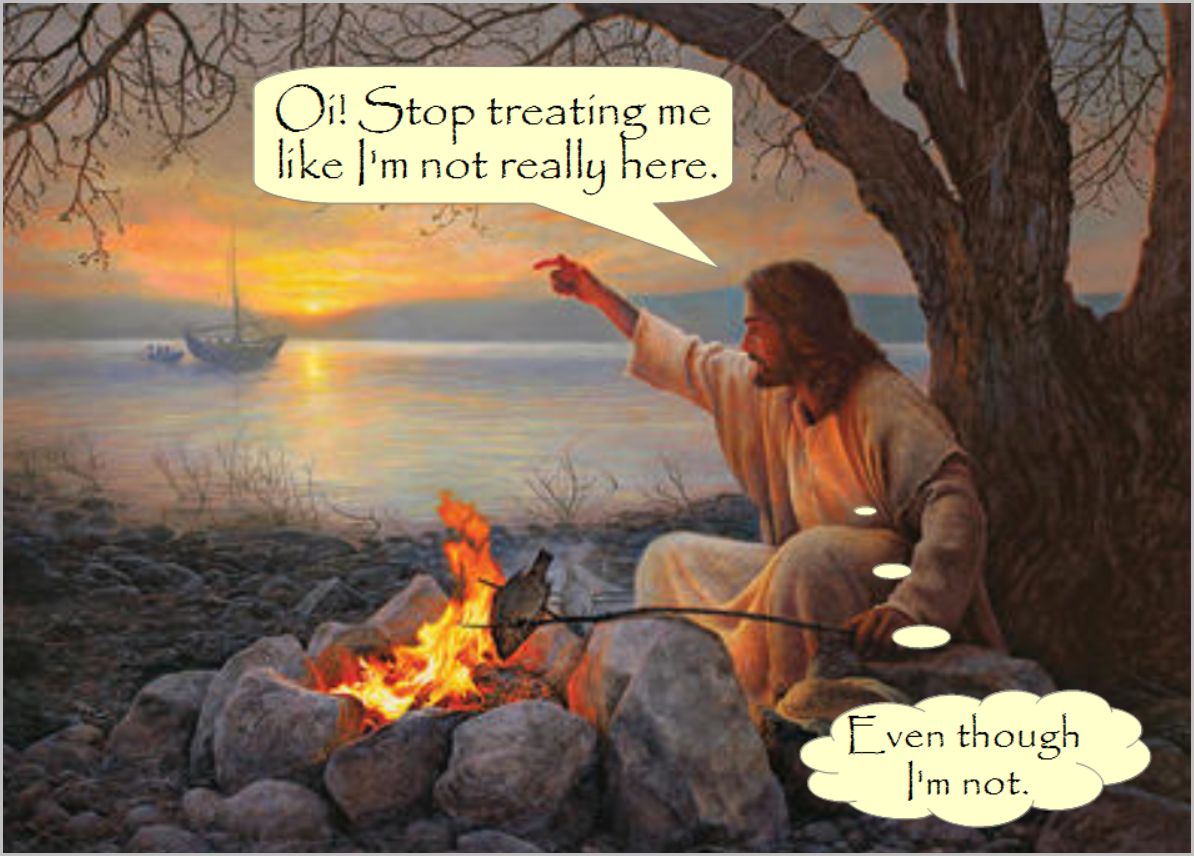
I recently challenged Christians on Charisma magazine’s blog-site to provide or point me to evidence that any one of the 107 billion people who has ever lived who after they had died had gone on to enjoy either eternal life in Heaven or eternal punishment in Hell. Unfulfilled promises from magic books weren’t admissible, because a promise of something happening is not the same as it actually doing so. Jesus didn’t count either, as there are no eye-witness accounts of his bodily resurrection, only stories written decades after the supposed event. In any case he was half Vulcan or something, not an ordinary mortal.

Alas, my challenge went unanswered. You won’t find it on the Charisma site now because it has been removed by the moderator there. Expecting evidence from Christians for what they believe is patently unreasonable. After all, who needs evidence when you can exercise your licence to believe whatever you’re told?

Of course, there is no evidence of any resurrection nor of anyone who has gone on, post-mortem, to enjoy everlasting life. Have you noticed how everything about Christianity is either invisible – God, the Holy Spirit, Heaven, angels, demons – or lies permanently in the future; the Second Coming, the resurrection of the body, the Kingdom of God, judgement and eternal life? All of them always just that little bit further on. This year, next year, sometime, never. Just not now.

Yet Jesus, Paul, Revelation’s John and most other New Testament luminaries believed God’s Kingdom, the resurrection and judgement were coming within their own lifetimes.* Not one of them entertained the thought that 2000 years down the line none of these miraculous events would have materialised.

Small wonder then, that at the start of the second century, believers began to lose hope in the Second Coming, the Kingdom’s arrival and an earthly resurrection of the dead. Maybe, some of them began to think, eternal life would be not be here on Earth, as Jesus and Paul had promised, but in Heaven with God, which they most definitely hadn’t. This way, everything that hadn’t happened here on Earth would happen instead after death (we can see this transition taking place in the very late gospel of John). All of which was fortunate, because it dispensed with the need for confirmation and evidence; no-one could prove – apart from the fact nobody has ever survived their own extinction – that believers didn’t go to Heaven when they died. Equally, no-one could provide evidence they did.** How neat and convenient.

So if any Christians reading this would like to like to show us some evidence for the resurrection of the dead, post-mortem judgement, Heaven, Hell, God’s Kingdom on Earth – any of it – I’m sure we would all like to see it. Until then, I will go on regarding all of these assurances as empty promises – pie in the sky – that believers cling to desperately, while calling their desperation ‘faith’.

* See Matthew 16.27-28 & 24.27, 30-31, 34; Luke 21.27-28, 33-34; 1 Corinthians 15.51-52; 1 Thessalonians 4.15-17; 1 John 2:17-181; Peter 4.7; Revelation 1.1 & 21.2-4

** Psychics claim to commune with the dead of course, or at least with their spirits; more hokum from the minds of the deluded. Even if it weren’t, this isn’t the kind of resurrection Christians envisage for themselves. They dismiss psychics’ ‘evidence’ of life-after-death as so much demonic deception.

Some gospel truths

Jesus&Roman

Imagine a new book is discovered that claims to answer all of our questions about life, promises hope for the future and provides remarkable insights into the nature of reality. You’d be interested, right? It wouldn’t even bother you that the book was the result of a series of hallucinations its writers claim to have had.

You don’t need to imagine this book because it already exists. It answers essential questions that we all have at some point like whether is life after death, and what’s waiting for us on the other side; what is the purpose of life, and how can we find happiness and peace now? Does God know us personally and hear our prayers? How can we avoid sin and learn to truly split infinitives repent. It’s called (wait for it) The Book Of Mormon and it purports to answer all the deep questions I’ve just mentioned – I know it does because I’ve just lifted them from mormon.org – and it is the result of the visions a ‘prophet’ called Joseph Smith had of one of the Lord’s angels back in the 1820s.

What? You don’t believe it? Why not? It’s the result of divine revelation and it answers all the questions you have – we are all supposed to have – about the meaning of life.

I’m guessing you don’t believe it because Joseph Smith has the reputation of being a bit of a fraud. His visions are implausible and inconsistently reported, while the book itself is fanciful and feels, well, fabricated; Jesus’ adventures in America after his resurrection just seem so made up.

No, I’m with you on this one, as is 99.93% of the Earth’s population. They don’t believe the Book Of Mormon either.

So how about a different book, a much older one? It too is said to answer all the serious questions about life and is also the result of visions and revelations. Okay, maybe it’s inconsistent, contradictory and fanciful. Maybe its more than a little improbable in places, but this book is different. Truly, it is. Everything in it, though  written, misremembered and altered by human beings is the very word of God; it says so itself so it must be true, and 2.2 billion people in the world can’t be wrong.

Or can they? Why is it that a book that relies even more than the Book of Mormon does  on innervisions and ‘revelations’ – the Bible – is held in such high esteem by so many? The New Testament alone records over twenty such hallucinations*, including the entirity of its final book. Some of these visions – those of the Risen Christ – serve as the foundation for the entire belief system.

Why are these ‘revelations’ regarded, by Christians at least, as real and trustworthy when those of the Book Of Mormon, the Qu’ran, the Vedas, and all those other ‘holy’ texts that owe their existence to hallucinations, are not? There is no substantive difference between them; no difference between one group of religious fanatics’ visions and those of all the other groups. None are demonstrably divine and all are essentially the same. That the Bible is older than the Book Of Mormon does not lend it more credence or affirm its ‘holy’ status. On the contrary, its production in a more credulous, pre-scientific era gives it less credibility, not more, and supplies greater reason not to sanctify or revere it.

So, Christians, what distinguishes the revelations of the Bible from those found in other ‘holy’ books? What makes its visions viable and real when the others, apparently, are not? What makes the Bible right and those wrong? It cannot be because the Bible says it’s inspired by God (in a letter known to be a forgery) because the others claim the same thing. Why are you prepared to base your lives on one set of ancient hallucinatory experiences but dismiss all the others? Why don’t you subscribe to all the books that claim divine providence? Doesn’t Pascal’s wager demand that you at least hedge your bets and embrace them all, just in case?

News just in: Neither Jesus nor Paul nor the disciples nor the gospel writers nor the Bible’s forgers nor the churches mentioned in it nor the early ‘Church Fathers’ ever read the Bible. They didn’t know of its existence, living 300 years before it was finally put together. They didn’t even envisage its creation, believing the world was going to end in their own lifetimes.

*The visions recorded in the New Testament include 10 separate ‘sightings’ of the risen Christ in the gospels and Acts; the Transfiguration (Mark 9.2-8 etc); Paul’s conversion alluded to in Galatians 1.11-12 and 1 Corinthians 9.1 & 15.45 and recounted, with contradictory details, three times in Acts; Paul’s vision – in or out of his body, he’s not sure – of ‘the Third Heaven’ (2 Corinthians 12.1-6); Stephen’s vision of Christ at the right hand of God (Acts 7.56); Peter’s ‘trance’ in which he sees a giant table cover (Acts 10.9-16); Paul and Barnabas’ visit from an angel (Acts 5.19-20); 5 other reports of visions in Acts (9.12; 16.9; 18.9-10; 22.17-20; 27.23-24) and the entire book of Revelation that relates the many hallucinations of a very disturbed mind. And then there are all the other sightings of angels and the dreams through which God is said to communicate with various nut-jobs people. I ask you – dreams!

Now make up a story about it

Bible4

So there we have it. The accounts of Jesus’ resurrection all derive from imagined sightings of him post-mortem. Call them hallucinations, visions or revelations, none of them were encounters with a real, revived physical being.

Except that’s not quite it, because it’s worse than that, Jim.

Most of our accounts of the resurrection appearances are fifty years or more too late. Paul’s is the only first hand account we have and even that is sketchy and recounted several years after it happened. For at least three of those years, Paul meditated on his seizure and interpreted it as a revelation from the Lord. Undoubtedly, others had similar experiences; the stories of the resurrected Christ came from somewhere and the resurrection seems to have been central to Christian faith from its earliest days. Paul cites in 1 Corinthians 15:4-8 those he says have encountered the risen Christ:

He appeared to Cephas, then to the twelve. After that He appeared to more than five hundred brethren at one time, most of whom remain until now, but some have fallen asleep; then He appeared to James, then to all the apostles; and last of all, as to one untimely born, He appeared to me also.

Paul implies here that his own experience is the same as that of the others on his list; they too, then, had visions of the risen Christ within their imaginations. Significantly, Paul omits Mary Magdalene, the first to ‘see’ the post-mortem Jesus according to the later gospels, while some of the other encounters Paul claims to know about do not find their way into those accounts. Of those that do, we can be confident the details are wrong. They were most certainly not as they are described in the stories that eventually came to be written.

The earliest copies of Mark’s gospel famously have no resurrection appearances. The women discover the empty tomb, which Matthew and Luke later lift into their gospels, and, bizarrely, decide not to tell the disciples about it. By the time we get to last canonical gospel, written some thirty years down the line, its author embellishes Luke’s attempts to suggest that the risen Jesus has some physicality; he allows his old friends, especially Thomas, to poke around in his wounds and he eats fish. Nonetheless, as in the earlier gospels, the disciples all have trouble recognising him, even on a third occasion, and are afraid to ask him who he is (John 21.12). Did his followers simply experience, as John 14.15-20 and Matthew 18.20 seem to suggest, an intense sense of Jesus’ presence? This would make the reports of actual sightings evidence of later believers’ need for something more substantial than flashing lights and fuzzy feelings. Which is how, over time, surrounding detail came to be added.

In their specifics, the resurrection appearances in the gospels and Acts are stories that accrued around the visions and inner traumas experienced by Jesus’ friends and other zealots. As such they are fiction; the angels at the tomb – probably the empty tomb itself – the encounter on the road to Emmaus, the fish breakfast and the rest. Bart D. Ehrman demonstrates convincingly in Jesus Before The Gospels, that the oral tradition was not capable of transmitting the details of Jesus’ life and ministry accurately over a 40 year period (when Mark’s gospel was written). The same is true, perhaps moreso, of individuals’ idiosyncratic inner experiences. Over 50+ years, after which Matthew and Luke’s gospels were composed, reports of these visions would have been altered innumerable times by those relating them, ever onwards and outwards; details would inevitably have been changed, added, removed and invented in a protracted game of Chinese whispers. In all probability the gospel writers themselves introduced their own embellishments.

So then, from a small number of visions/hallucinations/feelings, via significantly altered accounts of these same subjective experiences, together with others that are pure invention, to the eventual recording of such stories 50 to 80 years later, this is the evolution of the fantasy that is the risen Christ.

See what you want to see

dog's bottom2

Paul was a religious fanatic, a zealot is how he describes himself, whose raison d’etre had become the elimination of those who believed that Yeshua was the Messiah. The Jesus movement, which at this time was still very much a part of Judaism (it is Paul who will later uncouple it from its Jewish mooring) is in Paul’s eyes an aberration and he is prepared to brutalise and imprison those who subscribe to it. He is an extremist; religion is his life, his world, his being; he spends all of his time with his band of Pharisaic thugs and members of the new cult (trying to destroy them, admittedly). That’s all he does. He doesn’t have any other interests. No wonder then, that he starts to hallucinate, as fanatics are prone to do, perhaps while suffering an epileptic seizure.

According to Luke in Acts 9.5, Paul can’t make sense of what he thinks he’s ‘seeing’ in his head. He doesn’t immediately connect the light there with Jesus and is forced to interpret it, perhaps some considerable time afterwards (both he and Luke recount the experience only many years later) as being the cult leader whose followers he is persecuting. Once he has decided that this is what his experience was all about, he switches from one kind of fanaticism to another, from one kind of extremist Judaism to another equally fanatical kind.

He does not, I want to emphasise, go from being a Jew to a Christian; he has three years yet to spend brooding on his hallucinatory experience and to work up a convoluted interpretation of it. Only after that does he offer his own bizarre take on the Yeshua phenomenon that conflicts with the original cult and will eventually succeed it.

So, the risen Jesus, like ghosts today, was ‘seen’ only by those already infatuated with him, and even then not always in a form that was recognisably human.

There were no appearances to anyone in the outside world who might have provided objective verification of his return from the dead.

No appearance to any authority, none to the emperor.

There was no appearance in front of Pilate so that the resurrection might be become part of Roman records.

None to Herod to show him he had overcome death.

None to the masses who had earlier called for his death to prove to them he really was their King. 

None to usher in, at last, the Kingdom of God he’d been promising for so long.

None to Caiaphas to demonstrate that he, Jesus, truly was the prophesied Messiah.

None to Judas, to prevent his suicide and forgive him for his betrayal (or ask his forgiveness for using him as a pawn in the Great Divine Plan).

None, in fact, to anyone outside his own coterie, people who were already susceptible to ‘visions’ and psychologically primed to see him again – or to convince themselves they had, like the gullible people today who swear they’ve seen him in the clouds, in various food items or in the hallowed form of a dog’s bottom.

Keen amateur photographer Terry Buckman spotted the 'Face of God' in a cloud formation as he was taking pictures of boats sailing on the English Channel near Sandbanks in Poole, Dorset. Terry said that he was the clouds part and then suddenly the shape of the face appeared. *** Local Caption *** Disclaimer: While Cavendish Press (Manchester) Ltd uses its' best endeavours to establish the copyright and authenticity of all pictures supplied, it accepts no liability for any damage, loss or legal action caused by the use of images supplied. The publication of images is solely at your discretion.kit-katdog's bottom


Believing is Seeing

Fish

Have you noticed how the risen Jesus seems only to have appeared to those who were already primed to see him? Of course, the accounts of the resurrection are inconsistent, unreliable and constructed long after the supposed event, but just for now, let’s take them at face value. Jesus appears first, according to Matthew, Luke and John, to his female followers – maybe one on her own (in John), maybe two (Matthew), maybe several (Luke) – but to women who would be mourning him and would be longing to see him again. And lo and behold, they do! He’s not quite substantial and not quite recognisable – every bit the hallucination, in fact – but he appears.

Next he is said to have shown himself to the disciples – maybe one (Luke), maybe two (Luke again), maybe several (Matthew) – men who have been thrown into complete disarray by Jesus’ death but who believed in him and his mission to inaugurate the Kingdom of God, and were looking forward to ruling it with him. So naturally they see him in their midst. Never mind he walks through walls and disappears at will, just like an apparition – he appears! As Acts 1.3 puts it, ‘he presented himself alive to them after his suffering by many proofs’.

Wait – ‘by many proofs’? What does that mean? That he had to prove he’d come back to life? Could they not see that for themselves? Couldn’t they recognise the man with whom they’d spent the last three years? Or if they could, weren’t they convinced he’d returned from the dead so that he felt he had to prove it? How? How did he prove it? With a death certificate? By letting them poke his holes? And this took forty days? Isn’t it more likely they were subject to group hysteria and some sort of hallucination (they’d had hallucinations before – see Matthew 17:1-9) and they then had to convince each other that what they’d experienced was really Jesus? No wonder it took forty days to concoct a ‘plausible’ story, to arrive at ‘the many proofs’ that Acts speaks of. Whichever it was, Jesus’ gullible old pals convinced themselves they’d seen him.

During these same forty days – though in his gospel Luke implies it’s a much shorter time (24.40-53) – Jesus fits in a guest appearance at a rock concert in front of 500 believers – believers, note. Not people who were converted as a result of this miraculous appearance, but people who were already part of the Jesus cult when they experienced this vision. Or so Paul tells us in 1 Corinthians 15.3-8. He wasn’t actually there, but he heard about it from a friend of a friend of a friend so it must be true.

And finally he appeared also to Paul himself (1 Corinthians 15.5). Not as a physical body but as a beam of light in Paul’s head. I’m not getting into how this was, as Paul himself admits, no more than an inner vision (he too is prone to hallucinations – see also Acts 16:9-10 and 2 Corinthians 12.1-7) because you can read about that here. Rather, I’m going to argue that Paul, arch-enemy to this point of all things to do with the Jesus cult, is just as primed for a sighting of the Lord as all those other people who think they saw him… next time.

to be continued.

The Stuff Christians Say… (part three)

DoorToDoorAtheists are aggressive/militant/unreasonable: The Christians might’ve got us on this one. After all, it is incredibly irritating when we atheists start preaching in the town centre or invade others’ events to tell them what to believe or dish out loony pamphlets or turn up at people’s doors when they’re just about to have their tea. And what about all those meeting places we have, on just about every corner of the city, with smart-arse posters about Adam and Steve on the board outside? And let’s not forget our readiness to blow up ourselves and others in the name of our great cause. Now that’s ‘militant’! Yes, we atheists really do have too much freedom to push our views on others. No wonder we’re so insufferable. (Note to self: check you’ve got this right.)

It takes more faith to be an atheist than a Christian: It takes no faith to recognise there are no supernatural beings. It takes no more faith not to believe in God – or to acknowledge that there is no God to believe in – than it does not to believe in Santa Claus, Poseidon or Ra. Christians themselves require no great abundance of faith to dismiss these characters. Is it so difficult to understand that atheists disregard the Christian pantheon of fantasy figures in exactly the same way? Or are believers practising their dishonesty-for-Jesus again? There is no faith involved in being an atheist. On the other hand, believing in an omnipotent but suspiciously inactive God, a super-hero Saviour, a magic Spirit, angels, cherubim, seraphim, demons, Satan, resurrected saints, Heaven, Hell and all manner of powers and principalities – this requires faith in delusional quantities. No atheist could possibly compete. Nor would they want to.

Faith: An Exercise In Futility

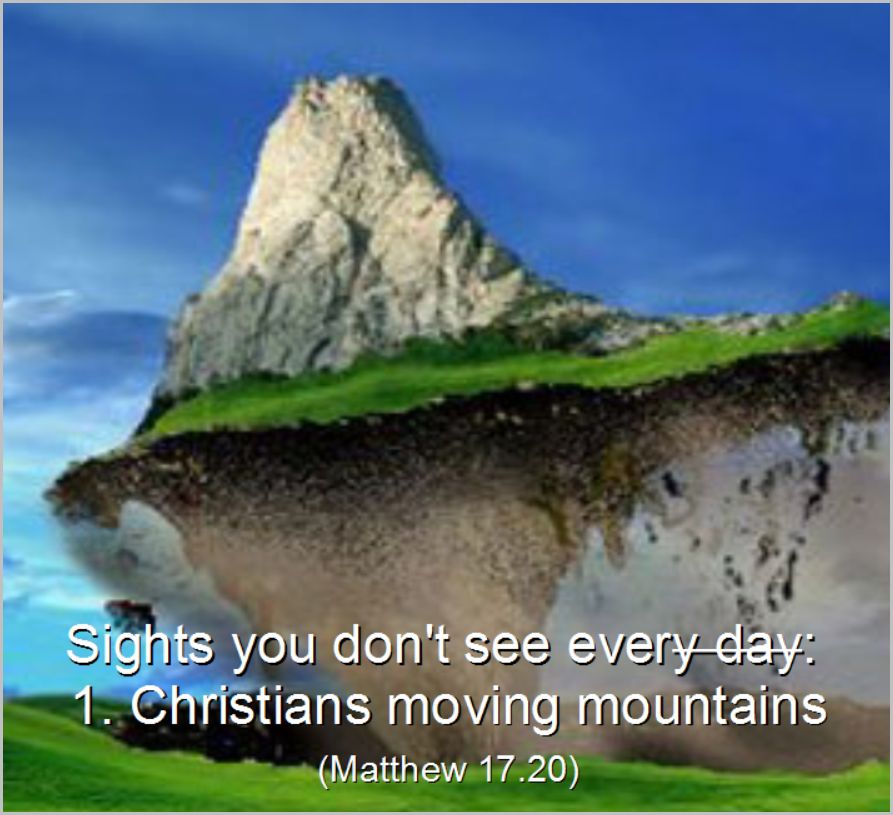
MountainsWhat is faith?

The anonymous author of the book of Hebrews says it’s ‘the substance of things hoped for, the evidence of things not seen.’ (11.1)

Hoping for ‘things’ like perfection, resurrection, eternal life, heaven (not to mention the ability to move mountains), the likes of which no-one has ever achieved, is nothing but wishful thinking. Despite what the Hebrews author says, wishful thinking isn’t evidence of anything – except a capacity for wishful thinking.

By it’s very nature, then, faith is not evidence, but the very opposite. It is the effort to believe in things for which there is no evidence and the delusional insistence that the imagined is more real than that which is.

The stuff Christians say… (part one)

Jesus-Facepalm

On the day Christians remember the time Jesus allegedly spent being dead and buried (that’s one day, if you’re counting; what happened to the three he promised?) by going shopping or watching sport, let’s take a look at some of the nonsense they spout about atheists:

Atheism/humanism is of Satan: Given there’s no evidence for any supernatural beings, there can be no devil, Satan, Lucifer – or whatever other name Christians come up with for this fantasy figure. (Bizarrely, it’s Jesus who’s called Lucifer in Revelation 5.5) The devil is a creation of the human mind, intended to explain the nasty stuff in life and to let a supposedly good God off the hook. It follows that an imaginary being can’t make human beings be anything. The devil therefore does not make people atheists nor direct them in their ways.

Humanists/atheists set themselves up as God: Every manifestation of the god(s), including those that happen to be popular at present, is of human origin. Like all the others, the Christian God is a product of the human imagination that is made manifest only through human behaviour. So who is it who sets themselves up as God? Those who recognise that this creation of the human mind has no external reality, or those who claim an intimacy with the ‘Supreme Being’, believe his Holy Spirit lives within them and delude themselves into thinking they speak for him? No prizes.

Humanists/atheists worship man as God: Atheists don’t do this either. We are well aware of humans’ fallibility, inconsistency and capacity to bugger things up. However, we’re all we’ve got. There’s no God going to come and save us or solve our problems. We have to do it ourselves (or, as the case may be, not). Nor do atheists regard other people as wicked sinners who have no good in them – a particularly unhealthy viewpoint favoured by the religious – but this hardly constitutes ‘worship’.

Atheists hate God: Only to the same extent we ‘hate’ Santa Claus, Poseidon and Ra. You can’t hate (or rebel) against something that doesn’t exist. We do get very tired though of Christians foisting their views on us, insisting we should believe what they believe. And we get angry when they disparage others and attempt to curtail their freedom because they alone know what Jesus would want. But being angry about Christians’ unreasonableness is not the same as hating something that doesn’t exist.

To be continued

A Long Long Time Ago

ShinyJesusHe was a man of great charisma, a provocative individual who challenged the establishment and the norms of his day. Some said, as he implied himself, that he had come to visit the Earth from a higher plane and that perhaps, again as he occasionally hinted (though maybe he was only being contentious) that he was some sort of Messiah. He certainly inspired and gave hope to others who, like himself, found themselves on the fringes of society, who felt unaccepted and down-trodden. Some of what he said and did may have enabled such people to accept who they were or, better still, who they wanted to be.

He refused to accept that he was ‘good’, and certainly he acted as he did because it suited him to do so, not because he felt any need to impress others. Nevertheless, many found him to be humble and kind. His detractors said he was a charlatan and claimed he was demon-possessed; he was all things to all people.

His death came as a shock, what with its suddenness and the manner in which it happened, but nonetheless he seemed to have been prepared for it. In his final messages he suggested he was returning to the higher place from where, perhaps, he’d originally come.

Those who had followed him mourned him and talked of him as an important figure in their lives. They couldn’t, they said, believe he was gone. Some felt that even though he was no longer a physical presence in the world, what he had meant to them would always live on in their hearts, especially when a few of them would gather together to reminisce about him. Others talked of how they hoped and prayed God would raise him from the dead and allow him to live again.

It wouldn’t be long before someone claimed to have seen him back among the living.

So much for David Bowie (there really is a petition asking God to bring him back to life, in spite of his already having been cremated and there being no God.) Within hours of his death being announced, Bowie was elevated to a sort of godhood, his work and sense of alienation imbued with a kind of profound mysticism. The reaction we’ve seen, particularly in the UK, to Bowie’s demise is a common human reaction to the death of a revered one. It happened when John Lennon was killed (a saint he was not) and with Elvis Presley, who, in the years following his death was frequently seen alive in the supermarket or laundromat, and with Diana, Princess of Wales. Elevating larger than life characters to hallowed status when they die is a human trait that helps us mourn them and deal with bereavement.

Is this not what happened when Jesus died? The profound grief, bewilderment, fear and shared memories of those who idolised him, together with their desperate search for meaning in his pointless end, led to his elevation to quasi-godhood and, eventually, to visions of him, if not in the supermarket and laundromat, then back amongst them somehow. If such a thing can happen still, in the technological world of the twenty-first century, how much more could it happen in the superstitious backwaters of first century Palestine.


Peace Off

angels

Glory to God in the highest, and on earth peace, good will toward men. Luke 2.14 as rendered by the King James Bible.

Whatever happened to that peace? There hasn’t been peace on earth ever since the angels were made to herald Christ’s birth with these words. Some of that absence of peace – the conflicts and wars – has been the result of religion, including that of Jesus himself. Then again, he did contradict the angels when he said he hadn’t come to bring peace but a sword and for once, he was right (Matthew 10.34). So what can the angels have meant? More to the point, what can those who created these words to put in the mouths of non-existent beings have been thinking? Is their declaration a promise? A prophecy? Something to look good on Christmas cards?

Other translations of Luke 2.14 avoid the whole peace on earth shtick by watering down the statement: ‘Glory to God in the highest heaven, and on earth peace to those on whom his favour rests’ reads the NIV. Now only those whom God ‘favours’ are granted peace, which presumably means only Christians, and it’s now a vague sense of well-being (complacency? smugness?) that isn’t of much use to the world at large. Certainly other New Testament writers, the creators of John’s gospel and the letter to the Ephesians for example, interpret ‘peace’ in this very limited way.

And yet, in Isaiah, in verses applied to Jesus (especially at this time of year; they were read out in the carol service I attended last night) we find him descibed like this:

For to us a child is born, to us a son is given, and the government will be on his shoulders. And he will be called Wonderful Counselor, Mighty God, Everlasting Father, Prince of Peace. (Isaiah 9.6)

Apart from the fact this is a specifically Jewish prophecy that has nothing to do with Jesus – which is why most of the titles don’t really apply to him (nobody has ever called him ‘Wonderful Counselor’ or ‘Everlasting Father’) – there again is the idea that he’s somehow connected with capital-letter Peace. He’s a Prince of it, no less.

But wait – there’s more:

Of the increase of his government and peace there will be no end. He will reign on David’s throne and over his kingdom, establishing and upholding it with justice and righteousness from that time on and forever. The zeal of the Lord Almighty will accomplish this. (9.7)

Of course; it’s all end time stuff! We should’ve guessed. Long term peace on the Earth, predicted by the angels and, ostensibly, by Isaiah is going to be in the future, after Jesus returns to establish God’s Kingdom on earth.

Have you noticed how it’s always in the future? Everything Christianity offers is going to happen later: heaven, eternal life, the second coming, the rapture, resurrection, God’s Kingdom, the lion lying down with the lamb, the end of war, everlasting peace. Not in Jesus’ own time as he thought; not in Paul’s, not in the gospel writers’, not any time since, but always just around the corner, any time now, soon. Never in the here and now. Peace on Earth, like all those other promises, is always just out of reach, like the pot of gold at the end of the rainbow – the closer you think you might be to it, the further it moves away.

A friend added one of those clever posters to Facebook recently. It said, amongst other things, that it wasn’t okay to ‘shame’ religion. I couldn’t disagree more. Scams must be debunked and the sham of religion’s empty promises held up to the light of reality. None of the things that the Bible says will happen is going to; not now, nor in an ever-elusive future.

A happy and peaceful Christmas to both my readers.