How Prophecy Works

Like many evangelicals and others afflicted by Christianity, Don Camp believes that the Old Testament is jam-packed with prophecies about Jesus; his origin, background, mission, teaching, sacrifice and resurrection. He quotes a couple in one of his recent comments, which we’ll get to soon, and thinks that the general direction of travel is from ancient prophecy to later fulfilment in Jesus. Don and those like him will not entertain the possibility that this is an illusion created by those who constructed the Jesus’ stories.

Here’s how the illusion was created: the gospel writers, and Paul too, looked back at the Old Testament (‘the scriptures’) and found there what Don describes as ‘indistinct’ references to events they believed had happened in their own time. From these and other sources, they built their stories about Jesus. More often than not, these scriptural references were not in themselves prophecies or predictions of Jesus’ life, death or resurrection. We know this by a) reading them in their original context, b) recognising that the Jewish scriptures as a whole never speak of a Messiah who must die an ignoble death for his people, and c) noting the number of times these ‘indistinct’ statements have to be altered by the gospel writers and others, to make them ‘fit’ their conception of their God-man.

Let’s start with one of Don’s picks, from Isaiah 53:11:

After he has suffered, he will see the light of life.

It has to be conceded that all of Isaiah 53 does indeed look like it’s a prophecy of Jesus’ suffering, death and resurrection. In context, however, the suffering servant it describes is Israel itself, as surrounding chapters make clear. Furthermore, on closer inspection, some of it doesn’t seem to apply to Jesus at all. Verses 2&3 really don’t describe a man followed around by multitudes and later worshipped by millions:

He grew up before him like a tender shoot, and like a root out of dry ground. He had no beauty or majesty to attract us to him, nothing in his appearance that we should desire him. He was despised and rejected by mankind, a man of suffering, and familiar with pain. Like one from whom people hide their faces he was despised, and we held him in low esteem.

Unsurprisingly, Don doesn’t quote these verses. Sure, it’s possible to make them fit; to say that these verses 2-3 describe Jesus on trial with the crowd baying for his blood; but it’s a stretch. We’ll come back to Isaiah 53 shortly.

Don then refers to ‘the prophecy about (Jesus) not seeing corruption as a dead body’. This is actually Psalm 16:10:

You (YHWH) will not abandon me to the realm of the dead, nor will you let your faithful one see decay.

And, my, yes it does seem to fit Jesus once again, if we believe he died and rose again before his body could deteriorate. But it isn’t about him. It’s about the writer of the psalm, traditionally David, expressing his belief that his God will preserve him. Plucked out of context, it can sound like it’s Jesus being described, just as any number of other verses can be said to be about future events when they’re not. For example, some Christians, including Pat Robertson, are currently claiming that Ezekiel 38:1-2 is a prophecy of Russia’s invasion of Ukraine:

Son of man, set your face against Gog, of the land of Magog, the prince of Rosh, Meshech, and Tubal, and prophesy against him.

That works, don’t you think?

No. Me, neither. Such nebulous statements can easily be applied to much later events on which they have no actual bearing.

Which brings us neatly to the gospels. These claim that the events they describe were foretold by the prophets of old (Luke 24:44). It would be truly remarkable if, as Don believes, all of the prophecies about Jesus in the scriptures were actually fulfilled by him. Some Christian sources claim there are as many as 300. But, as we’ve seen, some of these are so vague they can be made to apply when in fact they don’t.

And this is how the Jesus story came about; it is structured around many of these indistinct prophecies. The authors of the gospels, and Paul too, knew their scriptures and built up a story about the Messiah using them. Like Paul, Mark had little knowledge of the circumstances of his Messiah’s earthly life, so he set about creating a biography for him using ‘prophecies’, scenarios and statements from the scriptures. We might ask here why he should do this if Jesus was as remarkable as early cultists claimed. There is no need to invent stories about a remarkable figure if that figure has already lived an amazing life that is widely known about. Be that as it may, Mark and the other gospel writers set about creating an elaborate life for their hero, largely based on ancient scriptures.

Mark quotes Isaiah 53 directly in 15:38 and makes extensive use of the chapter in his account of Jesus’ passion. Let me stress: Isaiah 53 is not a prophecy of the passion, it is the blueprint for it. Mark’s account is Isaiah 53, down to Jesus’ silence at his trial and his being buried ‘with the rich’.

Matthew and Luke later embellished Mark’s efforts by doing more of the same thing, adding fresh episodes to Mark’s core gospel. Most of these embellishments  are based on ‘prophecies’ that Mark somehow missed. None of them necessarily happened – I’m persuaded they didn’t – but are ‘actualisations’ of parts of ancient scripture. We know this because of mistakes Matthew made in expanding the story, using the additional ‘prophecies’ he ‘discovered’ in scripture. We’ll get to these mistakes next time.


Jesus writes…

Image: Caleb Havertape (https://www.pinterest.co.uk/calebhavertapei/_saved/)

Ubi Dubium has posed the question, ‘why didn’t Jesus write his own gospel?’ It’s a good question. What better way to ensure his ideas were conveyed precisely without any margin for error or misinterpretation, than to do it himself? If he hadn’t the time or the ability to do so, why didn’t he dictate his message to one of his literate disciples (surely one of them could write) who could then, as an eye-witness, finish off the story accurately once Jesus himself had returned to Heaven. Why, instead, did he leave it to people he’d never met, most of whom wouldn’t be about for another few decades?

It seems to me there are three possible answers.

  1. Jesus believed the world as he knew it was soon to end. He was convinced God was about to intervene and sweep away the old order and inaugurate the Kingdom of God on Earth. If the gospels that have come down to us are to believed, this was the core of his teaching. Jesus mentions its imminence repeatedly across the synoptic gospels and the morality he proposes, wholly impractical in the long term, is designed for the ‘shortness of the hour’. In this scenario, Jesus and his followers had no interest in writing anything down for posterity. There was no posterity; the end was very truly nigh.

  2. God didn’t want his Son to write his own story. He wanted the job left to people whom Jesus never met, who were little more than children during his lifetime and who lived hundreds of miles from where events occurred. God was sure this was the best way to create a record of his Son’s visit to Earth, without inaccuracies, inconsistencies and contradictions. 

  3. The creator of Mark’s gospel bought into Paul’s celestial Saviour, his illusory ‘Lord Jesus Christ’. Mark set about creating a ‘what if’ back story for him, set in Palestine in the recent past and constructed from Paul’s ’revelations’ and Old Testament ‘prophecy’. Mark highlighted Paul’s teaching that the Christ, whom he calls the Son of Man in his gospel, would soon be coming to the Earth (not a second coming or a return) to rescue his Chosen and reset reality.

Are there any other possibilities? I can’t think of any, nor have I read of any. So which of the three is the most plausible?

Scenario 1 leaves us with a Son of God not knowing what he was talking about. This Jesus was wrong about when the Son of Man would appear, wrong about the End of the Age, wrong about the traumatic nature of God’s intervention, wrong about the Final Judgement, wrong about the fate of the unrighteous and wrong about the Kingdom of God being established on the Earth. This scenario gives us a Jesus who is a failure as both a prophet and Messiah. It’s a wonder anything at all was written about such a loser, let alone narratives that preserved his hopeless predictions about the Kingdom’s arrival.

Scenario 2 is of course ridiculous, though it is the one most Christians buy into, more or less. As well as its inherent implausibility, it relies on the hypothetical document Q, for which no evidence exists let alone any extant copy (or even fragment). It, and a supposedly reliable oral tradition, are speculative, needed only to counter the improbability of this scenario.

Scenario 3, while contentious, makes most sense of why neither Jesus nor any of his contemporaries wrote down or otherwise recorded a single thing he said or did. Mark’s gospel, created shortly after 70CE, was the first anyone had heard of a Jesus on Earth. The three subsequent gospels were all based, to varying degrees, on Mark’s fable. In this scenario there was no real Jesus, and no dozy disciples, to have recorded his exploits and teaching.

What you think, Ubi?

Stories


  • Many Christians believe that God himself impregnated Mary and that her son, Jesus, was God Incarnate. Yet they don’t accept that numerous others, including Perseus, Buddha and Vishnu, who were all fathered by gods, are in any way divine. Why not?
  • Evangelicals and other Christians believe that Jesus performed many miracles. However, they dismiss other miracle workers as frauds or mythical beings. As John Oakes puts it on the Evidence for Christianity website, ‘religious figures (such) as Osiris, Empedocles or Krishna almost certainly were not real people, making stories of supposed miracles they worked irrelevant’. Why?
  • Christians believe Jesus fed 5,000 people with 5 fish and 2 loaves. They don’t believe the Qur’an’s story that Muhammed did much the same thing. Why not?
  • Christians believe Jesus was visited by the long dead Moses and Elijah. They believe Paul saw Jesus after he died. Yet they dismiss the Mormon claim that Joseph Smith saw Jesus and God himself. Why?
  • Christians believe Jesus came back to life a day and a half after he was killed. However, they regard the resurrection stories of Dionysus, Osiris and Attis as counterfeit. Why?
  • Christians believe Jesus rose into the sky to take up his place in heaven. Yet they think it preposterous that Muhammed went there on a flying horse. Why?

When it comes to their own stories Christians are adamant that they are reliable accounts of events that really happened. Jesus really was God’s son. He really did do magic; really did feed 5,000 people with a few scraps; really did rise from the dead and really did beam up to heaven. Paul really met him on the road to Damascus.

Even liberal Christians like Joel Anderson, while acknowledging there is much that is suspect in the Jesus story, argue with all the cognitive dissonance they can muster, that the gospels are nevertheless ‘historically reliable’. This really won’t do. Evidentially, the gospels are as ‘historically reliable’ as the tall tales involving Osiris, Buddha, Vishnu, Muhammed and Joseph Smith. Gods only make visits to the Earth in stories, individuals only rise from the dead in stories, magic and miracles only occur in stories. The Christian examples of these tropes are as imaginary as all the others. The heroes of such stories – be it Empedocles, Perseus, Mithras, Buddha, Krishna or Jesus – are fabrications too.

If it’s constructed like a story, has all the components of a story and reads like a story then that’s exactly what it is. 

Making it all up

While the Old Testament is made up of myth and legend and the New created from the visions and dreams of a few disturbed individuals, we are expected to believe that the gospel accounts nevertheless shine out as beacons of truth.

We know, however, that much of what is contained in the four canonical gospels is fiction. I’m not referring here merely to how contradictory they are (though there is that), I’m talking about the parts that are clearly made up, invented for theological and literary purposes. These include:

The nativity stories: These are myth, created so that the Godman has an origin similar to those of other Godmen: There is no historical evidence for a wand’rin’ star, a census that involved the mass movement of populations or the Massacre of the Innocents.

The virgin birth: relies on a misreading of ‘young woman’ in Isaiah 7.14

The flight to Egypt: a misapplication of Hosea 11.1.

Genealogies: invented. Matthew’s and Luke’s are completely different and don’t, in any case, include sufficient generations to reach back to ‘the first man’.

The Magnificat: Written as a Greek poem. It is not an outpouring of a young peasant woman.

The temptation in the wilderness: Jesus did not have a conversation with the devil. He was not attended to by squadrons of angels; we know such beings do not exist. In any case, which eye-witness was present to record these fanciful encounters?

Angels: 12 appearances across the gospels. Demons and other evil spirits: at least 20 mentions. Myth, pure and simple.

The miracles: all of them make a theological point. This is their purpose. They are literary.

Jesus’s teaching: designed to encourage members of the cult, a cult that could only exist after the events the gospels purport to relay. Everything he’s made to say comes from different sects, Paul’s teaching, Old Testament wisdom literature and even pagan sources.

The sermon on the mount: created and written in sophisticated Greek, not delivered by a semi-literate itinerant preacher.

John’s self-obsessed Jesus: nothing like the character in the synoptic gospels. Either he’s made up or they are. Or both.

The Transfiguration: Elijah and Moses do not return from the dead to have a chat with Jesus. This is completely made up.

The Eucharist: first appears in Paul’s teaching in I Corinthians 11.23-27. It is distinctly pagan but is accommodated in the gospels because Paul insisted he got it directly from his (imagined) Christ.

Judas’ betrayal: suggested by Zechariah 11.12-13 (which in context is not a prophecy).

The custom of freeing a prisoner (Barabbas): no such custom existed. The event is symbolic.

Resurrected corpses emerge from their graves: Matthew made this up. No-one else seems to know of it and Luke makes a point of cutting the episode out of his version of events.

The Crucifixion: based on Isaiah 53 and various Psalms.

The Resurrection: based on the visions of Cephas, Paul and others with added, invented detail, incompatible across the four accounts.

The Ascension: Jesus levitates into the stratosphere, in front of witnesses no less. Or perhaps not; Luke invented this impossibility.

There is much more in the gospels that is evidently and demonstrably made up. We can, as Christians do, believe it all really happened. We can insist that the stories are not based on other sources but that these sources are prophecies of real events that took place in history. From this perspective, Paul’s and others’ visions are then the result of these same events.

But which is more likely? –
The Old Testament is packed with prophecies about Jesus’ life and death, and that what Paul and others saw in their heads was because Jesus really existed and spoke to them once he’d returned to Heaven…

Or: The Jesus story is fictional, a patchwork of Old Testament snippets, mystical visions, invented symbolic events and pagan ideas of resurrecting Godmen.

And If the gospels are fiction – and they evidently are – then why not Jesus himself? If there was no real history to be written about him, just this mish-mash of other sources, that can only be because there was no Jesus who walked the Earth 2000 years ago.

Jesus is the same as his near contemporaries Osiris, Dionysus and Mithras. Like them, he is entirely mythological.

What are the Odds?

To look at it another way…

The stories of the Old Testament are largely fictional. They’re myth, legend and otherwise fabricated. There was no Eden, no world-wide flood, no slavery in Egypt, no Exodus. There’s no evidence that the characters around which events supposedly took place actually existed: no Noah, Abraham, Moses, Job, Jonah or Daniel. Their stories were created long after the time they purportedly lived; centuries later. The stories written about kings – which, if they existed, were no more than half-remembered tribal chiefs – and the so-called great prophets are constructed from folktales. In short, nothing we read in the Old Testament actually happened.

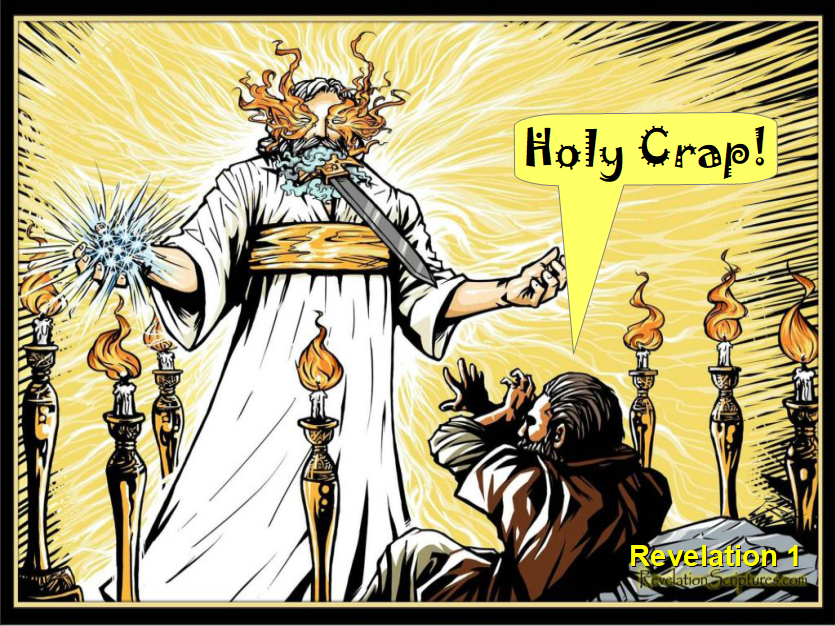
When we get to the New Testament, we find convoluted exposition of Paul’s ‘revelations’ about Jesus; visions and imagined sightings of a celestial being he had in his own head. It’s the same for the fruitcake writer of Revelation who envisaged an unreal comic book Jesus; invention every bit of it. The Acts of the Apostles offers a fanciful and wholly inaccurate ‘history’ of the early church, including angels, teleportation and fatal miracles. Of the 21 letters in the New Testament, at least 11 are forgeries, known to have been written by anonymous authors who were not who they claimed to be. The other 10, including Paul’s genuine letters and the likes of Hebrews, make up all sorts of mystical stuff about an angelic Godman-cum-high priest.

 And yet, in the midst of these myths and legends, made-up characters and stories, forgeries and fantasies and mystical musings stands the indisputable truth of the gospels. Or so Christians and theologians would have us believe. These particular stories, surrounded as they are by fiction on all sides are historical, factual and true.

What are the odds?

Will the real Jesus please stand up? (part 3)

As we’ve seen, so much about Jesus appears to have been invented and made up; literally, ‘envisioned’. Almost everything he said and did, including his death and resurrection, derive from Paul’s teaching and the Old Testament. Mark created his gospel narrative out of these, embellishing the story with ideas from other, pagan myths. Mark’s gospel then served as the basis of the other three canonical gospels.

It could be argue that none of this suggests Jesus didn’t exist. He could still have been a real life human being who wandered around Palestine, teaching people about the End of the Age. In which case, why did Paul and the later gospel writers have to make so much up about him, as clearly they did. Why didn’t they report directly what he taught, instead of quoting the Old Testament as Paul does when he talks about his Christ (he tells us this is what he’s doing, in Romans 15.2-4)? Not once does he refer to anything the historical Jesus said. Neither do the gospel writers. They make stuff up, they alter what their predecessors say, they dip into the Old Testament to construct Jesus’ teaching.

Why? If the real Jesus was such a Great Teacher, who had so much wisdom to impart, why don’t we find it in the gospels instead of this amalgam of other sources? Was his teaching so unimpressive and unmemorable that a new script had to be written for him? If so, how did he attract the fame and following he purportedly did? Why are the gospels literary creations and not the kind of reporting we might expect if they were relating the sayings and doings of one man? Why do the gospels have their own distinct agendas when they are supposedly reporting the views of a real individual? Why are there so many interpretations of Jesus in the New Testament: Jewish Jesus, Gentile Jesus, Anti-semitic Jesus, Gnostic Jesus, Anti-gnostic Jesus, Radical Jesus, Pacifist Jesus, Saviour Jesus, High Priest Jesus, Cosmic-judge Jesus? Why, if it really happened, does the resurrection read like myth, with all the differences in detail between the accounts? Why does Paul talk about it as something that was only revealed in ‘visions’? Why does Mark hint that his Jesus story is a parable, the true meaning of which can only be discerned by the spiritually mature (Mark 4.10-12)?

If Jesus was real, none of this – the myth making, the invention, the reliance on the Old Testament – would be necessary.

That Paul and the gospel writers made up so much suggests there wasn’t a real person on whom their teaching and stories are based. Jesus Christ was the result of the ‘visions’, dreams and hallucinations that someone called Cephas and a few others, Paul included, experienced.

There was no historical Jesus, no miracles, no wondrous teaching, no crucifixion, no resurrection, no ascension. There will be no second coming, no final judgement, no Kingdom of Heaven presided over by someone who originally lived 2000 years ago. Why? Because every bit of it is make believe.

Will the real Jesus please stand up? (part 2)

What evidence is there in the Bible that Jesus really existed? Let’s take a look*:

Paul’s Christ – imaginary (only in his head)

The crucifixion – invented (structured around and based on selected parts of the Old Testament. These aren’t prophecies of his death, they’re used as the template for people writing centuries later)

The Resurrection stories – made up (following various visions and ‘revelations’. The stories themselves are not in Paul or Mark; they’re made up later)

The empty tomb – imaginary (added to bolster resurrection stories. Unknown to Paul)

Miracles – made up (not in Mark where Jesus flatly refuses to perform them. Later miracles all have symbolic meaning. They are symbolic)

Nativity stories – make-believe (the two accounts in Matthew and Luke conflict and have all the properties of myth)

Jesus’ ‘I Am’ statements – invented (only in John: missing entirely from the other gospels. How did they miss them?)

Sermon on the Mount – made up by Matthew (not in Mark but suddenly in Matthew where it is clearly a literary construct)

Jesus’ teaching – invented (next to none of it is original, based as it is on Paul’s teaching, Old Testament ‘wisdom’ and what the gospel writers needed him to say to fit their agendas)

Cult rules – made up (by members of the early cult church)

The Beloved Disciple/Lazarus and Nicodemus – imaginary (not in the other three gospels. How could they not know about Jesus’ most impressive miracle, the raising of Lazarus?)

The woman caught in adultery – invented (a very late addition to the fourth gospel; possibly as late as 350CE)

The Ascension – make-believe (I mean, really?)

Paul’s adventures in Acts – made up (largely incompatible with what Paul himself relates)

Revelation – total lunacy (made up in its entirety: Jesus didn’t say any of the things attributed to him there: he didn’t dictate letters to churches, isn’t a cosmic warlord, hasn’t brought a celestial city to the Earth, etc, etc)

Satan, demons, angels, spirits, powers and principalities – imagined (all non-existent)

Old Testament tales – made up (Creation, Adam & Eve, Tower of Babel, Noah, the Exodus, Job, Jonah, Daniel. Too many to list)

Ephesians, Colossians, 2 Thessalonians, 2 Peter, James, Jude, 1 & 2 Timothy, Titus – forgeries

Jesus – imaginary? It makes you wonder. So much is demonstrably made up about him. If he did exist, he has been buried under layers of make-believe, myth and other fiction; a grave from which he will never rise.

To be continued…

* Examples derived from my own considerations, Richard Carrier’s On The Historicity of Jesus, Bart D. Ehrman’s Forged and Did Jesus Exist?, Michael J. Alter’s The Resurrection, Barrie Wilson’s How Jesus Became Christian &  Freke and Gandy’s The Jesus Mysteries, amongst others.


Did Jesus exist? A rethink.

Blog418

Who determined the rules for the early Jesus cult? Jesus himself or the members of the cult? What does the evidence suggest? They all appear in documents written between 40 and 90 years after Jesus died. Either they survived from the moment the words left his lips, remembered accurately by generations of believers or they were included in the gospels by the cult communities that created them.

I’ve written before about how much of the Bible was written backwards (so to speak) and the gospel’s cult rules look likely to have been developed in just this way. The cult members had, by the time the gospels came to written, established these rules for their communities. They had shaped a Jesus that suited their purposes; it has long been recognised that the creators of Matthew’s, Luke’s and even John’s gospel took Mark’s account and amended it significantly. Their depiction of Jesus, his teaching and the resurrection are amended to reflect their particular beliefs and community rules. How do we know this?

Richard Carrier, the so-called mythicist (he actually says there’s a 1 in 3 possibility of the historicity of Jesus; figures as mythologised as Jesus rarely existed in fact) demonstrates how Mark’s gospel is an allegorical story based on Paul’s teaching. Mark created a well constructed narrative designed, literally, to flesh out the spiritual being that Paul imagined he’d seen in his visions. Using Jewish and pagan myths to structure it, he incorporates Paul’s visions and ‘revelations’ to create his Jesus story. To take one example, Paul relates in 1 Corinthians 11.23-25 how his celestial Christ told him in person (i.e. in his head) how his sacrifice of himself should be celebrated: with bread and wine. Mark turns this into an actual meal supposedly shared between Jesus and his early followers: the Last Supper.

Subsequent gospel writers took Mark’s allegory and amended it both to suit their needs and to correct what they perceived as Mark’s shortcomings. In the process they ‘fleshed out’ still further the figure at the centre of Paul’s (and others’) visions and Mark’s story based on them. Most significantly, they added increasingly elaborate resurrection appearances; it is significant Mark’s gospel has none, as if he knew Jesus’ resurrection wasn’t a physical event but a visionary one exactly as Paul describes.

It seems indisputable that the gospels were written this way (though there are, naturally, those who do dispute it.) None of the gospels rely on a hypothetical oral tradition, which, if it existed, would be extremely unreliable over 50 or so years (the time between Jesus’ supposed ministry and the writing of Matthew’s gospel), nor do they depend on the equally hypothetical Q. In any case, Q, if it existed, was a book of sayings, not a narrative account. Significantly, no copies of what must surely would have been a precious document have survived.

No, Mark made up the story of Jesus based on Paul’s visions (we know others had similar visions before Paul; he tells us so in 1 Corinthians 15.1-8). We know too that subsequent gospel writers built on Mark, adding what suited them, including their particular sect’s rules. What better endorsement of these rules than to have the object of their worship seeming to issue them himself? It’s highly unlikely he did anything of the sort. In 1991 the Jesus Seminar determined, controversially, that only about 20% of the words in the gospels could be attributed to an historical Jesus. All of the rest is made up and put retrospectively into his mouth. (The Seminar nevertheless concluded that Jesus existed.)

From the small amount of Jesus’ teaching that might be attributed to an historical Jesus, to the way the gospels were created, what can be known about a ‘real’ Jesus – what he said and did – grows increasingly small. All we are left with is a ghost of a figure. And isn’t this precisely what Paul claimed he and others had seen?

I’m rethinking my position and I’m coming to the conclusion, based on how the gospels were written, especially the way Mark allegorised Paul’s visions and teachings, that the likelihood of an historical Jesus is slim. Carrier has an abundance of evidence to support his proposal of a 1 in 3 chance that Jesus existed. Certainly the Jesus(es) of the gospels did not exist; they’re all made up. It now seems to me there’s no real, historical Jesus behind any of them. 
 

God: more reasons why not

Blog403

The third reason it’s unlikely God exists (see the previous post for the first two) is that he is a mass of contradictions; omnipotent and yet vulnerable to his creation’s ‘sin’. Loving yet unable to stop himself from meting out savage justice. Interventionist yet conspicuously absent when actually needed. Distant and mysterious and yet intimately involved with a select number of humans. Oblivious to the thousands who starve to death each day yet overly concerned with how others dress, spend their money or have sex.

The God of the Bible is everything a badly conceived character in a third-rate novel might be. Not surprising really, when that’s what he is. The all-too-human authors of that most mixed, muddled and deplorable book creating and recreating him in their own image, modifying and evolving him until he is a transparently human creation. He is a product of their misinterpretation of reality, wishful thinking and vindictiveness, human traits he reflects throughout the so-called ‘holy book’ and in his church throughout history.

Four, God is ineffectual in the real world. He demands the love and devotion of his creation and gives next to nothing in return. Warm fuzzy feelings possibly, and a ludicrously nonsensical ‘salvation’ plan that undercuts his supposed omnipotence. That’s it. That’s all he offers. Oh, and eternal life spent as an automaton, forever worshipping him. Nothing in the here and now. Nothing to alleviate poverty, feed the starving, eliminate disease or rescue us from viral pandemics. He doesn’t even do this for those whom have pledged allegiance to him, however much they claim he has or will do. This leaves us with two options: he is either an absolute failure or he doesn’t exist. I conclude the latter.

Five: Jesus. Jesus is the prime evidence there is no God. Not one of the claims Jesus made for God was realised. God doesn’t answer prayer; he doesn’t give whatever is asked of him (Mark 11.24; Matthew 21.22); he didn’t bring his kingdom to the earth in the first century (Luke 9.27; Matthew 24.29-31 & 34); he didn’t set Jesus and his disciples up as rulers of the world (Matthew 19:28). In short, he didn’t do a damn thing his supposed son said he would. Jesus was sadly mistaken, deluded, about his Father. In terms of delivery, Jesus’ God did nothing for him, nor for those, like Paul, who came after him. The New Testament is nothing but testimony to its own failure, its God mere make-believe.

To be continued, again. I mean how many more reasons can there be that demonstrate God is unlikely to exist?

Bathwater

Blog392

While putting together the ‘Can You Be a Christian and…’ series, I encountered on more than one occasion the line of reasoning (I use the term lightly) used by moderate Christians that, essentially, certain parts of the Bible are no longer relevant. So you can, they said, be both a free thinker and a Christian; you can be gay, so long as you disregard what the bible says about homosexuality; you can be a Christian woman if you dismiss Paul’s denigration of women; you can acknowledge evolution provided you reinterpret what the bible says about creation; you can be a realist if you ignore the bible’s supernaturalism.

But if you’re going to disregard anything the bible teaches that appears incompatible with what we know about psychology, sexuality, biology and reality, then how does the Bible’s central objective truth, as one commenter on here calls it, survive? What makes its core message (that, in some way, Jesus’ death and resurrection is capable of saving humankind) an immutable, eternal truth, while almost everything else can be compromised, deemed to be ‘culture-bound’ and metaphorical, to the point of irrelevance?

I recognise, of course, that fundamentalist Christians don’t do this. For them the bible is inspired, infallible and immutable. They’re prepared to compromise themselves, science and reality in order to honour and preserve what the book says. For them evolution, feminism, homosexuality and independent thinking will always be wrong. The alternative is to acknowledge that the bible doesn’t get everything right and to take the approach of the liberal progressive Christian who is prepared to adjust and adapt what it says; to emasculate it.

Which brings us back to asking where this process stops. If progressive Christians are prepared to dilute to the point of meaninglessness what the bible has to say about creation, women, sexuality and reality itself then why not what it teaches about Jesus and salvation?

It’s a fact that almost all varieties of the Faith, including fundamentalism, are happy to ignore completely Paul and Jesus’ teaching that the Kingdom of God was due to arrive, in all its glory, in their own time. It’s the same with Jesus’ moral extremism (giving to all who ask, loving enemies, turning the other cheek.) So why not the rest of it?

Why are Paul’s muddled theology and selected bits of the Jesus stories considered to be the baby while the rest of the bible is the disposable bathwater? On what basis do progressive Christians decide what is inessential and what is crucial, critical, indispensable? Ideas about angry deities, blood sacrifice, the sins of the people and the resurrection of god-men are every bit as culture-bound as the bible’s perspective on all those other issues.  

Because really, in the end, it’s all bathwater.