There’s good news and there’s good news…

Bat-Jesus

Mark, Matthew and Luke all tells us that Jesus preached the gospel when he was alive (Mark 1.14-15; Matthew 4.23, 9.35 & 10.5-7; Luke 20.1). So what was this gospel? What was Jesus’ ‘good news’? He had yet to die so it couldn’t possibly have been ‘you can be saved through my death and resurrection’ because this magic formula had yet to be arrived at by those who came later. Nor could it have been ‘accept my substitutionary atonement whereby I take the punishment you deserve in order to restore your relationship with God,’ for much the same reason. Nor could it have been, ‘you must accept me as your personal your saviour if you want to gain everlasting life in Heaven,’ because he didn’t regard himself in this way and he didn’t, according to the synoptic gospels, offer an eternity in Heaven. No, Jesus’ good news could not have been any of these because they are all later developments, mumbo-jumbo invented about him by others, not things he said himself .

Actually we needn’t speculate on what the good news was that Jesus preached because the gospels tell us: God was going to intervene in history very soon, rescuing his people from Gentile rule and setting up his Kingdom, in which he, Jesus, would be judge and king (Matt 24.27-34 & 25.31; Luke 1.33; 21.25-28). People, he said, referring only to Jewish people, should prepare themselves for this coming Kingdom by mending their ways (Matthew 10.5-6).

How soon would all this happen? In the lifetime of his hearers according to Mark 9.1, Matthew 16.28 and Luke 9.27, maybe even within a few weeks or months. When sending out the disciples to spread his good news he promised them, ‘you will not have gone through all the towns of Israel, before the Son of man comes (to usher in the new Kingdom)’ (Matthew 10.23). We can only assume that the disciples are back by now – in fact they return a few verses later – yet the Son of man still hasn’t materialised among the clouds in full view of ‘the tribes’ of the Earth (Matthew 24.30).

As the Bible records, Jesus was wrong in every respect; God did not set up his new Kingdom within the lifetime of those Jesus spoke to; the Son of man did not appear; the Romans were not overthrown; Jesus was not appointed judge and king of the world. The sarcastic inscription on his cross, ‘King of the Jews’, was the closest he came to having his self-aggrandising prophecy realised.

Is this the Jesus that Christians worshipped subsequently and still worship today? It ought to be as he’s the one revealed in the first three gospels. But the Jesus believers carry around in their heads is not this man. The ‘Jesus’ worshipped by Christians is primarily a construct of Paul’s – his ‘Christ’ – and their own collective imaginations. The mythical ‘Christ’ that Paul ‘did not receive from any man’, has replaced and almost obliterated Yeshua and his mistaken beliefs about the coming Kingdom (though Paul held on to the idea that it was indeed imminent; see 1 Thessalonians 4.15-17).

Admittedly ‘the Christ’ has had a far better shelf-life than Yeshua could ever have had on his own; the continual resurrection of the idea in the minds of believers – and only there – has ensured the perpetuation of the myth. When all is said and done, however, the Christ is nothing more than an imaginative recreation of a failed zealot with an altogether different gospel.* Yeshua’s good news of the Kingdom died shortly after he did and like him has stayed dead, its echoes preserved by Mark, Matthew and Luke and ignored by Christians everywhere.

* I’m aware there is a body of thought that gives primacy to the mythical god-man, ‘the Christ’, with the Jesus stories being seen as a later ‘in-fill’ designed to provide him with a plausible back-story. I’m not convined of this for several reasons, which I’ll explore at a later date.

Some gospel truths

Jesus&Roman

Imagine a new book is discovered that claims to answer all of our questions about life, promises hope for the future and provides remarkable insights into the nature of reality. You’d be interested, right? It wouldn’t even bother you that the book was the result of a series of hallucinations its writers claim to have had.

You don’t need to imagine this book because it already exists. It answers essential questions that we all have at some point like whether is life after death, and what’s waiting for us on the other side; what is the purpose of life, and how can we find happiness and peace now? Does God know us personally and hear our prayers? How can we avoid sin and learn to truly split infinitives repent. It’s called (wait for it) The Book Of Mormon and it purports to answer all the deep questions I’ve just mentioned – I know it does because I’ve just lifted them from mormon.org – and it is the result of the visions a ‘prophet’ called Joseph Smith had of one of the Lord’s angels back in the 1820s.

What? You don’t believe it? Why not? It’s the result of divine revelation and it answers all the questions you have – we are all supposed to have – about the meaning of life.

I’m guessing you don’t believe it because Joseph Smith has the reputation of being a bit of a fraud. His visions are implausible and inconsistently reported, while the book itself is fanciful and feels, well, fabricated; Jesus’ adventures in America after his resurrection just seem so made up.

No, I’m with you on this one, as is 99.93% of the Earth’s population. They don’t believe the Book Of Mormon either.

So how about a different book, a much older one? It too is said to answer all the serious questions about life and is also the result of visions and revelations. Okay, maybe it’s inconsistent, contradictory and fanciful. Maybe its more than a little improbable in places, but this book is different. Truly, it is. Everything in it, though  written, misremembered and altered by human beings is the very word of God; it says so itself so it must be true, and 2.2 billion people in the world can’t be wrong.

Or can they? Why is it that a book that relies even more than the Book of Mormon does  on innervisions and ‘revelations’ – the Bible – is held in such high esteem by so many? The New Testament alone records over twenty such hallucinations*, including the entirity of its final book. Some of these visions – those of the Risen Christ – serve as the foundation for the entire belief system.

Why are these ‘revelations’ regarded, by Christians at least, as real and trustworthy when those of the Book Of Mormon, the Qu’ran, the Vedas, and all those other ‘holy’ texts that owe their existence to hallucinations, are not? There is no substantive difference between them; no difference between one group of religious fanatics’ visions and those of all the other groups. None are demonstrably divine and all are essentially the same. That the Bible is older than the Book Of Mormon does not lend it more credence or affirm its ‘holy’ status. On the contrary, its production in a more credulous, pre-scientific era gives it less credibility, not more, and supplies greater reason not to sanctify or revere it.

So, Christians, what distinguishes the revelations of the Bible from those found in other ‘holy’ books? What makes its visions viable and real when the others, apparently, are not? What makes the Bible right and those wrong? It cannot be because the Bible says it’s inspired by God (in a letter known to be a forgery) because the others claim the same thing. Why are you prepared to base your lives on one set of ancient hallucinatory experiences but dismiss all the others? Why don’t you subscribe to all the books that claim divine providence? Doesn’t Pascal’s wager demand that you at least hedge your bets and embrace them all, just in case?

News just in: Neither Jesus nor Paul nor the disciples nor the gospel writers nor the Bible’s forgers nor the churches mentioned in it nor the early ‘Church Fathers’ ever read the Bible. They didn’t know of its existence, living 300 years before it was finally put together. They didn’t even envisage its creation, believing the world was going to end in their own lifetimes.

*The visions recorded in the New Testament include 10 separate ‘sightings’ of the risen Christ in the gospels and Acts; the Transfiguration (Mark 9.2-8 etc); Paul’s conversion alluded to in Galatians 1.11-12 and 1 Corinthians 9.1 & 15.45 and recounted, with contradictory details, three times in Acts; Paul’s vision – in or out of his body, he’s not sure – of ‘the Third Heaven’ (2 Corinthians 12.1-6); Stephen’s vision of Christ at the right hand of God (Acts 7.56); Peter’s ‘trance’ in which he sees a giant table cover (Acts 10.9-16); Paul and Barnabas’ visit from an angel (Acts 5.19-20); 5 other reports of visions in Acts (9.12; 16.9; 18.9-10; 22.17-20; 27.23-24) and the entire book of Revelation that relates the many hallucinations of a very disturbed mind. And then there are all the other sightings of angels and the dreams through which God is said to communicate with various nut-jobs people. I ask you – dreams!

See what you want to see

dog's bottom2

Paul was a religious fanatic, a zealot is how he describes himself, whose raison d’etre had become the elimination of those who believed that Yeshua was the Messiah. The Jesus movement, which at this time was still very much a part of Judaism (it is Paul who will later uncouple it from its Jewish mooring) is in Paul’s eyes an aberration and he is prepared to brutalise and imprison those who subscribe to it. He is an extremist; religion is his life, his world, his being; he spends all of his time with his band of Pharisaic thugs and members of the new cult (trying to destroy them, admittedly). That’s all he does. He doesn’t have any other interests. No wonder then, that he starts to hallucinate, as fanatics are prone to do, perhaps while suffering an epileptic seizure.

According to Luke in Acts 9.5, Paul can’t make sense of what he thinks he’s ‘seeing’ in his head. He doesn’t immediately connect the light there with Jesus and is forced to interpret it, perhaps some considerable time afterwards (both he and Luke recount the experience only many years later) as being the cult leader whose followers he is persecuting. Once he has decided that this is what his experience was all about, he switches from one kind of fanaticism to another, from one kind of extremist Judaism to another equally fanatical kind.

He does not, I want to emphasise, go from being a Jew to a Christian; he has three years yet to spend brooding on his hallucinatory experience and to work up a convoluted interpretation of it. Only after that does he offer his own bizarre take on the Yeshua phenomenon that conflicts with the original cult and will eventually succeed it.

So, the risen Jesus, like ghosts today, was ‘seen’ only by those already infatuated with him, and even then not always in a form that was recognisably human.

There were no appearances to anyone in the outside world who might have provided objective verification of his return from the dead.

No appearance to any authority, none to the emperor.

There was no appearance in front of Pilate so that the resurrection might be become part of Roman records.

None to Herod to show him he had overcome death.

None to the masses who had earlier called for his death to prove to them he really was their King. 

None to usher in, at last, the Kingdom of God he’d been promising for so long.

None to Caiaphas to demonstrate that he, Jesus, truly was the prophesied Messiah.

None to Judas, to prevent his suicide and forgive him for his betrayal (or ask his forgiveness for using him as a pawn in the Great Divine Plan).

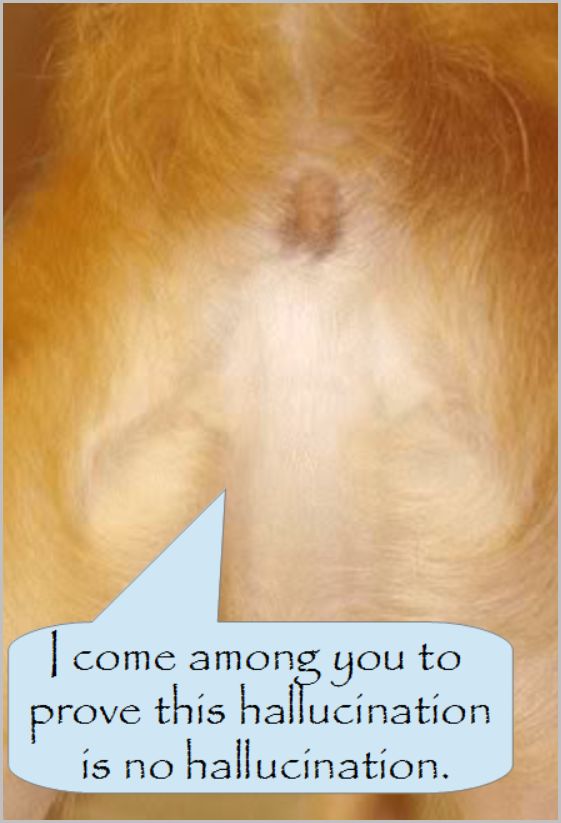
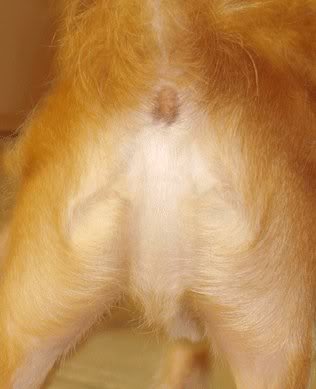
None, in fact, to anyone outside his own coterie, people who were already susceptible to ‘visions’ and psychologically primed to see him again – or to convince themselves they had, like the gullible people today who swear they’ve seen him in the clouds, in various food items or in the hallowed form of a dog’s bottom.

Keen amateur photographer Terry Buckman spotted the 'Face of God' in a cloud formation as he was taking pictures of boats sailing on the English Channel near Sandbanks in Poole, Dorset. Terry said that he was the clouds part and then suddenly the shape of the face appeared. *** Local Caption *** Disclaimer: While Cavendish Press (Manchester) Ltd uses its' best endeavours to establish the copyright and authenticity of all pictures supplied, it accepts no liability for any damage, loss or legal action caused by the use of images supplied. The publication of images is solely at your discretion.kit-katdog's bottom


My preciousss is mine (and mine alone)

bible3Christians have a monopoly on the Bible. No-one else should comment on it, criticise it or even quote from it. Or so Christians tell me. The reason for this, apparently, is that ‘it is absurd to contest the Bible when (you’re) missing the one main ingredient: Jesus’. Not so, of course; the Bible is there for anyone who wants to consider and ‘contest’ it. Granted one’s perspective will be coloured by how one regards it to begin with –

whether you approach it with a reasonable degree of objectivity or look at it through the myopia of faith;

whether you take what it says at face value or apply shifty exegesis to smooth out its many inconsistencies;

whether you acknowledge it was created over time by a succession of fallible men or assume it represents the accurately recorded words of God;

whether you regard it as beliefs of ancient tribesmen and religious fanatics or see it as the means of salvation and the ultimate guide to life.

It is only reasonable that those who take the first of each of these alternatives look to those who take the latter to see how closely they adhere to the demands the Bible makes of them. It’s reasonable because those who believe in its magical properties use it to tell the rest of us how wicked and/or lost we are and how much we need Jesus. If the Bible is the Word of God (as I’ve noted before, it doesn’t claim to be; it’s Christians who say it is), instructing believers on how to live their lives while spreading the gospel, it is not unreasonable for those of us on the receiving end of their ‘witness’ to take a look at how that works out. Not so well as it happens.

Now either this is the fault of the book – heaven forfend that it isn’t clear about what’s expected of God’s Chosen – or Christians themselves are to blame for failing to live as it expects. Unsurprisingly, it’s a combination of the two; a book of mixed messages in the hands of flawed human beings. When Christians refuse to acknowledge that the Bible is far from perfect they are faced with the challenge of making its impossible demands compatible with their own imperfections. They have a number of cop-out excuses that enable them to do this, several of which appear in the comments on this blog. I’ve discussed a number of them before, but here’s a quick summary:

Christians are not perfect and the Bible doesn’t say we should be (actually it does, in Matthew 5.48);

Others have no right to be critical of Christians when we’re doing our best;

You can’t use our own book against us when you don’t know Jesus (see above);

You’re a sinner so what do you know?;

You’re quoting out of context (and only Christians can do that);

You’re not applying the correct exegesis and/or hermeneutics (i.e. mine);

The Christians you’re criticising aren’t real Christians;

It is unfair to lump all Christians together.

Is it? Is it really unfair to lump all Christians together? Aren’t you all meant to be one body, the Body of Christ – you, the Pope, Westboro Baptists, the mega-churches and their celebrity pastors, Joyce Meyer, those who would stone gays, those who affirm gays, Franklin Graham, Alpha converts, abortion-clinic bombers, African witch-finders, Archbishop Sentamu, ‘Emergents’, those who belong to one of the thousands of other denominations and all your friends in your own little church? Who are you to say who’s saved and who isn’t? All Christians represent all other Christians, who represent Christ himself. The Bible says so in 1 Corinthians 12.12-26, Ephesians 4.14 -16 and elsewhere. Or did it get it wrong again?

The Embarrassment that is the Old Testament

bible2

When does the Old Testament count and when doesn’t it? When does what it says matter and when doesn’t it?

The answer to both questions is when Christians say so. It counts when something from it can be used to underline how wicked the rest of us are and when they think it’s pointing to the coming of Jesus, many years in its future. It doesn’t, of course, foretell of Jesus as such, despite its predictions of a coming Messiah and/or Son of Man. Jesus doesn’t fit its descriptions of either of these figures. Rather, Jesus’ story is read back into the older texts, their characters and events forced to serve typological and prophetic purposes for which they were never designed. The entire endeavour, which began very early in the development of Christianity, is entirely back to front, with the gospel writers, Paul and other New Testament authors pillaging older Jewish texts and forcing them to fit Jesus retrospectively (and often laughably.)

Regarding ancient Jewish texts as an Old Testament – that is, as representing a previous agreement/covenant between God and his people that has since been superseded – is a political, interpretive manoeuvre of the later religion. (While it’s true Jesus is made to speak of a new covenant, it is debatable how authentic his words are; rewriting the past is not only confined to the New Testament’s treatment of the Old.) This kind of slippery manoeuvring was also endorsed by those who later compiled the Bible as we now know it,* when they relegated the writings that Jesus and all the New Testament writers would have regarded as sacred Scripture to nothing more than a forerunner of the real thing.

Believers want to hang on, naturally, to Genesis, because that’s where it tells them God created everything using nothing but magic and breath from his holy lungs. It relates too how everything went pear-shaped after some mythical people ate some fruit. Noah’s ark is there too, which is a jolly good fantasy, apart from that weird bit at the end where Ken Ham gets an eyeful of his old man’s old man (Genesis 9.20-27). Christians are less keen on those Old Testament stories where God instructs the Israelites to massacre other tribes (1 Samuel 15.2-3; Deuteronomy 2.34 etc) and rape their women (Isaiah 13.15; Zechariah 14.1-2 etc) but nonetheless they’ll defend these unpleasant, barbaric stories just because they’re in the Bible. The Psalms are nicer, what with their words of comfort and paranoia, but best of all are the Old Testament pronouncements that can be used for clobbering sinners. Leviticus 20.13 – ‘If a man lies with a male as with a woman both of them have committed an abomination; they shall be put to death; their blood is upon them’ – is a particular favourite, as is the story of Sodom and Gomorrah for much the same reason. But when it comes to other diktats, Christians are less interested; rules about not eating shellfish or wearing clothes of mixed fabrics, they are quick to point, are entirely negated by the new covenant; they don’t count any more, even though they’re in the same list of largely petty rules as the homophobic one (Leviticus 11.10 & 20.9.)

So how do Christians decide which Old Testament laws are applicable and which are now inessential? There is no shortage of know-alls Christian scholars who make it up as they go along and can tell them. It’s easy you see; the old ‘ceremonial’ rules of the old covenant are now redundant while the moral precepts still stand. Needless to say, the Bible itself suggests no such thing, with Jesus saying precisely the opposite in Matthew 5.17-18 and Luke 16.17; evidently another of his strange ideas that can safely be ignored.

So how do we know which of the Old Testament’s prescriptions are ceremonial and which moral? The same self-appointed experts can tell us this too, though it’s actually easy to work it out for oneself. As a general rule of thumb, verses that condemn other people are still applicable while those that Christians themselves don’t care for are not. So the shellfish and mixed fabrics directives can be disregarded, because obviously they’re ceremonial, while the anti-gay stuff isn’t – obviously. And there’ll be no public stoning of wayward teenagers (Deuteronomy 21.18-21) because that’s obviously ceremonial too – and don’t even think of having sex with the slaves, not even ceremonially. These days, thank God, it’s considered so uncivilised (even if, in Numbers 31.17-18, Yahweh says it’s okay. )

The Old Testament then; an embarrassment Christians are compelled to defend as part of their magic book but which they nevertheless feel free to use selectively, according to taste. Not unlike the New Testament really.

*There are, we should note, several variations of the Bible within Christendom; God can’t seem to decide which books are or are not part of his Holy Word.

Hermeneutics = Sameoldtrics?

Paul&JCHermeneutic consistency is the means by which Christian apologists try to harmonise disparate parts of the Bible. Saddled with the premise that the Bible is the Word of God they need to demonstrate a consistency it doesn’t have because God, as its ultimate creator, could not possibly be the author of confusion (1 Corinthians 14.33). Consequently, they set about ironing out the Bible’s many discrepancies and contradictions to arrive at what they claim is a consistent and uniform Salvation Plan.

Unfortunately, this being an essentially dishonest enterprise, they have to pretend that New Testament authors with conflicting ideas about what it means to be a follower of Jesus are really saying the same thing. As I demonstrate in Jesus v Paul Round 2, there are vast differences between Paul’s good news and that ascribed to Jesus in the synoptic gospels. In the latter, Jesus is made to say that ‘righteousness’ can be cultivated in a measure-for-measure arrangement so that the extent to which a person forgives, gives to others and demonstrates compassion and mercy is mirrored exactly in how much God forgives, gives and shows mercy and compassion to that person in return. Paul on the other hand sees ‘salvation’ as being entirely undeserved. It is, rather, the result of God’s ‘grace’, which is given even though unmerited. According to Paul, showing compassion and mercy and offering forgiveness has no bearing on whether one is saved or not. These – Jesus’ path of righteousness and Paul’s unearned salvation – are two entirely different, and mutually exclusive, ‘ways to God’. Christians choose to remain blind to this fact.

They see no difference between the two ways to redemption because they are taught that Christianity is one grand scheme, woven, as it were, from a single piece of cloth. From this perspective, Jesus and Paul are simply drawing attention to different aspects of what is taken to be a consistent pattern. But this isn’t so; the New Testament is more like an untidy patchwork, a series of explanations by at least a dozen hands of what Jesus was about. Its most prominent voice is Paul’s (and those who pretend to be him); Christians prioritise Paul’s teaching over and above that of the synoptic gospels, which is markedly different, and interpret their ‘good news’ in the light of Paul’s mysticism. What doesn’t fit, they discard.

This has been a problem ever since the start of Christianity; the differences and disputes between Paul and the original disciples is well documented in the New Testament itself. Paul did not regard those who had walked and talked with Jesus as having a grasp of the true gospel (his) and was not reticent about saying what he thought of them. In Galatians 5.12, for example, Paul is so pissed off with the apostles he wishes they would accidentally castrate themselves.

Enter Luke, the original hermeneutic harmoniser. His Acts of the Apostles is designed to reconcile the radically different doctrines. By and large he succeeds, with most believers down the ages, perhaps because they haven’t wanted to, unable see the joins. But Acts doesn’t get Paul’s itinerary right, let alone his theology. The speeches Paul makes in Acts are not about the salvation through grace that concern him in his letters. They make concessions to other teaching – that of repentance and forgiveness (for example in Acts 13.38 and 17.30) while the real Paul makes no such compromise. There are no exhortations to repentance nor the promise of forgiveness in Paul’s own writing; there he mentions repentance only once, in a strikingly different context (Romans 2.4), and forgiveness not at all.

Moreover, Paul is adamant that he did not receive his doctrine from Peter or anyone else (Galatians 1.11-12). Instead he insists he got it direct from the Lord – i.e. through the hallucination he alludes to in Galatians 1.11-12 and 1 Corinthians 9.1 & 15.45 – which explains why it is so radically different from the original believers’. In Acts, however, Luke isn’t very happy with this – he’s trying to harmonise, after all – and has Paul meet Peter and James very soon after his conversion (Acts 9.26-30). Following some initial sheepishness, Luke implies, they all get on famously.

According to Paul, however, he and Peter didn’t meet for the first time until three years after Paul’s conversion (Galatians 1.18) and it was fourteen years later before he talked with a larger group of disciples (Galatians 2.1), when ‘the pillars of the church’ summoned him because of his wayward teaching. Paul records how he ‘rebuked’ Peter shortly after this (Galatians 2.11-13) because he objected to Peter’s interpretation of what was involved in following Jesus. In short, Paul and the apostles could not agree on what constituted belief in Jesus and what part Jewish law played.

Two questions result that Christians need to ask themselves, though invariably they don’t:

1. Where there are discrepancies between Paul’s theology and account of events, and Luke’s – written 15-20 years after Paul’s death – which is more likely to be correct?

2. Who is more likely to have the greater understanding of Jesus’ teaching: Paul who never met him but made it all up in his head, or Peter and the other disciples who spent years with him, listening to what he said?

In answer to the second, Christians down the ages have opted for Paul, the one who made it all up. His Salvation Plan is, after all, easier to buy into than Jesus’ mad idea of giving everything away and loving your enemies. Having chosen their man, it follows that the rest of the New Testament must be forced to comply with Paul’s ideas.

This is hermeneutics in the hands of Christians; an intellectually dishonest sleight of hand designed to bring everything into line with their interpretation of Paul’s idiosyncratic take on a man he never met. As for those who are unimpressed by their contortions, well, it must be that they have a faulty hermeneutic. Praise the Lord!

It’s Baby Jesus time again

Nativity2It’s that time of year again, when we’re expected to worship the baby Jesus and thank God for sending him. I do usually go to a church carol service with friends and sing along for nostalgic reasons, while marvelling at folk’s willingness to believe the fairy story. Plus, there’s always a drink or two afterwards to look forward to.

What would Jesus have made of it? The stories of his miraculous birth have been tacked on to the beginning of two of the gospels but even in Matthew and Luke there is no indication that he was aware of them. Neither he nor his mother mention them when it looks like aspersions are being cast on his legitimacy (eg: Mark 6.3; John 8.41). You’d think one or other would have done so as sure-fire proof that he was an emissary from God. In fact, apart from the two conflicting accounts in Matthew and Luke there are no other mentions of his spectacular nativity in the Bible; Paul, writing closest to Jesus’ lifetime, doesn’t refer to it even when he’s arguing in 1 Corinthians 15.42-52 that Jesus came from Heaven.

How do we account for this? The obvious answer is that the nativity narratives are much later inventions. We know they were not included in Matthew and Luke’s shared source material because the two are significantly different (as I discuss here). However, by the time these gospels were being compiled, in the 80s and 90s, such stories had begun to circulate – then as now, people liked origin stories for their super-heroes – and two such tales were incorporated into their accounts. The birth stories are invention, heavy with symbolism and designed to show that Jesus was not illegitimate but spawned by God in a supposed fulfilment of prophecy.

While the adult Jesus was a egotist who thought he was going to the end the system in which he lived (Matthew 24.34-35) and then rule the world with his mates (Matthew 19.28), he didn’t require that his followers worship him. It’s true that, like any other cult leader, he accepted others’ adulation when it was offered, especially when it was offered by women; one anoints him with expensive perfume in John 12.13, while another Mary – they were evidently short of female names back then – fawns over him in Luke 10.41-42. However, he doesn’t make it part of his mission to demand the worship of others. When early Christians started to think of Jesus as a supernatural-being worthy of adulation, they devised statements about how marvellous he was (Colossians 1.15-20 may be one such) but worshipping him through song does not appear to have been part of their agenda.

Modern Christians’ use of hymns and songs to tell Jesus how much they love him is, then, alien to the faith as it was originally practised, and to Jesus himself. The carols that’ll be sung this Christmas have no equivalent in Jesus’ life nor in that of his earliest followers. Even if he were hanging around in Heaven somewhere, which of course he isn’t, the last thing he’d want to be subjected to would be some badly sung Victorian carols telling him what a great guy he is. He was in no doubt about that when he was alive.

Sin Nevermore

Second

Remember the old hit Spirit in the Sky? It had the line, ‘never been a sinner, I never sin, ‘cos I got a friend in Jesus’. It doesn’t seem likely, does it? I don’t mean that Norman Greenbaum, who wrote the song, never sinned (he was Jewish, not a Christian) but that friends of Jesus are entirely sin-free. The idea that Christians never sin would be preposterous.

But actually, it’s true; Christians never sin. How do we know? Because the Bible tells us so. 1 John 3.6 says,

No one who abides in Christ sins; no one who sins has either seen him or known him.

And just in case we miss the point, the writer of the letter (almost certainly not the same John who wrote the gospel, nor the John who came up with the trippy Revelation) repeats it in verse 9:

Those who have been born of God do not sin, because God’s seed abides in them; they cannot sin, because they have been born of God.

Christians love to say that awkward bits of scripture like these have been taken out of context, so please feel free to read them in context – you’ll find they say exactly the same thing. What John is claiming – without a glimmer of irony – is that anyone who really knows God/Christ ‘cannot sin’.

So next time you see Christians shooting people at family planning clinics, committing adultery, lying or even just judging others, remember they’re not really sinning. Yes, they may be behaving immorally, uncharitably or despicably but they are most definitely not sinning. That would be impossible because they’re incapable of it.

However, Christians are all too aware that they sin (that’s their choice of word, by the way; I’d prefer to say they sometimes – often – behave as badly as those of us who are not ‘saved’.) So where does this leave us or, more importantly, them? How do they square their capacity for sin with what the Bible says here? Does their behaviour demonstrate that God’s Word has it wrong? Or are they not really Christians, not really people who ‘abide in Christ’, not really born of God?

What a dilemma. Either the Word of God™ is wrong here, like it is in so many other places, or Christians are not as saved as they like to think they are. Perhaps it’s both.

Definitely it’s both.


Loose Threads

FamilyPick a thread. Any thread. And start pulling. Gently does it, no need for force. A gentle pull on any of the loose ends of faith and the whole fabric will come apart quickly.

Here, pull on this one marked ‘the infallibility of the Bible‘. See how easily it comes loose as soon as you realise that most of it, Old and New Testament alike, was written long after the events it purports to describe, some of it by imposters and forgers.

Or this one – the salvation thread, much of it stitched into place by an excitable chap prone to hallucinations. Pull it and see how its pattern is nothing like the one proposed by the man it claims to be about.

Pull the magic threads, the ones about Gods, supernatural beings, heaven and hell, eternal life. Watch them disintegrate in your fingers once they’re teased out into the real world.

Take hold of the threads about Resurrections, Second Comings, Raptures and Judgements; so fragile, these break away as soon as they’re touched. The only miracle is that they’ve lasted this long.

Then there’s the promises threads, about how believers are going to do fantastic miracles and heal the sick and raise the dead. Imaginative and colourful, these have never really fitted in.

Then there’s the prayer threads, whose embroidery tells us how prayer works, how God will give us whatever we ask for. Downright embarrassing, these – yank ’em out.

And how about the strands that those who say they love the cloth pick out themselves and throw away? You know the ones; the threads which tell them how to live their lives that they just don’t like the look of and think spoil the overall effect. These have definitely got to go.

What about the threads that weren’t originally there – the ones about ‘defending God’s standards‘ and having a ‘relationship‘ with a dead person? These grubby, greasy threads have been added in to replace the ones those who love the cloth have pulled out for themselves.

Choose any number of other threads – the ones that clash with other bits of the pattern, the ugly brutal ones, the fantastic, the ignorant – and give them a tug. Oh, look. They come away too.

And before you know it, the entire fabric has come apart in your hands. All that’s left is a pile of worthless, brittle threads, good for nothing but throwing in the bin.

Our Operators are Waiting to Hear from You!

ApostlesHi! You’ve reached the Salvation Hotline. Calls may be recorded for training purposes. All offers are validated by our six day guarantee.* Please listen carefully to your options:

Press 1 for Matthew. With one of our less popular offers (but don’t let that put you off!) Matthew is waiting to explain our buy-one-get-one-free offer! Keep the Jewish law and be saved, plus, forgive others and be forgiven yourself!

Press 2 for John who will tell you how you can get your very own get-out-of-Hell just by believing! Eternal life awaits!

Press 3 for Luke. Luke wants to let you know you how you can be saved simply by asking for forgiveness. Note: this offer cannot be used in conjunction with any other.

Press 4 for Luke’s bargain Family Ticket! Only one family member need sign up and the rest go free!

Press 5 for Paul and to hear about a unique special offer! ‘God’s grace’ can save you without you making any real effort on your part! Not to be missed.

Press 6 for Paul’s great alternative offer: get saved for free! No need to do anything! (Offer good for Jews only. Terms and conditions apply.)

Press 7 for a special operator who passes himself off as Paul but isn’t. And he has a great offer for our female callers! He’ll tell you about how, just by having babies, you can be saved! It really doesn’t get any better than this, ladies! Get saved just by doing what comes naturally!

Press 8 for a very special guy of ours who wants to stay anonymous! But he will show you how you can escape death by buying into Jesus’ cosmic defeat of evil!

Press 9 for James who will tell you how you need to do good if you want to be saved. So, okay, Paul doesn’t think so, but we want to make sure you hear all our offers!

Please note: these offers are mutually incompatible so you might just want to hang up now and forget all about them.

*Our guarantee isn’t worth the paper it’s written on but for legal reasons, here it is anyway:
Press 1: Matthew 5.17-19 & 6.14.
Press 2: John 5.24.
Press 3: Acts 2.36-38.
Press 4: Acts 16.30-31.
Press 5: Romans 10.5; Ephesians 2.8.
Press 6: Romans 11.26-27.
Press 7: 1 Timothy 2.15.
Press 8: Hebrews 2.14-15.
Press 9: James 2.14-17, 24