
 4. Atheism offers genuine morality
Having no magic book to tell them how to behave (not that Christians derive their morals from theirs) atheists work out their own morality. They don’t do this in a vacuum, however, recognising that morality is culturally derived, evolving as the means by which primates with complex social arrangements relate to one another. It’s likely they adhere to their moral codes imperfectly, as do believers of various stripes. Not having an ideology they feel compelled to impose on others, they don’t regard their fellow human beings as mere conversion fodder. The atheists’ world is big enough to embrace all, though they lament the damage wreaked on it by religion. Atheist terrorists are a much rarer breed than their religious counterparts, while secular societies are among the most peaceful and prosperous in the world today (with the more religious generally at the opposite end of the spectrum.) Nor do atheists attribute their behaviour to supernatural forces; neither god nor the devil inspires them to act. Rather they recognise and take personal responsibility for what they do.
5. Atheism offers authenticity
An atheist is free to be him or herself. There is no striving to maintain the imagined standards of an imaginary god, no need to represent the perspective of a ‘sacred’ book or to defend the indefensible. The atheist does not see themselves or other people as lost, worthless, sinners, suppressors of truth, goy, infidels or any of the other disparaging terms used of non-believers in so-called holy books. The atheist can be a free-spirit, possessed of self-respect, and true to themselves and their nature, whatever that may be. Here’s how pastor-turned-atheist Ryan Bell put it in a recent blog post:
I don’t have secrets anymore, which is a huge mental and moral relief. I also wrestle with less cognitive dissonance than ever. All of this means I’m more at peace and more comfortable in my own skin. I give far fewer fucks about what people think of me and my decisions. My ire is raised, from time to time, by unfair attacks, and I will probably always struggle with my tendency to be a people pleaser, but I am in recovery. I’m learning to tell the truth on a more regular basis and trust that people can handle the truth (whether they actually can or not). I’m learning to trust myself and what I know while remaining open to critique and able to say I was wrong.
6. Atheism offers free thought
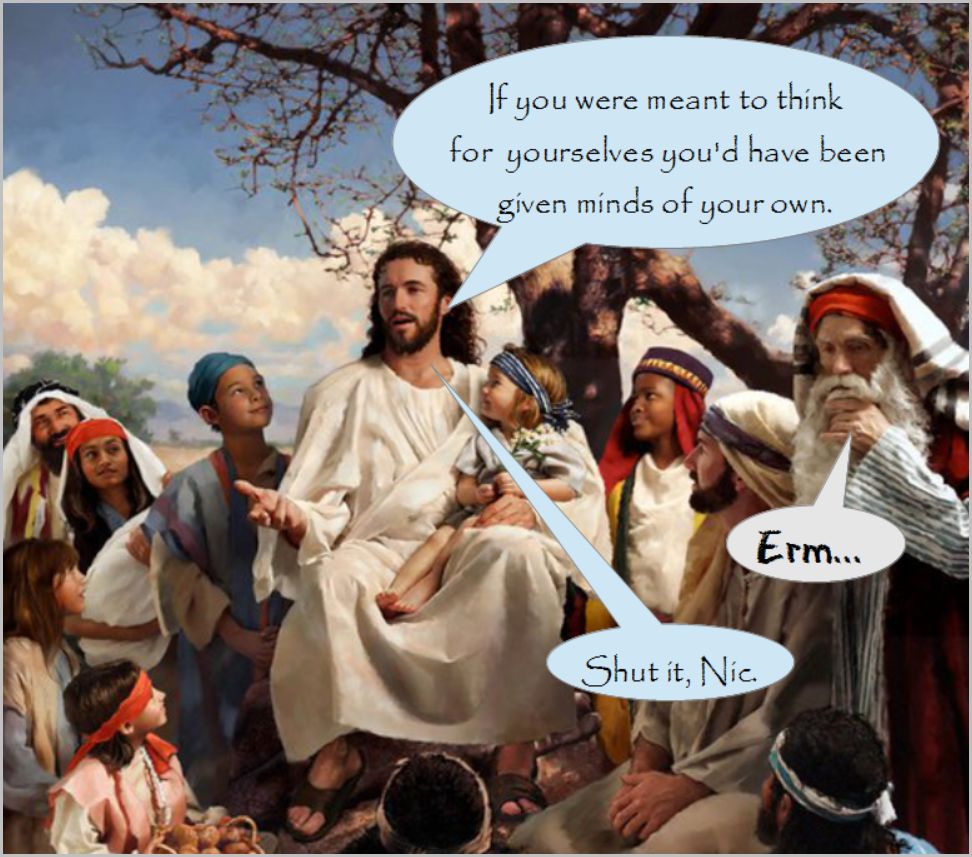
Having no dogma to represent or promulgate, no myths to restrict them and no cult leaders, shaman or gurus dictating to them, atheists are free to think for themselves. Religion demands that its adherents begin with myth or dogma, which the facts are then forced to fit. When they don’t, which is invariably the case, the believer is compelled to dismiss the facts to preserve the fantasy (if you think not, you’ve never visited Answers In Genesis). The atheist, on the other hand, can begin with the evidence and reason from it to make up their own mind about ethics, the issues of the day and the human condition.
to be continued…



 rejectingjesus,