The Walking Dead

Let’s take a look at another of the stories from the gospels. This time the miraculous rising from the dead of ‘saints’ at the time of Jesus’ death (or maybe at the time of his resurrection…): 

And Jesus cried out again with a loud voice, and yielded up His spirit. And behold, the veil of the temple was torn in two from top to bottom; and the earth shook and the rocks were split. The tombs were opened, and many bodies of the saints who had fallen asleep were raised; and coming out of the tombs after His resurrection they entered the holy city and appeared to many (Matthew 27:51-53).

Yes, it’s another case of Matthew making up a story from bits of Jewish scripture. We know it’s made up not only because of its fantastical nature, but because no-one else thought to record it; no eye-witness, no Roman official, no Jewish priest, no writer of Q. Not Paul, who says Jesus was the first to be resurrected; not even Mark, who doesn’t include it and therefore probably didn’t know of it; nor Luke, who omits it when he copies chunks of Matthew; nor John, who invents his own raising-the-dead story, the one about Lazarus.

So where does Matthew find his inspiration? There are many verses in Jewish scripture that declare YHWH will resurrect his people; Ezekiel 37: 12-14 for example:

Therefore prophesy and say to them: ‘This is what the Sovereign Lord (YHWH) says: My people, I am going to open your graves and bring you up from them; I will bring you back to the land of Israel. Then you, my people, will know that I am the Lord, when I open your graves and bring you up from them. I will put my Spirit in you and you will live, and I will settle you in your own land. Then you will know that I the Lord have spoken, and I have done it, declares the Lord.’”

And Isaiah 26:19:

But your dead will live, Lord; their bodies will rise – let those who dwell in the dust wake up and shout for joy!

Matthew ignores the fact that ‘prophecies’ like this are about the revival of the Jewish nation. He rips them out of context and creates his bizarre, Jesus-related story from them. Bizarre not only because of resurrected dead bodies, but because he has the tombs crack open as Jesus dies, only for the revived occupants to wait more than 36 hours to emerge from them. The poor buggers lie around in their tombs, alive again for a day and a half before they make it out into the outside world (Some scholars think the delay is an interpolation introduced by a later scribe who didn’t want the dead guys getting ahead of Jesus.)

Of course, the story is symbolic. It didn’t happen (though there are those who insist that it did); Matthew invented it, like most of his gospel. It’s another literary recreation of ‘prophecies’ from scripture, intended this time to show that Jesus was the Promised One who was about to bring about the great resurrection of the dead. The verses in their original context say nothing of the sort, of course. There’s no verse in the Jewish scriptures that does (though no doubt there are those who believe there is.)

So, yet another story, yet another symbolic fantasy. We could play this game endlessly: name the gospel story – the resurrection included – and it can be shown to have been created around lines lifted out of context from the Jewish scriptures.


,


This time it’s personal

Desperately searching for another reason to dismiss recent critiques of Christianity, Don has suggested that my views and those of commenters here are somehow invalid because they’re ‘personal’. (I declined to publish Don’s latest comment in which he elaborated on this theme; not only was he already on enforced rest but he also decided to have a rant about ‘sexual depravity’. This would appear to have been directed  at my own happy same-sex relationship, as well as all other forms of consensual sex that God Don disapproves of.)

So what’s wrong with ‘personal’? My faith, when I had it was personal. I’d prayed the sinner’s prayer in which I confessed I was a sinner and I received Jesus into my heart (or so I thought) and began to live my life in accordance with what he required of me. This personal relationship with Jesus, as it was usually described in evangelical circles, was reinforced by the preaching I heard in church, by prayer meetings and Bible studies, by the devotional books I read, C. S. Lewis’s writing and the notes I used alongside my personal Bible reading.

I’ve written before how I abandoned all of this when, in a time of crisis, God wasn’t there, and I eventually came to realise, in what I can only describe as a moment of personal revelation, that this was because he didn’t exist.

I then set about discovering what it was I had believed for the previous 30 years; what were these beliefs that had shaped my life, determining what I did, who I married, my morality, my sense of guilt and failure… essentially all that I was. That quest, which began with my broadening my reading well beyond the bounds of devotional Christian books (how treacherous I felt when I first picked them up!) was personal. It was fuelled by the reaction of some Christian friends who attacked me personally when, still later, I came out not only as an atheist but as gay too. My dealings with one particular zealous and homophobic friend led to my first book and ultimately, over 12 years ago, to this blog.

RejectingJesus is a personal working out of my love-hate relationship with Christianity. It is, I hope, informed by my reading but it is first and foremost personal. The posts are my analysis of Christianity as it is practised and my own dissection of the Bible. I’m not a historian nor a theologian (thank god); my Masters is in English Literary Research and it is these skills, together with my knowledge of the Bible from my Christian days, that I apply in my sometimes irreverent analyses. Nothing is sacred, though I’m aware of the importance of providing evidence for my claims and, where relevant, in citing appropriate sources, which is why I provide links and reference relevant verses from the Bible. Perversely, Don also accuses me of being in thrall to the scholars I cite; the opposite of his complaint that posts are ‘personal’.

Do I then, as Don implies, try to discredit the Bible because I’m gay? Am I, as Don suggests, motivated by the ‘constraints’ the Bible places on my sexuality? I don’t believe so. Once I recognised that God didn’t exist, it followed that he could not have any opinion about homosexuality or indeed anything else. Like any other fictional character, his views were created by those who presumed to speak for him: ‘I am so mysterious and my ways unknowable. Oh, but by the way, I really don’t like those depraved gays. Feel at liberty to stone them.’ God’s self-appointed homophobes have to be challenged because of the damage they do.

Am I as an atheist predisposed to being critical of both faith and the Bible, as Christian readers sometimes say? Undoubtedly, but I’m no more predisposed than as a Christian I was predisposed to see God everywhere. As Nan put it in a recent comment:

Any individual who allows him/herself to put aside the centuries-long teachings of Christianity … and read the scriptures without bias and/or preconception … cannot fail to see the multitude of inconsistencies.

Nor can they fail to see the Bible’s flights of fancy, its reliance on dreams and visions, its make-believe and pretend fulfilment of prophecy, its forgeries and false promises, its disconnect from reality and magical thinking, its supernaturalism and sheer cultishness. Critically evaluating scriptures at face value, without making excuses for them or trying to guessing what the original writers might have ‘intended’ or deciding that unpalatable parts are ‘really’ symbolic/metaphorical is, however ‘personal’, by far the more honest approach.

To insinuate with a personal slur that having ‘personal’ reasons for criticising Christianity is a weak ad hominem. It does not address the arguments in question nor the issues at hand. Anyone who wants to demonstrate that what I say about the Bible, Christian belief and practice is wrong needs to provide evidence of their own. Insult, screeds of Bible quotation and ‘a legion of “work arounds”’ (Nan again) is not how to go about it.


The Return of the Annual Christmas Quiz!

Back, due to popular demand! The annual Christmas quiz, last seen in 2014. Ten questions on Biblical trivia. Answers at the bottom of the page.

Good luck. You’ll need it.

1. Where did Mary and Joseph live prior to Jesus’ birth?

a) Bethlehem

b) Nazareth

c) Galilee

2. How did Mary conceive?

a) By the power of the Holy Spirit

b) She didn’t. It’s a story.

c) How’d you think?

3. What was the relationship between John the Baptist and Jesus?

a) They were second cousins

b) They didn’t know each other and didn’t meet until they were adults

c) Jesus originally belonged to John’s baptism cult

4, When was Jesus born?

a) When Herod I was alive

b) After Herod had died and Quirinius was governor of Syria

c) Perhaps he wasn’t

5. How did Mary end up giving birth in Bethlehem?

a) There’s no evidence she gave birth in Bethlehem

b) She and Joseph had to go there because of the Roman census

c) She lived there anyway

6. The Lord tells Mary to call her child

a) Jesus

b) Immanuel

c) Yeshua

7. Where did the family go following the birth?

a) They went home to their house in Bethlehem

b) Egypt

c) Nazareth

8. Who preserved the songs of Zechariah, Mary and Simeon (Luke 1 & 2)?

a) They were preserved orally word-for-word for 50 years

b) They were recorded in Q

c) They were created in their entirety by Luke, based loosely on Jewish scriptures

9. Where is the prophecy, quoted by Matthew (2:23), that Jesus would be called a Nazarene?

a) Micah

b) Isaiah

c) Nowhere: there is no such prophecy in Jewish scriptures or anywhere else

10. Which is the most unbelievable part of the nativity stories of Matthew and Luke?

a) a host of singing angels hovering in the sky

b) the wand’rin’ star

c) a virgin giving birth

d) Herod’s re-enactment of a story from Exodus

e) All the angelic visitations, dreams and visions that are needed to make the stories function

Answers:

1. Where did Mary and Joseph live prior to Jesus’ birth? All of the answers here are correct, so the Holy Bible say. According to Matthew, Mary & Joseph lived in Bethlehem. According to Luke they lived in Nazareth. According to Mark, it was known that Jesus hailed from Nazareth though he doesn’t say Jesus was born there. John refers to Jesus being from Galilee and acknowledges he comes from Nazareth (1:46).

Matthew and Luke insist Jesus was from Bethlehem to make him ‘fulfil’ the prophecy that the Messiah would come from there. Mark and John apparently don’t care.

2. How did Mary conceive? Matthew and Luke have the Holy Spirit do the deed. Matthew says merely that Mary ‘conceived by the Holy Spirit’, while Luke really goes to town with a ridiculous story involving an angel and Mary being orgasmic about the coming of the Lord. Mark hasn’t heard of either account, because neither had been invented, and fails to invent his own. John is only interested in Jesus as The Logos prior to his time on Earth. Actually, Jesus could only have been conceived by the only method we know that works: boy and girl hoochie-coochie.

3. What was the relationship between John the Baptist and Jesus? All are correct. Luke says Jesus and John were second cousins (1:36) and their mothers were close (1:56). The Gospel of John (1:31) says that John the Baptist didn’t know Jesus personally. Some scholars think Jesus was originally a member of John’s baptism cult.

4, When was Jesus born? a) and b) are both correct according to the gospels. Matthew places Jesus’ birth in Herod I’s reign, which ended when he died in 4BCE. Luke meanwhile dates it to Quirinius’ governorship of Syria, which was in 6 and 7CE. No wonder there are those who think Jesus may never have existed, so encrusted with myth and make-believe is he.

5. How did Mary end up giving birth in Bethlehem? The census is a contrivance to shift the birth to Bethlehem. There wasn’t a census of the kind described when Quirinius was governor of Syria, nor in 4BCE. Quirinius’ census was of property and would not have entailed the (mass) movement of people. Matthew seems to think M&J lived in Bethlehem all along. No-one else thinks so.

As the Bethlehem connection derives only from prophecy (Micah 5:2), it is likely Matthew and Luke located the birth there to show the ‘fulfilment’ of that prophecy. In other words, they invented it, as they do other ‘fulfilments’. It looks like a) is the only viable answer.

6. The Lord tells Mary to call her child… According to Matthew. Mary is meant to call the baby Immanuel, which, as the text helpfully informs us, means ‘God with us’. This is to make the story comply with Isaiah 7:14 which claims the Messiah will be called Immanuel. But Mary doesn’t call her baby Immanuel. She calls him Yeshua, meaning ‘God Saves’, which is not the same thing. How Matthew thinks this is a fulfilment of the Immanuel prophecy is anyone’s guess. When the gospels came to be written, Yeshua was rendered in Greek as Iesus and eventually in English as Jesus. Neither he nor his mother would have recognised this rendering.

7. Where did the family go following the birth? Again, all are correct according to the gospels. The family went on living in Bethlehem according to Matthew (2:7-11) but fled to Egypt according to Luke. Mark doesn’t appear to know either the Bethlehem or Egypt stories and refers only to Jesus coming from Nazareth.

8. Who preserved the songs of Zechariah, Mary and Simeon (Luke 1 & 2)? c) is correct. No oral tradition could possibly preserve the three carefully structured poems verbatim for 50 years. The hypothetical Q is conjectured to be a collection of Jesus’ sayings so the songs don’t come from there either. Luke or his community made them up.

9. Where is the prophecy, quoted by Matthew (2:23) that Jesus would be called a Nazarene? There is no such ‘prophecy’ anywhere in Jewish scripture nor in any extant writing: c) is correct once again.

10. Which is the most unbelievable part of the nativity stories of Matthew and Luke? That’s right. All of them are completely unbelievable.

How did you do? If you’re confused, don’t be. It’s the gospel writers who were. They made up stories about Jesus so that he complied with parts of Jewish scripture that seemed to them to be speaking of the Messiah. (John’s stories are a little different; they and Jesus’ tedious monologues were created to make him seem more like a Greek demi-god.)

Perhaps though I’m taking it all too literally, ‘like a fundamentalist’ as my self-appointed chief critic likes to say. I should perhaps accept it’s all just a metaphor, as he advises. Of course, when I do, he objects to that too; ‘A metaphor for what?’ he asks, forgetting he’s the one who believes the stories are ‘intended’ to be deeply meaningfully symbolic.

The muddled accounts arose as each gospel writers attempted to make an origin story for their hero based on scraps from Jewish scripture, Paul’s teaching and the emerging beliefs of their particular brand of the cult. They’d have got away with it too if some clever-dicks hadn’t decided, many decades later, to put their efforts side by side so their differences were laid bare for all to see: all the contradictions, inconsistencies, fallacies, anomalies and incompatible flights of fancy. Thank god the church kept their writings hidden away from most folks by preserving them in a language they couldn’t read.

That same critic will no doubt tell me I’m wrong again. ‘Everything happened as Matthew and Luke relate. There are no contradictions between them and the other two, Mark and John, had different priorities anyway.’ (See comments to this post here). He’ll tie himself in knots rather than admit the nativity stories are myth, as is everything that follows.

Have a happy Christmas, ya’ll. See you on the other side.

 

Jesus the No-Hoper

Jesus – Hope for the World declares the banner outside the church near where I live. I can’t help but wonder about the naivety of the people who came up with the slogan and what it means. What are the possibilities?

‘Peace on Earth, goodwill to all men’ (and maybe women)? If so, the world isn’t showing much of either, certainly none that can be attributed to Jesus and his fractured, fractious and frequently intolerant church.

How about inner peace then, even though that’s a long way from ‘hope for the world.‘ How many Christians exemplify this particular fruit of Spirit? Is this, in the end, all that Jesus offers: the hope of a nice fuzzy feeling inside? Of course, peace of mind can be spirit-generate, though personally I prefer wine. 

Hope of reconciliation with God then. Only if you believe in God in the first place, not to mention ‘sin‘, human sacrifice and magic. If this is the kind of hope Jesus represents, then really, what good is it? 

Possibly the hope of which the banner speaks is the hope the earliest Christians had, of Jesus coming back real soon to slaughter his enemies and set up the Kingdom with, naturally, themselves at the top of the pile? Hasn’t Jesus had two thousand years to deliver this hoped for outcome?  An idea well past its sell-by date, the Kingdom of God on Earth isn’t ever going to materialise, however much ‘hope’ people have.

Maybe, then, it’s a hope of eternal life. The gospel writers have Jesus make such a preposterous offer (e.g. John 10:27-28). If this is what Christians are hoping for they are sadly deluded, and, as Paul puts it, the most pitiable of all people (1 Cor 15:19). No human being outside of myth and comic books has ever lived forever. None ever will.

Hope of heaven? See above. Besides, the Bible really doesn’t offer a place in heaven to anyone. That’s a much later development. It’s a waste of this one and only life to live in the vain hope of something better after death. 

Maybe the hope referred to is hope in hope itself. How futile would that be? Hope is no substitute for food for the hungry, shelter for the destitute, treatment for the sick. 

When I go to the carol service at the church next weekend, I’m confident it will be made clear just what sort of hope Jesus offers the world. If not, I’ll be sure to ask. I’ll let you know.

Cruci-fiction

Given the birth, baptism and wilderness narratives are fiction, why not then the other parts of Mark and Matthew? We’ve already seen how the trial and crucifixion in Mark are literary creations, which Matthew lifts and embellishes. The resurrection stories are also invented, which is why the different accounts are confused and contradictory. The likelihood that everything between the beginning and the end – Jesus’ ‘ministry’, miracles and preaching – is invented too, either by the authors of the gospels themselves or by those who preceded them. My money would be on the former; the stories are so carefully arranged, forming an integral part of a clever literary construct.

I have a growing, sneaking admiration for what Mark and Matthew, and later Luke and John, achieved. They consciously set about creating myth. When Paul and others preached that their Christ had died and risen again ‘according to the scriptures’ that’s literally what they meant; the Christ was discernible in Jewish scripture, his story laid out there for those with eyes to see it. Mark tells us as much in Mark 4:9: ‘He who has ears to hear, let him hear.’

What he and, to an even greater extent, Matthew did, was construct a Saviour story from these elements. They saw him, or thought they did, all over the place. Whether or not there was an actual Jesus is beside the point. as is the extent to which the gospel writers may have used existing stories about him. Gospel Jesus is their imaginative creation from start to finish. His life, deeds and many of his sayings are put together by cutting and pasting scripture.

Cite any episode in Mark and Matthew’s gospels and it will have a precedent in scripture, either a prophecy (that invariably isn’t a prophecy) or episode (that was never about a future suffering Messiah) or character (usually legendary in their own right.) You can believe, as many True Believers do, that these ‘Old Testament’ episodes foreshadow the events of Jesus’ life. That he miraculously fulfilled prophecy through everything he did and said while here on Earth. Or you can take the view that doesn’t rely on faith in the miraculous, and recognise that he’s merely written that way. He’s the literary embodiment of scattered scraps of scripture.

On this much more realistic view, everything Jesus is made to do, particularly his miracles and crucifixion, is symbolic; a fictional enactment of scripture. Other aspects are drawn from Paul (the Last Supper/Eucharist, for example), claims of inner-visions (the resurrection) and early cult rules (behavioural expectations.) The events of Jesus’ earthly existence, as created by the gospel writers, have no historical basis; they didn’t really happen. I maintain that all of the gospel writers were fully cognisant of this as they created their respective symbolic lives for him.

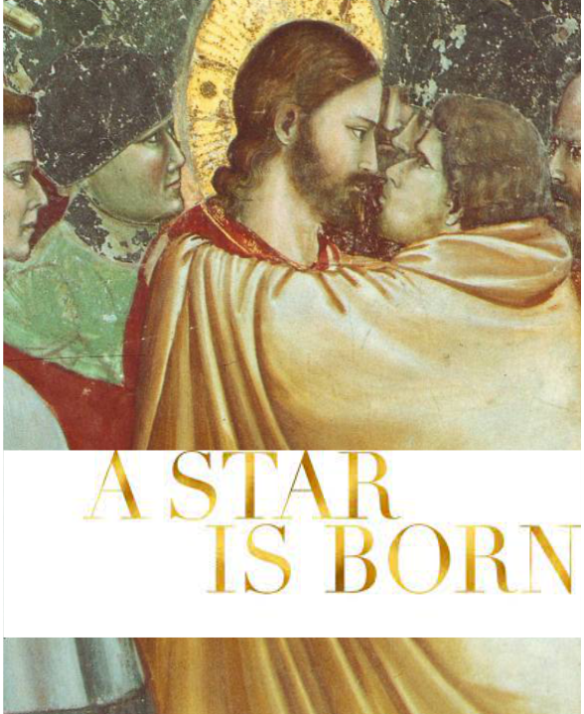
A Star Is Born

Did you know that the original, 1937 version of A Star Is Born may well have been based on a true story, first aired in an earlier, 1932 movie called What Price Hollywood? Yet every word of dialogue in the original Star Is Born was invented, all of its characters fictional, all of its scenes made up.

By the time of the 1954 remake, the female lead had gone from being an aspiring actress to an aspiring singer, played by Judy Garland, looking for her big break. Her mentor is still the addictive personality of the original film but this time he’s a has-been singer, not an actor, and crucially he doesn’t commit suicide before the film’s end (apologies for the spoiler.) Practically everything about this remake – its dialogue, characters, songs (songs? Where’d they come from?) settings and scenes – is different and, once again, is completely made up.

In the Barbra Streisand 1976 version, the female lead is once again a singer, her mentor a rock star whose career is on the slide. This film is about the perils of a rock’n’roll lifestyle and the passionate relationship between the two protagonists. It bears only the scantest relationship to its predecessors, never mind the original true-story that inspired the first film. Again, everything in it is pure invention.

Which brings us to the fourth version, starring Lady Gaga, that borrows a little something from all of the previous films. All the same, it alters the story, creating completely new scenarios, dialogue, songs and settings. It would be unrecognisable to the original audience of the first A Star Is Born, as different from that film as… well, as John’s gospel from Mark’s.

As the various versions of the film demonstrate, stories evolve. They are fluid and in their telling and retelling they change. Their creators adapt them and ‘improve’ them to meet the evolving tastes of their intended audience. They happily invent new episodes, new scenarios and new dialogue.

And so it is with the gospels: Mark’s original based on the visions of a few people from 40 or so years earlier; Matthew and Luke’s based on Mark’s – with their own largely invented additions – and John’s (the Lady Gaga of the set) a wild reimagining of all three. Apart from the outline of the story (which they get from Mark), every one freely adapts everything else: dialogue, scenarios, pericopes and, yes, songs.

We’ll look in detail next time at the evidence, still apparent in today’s versions of the gospels, at how we know this to be the case. 

The Oral Tradition

Where did stories about Jesus originate?

Memory and the Oral Tradition, part 2

The passing on of stories from memory is the ‘oral tradition’ that some argue preserved the words of Jesus more or less accurately for forty years. We’re expected to believe that eye-witnesses recalled in precise detail what Jesus said and did; that they all largely agreed on what this was; that none of them embellished or altered their recollections in any way in the telling and that they were passed on to convert after convert after convert in precise and unaltered form. And then, that no-one in forty years amended or refined the stories in any substantial way, because if they did the originators of the tales would be quick to point out any inaccuracies.

We know this isn’t what happened. The stories evolved and were refined and embellished as they were passed along for forty years between numerous converts. The defence that ancient largely illiterate cultures were better at faithfully preserving stories orally than we are today is a myth. (See EhrmanHow Jesus Became God: The Exaltation Of A Jewish Preacher from Galilee)

Even when some of the oral stories about Jesus were eventually written down, as in the gospels, they continued to evolve; Matthew and Luke both altered stories they took from Mark while John’s Jesus, in the latest of the canonical gospels, is a different creation altogether; either the source stories John knew had evolved quite differently from those Mark, Matthew and Luke had access to, or John created his Jesus out of whole cloth himself.

These stories once written down were changed again, both deliberately and accidentally, whenever the gospels were copied. We know this from the myriad of differences in the extant manuscripts. As Bart Ehrman puts it in Misquoting Jesus, there are more variations among our manuscripts than there are words in the New Testament’. The evolution continued. This is why the Jesus seminar concluded, controversially, that only 20% of the words attributed to Jesus in the gospels can be regarded as originating with him. I consider this to be over-generous. 

Even if the writers of Jesus stories took some of their material from the so-called oral tradition (aka, ‘stories that were being passed around’), we have no way of knowing which of it, if any, is an accurate representation of the things Jesus did and said. It’s unlikely much of it is, given how stories are misremembered, reshaped and altered over time. Their evolution makes them less reliable, not more.

By the way, you’ve not read the post I wrote on Cape Cod. Most of it was completed in Boston and I’ve edited and posted it from my home in the UK. In other words, it evolved in various locations. Kind of like the gospels.


The Evolution of Jesus II: from Life Giving Spirit to God the Son and beyond.

A couple of decades after the first visions of a risen Jesus, a Jewish zealot called Saul decided he’d seen him too. He came to imagine a vision he’d had in his head was this same Jesus, who then revealed to Saul – all entirely within his head as he admits – what his death and return from the dead really meant. Paul, as he renamed himself, announced that God had decided Jesus was a good man and returned him to life after his execution. In doing so, God made Jesus his Son (you can read all this poppycock in Romans 1:3-4). Jesus was now a life-giving spirit, the Saviour Christ: 1 Corinthians 15:45. (Maybe though Jesus always had been this; it’s kind of confusing, but in Philippians 2:6-8 Paul seems to think Jesus was some sort of quasi-divine being from the get-go. Take your pick. Whatever.)

Memetic selection ensured the survival and perpetuation of Paul’s bizarre idea, one that was, after all, not unfamiliar to the Hellenised people of the first century. The superstitious embraced and transmitted it without knowing a thing about any itinerant Jewish preacher. 

The next stage of Jesus’ evolution came twenty or so years later, when a believer we now know as Mark decided to write a back story for this Christ. He created his story using Jewish scripture, Paul’s ideas and the rules of the sect to which he belonged. Who knows if Mark believed Jesus had ever been a real person who trudged around Palestine preaching the good news about the end of everything, but in Mark’s story he had him do just that. He decided, crucially, that he wouldn’t have Jesus become God’s adopted son at the time of his spiritual resurrection. Instead, Mark had him become God’s son at his baptism (Mark 1.10-11).

This wasn’t quite good enough for the next two cultists who attempted a Jesus narrative. While they plagiarised much of Mark’s story, they changed details and made up more for Jesus to say and do. Importantly, where Mark had avoided suggesting Jesus’ resurrection appearances had occurred in the real world, Matthew and Luke showed no such reticence. Their Jesus(es) showed himself not in visions but in the flesh. It’s likely Matthew at least knew he was creating a symbolic, literary representation of others’ visions.

At the other end of the story, Matthew and Luke invented largely incompatible birth stories for their hero. For Matthew, Jesus was the Messiah from the time he was born, fulfilling all the prophecies Matthew borrowed to create his nativity story (he doesn’t: the Messiah, according to the very ‘prophecies’ Matthew manipulates is not divine but a human warrior).

Luke, on the other hand, is determined to push Jesus’ divinity even back further. For Luke, Jesus became divine when God magically made Mary pregnant; Luke’s Jesus is quite literally God’s son (Luke 1.35). Unfortunately, Mary forgot all about being impregnated by the Holy Semen Spirit later on in Luke’s ridiculous story. Nevertheless, Jesus’ status had evolved again; he’d become God’s son from the very moment of conception.

Even this was not good enough for the next version of the Jesus’ story. The writers of the fourth gospel decide to make him eternal and part of God himself. Plundering Greek philosophy and Paul’s ruminations from Philippians, they declare Jesus the ‘Logos’; the Word or aspect of God responsible for the creation of everything (John 1:1-5). And despite this being as far from an itinerant peasant preacher as it’s possible to be, even more gullible folk came to believe it.

Jesus’ evolution was still not complete, however. The council of Nicaea in 325 decided that Jesus was ‘begotten not made’ (whatever that means) – but couldn’t quite decide whether being the Logos and the Son of God actually made Jesus God Incarnate. It wasn’t until the Council of Constantinople in 381 that a collection of bishops decided Jesus was, after all, officially part of the Godhead. The apocalyptic preacher from the backwoods finally became God the Son, a mere 350 years after he lived (if indeed he did).

Jesus has continued to evolve ever since, becoming all things to all people; a God pliable enough to be whatever his followers want him to be: Roman Catholic, Greek Orthodox, Russian Orthodox, Evangelical, Mormon, fringe cult. He’s evolved into a schizophrenic deity capable of being both meek and mild and bellicose; best buddy and chief executioner; Christian Nationalist, socialist and capitalist, gay and anti-gay, pro-family and anti-family; anti-abortion and pro-gun; environmentalist and iconoclast; the one who promotes a prosperity gospel and the ‘One True God’ known (only) to a select few. Every contradictory manifestation is supported by the Bible, the Church or tradition. Every one is non-existent and ultimately pointless.

That’s some evolution.

Only The One Book

Some years ago I visited friends where another of their guests told me he had been reading a remarkable book. It was he said, about Atlantis and demonstrated beyond any doubt that the ancient city had really existed and had sunk beneath the ocean where it still waited to be found. I asked him how he knew this (a polite way of asking what his evidence was.) He looked at me incredulously. ‘Because the book says so,’ he explained.

It’s the same with all the claims made about Jesus: that he was the Saviour, the Messiah and the Son of God. All such claims are found only in one book written by people who already believed such things about him.

Outside of this book there’s nothing: no Roman records of his death and subsequent resurrection; no reports of post-resurrection visits by witnesses who weren’t already invested; no contemporary, independent accounts of his remarkable miracles; nothing from historians of the day about his return from the dead and subsequent ascent into the sky; no mention of him at all in any documentation for the first 80+ years of Christianity outside of this one book. The Son of God appears on Earth and nobody but a handful of superstitious zealots notice.

Not very convincing, is it? 

Is Jesus the Saviour, the Messiah and the Son of God?

Is Jesus the Saviour, the Messiah, and the Son of God?

No, no and no.

We know he’s not the Saviour because he hasn’t saved anyone. Every single person who has believed in him over the last 2,000 years has died and stayed dead. He hasn’t resurrected a single one of them and hasn’t ushered anyone into the heavenly mansion he (supposedly) said he was preparing for his Elect. Neither has he saved them from the trials of this life: illness, pain or suffering. His followers are no more saved from these than the rest of us.

Of course, Christians claim that what he saves people from is ‘sin’. But sin is an empty and peculiarly religious concept signifying the separation of ‘man’ from God. If there’s no God to be separated from there can be no sin. If, however, we’re talking about morals – ‘sinning’ – then it’s evident that believers are no more or less moral than anyone else. Jesus, it turns out, doesn’t save anyone from their own bad behaviour.

He’s not the Messiah (I’m resisting the temptation to add the Monty Python completion of that sentence) which is why most Jews do not believe in him. He doesn’t demonstrate any of the characteristics of the Messiah prophesied in Jewish scripture. He didn’t overturn the oppression his people endured under Roman rule and he hasn’t been there for the Jewish people in all their subsequent suffering. He certainly didn’t rescue them from the Holocaust. Only by redefining what is meant by ‘Messiah’, as early Christians did when they made the term synonymous with ‘saviour’, could Jesus even be considered a contender. In reality, he is an utter failure as a Messiah.

He’s not the Son of God. Even in the synoptic gospels he doesn’t claim to be; he’s cagey whenever the subject arises. It’s as if his early followers couldn’t make up their minds about how divine he actually was. Later Christians were more emphatic, claiming that the resurrection demonstrated Jesus’ divinity. Paul, however, doesn’t think so, saying only that Jesus’ return from the dead elevated him to a favoured position in God’s hierarchy (Philippians 2:9). Even this is going too far when the evidence of Jesus’ physical resurrection is so poor; the gospel stories do not  qualify him for Sonship. Nor do his failed promises and prophecies; if he were the Son of God, he’d have known the appearance of Son of Man (he himself?), the last judgement, the Kingdom of God on Earth, the inversion of the social order and the meek inheriting the Earth would not happen when he said they would. Or indeed at all. He was ignorant about so much! What sort of Son of God was he, to get so much so wrong?

In fact, we can be certain Jesus was no more the Son of God than Alexander the Great was Son of Ammon-Zeus or Augustus the ‘Son of the Most Divine’. How? Because like Ammon-Zeus and ‘the Most Divine’, the likelihood YHWH exists is ridiculously low; so low it’s reasonable to conclude he doesn’t. And no God = no Son of God.

To be continued.