Jesus the No-Hoper

Jesus – Hope for the World declares the banner outside the church near where I live. I can’t help but wonder about the naivety of the people who came up with the slogan and what it means. What are the possibilities?

‘Peace on Earth, goodwill to all men’ (and maybe women)? If so, the world isn’t showing much of either, certainly none that can be attributed to Jesus and his fractured, fractious and frequently intolerant church.

How about inner peace then, even though that’s a long way from ‘hope for the world.‘ How many Christians exemplify this particular fruit of Spirit? Is this, in the end, all that Jesus offers: the hope of a nice fuzzy feeling inside? Of course, peace of mind can be spirit-generate, though personally I prefer wine. 

Hope of reconciliation with God then. Only if you believe in God in the first place, not to mention ‘sin‘, human sacrifice and magic. If this is the kind of hope Jesus represents, then really, what good is it? 

Possibly the hope of which the banner speaks is the hope the earliest Christians had, of Jesus coming back real soon to slaughter his enemies and set up the Kingdom with, naturally, themselves at the top of the pile? Hasn’t Jesus had two thousand years to deliver this hoped for outcome?  An idea well past its sell-by date, the Kingdom of God on Earth isn’t ever going to materialise, however much ‘hope’ people have.

Maybe, then, it’s a hope of eternal life. The gospel writers have Jesus make such a preposterous offer (e.g. John 10:27-28). If this is what Christians are hoping for they are sadly deluded, and, as Paul puts it, the most pitiable of all people (1 Cor 15:19). No human being outside of myth and comic books has ever lived forever. None ever will.

Hope of heaven? See above. Besides, the Bible really doesn’t offer a place in heaven to anyone. That’s a much later development. It’s a waste of this one and only life to live in the vain hope of something better after death. 

Maybe the hope referred to is hope in hope itself. How futile would that be? Hope is no substitute for food for the hungry, shelter for the destitute, treatment for the sick. 

When I go to the carol service at the church next weekend, I’m confident it will be made clear just what sort of hope Jesus offers the world. If not, I’ll be sure to ask. I’ll let you know.

Cruci-fiction

Given the birth, baptism and wilderness narratives are fiction, why not then the other parts of Mark and Matthew? We’ve already seen how the trial and crucifixion in Mark are literary creations, which Matthew lifts and embellishes. The resurrection stories are also invented, which is why the different accounts are confused and contradictory. The likelihood that everything between the beginning and the end – Jesus’ ‘ministry’, miracles and preaching – is invented too, either by the authors of the gospels themselves or by those who preceded them. My money would be on the former; the stories are so carefully arranged, forming an integral part of a clever literary construct.

I have a growing, sneaking admiration for what Mark and Matthew, and later Luke and John, achieved. They consciously set about creating myth. When Paul and others preached that their Christ had died and risen again ‘according to the scriptures’ that’s literally what they meant; the Christ was discernible in Jewish scripture, his story laid out there for those with eyes to see it. Mark tells us as much in Mark 4:9: ‘He who has ears to hear, let him hear.’

What he and, to an even greater extent, Matthew did, was construct a Saviour story from these elements. They saw him, or thought they did, all over the place. Whether or not there was an actual Jesus is beside the point. as is the extent to which the gospel writers may have used existing stories about him. Gospel Jesus is their imaginative creation from start to finish. His life, deeds and many of his sayings are put together by cutting and pasting scripture.

Cite any episode in Mark and Matthew’s gospels and it will have a precedent in scripture, either a prophecy (that invariably isn’t a prophecy) or episode (that was never about a future suffering Messiah) or character (usually legendary in their own right.) You can believe, as many True Believers do, that these ‘Old Testament’ episodes foreshadow the events of Jesus’ life. That he miraculously fulfilled prophecy through everything he did and said while here on Earth. Or you can take the view that doesn’t rely on faith in the miraculous, and recognise that he’s merely written that way. He’s the literary embodiment of scattered scraps of scripture.

On this much more realistic view, everything Jesus is made to do, particularly his miracles and crucifixion, is symbolic; a fictional enactment of scripture. Other aspects are drawn from Paul (the Last Supper/Eucharist, for example), claims of inner-visions (the resurrection) and early cult rules (behavioural expectations.) The events of Jesus’ earthly existence, as created by the gospel writers, have no historical basis; they didn’t really happen. I maintain that all of the gospel writers were fully cognisant of this as they created their respective symbolic lives for him.

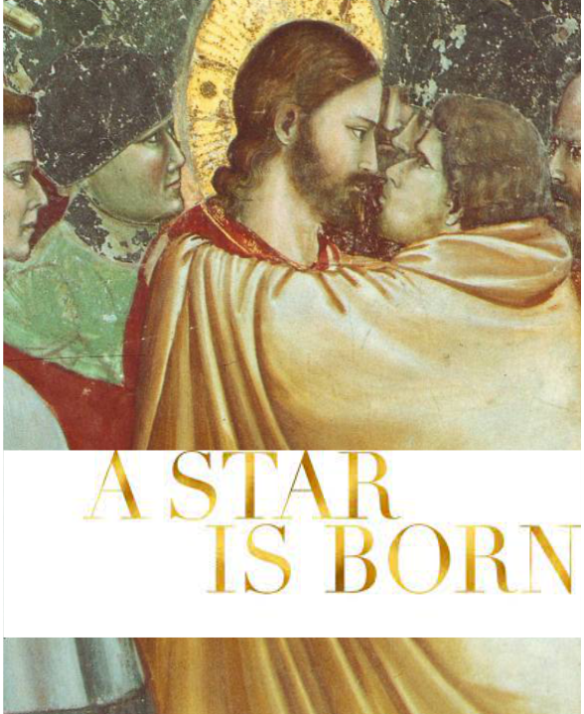
A Star Is Born

Did you know that the original, 1937 version of A Star Is Born may well have been based on a true story, first aired in an earlier, 1932 movie called What Price Hollywood? Yet every word of dialogue in the original Star Is Born was invented, all of its characters fictional, all of its scenes made up.

By the time of the 1954 remake, the female lead had gone from being an aspiring actress to an aspiring singer, played by Judy Garland, looking for her big break. Her mentor is still the addictive personality of the original film but this time he’s a has-been singer, not an actor, and crucially he doesn’t commit suicide before the film’s end (apologies for the spoiler.) Practically everything about this remake – its dialogue, characters, songs (songs? Where’d they come from?) settings and scenes – is different and, once again, is completely made up.

In the Barbra Streisand 1976 version, the female lead is once again a singer, her mentor a rock star whose career is on the slide. This film is about the perils of a rock’n’roll lifestyle and the passionate relationship between the two protagonists. It bears only the scantest relationship to its predecessors, never mind the original true-story that inspired the first film. Again, everything in it is pure invention.

Which brings us to the fourth version, starring Lady Gaga, that borrows a little something from all of the previous films. All the same, it alters the story, creating completely new scenarios, dialogue, songs and settings. It would be unrecognisable to the original audience of the first A Star Is Born, as different from that film as… well, as John’s gospel from Mark’s.

As the various versions of the film demonstrate, stories evolve. They are fluid and in their telling and retelling they change. Their creators adapt them and ‘improve’ them to meet the evolving tastes of their intended audience. They happily invent new episodes, new scenarios and new dialogue.

And so it is with the gospels: Mark’s original based on the visions of a few people from 40 or so years earlier; Matthew and Luke’s based on Mark’s – with their own largely invented additions – and John’s (the Lady Gaga of the set) a wild reimagining of all three. Apart from the outline of the story (which they get from Mark), every one freely adapts everything else: dialogue, scenarios, pericopes and, yes, songs.

We’ll look in detail next time at the evidence, still apparent in today’s versions of the gospels, at how we know this to be the case. 

The Oral Tradition

Where did stories about Jesus originate?

Memory and the Oral Tradition, part 2

The passing on of stories from memory is the ‘oral tradition’ that some argue preserved the words of Jesus more or less accurately for forty years. We’re expected to believe that eye-witnesses recalled in precise detail what Jesus said and did; that they all largely agreed on what this was; that none of them embellished or altered their recollections in any way in the telling and that they were passed on to convert after convert after convert in precise and unaltered form. And then, that no-one in forty years amended or refined the stories in any substantial way, because if they did the originators of the tales would be quick to point out any inaccuracies.

We know this isn’t what happened. The stories evolved and were refined and embellished as they were passed along for forty years between numerous converts. The defence that ancient largely illiterate cultures were better at faithfully preserving stories orally than we are today is a myth. (See EhrmanHow Jesus Became God: The Exaltation Of A Jewish Preacher from Galilee)

Even when some of the oral stories about Jesus were eventually written down, as in the gospels, they continued to evolve; Matthew and Luke both altered stories they took from Mark while John’s Jesus, in the latest of the canonical gospels, is a different creation altogether; either the source stories John knew had evolved quite differently from those Mark, Matthew and Luke had access to, or John created his Jesus out of whole cloth himself.

These stories once written down were changed again, both deliberately and accidentally, whenever the gospels were copied. We know this from the myriad of differences in the extant manuscripts. As Bart Ehrman puts it in Misquoting Jesus, there are more variations among our manuscripts than there are words in the New Testament’. The evolution continued. This is why the Jesus seminar concluded, controversially, that only 20% of the words attributed to Jesus in the gospels can be regarded as originating with him. I consider this to be over-generous. 

Even if the writers of Jesus stories took some of their material from the so-called oral tradition (aka, ‘stories that were being passed around’), we have no way of knowing which of it, if any, is an accurate representation of the things Jesus did and said. It’s unlikely much of it is, given how stories are misremembered, reshaped and altered over time. Their evolution makes them less reliable, not more.

By the way, you’ve not read the post I wrote on Cape Cod. Most of it was completed in Boston and I’ve edited and posted it from my home in the UK. In other words, it evolved in various locations. Kind of like the gospels.


The Evolution of Jesus II: from Life Giving Spirit to God the Son and beyond.

A couple of decades after the first visions of a risen Jesus, a Jewish zealot called Saul decided he’d seen him too. He came to imagine a vision he’d had in his head was this same Jesus, who then revealed to Saul – all entirely within his head as he admits – what his death and return from the dead really meant. Paul, as he renamed himself, announced that God had decided Jesus was a good man and returned him to life after his execution. In doing so, God made Jesus his Son (you can read all this poppycock in Romans 1:3-4). Jesus was now a life-giving spirit, the Saviour Christ: 1 Corinthians 15:45. (Maybe though Jesus always had been this; it’s kind of confusing, but in Philippians 2:6-8 Paul seems to think Jesus was some sort of quasi-divine being from the get-go. Take your pick. Whatever.)

Memetic selection ensured the survival and perpetuation of Paul’s bizarre idea, one that was, after all, not unfamiliar to the Hellenised people of the first century. The superstitious embraced and transmitted it without knowing a thing about any itinerant Jewish preacher. 

The next stage of Jesus’ evolution came twenty or so years later, when a believer we now know as Mark decided to write a back story for this Christ. He created his story using Jewish scripture, Paul’s ideas and the rules of the sect to which he belonged. Who knows if Mark believed Jesus had ever been a real person who trudged around Palestine preaching the good news about the end of everything, but in Mark’s story he had him do just that. He decided, crucially, that he wouldn’t have Jesus become God’s adopted son at the time of his spiritual resurrection. Instead, Mark had him become God’s son at his baptism (Mark 1.10-11).

This wasn’t quite good enough for the next two cultists who attempted a Jesus narrative. While they plagiarised much of Mark’s story, they changed details and made up more for Jesus to say and do. Importantly, where Mark had avoided suggesting Jesus’ resurrection appearances had occurred in the real world, Matthew and Luke showed no such reticence. Their Jesus(es) showed himself not in visions but in the flesh. It’s likely Matthew at least knew he was creating a symbolic, literary representation of others’ visions.

At the other end of the story, Matthew and Luke invented largely incompatible birth stories for their hero. For Matthew, Jesus was the Messiah from the time he was born, fulfilling all the prophecies Matthew borrowed to create his nativity story (he doesn’t: the Messiah, according to the very ‘prophecies’ Matthew manipulates is not divine but a human warrior).

Luke, on the other hand, is determined to push Jesus’ divinity even back further. For Luke, Jesus became divine when God magically made Mary pregnant; Luke’s Jesus is quite literally God’s son (Luke 1.35). Unfortunately, Mary forgot all about being impregnated by the Holy Semen Spirit later on in Luke’s ridiculous story. Nevertheless, Jesus’ status had evolved again; he’d become God’s son from the very moment of conception.

Even this was not good enough for the next version of the Jesus’ story. The writers of the fourth gospel decide to make him eternal and part of God himself. Plundering Greek philosophy and Paul’s ruminations from Philippians, they declare Jesus the ‘Logos’; the Word or aspect of God responsible for the creation of everything (John 1:1-5). And despite this being as far from an itinerant peasant preacher as it’s possible to be, even more gullible folk came to believe it.

Jesus’ evolution was still not complete, however. The council of Nicaea in 325 decided that Jesus was ‘begotten not made’ (whatever that means) – but couldn’t quite decide whether being the Logos and the Son of God actually made Jesus God Incarnate. It wasn’t until the Council of Constantinople in 381 that a collection of bishops decided Jesus was, after all, officially part of the Godhead. The apocalyptic preacher from the backwoods finally became God the Son, a mere 350 years after he lived (if indeed he did).

Jesus has continued to evolve ever since, becoming all things to all people; a God pliable enough to be whatever his followers want him to be: Roman Catholic, Greek Orthodox, Russian Orthodox, Evangelical, Mormon, fringe cult. He’s evolved into a schizophrenic deity capable of being both meek and mild and bellicose; best buddy and chief executioner; Christian Nationalist, socialist and capitalist, gay and anti-gay, pro-family and anti-family; anti-abortion and pro-gun; environmentalist and iconoclast; the one who promotes a prosperity gospel and the ‘One True God’ known (only) to a select few. Every contradictory manifestation is supported by the Bible, the Church or tradition. Every one is non-existent and ultimately pointless.

That’s some evolution.

Only The One Book

Some years ago I visited friends where another of their guests told me he had been reading a remarkable book. It was he said, about Atlantis and demonstrated beyond any doubt that the ancient city had really existed and had sunk beneath the ocean where it still waited to be found. I asked him how he knew this (a polite way of asking what his evidence was.) He looked at me incredulously. ‘Because the book says so,’ he explained.

It’s the same with all the claims made about Jesus: that he was the Saviour, the Messiah and the Son of God. All such claims are found only in one book written by people who already believed such things about him.

Outside of this book there’s nothing: no Roman records of his death and subsequent resurrection; no reports of post-resurrection visits by witnesses who weren’t already invested; no contemporary, independent accounts of his remarkable miracles; nothing from historians of the day about his return from the dead and subsequent ascent into the sky; no mention of him at all in any documentation for the first 80+ years of Christianity outside of this one book. The Son of God appears on Earth and nobody but a handful of superstitious zealots notice.

Not very convincing, is it? 

Is Jesus the Saviour, the Messiah and the Son of God?

Is Jesus the Saviour, the Messiah, and the Son of God?

No, no and no.

We know he’s not the Saviour because he hasn’t saved anyone. Every single person who has believed in him over the last 2,000 years has died and stayed dead. He hasn’t resurrected a single one of them and hasn’t ushered anyone into the heavenly mansion he (supposedly) said he was preparing for his Elect. Neither has he saved them from the trials of this life: illness, pain or suffering. His followers are no more saved from these than the rest of us.

Of course, Christians claim that what he saves people from is ‘sin’. But sin is an empty and peculiarly religious concept signifying the separation of ‘man’ from God. If there’s no God to be separated from there can be no sin. If, however, we’re talking about morals – ‘sinning’ – then it’s evident that believers are no more or less moral than anyone else. Jesus, it turns out, doesn’t save anyone from their own bad behaviour.

He’s not the Messiah (I’m resisting the temptation to add the Monty Python completion of that sentence) which is why most Jews do not believe in him. He doesn’t demonstrate any of the characteristics of the Messiah prophesied in Jewish scripture. He didn’t overturn the oppression his people endured under Roman rule and he hasn’t been there for the Jewish people in all their subsequent suffering. He certainly didn’t rescue them from the Holocaust. Only by redefining what is meant by ‘Messiah’, as early Christians did when they made the term synonymous with ‘saviour’, could Jesus even be considered a contender. In reality, he is an utter failure as a Messiah.

He’s not the Son of God. Even in the synoptic gospels he doesn’t claim to be; he’s cagey whenever the subject arises. It’s as if his early followers couldn’t make up their minds about how divine he actually was. Later Christians were more emphatic, claiming that the resurrection demonstrated Jesus’ divinity. Paul, however, doesn’t think so, saying only that Jesus’ return from the dead elevated him to a favoured position in God’s hierarchy (Philippians 2:9). Even this is going too far when the evidence of Jesus’ physical resurrection is so poor; the gospel stories do not  qualify him for Sonship. Nor do his failed promises and prophecies; if he were the Son of God, he’d have known the appearance of Son of Man (he himself?), the last judgement, the Kingdom of God on Earth, the inversion of the social order and the meek inheriting the Earth would not happen when he said they would. Or indeed at all. He was ignorant about so much! What sort of Son of God was he, to get so much so wrong?

In fact, we can be certain Jesus was no more the Son of God than Alexander the Great was Son of Ammon-Zeus or Augustus the ‘Son of the Most Divine’. How? Because like Ammon-Zeus and ‘the Most Divine’, the likelihood YHWH exists is ridiculously low; so low it’s reasonable to conclude he doesn’t. And no God = no Son of God.

To be continued.

No True Christian


Why is it, I wonder, that every Christian I encounter thinks they are True Christians, while most others are not?

A recent survey in the States revealed that belief in God is in decline. Ken Ham of Answers In Genesis decided this is because:

We live in a day when the religion of secularism (naturalism)—with its belief that there is no God, morality is relative, my happiness is all that matters, and we’re simply the products of evolution—is taught as fact in public schools and through the media.

I suggested on Ken’s Facebook page that the reason more people are rejecting the idea of God might have a lot to do with Christians themselves; that Christians’ own public performance was a complete turn-off for many people. I meant by this the way evangelicals in particular:

  • align themselves with Christian Nationalism;
  • actively campaign to restrict LGBT+ rights (and in some cases to have gay people executed);
  • are obsessed with abortion;
  • disregard almost totally Jesus’ actual commands and instead –
  • waste their time online maligning atheists and other minority groups;
  • are downright unpleasant to those who don’t share their views.

Silly me! I was told by a real Christian called Tim Bodnar that Christians who behave like this are not real Christians (despite believing they are):

If we are to know fellow believers by their fruit (or as you say, “public performance”) – we then know that their fruits show them to not be the Christians they claim to be.  That’s why our relationship with Jesus Christ is a personal one.

When I pointed out to Tim that this was nothing more than the No True Scotsman fallacy, he told me – passively aggressively but oh so lovingly – that ‘it isn’t difficult to grasp’ what’s going on; Christians who aren’t real Christians are the same as people who impersonate police officers. In any case, he said, Jesus had it covered.

Maybe it’s a good thing Christians refuse to look to themselves to learn why others are increasingly rejecting their God and their beliefs. After all, if they were to make their worn-out old fantasies more attractive, more people might fall prey to them. ‘True’ Christians are to be applauded for discouraging, albeit unwittingly, belief in their non-existent God.

A Christian’s Circular Reasoning

Don asks:

Why is it not possible for people to see immaterial things? We see with the mind as much or more than with then eyes. If the mind can conceive of immaterial things we can see them. Often skeptics declare that what Paul saw was a hallucination. If so, he saw something that was not material. We all dream. When we do we see things that are not material. If there are immaterial beings such as spirits, why would it not be possible to see them?

Why is it not possible for people to see immaterial things? Because ‘immaterial things’ by their very nature cannot be seen. Moreover, in the sense you’re talking about – supernatural beings and places – there is no evidence they have independent existence outside the human imagination.

We see with the mind as much or more than with then eyes. The mind processes what the eyes see. Sometimes it produces, imagines, ‘sights’ for itself, as in hallucinations or dreams, but this doesn’t mean these sights are real. Indeed, they are not.

If the mind can conceive of immaterial things we can see them. You mean like ghosts, spirits from the Greek underworld and Norse gods? Of course you don’t,  though your argument applies equally to these. You mean only Christian immaterial things: heaven and hell, angels and demons and the risen Christ. This is merely special pleading.

Your assertion is patently untrue. It begs the question, ‘if the mind can conceive of ’immaterial things’ does this mean these things are real?’ To which the answer must always be ‘no’.

what Paul saw was a hallucination. If so, he saw something that was not material. Yes and yes. Paul hallucinated on more than one occasion, seeing figures and places that were not real. His seeing them did not make them real.

We all dream. When we do, we see things that are not material. A statement of the bleedin’ obvious, but yes, we all dream. Does this make what we see in those dreams real? Again, no.

If there are immaterial beings such as spirits…There aren’t. As you keep stating while failing to recognise it, they are merely figments of the imagination.

why would it not be possible to see them? Because as figments of the imagination, they don’t exist. Here’s where your ‘reasoning’ is entirely circular: the human mind can conceive of immaterial beings and places and these things can be ‘seen’ ((in dreams and hallucinations); because they can be seen they must be real. Therefore, we know they’re real because they can be seen. Can you not ‘see’ the absurdity of your position, Don?  

My 3+ year old granddaughter can distinguish between reality and figments of the imagination, fantasy and dreams. It is really is time you could too.

If The Resurrection Had Really Happened

Somehow this repost unposted itself after the first few comments. I’m reinstating it and will post something new soon

Don thinks I ‘exaggerate’ when I bring up what the New Testament says are supposed to be the direct consequences of the resurrection. As he seems to have no knowledge of the things Paul and others promised would follow, I offered to provide him with chapter and verse. The easiest way to do that is to republish this post, slightly amended, from 2018. (Alternatively, there’s this rather more flippant take on the subject.)

I’m willing to bet Don now tells me I don’t know how to interpret prophecy like an ancient Jew would, that the promises are really metaphors and despite being written for members of the nascent cult they’re really meant for people thousands of years in the future. 

The Christian faith rests entirely on the resurrection of Jesus. As Paul says in 1 Corinthians 15.17 & 19:

 …If Christ has not been raised, your faith is futile; you are still in your sins. Then those also who have fallen asleep in Christ are lost. If only for this life we have hope in Christ, we are of all people most to be pitied.

Of course neither Jesus nor Paul’s invention, the Christ, were raised from the dead; those encounters with him, described in the gospels are, like Paul’s, visions and sensations of his presence (later ‘the Holy Spirit’) embroidered in the 40 or more years between when they occurred and when they were recorded.

Let’s though, suppose that Jesus really did rise from the dead and work backwards from there. What difference did it make? More specifically, what does the bible say were the results and consequences of Jesus being raised?

The Coming of the Kingdom

According to the New Testament (Matthew 25.34; Romans 15.12; Revelation 20.4-6), the resurrection was a clear sign that the Final Judgement and Yahweh’s Kingdom was finally arriving on Earth. Jesus is made to predict it:

Was God’s wonderful reign established here on Earth back in the first century? Was there a final judgement then? Were all wrongs righted, the social order inverted, and war and suffering abolished (Mark 10.31; Matt 5.2-11; Rev 21.4)? New Testament writers believed that following the resurrection, all of this would be happening –

in reality, none of it happened; not then and not since.

The Resurrection of the Dead

Did Jesus’ resurrection result in even more people rising from the dead? Paul said it would; he said Jesus was the ‘first fruits’, meaning the first of many, with others following him in being raised from the dead (1 Corinthians 15.20-21). Has any ordinary person – anybody at all – ever returned from the dead, long after they passed away? Not one; never mind the hundreds or thousands Paul and other early cultists had in mind. No Pope, no shining example of Christian piety, no activist or worker in the Lord’s vineyard has ever been resurrected during Christianity’s entire history. The dead have always remained stubbornly dead.

So no, this didn’t happen either.

New Creatures

Did the resurrection result in those who believed becoming ‘new creatures’? Paul said it would (2 Corinthians 5.17). He also said members of the new cult would be loving, forgiving and non-judgemental (1 Cor 5.12 & 13.14). There’s no evidence, from his letters, that they were, nor is there evidence from the long and often cruel history of the church. Christians today don’t always radiate loving-kindness either. Those who are caring and gentle before they become Christians remain so; those who are self-gratifying, vindictive or exploitative find a new context in which to be so. As I’ve said before, religion is like excess alcohol; it exaggerates the essential characteristics of a person, for good or for bad.

What it doesn’t do is make shiny ‘new creatures’.

So, what conclusions can we draw from this? Perhaps that nothing went to plan in post-resurrection Christianity. The promised results all failed to materialise. If the effects of the resurrection were and are not what they should have been, what does this say about their supposed cause?

If a storm is forecast and yet, when the time comes, there is no rain, wind or damage, wouldn’t we say that there was no storm?

If a woman said she was pregnant but during the ensuing nine months there was no physical evidence of pregnancy and ultimately no baby, wouldn’t we say she wasn’t pregnant at all?

If God’s Kingdom on Earth, brand new creatures, the resurrection of ordinary believers and the final judgement failed to materialise, wouldn’t we say there can have been no resurrection? The supposed causal event of all these non-effects really can’t have happened. Jesus died and like all dead people stayed dead. The visions, dreams and imaginings of his early followers gave rise to a cult in his name, one that, ultimately failed on all levels to deliver what it promised.

There was no resurrection.