The Resurrection: Real or Imagined?

Did Paul see a physically resurrected man or did he hallucinate some sort of spirit? What does the bible say?

Paul describes his encounter with the risen Jesus in his letter to cultists in Galatia:

For I did not receive it (the gospel) from man, nor was I taught it, but it came through a revelation of Jesus Christ… God was pleased to reveal his Son in me… (Galatians 1.12 & 15)

‘Revelation, revealed, in me’: there’s no physically resurrected body here.

In his letter to the little community in Corinth, Paul tells us explicitly that Jesus was raised as a ‘life giving spirit’ (1 Corinthians 15.45). Whatever this means, this is how Paul experienced the risen Christ. Nowhere in his letters does he claim to have seen a man who has physically risen from the dead. Even in the legend created around Paul’s mystical revelations decades later, there’s no physical Jesus: a bright light and disembodied voice is what Luke comes up with.

Why does this matter? Well, for a start, Paul’s is the only first hand account of an encounter with the risen Jesus we have. And it was of an entirely ‘spiritual’ nature. Second, Paul assumes that those who ‘saw’ the risen Jesus had exactly the same sort of experience he did. He says in 1 Corinthians 15.5-8,

…(the Risen Jesus) appeared to Cephas, and then to the Twelve. After that, he appeared to more than five hundred of the brothers and sisters at the same time, most of whom are still living, though some have fallen asleep. Then he appeared to James, then to all the apostles, and last of all he appeared to me also, as to one abnormally born.

Paul makes no distinction between the way he experienced the risen Jesus, as a life giving Spirit, and the way these others did. His persistent use of ‘appeared to’ also underlines the mystical nature of these encounters; he doesn’t say Jesus ‘visited’ James or ‘spent time with’ Cephas or ‘chatted with’ the apostles over a fish supper (those legends would come later). There’s absolutely no human interaction here between these people and a real human being. No: instead, Paul says Jesus ‘appeared to’ them, as in ‘he was an apparition’.

The translation of the same passage in the King James version makes this obvious:

…he was seen of Cephas, then of the twelve: After that, he was seen of above five hundred brethren at once; of whom the greater part remain unto this present, but some are fallen asleep. After that, he was seen of James; then of all the apostles.  And last of all he was seen of me also, as of one born out of due time.

As for Paul, then, so for all these other sightings (we only have Paul’s word they actually took place.) They were apparitions, hallucinations, innervisions, emotional, spiritual experiences – call them what you will – ‘seen of’ others. They were not of a real man physically raised from the dead.

Why do some Christians find this so hard to accept? After all, this is much their own experience today. They may not hallucinate that Jesus is standing in front of them (assuming that’s what the ‘life giving spirit’ looked like to Paul and others) but they have an emotional experience at conversion that they credit to the presence, the spirit, of this long dead individual. If that’s how it is for converts today, why not for the original Christians? Why does there have to be physical resurrection at all?

Spoiler: there doesn’t and there wasn’t.


Jesus Sees Dead People

On his blog Escaping Christian Fundamentalism, Gary Matson has been considering the origin of resurrection belief, looking particularly at the possibility that sightings of the risen Jesus as recorded in the New Testament, were visions or hallucinations.

Naturally, his resident troll, FT Bond, recently banned from the site, objected to this suggestion, even though there is very good internal evidence that this is exactly how the belief in the resurrection arose. I felt compelled to raise the matter – no pun intended – of the occasion in the gospels where Jesus himself sees long dead people, apparently and inexplicably returned from the dead. In all three synoptic gospels Jesus chats with Moses and Elijah who appear in front of him. Mark 9.2-10 relates the story, usually referred to as the Transfiguration, as follows:

After six days Jesus took Peter, James and John with him and led them up a high mountain, where they were all alone. There he was transfigured before them. His clothes became dazzling white, whiter than anyone in the world could bleach them. And there appeared before them Elijah and Moses, who were talking with Jesus.

Peter said to Jesus, “Rabbi, it is good for us to be here. Let us put up three shelters – one for you, one for Moses and one for Elijah.”(He did not know what to say, they were so frightened.)

Then a cloud appeared and covered them, and a voice came from the cloud: “This is my Son, whom I love. Listen to him!” 

Suddenly, when they looked around, they no longer saw anyone with them except Jesus. As they were coming down the mountain, Jesus gave them orders not to tell anyone what they had seen until the Son of Man had risen from the dead. They kept the matter to themselves, discussing what “rising from the dead” meant.

So what is going on here? There are three options:

1. Moses and Elijah were actually ‘resurrected’ or otherwise miraculously returned from dead.

We can safely rule out this first possibility. Two men who had been dead for centuries did not suddenly return from the dead or even from their eternal repose in the bosom of Abraham for a cameo in the Jesus story. 

2. Moses and Elijah were a vision that Jesus and his three associates experienced simultaneously.

Jesus and the three disciples experiencing the same vision simultaneously is clear evidence of shared hallucinatory experiences in the gospels. Mark and Matthew (and possibly Luke) understand the story in this way, using the term ὤφθη (ophthe) meaning ‘appeared to’ or ‘appeared in front of’; ὤφθη usually conveys the sense of ‘apparition’: something that appears that has no physical presence: a vision. The synoptic gospel writers use it almost exclusively in this sense.

3. The event is an invented story. It didn’t happen in reality. There was no hallucination, no vision. It is a fiction devised to convey a symbolic point.

The symbolism is this: Moses and Elijah represent the Law and the Prophets, and in this episode are seen to give way to their superior: Jesus, God’s Chosen Son. He supersedes the old Jewish folk-heroes in every way. Most scholars, and even some conservative Christians, argue for such an interpretation. As symbolic fiction, however, the episode has little or no basis in reality.

Let’s now apply the same analysis of the options in terms of the resurrection stories:

1. Jesus really did come back to life after being dead for 36 hours.

There really is no evidence he did because a) we know this doesn’t happen and b) Paul, who wrote the only first-hand account we have of someone ‘seeing’ the risen Christ, admits it was an hallucinatory ‘revelation’.

2. The disciples had visions of the Risen Jesus similar to Paul’s and to those they are said to have in the Transfiguration story.

Significantly, both Paul and Matthew use the phrase ‘appeared to/in front of’ (ὤφθη, ophthe again) when describing sightings of the Risen Jesus. Luke does so on one occasion too. There is no distinction for the gospel writers, therefore, between the way they describe the vision of Moses and Elijah (ὤφθη, ophthe) and the way they describe Jesus ‘appearing in front of’ the disciples after his death (ὤφθη, ophthe). Moses and Elijah ‘appear to’ the disciples, then the Risen Jesus ‘appears to’ them in the same way. In this option, the Risen Jesus, like Moses and Elijah, are mere visions in people’s heads. 

3. The stories of the disciples resurrection visions are fiction: made up stories about visions, designed to convey a symbolic point. 

There is no reason to suppose that the stories of Jesus reappearing after his death are in any way different from the fiction that is the Transfiguration story. Matthew and Luke were both skilled in creating symbolic events to hammer home the significance of Jesus; the Moses/Elijah story is one such; the nativity, the temptation in the wilderness, voices from the sky, cursing of the fig tree, walking on water and healing of the blind are others. The resurrection belongs to the same category as these. It too is symbolic fiction with only a limited basis in reality. We know from Paul that some people had visions that they took to be the Risen Jesus. The resurrection narratives are the made-up stories invented to illustrate those visions.   

You pays your money, you takes your choice…


Omicron+Insanity

Who was it who said,Insanity is doing the same thing over and over again and expecting different results’? We don’t actually know. It’s often attributed to Einstein but it almost certainly isn’t, its first recorded use appearing in 1981, 26 years after Einstein died. Whoever it was though talked a lot of sense, as well as contributing a memorable meme to the world.

If only those who presently control our lives would heed it. They wouldn’t then be re-introducing the same restrictions they tried in 2020 and again in 2021 to prevent the spread of Covid. In the UK, the government has just announced that when secondary students return to school today they must wear face masks all the time, because obviously this stopped Covid infections last time round and will do so again. Except it didn’t stop them last time. If face masks worked, we wouldn’t now be in the position we are, with the rapid spread of the ultra-infectious Omicron variant. Face coverings did not prevent or even slow the spread of the original virus, nor the Delta variant; they are certainly not going to have any effect against Omicron. We know this from the countries that have had strict mask mandates in place for the last year. France has twice had almost as many infections in one day as England has had in total. The rest of the European Union has as many or more cases of Omicron than England, when England hasn’t, for the most part, forced its populace to wear face coverings. It makes no sense to impose them now on English school children. The government’s own Education Select Committee has ‘concerns’ about the measure. My sister and mother are conscientious mask wearers, yet during the holidays both have had heavy colds. Their masks did not prevent them from contracting a cold virus, quite possibly a Coronavirus (20% of colds are caused by Coronaviruses, the rest by other viruses.)

Non-pharmaceutical measures do not appear to prevent Covid infections; masks are of limited effectiveness and lockdowns merely defer the problem. Only vaccines reduce the virus’s potency and, even then, not for as long as we originally hoped. (Get the booster!) We have to learn to live with it, as we do with colds, flu and pneumonia. It is estimated that around 25,000 people a year die of flu in England and Wales, year on year. Over the last decade alone this adds up to far more deaths from flu (250,000) than deaths from Covid-19 in the last 2+ years (a contested 136,000), and far fewer than will die of the milder Omicron.

Yet we do not lockdown or wear masks because of flu. Of course the numbers for the milder Omicron are more concentrated and the fear is that cases will overwhelm health services (the same services successive governments have failed to reform.) However, according to the BMJ, 84% of hospitalisations are of the unvaccinated. If anyone is overwhelming the NHS it is people who have chosen not to have the vaccine; it is not reasonable that as a consequence, those who are vaccinated or who like, school children, are less susceptible to the virus, must have restrictions placed on them.

Of course the vulnerable and elderly must be able to isolate themselves and anyone should be free to wear face coverings if it makes them feel more comfortable. The rest of us must learn to get on with our lives alongside Covid-19 and its variants, just as we do with other respiratory diseases. They’re part of being human, after all. It is futile making us adopt the same measures that failed last time and the time before that and the time before that.

Insanity indeed.

The Sorceress and the Cursed Chide

There was once a powerful sorceress who cast her magical spells to the delight of her acolytes, not to mention those for whom she conjured gold from the air around her. The sorceress then turned her attention to other matters important to her and cast other spells over these. But not everyone was as enamoured with these spells as they had been with her earlier ones. Some said she was a misanthrope who should no longer be casting spells, especially ones they did not agree with. Her new spells, they said, were designed to hurt and harm others, and were spreading hate. (They said this because they didn’t know hate was a verb and not a noun.) They responded to the sorceress with incantations of their own: a Cancelorium Censorium curse that would see her immediately silenced and eventually withered away to nothing. They wished fulsomely for her to be banned from ever casting spells again. The sorceress said she did not intend harm to anyone but needed to preserve something of the old magic she believed in.

Some of her detractors then appealed to the self-appointed Ministry of Freedom and Truth (MOFT) who took up the case, protesting to Professors Bloomsbury and T. Witter, asking them to shut down the sorceress’ means of casting her spells. But these professors, especially Bloomsbury, were among those for whom the sorceress had created much gold from nothing and they were loathe to cancel her. So they did not.

The Ministry then appealed to the Council of Wizards to write new rules that would, in the twinkling of an eye, render the sorceress’ spells ‘black art’ and so forbid them from ever being uttered again, anywhere, on pain of imprisonment in Azerbaijan or even the deathly gallows themselves. But the Ministry had forgotten that the last time the Council had been given the power to regulate what others could say it had introduced the infamous Incantation 28 that had prevented anyone from even mentioning that left-handed witches and wizards existed. It was not wise to consider embarking on such a road again. Fortunately, the Council was preoccupied with magicking away a pestilence that was stalking the land and had no time for quarrelsome spats between well meaning, but offended defenders of Freedom and Truth and controversial conjurors.

So the sorceress continued to cast her spells, while others continued to object to her doing so. Still others helped her create even more gold by buying her latest books about a striking shambling eccentric who was just the same as the striking shambling eccentric in her earlier books of wizardry and witchcraft. There was also a volume about an anthropomorphised farm animal that did rather well too, though some deemed it hateful to those who held such animals in low regard. Little wonder the sorceress shrugged her shoulders and set to creating another spell that, she had no doubt, would offend someone somewhere.


Enough frivolity. Where do I stand on these matters? As a trustee of an LGBT+  organisation, I am actively involved in the support of trans as well as gay, lesbian and questioning people. While I don’t necessarily agree with J. K. Rowling’s views on trans issues that she expresses on Twitter, I do believe she has the right to express them.

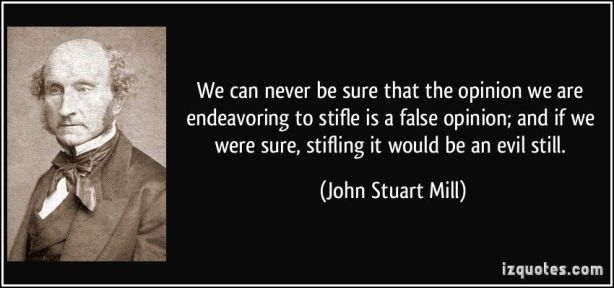
As part of a minority that has frequently been subject to censorship in the past, I cannot endorse the silencing of dissenting voices. Once we start to do that it becomes only a matter of time before it’s our turn again. If we want to be critical of religion and those who practise it, if we want to comment on politics, and challenge those who do indeed espouse hatred; if we want to have a view on anything at all, we have to accept that others have the same right to express their opinions on matters that are dear to us.

Christmases With Grandad: Christmas Yet To Come (2041)

This three-part story was written for BBC Radio Cumbria this Christmas. Here’s the first instalment.

Lana will wrap the last of her presents, the ones to give to the family on Christmas morning. She will like doing it herself even though the online providers with their one-hour service, would wrap them for her in reconstituted all-natural paper-substitute that automatically recycles itself after 5 hours. She will be pleased with the low energy-use holographic display device she’s bought for her sister Eva. She will have already programmed it to display family members in rotation, as they appear in her ancient photos preserved on the universal cloud.

She’ll laugh as she finds some of her granddad Neil from 20 years earlier; Christmas 2021 according to the information embedded in the image, when she was 5 and Eva almost 3. She will think how strange Christmases were then! When a crisis closed down her school after she had only just started it, and you could only have one or two visitors on Christmas Day. All the same, she will have warm, vague memories of that time, when granddad Neil and Dennis would come on Christmas day and play tea parties and try to put together whatever game they’d got from Santa. She will think how peculiar it was that the game would probably have been made of plastic, long since outlawed.

Then she will tell the hologram device to power down and will put it in its little box. Her mum and dad and Eva will join her and her family first thing the next morning when they will drink a toast to Granddad Neil and Dennis. It will, she knows, be a lovely Christmas.

The Jesus Story v. Reality

Recycled picture, new post

Whenever the Jesus story comes face to face with reality, it fails. The nativity stories, which only Matthew and Luke think to invent include, are a case in point.

  • Luke tells us the Emperor Augustus decreed there should be a census in what we now know as 4BC. He didn’t. The closest Roman census was in AD6, ten years later and it didn’t entail hordes of people trailing back to their ancestral village.
  • Matthew claims that Herod was so enraged about the birth of the ‘royal’ baby that he killed all little boys under two years old. Except he didn’t. This never happened.
  • According to the same story, a host of supernatural beings appeared announcing that a young woman who’d never had sex with a man had given birth, while a wandering star shone directly over her house.

Where in reality do these kinds of things happen? That’s right: in myths and stories. They are typical literary tropes found in fantasy fiction. The ‘miraculous’ events of the nativity are of this genre.

  • Christians who delude themselves into thinking theirs is an intellectual faith concede the nativity is mythical, its events symbolic. They’re not usually so hot on what they’re symbolic of but say the story conveys truth. Still, they insist, the rest of the Jesus story is true. Evangelicals go even further and say it’s literally true. So, Jesus walking on water really happened (or if your faith is, oxymoronically, intellectual faith, it didn’t.) After all, the illusionist Dynamo walked across the Thames a few years ago (see it here), and if he could walk on water then how much more capable of doing that was the Son of God. Except the modern illusionist‘s feat was – yes, you guessed it – an illusion. So even if Jesus did the same thing, his trick was also an illusion. Those who say the story is included in Mark and Matthew because it’s actually only a parable about faith (or something) are conceding, again, that it didn’t actually happen.
  • Likewise when Jesus turns water into wine, calms the storm, raises the dead, chats with apparitions of long dead Jewish folk-heroes and does every other ‘miracle’ he’s credited with. If they’re only symbolic then, by definition, they didn’t happen. Nor did they happen, if, as Evangelicals believe, they’re being passed off as real events. ‘Miracles’ do not happen in reality. Never have, never will. They happen only in stories.

Well, okay, more enlightened Christians might say, but nonetheless Jesus conveyed to the world what God wanted us to know. He was wise and compassionate and told us how our sins could be forgiven. Except his wisdom comes directly from Jewish scriptures; he had nothing new to say. He was no more compassionate than anyone else and could in fact be an absolute s**t. He was inconsistent across the gospels about how sins were forgiven and much of his teaching in the original Gospel (Mark’s) is lifted from Paul or reflects the beliefs of the early Christ cult. Jesus the holy man is a construct – or rather a series of constructs, a literary device, not a real man.

So, okay; the nativity didn’t happen as depicted. The astounding feats attributed to Jesus didn’t happen and Jesus is whoever the various gospel writers and Paul want to make him. Nothing we’ve seen so far is factually, historically or really (as in reality) true.

But, the crucifixion and resurrection are! Oh yes. The rest is made up, but these two events most certainly are not.

  • Even though Jesus’ trial is historically inaccurate and is, as a consequence, highly implausible.
  • Even though there was no-one to record Jesus’s snappy repartee (or silence depending on which gospel you read) with Pilate or Herod.
  • Even though there was no such Roman custom as releasing a prisoner on the Passover.
  • Even though the synoptics have Jesus crucified on Friday while John says it was a Thursday.
  • Even though characters like Barabbas, Joseph of Arimathea, Mary Magdelene and the ‘disciple whom Jesus loved’ are evidently and entirely fictional.
  • Even though there was no eclipse of the sun that lasted for hours.
  • Even though there was no earthquake that shook zombies loose from their graves before Jesus had a chance to rise and shine himself.

Such things are not historical. They’re not even feasible. They did not happen in reality. Well, if not the crucifixion per se, Christians say, then definitely the resurrection: that most unlikely of all unlikely events. That really happened.

  • Even though the reports of it are completely at odds with one another.
  • Even though angels are involved once again.
  • Even though Jesus behaves entirely like a ghost, walking through closed doors, altering his appearance and vanishing at will.
  • Even though he levitates into the clouds.
  • Even though some of the disciples find it impossible to believe he’s back.
  • Even though dead people rise only in stories, myths, legends and fantasies.
  • Even though, in reality, dead people do not come back to life after three days, which is why Jesus didn’t either.

Still, I’m sure I’ll be told when I go to a carol service with my friends in a few days, that the story of Jesus’ birth, emotionally powerful as it is, is true from start to finish. Why? Because people’s capacity for believing fantasy stories knows no bounds.

A Christmas Murder Mystery

I do love reading a good whodunit at Christmas time.

Here’s one I discovered recently, called 

And One For The Dame

by Agnetha Crispin

Obscured by the large Christmas tree in the drawing room, Miss Palmer put down her knitting and listened intently to the conversation going on in the hallway outside. 

Listen Lucinda,’ a ridiculously plummy male voice said, ‘if that old bird keeps asking questions she’s going to rumble us, don’t you know.‘

Oh Rupert, darling, don’t be silly. She’s completely ga-ga. In any case, she’s not interested in us. She thinks she’s here to find out how dear old uncle Bertie died. All she’s really succeeding in doing is getting under the inspector’s feet. He told me so himself.’

Oh, Luce,’ Rupert Hayes-Hickson whispered softly. ‘You really are a first-rate sort of chap.’ The two of them drifted down the hallway and out of earshot. Miss Palmer resumed her knitting. She resolved to catch up with Inspector Petherbridge… or was it Carmichael? – these token policemen really were interchangeable – at the earliest opportunity. Ga-ga indeed!

* * * * * *

So you see, inspector,’ she said, ‘It’s becoming so much clearer who poisoned Bertie. When you think how like Colonel Arbuthnot he was…’

Colonel Arbuthnot?’ the inspector said with requisite weariness, ‘Who is Colonel Arbuthnot?’

Oh dearie me, yes,’ murmured Miss Palmer absently, as she purled another stitch. ‘Such a difficult man, you know.’

Colonel Arbuthnot or Bertie Mallowan?’ asked the inspector, irked with himself for showing interest in the old lady’s seemingly inconsequential remarks.

Arbuthnot, of course,’ she replied with gentle disapproval. ‘He moved into the old manor house in my quintessentially English village, St Mary-Westmacott. Dear me, no; Colonel Arbuthnot was not loved at all. It came as no surprise when my friend Dotty Lumley discovered him dead in his study with multiple gunshot wounds. Goodness me, the blood!’ she exclaimed. ‘That one took some sorting out, I can tell you.’

Miss Palmer, I really don’t see…’

Come closer, inspector,’ she said. The inspector reluctantly drew his chair up to hers. ‘It’s most suggestive, you see,’ she continued. ‘Yes, most suggestive.’ She turned towards the inspector, ‘So I really would prefer it if you did not address me as Anna.’

I don’t recall…’ began the inspector.

You know, it isn’t quite the thing to call respectable elderly spinsters by their Christian names, inspector. It is also as I say, much too suggestive. It all but announces how like an anagram my name is.’ She leant into him conspiratorially, ‘You do take my point, don’t you?’

The inspector’s eyes glazed over. He gurgled as the blood forced its way up his throat and into his mouth. ‘Yes, much too suggestive,’ repeated the old lady, withdrawing the knitting needle from between his ribs and wiping it on his pristine breast-pocket handkerchief.

Gathering up her wool, Miss Palmer glided surreptitiously from the room. There would have to be at least two more grisly murders – quite possibly Lucinda and Rupert’s – before she would reveal how poor old Uncle Bertie had met his end.


Oh my Cron! It’s Omicron!

NHS advert - All contacts of suspected Omicron cases must self-isolate for ten dates regardless of their vaccination status

All contacts of suspected Omicron cases? They don’t have to be confirmed now? We are sleep walking into a police state.

How severe are the symptoms from the new Covid variant, Omicron? According to the doctor who first detected it in South Africa, its symptoms are ‘extremely mild’. She accuses the UK – and now, by extension, much of the rest of the world – of ‘panicking unnecessarily.’

At the time of writing, fourteen cases of the new variant have been detected in the UK out of population of 64 million. As a result of just three of these, England has been returned to mandatory mask wearing by a prime minster and health secretary, Sajid Javid. The pair promised back in July that the lifting of restrictions would be ‘irreversible’. There were no provisos on this promise – no ‘unless another variant appears’ get-out clause. We were fools for believing them, this government of panickers, flounderers and trashers of civil liberties.

This time round Boris Johnson is imposing mask wearing while travelling on public transport, in hairdressers and shops and in a variety of other locales. The virus, however, is apparently unable to penetrate restaurants, pubs, cafes, cinemas and theatres so mask wearing is not required there. And quite rightly too. It should not be mandatory anywhere. Politicians and the scientists who advise them are well aware of the extremely limited way that masks protect others from the droplets in your breath.

A doctor explores the efficacy of masks.

Yet still they impose such a mandate, this time with a £200 fine for the first ‘offence’ of failing to wear a mask in the specified locations. If masks were effective, then Scotland, which unlike England did not dispense with them back in the summer, would have fewer cases of Covid than England. In fact, it has considerably more. Likewise Germany, which imposed the compulsory wearing of high standard FFP-2 surgical masks back in January. Meanwhile mask-free England (free that is until yesterday) has seen cases and hospitalisations falling.

Whenever I write about the pandemic – which some scientists now regard as coming to an end, despite the predictable winter increase in cases – I receive fewer likes than when I write about Christianity. That may be because I address the Covid situation primarily as it affects the UK. But it might also be because I question the received narrative; that we must panic, must wear masks to protect ourselves and others, must protect the health service that exists in reality to protect us. I’m no conspiracy theorist; as I’ve explained before, incompetence more readily explains governments’ actions this past two years. Crediting them with the intelligence and deviousness necessary to perpetrate a worldwide conspiracy is truly beyond them. But it is nonetheless alarming to see the extent to which they have deprived us of our civil liberties. Overnight, we can be imprisoned in our own homes if we are in contact with someone who suspects they may have Omicron and fined if we don’t, while not wearing a mask has become a crime. The police, having nothing better to do, say they will be hanging around England’s transport hubs and shopping centres to challenge and fine those not wearing face coverings.

Further indication that politicians really do not know what they are doing comes from their making available the booster vaccination to all over 18 year olds a mere three months after their second shot. Boris Johnson said yesterday that the booster will, while the second vaccination is supposedly still offering its own protection, ‘undoubtedly’ save them from Omicron (with its very mild symptoms).

Do we know this? We do not. Vaccine producers have begun tests to see if it so. Injecting all and sundry is merely more panic, not to mention a political ploy to make us think they’re actually doing something. They aren’t. Why are politicians surprised that the populace has lost all faith in them, does not believe a word they say and, when it’s not engaging in government and media induced panic, is ignoring their ever conflicting messages, empty rhetoric and false promises?

I have had my three shots, plus one for flu. The vaccine is demonstrably the most effective way of minimising Covid and the variants that have appeared so far. It may well be the only way. Nothing else we have done has held back the virus. Scotland now has what appears to be a home-grown version of Omicron, not one that came from outside the country (those masks really worked!) and even those countries that have undergone extreme lockdowns discover it’s among them once they re-open: Omicron has been found in the perpetually locked down Australia. Variants will be around for a long time to come. Governments cannot continue to impose sanctions every time a new one emerges. If they do, they and we will be playing this ridiculous circle game forever.

Food For Thought

The late Patricia Highsmith’s diaries were published recently. Highsmith is the author of The Talented Mr Ripley and Strangers On A Train among many others. She wrote a mean short story too – mean in every sense of the word – some of which I read a while back. The following is a spoof of the kind of thing she came up with.  

Vernon had read somewhere about how ancient Aztecs – or perhaps it was Mayans – would eat the hearts of brave enemies so that they might absorb their courage. He was sure too he’d read something about how, on the same principle, consuming the flesh of intelligent creatures endowed the consumer with whatever intelligence the creatures had originally possessed. He read some strange things, he knew, but had become fully convinced that in principle these facts must be true. As he was, he felt, averse to cannibalism, he researched what would be the most intelligent animals one might reasonably devour. He supposed that dolphins and chimpanzees were off limits – though hadn’t he read of an African tribe that considered chimpanzee a delicacy? – and discovered an article that suggested intelligent life had evolved twice-over. Next to humans, it said, cephalopods were considered to have the greatest intelligence. Apparently the octopus brain was diffused throughout its body and therefore to eat it did not entail ingesting lumps of grey matter. Rather, it could be taken into the body in a soup or stew made from the entire organism.

The next set-back, he was disappointed to discover, was that octopus soup was not readily available in any of the stores near to where he lived. However, after further enquiry, he was pleased to learn that a Japanese restaurant in the next town specialised in such a dish. Accordingly, he determined to travel there on a daily basis, Sundays not included, to take his evening meal. He was surprised, though pleasantly so, to discover that octopus soup had a certain piquancy to it, reminiscent of a crab paste he had once tasted. He found it eminently palatable and for the next sixteen days, Sundays not included, partook of cephalopod consommé.

He would have continued with his regime for longer if not for a peculiar development. While his intelligence and capacity for deep thought had, he was pleased to say, improved considerably as a result of his new diet, he discovered on rising on the seventeenth day, that unsightly red blotches had appeared all along his arms. He was further dismayed, on swinging his legs from the bed, to see that the same marks ran from ankle to thigh.

Doctor Highsmith was at a loss to explain them. ‘Probably a virus of some sort,’ she said vaguely, washing her hands after what Vernon considered to be a perfunctory examination.’Or an allergic reaction to something. If I didn’t know better, I might even say you’d contracted plague – ring-a-roses and all that,’ she joked; impertinently Vernon thought. He wondered if his new diet could have played a part in his condition, but considered it best not to mention it to the doctor. He had, he knew, already surpassed her level of intelligence and did not therefore expect her to understand.

He was further alarmed two days later, however, when the red blotches had assumed a more three-dimensional appearance. They looked now rather like miniature, red-rimmed volcanic craters. He counted sixty-four in total, a neat multiple of eight. They were not painful but had blossomed so that his normal pasty flesh tones were all but obliterated with zig-zagged rows of the little craters. They somehow looked familiar and so he returned to his Encyclopaedia Animalia and the pages relating to cephalopods. Yes, that was what it was; the craters were like the suction cups on the arms of the creatures. He was not unduly alarmed; it was perhaps only to be expected after consuming so many of them and he was sure the symptoms would pass. His confidence was shaken a little though, when he caught himself adding an excess of salt to his food. It was rocked when he noticed that when passing water he was instead emitting a blue-black substance, indistinguishable from the ink secreted by octopuses themselves.

He was on the point of dialling Doctor Highsmith again when he was struck with a stabbing pain in his right arm. He rolled up his shirt sleeve to discover the entire limb had now a deep gash of glistening crimson, running its entire length between the rows of suction cups. Each side of this channel appeared to be on the verge of parting company with the other. His left arm was the same. He dared not look at his legs. He took up the telephone again but was shocked to discover that his lips had hardened around his mouth to the point of being beak-like. He was simultaneously overtaken by an urgent and compulsive need to visit the coast.

He drove to the sea – he knew not how – and abandoning his vehicle, tore off this clothes with what remained of his hands. He ran, gulping for air, to the cliff top. Launching himself from its prominence he entered the water, eight limbs trailing behind a now bulbous body, and disappeared beneath the surface.


Scourge

He came from out of nowhere. Myalgic was his name, but he was more commonly known as The Scourge . He was dressed in an impenetrable armour, shining shades of metallic blue and purple, like a beetle’s carapace. He towered over me and despite my own superhuman powers, overpowered me with one blow from the back of his axe. The first wave of unbearable pain swept over me as, in that same instant, my arms, from shoulder to finger ends, became as iron, rendered immoveable, while the muscles of my back twisted into knots of corroded steel. My legs likewise were seared, down to my toes of shattered bone, inside my own inadequate armour. I was being broken from the inside out; every part of my body succumbing to an agony unlike any I have never known.

And then he moved on, leaving me there, smashed into innumerable agonised pieces, defeated.

That was years ago. The pain has not left me. Yes, I have days when it abates, but always it returns with vengeful severity. I cannot, will not, allow it to prevent me from living as fully as I might – of course not – but my days of using my abilities to serve others are gone, ending the day Myalgic The Scourge descended and conquered the world; my world.