Very Naughty Children

Remember when you were a child in primary school and the whole class was kept in at playtime because one or two individuals couldn’t behave themselves? Remember how unjust that felt? You’d done as you were told, as had most of your classmates, and yet there you were, stuck inside while other groups played out. All because of the actions of a few. When I became a teacher myself I vowed I would never do this to whole classes of children. Those who couldn’t behave would be the ones to face the consequences of their actions, not those who had. To the best of my memory, I kept this promise.

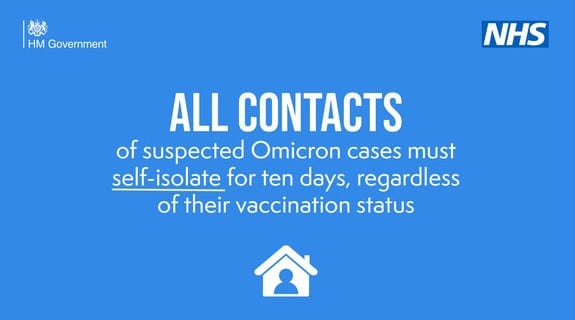
The sense of injustice I felt as a child when I was punished because of others’ misdemeanours returned this week, when UK health secretary Sajid Javid threatened the entire country with a Christmas lockdown if more eligible people didn’t take up their Covid booster jab. The ‘booster’ amounts to a third shot because, it turns out, the effects of the first two vaccinations last only six months. I have my booster booked for tomorrow. And yet, having done the right thing for myself and others, I could still be faced with the prospect of having Christmas curtailed because, according to Sajid Javid, too many people have been naughty children and haven’t done as they were told.

If this is the case, might it not be because the populace as a whole has grown tired, not to mention altogether sceptical, of politician’s promises about Covid?

       ‘Lockdown for three weeks to flatten the peak of the epidemic’ we were told by the Prime Minister in March 2020.

       Lockdown again, for a month, in November 2020, this time to protect the NHS.

        Stay locked down for over six months.

     Keep your distance, wear a mask, get tested – with which we all complied – and we’ll stop the infection from spreading.

       Get the injection and we’ll soon see off this pandemic;

       Get a second and save grandma;

     Vaccinate your children and erm… we’ll soon see off this pandemic (again).

      Get the booster jab and you can have Christmas. (What will it be after another six months? ‘Have your fourth shot or we won’t let you go on holiday’?)

While these measures may have been effective (the fact we’re still being threatened with lockdowns might suggest otherwise), the means by which we have been coerced into compliance has been through blackmail and bullying. Only a couple of days ago, NHS chief Amanda Pritchard claimed that hospitalisations are currently 14 times higher than they were this time last year. This was a lie. They are considerably lower, as the government’s own data shows. (Regrettably, Ms Pritchard neglected to mention that the NHS itself has been responsible for the deaths of about 11,600 people who caught Covid while in hospital for other ailments.)

I’ll be having my booster and I’ll be having Christmas too, regardless of what an authoritarian career politician and inept NHS chiefs tell me. If we have learnt anything as a result of the pandemic about those who govern us it is that they really do not have the first idea what they are doing. Nor do they know how to manage people. Bullying, blackmailing and punishing the whole class because of a few naughty children is not the way.

Religion Is Bad For You. Always.

There is no upside to religion. All of them, not just Christianity (though certainly including it.)

Religion makes its adherents judgmental. Those who don’t share their beliefs are ‘other’. Consider the terms that religion has spawned to describe non-believers: infidel, heathen, goy, kafir, lost, dissenter, apostate, scoffer, profaner, blasphemer, paynim, idolater, deviant. Needless to say, none of these is designed to flatter. If not being ostracised – ‘be not unequally yoked with unbelievers,’ says Paul with his usual magnanimity – then non-believers are viewed as sinners in need of redemption or enlightenment, as souls to be won, fodder for evangelism. Never as people to be respected or accepted for themselves.

Religion causes its adherents to abandon their critical faculties, accentuating their irrationality so that even those with some intellectual capacity sacrifice it to subscribe to a primitive, superstitious mind-set. They believe in miraculous resurrections, eternal life, covenants with the gods that necessitate the genital mutilation of children, prayer, ‘prophets’, demons, spirits, pantheons of supernatural beings and myths about the end of the world. There’s no evidence for any of this fantasy material, yet the believer trades in their good sense to embrace all of it to one degree or another.

Religion cultivates delusion. Otherwise intelligent believers are convinced their god talks to them in their heads while they, in turn, are capable of projecting their thoughts into the deity’s mind. They take part in rituals they believe appease him, assume  specific body positions and dress up in items of clothing they think, for some unfathomable reason, will help them gain favour in his sight. They believe they’re possessed by the spirit of the deity that enables them to do miraculous things, not least survive their own deaths.

Religion discourages thinking for oneself. Believers are told, either by a ‘holy’ book or by those who claim they know gods’ thoughts, what they should think about vaccinations, abortion, women, homosexuality, politics, guns, the significance of climate change, the state of the world and all those godawful infidels. Woe betide the believer who dissents from the views of their particular cult or sect.

Religion compels its adherents to deny reality. Believers are in a constant state of denial: about the world, evolution, education, the rights of others, the fact people can be moral without religion and death itself. They deny that the universe and nature are as they would be if there were no gods; that religion has contributed nothing to our understanding of the world, has discovered nothing, invented nothing. All of this is the equivalent of sticking one’s fingers in one’s ears and singing na-na na-na. Who needs facts when you’ve got third rate fantasy?

Religion causes hatred. There are those within every religion who seek to eliminate their enemies. They fly planes into buildings, shoot and stab innocent people in the street because they regard them as profaners or blasphemers, and call for the death penalty for those they regard as deviant.

Religion prevents people from being themselves. It convinces them they are worthless sinners in dire need of forgiveness and then imposes an inauthenticity on them. It makes them assume a role that reflects, or so they think, the nature of their saviour or prophet. It’s all an act, held in place by the collective pressure of fellow believers, in churches, synagogues, temples, mosques and kingdom halls. It is not life affirming but life denying. It is a lie.

Anyone care to defend religion? One particular version of it? What has your pet religion contributed to the world? What good does it serve?

Facts & Figures

The average age of death in the UK is around 82.

The average age of vaccinated people dying from Covid-19 is 85.

Most Covid deaths are of people with five other underlying causes.

The majority of hospitalisations are of unvaccinated people.

The majority of people in Intensive Care Units are unvaccinated.

The statistics tell us Covid cases are on the increase in the UK. These scientists tell us they are about to decrease.

NHS executives Matthew Taylor and Amanda Pritchard argued last week that the government should impose restrictions on the populace to ‘protect the NHS’. These are the same executives who have done nothing since last winter to better prepare the service for this winter.

Taylor and Pritchard are paid in the region of £255,000. Regional NHS executive posts are advertised with salaries of between £220,000 to £270,000 a year.

The restrictive measures that executives want to bring in for England are already in place in Scotland and Wales. Covid rates in Scotland and Wales are increasing at a greater rate than in England.

Health Secretary, Sajid Javid said this week that the Booster programme in the UK had slowed due to a reluctance on the part of those eligible – the over-65s whose second shot was 6 months ago – to have the booster. They should, he said, book their booster on the NHS online booking system.

Many of those eligible report that the online booking system will not allow them to book a booster shot online. The online system refers them to an NHS telephone booking system. The telephone booking system refers them to the online booking system.


Why I’m not watching the News any more

I’ve reached the point where I can’t watch or read mainstream news reports. I’ve had difficulty with them throughout the pandemic with their incessant reporting of Covid cases and deaths completely devoid of context (how many cases were serious enough to cause hospitalisations? How many deaths were ‘of’ Covid rather than ‘with’ it? How many of the deaths were excess deaths; how many people die in any given period normally?) Ignoring context, the media became intent on fostering anxiety and panic. Their reporting was not independent; in the UK at least they parroted uncritically and relentlessly the government’s position. This, in turn, was shaped by the Scientific Advisory Group for Emergencies (SAGE) and in particular the predictions of computer modeller Neil Ferguson. Ferguson, regularly interviewed on BBC news programmes, was, as he now admits, wrong on every occasion. Very wrong. The pandemic was nowhere near as drastic as he repeatedly said it was going to be (I’m not disputing how serious it was. It was not, however, anywhere as near as bad as he kept predicting it would be). Yet the government and the media continued to rely on his predictions as if they were fact.

All of which is the reason I reduced my watching, listening and reading of the news to a minimum. Headlines only. Early in the summer of this year, the UK government felt the need to restore some normality to society, it asked the mainstream media to reduce its reporting of Covid statistics. All media outlets immediately complied. Conservatives can never say again that the BBC in particular is biased against them; it has done their bidding throughout the pandemic.

This is not, however, the reason I am abandoning the news, giving up even on headlines. I am tired of predictions, conjecture, speculation, forecasts and extrapolation. None of these is news. They are attempts to see the future, something that we are incapable of doing. Of course we need to be aware of potential consequences of decisions or actions, our own, governments’ and society’s. But reporting those possible consequences as fact, as outcomes that are inevitable, fait accompli, like Neil Ferguson’s hopeless predictions, is not what news reporting should be about. Its job is to tell us what has happened, how, where and possibly why (analysis). That it extends itself well beyond this by determining for us what a particular development means ‘for the future’ or ‘’in the long term’ is nothing more than supposition. It also, dangerously, leads to some self-fulfilling prophecy, such as we’ve seen in the reporting of recent supply chain difficulties. That these were restricted to specific areas was not reported but the possibility that these difficulties could, possibly, maybe, result in food shortages was. Result? Panic buying and food shortages in some areas. The same happened with supposed fuel shortages. Christmas is now in danger according to the UK media.

With Covid largely off the agenda, the news media find themselves in need of something else with which to fill schedules; some alternative source of doom and gloom. The mainstream (in the UK, at least) has opted for climate change, replete with forecasts of catastrophe, destruction and extinction. Of course it’s possible that if we do not act collectively to reduce the human contribution to climate change, that these outcomes will come to pass. It’s possible but it isn’t certain to be the case. Who remembers the media reporting that by this point in the 21st century we would be living in an ice age because of climate change? (This speculation is still about and has traction in some quarters).The news is that climate change is happening. That’s it. What we might do about it is for some other source that doesn’t claim to be delivering news.

I am tired of the narrative of the day, be it #MeToo, Brexit, BLM, Covid, climate change. Tired of its promotion by the media, of the prediction and conjecture that goes along with it, but only while it attracts sufficient viewers or readers. When something more ‘newsworthy’, sensational and alarmist comes along, what was once narrative of the day is dropped. There’s a new bandwagon to jump on! This time though, I’m doing the dropping first.


Are You Born Again?

Someone handed me the above card in town yesterday. ‘Are you born again?’ No, mate, and neither are you. As Bart Ehrman shows in Jesus Interrupted, and as I’ve written about before, the story of Jesus and Nicodemus in John 3 is a literary construct (as are the gospels in general.) The pun between ‘born a second time’ and ‘born from above’ only works in the Greek, where ἄνωθεν (anothen) can mean either ‘again’ or ‘from above’ (though it’s usually the latter.) Unfortunately, it is highly unlikely Jesus spoke Greek. Here’s Ehrman:

  In the Gospel of John, chapter 3, Jesus has a famous conversation with Nicodemus in which he says, ‘You must be born again.’ The Greek word translated ‘again’ actual has two meanings: it can mean not only ‘a second time’ but also ‘from above.’ Whenever it is used elsewhere in John, it means ‘from above’ (John 19:11, 23). That is what Jesus appears to mean in John 3 when he speaks with Nicodemus: a person must be born from above in order to have eternal life in heaven above. Nicodemus misunderstands, though, and thinks Jesus intends the other meaning of the word, that he has to be born a second time. ‘How can I crawl back into my mother’s womb?’ he asks, out of some frustration. Jesus corrects him: he is not talking about a second physical birth, but a heavenly birth, from above. (Jesus Interrupted, p155)

So Nicodemus is made to misunderstand Jesus, confusing ‘born again’ with ‘born from above’, and Jesus has to tell him what a twit he is. Translators of this chapter haven’t understood the point of the story either, making Jesus say, in John 3.3, ‘you must be born again’, when the rest of the narrative makes clear he means, ‘you must be born from above’ (i.e: be renewed by God who sits in Heaven on high.) 2000 years later, Christians, thanks to these translators, still make the same mistake.

There’s even more poppycock on the back of the card. The born again, it seems, avoid sin like the plague. Sure they do. Just ask all those kids molested by priests, preachers and Christian youth workers.

So Long, Jesus – the new book is here!

My new book, marking a final farewell to Jesus and his cult, is available now from all Amazon outlets. So Long, Jesus and Other Lessons From Life collects together the religiously-themed posts that have appeared on this blog over the past three years. A great Christmas present for those of your friends who might be considering saying their own farewell to Christian mumbo jumbo. This is the book you’ve been waiting for! 

So Long, Jesus and Other Lessons From Life – get it before the rapture!

Is It Me?

Is it me?

Has the world gone completely mad during the pandemic?

It’s one of the two. In the UK, we have panic buying of fuel because of a shortage in some areas of delivery drivers and the consequent closure of a small number of petrol stations. According to a leading motoring organisation, we have over 5 times the usual number of people putting the wrong kind of fuel into their cars (diesel instead of petrol or vice versa.) There have even been some fights. The would-be German chancellor, Olaf Scholz (not yet, Olaf!) blames Brexit, which is a rather curious thing to do when Europe too, as well as the US, is likewise suffering from a shortage of delivery drivers. Perhaps it’s Covid, with some foreign drivers having returned home at the start of the pandemic, never to return. Perhaps it’s the poor working conditions for drivers in the UK or the fact that some companies have driven down their wages, making the job less attractive.

We have civil servants, who, despite their title, are neither civil nor cognisant of their duty to serve the public. Rather, it is, apparently, the public’s duty to comply with all of their demands. I’ve been dealing today, for example, with the DVLA, the agency that handles driving licences in the UK. They want my son, who lives in Australia, to renew his UK licence. He has explained to them by email why he won’t be doing so, only to be instructed to send his explanation in writing. You might think an email is in writing, but you’d be wrong. An email simply won’t do. It must be a letter in the post. Explanations are unacceptable in any other form.

Is it me?

Many civil servants are still working from home following the lockdowns and are reluctant to return to the office. A number of services are unavailable as a result, including queries about tax and pensions, as well as applying for various government permits. Perhaps I’m being unrealistic or unreasonable, but are these people, all of whom have been on full pay throughout the pandemic, working or are they not? Is ‘working from home’ now a euphemism for ‘avoiding dealing with the public we’re meant to serve’?

I don’t know. Maybe it is me.

I’ve been collecting together some of posts from this here blog into book form, as I’ve done several times in the past, using Amazon’s Kindle Direct. (What a splendid Christmas present it will make when it eventually goes on sale – I’ll be sure to let you all know when it does.) Amazon, however, emailed me a couple of hours after I submitted it yesterday, asking me to confirm whether the author of the book (me) is alive or dead. Apart from the pointlessness of this request, I do wonder how, if I were dead, I would confirm the fact.

Doctors (GPs) are now diagnosing people by phone, with many resisting the efforts to get them to resume face-to-face appointments. It took me three weeks to secure an in-person appointment with a doctor recently. I almost put ‘my’ doctor there, but as I’d never seen this particular doc before and am unlikely ever to see him again, I’m not sure ‘my’ really applies. Meanwhile, the Labour Party, the only serious opposition to the UK government, is currently embroiled in an argument about whether only a woman is in possession of a cervix. Many members of the party are reluctant to say and those who have, have been subject to verbal abuse. It is, obviously, the burning issue of the day.

It must be me. Perhaps I’m just getting old and grumpy. Maybe I’ve been locked up (let’s call it what it is) too many times during the last 18 months and, like my fellow Brits, am now facing the possibility of being locked up again this winter because successive UK governments have failed to get to grips with an ailing health service.

If it’s not me, then quite possibly the world really has gone mad.

Jesus v. Covid (and the winner is…)

Two years ago, a few months before Covid hit, I wrote a post entitled ‘God’s Very Good Creation’ that included the picture above. The post concluded that ‘Jesus can’t save you from the common cold, let alone death’. How the past 23 months have borne that out! We hear almost daily of anti-vax pastors, preachers and assorted evangelicals, who have trusted the Lord to save them from Covid, dying of the virus. The Lord failed to come through for them despite their faith in him and his promises.

I recognise there are Christians who like to tell us God doesn’t work like this. He’s not, they say, a dispenser of health and healing, a fairy godmother who fixes those who love him just because they pray in earnest that he will. They’re right of course; God doesn’t work like this. (God doesn’t work, period.) So why does the Bible tell us he does?

Is anyone among you sick? Let him call for the elders of the church, and let them pray over him, anointing him with oil in the name of the Lord. And the prayer of faith will save the one who is sick, and the Lord will raise him up. And if he has committed sins, he will be forgiven (James 5.14-15).

And these signs will accompany those who believe: in my name they will… their hands on the sick, and they will recover (Mark 16.17-18).

Whatever you ask in my name, this I will do, that the Father may be glorified in the Son (John 14.13).

Again I say to you, if two of you agree on earth about anything they ask, it will be done for them by my Father in heaven. For where two or three are gathered in my name, there am I among them (Matthew 18.19-20).

At best this is delusional wishful thinking, at worst, out and out lies. Surely the men who made these fantastic claims knew that God wasn’t like this at all, that magical thinking and ritual didn’t really cure illness? (Perhaps we should expect nothing better from people who believed that God had granted them eternal life.) Despite their dishonesty, some believers today are still prepared stake their lives, quite literally, on the same false promises, discovering when it’s too late, that they are empty and meaningless. The Lord will not and has not saved anyone from Covid nor anything else.

Worse than that, however, is how Christian anti-vaxxers affect others; dissuading the gullible from having the vaccine, spreading infection and providing the means, the culture, for the virus to mutate. They also take up space in ICUs that people with unavoidable medical conditions need but can’t access because of them – like the child in this story. It’s also likely that, should health services become overwhelmed this winter because of the unvaccinated contracting Covid – the overwhelming majority of hospitalisations are of the unvaccinated – the rest of the population will need to go into lockdown again. The UK government, while saying it wants to avoid further lockdowns, has not ruled them out should the NHS need ‘saving’ once more.

Sarah Palin has said she will not get the vaccine because she ‘trusts in the science’. No, it doesn’t makes sense (when has she ever?) Palin believes her own immune system will protect her, failing to understand how vaccines work – by priming the immune system to produce anti-bodies against disease before coming into contact with it.

Palin and those similarly motivated by the fatal combination of ignorance and religion, who refuse to protect themselves and others, are selfish and socially irresponsible . Their actions are as far from loving one’s neighbour as it’s possible to imagine.


What Does The Evidence Tell Us… About Vaccinations?

Vaccinations: do they work? There is unequivocal evidence that the vaccine prevents serious infection, hospitalisations and death from Covid-19. There is also evidence emerging that immunity reduces as time goes by but even after three months vaccinated individuals still have between 61% (AstraZeneca) and 78% (Pfizer) immunity. (Can you believe that the US’s CDC approved the made-in-New-York Pfizer vaccine only at the end of August? Millions of people in the UK have had the Pfizer; I had my first in February and the second in May, without any adverse effects.) Yesterday, the UK government decided to give booster shots to the over-50s. I will certainly be having mine and have booked my flu shot too.

Why? Because the vaccine is the only way through this. We can be certain none of those currently available contain computer chips, DNA altering chemicals, aborted foetus cells or tracking devices. In this case, absence of evidence is evidence of absence. The needle-phobic idiots who peddle nonsense, like the vaccine being the precursor of the Mark of the Beast, prolong the pandemic and its restrictions when they deter others from having the injection, and contribute to hundreds more unnecessary deaths. (Deaths from the vaccine itself are not unknown but are far fewer than those claimed by some online sources and certainly fewer than deaths from Covid itself.) 

The bulk of hospitalisations in the UK and US are of unvaccinated individuals. A report by the New York Health Dept puts the figure as high as 96% in the city, with a similar figure for the UK. Health line reported two weeks ago that,

The vast majority of people (in the US) who have died from COVID-19 were unvaccinated. Fatal cases of COVID-19 among vaccinated people are either very low or virtually zero in 48 states.

The vaccine does not and has never guaranteed 100% defence against the virus and it is possible to contract Covid after two injections. A 70 year old friend of mine did so recently. His symptoms, however, were mild and after isolating for 10 days he was fully recovered. Who knows how he might have been without the vaccine. The data for those hospitalised after two jabs appears to show an increasing statistical rate. This is to be expected; the more people who are vaccinated the more cases there will be of infections among the vaccinated. The closer we come to being 100% doubly vaccinated, the closer to 100% will be the infection rate among doubly vaccinated people. Most infections of the doubly vaccinated are not serious.

Previous pandemics, mainly of varieties of the flu, have lasted about two years. Covid, though related, is different, but our bodies can and do learn to defeat viruses, and will this time with the help of the vaccine. Like the remnants of older viruses, Covid will be around for a long time to come but the vaccine is the best means of dealing with it.  


What Does The Evidence Tell Us… About Masks?

Masks: do they work?

Back at the start of the pandemic, England’s Chief Medical Officer, Chris Witty, and his US counterpart Anthony Fauci had this to say about wearing face coverings:

In terms of wearing a mask, our advice is clear: that wearing a mask if you don’t have an infection reduces the risk almost not at all. So we do not advise that. (Witty, February 2020)

There’s no reason to be walking around with a mask. (Fauci, March 2020)

The World Health Organisation was still saying in December 2020 that,

the use of a mask alone, even when correctly used, is insufficient to provide an adequate level of protection for an uninfected individual or prevent onward transmission from an infected individual. (Google ‘Mask use in the context of COVID-19’.)

While in February this year, The European Centre for Disease Prevention and Control (ECDC) concluded that,

Evidence for the effectiveness of non-medical face masks, face shields/visors and respirators in the community is scarce and of very low certainty.’

Why did experts like Witty and Fauci say initially that masks were inadequate, only later to change their minds? Because, I would venture to say that they were aware of the scientific studies, carried out prior to Covid-19, about masks’ effectiveness in preventing the passage of other SARS viruses, including influenza. At best, these concluded that even wearing surgical masks, as opposed to the supermarket varieties, has a limited effect on the transmission of either influenza or Covid. This is hardly surprising when the average distance between strands of fabric in a mask is between 5 – 200 micrometers, while the virus is 0.1 micrometers in diameter. In other words, the gaps in the fabric are between 500 and 2000 times larger than the virus. (Though this article argues that there is still a chance such masks can stop some transmission of the virus).

Other studies seem to bear out the limited nature of masks’ effectiveness. This one, by the University of Waterloo in Canada, concluded that masks filter only 10% of the airborne virus and that moderate ventilation offers better protection.

Similarly, The National Center of Biotechnology Information found that

There is uncertainty about the effects of face masks… The pooled results of randomised trials did not show a clear reduction in respiratory viral infection with the use of medical/surgical masks during seasonal influenza.’

The Influenza Journal, reviewing 17 studies on mask wearing, said,

None of the studies established a conclusive relationship between mask/respirator use and protection against influenza.

The British Medical Journal (BMJ) advised that healthcare workers,

should not use cloth masks as protection against respiratory infection. Cloth masks resulted in significantly higher rates of infection than medical masks, and also performed worse than the control…

(More studies are cited here.)

Specific to Covid is this study from Denmark which examined how far masks protect the wearer from infection (it did not seek to discover the extent to which they might prevent the spread of the virus to others.) It reported:

Infection with SARS-CoV-2 occurred in 42 participants (with) recommended masks (1.8%) and 53 non-mask wearing (2.1%). Although the difference observed was not statistically significant, the 95% CIs are compatible with a 46% reduction to a 23% increase in infection (my emphasis.)

The report suggested that social distancing was as likely to have caused the small reduction in infection rates.

While it is anecdotal, it was my experience that once mask wearing was mandated in the UK, people started to ignore social distancing measures, on the assumption, presumably, that everyone was safe behind their masks. Moreover, as the BMJ and others have pointed out, there is also evidence that mask wearing can be detrimental to one’s physical and mental health. And then there are all those discarded masks, infested with bacteria and virus particles that thoughtless numpties leave on the street for someone else to have to deal with.

So, why did the various experts and organisations change their minds about masks? Was it because more data became available about their efficacy? Unfortunately not. Instead, mask wearing became both politicised and polarised. As journalist Laura Dodsworth points out in A State Of Fear, face coverings became a means of social control and of giving us all a false sense of security (p113). It was and is wrong for politicians to mandate either the wearing or not wearing of masks. If people find some psychological reassurance from wearing them they should be able to do so. Those who don’t should not have to. In the UK, where indoor mask wearing was mandatory only up to July 19th, there has been a sharp decrease in mask wearing with only a small increase in hospitalisations due to Covid. (These admissions are not necessarily the result of less mask wearing; mass social events have returned during this period.) I have rarely worn a mask since July (only when asked, in fact) with no ill effect for myself or others. I’m trusting in the vaccine and other preventative measures. As the ECDC said in February:

the use of face masks in the community should complement and not replace other preventive measures such as physical distancing, staying home when ill, teleworking if possible, respiratory etiquette, meticulous hand hygiene and avoiding touching the face, nose, eyes and mouth.

It is these other measures that minimise the chances of contracting or spreading the infection, not face coverings. It is beggars belief that we had to be told, and taught how, to wash our hands once the virus took hold. That daintily expressed ‘respiratory etiquette’ is important too. I would advocate regular face washing followed by nose-blowing into a tissue; while I’ve no evidence for it, I feel sure these have prevented me from getting colds and flu for most of my life. Physical distancing remains an important measure, though large gatherings make it difficult to achieve; in such circumstances masks might compensate to a limited extent by providing some small degree of protection  

So, masks: do they work? It looks like they don’t, not to any significant degree anyway. Let me give the final word to a doctor whose letter was published in The Daily Telegraph last week:

SIR – A paper published in 2016 by the American National Institutes of Health reviewed previous clinical trials of the use of face masks in operating theatres. It concluded: “Wearing a face mask neither increases nor decreases the number of wound infections following surgical operations.”

A simple experiment will show why: if a lighted candle is held in front of a mask the flame cannot be extinguished, no matter how hard one blows. However, if the candle is held to the side of the mask it is easily extinguished.

Moreover, the obstruction of exhaled air by the mask increases its pressure and the distance it will travel.

Hence the wearing of a mask will increase the area in which the exhaled air is dispersed. In this context it is interesting that in one clinical trial a slight but not statistically significant increase in infections was associated with the wearing of masks.

There simply is no sound scientific evidence for the wearing of masks to prevent transmission of infections. On the other hand, a controlled trial is not required to show their dehumanising effect.

Dr Max Gammon

London SE16