The sharp-eyed among you will have noticed I hedged my bets in my post, ‘It’s A Small World After All’, when I wrote that ‘after the ride stops you will in all probability cease to exist.’ Really the line should have read, ‘after the ride stops you will cease to exist,’ without ‘in all probability’. I’d like my existence (yours too) to continue beyond death. I don’t mean merely in my children and grandchildren’s memories, I mean in some real sense. Me, still existing somewhere. I’m not in any state of anxiety about this black hole of nothingness, because I know my continued existence is highly unlikely to happen. But still…
I wonder if any of you watched Star Trek: Deep Space Nine back in the early 1990s. There was a character in it called Odo, played by the late René Auberjonois. Odo was a shape shifter whose day-to-day appearance mirrored that of the humanoids around him, but not quite. In one episode, Odo returned to his home planet where he assumed his true form of viscose fluid, and merged with a planet-wide pool of his own kind. In this state he became one with everyone else while maintaining, it was suggested, his own identity.
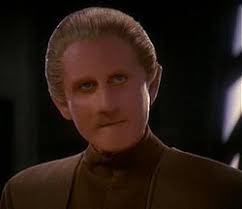
I liked this idea very much. It seemed to me that an after-life could be like this, one in which we merge back into the great consciousness without quite losing our own identity. It was a pleasant fantasy, one shared I suspect by whichever Star Trek writer envisaged Odo’s existence as being like this.
Recently I read Dan Brown’s latest, The Secret of Secrets (not his best) where, lo and behold, the same idea pops up again. Brown makes much of the idea that our sentience is drawn from a consciousness that exists separately from our physical bodies. According to this philosophy, after we die, the consciousness we have drawn down and made use of, continues as part of the greater consciousness ‘out there’, while retaining a sort of impression of us while we were alive. This sounded like so much Dan Brown hokum, even though he is at pains to stress that there is some research evidence for it. He’s right, there is, though it is problematic (as he acknowledges.)
Noetic science as it’s called proposes ‘non-local’ consciousness that some evidence suggests continues after our individual deaths. The problem is of course that much of this evidence is anecdotal and difficult, if not impossible, to replicate scientifically. What sort of rigorous experiment could be constructed to determine whether, when an individual dies, his or her consciousness continues? Hence the reliance on reports of near-death and out of body experiences and the significance of dreams and shared existential, spiritual states.
Still, it’s a nice idea and much more inviting than those after-life promises made by religions that are dependent on believing the right things, debasing ourselves in front of imagined deities and attaining a degree of righteousness in this life. How religions have tied up access to the after-life, if there is one, with all their ludicrous terms and conditions! Maybe it’s as simple as our consciousness continuing from wherever it is it actually exists. Or maybe not.


You entertain this as an idea but not the resurrection of Jesus? Seems that would seal the deal once and for all and provide some hope.
LikeLiked by 2 people
Another Amonymous commenter. Evidently you don’t have the courage of your convictions.
You’re right though, I should’ve drawn the parallel between a fictional character who is made to live after death in a fantasy story and Odo.
That a tall tale might offer hope is no indication it is true.
LikeLiked by 2 people
Someone on the Interwebz sed: You entertain this as an idea but not the resurrection of Jesus? Seems that would seal the deal once and for all and provide some hope.
Believing our elected representatives care about the average person and will do their best for them also provides some hope. But, like the Jesus story, it’s a fantasy. The cold, hard truth is very different.
I love that phrase, “the cold, hard truth.” It reminds us that belief and faith are worth nothing against truth, against reality.
Another anonymous commenter here recently said, basically, that you can take an old Babylonian myth, scratch out the names of the Babylonian gods, write in the names of some Canaanite gods, and the myth magically changes from a very mythy myth into a “real myth.” Which is hilarious.
Truth is whatever reflects reality. Reality is whatever, when you stop believing in it, remains.
The Bible myths, including those of Jesus, don’t reflect reality. Believers tie themselves in knots trying to make those myths really real in the real world. When something is true, you don’t have to do that.
There is no evidence that consciousness is anything other than a biological process done by our brains and nervous systems. As such, it is reasonable to assume that when those biological processes cease, our consciousness ceases as well. Wishing, believing, or hoping for something different won’t change reality.
I find something very peaceful in accepting reality as it is.
LikeLiked by 1 person
I agree, Kos, despite my playful speculation here. Consciousness is the product of a living brain. They cease to be at the same time. As you say, this is not calamitous, a fact I’ll be musing on soon.
LikeLiked by 1 person