Silence of Mind

ThinkerThe anonymous blogger over on Silence of Mind, (we’ll call him ‘SoM’) is arguing that Christianity is responsible for Western civilisation. He does so even though others have pointed out to him that the essential elements of a civilised society – democracy, the rule of law, moral codes, mathematics, scientific enquiry, medicine, education, art, literature and architecture – were all evident in human societies millennia before Christianity emerged.

SoM goes further, however, insisting that Western culture owes its existence solely to Christianity. He doesn’t demonstrate how this is so; he is content to assert that it is. He is, of course, confusing correlation with causation, failing to recognise that Christianity’s involvement in the development of Western society does not mean it was the cause.

Having reach this insupportable conclusion, SoM makes an even greater leap of faith by declaring that because the Christian faith created civilisation as we know it – we’ll ignore, as he does, the church’s suppression of so much that is integral to a civilised society during the ‘dark ages’ – then Jesus must therefore be God. Here’s how he puts it:

1. Jesus established the Christian religion.

2. Christianity became the religion that spawned Western Civilization.

3. Western Civilization is the only civilization in human history to have developed modern science.

4. Modern science proved the existence of God

5. Since only God can reveal God, Jesus of Nazareth must be God.

So wrong in every respect:

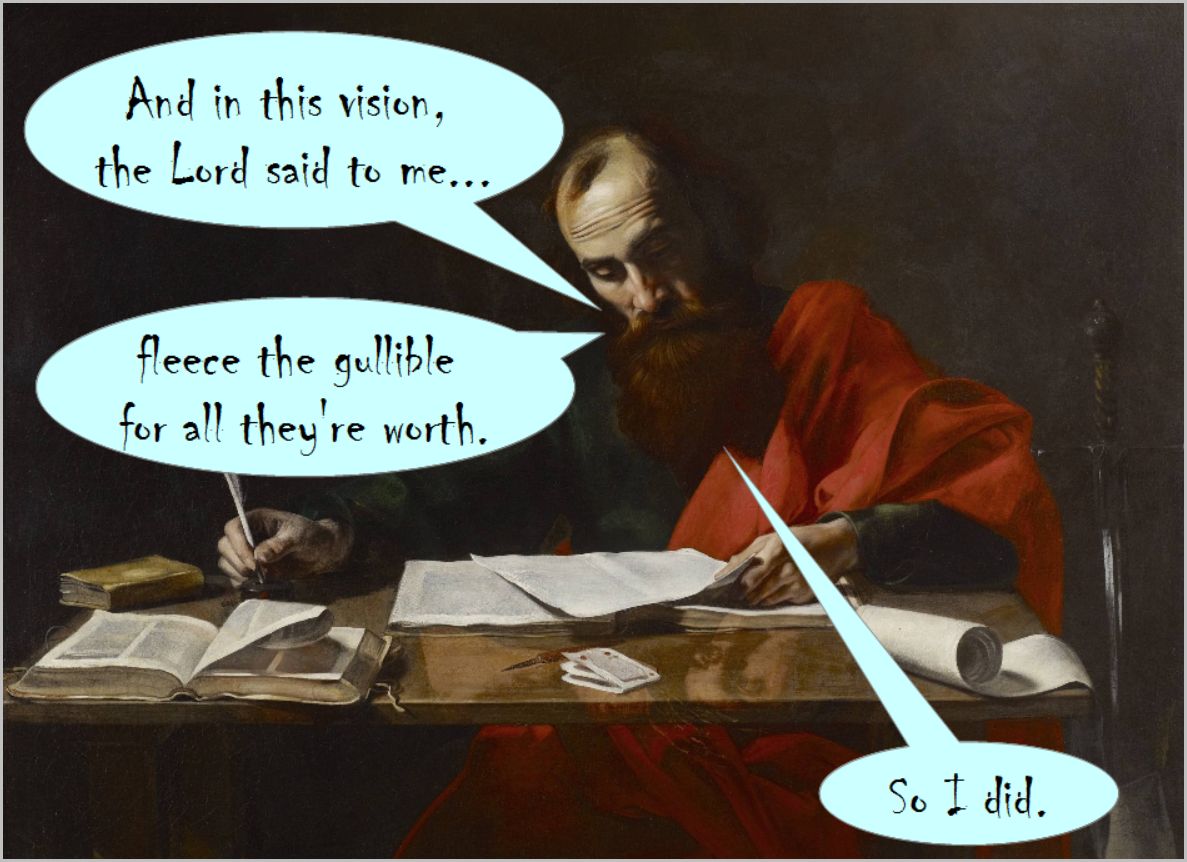
1. Jesus did not establish the Christian religion. Paul did.

2. Christianity did not spawn Western civilisation (see above).

3. Western civilisation is not the only one to have developed science, and where it has emerged has often been in spite of religion, not because of it.

4. Science certainly has not ‘proved’ the existence of God. It has no interest in the so-called ‘supernatural’ nor, indeed, in ‘proving’ anything. It is significant that none of the explanations science has arrived at require the involvement of a god.

5. ‘Since only God can reveal God, Jesus of Nazareth must be God’ is a non-sequitur; it doesn’t follow from anything that has gone before, as flawed as all of the previous assertions are. What SoM is claiming here is that because “1, 2, 3 and 4 are the case (though I have failed to demonstrate they are and in fact they are not), then A must equal B”.

In the end, SoM’s ‘argument’ is the same as saying that because there is a place called Greece, Zeus must really exist. Or because there are tea-shops, we can be certain Bertrand Russell’s teapot is orbiting the sun, forever just out of sight.

As proof of the divinity of Jesus, the argument from the scientific and cultural achievements of the West has to be one of the worst. All arguments (and SoM’s assertions can hardly lay claim to the term) that attempt to demonstrate how an abrasive, inconsistent zealot from a Palestinian backwater was secretly the God of the Universe are equally worthless while God himself remains unproven, as he always must.

This is why believing anything about him and about Jesus’ supposed divinity is called ‘faith’. If it were possible to prove the things held on faith, then faith wouldn’t be necessary. But it is, because believing the impossible and the unprovable can only be managed by by-passing and, yes, silencing the mind’s critical faculties.

It was all just a dream…

Stone2Perry Stone, self-styled prophet, evangelist and teacher is of the view that God provides dreams and visions to his followers. He does this, apparently, when he can’t think of a better way of communicating them. Perry recommends that those on the receiving end of God’s special messages should immediately wake up and quickly write down what their dream was about. If they don’t, they’ll forget it! Who knew we can’t always recall dreams once we wake up? Who knows how to wake up as soon as a dream is over? Perry has big drawings made of his own God-delivered dreams. Here’s one. See if you can guess what it was about:

Stone1

Yes, it was a warning about 9/11. The Lord gave it to Perry, in a dream, long before the 2001 attack.

You can’t see it? You think five tornadoes and the monolith from 2001: A Space Odyssey look nothing like 9/11? Shame on you! You need to take this more seriously. You’re thinking, aren’t you, that Perry’s dream, if he had it at all, was down to the cheese he’d eaten before going to bed. That and a deranged mind.

But you’d be wrong; Perry knows for certain his dream was from God and that his interpretation is right on the mark. And who are we to doubt it? Curious, though, that even though the Lord had warned him about the attack in advance, Perry neglected to tell anyone about it. I wonder why that was? God must have wondered too – why he’d entrusted such an important message to a dimwit who did nothing with it. (Then again, if the Lord is capable of inducing dreams why didn’t he speak directly to the terrorists to prevent them from doing what they did?)

Still, good ol’ Perry’s made up for lost time since and is now more than happy to tell the rubes everyone about his dreams. And so what if it makes him a few million dollars? Frenetic Perry has a significant following on TBN and on his own web-site, which is where you can buy his dream-world DVDs for as little as $45 a set.

Nut-jobs’ dreams and visions have been at the centre of religious belief since forever. Dreams are significant, or so it’d have us believe, in the Old Testament where there are at least two dozen ‘important’ ones, together with advice about their interpretation (Job 33.15-18, for example). They’re quite a presence in the Qur’an too.

In fact, dreams and their waking equivalent, visions, are ultimately what religion is made of. They’re certainly what Christianity is made of; Joseph, the Magi, Pilate’s wife, Peter and Paul all have deeply meaningful dreams while Peter, Paul, John and others have visions which, they persuade themselves, can only be the monolith from 2001 Jesus returned from the dead, and other fantastic nonsense. The authors of the New Testament attached such importance to converts’ dreamy/visionary experiences that they had them written back into the Jesus narrative itself. That way it sounded like Jesus knew when he was alive that later fanatics would think they could sense his presence (especially when they whipped themselves up together) and could experience him in dreams and visions. Still today there are those who convince themselves they have a ‘relationship’ with him and can see him in their dreams, near-death experiences and other hallucinations. Just ask Perry Stone. It’s all real!

Well, as real as things entirely in the mind can be.

Same as it ever was…

Paul2

(Edited for clarity 2nd Aug)

What does God think about the Orlando massacre?

Orlando

Let’s see what he’s saying through his spokesmen here on Earth:

According to a minister from the cathedral in my home town, who conveyed this message from the Lord at a vigil on Monday night,

God is just as confused as we are. All the same, he’s full of compassion for those who died and for their loved ones.

Makes you wonder though, if he’s so compassionate, why he didn’t do anything to prevent the murders in the first place. Still, he is sympathetic, which is something.

Oh wait! That isn’t how God feels at all, not according to Pastor Steven Anderson, who knows exactly what the Lord thinks:

…in Leviticus 20:13, God’s perfect law, he put the death penalty on murder, and he also put the death penalty on homosexuality. That’s what the Bible says, plain and simple. So, you know, the good news is that at least 50 of these pedophiles are not gonna be harming children anymore. The bad news is that a lot of the homos in the bar are still alive, so they’re gonna continue to molest children and recruit people into their filthy homosexual lifestyle.

Right. So now we know.

Hang on, though. Christian Today tells us something different again. According to this guy, what God really wants his followers to know is that,

true believers should pray for everyone involved in the terrible events of the weekend and ‘not miss a huge opportunity to build bridges and demonstrate our saviour’s love.’

Phew, glad that’s finally sorted.

Or maybe not, because God has changed his mind again: Pastor Roger Jimenez has this straight from the Lord himself:

The tragedy is that more of them didn’t die… the Bible paints the picture that these are wicked people. These are evil people. God gave them up to their vile affections… they’re not natural… they received a reward for their error… God almighty says, ‘there’s nothing I can do for (homosexuals).’

All these mixed messages, and all supposedly from the same Person! Compassion, punishment, love, abandonment; that truly is one confused, mixed-up deity you worship, Christians. You’d be confused too, I guess, if one nutjob after another put words into your mouth. Just who’s the ventriloquist here and who the dummy?

When, Christians, are you going to stop deluding yourselves that arses like Anderson and Jimenez know anything about what God thinks? When are you going to stop pretending that anyone knows what he thinks? When are you going to recognise that a God who ‘speaks’ so inconsistently through simple-minded ‘intermediaries’ is not God at all?  When are you going to stop deluding yourselves that there even is a God?

Christianity: always winter but never Christmas

Spot the difference:Shore

Christians are hot on evidence.

There isn’t enough for evolution, they say, even though there’s an abundance.     

None, they claim, that the Earth is billions of years old, but only 6 thousand.

Not enough that climate change is man-made, when there’s considerable evidence it is.

None that there’s a genetic component to homosexuality when science reveals that there is.

But, as far as the resurrection of the body, judgement and eternal life in either Heaven or Hell are concerned, these they believe in, no evidence required.

I recently challenged Christians on Charisma magazine’s blog-site to provide or point me to evidence that any one of the 107 billion people who has ever lived who after they had died had gone on to enjoy either eternal life in Heaven or eternal punishment in Hell. Unfulfilled promises from magic books weren’t admissible, because a promise of something happening is not the same as it actually doing so. Jesus didn’t count either, as there are no eye-witness accounts of his bodily resurrection, only stories written decades after the supposed event. In any case he was half Vulcan or something, not an ordinary mortal.

Alas, my challenge went unanswered. You won’t find it on the Charisma site now because it has been removed by the moderator there. Expecting evidence from Christians for what they believe is patently unreasonable. After all, who needs evidence when you can exercise your licence to believe whatever you’re told?

Of course, there is no evidence of any resurrection nor of anyone who has gone on, post-mortem, to enjoy everlasting life. Have you noticed how everything about Christianity is either invisible – God, the Holy Spirit, Heaven, angels, demons – or lies permanently in the future; the Second Coming, the resurrection of the body, the Kingdom of God, judgement and eternal life? All of them always just that little bit further on. This year, next year, sometime, never. Just not now.

Yet Jesus, Paul, Revelation’s John and most other New Testament luminaries believed God’s Kingdom, the resurrection and judgement were coming within their own lifetimes.* Not one of them entertained the thought that 2000 years down the line none of these miraculous events would have materialised.

Small wonder then, that at the start of the second century, believers began to lose hope in the Second Coming, the Kingdom’s arrival and an earthly resurrection of the dead. Maybe, some of them began to think, eternal life would be not be here on Earth, as Jesus and Paul had promised, but in Heaven with God, which they most definitely hadn’t. This way, everything that hadn’t happened here on Earth would happen instead after death (we can see this transition taking place in the very late gospel of John). All of which was fortunate, because it dispensed with the need for confirmation and evidence; no-one could prove – apart from the fact nobody has ever survived their own extinction – that believers didn’t go to Heaven when they died. Equally, no-one could provide evidence they did.** How neat and convenient.

So if any Christians reading this would like to like to show us some evidence for the resurrection of the dead, post-mortem judgement, Heaven, Hell, God’s Kingdom on Earth – any of it – I’m sure we would all like to see it. Until then, I will go on regarding all of these assurances as empty promises – pie in the sky – that believers cling to desperately, while calling their desperation ‘faith’.

* See Matthew 16.27-28 & 24.27, 30-31, 34; Luke 21.27-28, 33-34; 1 Corinthians 15.51-52; 1 Thessalonians 4.15-17; 1 John 2:17-181; Peter 4.7; Revelation 1.1 & 21.2-4

** Psychics claim to commune with the dead of course, or at least with their spirits; more hokum from the minds of the deluded. Even if it weren’t, this isn’t the kind of resurrection Christians envisage for themselves. They dismiss psychics’ ‘evidence’ of life-after-death as so much demonic deception.

Now make up a story about it

Bible4

So there we have it. The accounts of Jesus’ resurrection all derive from imagined sightings of him post-mortem. Call them hallucinations, visions or revelations, none of them were encounters with a real, revived physical being.

Except that’s not quite it, because it’s worse than that, Jim.

Most of our accounts of the resurrection appearances are fifty years or more too late. Paul’s is the only first hand account we have and even that is sketchy and recounted several years after it happened. For at least three of those years, Paul meditated on his seizure and interpreted it as a revelation from the Lord. Undoubtedly, others had similar experiences; the stories of the resurrected Christ came from somewhere and the resurrection seems to have been central to Christian faith from its earliest days. Paul cites in 1 Corinthians 15:4-8 those he says have encountered the risen Christ:

He appeared to Cephas, then to the twelve. After that He appeared to more than five hundred brethren at one time, most of whom remain until now, but some have fallen asleep; then He appeared to James, then to all the apostles; and last of all, as to one untimely born, He appeared to me also.

Paul implies here that his own experience is the same as that of the others on his list; they too, then, had visions of the risen Christ within their imaginations. Significantly, Paul omits Mary Magdalene, the first to ‘see’ the post-mortem Jesus according to the later gospels, while some of the other encounters Paul claims to know about do not find their way into those accounts. Of those that do, we can be confident the details are wrong. They were most certainly not as they are described in the stories that eventually came to be written.

The earliest copies of Mark’s gospel famously have no resurrection appearances. The women discover the empty tomb, which Matthew and Luke later lift into their gospels, and, bizarrely, decide not to tell the disciples about it. By the time we get to last canonical gospel, written some thirty years down the line, its author embellishes Luke’s attempts to suggest that the risen Jesus has some physicality; he allows his old friends, especially Thomas, to poke around in his wounds and he eats fish. Nonetheless, as in the earlier gospels, the disciples all have trouble recognising him, even on a third occasion, and are afraid to ask him who he is (John 21.12). Did his followers simply experience, as John 14.15-20 and Matthew 18.20 seem to suggest, an intense sense of Jesus’ presence? This would make the reports of actual sightings evidence of later believers’ need for something more substantial than flashing lights and fuzzy feelings. Which is how, over time, surrounding detail came to be added.

In their specifics, the resurrection appearances in the gospels and Acts are stories that accrued around the visions and inner traumas experienced by Jesus’ friends and other zealots. As such they are fiction; the angels at the tomb – probably the empty tomb itself – the encounter on the road to Emmaus, the fish breakfast and the rest. Bart D. Ehrman demonstrates convincingly in Jesus Before The Gospels, that the oral tradition was not capable of transmitting the details of Jesus’ life and ministry accurately over a 40 year period (when Mark’s gospel was written). The same is true, perhaps moreso, of individuals’ idiosyncratic inner experiences. Over 50+ years, after which Matthew and Luke’s gospels were composed, reports of these visions would have been altered innumerable times by those relating them, ever onwards and outwards; details would inevitably have been changed, added, removed and invented in a protracted game of Chinese whispers. In all probability the gospel writers themselves introduced their own embellishments.

So then, from a small number of visions/hallucinations/feelings, via significantly altered accounts of these same subjective experiences, together with others that are pure invention, to the eventual recording of such stories 50 to 80 years later, this is the evolution of the fantasy that is the risen Christ.

The Stuff Christians Say… (part three)

DoorToDoorAtheists are aggressive/militant/unreasonable: The Christians might’ve got us on this one. After all, it is incredibly irritating when we atheists start preaching in the town centre or invade others’ events to tell them what to believe or dish out loony pamphlets or turn up at people’s doors when they’re just about to have their tea. And what about all those meeting places we have, on just about every corner of the city, with smart-arse posters about Adam and Steve on the board outside? And let’s not forget our readiness to blow up ourselves and others in the name of our great cause. Now that’s ‘militant’! Yes, we atheists really do have too much freedom to push our views on others. No wonder we’re so insufferable. (Note to self: check you’ve got this right.)

It takes more faith to be an atheist than a Christian: It takes no faith to recognise there are no supernatural beings. It takes no more faith not to believe in God – or to acknowledge that there is no God to believe in – than it does not to believe in Santa Claus, Poseidon or Ra. Christians themselves require no great abundance of faith to dismiss these characters. Is it so difficult to understand that atheists disregard the Christian pantheon of fantasy figures in exactly the same way? Or are believers practising their dishonesty-for-Jesus again? There is no faith involved in being an atheist. On the other hand, believing in an omnipotent but suspiciously inactive God, a super-hero Saviour, a magic Spirit, angels, cherubim, seraphim, demons, Satan, resurrected saints, Heaven, Hell and all manner of powers and principalities – this requires faith in delusional quantities. No atheist could possibly compete. Nor would they want to.

Faith: An Exercise In Futility

MountainsWhat is faith?

The anonymous author of the book of Hebrews says it’s ‘the substance of things hoped for, the evidence of things not seen.’ (11.1)

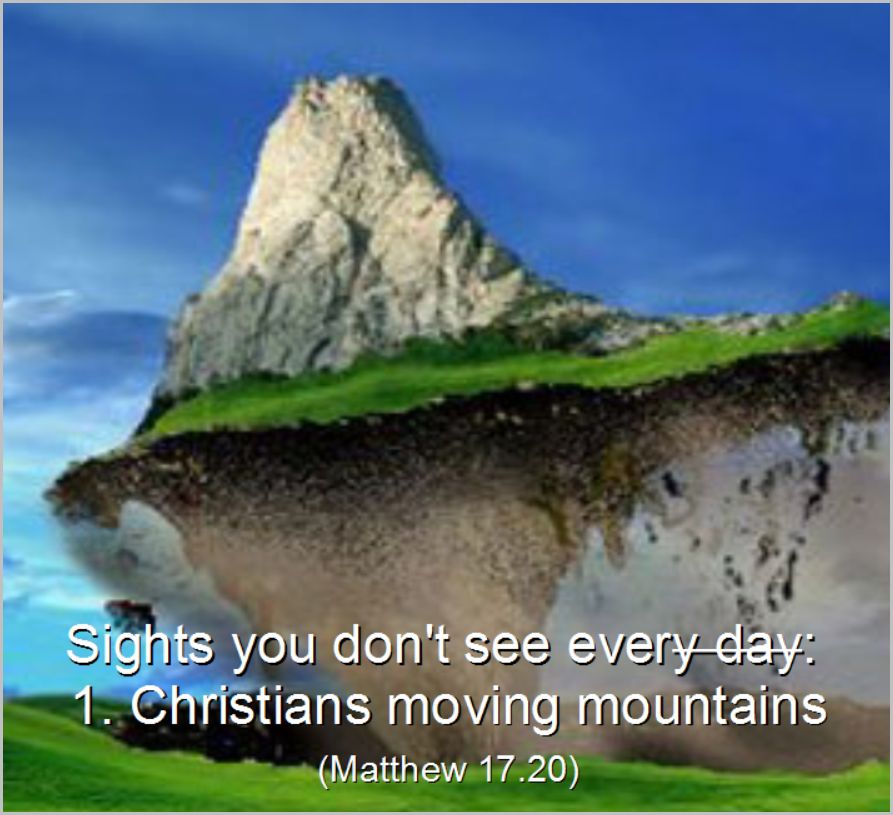
Hoping for ‘things’ like perfection, resurrection, eternal life, heaven (not to mention the ability to move mountains), the likes of which no-one has ever achieved, is nothing but wishful thinking. Despite what the Hebrews author says, wishful thinking isn’t evidence of anything – except a capacity for wishful thinking.

By it’s very nature, then, faith is not evidence, but the very opposite. It is the effort to believe in things for which there is no evidence and the delusional insistence that the imagined is more real than that which is.

Is It Wise To Be An Atheist?

Tract

Christians say the funniest things… like ‘atheists can’t possibly know that there’s no God.’

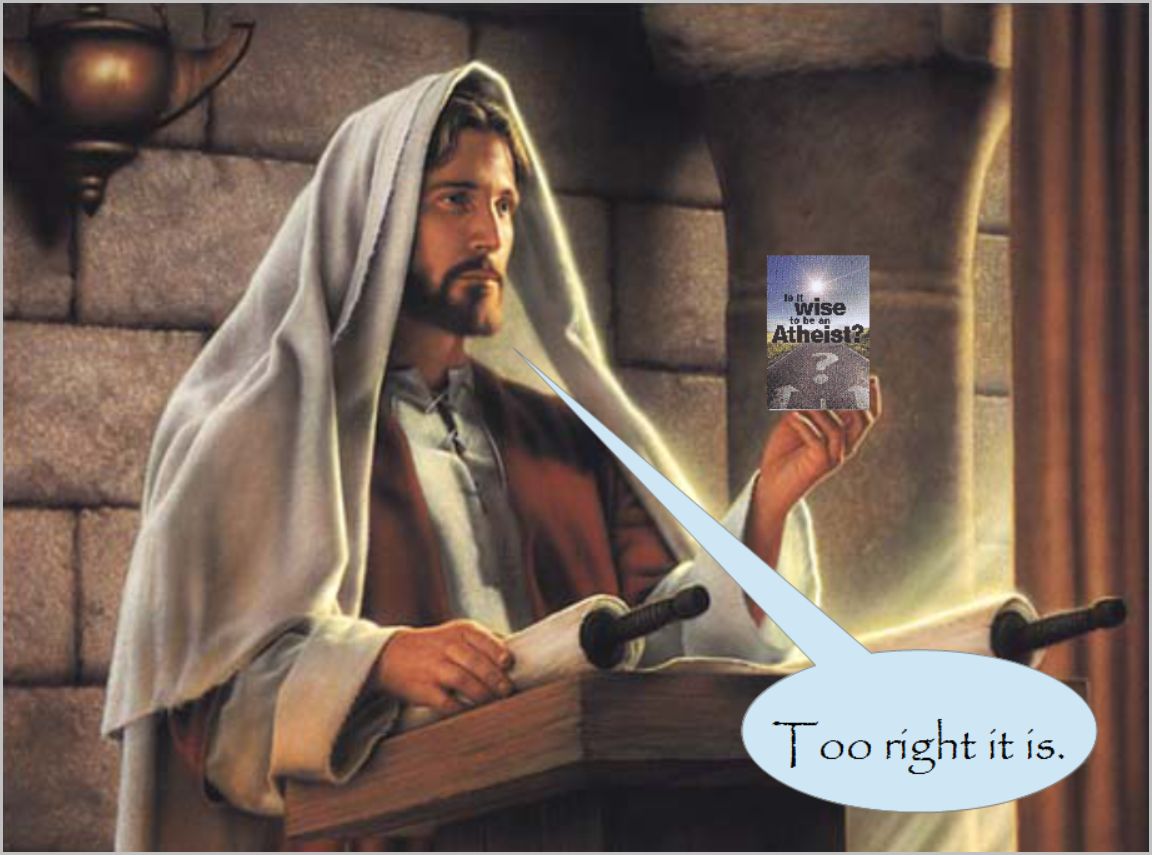
This is the argument expressed in a tract,  Is It Wise To Be An Atheist?, that I was given on the street the other day:

A person cannot really be sure there is no God (unless) they have existed for all time and have identified that God isn’t there; they have been everywhere and have seen that God isn’t anywhere and they know everything and therefore know for certain that God is non-existent.

Safe to say, these are not the same impossible criteria Christians apply when determining whether deities other than their own exist. Even Christians know that Allah, Zeus, unicorns and the tooth fairy don’t really exist. But without being immortal, omnipresent and omniscient, they cannot know for sure. By their own criteria, all mythical/supernatural beings have as much chance of existing as their God. Yet Christians do claim, with reasonable certainty, that other Gods and imaginary entities are not real. This is because determining the authenticity of entities is not about absolute certainty but probability and, yes, reasonable certainty.

For reasons I explore on this blog – here, here and here, for example – the likelihood that a god of some sort exists is low. That that god should then turn out to be the one worshipped by Christians today reduces the possibility still further, on the basis that the more conditions one adds to a proposition, the more improbable it becomes.

To put it another way, the probability that there is no god is already high; that there is no God as conceived by Christians is higher still. Therefore it is reasonable to conclude he does not. This is reasonable certainty; the same reasonable certainty Christians apply when dismissing all other gods.

Better luck next time, Christians.

Arguing for God

God3It’s a funny thing, but there aren’t hundreds of sites on the internet arguing for Barrack Obama’s existence. Nor the Eiffel Tower’s. Nor Australia’s. Nor the moon’s, nor the universe’s.

Why not? Because we have an abundance of empirical evidence that all of these things are real. People have experienced them first hand, can observe them and interact directly with them. There is no need to ‘prove’ or argue for their existence.

There are, however, hundreds of sites – plus books and broadcasts – that argue for the existence of God. This is telling. It is, whether those offering such arguments realise it or not, a blatant admission that there is no empirical evidence for him. If there were, there would be no need for argument and ‘proofs’; no need for apologists to resort to persuasion that is ultimately self-refuting to ‘demonstrate’ his existence. No need for apologists. Their problem is, of course, no-one has ever met God nor observed or interacted directly with him. Not in the same way people have met President Obama, seen him on the television, heard him speak or interacted with him in person. No-one has done anything of the kind with God, not even those who claim they have and feel compelled to tell us all about it. Every encounter with the Almighty has taken place in the mind of the individual experiencing it, just as St Paul admitted. God himself has never made an appearance.

So, yes, it’s very telling, this having to argue for God. If there was clear evidence of him there wouldn’t be any need to devise arguments for his existence; he’s not, or shouldn’t be, a philosophical proposition. An omnipotent, omniscient, omnipresent, creative being would, by dint of his immanence (presence in this world), be somewhat obvious and there would be incontrovertible evidence of his existence. Christians and other god-botherers say there is such proof, citing Nature, Goldilocks universes, Holy Books and personal experience. But these are far from incontrovertible, being much better explained by other means, none of which involve God. His very superfluousness demands that, through the application of Occam’s razor, he be discarded; not, as apologists would have it, rebranded as ‘transcendent’, a sleight of hand allowing them to proffer unreality as the ultimate reality.

The desperation to convince others there’s a God with an existence outside the human imagination is, then, more than adequate demonstration that there isn’t. Christians and others who want us to believe their God is real, protest much too much and in so doing, demonstrate precisely the opposite.

God’s Ache

 TBNI was going through my nightly ritual of channel-hopping before going to bed the other night when I lighted on a station called ‘TBN’. ‘TBN’, for the uninitiated, stands for ‘Trinity Broadcasting Network’. It is managed and operated by a posse known only as the Father, Son and Holy Spirit. No-one else is involved. These three have decided the best way to get the word out to the masses is to do it on the TV, which, I suppose, beats the old-tech approach. I mean, who reads books these days?

The Father, Son and Holy Spirit Collective was evidently having a night off and had delegated the job of running the station to an ordinary mortal (whose name I was sure I’d remember but have already forgotten). This chap was telling everyone – I say ‘everyone’ though he was standing in an empty attic – just how much God loves us and yearns to heal us. That was his word, ‘yearns’, which means to desire strongly or to ache to do something.

And I found myself wondering why he doesn’t – heal us, that is. I’ve already shared my thoughts on the Godhead’s abdication of any hands-on demonstration of his love, but if this bloke was right and God really does want to heal us – then why doesn’t he just get on with it? He could post a big miraculous sign in the sky saying ‘Hi. It’s me, God. I’m doing all this, the healing you’re seeing all over the world,’ so everyone would know it was him and not aliens or some super-advanced scientists who’d travelled back from the future. Or – even better idea – he could have it broadcast on his very own TV station. If he’s not available to do it himself, what with all his preparations for the miracle-to-end-all-miracles, he could get one of those Holy Joes who’ve got a direct line to him to announce it for him. Franklin Graham maybe, or Jan Crouch, who could have her hair roughed up specially:

Starting tomorrow at 12.00 the Lord God Almighty will be curing every illness, healing every psychological and physical ailment and eradicating all illness, just like he said he would way back when (in Isaiah 35.5 and Matthew 11.5 if you’re interested). Okay, he’s a little behind schedule but he’s been busy and, well, better late than never.

Something like that.

If the Lord doesn’t care for either of these splendid options then surely he can come up with a better alternative; according to his human mouthpieces, he sends storms and earthquakes when he’s unhappy, so he could easily conjure up something nice for a change. He’s a creative sort, after all. Not to mention omnipotent.

Now I know there are a couple of theological flies in the ointment that would make all of this difficult for him. The first is Kryptonite. Or human sin… one or the other. But he could obliterate this at the same time, couldn’t he; make us all perfect first then the Kryptonite couldn’t harm him while he’s busy fixing us. I know, you’re going to tell me this would be an infringement of our free-will. But there’s nothing Biblical about free-will. God’s never been keen on it, preferring instead to choose his buddies up front, and in any case, he’s going to eliminate it completely once they’re all taken up into Heaven. So it really wouldn’t hurt him to make some sort of decision about it now. With free-will gone he could just get down to the business of making us all better, not forgetting to take credit for his work in one of the mysterious ways I’ve suggested.

‘What’s in it for God?’ I hear you ask. Well, my tele-evangelist failed to say, but I can think of at least three benefits: 1. He’d get over his ache. Instead of just yearning to do something about disease he’d have actually done something and this would make him feel a whole lot better about himself. 2. He wouldn’t have to worry about Kryptonite any more. 3. He’d have lots of new friends that he wouldn’t then have to consign to Hell.

To be honest, I can’t see why God hasn’t done something like this already. His first idea, to bully a load of ancient tribesmen into submission, didn’t work so well and Plan B just ended in tears. Let’s face it, it wasn’t the greatest of ideas. This though is a far better option. So if you’re listening God, it’s yours, gratis.

                        God?

                                      God?