But Is It True?

We can argue till Kingdom come (i.e. forever) about whether or not this or that Bible verse is meant to be taken literally or metaphorically (God couldn’t make himself clearer?) and whether a particular author was an eyewitness or not, but the bottom line is, ‘Is what the Bible says True?’ Nothing else matters. If it is true, then it’s claims must be accepted. It would be extremely foolish to disregard them. If not, if the Bible is one big lie, then we must consign it to the dustbin of history.

Is it true that whatever a believer prays for, God will provide? Jesus says so several times:

If you believe, you will receive whatever you ask for in prayer (Matthew 21:22).

And I will do whatever you ask in my name, so that the Father may be glorified in the Son (John 14:13).

Very truly, I tell you, if you ask anything of the Father in my name, he will give it to you (John 16.23).

No, its not true. We don’t see ‘whatever’ and ‘everything’ being granted even when Christians pray ‘in accordance with God’s will’ as they like to qualify these promises.

Is it true that whatever a believer gives will be returned to him until it overflows (Luke 6:38)? While this is the foundation for the prosperity gospel movement it is patently untrue. Untrue symbolically too; if you give of yourself in God’s service you will be rewarded excessively? Just ask all those burnt-out ministers.

Is it true that with sufficient faith believers can uplift mountains and throw them in the sea (Matthew 21:21)? Obviously not, not even when this hyperbolic promise is interpreted figuratively. Christians can’t resolve their problems, work miracles or bring about radical change more than anyone else, and certainly not by ‘faith’.

Is it true that God looks after those he has chosen, to the extent he knows the number of hairs on their heads (Matt 10:29-30)? Evidently not. It didn’t work this way for Jewish people in the holocaust, it doesn’t work for the 10,000 children who die everyday of hunger and it doesn’t work for Christians, who fair no better than anyone else in life’s calamities.

Is it true that Jesus was born in Bethlehem under a wandering star? No. This is a myth constructed from older stories.

Is it true Jesus walked on water, turned water into wine and raised the dead? Or is it more likely these ‘miracles’ were created for him, ‘signs’ from Jewish scripture designed to present him as the anticipated Messiah? This is the more likely explanation. A man called Iesous did not really perform supernatural feats.

Is it true Jesus rose from the dead after three days and nights? No. While Mark (10.33-34) and Matthew (12:40) claim this was going to happen, they don’t even pretend that it did. Friday evening till Sunday morning is 36 hours, not three days and nights.

Is it true his disciples and lady friends saw Jesus risen from the dead? We don’t know; the accounts of them doing so were written forty and more years after the supposed event by people who weren’t there. The only eye-witness account of a risen-Jesus sighting is Paul’s and he admits it was in his head. So probably the answer is no: it’s not true people saw a resurrected physical body.

Is it true gospel Jesus existed? With his story made up from existing myths and mystical visions, it’s highly unlikely. So no.

Is it true Jesus sends those he’s saved to heaven when they die? The Bible doesn’t say he does; it claims he would be coming from heaven himself, in the time of those who were writing about him, to initiate God’s kingdom on Earth. So, no and no again; its not true he came down from heaven, in the time of those who were writing about him, to initiate God’s kingdom on Earth.

Is it true, that by believing in something akin to magic, people can rise from the dead? No. Believing a secret formula does not enable anyone to escape death. There is no evidence anyone has resurrected after being fully, properly dead because they believed something. There is no evidence anyone has resurrected from the dead ever.

Is it true that believing in Jesus makes people into new creations? No more than many other experiences in life. Does it make for better people – more righteous, more moral, more loving? Evidence from the Bible itself suggests not, as does the appalling behaviour of some Christians today.

Is it true that the spirit of this long-dead first-century itinerant Jewish preacher lives inside people today (John 14:17)? No, it’s not. There is no evidence that dead people, or celestial super-beings from some other plane, inhabit the living. Many believers are embarrassed to acknowledge even the possibility.

Is any of it true? We could play this game all day: taking any of the New Testament’s claims and stories and asking ourselves whether they are true. The answer will be, invariably and demonstrably, no. It takes the closing down of any critical faculties to believe they are, and mental gymnastics to maintain that, even if they’re not literally true, they contain hidden, profound truth. They don’t.

God’s Design for Sexual Relationships: the Gospel According to Don

A digression:

A little while back, a Christian commenter (we’ll call him ‘Don’) made the point that homosexuality and other non-conformist sexualities are ‘not the order of creation God intended‘. Yes, Don knows the intentions of a God whose purposes are unknowable (Romans 11:33-34)! 

And what are those intentions?’ I hear you ask. It is that everyone be, or pretends to be, heterosexual and involves the marriage of one man to one woman for life, for the procreation of children. I know this because it says so in the Book of Common Prayer, originally composed in 1622:

The union of husband and wife in heart, body, and mind is intended by God for their mutual joy; for the help and comfort given one another in prosperity and adversity; and, when it is God’s will, for the procreation of children and their nurture in the knowledge and love of the Lord. Therefore marriage is not to be entered into unadvisedly or lightly, but reverently, deliberately, and in accordance with the purposes for which it was instituted by God.

But how did the writers of this book know this was God’s plan? How do evangelicals today, who subscribe to the same ideas, know that this is what God intended? How does Don?

The Bible. Surely the writers of the prayer book consulted the Bible and created their summary of God’s plan from that. Surely the evangelicals who promote one-man one-woman marriage draw their inspiration from God’s Word. Surely this is how Don knows too.

Let’s see. Here’s what Paul has to say about marriage 1 Corinthians 7:28-29:

…if you marry, you do not sin, and if a virgin marries, she does not sin. Yet those who marry will experience distress in this life, and I would spare you that. I mean, brothers and sisters, the appointed time has grown short; from now on, let even those who have wives be as though they had none.

Hardly a ringing endorsement of marriage!

Paul goes on to say,

I would like you to be free from concern. An unmarried man is concerned about the Lord’s affairs—how he can please the Lord. But a married man is concerned about the affairs of this world—how he can please his wife— and his interests are divided. An unmarried woman or virgin is concerned about the Lord’s affairs: Her aim is to be devoted to the Lord in both body and spirit. But a married woman is concerned about the affairs of this world—how she can please her husband.I am saying this for your own good, not to restrict you, but that you may live in a right way in undivided devotion to the Lord…So then, he who marries the virgin does right, but he who does not marry her does better. A woman is bound to her husband as long as he lives. But if her husband dies, she is free to marry anyone she wishes, but he must belong to the Lord. In my judgment, she is happier if she stays as she is—and I think that I too have the Spirit of God (1 Corinthians 7:32-40).

In other words, avoid marriage if you can, the better to devote yourself entirely to the Lord. How many Christians actually do this? How many preachers and evangelists promote it? None that I know of.

I can already hear Don arguing that Paul’s views are his own and were not handed down from on high. Let’s then turn to what Jesus says about marriage. If anyone knows God’s views on the matter, it must surely be his very own Son. I don’t for a second, believe he was of course, especially as Jesus’ script was written years after Paul and owes a great deal to him. Nonetheless, here’s what Jesus is made to say about God’s plan for marriage:

Jesus said to them, ‘Those who belong to this age marry and are given in marriage; but those who are considered worthy of a place in that age [i.e. that of the Kingdom] and in the resurrection from the dead neither marry nor are given in marriage (Luke 20:34-36).

Surely he can’t be saying that those who want to rise from the dead and make it into the Kingdom of God shouldn’t marry? That they’re not worthy of that Kingdom if they do? Yup, that’s exactly what he’s saying.

Similarly, in Matthew 19:10-12, after discussing divorce with the Pharisees, Jesus responds to the disciples’ remark that ‘it is better not to marry’, with –

…not everyone can accept this teaching, but only those to whom it is given. For there are eunuchs who have been so from birth, and there are eunuchs who have been made eunuchs by others, and there are eunuchs who have made themselves eunuchs for the sake of the Kingdom of heaven. Let anyone accept this who can.

Even interpreted figuratively – though it’s not evident from the text that Jesus is speaking figuratively – this means Jesus thinks it’s preferable to be sexless: chaste, celibate, single. How well that’s worked out for the Catholic church!

Finally, there’s Luke 14:26 where Jesus makes it clear what following him entails:

If anyone comes to me and does not hatewife and children, brothers and sisters—yes, even their own life—such a person cannot be my disciple.

Not much ‘mutual joy’ there.

Unlike Jesus and Paul, I’m not knocking hetero-marriage or the procreation of children. I’ve been involved with both. If these are what floats your boat, that’s great. But they’re not what the Bible promotes. Just the opposite. After the tales of incest, polygamy and adultery in the Old Testament, the New teaches that marriage has had its day. It is to be avoided, the better to follow Jesus, prepare for the coming kingdom and be worthy of eternal life. Only marry, Paul advises, if you can’t control your sexual urges. But, according to Jesus, you are risking your place in the coming kingdom if you do. You can improve your chances by shunning sex altogether.

This is the Bible’s teaching about marriage and God’s intentions for the sexual beings he created. Strictly speaking, it’s the New Testament’s teaching; that of the Old is even more bizarre.

Aah but,’ I hear someone say, ‘it’s all about context.’ Certainly it is; and the context is that Paul and those who created Jesus’ script believed the current age was about to end. Marriage, such as it was (very different from the modern concept, particularly for women who could be bought and sold aged only 12 or 13), would also then be coming to an end. With the arrival of the Kingdom of God on Earth, marriage would be redundant. Better, Paul and the gospel writers argue, to have done with it now to conform ahead of time with the new system, with God’s plan: ‘those who are considered worthy of a place in that age and in the resurrection from the dead neither marry nor are given in marriage.’

But God’s plan – the arrival of his kingdom on Earth in the first century didn’t come to fruition. His plan for marriage to end likewise fell by the wayside. Instead, and without the assistance of any deity, the very human institution of marriage persisted and evolved, eventually being hijacked by the Catholic church in the ninth century. It emerged more or less in its current form – though not for everyone – in the 17th century. Whatever this signifies, it was not what ‘God intended for his creation’ nor his ‘design for sexual relationships’ (Don again, doubling down on his position.)

If the Bible is anything to go by, God has never been very impressed by marriage. His long-term plan for it, if that disreputable book is to be believed, was to scrap it altogether. Yet we still have Christians who use its continued existence to disparage and denigrate those of us who express our sexuality with other adults of the same sex, with whom we share a mutual attraction.

Shame on them.

No Sign of Life

For what I received I passed on to you as of first importance, that Christ died for our sins according to the Scriptures, that he was buried, that he was raised on the third day according to the Scriptures. (1 Corinthians 1:4)

This, apparently, is what early Christians believed; Paul is thought to be quoting an early creed here. What an incredible statement it is. Incredible because of its demonstrable falsity.

Christ died for our sins according to the Scriptures’: just where, in which scriptures, does it say this? Presumably Paul, or those he’s quoting, thinks it’s Isaiah 53, where it says:

…the Lord was willing to crush (his servant), and he made him suffer. Although you make his soul an offering for sin, he will see his offspring, and he will prolong his days, and the will of the Lord will triumph in his hand. ‘the Lord makes his life an offering for sin’ (Isaiah 53:10)

Unfortunately for Paul, most scholars agree that Isaiah 53 is not about the Messiah at all, but about the Jewish nation. It looks as if it neatly fits the much later ‘Christ’ because the Christ is a construct built on a handful of believers’ visions and this very chapter, which seemed, but only superficially, to validate their inner experiences.

Paul goes on to say, ‘he (Christ) was buried (and) was raised on the third day according to the Scriptures. Here he is on even shakier ground. The Messiah was not going to die for his people – he would be a triumphant warrior king – and he certainly wasn’t predicted to rise from the dead. There are no references at all, anywhere in the Scriptures, to the Messiah being raised from the dead and certainly not ‘on the third day’. Paul is wrong. At best, he’s mistaken, at worst he’s deliberately perpetuating a falsehood.

When Paul wrote this, the gospels were still many years away from being written. All that new believers, in as faraway a place as Corinth, could rely on was the testimony of preachers who came to tell them about the Christ. Some of these preachers may have known Jesus personally (though I doubt it) but most, like Paul, had limited means of persuading those they aimed to convert that Jesus had died for their sins and had risen again. Not unlike today’s evangelists, all they offered was their own and others’ inner spiritual experiences and visions, together with ‘evidence’ from scripture. Paul admits this is all he’s offering here: ‘what I received’ and ‘according to scripture’. But there is no evidence from the scripture available at that time.

What’s a gospel writer to do? When Mark created his gospel, he undoubtedly knew of Paul’s teaching about the resurrection and he may have known of this early creed. Yet he knew also that there was no prophecy about Jesus rising ‘on the third day’, on which to build his story. Consequently, he has Jesus declare in Mark 8:12 that ‘no sign will be given’ (= ‘there’s nothing in the scriptures about this’) and he omits the resurrection from his story.

Not so Matthew. As is his way, Matthew scoured Jewish scripture till he alighted, in the absence of anything resembling a prophecy, on the story of Jonah. Jonah 1.17 claims preposterously that this ancient prophet spent ‘three days and three nights’ in the belly of a great fish – and Matthew decided, ‘that’ll do!’. He has his Jesus refer to the tall tale as a ‘sign’ that he too will spend three days and nights in the belly of the earth:

Then some of the scribes and Pharisees told Jesus, “Teacher, we want to see a sign from you.” But he replied to them, “An evil and adulterous generation craves a sign. Yet no sign will be given to it except the sign of the prophet Jonah, because just as Jonah was in the stomach of the sea creature for three days and three nights, so the Son of Man will be in the heart of the earth for three days and three nights…” (Matthew 12:38-40)

Contradicting Mark’s Jesus (‘no sign will be given’), Matthew also modifies the original belief that Jesus rose on the third day. Now it’s after ‘three days and three nights’, which does not mean the same as ‘on the third day’. According to Matthew’s own gospel, Jesus was in the tomb – the belly of the earth? Really? – from Friday ‘as the evening approached’ (Matthew 27:57) till before dawn on Sunday morning (Matthew 28:1). This only just qualifies as being ‘on the third day’, given that days are counted from evening to evening in the Jewish calendar; it certainly isn’t ‘three days and nights’. Jesus lay dead in the tomb for no more than 36 hours. The damn ‘sign’ Matthew is so eager to use doesn’t even fit his own story.

What a mess. It’s what you get when you lift any old tall tale from ancient scripture and use it as a symbol for your own made-up story.

Jesus the No-Hoper

Jesus – Hope for the World declares the banner outside the church near where I live. I can’t help but wonder about the naivety of the people who came up with the slogan and what it means. What are the possibilities?

‘Peace on Earth, goodwill to all men’ (and maybe women)? If so, the world isn’t showing much of either, certainly none that can be attributed to Jesus and his fractured, fractious and frequently intolerant church.

How about inner peace then, even though that’s a long way from ‘hope for the world.‘ How many Christians exemplify this particular fruit of Spirit? Is this, in the end, all that Jesus offers: the hope of a nice fuzzy feeling inside? Of course, peace of mind can be spirit-generate, though personally I prefer wine. 

Hope of reconciliation with God then. Only if you believe in God in the first place, not to mention ‘sin‘, human sacrifice and magic. If this is the kind of hope Jesus represents, then really, what good is it? 

Possibly the hope of which the banner speaks is the hope the earliest Christians had, of Jesus coming back real soon to slaughter his enemies and set up the Kingdom with, naturally, themselves at the top of the pile? Hasn’t Jesus had two thousand years to deliver this hoped for outcome?  An idea well past its sell-by date, the Kingdom of God on Earth isn’t ever going to materialise, however much ‘hope’ people have.

Maybe, then, it’s a hope of eternal life. The gospel writers have Jesus make such a preposterous offer (e.g. John 10:27-28). If this is what Christians are hoping for they are sadly deluded, and, as Paul puts it, the most pitiable of all people (1 Cor 15:19). No human being outside of myth and comic books has ever lived forever. None ever will.

Hope of heaven? See above. Besides, the Bible really doesn’t offer a place in heaven to anyone. That’s a much later development. It’s a waste of this one and only life to live in the vain hope of something better after death. 

Maybe the hope referred to is hope in hope itself. How futile would that be? Hope is no substitute for food for the hungry, shelter for the destitute, treatment for the sick. 

When I go to the carol service at the church next weekend, I’m confident it will be made clear just what sort of hope Jesus offers the world. If not, I’ll be sure to ask. I’ll let you know.

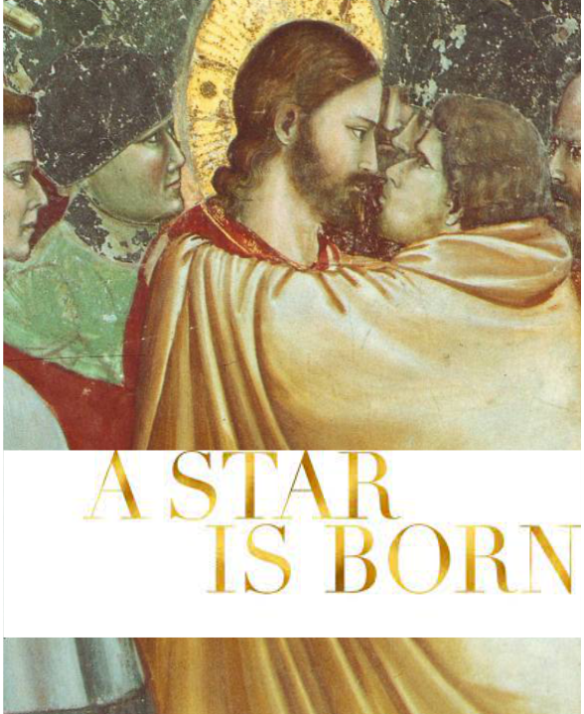
A Star Is Born

Did you know that the original, 1937 version of A Star Is Born may well have been based on a true story, first aired in an earlier, 1932 movie called What Price Hollywood? Yet every word of dialogue in the original Star Is Born was invented, all of its characters fictional, all of its scenes made up.

By the time of the 1954 remake, the female lead had gone from being an aspiring actress to an aspiring singer, played by Judy Garland, looking for her big break. Her mentor is still the addictive personality of the original film but this time he’s a has-been singer, not an actor, and crucially he doesn’t commit suicide before the film’s end (apologies for the spoiler.) Practically everything about this remake – its dialogue, characters, songs (songs? Where’d they come from?) settings and scenes – is different and, once again, is completely made up.

In the Barbra Streisand 1976 version, the female lead is once again a singer, her mentor a rock star whose career is on the slide. This film is about the perils of a rock’n’roll lifestyle and the passionate relationship between the two protagonists. It bears only the scantest relationship to its predecessors, never mind the original true-story that inspired the first film. Again, everything in it is pure invention.

Which brings us to the fourth version, starring Lady Gaga, that borrows a little something from all of the previous films. All the same, it alters the story, creating completely new scenarios, dialogue, songs and settings. It would be unrecognisable to the original audience of the first A Star Is Born, as different from that film as… well, as John’s gospel from Mark’s.

As the various versions of the film demonstrate, stories evolve. They are fluid and in their telling and retelling they change. Their creators adapt them and ‘improve’ them to meet the evolving tastes of their intended audience. They happily invent new episodes, new scenarios and new dialogue.

And so it is with the gospels: Mark’s original based on the visions of a few people from 40 or so years earlier; Matthew and Luke’s based on Mark’s – with their own largely invented additions – and John’s (the Lady Gaga of the set) a wild reimagining of all three. Apart from the outline of the story (which they get from Mark), every one freely adapts everything else: dialogue, scenarios, pericopes and, yes, songs.

We’ll look in detail next time at the evidence, still apparent in today’s versions of the gospels, at how we know this to be the case. 

The Evolution of Jesus II: from Life Giving Spirit to God the Son and beyond.

A couple of decades after the first visions of a risen Jesus, a Jewish zealot called Saul decided he’d seen him too. He came to imagine a vision he’d had in his head was this same Jesus, who then revealed to Saul – all entirely within his head as he admits – what his death and return from the dead really meant. Paul, as he renamed himself, announced that God had decided Jesus was a good man and returned him to life after his execution. In doing so, God made Jesus his Son (you can read all this poppycock in Romans 1:3-4). Jesus was now a life-giving spirit, the Saviour Christ: 1 Corinthians 15:45. (Maybe though Jesus always had been this; it’s kind of confusing, but in Philippians 2:6-8 Paul seems to think Jesus was some sort of quasi-divine being from the get-go. Take your pick. Whatever.)

Memetic selection ensured the survival and perpetuation of Paul’s bizarre idea, one that was, after all, not unfamiliar to the Hellenised people of the first century. The superstitious embraced and transmitted it without knowing a thing about any itinerant Jewish preacher. 

The next stage of Jesus’ evolution came twenty or so years later, when a believer we now know as Mark decided to write a back story for this Christ. He created his story using Jewish scripture, Paul’s ideas and the rules of the sect to which he belonged. Who knows if Mark believed Jesus had ever been a real person who trudged around Palestine preaching the good news about the end of everything, but in Mark’s story he had him do just that. He decided, crucially, that he wouldn’t have Jesus become God’s adopted son at the time of his spiritual resurrection. Instead, Mark had him become God’s son at his baptism (Mark 1.10-11).

This wasn’t quite good enough for the next two cultists who attempted a Jesus narrative. While they plagiarised much of Mark’s story, they changed details and made up more for Jesus to say and do. Importantly, where Mark had avoided suggesting Jesus’ resurrection appearances had occurred in the real world, Matthew and Luke showed no such reticence. Their Jesus(es) showed himself not in visions but in the flesh. It’s likely Matthew at least knew he was creating a symbolic, literary representation of others’ visions.

At the other end of the story, Matthew and Luke invented largely incompatible birth stories for their hero. For Matthew, Jesus was the Messiah from the time he was born, fulfilling all the prophecies Matthew borrowed to create his nativity story (he doesn’t: the Messiah, according to the very ‘prophecies’ Matthew manipulates is not divine but a human warrior).

Luke, on the other hand, is determined to push Jesus’ divinity even back further. For Luke, Jesus became divine when God magically made Mary pregnant; Luke’s Jesus is quite literally God’s son (Luke 1.35). Unfortunately, Mary forgot all about being impregnated by the Holy Semen Spirit later on in Luke’s ridiculous story. Nevertheless, Jesus’ status had evolved again; he’d become God’s son from the very moment of conception.

Even this was not good enough for the next version of the Jesus’ story. The writers of the fourth gospel decide to make him eternal and part of God himself. Plundering Greek philosophy and Paul’s ruminations from Philippians, they declare Jesus the ‘Logos’; the Word or aspect of God responsible for the creation of everything (John 1:1-5). And despite this being as far from an itinerant peasant preacher as it’s possible to be, even more gullible folk came to believe it.

Jesus’ evolution was still not complete, however. The council of Nicaea in 325 decided that Jesus was ‘begotten not made’ (whatever that means) – but couldn’t quite decide whether being the Logos and the Son of God actually made Jesus God Incarnate. It wasn’t until the Council of Constantinople in 381 that a collection of bishops decided Jesus was, after all, officially part of the Godhead. The apocalyptic preacher from the backwoods finally became God the Son, a mere 350 years after he lived (if indeed he did).

Jesus has continued to evolve ever since, becoming all things to all people; a God pliable enough to be whatever his followers want him to be: Roman Catholic, Greek Orthodox, Russian Orthodox, Evangelical, Mormon, fringe cult. He’s evolved into a schizophrenic deity capable of being both meek and mild and bellicose; best buddy and chief executioner; Christian Nationalist, socialist and capitalist, gay and anti-gay, pro-family and anti-family; anti-abortion and pro-gun; environmentalist and iconoclast; the one who promotes a prosperity gospel and the ‘One True God’ known (only) to a select few. Every contradictory manifestation is supported by the Bible, the Church or tradition. Every one is non-existent and ultimately pointless.

That’s some evolution.

Only The One Book

Some years ago I visited friends where another of their guests told me he had been reading a remarkable book. It was he said, about Atlantis and demonstrated beyond any doubt that the ancient city had really existed and had sunk beneath the ocean where it still waited to be found. I asked him how he knew this (a polite way of asking what his evidence was.) He looked at me incredulously. ‘Because the book says so,’ he explained.

It’s the same with all the claims made about Jesus: that he was the Saviour, the Messiah and the Son of God. All such claims are found only in one book written by people who already believed such things about him.

Outside of this book there’s nothing: no Roman records of his death and subsequent resurrection; no reports of post-resurrection visits by witnesses who weren’t already invested; no contemporary, independent accounts of his remarkable miracles; nothing from historians of the day about his return from the dead and subsequent ascent into the sky; no mention of him at all in any documentation for the first 80+ years of Christianity outside of this one book. The Son of God appears on Earth and nobody but a handful of superstitious zealots notice.

Not very convincing, is it? 

Is Jesus the Saviour, the Messiah and the Son of God?

Is Jesus the Saviour, the Messiah, and the Son of God?

No, no and no.

We know he’s not the Saviour because he hasn’t saved anyone. Every single person who has believed in him over the last 2,000 years has died and stayed dead. He hasn’t resurrected a single one of them and hasn’t ushered anyone into the heavenly mansion he (supposedly) said he was preparing for his Elect. Neither has he saved them from the trials of this life: illness, pain or suffering. His followers are no more saved from these than the rest of us.

Of course, Christians claim that what he saves people from is ‘sin’. But sin is an empty and peculiarly religious concept signifying the separation of ‘man’ from God. If there’s no God to be separated from there can be no sin. If, however, we’re talking about morals – ‘sinning’ – then it’s evident that believers are no more or less moral than anyone else. Jesus, it turns out, doesn’t save anyone from their own bad behaviour.

He’s not the Messiah (I’m resisting the temptation to add the Monty Python completion of that sentence) which is why most Jews do not believe in him. He doesn’t demonstrate any of the characteristics of the Messiah prophesied in Jewish scripture. He didn’t overturn the oppression his people endured under Roman rule and he hasn’t been there for the Jewish people in all their subsequent suffering. He certainly didn’t rescue them from the Holocaust. Only by redefining what is meant by ‘Messiah’, as early Christians did when they made the term synonymous with ‘saviour’, could Jesus even be considered a contender. In reality, he is an utter failure as a Messiah.

He’s not the Son of God. Even in the synoptic gospels he doesn’t claim to be; he’s cagey whenever the subject arises. It’s as if his early followers couldn’t make up their minds about how divine he actually was. Later Christians were more emphatic, claiming that the resurrection demonstrated Jesus’ divinity. Paul, however, doesn’t think so, saying only that Jesus’ return from the dead elevated him to a favoured position in God’s hierarchy (Philippians 2:9). Even this is going too far when the evidence of Jesus’ physical resurrection is so poor; the gospel stories do not  qualify him for Sonship. Nor do his failed promises and prophecies; if he were the Son of God, he’d have known the appearance of Son of Man (he himself?), the last judgement, the Kingdom of God on Earth, the inversion of the social order and the meek inheriting the Earth would not happen when he said they would. Or indeed at all. He was ignorant about so much! What sort of Son of God was he, to get so much so wrong?

In fact, we can be certain Jesus was no more the Son of God than Alexander the Great was Son of Ammon-Zeus or Augustus the ‘Son of the Most Divine’. How? Because like Ammon-Zeus and ‘the Most Divine’, the likelihood YHWH exists is ridiculously low; so low it’s reasonable to conclude he doesn’t. And no God = no Son of God.

To be continued.

No True Christian


Why is it, I wonder, that every Christian I encounter thinks they are True Christians, while most others are not?

A recent survey in the States revealed that belief in God is in decline. Ken Ham of Answers In Genesis decided this is because:

We live in a day when the religion of secularism (naturalism)—with its belief that there is no God, morality is relative, my happiness is all that matters, and we’re simply the products of evolution—is taught as fact in public schools and through the media.

I suggested on Ken’s Facebook page that the reason more people are rejecting the idea of God might have a lot to do with Christians themselves; that Christians’ own public performance was a complete turn-off for many people. I meant by this the way evangelicals in particular:

  • align themselves with Christian Nationalism;
  • actively campaign to restrict LGBT+ rights (and in some cases to have gay people executed);
  • are obsessed with abortion;
  • disregard almost totally Jesus’ actual commands and instead –
  • waste their time online maligning atheists and other minority groups;
  • are downright unpleasant to those who don’t share their views.

Silly me! I was told by a real Christian called Tim Bodnar that Christians who behave like this are not real Christians (despite believing they are):

If we are to know fellow believers by their fruit (or as you say, “public performance”) – we then know that their fruits show them to not be the Christians they claim to be.  That’s why our relationship with Jesus Christ is a personal one.

When I pointed out to Tim that this was nothing more than the No True Scotsman fallacy, he told me – passively aggressively but oh so lovingly – that ‘it isn’t difficult to grasp’ what’s going on; Christians who aren’t real Christians are the same as people who impersonate police officers. In any case, he said, Jesus had it covered.

Maybe it’s a good thing Christians refuse to look to themselves to learn why others are increasingly rejecting their God and their beliefs. After all, if they were to make their worn-out old fantasies more attractive, more people might fall prey to them. ‘True’ Christians are to be applauded for discouraging, albeit unwittingly, belief in their non-existent God.

If The Resurrection Had Really Happened

Somehow this repost unposted itself after the first few comments. I’m reinstating it and will post something new soon

Don thinks I ‘exaggerate’ when I bring up what the New Testament says are supposed to be the direct consequences of the resurrection. As he seems to have no knowledge of the things Paul and others promised would follow, I offered to provide him with chapter and verse. The easiest way to do that is to republish this post, slightly amended, from 2018. (Alternatively, there’s this rather more flippant take on the subject.)

I’m willing to bet Don now tells me I don’t know how to interpret prophecy like an ancient Jew would, that the promises are really metaphors and despite being written for members of the nascent cult they’re really meant for people thousands of years in the future. 

The Christian faith rests entirely on the resurrection of Jesus. As Paul says in 1 Corinthians 15.17 & 19:

 …If Christ has not been raised, your faith is futile; you are still in your sins. Then those also who have fallen asleep in Christ are lost. If only for this life we have hope in Christ, we are of all people most to be pitied.

Of course neither Jesus nor Paul’s invention, the Christ, were raised from the dead; those encounters with him, described in the gospels are, like Paul’s, visions and sensations of his presence (later ‘the Holy Spirit’) embroidered in the 40 or more years between when they occurred and when they were recorded.

Let’s though, suppose that Jesus really did rise from the dead and work backwards from there. What difference did it make? More specifically, what does the bible say were the results and consequences of Jesus being raised?

The Coming of the Kingdom

According to the New Testament (Matthew 25.34; Romans 15.12; Revelation 20.4-6), the resurrection was a clear sign that the Final Judgement and Yahweh’s Kingdom was finally arriving on Earth. Jesus is made to predict it:

Was God’s wonderful reign established here on Earth back in the first century? Was there a final judgement then? Were all wrongs righted, the social order inverted, and war and suffering abolished (Mark 10.31; Matt 5.2-11; Rev 21.4)? New Testament writers believed that following the resurrection, all of this would be happening –

in reality, none of it happened; not then and not since.

The Resurrection of the Dead

Did Jesus’ resurrection result in even more people rising from the dead? Paul said it would; he said Jesus was the ‘first fruits’, meaning the first of many, with others following him in being raised from the dead (1 Corinthians 15.20-21). Has any ordinary person – anybody at all – ever returned from the dead, long after they passed away? Not one; never mind the hundreds or thousands Paul and other early cultists had in mind. No Pope, no shining example of Christian piety, no activist or worker in the Lord’s vineyard has ever been resurrected during Christianity’s entire history. The dead have always remained stubbornly dead.

So no, this didn’t happen either.

New Creatures

Did the resurrection result in those who believed becoming ‘new creatures’? Paul said it would (2 Corinthians 5.17). He also said members of the new cult would be loving, forgiving and non-judgemental (1 Cor 5.12 & 13.14). There’s no evidence, from his letters, that they were, nor is there evidence from the long and often cruel history of the church. Christians today don’t always radiate loving-kindness either. Those who are caring and gentle before they become Christians remain so; those who are self-gratifying, vindictive or exploitative find a new context in which to be so. As I’ve said before, religion is like excess alcohol; it exaggerates the essential characteristics of a person, for good or for bad.

What it doesn’t do is make shiny ‘new creatures’.

So, what conclusions can we draw from this? Perhaps that nothing went to plan in post-resurrection Christianity. The promised results all failed to materialise. If the effects of the resurrection were and are not what they should have been, what does this say about their supposed cause?

If a storm is forecast and yet, when the time comes, there is no rain, wind or damage, wouldn’t we say that there was no storm?

If a woman said she was pregnant but during the ensuing nine months there was no physical evidence of pregnancy and ultimately no baby, wouldn’t we say she wasn’t pregnant at all?

If God’s Kingdom on Earth, brand new creatures, the resurrection of ordinary believers and the final judgement failed to materialise, wouldn’t we say there can have been no resurrection? The supposed causal event of all these non-effects really can’t have happened. Jesus died and like all dead people stayed dead. The visions, dreams and imaginings of his early followers gave rise to a cult in his name, one that, ultimately failed on all levels to deliver what it promised.

There was no resurrection.