(A brief interlude before we get to the greatest of Christianity’s Greatest Failures.)
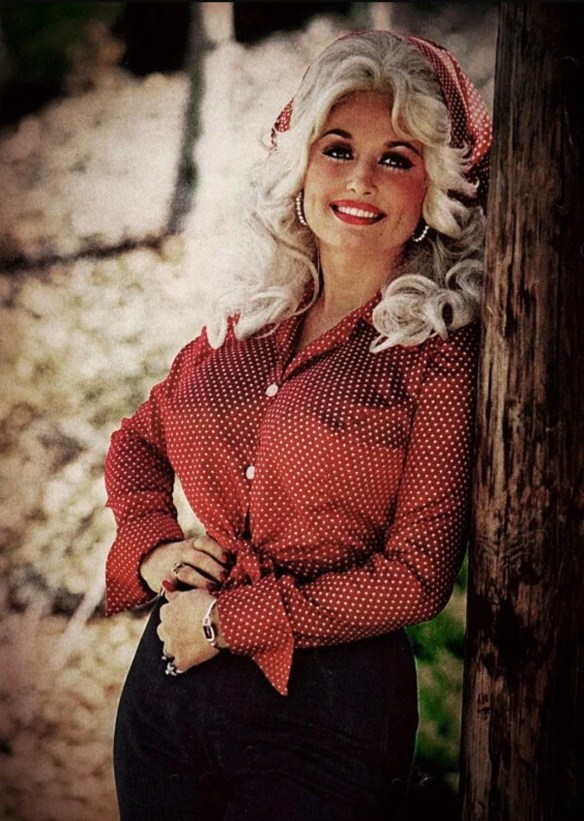
I loved Dolly Parton. Since first hearing Jolene back in the early 1970s, and despite my aversion to country music (my dad’s kind of music), I felt sure this was a songwriter of some considerable talent. The ‘maxi-single’ of ‘Jolene’ released here in the UK had ‘Coat Of Many Colors’ and ‘Love Is Like a Butterfly’ on the B side: two other absolute gems. I went on to buy many of her albums and compilations, right up to the most recent.
When I first saw her on TV, I was very taken with Dolly’s appearance – that amazing flamboyance – as well as her wit and warmth. As a latent young, closeted gay man, her ample bosoms didn’t impress me much but it was impossible to ignore how beautiful she was. I watched her being interviewed whenever I could and was always impressed by her wisdom, energy and compassion. Occasionally she would talk about her faith and what it meant to her. Never did she seek to impose it on others, not even in the songs that referred to it. I was eventually fortunate enough to see her live, during her Blue Grass era, and experienced her dazzling stage presence and her performance of so many of iconic songs.
I mention all this because after her death last week the ghouls were out: evangelical Christians who declared she wasn’t a real Christian because something she said didn’t line up with their doctrine or because her support for LGBT+ people demonstrated how unsaved she really was. Didn’t she know that the Bible condemns such people and their flaunting of sinful lifestyles? How could she not know that she couldn’t be saved by good works or by mouthing platitudes that sounded Christian but really weren’t? Why did she support those mired in all manner of sin instead of pointing out how their sin would take them to the bowels of hell if they didn’t turn to Jesus? How could she not recognise biblical truth and preach an uncompromised gospel? And on and on.
Because, dear brood of vipers, she lived her faith. She was compassionate, non-judgemental, caring and giving. She redistributed much of her wealth, just as Jesus commanded. She was very much what he and the early cultists decreed a Christian should be. She didn’t get tangled up with doctrinal disputes but had a sense of what really mattered. Nor did she mention Jesus merely to promote her brand as some suggest, but because her faith was real to her. She was as genuine within as her outward appearance was artificial (‘it costs a lot of money to look this cheap’.) She was the opposite of the Christians who are now condemning her for what they claim was her ‘false faith’; they are whited sepulchres, heartless and pitiless within.
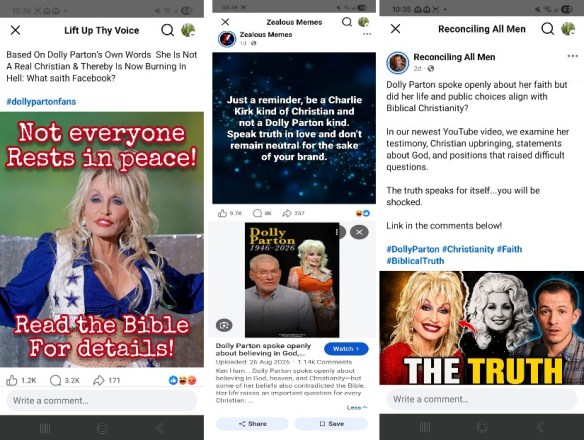
We need more Dolly Partons in the world, though I doubt we’ll see her like ever again. We would be far better off with fewer self-righteous bigots, of the kind who are now condemning her to hell.
PS. What was it you were saying, Don, about Christians being one big happy family, all saved by Jesus regardless of superficial differences? It sure doesn’t look that way to anyone with eyes to see.


