Making it all up

While the Old Testament is made up of myth and legend and the New created from the visions and dreams of a few disturbed individuals, we are expected to believe that the gospel accounts nevertheless shine out as beacons of truth.

We know, however, that much of what is contained in the four canonical gospels is fiction. I’m not referring here merely to how contradictory they are (though there is that), I’m talking about the parts that are clearly made up, invented for theological and literary purposes. These include:

The nativity stories: These are myth, created so that the Godman has an origin similar to those of other Godmen: There is no historical evidence for a wand’rin’ star, a census that involved the mass movement of populations or the Massacre of the Innocents.

The virgin birth: relies on a misreading of ‘young woman’ in Isaiah 7.14

The flight to Egypt: a misapplication of Hosea 11.1.

Genealogies: invented. Matthew’s and Luke’s are completely different and don’t, in any case, include sufficient generations to reach back to ‘the first man’.

The Magnificat: Written as a Greek poem. It is not an outpouring of a young peasant woman.

The temptation in the wilderness: Jesus did not have a conversation with the devil. He was not attended to by squadrons of angels; we know such beings do not exist. In any case, which eye-witness was present to record these fanciful encounters?

Angels: 12 appearances across the gospels. Demons and other evil spirits: at least 20 mentions. Myth, pure and simple.

The miracles: all of them make a theological point. This is their purpose. They are literary.

Jesus’s teaching: designed to encourage members of the cult, a cult that could only exist after the events the gospels purport to relay. Everything he’s made to say comes from different sects, Paul’s teaching, Old Testament wisdom literature and even pagan sources.

The sermon on the mount: created and written in sophisticated Greek, not delivered by a semi-literate itinerant preacher.

John’s self-obsessed Jesus: nothing like the character in the synoptic gospels. Either he’s made up or they are. Or both.

The Transfiguration: Elijah and Moses do not return from the dead to have a chat with Jesus. This is completely made up.

The Eucharist: first appears in Paul’s teaching in I Corinthians 11.23-27. It is distinctly pagan but is accommodated in the gospels because Paul insisted he got it directly from his (imagined) Christ.

Judas’ betrayal: suggested by Zechariah 11.12-13 (which in context is not a prophecy).

The custom of freeing a prisoner (Barabbas): no such custom existed. The event is symbolic.

Resurrected corpses emerge from their graves: Matthew made this up. No-one else seems to know of it and Luke makes a point of cutting the episode out of his version of events.

The Crucifixion: based on Isaiah 53 and various Psalms.

The Resurrection: based on the visions of Cephas, Paul and others with added, invented detail, incompatible across the four accounts.

The Ascension: Jesus levitates into the stratosphere, in front of witnesses no less. Or perhaps not; Luke invented this impossibility.

There is much more in the gospels that is evidently and demonstrably made up. We can, as Christians do, believe it all really happened. We can insist that the stories are not based on other sources but that these sources are prophecies of real events that took place in history. From this perspective, Paul’s and others’ visions are then the result of these same events.

But which is more likely? –
The Old Testament is packed with prophecies about Jesus’ life and death, and that what Paul and others saw in their heads was because Jesus really existed and spoke to them once he’d returned to Heaven…

Or: The Jesus story is fictional, a patchwork of Old Testament snippets, mystical visions, invented symbolic events and pagan ideas of resurrecting Godmen.

And If the gospels are fiction – and they evidently are – then why not Jesus himself? If there was no real history to be written about him, just this mish-mash of other sources, that can only be because there was no Jesus who walked the Earth 2000 years ago.

Jesus is the same as his near contemporaries Osiris, Dionysus and Mithras. Like them, he is entirely mythological.

What are the Odds?

To look at it another way…

The stories of the Old Testament are largely fictional. They’re myth, legend and otherwise fabricated. There was no Eden, no world-wide flood, no slavery in Egypt, no Exodus. There’s no evidence that the characters around which events supposedly took place actually existed: no Noah, Abraham, Moses, Job, Jonah or Daniel. Their stories were created long after the time they purportedly lived; centuries later. The stories written about kings – which, if they existed, were no more than half-remembered tribal chiefs – and the so-called great prophets are constructed from folktales. In short, nothing we read in the Old Testament actually happened.

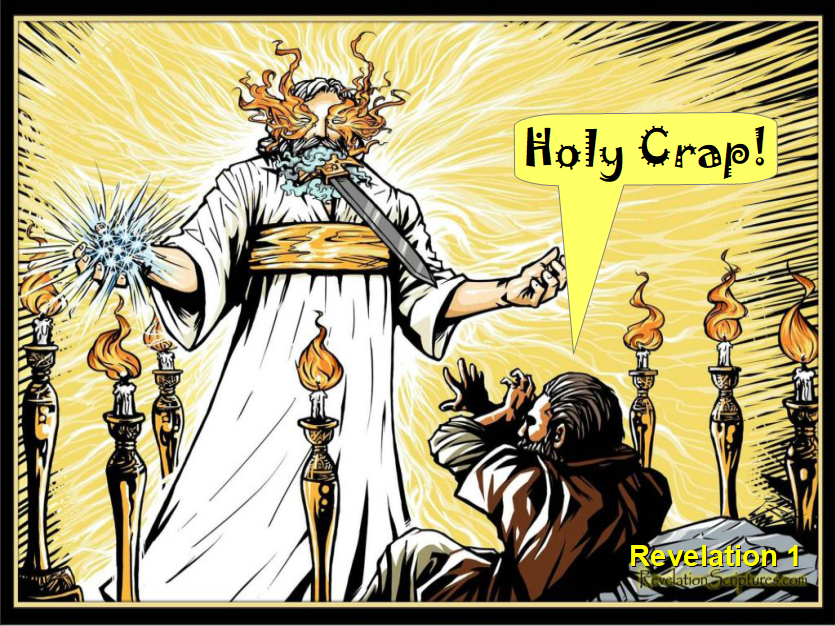
When we get to the New Testament, we find convoluted exposition of Paul’s ‘revelations’ about Jesus; visions and imagined sightings of a celestial being he had in his own head. It’s the same for the fruitcake writer of Revelation who envisaged an unreal comic book Jesus; invention every bit of it. The Acts of the Apostles offers a fanciful and wholly inaccurate ‘history’ of the early church, including angels, teleportation and fatal miracles. Of the 21 letters in the New Testament, at least 11 are forgeries, known to have been written by anonymous authors who were not who they claimed to be. The other 10, including Paul’s genuine letters and the likes of Hebrews, make up all sorts of mystical stuff about an angelic Godman-cum-high priest.

 And yet, in the midst of these myths and legends, made-up characters and stories, forgeries and fantasies and mystical musings stands the indisputable truth of the gospels. Or so Christians and theologians would have us believe. These particular stories, surrounded as they are by fiction on all sides are historical, factual and true.

What are the odds?

Will the real Jesus please stand up? (part 4)

All of which begs the question: was Jesus a real person who became a mythical celestial being within 3 or 4 years of his death or was he a mythical celestial being to begin with who was historicised within about fifty or sixty years of his creation?

The time scales are important. Christians today argue that Jesus can’t possibly have been an imagined being because fifty to sixty years represents an insufficient period for him to have transitioned into a fully realised historical figure. Yet this is precisely what we see between Paul and others’ visions of Christ and the writing of Mark and Matthew’s gospels. (Richard Carrier makes the case that the writer of the former was cognizant of the fact he was not writing history but allegory. If so, Matthew’s gospel, circa 80CE, is the first to depict Jesus as an actual person.)

As related by Paul, his vision of the heavenly Christ followed those of Cephas, the twelve and 500 others. His experience is usually dated to between 34 and 37CE. These visions appear not to be rooted in reality. Paul writes at length about his Lord Jesus Christ yet shows no knowledge about the life, relationships, teaching or miracles of the character who later appears in the gospels. His Christ exists only in a celestial heaven where Paul believes his sacrifice also took place there.

Christians argue instead that Christ was a real person. He lived, preached and died in a specific geographical area (though the gospel writers don’t all agree where this was) at a particular time (they don’t agree on this either). After his resurrection he ascended to a heaven believed to be above the sky. He became a spiritual entity at this point, having lived a real life on Earth. Later Christians would argue he resumed the role of celestial being. After his ascension he began communicating with mortals attuned to him using visions and dreams; hence Paul’s and others’ revelatory experiences.

But wait. If fifty years is too short a period for a celestial Christ to be seen as a real person, then 4 years or less – the time between Jesus’ supposed ascension and Paul experiencing him in his head – is even shorter. If we’re judging how probable either transition is in terms of the time it took, the Christian preference of 3-4 years is by far the less likely.

A transition is involved either way: from a wholly spiritual entity to human, or from human to a celestial being. The first, taking about 50 years, is too short a time for Christians. They prefer the second, which involves only 4 years. It also entails supernatural intervention, with God required to engineer the transition from the human to the quasi-divine.

Taking Occam’s razor to the evidence – Paul’s genuine letters, the other early letters and the book of Hebrews – it is clear the transition happened the other way round. Christ was originally an imagined spiritual being, envisaged by Paul and others. The spiritual Christ was subsequently, 50 years later, given an earthly back story, like one of those shaky prequels created for an already successful TV series. This story in its different versions eventually came to dominate, stories being easier to remember and believe than complex theories about invisible beings.

Will the real Jesus please stand up? (part 3)

As we’ve seen, so much about Jesus appears to have been invented and made up; literally, ‘envisioned’. Almost everything he said and did, including his death and resurrection, derive from Paul’s teaching and the Old Testament. Mark created his gospel narrative out of these, embellishing the story with ideas from other, pagan myths. Mark’s gospel then served as the basis of the other three canonical gospels.

It could be argue that none of this suggests Jesus didn’t exist. He could still have been a real life human being who wandered around Palestine, teaching people about the End of the Age. In which case, why did Paul and the later gospel writers have to make so much up about him, as clearly they did. Why didn’t they report directly what he taught, instead of quoting the Old Testament as Paul does when he talks about his Christ (he tells us this is what he’s doing, in Romans 15.2-4)? Not once does he refer to anything the historical Jesus said. Neither do the gospel writers. They make stuff up, they alter what their predecessors say, they dip into the Old Testament to construct Jesus’ teaching.

Why? If the real Jesus was such a Great Teacher, who had so much wisdom to impart, why don’t we find it in the gospels instead of this amalgam of other sources? Was his teaching so unimpressive and unmemorable that a new script had to be written for him? If so, how did he attract the fame and following he purportedly did? Why are the gospels literary creations and not the kind of reporting we might expect if they were relating the sayings and doings of one man? Why do the gospels have their own distinct agendas when they are supposedly reporting the views of a real individual? Why are there so many interpretations of Jesus in the New Testament: Jewish Jesus, Gentile Jesus, Anti-semitic Jesus, Gnostic Jesus, Anti-gnostic Jesus, Radical Jesus, Pacifist Jesus, Saviour Jesus, High Priest Jesus, Cosmic-judge Jesus? Why, if it really happened, does the resurrection read like myth, with all the differences in detail between the accounts? Why does Paul talk about it as something that was only revealed in ‘visions’? Why does Mark hint that his Jesus story is a parable, the true meaning of which can only be discerned by the spiritually mature (Mark 4.10-12)?

If Jesus was real, none of this – the myth making, the invention, the reliance on the Old Testament – would be necessary.

That Paul and the gospel writers made up so much suggests there wasn’t a real person on whom their teaching and stories are based. Jesus Christ was the result of the ‘visions’, dreams and hallucinations that someone called Cephas and a few others, Paul included, experienced.

There was no historical Jesus, no miracles, no wondrous teaching, no crucifixion, no resurrection, no ascension. There will be no second coming, no final judgement, no Kingdom of Heaven presided over by someone who originally lived 2000 years ago. Why? Because every bit of it is make believe.

Will the real Jesus please stand up? (part 2)

What evidence is there in the Bible that Jesus really existed? Let’s take a look*:

Paul’s Christ – imaginary (only in his head)

The crucifixion – invented (structured around and based on selected parts of the Old Testament. These aren’t prophecies of his death, they’re used as the template for people writing centuries later)

The Resurrection stories – made up (following various visions and ‘revelations’. The stories themselves are not in Paul or Mark; they’re made up later)

The empty tomb – imaginary (added to bolster resurrection stories. Unknown to Paul)

Miracles – made up (not in Mark where Jesus flatly refuses to perform them. Later miracles all have symbolic meaning. They are symbolic)

Nativity stories – make-believe (the two accounts in Matthew and Luke conflict and have all the properties of myth)

Jesus’ ‘I Am’ statements – invented (only in John: missing entirely from the other gospels. How did they miss them?)

Sermon on the Mount – made up by Matthew (not in Mark but suddenly in Matthew where it is clearly a literary construct)

Jesus’ teaching – invented (next to none of it is original, based as it is on Paul’s teaching, Old Testament ‘wisdom’ and what the gospel writers needed him to say to fit their agendas)

Cult rules – made up (by members of the early cult church)

The Beloved Disciple/Lazarus and Nicodemus – imaginary (not in the other three gospels. How could they not know about Jesus’ most impressive miracle, the raising of Lazarus?)

The woman caught in adultery – invented (a very late addition to the fourth gospel; possibly as late as 350CE)

The Ascension – make-believe (I mean, really?)

Paul’s adventures in Acts – made up (largely incompatible with what Paul himself relates)

Revelation – total lunacy (made up in its entirety: Jesus didn’t say any of the things attributed to him there: he didn’t dictate letters to churches, isn’t a cosmic warlord, hasn’t brought a celestial city to the Earth, etc, etc)

Satan, demons, angels, spirits, powers and principalities – imagined (all non-existent)

Old Testament tales – made up (Creation, Adam & Eve, Tower of Babel, Noah, the Exodus, Job, Jonah, Daniel. Too many to list)

Ephesians, Colossians, 2 Thessalonians, 2 Peter, James, Jude, 1 & 2 Timothy, Titus – forgeries

Jesus – imaginary? It makes you wonder. So much is demonstrably made up about him. If he did exist, he has been buried under layers of make-believe, myth and other fiction; a grave from which he will never rise.

To be continued…

* Examples derived from my own considerations, Richard Carrier’s On The Historicity of Jesus, Bart D. Ehrman’s Forged and Did Jesus Exist?, Michael J. Alter’s The Resurrection, Barrie Wilson’s How Jesus Became Christian &  Freke and Gandy’s The Jesus Mysteries, amongst others.


The Great Resurrection Swindle

We have an anomaly. Paul did not see the resurrected Jesus in the body he died in. He is quite categorical about this. The Risen Jesus was revealed ‘within’ him as a vision of some sort (Galatians 1.15-16). Paul then implies that Peter and ‘the twelve’ apostles had previously encountered the Risen Jesus in precisely the same way; that is, though he doesn’t of course use the terms, as an innervision or hallucination:

For what I received (in my vision) I passed on to you as of first importance: that Christ died for our sins according to the Scriptures, that he was buried, that he was raisedon the third day according to the Scriptures, and that he appeared to Cephas, and then to the Twelve.  After that, he appeared to more than five hundred of the brothers and sisters at the same time, most of whom are still living, though some have fallen asleep. Then he appeared to James, then to all the apostles, and last of all he appeared to me also, as to one abnormally born. (1 Corinthians 15.3-8)

From this, Paul develops his idea that every other believer will, either after they die or when Christ descends from the clouds, be given a new ‘spiritual body’ without any of the limitations of the lowly fleshly body in which we spend this life. This is his gospel which, he wants everyone to know, did not come from any other human but from the Christ who appeared in his head (Galatians 1.11-12).

Here’s the anomaly: Paul believed he had encountered the risen Jesus, an experience of a super-spiritual being that was entirely in his own head. The later gospels, however, written decades after Paul’s psychotic episode, had a different view of the resurrected body. The original version of Mark, ending at 16.8, offers no resurrection appearances (Mark 16.9-20 was added much later in an attempt to plug the gap) but from Matthew onwards we begin to get a risen Jesus who assumes more and more of a physical form the further from Paul’s time we go. Luke wants us to know that his Risen Jesus has a real physical body; he asks for food which he then eats (Luke 24.42-43) and his crucifixion wounds are visible (Luke 24.37-39). John then goes even further by having Jesus invite the disciples to poke and admire the wounds (John 20.27), making the point that the body Jesus died in is the same one he resurrected in (even though in other parts of the narrative, for example when he encounters Mary Magdalene, he is suspiciously vision-like.)

As a result, later Christians were adamant that Jesus rose physically, in the body he’d died in. Today’s evangelicals seem to think so too.

So, here’s what we’ve got: Christianity’s earliest advocate, while promising resurrected believers will have a super new ‘spiritual’ body that bears little relation to their old physical bodies, witnessed the risen Christ only as a vision in his head. Yet Luke and John are at pains to point out that Jesus rose physically, in the same body he died in albeit with new super-powers. Luke even tries to distance his risen Jesus from Paul’s by having him say,

Handle Me and see, for a spirit does not have flesh and bones as you see I have. (Luke 24:37–39)

Isn’t it fortuitous, and not a little too convenient, that Jesus himself decides to makes the doctrinal point that he’s most definitely not a spirit, hallucination or vision? Of course, Luke (not Jesus) made up this line to address the hallucinated-spirit v. reanimated-corpse anomaly head on. Luke’s risen Jesus, whom, let’s not forget, Luke never met – nor did he meet any eyewitnesses to the resurrection (his sources are primarily Mark and Matthew) – is at pains to point out he is not like Paul’s risen Jesus. No sir, not at all. In the space of 30 or 40 years then, the risen Jesus has gone from being an imagined spirit (1 Corinthians) to a flesh and blood, revitalised corpse (Luke) with extra peripheral details like an empty tomb, added in support of the transition.

The risen Jesus began life as a vision. Paul makes this clear whenever he refers to him. He calls it his ‘revelation’. As time passed this supposed resurrection began to be fleshed out – literally – until the fantastical stories of a real body returning from the dead took form. Neither was real, neither is real; not the revelatory Christ nor the resurrected man. They are made up; one by a man who had a psychotic episode or bad dream, the other by men who disagreed with him. Anyone who thinks they’re going to receive either a spiritual body or a refurbished version of the one they’ve got now is deluding themselves.

Body Talk

So you’re not getting a new body when you die. Sorry about that. It all comes down then to what you’re going to do with the one you’ve already got. I don’t know what condition it’s in. Your genes and the wear and tear it’s undergone in life will determine that. My own isn’t too bad for its age, I guess, though it suffers from inexplicable aches and pains these days (fibromyalgia) which is probably only going to get worse as I get older. All the same, that’s better than the alternative, so I’m not going to let it stop me from enjoying life.

And that’s what I’d recommend to you too. Enjoy life, enjoy your body. Indulge it in its appetites. The Christians who tell you you’re wrong to do so, who quote verses like Romans 8.13 at you are missing the point:

For if you live according to the flesh you will die, but if by the Spirit you put to death the deeds of the body, you will live.

Denying yourself will not take you to Heaven, won’t make you a better person and won’t make Jesus like you any more than he does already (which is not at all, on account of his non-existence.) Of course, it’s sometimes a good thing to delay gratification, if others might be adversely affected, for example, but usually it’s not. Most of the time it’s okay to do with your body what you want to do with it – it’s yours for that reason. So enjoy training it, exercising it, eating well and wisely, grooming and pampering your body, keeping it as fit and clean as you possibly can. Enjoy being creative and caring. Be sensual (as in enjoying its sensations) and have all the sex you want, however you want it – with protection, specially if you don’t intend creating more little bodies – and with whichever consenting partners you want. Your body has evolved to be like this. You have evolved to be like this. Anything else is an aberration.

Why am I saying this? Because having reached 65, I’m very aware of the physical limitations that make themselves known as one gets older. Your body, my body, everybody’s body will eventually and irrevocably let each and everyone of us down. You will have experienced some debilitation already, whatever age you are; temporary illness, ailments of one sort or another, injuries, viruses, infections and malfunctions. Your body will eventually undergo the ultimate malfunction and let you down completely. It will die. Don’t leave it until that time approaches – and which of us knows when that is? – to appreciate it. Enjoy it now, whatever stage of life you have reached and whatever shape your body is in.

Am I preaching hedonism? Not exactly. But I am recommending you take pleasure from whatever activities you use your body for, no matter how mundane they are. And let’s face it, all human activities, including the cerebral, involve the body one way or another. Be a sensualist, as in enjoying the body’s sensations, and find pleasure in all things. Give pleasure in return and in many varied ways to others.

Isn’t this more life-enhancing than all that unhealthy ‘death to the flesh’ stuff (Romans 8.13) at the heart of Christianity, which regards the body as corrupt (Romans 7.24), sinful (Romans 7.5), lowly (Philippians 3.21), weak and dishonourable (1 Corinthians 15.43) and unworthy of a place in the Kingdom of God (1 Corinthians 15.50)? It surely is. Paul says in 1 Corinthians 15.32 that if the dead are not raised in new spiritual bodies then we may as well live our lives according the maxim, ‘Let us eat and drink for tomorrow we die’. There is no resurrection, there are no bodies other than the ones we have now, so perhaps, for once, Paul was on to something.

New Bodies For Old

Paul taught that believers in the Lord Jesus would, once the Christ returned, be resurrected in a ‘spiritual body’. Those who remained alive at this time, as Paul anticipated he himself would be, were also to be ‘re-clothed’ in a new body (2 Corinthians 5.3) in preparation for life in the Kingdom.

He also seems to have believed that Jesus himself was resurrected in a ‘spiritual body’. This is presumably what Paul thinks he saw when Christ revealed himself to him in his head. Christians since have argued that when Jesus rose from the dead, it was in the same body in which he was crucified. Indeed, John’s gospel goes so far as to show his resurrected body still carried the wounds he suffered during his execution (John 20.26-29).

So what does this spiritual body, the one Paul promises all believers will receive, which is somehow physical yet not – the risen Jesus can pass ghost-like through locked doors (John 20.19) and levitate into the sky (Acts 1.8-11) – look like? What is its nature? Is it ephemeral so that it can vanish at will (Luke 24.31) and change its appearance (Luke 24.16), or is it like the bodies we have now, only better? Is it made of meat and gristle? Does it breath, eat, sweat, need to sleep, poop and pee? If not, then in what way is it a body? Will the new body retain its lungs, sweat glands, digestive system and genitals? Can it be considered a proper body if it doesn’t? If it’s to be an upgraded version of our existing bodies, minus all those pesky instincts, demands and messy bits, then how does it work? Does it only vaguely resemble the body we have now, like an Avatar in the famous film? Is it intangible, like the risen Christ’s (as implied in John 20.17)? Can it morph into unrecognisable forms (John 20.14)? Will it be able to pass through physical objects like Jesus’ ghostly form could ?

Alas, we shall never know. When Paul was making pronouncements about ‘spiritual bodies’ he hadn’t a clue what he was talking about. Writing to the cultists in Corinth, he anticipates that someone might want to know what ‘spiritual bodies’ are like. Here’s his profound answer:

But someone will ask, “How are the dead raised? With what kind of body do they come?” You foolish person! (1 Corinthians 15.35)

Yup, he had no idea what he was talking about so he resorts to ad hominem abuse instead. He then twitters on about how the physical body has to die, like a seed, before the new super-duper spiritual body can manifest itself. Except a seed doesn’t die in order to produce a plant. It may be buried but it doesn’t die. His analogy, which, you’ll note, doesn’t actually answer the question, fails miserably:

What you sow does not come to life unless it dies. And what you sow is not the body that is to be, but a bare kernel, perhaps of wheat or of some other grain…. So is it with the resurrection of the dead. What is sown is perishable; what is raised is imperishable. It is sown in dishonour; it is raised in glory. It is sown in weakness; it is raised in power. It is sown a natural body; it is raised a spiritual body. If there is a natural body, there is also a spiritual body. (1 Corinthians 15.36-37, 42-44)

His final flourish – if there is physical body then there has to be spiritual one – is, to use a technical term, absolute crap. He is making this stuff up and passing it off as a message from the Lord. Then as now, there were those who were taken in by him.

No-one has ever received a new body after their death; when this, our only body dies, we die. Our consciousness does not survive; it is a manifestation of our bodies, specifically of the brain, part of the meat and gristle that make up our bodies. It doesn’t hang around waiting for Jesus or God or some other non-existent being to transplant it in an imaginary super body.

No-one has ever received a new ‘spiritual body’, and no-one ever will. Of the 100.8 billion people who have died in the history of mankind, not one has gone on to live again in a new ‘spiritual body’. Not one has gone on to live again, period. If you think they have, you are free to present your evidence here. (Jesus, I should point out, doesn’t count: he wasn’t, according to Christian myth-making, entirely mortal. Plus his resurrection appearances are fiction.)

Paul is lying. There is no such thing as a ‘spiritual body’, no such thing as resurrection. You won’t be experiencing either. You are allowing yourself to be duped if you think you will.

Did Jesus exist? A rethink.

Blog418

Who determined the rules for the early Jesus cult? Jesus himself or the members of the cult? What does the evidence suggest? They all appear in documents written between 40 and 90 years after Jesus died. Either they survived from the moment the words left his lips, remembered accurately by generations of believers or they were included in the gospels by the cult communities that created them.

I’ve written before about how much of the Bible was written backwards (so to speak) and the gospel’s cult rules look likely to have been developed in just this way. The cult members had, by the time the gospels came to written, established these rules for their communities. They had shaped a Jesus that suited their purposes; it has long been recognised that the creators of Matthew’s, Luke’s and even John’s gospel took Mark’s account and amended it significantly. Their depiction of Jesus, his teaching and the resurrection are amended to reflect their particular beliefs and community rules. How do we know this?

Richard Carrier, the so-called mythicist (he actually says there’s a 1 in 3 possibility of the historicity of Jesus; figures as mythologised as Jesus rarely existed in fact) demonstrates how Mark’s gospel is an allegorical story based on Paul’s teaching. Mark created a well constructed narrative designed, literally, to flesh out the spiritual being that Paul imagined he’d seen in his visions. Using Jewish and pagan myths to structure it, he incorporates Paul’s visions and ‘revelations’ to create his Jesus story. To take one example, Paul relates in 1 Corinthians 11.23-25 how his celestial Christ told him in person (i.e. in his head) how his sacrifice of himself should be celebrated: with bread and wine. Mark turns this into an actual meal supposedly shared between Jesus and his early followers: the Last Supper.

Subsequent gospel writers took Mark’s allegory and amended it both to suit their needs and to correct what they perceived as Mark’s shortcomings. In the process they ‘fleshed out’ still further the figure at the centre of Paul’s (and others’) visions and Mark’s story based on them. Most significantly, they added increasingly elaborate resurrection appearances; it is significant Mark’s gospel has none, as if he knew Jesus’ resurrection wasn’t a physical event but a visionary one exactly as Paul describes.

It seems indisputable that the gospels were written this way (though there are, naturally, those who do dispute it.) None of the gospels rely on a hypothetical oral tradition, which, if it existed, would be extremely unreliable over 50 or so years (the time between Jesus’ supposed ministry and the writing of Matthew’s gospel), nor do they depend on the equally hypothetical Q. In any case, Q, if it existed, was a book of sayings, not a narrative account. Significantly, no copies of what must surely would have been a precious document have survived.

No, Mark made up the story of Jesus based on Paul’s visions (we know others had similar visions before Paul; he tells us so in 1 Corinthians 15.1-8). We know too that subsequent gospel writers built on Mark, adding what suited them, including their particular sect’s rules. What better endorsement of these rules than to have the object of their worship seeming to issue them himself? It’s highly unlikely he did anything of the sort. In 1991 the Jesus Seminar determined, controversially, that only about 20% of the words in the gospels could be attributed to an historical Jesus. All of the rest is made up and put retrospectively into his mouth. (The Seminar nevertheless concluded that Jesus existed.)

From the small amount of Jesus’ teaching that might be attributed to an historical Jesus, to the way the gospels were created, what can be known about a ‘real’ Jesus – what he said and did – grows increasingly small. All we are left with is a ghost of a figure. And isn’t this precisely what Paul claimed he and others had seen?

I’m rethinking my position and I’m coming to the conclusion, based on how the gospels were written, especially the way Mark allegorised Paul’s visions and teachings, that the likelihood of an historical Jesus is slim. Carrier has an abundance of evidence to support his proposal of a 1 in 3 chance that Jesus existed. Certainly the Jesus(es) of the gospels did not exist; they’re all made up. It now seems to me there’s no real, historical Jesus behind any of them. 
 

The many and varied, Spirit-inspired interpretations of the Kingdom of God

Blog406Heaven

For the Son of Man is going to come with his angels in the glory of his Father, and then he will repay each person according to what he has done. Truly, I say to you, there are some standing here who will not taste death until they see the Son of Man coming in his kingdom” (Matthew 16.27–28).

Truly I say to you, this generation will not pass away until all these things take place. (Matthew 24.34)

See also Matthew 24.27, 30-31; Luke 21:27-28, 33-34; 1 Corinthians 15.51-52; 1 Thessalonians 4.15-17; 1 John 2:17-181; Peter 4.7

The Kingdom of God. What does it look like? When will it happen? Has it happened? You’d think that with the Kingdom of God being a central part of Jesus’ teaching, the central part, in fact – his ‘good news’ is about nothing else – that these would be questions Christians would find easy to answer.

They don’t. The Holy Spirit inspires a variety of incompatible responses from the faithful to the what, when and where questions. The most popular is, of course, that the Kingdom of God equates with Heaven: the saved are all going to heaven when they die. Post-mortem bliss, most Christians would tell you, is what Jesus meant by the Kingdom of God. After all, doesn’t Matthew refer to the Kingdom as the Kingdom of Heaven? Yes… but no: an after-life in Heaven is not what Jesus and his scriptwriters meant by the Kingdom. If it was, they would have said so, rather than promising, as they do, that God’s Kingdom was coming to the Earth real soon.*

So, when Jesus says the kingdom is just around the corner, which he does repeatedly in the synoptic gospels, he can’t have meant Heaven. Let’s try another favourite: Jesus meant that God’s Kingdom on Earth would manifest itself thousands of years in the future – in our time, no less. It’s all to do, you see, with Jesus’ return and the final judgement. As these have yet to happen then the final part of God’s plan – his reclaiming of his creation – will be in the (far) future too. A neat solution to be sure, but one that runs counter to everything in the gospels and in Paul. Admittedly it’s an idea that was taking shape in 2 Peter (3.8), a forgery written about 150CE, long after it had become apparent the Kingdom was running way behind schedule. However, you won’t find it in the synoptic gospels or the Pauline epistles because it isn’t what Jesus, Paul, the gospel writers or the earliest Chrsitians believed.

Where does this leave Jesus’ devotees today? With a Jesus who didn’t really mean the Kingdom would be manifesting itself in the physical world. This Jesus proclaims the Kingdom as something that exists inside his followers as an internal state of being. It’s true some of his pronouncements appear to fit this interpretation; the Kingdom is within you and all that, but what these statements are about in context is the Kingdom’s immanence at the time; what Jesus was saying was, ‘the Kingdom is arriving now; look at the signs – it’s all around you.’ A gnostic flavoured restructuring of what he actually claimed is yet another Spirit-led interpretation we can dispense with.

Consequently, some Christians accept that, yes, Jesus preached a Kingdom that would dramatically materialise in the real world close to the time he was speaking. That it didn’t in any observable way creates a dilemma: as God Incarnate, perfect and infallible, Jesus can’t have been wrong. This must mean the Kingdom did arrive when he said it would and we are living in it now. The Kingdom, these Covenantists say, is another term for the Christian era; the reign of the church, the Age of the Holy Spirit. We’re living in the Kingdom and have been for two thousand years!

How’s that working out?

Blog406Riot

Blog406Pollution

Blog406Bury

Blog406Starve

Yes, this looks exactly like the Kingdom of God Jesus promised: An eternity of peace with death and illness banished and the meek having inherited the earth; the social order reversed, God in charge and Jesus and his pals running the show. Or not.

So, however the faithful (re)interpret his words, however much they twist, cherry-pick or just plain ignore them, Jesus was wrong. The Kingdom of God did not arrive on the earth in the first century as he predicted. It’s definitely not here now. It won’t be coming in the future and it doesn’t await in an after-life; these were never the deal. (See my earlier series, Making Excuses for Jesus, for more detail.)

Whatever Christians do, wherever their imaginary Holy Spirit leads them, they end up with implausible and incompatible ways of explaining (away) the non-arrival of the Kingdom of God that Jesus promised. It’s a fallacy, a fantasy, another delusion sustained by the wilfully ignorant.

*John 18.36 does have Jesus say that ‘his’ Kingdom, as it’s become by the time of the fourth gospel, is not of this world. John, however, bears little relation to the other gospels and was written at least 70 years after Jesus lived. In any case, it doesn’t say or mean that common-or-garden believers are going to Heaven when they die.