Conversion

I’d be interested to know, of those of you who are no longer Christians, what led you to become one in the first place.

It seems to me there are thousands of websites, books that argue philosophically for the validity of Christianity, present their evidence for the resurrection and generally take an intellectual approach to promoting the faith.

I’d be very surprised if this ‘evidence’, which is poor at best, and Christians’ philosophical arguments lead anyone to Jesus/God/faith.

My own experience is that conversion is an emotional experience. As a teen I listened to speaker after speaker at the YMCA I attended tell me how their sins had been forgiven and how getting to knew Jesus had given them a great sense of peace and purpose. I originally went along to the YM, as we called it, to meet friends, play table–tennis and drink coffee while listening to the juke-box. I had no idea I was a sinner nor that I needed forgiven but I liked the enthusiasm – they said it was ‘joy’ – that the speakers conveyed. I thought too I could maybe do with a sense of purpose though I was, as a fifteen year old, quite happy drifting along relatively aimlessly.

The persistent drip feed of what Jesus could do for me (and others) was persuasive. It sowed the seed, as the Christian cliché has it. It took a lively young American evangelist from Arthur Blessitt ministries to convict me. Jesus had turned his life around and he was on his way to heaven. Denying Jesus, he said, was to crucify him all over again. So I prayed the sinner’s prayer and gave my life to Jesus too.

Nowhere in any of this was there anything philosophical, no ’proof’ of the resurrection, no explanation of how the Bible was the Word of God. All the talks were appeals to emotion – how I could feel forgiven, how I could know love, joy and peace, how I could live forever after I died, up there with God in heaven.

All the rationalisation came later, like it always does. Psychologists tell us that the intuitive part of the brain makes decisions ahead of the rational part, which seeks to catch up afterwards, supply the reasons why the decision we’ve made is a good one. We’ve all done it when we’ve bought that item we don’t really need and have justified it all the way home. Religious conversion follows this pattern.

The thinking mind only becomes involved afterwards, hence ‘post hoc rationalisation’. We then become complicit in our own indoctrination: Bible study (both group and individual), listening to sermons, learning from more mature Christians, worship (all those song and hymn lyrics reinforcing the mumbo jumbo), reading Christian books, immersing ourselves in the complexities of the religion. This is how it’s always been. As Paul puts in 1 Corinthians 3:2, we move from milk to meat as we delve further into ‘the mysteries of Christ’. Or, more accurately, we become more deeply indoctrinated.

But all of this comes later. The emotional experience is first, as it was for Paul, C S. Lewis (who described it as being ‘surprised by joy’), George W. Bush and millions of other converts. In my Christian days, I personally ‘led people to the Lord’, by ‘sharing my testimony’ (I’ve still got the jargon!) and can assure you, those involved felt the Holy Spirit with a profound intensely. Only kidding. They became pretty emotional.

I know of no-one who became a Christian by assessing the evidence for the resurrection, reading Paul’s theobabble or analysing the central claims of Christianity. I suppose there might be some who, like Lee Strobel, insist they ‘came to faith’ this way. But faith and rational analysis are incompatible. When the writer of Hebrews (11:1) says: ‘faith is the substance of things hoped for, the evidence of things not seen,’ he is oblivious to the fact that there isn’t any ‘evidence’ of unseen spiritual ‘things’. There are only our own feelings and emotional confirmation bias.

So that’s how it was it for me. How was it for you?

Next time I’ll take a look at the deconversion process.

Whatever Happened To Pontius Pilate?

While indisputably a real person, we know only a little about Pontius Pilate, primarily from Philo, writing circa 41CE, and also Josephus (writing 75-79CE). Pilate was appointed as prefect, or governor, of Judea in 26CE and after ten years of insensitive and brutal control was, according to Philo, recalled to Rome in 36 ‘to stand trial for cruelty and oppression, particularly on the charge that he had executed men without proper trial.’ (On the Embassy to Gaius)

Described by Philo as having ‘an inflexible, stubborn and cruel disposition’, Pilate was not the kind of man who would entertain in his private residence those marked out for crucifixion, nor one who would feel remorse at the execution of thieves, insurrectionists and general trouble makers. It is likely he had hundreds if not thousands of them crucified during his time as prefect.

Would a man known for ‘his venality, his violence, his thievery, his assaults, his abusive behaviour, his frequent executions of untried prisoners and his endless savage ferocity’ (Philo), have a prisoner over for a chat about the nuances of the meaning of Truth? Almost certainly not.

Would he have suffered mental anguish because he might be about to execute an innocent man? Absolutely not.

Would he have symbolically washed his hands to ease his conscience? He would not.

Would he have offered a rabble the chance to free Jesus or the bandit Barabbas? Again, absolutely not. There was no such ‘tradition’ and the episode is clearly symbolic.

If Jesus was crucified ‘under Pontius Pilate’, the Prefect himself would, in all probability, not have been aware of it. Jesus would have been one more seditionist among many. Nor would Pilate have granted a member of the Sanhedrin, unrelated to the crucified criminal, the right to remove his corpse from a cross to give it a decent burial in compliance with Jewish ritual. Pilate was known for his insensitivity to such niceties.

Jesus’ encounters with Pilate in the gospels are so entirely implausible they can only be fictional. The two would never have met. Even if they had, none of the gospel writers would have known the details of their exchanges, different in each gospel. In all of them, the cruel and savage Pilate behaves entirely out of character.

While no records survive of any trials conducted by any prefect of the area (because there were none in the first place?) it is perhaps surprising that details of Jesus’s trial were not preserved, when only a few days later, reports that he had returned from the dead began to circulate. Yet, say apologists, this is one of the few indisputable, ‘minimal’ facts we know about the historical Jesus: ‘he was crucified under Pontius Pilate.’ It’s there in both the Nicene creed (325CE) and the so-called Apostles’ creed (circa 341). Yet Paul, writing close to the time of Pilate’s supposed involvement, doesn’t mention him, ever. When he’s not blaming ‘the Jews’ for Jesus’ death (forgetting he is a Jew himself) Paul is insisting demonic powers are responsible:

Yet among the mature we do speak wisdom, though it is not a wisdom of this age or of the rulers of this age (‘Archons of this Aeon’), who are being destroyed. But we speak God’s wisdom, a hidden mystery, which God decreed before the ages for our glory and which none of the rulers of this age understood, for if they had, they would not have crucified the Lord of glory. (1 Corinthians 2:6-8)

While Paul doesn’t refer to either Pilate or the Romans in his teaching about the crucifixion, he does refer to the latter in his letter to believers in Rome itself. in Romans 13 he tells them they must obey Roman authority because God himself has put it in place. What an incongruous, unreasonable directive if the Romans had indeed been responsible for the execution of the Messiah.

The only other mention of Pilate outside the gospels is in 1 Timothy, which was not written by Paul but forged long after Mark had written the Prefect into his gospel as the embodiment of Paul’s demonic powers. (Mark’s gospel is in fact awash with demons, not to mention Satan himself. It’s essentially an allegory of their defeat at the hands of the Messiah.) 1 Timothy 6:13 merely repeats a tradition developed from Mark’s gospel that Jesus made ‘a good confession’ in front of Pilate. 

The ‘fact’ that Pilate had Jesus executed is therefore poorly attested. Mark is the first to mention it, circa 70CE, and we know Matthew and Luke lifted their timelines and much of their detail from Mark. A growing number of scholars think John also relied on Mark for the general outline of his gospel. It is likely therefore there is only one source for Pilate’s involvement in Jesus’ death: Mark.

Outside the Bible, there is no evidence that Pilate was responsible. Josephus’s Testimonium Flavianum is widely accepted as an interpolation (i.e. later Christian tampering) and Tacitus’ mention of Pilate is far too late (c. 116CE) to be an independent source.* There is therefore no contemporaneous, independent, reliable evidence that Jesus was crucified under Pontius Pilate. That myth came later and then only from Mark.

Legend has it that Pilate either killed himself in 37CE on the orders of Caligula or retired and faded into obscurity. Whichever it was, would he, in his last days, have regretted his excessive cruelty? Would he have suffered remorse for executing an innocent man? Would he even have remembered? It all seems so unlikely.

*See chapter 3 of Michael Alter’s The Resurrection and Its Apologetics, 2024)

Homelander created by Garth Ennis and Darick Robertson. Image of Antony Starr from Amazon Prime’s The Boys.

Whatever Happened to Yeshua bar Yosef?

What happened to the real Jesus? The itinerant Jew who trudged around Palestine with a small group of followers, preaching who knows what. How to survive the imminent end of the world perhaps. His name wasn’t really Jesus. That’s a Hellenised version of the Jewish name Yeshua: Ἰησοῦς’ pronounced ‘Yay-soos’, which means (suspiciously) ‘YHWH is salvation’. The bar Yosef part means son of Joseph, not son of God. Whatever he was about, this Yeshua was crucified by the Romans and soon after his death, one or two of his friends convinced themselves they’d seen him alive again. Or so the story goes.

The earliest information we have about Yeshua includes very little of what we now think we know of him. The crucifixion/resurrection are the only parts of the story that interest Paul, and then only because he thinks he too has seen the risen Yeshua inside his own head. But this Yeshua, whom Paul does indeed call Jesus, is no itinerant preacher. Paul seems unaware of any of his story, his parables, aphorisms or miracles. Instead he consistently describes Jesus as a heavenly being who speaks to him through ‘revelation’, explaining in convoluted terms how his death leads to salvation. This Jesus, now with appended ‘Christ’, Greek for Messiah, is an amalgam of elements from mystery religions, resurrection myths and Paul’s own fanciful ideas. He is hard to reconcile with a real man who walked the Earth years earlier.

Verdict: Paul’s celestial Christ isn’t Yeshua bar Yosef. Paul’s Christ never existed.

The accounts of Jesus that appear decades later attempt to ground Paul’s imaginary being historically and geographically. In this, the gospels are superficially successful but even a cursory analysis reveals serious fault lines. The gospels rely heavily on myth, metaphor and the misapplication of ‘prophecy’, rather than historical fact. They are a form of midrash. The first, written anonymously round about 70CE and later attributed to someone called Mark, is, as today’s TV dramas often say, based on an idea by Paul. It is unlikely it reflects an historical Yeshua. Subsequent gospels, also anonymous but known later as Matthew and Luke, are themselves based on Mark’s, importing its flaws and introducing spurious material of their own. In neither is Jesus the son of Joseph; he’s the son of God, born of a virgin

Verdict: the Jesus of the synoptic gospels is not Yeshua bar Yosef. He’s a literary construct, a fantasy figure.

When the fourth gospel appears, sixty to seventy years after Yeshua is supposed to have lived, the Jesus character has evolved yet again. John’s supremely confident, egotistical creation equates himself fully with God: ‘I and the Father are one,’ as he puts it. This Jesus bears little relation to Mark’s central character who keeps his mission and identity secret (as well he might as a literary construct created primarily for cult members in the know.)

Verdict: the fourth gospel’s Jesus is not Yeshua bar Yosef. He’s constructed from the beliefs of later versions of the cult.

By the time of Revelation (95-96CE), Christ has become a Game of Thrones reject, overseeing the destruction of demons, dragons and other non-existent creatures. Any semblance of reality has been left far behind.

Verdict: Revelation’s Christ isn’t Yeshua bar Yosef. He’s as imaginary as Paul’s Christ, another fanatic’s ‘vision’.

Can Yeshua bar Yosef be rescued from all these accretions? Can a historical figure be detected beneath the layers of fantasy constructed around him (or the idea of him at least)? The attempts made in the last 150 years suggest not. He is lost for good underneath layers of myth and magic.

Does it matter? Not really. None of his followers today would be interested even if he could be unearthed and resurrected. They are content with the Jesus of imagination: Paul’s, the gospel writers’, the creators of creeds, ministers who interpret the stories about him and their own emotional need. Today’s Christ is an imaginary being, a heavenly superman as unreal as the sky gods who preceded him; a faith-created myth.

Verdict: the Jesus worshipped by today’s Christians isn’t Yeshua bar Yosef either. That character is lost to us. So early did cultists lose sight of him, he may as well have not existed.

Perhaps he didn’t. 

Whatever Happened to Mary Magdalene?

(The risen Jesus) appeared to Cephas, and then to the Twelve (1 Corinthians 15:12)

When Jesus rose early on the first day of the week, he appeared first to Mary Magdalene, out of whom he had driven seven demons. (Mark 16:9)

Mary Magdalene and the other Mary went to look at the tomb… Suddenly Jesus met them. “Greetings,” he said. They came to him, clasped his feet and worshipped him. (Matthew 28: 1 & 9)

Mary Magdalene went to the tomb and saw that the stone had been removed from the entrance… she turned around and saw Jesus standing there. (John 20: 1 & 14)

Whatever happened to Mary Magdalene? I mean, where did she go? She’s everywhere in the gospels: following Jesus and his entourage around the place, funding his layabout lifestyle (Luke 8:1-3) and being first to see him after he returned from the dead. After that, nothing. Luke doesn’t even bring her back for his sequel and no one else in the New Testament so much as mentions her. When, in 1 Corinthians 15, Paul lists those who, like him, have had a vision of the risen Christ, she’s conspicuously absent. Mary is the first person to see Jesus resurrected according to three of the four gospels, yet in the far earlier tradition mentioned by Paul, she doesn’t get a look in. Her place is taken by Cephas.

The neglect of Mary Magdalene in early tradition could of course be because she was a woman, and a woman’s testimony, back in those less than enlightened times, was worth far less than a man’s. However, it’s far more likely that whoever created the creed had never heard of her. Why not? Because the gospels didn’t exist when they came up with it. They had no idea that a woman was supposedly the first to see Jesus alive again. As far as they were aware, it was ‘Cephas’ who’d had the first vision of the risen Lord. Yet Peter – assuming he and Cephas are the same person – isn’t the first to see the risen Jesus in any of the gospels.

Mary Magdalene is side-lined like this because when the creed was created, and later still when Paul quotes it in 1 Corinthians 15, the stories about her hadn’t yet been invented. It’s safe to say, she hadn’t been invented.

In fact, Mary Magdalene and most of the rest of the support cast from the (future) gospels aren’t referred to anywhere else in the New Testament. This includes at least eight of the disciples from the slightly differing lists in the gospels, the Virgin Mary, Joseph, the angel Gabriel, the Magi, Nicodemus, Lazarus, Martha & Mary, Judas (apart from Luke’s side-splitting story about him in Acts), Barabbas, Joseph of Arimathea and Doubting Thomas. Likewise, fictionalised versions of historical figures with key roles in the gospel stories aren’t referred to either: Herod, Pilate, Caiaphas and John the Baptist(?) are all absent, even from epistles written and forged after the appearance of the gospels’ ‘cunningly devised fables’ (2 Peter 1:16).

Decades after the early creed of 1 Corinthians 15 and Paul’s letters, Mark invented Mary Magdalene, as well as many other characters who appear in his gospel. His allegory then became the basis for the other three canonical gospels, whose authors added their own imaginary characters.

And just as they invented the earthly Jesus’ companions and adversaries, they created too his miracles, teaching, cryptic parables, bodily resurrection and ascension. Mary Magdalene was but one small aspect of their ingenuity.


Presenting a well-thought through Christian Response*

If there’s one thing I love about writing this blog it’s the considered, articulate comments I get from loving Christians.

A brave anonymous commenter left one the other day on the 2015 post ‘Gentle Jesus – meek and mild?‘. Short on time and rhetorical skills, Brave Anon opted instead for a different range of tactics. Here’s what he(?) had to say:

I’m a little short on time, and i wish I wasn’t, because I could pick apart your post piece by piece for hours. I WILL say though, that I’d expect someone who has dedicated a whole site to this matter to have actually read the book he’s so dedicated to disproving. It’s pretty clear that you haven’t and only used quick Google searches to try to prove your point. The big thing that i’d really like to point out is that most of the scripture you quoted to try to prove your point is from the Old Testament. That means it was law BEFORE Jesus was born. Yes, some of them are pretty harsh. That is why Jesus whittled the 613 commandments in the OT down to 10 in the NT. The most important being, ”Love the Lord your God with all your heart, and with all your soul, and with all your mind.” The most important one, right behind that, is to, “Love your neighbor as yourself.” That is why I just prayed for you. I wish that people like you would get away from trying to disprove the Word and find something else (literally ANYTHING else) to spend your time doing. What do you have to gain by making this site? Do you have such little self worth that, as a grown adult (I assume, but maybe I’m wrong), you really need someone to pat you on the back and say, “WOW! You did a really good job! You get a gold star. That means, you get to pick out what toy you want to play with at recess first today!” Will, if that’s what you need, I ain’t the one to say it. Your arguments are weak, and you are clearly uninformed on the subject you’ve chosen to focus on. Why don’t you, at least, read the Bible (I mean cover to cover) before you speak on it. If you need a little motivation, why don’t you remember that Satan knows the Bible better than ANYONE here on Earth. I mean, even better than the POPE!!! Familiarize yourself so you can, at least, make an educated, organized, well informed, argument. You do that, and I’ll consider giving you a shred of respect. Otherwise, good luck on your day of reckoning. I hear it’s hot down there, so make sure you pack shorts!!

Let’s ‘pick apart’ the tactics in use here:

  1. Mind reading: Brave Anon knows that I have never read the Bible. Impressive. Wrong, but impressive. He uses his telepathy too to work out my motivation for writing: so I’ll be rewarded with praise. Thanks, Brave Anon; in the 12 years I’ve been blogging I’ve never realised this.

  2. Jumping to conclusions: Brave Anon decides all my information comes from Google. While it’s true I do use Google to verify sources and provide links to articles, when it comes to the Bible, I quote it directly. All those references in brackets are the clue that this is what’s going on. They look like this: (Matthew 7:1-3), (1 Corinthians 5:12). Brave Anon might want to look these two up on Google.

  3. Confused irrelevancy: Brave Anon is unhappy I ‘quoted… from the Old Testament’ in the post in question. Wait – didn’t he just say I’ve never read the Bible? Isn’t the Old Testament part of the Bible any more? The point made by the post is that Matthew’s very Jewish Jesus says that the Law – that’s the one in the Old Testament – will never pass away, not one jot or tittle of it. Wasn’t the Old Testament, under a different name of course, the only scripture Jesus knew? Maybe that’s why I quote it alongside the later stuff Matthew makes up for him to say.

  4. Intuition: Brave Anon intuits I’m a full grown adult. Brilliant. He could of course have read ‘The Author…’ above, which would have told him that, and would also have informed him of why I post what I do. Guessing is so much more effective though, don’t you think?

  5. Condescension: Brave Anon prayed for me. Nice. Nevertheless, he felt moved to send a derisory comment.

  6. Withholding his respect: Jeez, if I’d known this was going to happen I’d never have written the post. I’m positively bereft.

  7. More confused irrelevancy: Satan, the capitalised POPE… what the…?

  8. Desperation: ‘Just wait until the day of reckoning then you’ll regret criticising my buddy Jesus ‘cause you’ll be burning in hell!’ This threat is always a part of Christians’ comments. I’m thrilled Brave Anon remembered to include it.

Thanks for dropping by, Brave Anon, and for reminding me to pack my shorts.

*Not really.

The Great Resurrection Scam

Brothers and sisters, we do not want you to be uninformed about those who sleep in death, so that you do not grieve like the rest of mankind, who have no hope.  For we believe that Jesus died and rose again, and so we believe that God will bring with Jesus those who have fallen asleep in him. According to the Lord’s word, we tell you that we who are still alive, who are left until the coming of the Lord, will certainly not precede those who have fallen asleep. For the Lord himself will come down from heaven, with a loud command, with the voice of the archangel and with the trumpet call of God, and the dead in Christ will rise first. After that, we who are still alive and are left will be caught up together with them in the clouds to meet the Lord in the air. And so we will be with the Lord forever.

1 Thessalonians 4:13-17 (circa AD 49-51)

Paul said that because Jesus died and rose from the dead others would too. How does this follow?

He also claimed that all a person had to do to be sure of a spiritual resurrection was to believe that Jesus had already risen (1 Corinthians 15:20, AD 53-54), How did he know this? Almost certainly it came to him in one of his visions and his subsequent ‘revelations’ (‘the Lord’s word’ as he puts it in the letter to the Thessalonian sect).

Possibly, though less likely, he learnt it from the Christians he persecuted prior to his conversion. If so, where did they get the idea from? That the cult members in Thessalonica had to ask Paul what would happen to those who had passed away suggests this wasn’t a significant concern prior to this point. Paul and other early believers thought the Messiah/Son of Man was going to appear within their lifetimes (‘we who are still alive’ etc). It was only when cultists started dying off in noticeable numbers, and the Lord remained a no-show, that it started to become an issue. Paul had to make something up. And make it up he did.

How the Bible tells us the Resurrection was nothing more than Visions

I’ve written about this before, but want to pull together some strands that demonstrate the risen Jesus was a vision or hallucination. He appeared only in the mind of others: the New Testament tells us as much.

Exhibit 1. Paul writes of the appearance of the risen Jesus, whom he sees as a ‘life-giving Spirit’, being ‘in’ him (Galatians 1.16). Paul has more than one such vision, including his trip to heaven recounted in 2 Corinthians 12.2, which he refers to as his ‘revelations’.

Exhibit 2. Paul implies in Corinthians 15.5-8 that others who have experienced the post-mortem Jesus ‘saw’ him in exactly the same way he did. For Paul, there was no difference between his inner-visions and those experienced by the so-called apostles.

Exhibit 3. The author of Acts creates a story out of Paul’s first vision, the famous account of his conversion on the road to Damascus. It’s a fabrication of course, told differently each time it’s referred to Even so, Luke retains the visionary nature of the experience: Jesus is a bright light and a disembodied voice.

Exhibit 4. The other sightings of the risen Jesus in Acts are visions. When, for example, Stephen is about to be stoned (Acts 7:54-56) he sees in his mind’s eye the heavens open and Jesus sitting at the right hand of god. Other New Testament encounters of the resurrected Jesus, such as John’s Revelation, are explicitly said to be visions.

Exhibit 5. Many of the sightings of the risen Jesus in Matthew and Luke are not of a real, physical human being. Those who experience him see him materialising in locked rooms, vanishing at will and floating up into the clouds. None of these events actually happened; they are the gospel writers’ literary realisations of visions experienced decades earlier, and they retain the hallucinatory qualities of those experiences.

Exhibit 6. Remaining with the gospels’ accounts of the risen Jesus, there is the strange phenomenon of those experiencing him failing to recognise him. Mary in the garden thinks he’s the gardener; the disciples on the road to Emmaus don’t know its him until he breaks bread; the disciples mistake him for someone else on the shore until he tells them how to fish properly. Most damning of all, some of the inner circle of disciples doubt it’s Jesus they’re seeing in their collective visions (Matt 28:17-18). Again, these stories preserve the tradition that the earlier visions weren’t always recognised as Jesus. And why wasn’t he? Because he was an hallucination

Exhibit 7. The risen Jesus has to prove who he is. According to Acts 1:1-3, he ‘presents himself’ his followers, some of whom have wandered around aimlessly with him for three years, and has to convince them he is who he appears to be. And, the text suggests, it takes him forty days to do it. This makes no sense. A far better explanation of this story (and it is a story) is that having experienced their visions of something-they-took-to-be-the-resurrected-Jesus (bright lights? Disembodied voices?), his followers set about convincing themselves that what they experienced really was their former Master. This they did by scouring the scriptures to find ‘proof’ that the Messiah would die and rise again. We know this is how their thinking worked. The same process was used to create the gospels and is evident throughout the New Testament.

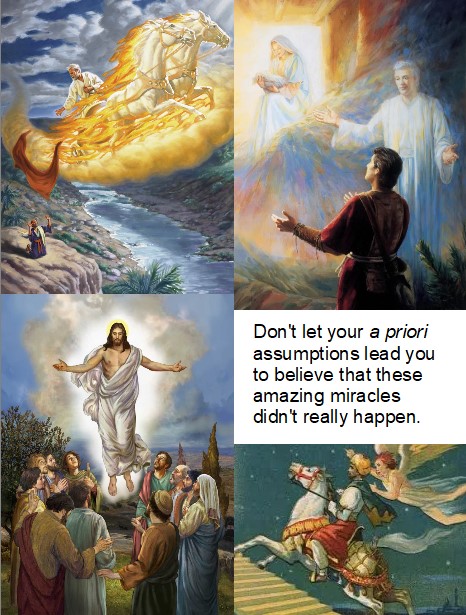
Exhibit 8. Dead people stay dead. They do not resurrect.. This is not an a priori assumption. No corpse has ever revived after 36 hours or indeed any other period of time. We know this experientially, statistically and scientifically. Only in stories and religious myth do the dead return. This is what we are dealing with here: stories and myth that flesh out the visions and hallucinations of a few religious zealots.

Either All True Or None True

About 2,500 years ago, a man called Elijah went up to heaven while still alive. He was taken through a whirlwind in a chariot of fire, pulled by horses of fire. This amazing event was witnessed by several other people who were profoundly affected by it. The story of this ascension was possibly relayed orally for many years until finally being written down in what is now 2 Kings 2.

Did any of this really happen?

Of course not. It’s a myth.

Some time in the 4th century BCE, the first king of Rome, Romulus, was taken, while still alive, to the dwelling place of the gods. From that time on he was worshipped as a god – some said he was eternal to begin with – with a temple being built in the very place from where he had ascended. Later he appeared to one of his followers, Julius Proculus who said the resurrected Romulus was larger and more beautiful than ever, armed with weapons shining like fire. Julius Proculus attested to this appearance of the resurrected Romulus, swore an oath to its veracity and relayed it faithfully to others.

Did any of this really happen?

Of course not. It’s a myth.

https://mythologymatters.wordpress.com/2019/04/18/easter-mythology-the-resurrection-as-modeled-on-greco-roman-myths/

It is not known when Mithras was born, if indeed he was. He emerged from a rock in the spiritual realm as a child or youth, ritually slaughtering a bull and sharing a banquet with the god Sol. He guided souls to the after-life, propelled as they were by the bull’s blood and flames. He was worshipped primarily by soldiers who saw him as their salvation from the bitterness of earthly life. There were rituals to be followed to become a true initiate and for Mithraic mysteries to be revealed. How Mithras made himself known to his acolytes is unknown, but in the first three centuries CE, his cult rivalled that of the Christians in popularity.

Did all of this really happen?

Of course not. It’s a fabrication, a myth.

In the 8th century CE, the prophet Muhammad flew from Mecca to Jerusalem on a winged equine. Once in Jerusalem he climbed a ladder to heaven. Once there he travelled through the various levels, having conversations with other lesser prophets, before entering Allah’s domain. His journey was later revealed to two early prophets who had known Muhammed when they were boys. They conveyed the details accurately until they were recorded, briefly at first in the Qur’an and later in more detail in its supplement, the hadith.

Did any of this really happen?

Of course not. It’s a fabrication, a myth.

In the early 19th century, Joseph Smith was visited by Jesus and his Father in a vision. They told him that he should not join any existing church because they were all in error. Later, a hitherto unknown angel named Moroni appeared to Smith and indicated to him where some gold plates were buried. He instructed Smith to dig up and translate the plates. Obediently, Smith did so, using a pair of seer stones for the translation. The resulting Book of Mormon was a revelation of Christ’s activities in North America following his resurrection. Smith wisely had a number of his associates witness, in writing, the existence of the gold plates as well as their supernatural provenance.

Did any of this really happen?

Of course not. It’s a fabrication.

In 1916 the Virgin Mary appeared numerous times to three poor Portuguese children, giving them instruction and prophesying to them. She also promised that she would perform a miracle at Fatima. Accordingly, between 30,000 and 100,000 people, including reporters and photographers, gathered at Fatima where many saw multi-coloured lights before the sun itself ‘danced’. It came closer to the Earth before zig-zagging back to its usual place in the sky. While not all of the attendees testified to the phenomenon of the dancing sun (some saw only the lights, others nothing at all) many did and testified to the effect the miracle had had upon them.

Did all of this really happen?

Of course not. It’s a fabrication based on hallucinations.

Around 30CE, a rabbi known as Jesus, who had been born of a virgin, gathered together 12 followers and went around Galilee preaching absolution from sin and the imminence of the Kingdom of God. He announced he was the Messiah who would rule the Earth when the kingdom arrived. The Jewish authorities took exception to his claims and petitioned the Romans to have him executed. This they did, only for Jesus to come back to life three days later, appearing in visions to his followers. He ascended to heaven, promising that those who believed in him would enjoy eternal life. Some of his disciples spread his message faithfully until it was eventually written down, first by a former Pharisee called Paul and then by four authors who accurately recorded what Jesus had said and done.

Did all of this really happen?

What do you think?

No God and the Domino Effect

This a response to Don Camp’s comment on my post The Evil of Christianity, in which he tries to isolate ‘the crux’ of our disagreement about the Faith.

You start, Don, from the assumption that there is a God. I, on the other hand, have considered the evidence and concluded that in all probability there isn’t one. Certainly not the Christian God. There may be a god out there somewhere that has no interest in human beings and their affairs, though I doubt it. As far as we humans are concerned such a deity is as good as non-existent, being entirely hypothetical. If it is out there, it certainly won’t be offended at my saying so.

Once I realised some years ago that a personal God did not exist a number of other things followed (or rather, collapsed):

No God means no Son of God or God Incarnate, no Saviour or Christ.

No God means no resurrection (which Paul makes clear was a work of God).

No God means no Holy Spirit.

No Holy Spirit means no regeneration of individuals to become new creations in God (you only have to look at Christians today to see this is the case.)

No God means no grand Salvation plan.

No God means no Heaven, no Final Judgement, no Kingdom of Heaven of Earth, no Eternal Life.

No God means the universe can’t have been created by him.

No God means no manipulation of evolution, no intervention in human history and no prophecy of things to come.

No God means that the world would be just as we find it: messy, beautiful, dangerous, turbulent, indifferent.

No God means prophecy is man-made and comes to pass at no greater rate than chance allows (i.e. practically zero.)

No God means conversations with ‘him’, revelations from him and visions of him are all imagined, generated by and within the human brain, which works in mysterious ways.

No God means no God-given morality. Morality is, as you say, culturally determined and so may and does change over time. (You can see this in the Bible itself where morality supposedly handed down by God for all time evolves throughout the Old Testament and into the new.)

No God means there is neither Sin nor Righteousness. These are religious concepts. The whole spectrum of human behaviour, from destructive to altruistic, is demonstrated by believers and non-believers alike.

No God means assertions like ‘the issue turns on what I perceive as good for me versus what God declares is good for me’ are illusory. What is good for you is what you have worked out, even if you think God had a hand in it. A supernatural being who doesn’t exist cannot be responsible for your well-being, though your church and the bible undoubtedly contributed to your conditioning.

No God means individuals must work out their own meaning and purpose. Some do, some don’t, as you observe, Don. This is as true of believers as it is for non-believers. Many atheists have managed it, or not, without having it imposed by religion. And despite what you say, Christianity is a religion. It is the epitome of religion.

No God means none of the Abrahamic religions are true and therefore Christianity and its ‘holy’ book, being based on an invalid premise, must be false. Most of the posts on this here blog are about demonstrating this fact.

No God means all gods are man-made, not all gods except one.

The crux of the matter is you believe in God while I see how unlikely it is that there is one. I’d agree with you if I could, Don, but then we’d both be wrong.

Paul and the Oral Tradition

Much is made of the oral tradition that it is said informs the material in the synoptic gospels, and possibly John too. The tradition of conveying the events of Jesus’ life and the things he said goes back to Jesus’ original followers – the disciples and the apostles (the terms are not necessarily interchangeable) – and continues with a high degree of accuracy, at least until AD70 when the first gospel was written. 

Which must be why we find so much detail about Jesus’ life in the letters of Paul, from his first letter, 1 Thessalonians, written circa AD55 to his last, Philippians (now an amalgam of several letters), written about 62. Paul was aware of the stories about Jesus – as all converts were – and affirms so many of the details of his life in his letters, passing on the vital stories and the traditions associated with him, in written form.

But not in our reality. Our Paul knows nothing of the details of Jesus’ life. Not once does he quote him or refer to the events of his life before the resurrection. There is nothing of the oral tradition. Nowhere in his letters does he draw from it; never does he say he knows for a fact that Jesus said or did a specific thing while on Earth.

Even after his meeting with Cephas and James, a full three years after his conversion, Paul relays not a single thing he learnt from them. After the encounter, he continues to promote only his own revelations and says nothing of what he learnt about Jesus from the man who supposedly spent three eventful years with him.

Fourteen years later, Paul meets again with Cephas and encounters other apostles for the first time. On this occasion, he and Cephas argue about justification and Paul comes away grumbling that ‘those leaders added nothing to me’ (Galatians 2:6) What? Not even stories about their time with the Master? Apparently these weren’t as important as disputes about soteriology.

Later still, Acts tells us that immediately after his conversion, Paul stayed with ‘disciple’ Ananias and other ‘disciples’ for several days. Did Ananias not know any of the oral tradition that he could pass on to Paul? Details about Jesus’ life, a saying or two or an account of a miracle? Apparently not. (This might be because the story is pure fabrication. Paul tells us himself, in Galatians 1: 16, that immediately after his conversion he ‘did not rush to consult with flesh and blood’).

Surely, though, he must have heard some of the Jesus story from those he persecuted prior to his dramatic conversion. If he did, he didn’t see fit to include any of it in his letters. Likewise, Paul had contact with cult communities he didn’t himself establish, such as that in Rome. Surely they conveyed some of the stories about Jesus that they had had passed on to them. He appears too to have known at least one other evangelist:  Apollos. If these other believers did pass on stories of Jesus from an ultra-reliable oral tradition, why didn’t Paul see fit to include any of them in his letters?

So what were Paul’s sources? Certainly not the oral tradition, nor Q, the hypothetical sayings gospel, which he likewise ignores. If the gospel was being spread orally from the time Jesus lived, by the apostles and other preachers, and was being passed around the fledgling cult communities, why did Paul know nothing of it? If in fact he did, why did he choose to ignore it in favour of his own inner-visions? Did he consider it of such little value?

These questions matter, as we’ll see next time when Mark decides he’ll set the Jesus story down on paper.