There Is No God. And Here’s Why

adamSometimes I wonder why I continue writing this blog. There seems to be little that can shake believers from their delusions; what I write here doesn’t appear to be it. When they do respond it’s to tell me that I’m in for a shock when, after my death, I stand in front of the the throne of God and have to give an account of myself. I’ll not be smiling then, they tell me. They’re right, I won’t be. Not because of any ‘judgement’, but because dead people don’t smile. Not of their own volition anyway.

Christians can’t seem to see the ludicrousness of their post-mortem proposals. Religion, all religion, is wrong about most things at most levels; it denies death, which does exist, and replaces it with fantasies about supernatural beings, eternal life and judgements, none of which does. Christianity offers false promises, failed prophecies and an impossible morality, which Christians themselves can’t even manage. By and large they don’t even try to (see previous posts on all of this) yet they stick uncritically, unthinkingly, blindly to the fantasy elements of their ‘faith’ because they’re frightened of their own extinction and want to live forever. Christianity deceitfully promises them that they will – the ultimate false promise.

So let’s cut to the chase. There is no God. This is an indisputable fact, though believers will dispute it anyway. Even now, any Christians who are reading this will be muttering something about the fool saying in his heart there is no God; another tired, cliched response, which I’ve already considered here. But there is no God, not because of any foolishness on my part but because of the evidence. Or rather the absence of it. There is no evidence there is anything other than the physical universe or that life came about as the result of anything other than physical processes (it is not the case that scientists do not know how life emerged from non-life; they do and it did) or that humans evolved by any means other than blind, mindless natural selection. God is not required to explain any of this; not necessary to explain anything at all to do with life, the universe and ‘why there is something rather than nothing’. That being the case, we can know for certainty that he wasn’t in any way involved.

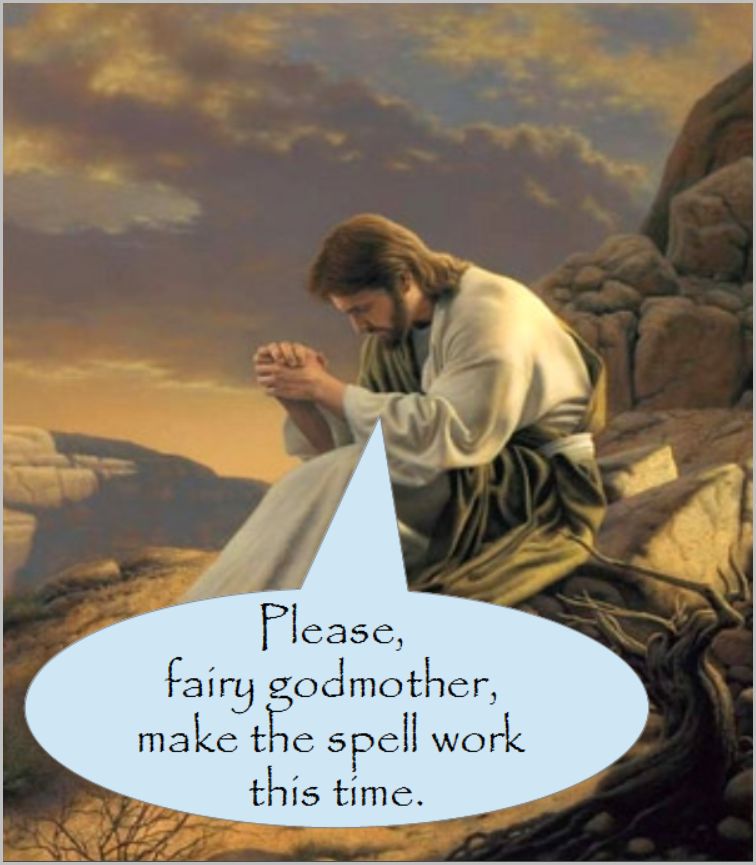
Let’s take a more down-to-Earth parallel to illustrate the point: we do not need to resort to stories of the tooth fairy to explain dentistry. I’m guessing that even Christians would agree with this; the tooth fairy has no part in matters of dental hygiene, orthodontist training or even the payment sometimes made by indulgent parents when their child’s tooth falls out. Trying to force the tooth fairy into any of these scenarios is not only entirely unnecessary, it’s erroneous and unhelpful. Dentistry is far better explained without reference to a mythical sprite. The tooth fairy not being needed, we can safely conclude that she doesn’t actually exist; she is a figment invented for children intended to take the away the pain of tooth loss, nothing more.

So it is with God in explanations into which he too is shoe-horned. He’s not needed, he’s superfluous to requirements. That being so, we can similarly conclude that he isn’t real either. A being that isn’t needed to explain anything is one that doesn’t exist.

This is not, note, a rejection of a figure who, even now, is sitting up in the sky somewhere feeling sad or angry because we’re ‘shaking our fist’ at him. If that’s what you’re seeing, you’re still believing in God, even if it is one you might be in the process of rejecting. It’s worse than that, Jim (or better): there is no super-being in the sky, or anywhere else. The universe is devoid of gods and of God; it always has been and always will be. There are none to be found because there are none there; not your pet god, nor those of other faiths, ancient or modern. None. There is only the physical universe itself and for the brief time we are here in it, we are lucky to be here in it. Which is more than any god has ever managed.
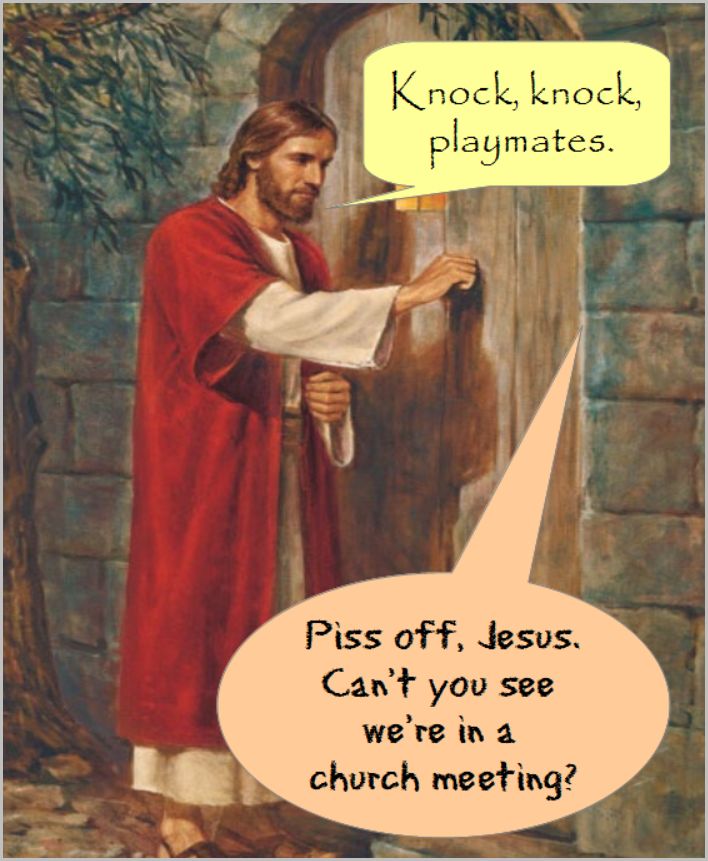
What Jesus should have said…

KnockLists are the thing, aren’t they. It’s time we had some on this here blog thingy.

List 1. 10 things Christians pretend Jesus didn’t say:

1. Treat others as you like to be treated (Matthew 7.12)

2. Forgive so that you’ll be forgiven (Matthew 6.14)

3. Don’t judge unless you want to be judged (Matthew 7.1)

4. Sell all you have and give it to the poor (Mark 10.21)

5. Turn the other cheek (Luke 6.29)

6. Go the extra mile (Matthew 5.41)

7. Give to all who ask and lend without expecting anything back (Luke 6.30 & 35)

8. Love your neighbour as much as yourself (Matthew 22.39)

9. Love your enemies (Luke 6.27)

10. Don’t worry about the future (Matthew 6.34)

If Christians followed these injunctions, what a very different world it would be. Instead, what do we get..?

List 2. 10 things Christians think Jesus should have said, but didn’t (with a few examples):

1. Show love for others by telling them what sinners they are (1, 2)

2. Stand on principle as much as you can (1, 2, 3).

3. Take easy offence (1, 2)

4. See persecution everywhere (1, 2, 3, 4)

5. Sue those who upset you (1, 2)

6. Demonise those who don’t share your world view (1, 2, 3, 4)

7. Hate homosexuals and oppose same-sex marriage (1, 2, 3)

8. Set yourself up as defender of God’s standards (1, 2)

9. Argue endlessly about points of doctrine (1, 2)

10. Obsess about the future and the state of the world (1, 2, 3)

This is the Christianity we’ve got. Well done, o righteous ones, for perverting Jesus’ radical (and yes, ridiculously impossible) message into this unsavoury concoction of mean-spirited self-centredness. It’s what he wouldn’t have wanted.


Why_Christians_Don't_Cover_for_KindleMy book Why Christians Don’t do What Jesus Tells Them To …And What They Believe Instead looks at how Christians ignore most of what Jesus says in favour of a Christianity of their own making. You can find it here in the UK, here in the US and on Kindle. Go on. You know you want it.


Idiotic Stuff Jesus Said 10: How to Entertain

Last supper 2Here’s something you don’t see every day.

When you give a luncheon or a dinner, do not invite your friends or your brothers or your relatives or rich neighbours, in case they may invite you in return, and you would be repaid. But when you give a banquet, invite the poor, the crippled, the lame, and the blind. And you will be blessed, because they cannot repay you, for you will be repaid at the resurrection of the righteous.
Luke 14.12-14

In fact, you don’t see it at all, because Christians feel free to flout this command of their Lord’s. I mean, he couldn’t speak any more plainly than he does here, could he? And yet, Christians, you don’t invite the poor, the dispossessed and the disabled to your luncheons and dinner parties. Like the rest of us – that’s the unsaved and sinners in Christian-speak – you only invite your friends, family and fellow-believers. If you’re well-placed, maybe as an official of the established church or as an obscenely wealthy evangelist, you invite those who are similarly rich and famous. As far as you’re concerned Jesus and his ridiculous ideas can just f**k off.

What? You object? You don’t say this, Christians? It would be blasphemous? But of course you say it, when you spiritualise his point, explain it away (‘what he really means is…’), claim the context excuses you or just plain ignore him.

Please don’t misunderstand me; I don’t blame you. Jesus’ expectations are totally unreasonable – idiotic even. But I’m not a Christian; I don’t pretend to follow him and don’t have to do as he says. You, on the other hand claim him as your saviour, your God, and profess to live your life in obedience to him. Except you don’t, do you; you wilfully disregard the clear, direct instructions, like this one, that he gives you.

You much prefer setting your own agenda, whether that’s ‘defending God’s standards’ (your God is incapable of defending his own standards?), bashing the gay or making sure you yourself are ‘blessed’. But these are not part of Jesus’ agenda; his good news (mad as it is), is much more concerned with elevating the lowest of the low, including inviting them into your homes and feeding and entertaining them.

So how about it Christians? How about it all you outspoken men of God – Stephen Green, Steven Anderson, Scott Lively, Matt Barber, Franklin Graham – and all you other Christians; isn’t it time you got down off your soap-box of whatever it is you’re opposing this week and made a start doing what your saviour commands you to do?

Well, isn’t it?

What Christians Believe: Part Two

AscensionHi, Thea Lojan here talking about the creed. Here’s what else it says, following on from last time:

I believe Jesus ascended into heaven and is seated on the right hand of God and will come to judge the living and the dead. As I was saying, Jesus could do amazing things. He could, like, beam up into the sky and out into space – that’s what ‘ascended’ means. Amazing. And he is coming back to judge the Earth, just like he promised. I know he said he’d be back real soon, like while his disciples were still alive, but to God a minute is like a thousand years so a few years can be anything like a million, or something like that. We shouldn’t take it literally when he said he’d be back while his friends were still around, though the Bible is, without a doubt, the literal Word of God.

Anyway, when he returns Jesus is going to send those who don’t believe in him to Hell, where they’ll suffer eternal torment for, like, forever and ever, amen. And he’ll take people who are saved, like me, back to Heaven with him. I can’t actually find the bit in the Bible where he says he’ll be taking me to Heaven, but I have faith so I’m sure he will.

Just a thought, but why doesn’t this creed mention the Bible, and how it’s the ineffable and literal Word of God? You’d think it would, wouldn’t you.

I believe in the Holy Spirit, the holy Catholic Church and the communion of saints. Definitely. The Holy Spirit is like the feeling of God that you get when you’re being blessed. You can’t see it – though it’s actually a ‘him’ because God is a ‘him’ – but it’s there, helping you make decisions, like whether you should buy a new car or install a heated pool in the yard. You definitely get a sense of him then. In my experience, he’s never let me down. He always guides me right.

I’m less sure of the holy Catholic Church because of course we’re not all Catholics and nor should we be when Catholics have got everything so wrong. But the pastor at church says it just means ‘the Body of Christ’ here, the same as ‘the communion of saints’ does, though that makes you wonder why we’ve got it in there twice. The communion of saints means all worshippers everywhere being united and working together. So, yes, I totally believe that because, that’s what we do as Christians; we all love each other. I don’t accept any of those lies that some people put about that there’s, like, 41,000 different kinds of churches. I don’t think God would let that happen, do you?

I believe in the forgiveness of sins. Yes I surely do, for God has forgiven my sins through the redeeming blood of the Lord Jesus Christ, his son. And if they’re really, really sorry I can forgive the sins of others, except of course if they’re, like, homosexuals. It really grosses me out to think about what so-called “gay” people do with each other. It’s unforgivable and even the Lord doesn’t forgive it. But my sins, yes, he forgives those.

The resurrection of the body and the life everlasting. Well, I already covered this. This is another repeat. What this really means is that everyone whose sins are forgiven and have been saved will go to live with God in Heaven after they die. Isn’t that amazing? Just think, whatever happens to your body all the time you’re dead, even if it’s been burnt or has rotted away to nothing, God will repair it and make it good as new. And then you’ll live forever in Heaven, because that’s what it means when it says ‘the life everlasting’. Even if I still can’t find that bit in my Bible.

Well, that’s it. That’s my creed, and what Christians everywhere believe. It was written, in fact, by the apostles, that’s Jesus’ friends, way back when he was still alive or just after. If you were to give your life to the Lord – and you really should if you want live forever in Heaven – then it’s what you’d believe too. Isn’t that, like, really, literally incredible?

What Christians Believe: Part One

A very special guest post by Thea Lojan.

PilateThe Creed

I’m very pleased to have this opportunity to share my testimony with you and give you an idea of what I and millions of other Christians believe. We call this the Apostles’ Creed and it goes like this:

I believe in one God. Actually no… three. Three Gods. One really, but he’s like three, a buy-one-get-two-free kind of God. Yes, okay, he says he’s the one and only God back in the Old Testament, but that’s before he knew he was really three. This doesn’t make him/them anything like those collections of ancient Greek Gods, though, because he’s still only one God really. That’s what’s called the Trinity and I hope I’ve made it clear for you .

Anyway, I believe in one God and in two others besides, creator, or creators, of Heaven and Earth. Yes, he/they definitely did this even though scientists think the universe was created billions of years before the Bible says it was and that God probably wasn’t even involved. But these scientists are all anti-Christian, that’s why they say that. If you have faith you know that of course God was involved. Other people who are also anti-Christian just out of spite say that if God made the Earth and all that is in it therein, then he must’ve made parasites and poisonous bugs and harmful bacteria and disease. But I’ve an answer to all that. Just don’t think about it.

And I believe in Jesus Christ, his only son, our Lord. Yes definitely this, even though Jesus says he’s not really anything like God’s son in three of the eye-witness accounts of his life in God’s Word. I expect he was just a bit muddled when he said this, being away from home and down here instead of up in Heaven with his Heavenly Father. He probably meant to say he was God’s son because it’d be too weird if he really was God’s Son and didn’t know it. We should be grateful to those people who came after him who realised exactly who he was.

And then there’s that bit somewhere about him being ‘begotten not made, of one substance with the father’, or something, which I think means he was more than God’s son. That he was, like, God himself. You’d think he’d remember that, wouldn’t you, when he was down here on Earth. What confuses me though is, if he was God, then who was he praying to all those times? I can’t get my head round that. But anyway, it’s a good job there were even more people who came after him who knew better than him and could tell he really was God.

He was conceived by the Holy Spirit, born of the Virgin Mary. Well, you’ve got to believe this haven’t you, even though some people say ‘virgin’ should really just say ‘young woman’. A young woman might or might not be a virgin, especially if she wasn’t a Christian to begin with. It does make me wonder that if she was pregnant then it’s more than likely Mary wasn’t a virgin, ’cause we all know how babies get made. Still, if God’s Word says it was the ‘Holy Spirit’ that was the father then that’s what we should believe. If you want to know more about the Holy Spirit that can make people pregnant, well, we’ll get to it soon.

He suffered under Pontius Pilate, was dead and was buried. He descended into hell and on the third day he rose again. I think a bit got missed out here – all the stuff Jesus said and did in between being born and suffering under Pontius Pilate. Isn’t that important? You bet it is. Pontius Pilate, by the way, was a Roman perculator who worked for Julius Caesar. I can’t find anything about Jesus ‘descending into hell’ in my Bible but I suppose it must be right. I definitely believe though that after three days and nights in the tomb he rose again from the dead. I mean, that’s a really important bit. I know he wasn’t in the tomb for a full three days and nights, even though he said he would be, but a day and a half is close enough. I guess that’s why we say ‘on the third day’ instead; it sounds like three days when it was only a day and half. But, you know, Friday night till Sunday morning – it’s legit to say ‘on the third day’.

And we know he rose from the dead because Saint Paul said so – he saw him himself, in person. Well, not exactly in person but in his head. He was like an amazing flash of light in Paul’s head, a bit like an epileptic event, except, you know, like really real. And then other people started seeing him but not in their heads, as a real person, but one who could walk through walls and disappear if he felt like it. Totally real. Amazing.

I’ll be back next time to tell you what else Christians believe. In the meantime, keep praising the Lord!


Thea was talking about the Apostles’ Creed, though she also mentions the Nicene Creed. The Apostles’ Creed was created prior to 390CE and the Nicene Creed in 325, both quite a bit after Jesus’ lifetime. Three hundred years after, in fact.

Oh, and Pontius Pilate was a Roman procurator or prefect during the reign of the Emperor Tiberius.

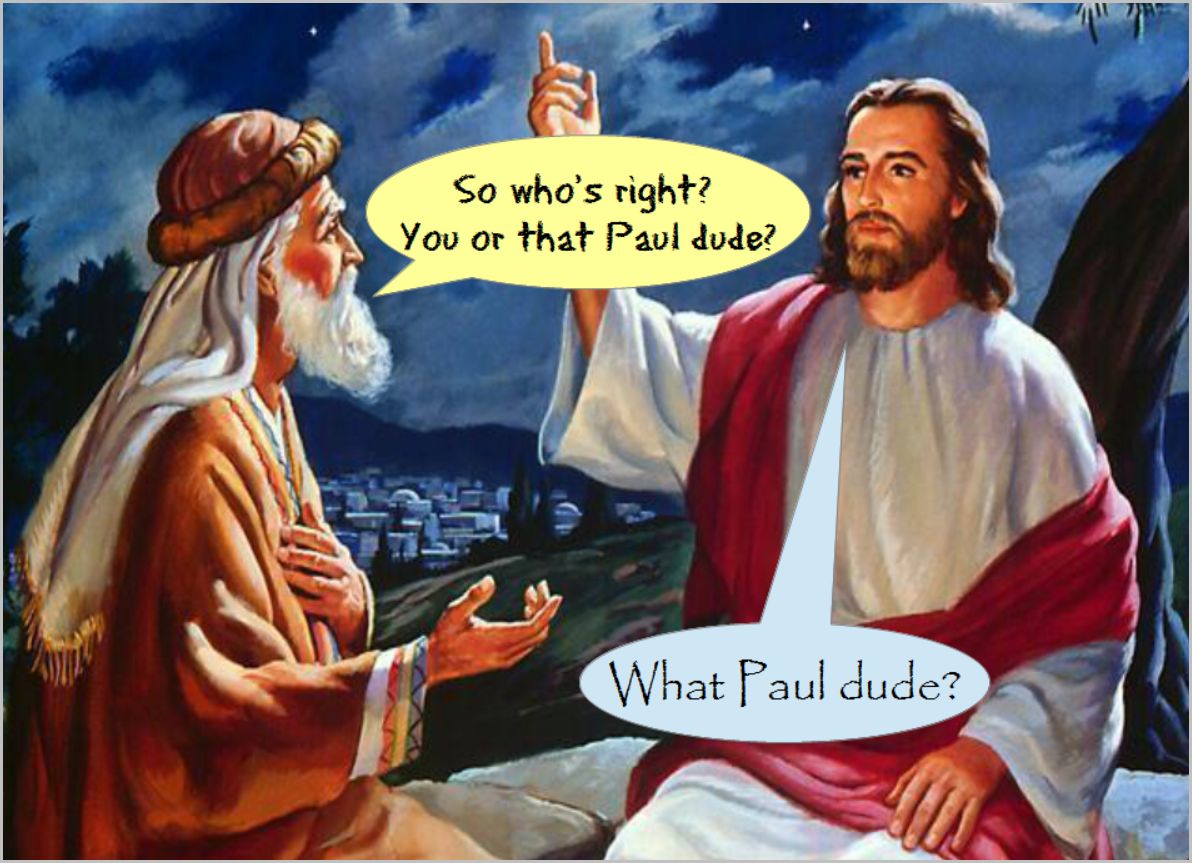
Jesus or Paul?

Nicodemus

Jesus is asked a few times in the gospels about how a person can find eternal life – like that’s the most obvious things to ask a travelling snake-oil salesman. Maybe it is, I don’t know. It was in the first century anyway, if the gospels are to be believed.

Jesus gives a variety of answers in the three earliest gospels: in Matthew 19.17 it’s ‘keep the commandments’ – those terrible, brutal laws I talked about last time. In Mark 12.30-31 he says the way to eternal life is to love God with all your heart and soul, and your neighbour as yourself. In other places he tells his audience that if you want to be forgiven by God then first you must forgive others (Matthew 6.14); if you want God’s compassion then first you must be compassionate (Matthew 25:31-46); if you don’t want to be judged, then you shouldn’t judge others (Luke 6.37).

Jesus is particularly fond of this kind of measure-for-measure salvation; it’s the lynch-pin of his good news – do unto others as you would have God do unto you. And almost every time he mentions it, he connects it with the Law and commandments.

Never does he say, anywhere in the gospels, that if you want to gain eternal life, or find favour with God, or be saved, then what you have to do is believe in the redemptive power of his own imminent death. Even when he could have done so, when he could have worked a little bit of Christian dogma into his teaching, he doesn’t. And that’s strange really, when you consider that Paul’s brand of Christianity – the one that’s come down to us today – is built entirely on the idea that the death and resurrection of Christ is the only thing can save us from God’s wrath.

Paul’s alternative gospel, which is expounded in Romans and summarised in Galatians 3.10-13, goes something like this:

Paul looks at the old Jewish Law and says, ‘actually it’s impossible. None of us can keep it. We’re all under a death sentence for some tiny infringement of it, because any and all infringements lead to the death penalty. But,’ he goes on, ‘Christ has taken that penalty for us by dying in our place. So although the law demands we should die and then suffer for eternity, we won’t, because he died for us. Then he rose again, just as those who believe in him will.’ That last bit – about believers rising from the dead – really doesn’t follow from his premise that the Law is impossible, but this is Paul talking, a man with only a passing acquaintance with logic. He doesn’t, either, have any evidence that Jesus took the penalty for the rest of humankind – he made that bit up too.

And that, in a nutshell – I do mean nut shell – is Paul’s ‘good news’. It bears no relation to the good news that Jesus preaches in the synoptic gospels. Admittedly, the Jesus who wanders his way through the first three gospels is for the most part a pre-death Jesus. You could argue, as a result, that he wouldn’t talk about redemption through his death before it had happened… but then again, why not? He talks about all sorts of other things he thinks are going to happen after he dies and rises again; he’s going to return pretty damn soon in a blaze of glory, through the clouds with an army of angels; heaven and earth are going to pass away; God is going to unleash his kingdom on the new earth.

But in spite of these mad speculations, he doesn’t mention even once in the synoptic gospels that people can be saved merely by accepting that he has paid – or will pay – the penalty for their infringements of the law, their sins if you will. Never. All the more odd when you consider that Mark, Matthew and Luke were putting their gospels together long after Paul preached his particular brand of salvation. Yet they don’t put this message into Jesus’ mouth, nor do they add it to the narrative.

It’s just not there.

So… were the gospel writers not aware of it? If they did know of it, was it that they didn’t like it? Did they know, in fact, that Paul’s formula didn’t square with what Jesus himself had said, or what they at least believed he’d said?

Whatever it was, the result is there are two conflicting versions of the ‘good news’ in the New Testament: Paul’s and Jesus’. One is easier than the other; in Paul’s plan all you have to do is believe. The other is difficult (and if we’re honest, really only designed for Jesus’ fellow Jews); it entails things like forgiving repeatedly, showing compassion, putting others first, turning the other cheek and, especially, following the six hundred and odd commandments that make up the Law.

So guess which one Christians today prefer.

Here’s a clue: it’s not Jesus’ gospel – the one without the magical incantation but with the barbaric Jewish law. But if, as Christians believe, Jesus was the Son of God – maybe even God himself – then why do they always accept Paul’s reinterpretation over and above everything their Lord said? Why do they disregard all that Jesus demands of those who would follow him, and take instead Paul’s easy path?

In the end, though, what Jesus and Paul (as well as the gospel writers and different factions of the early church) are in dispute about is the highly improbable and the absolutely impossible. It doesn’t matter whether they thought you could gain ‘eternal life’ by obeying the commandments or by letting someone else take your punishment for you; humans do not live forever. Just because a zealous first-century preacher thought they could does not make it so. Just because a different fanatic from roughly the same time believed it doesn’t make it happen either. There’s no evidence any human has ever, after this brief earthly existence, gone on to live forever. Equally, there’s no evidence that a deity exists, so those rules that are so important, in different ways, to Jesus and Paul can’t have originated with him. They’re man-made too.

So, with no God and no eternal life, Jesus and Paul might as well have been discussing whether the tooth fairy wears a pink dress or a green dress. What does it matter when she doesn’t exist?

How much more were they wrong about?

How long you got?

Christian love… but not so’s you’d notice

Church2Today, the world commemorated the relief of Auschwitz seventy years ago, following the murders of millions of Jews, homosexuals and gypsies.

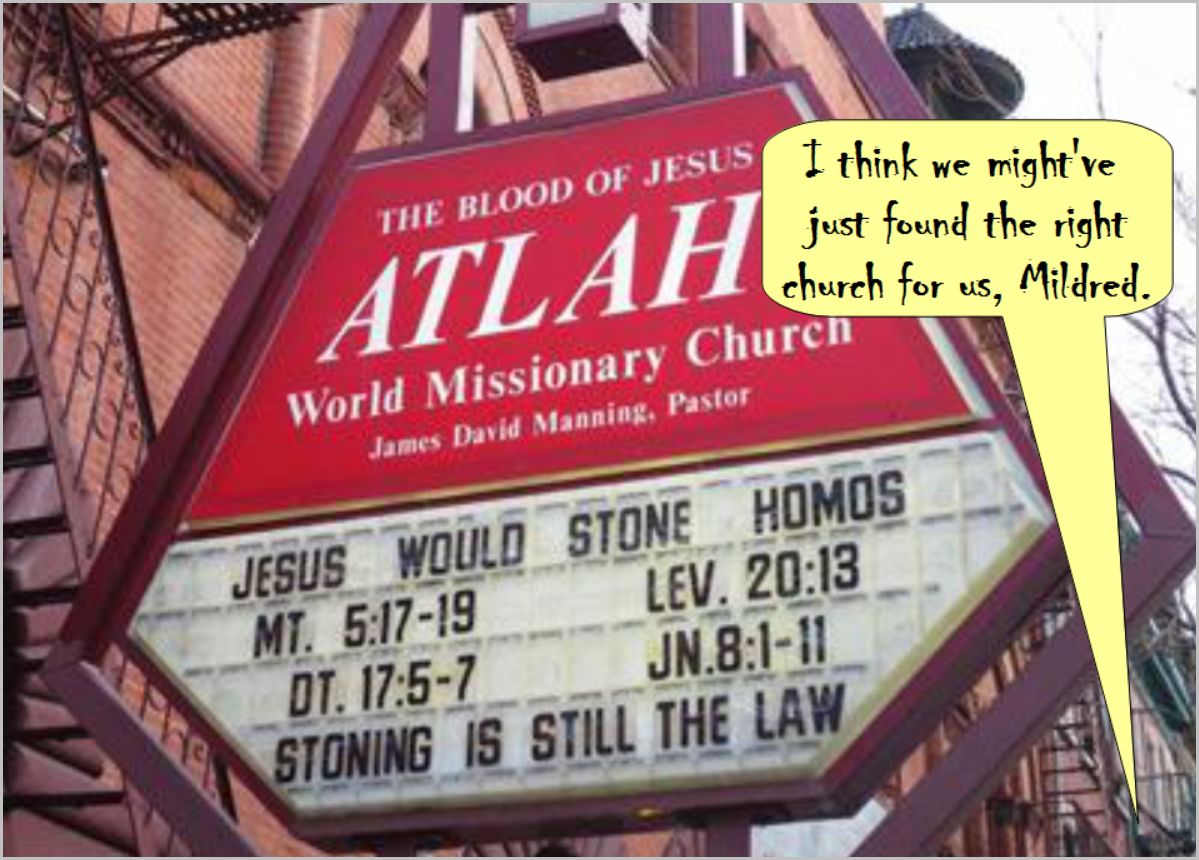
Also today, Christian pastor James Manning said Islamic militants are justified in executing gay people. Another man of God, Ben Carson, implied that Christian bakers might want to add poison to wedding cakes they are ‘forced’ to make for same-sex couples. And just before Christmas, pastor Stephen Anderson said gay people should be exterminated as the means of eradicating AIDS.

Whatever happened to ‘do not kill’? You know, the sixth of the much vaunted ten commandments that believers think should be displayed in public places so that the world might become a better place. I guess it’s far easier to display the commandments than it is to obey them.

What happened too to ‘love your neighbour as yourself’? This doesn’t – big surprise, Christians – mean endlessly pointing out others’ ‘sin’ while relentlessly banging on about ‘the Lord Jesus Christ’ like we’ve never heard of him before. Though again, I guess that sort of ‘love’ is a lot easier than actively caring for other people, regardless of their beliefs, values or sexuality, as much as you care for yourself. That, after all, is the whole point of the story of the Good Samaritan; the Samaritans were despised by the Jews of Jesus’ day in much the same way that homosexuals are despised by many of the righteous today. Yet it is a Samaritan whom Jesus makes the epitome of sacrificial neighbourly-love in his story. Still, what did he know?

And really, that’s my beef with Christianity. It just doesn’t work. Believing in Jesus, following him, as he insists you must, to the point of death doesn’t make you a better person. It doesn’t make you loving if you’re not already. Doesn’t make you meet the demands of the very one you claim was God on Earth. It certainly doesn’t make you more compassionate or even more intelligent, as the men of God above more than amply demonstrate.

So what use is it?


The gift that keeps on giving…

PunchSo that’s it then. The Pope has spoken. We can no longer ridicule religion.

Frankie warned yesterday that faith, his own especially, cannot be mocked.

Shame. I was enjoying this.

Predictions for 2015

BrideMy predictions prophecies for the year ahead:

1. There’ll be no Second Coming in 2015.
Jesus won’t be back this year. Just like he wasn’t back in 2014, 2013, 2012… 1985… 1914… 1868… 1497… 1000… 446… 35. Just think of all those years – count ’em, nearly two thousand – when he’s failed to return so far. Actually, he promised he’d be back while his disciples and those daft enough to listen to him were still alive – around AD30 or thereabouts (Matthew 16:27-28; Matthew 24:27, 30-31, 34; Luke 21:27-28, 33-34). Safe to say he’s not coming back at all now, just like dead people don’t. Not in 2015, not ever.

2. Christians will go on insisting Jesus is going to return any time soon.

3. There’ll be no natural disasters or human calamities as a result of same-sex marriage.

4. Christians will claim natural disasters and human calamities are the result of same-sex marriage. Shaking our fists at God… the wrath of the Almighty… sign of the End Times… blah, blah, blah.

5. More than one prominent Christian will call for the execution of gay people.

6. Christians in the west will claim they’re being persecuted when they’re being expected to treat others fairly and equally, and not to discriminate against them.

7. Christians will respond to criticism with clichés like ‘they wouldn’t dare say that about Muslims’… ‘Christians are the last group who are fair game’… ‘It’s time for Christians to speak out’… ‘Stand up for God’s standards…’ etc.

8. Christians will continue to dismiss and disparage anyone who doesn’t share their views, especially atheists. Look out for ‘atheists have no morality’, ‘the fool hath said in his heart there’s no God’ and ‘atheists want to oppress Christians’ occurring with tedious regularity.

9. There will be more revelations about the abuse of children by church ministers.

10. Church hierarchies will attempt to cover up the abuse of children by their ministers.

11. There will be the usual manufactured ‘war on Christmas’.

12. These predictions have far more chance of coming to pass than any of the so-called prophecies of Bible. I’ll return to them at the end of the year so we can see.

A happy new year to you all!


Original picture: Ursula Klawitter / zefa / Corbis

Idiotic Stuff Jesus Said 9: God knows what you need before you ask him

PrayJesus said: ‘Do not be like non-Jews, for your Father knows what you need before you ask him.’ Matthew 6.8

Prayer has been in the news quite a bit lately. Not, of course because it’s suddenly started working, but because prominent Christians have been pretending, yet again, that it does:

Archbishop of Canterbury, Justin Welby, has been telling us just how important prayer is. He prays for others while he does the ironing.

The pope has been praying for victims of Islamic State.

Churches in Glasgow have been praying for the victims and families involved in last Monday’s terrible accident there.

Bishops in Australia prayed for victims of the Sydney seige.

Christians inherit this futile behaviour and empty posturing from Jesus himself. He believed that talking ‘in secret’ to his god-in-the-sky could actually change things down here on Earth. This God, according to Jesus, knew what his children wanted even before they asked.

His children were not, however, Christians; they were Jews. The phrase I’ve interpreted above as ‘non-Jews’ is ‘Gentiles’, which means exactly that – outsiders who weren’t Jews. These outsiders, Jesus implies, just don’t get prayer. Only the chosen people, the Jews, do. Only they know how to talk to the big Sky Daddy properly and it’s only their needs that he knows about beforehand. He isn’t interested in others, their needs or their prayers.

But if he knows the needs of his chosen before they even ask him, why doesn’t he simply meet those needs? Why does he have to be asked? What sort of perverse and twisted version of a loving father is this, who insists on being asked before he will consider acting? I’m only a fallible and flawed human being but when I know my children’s needs, I don’t wait to be asked to meet them.

Maybe God isn’t really as magic as Jesus seems to think. Maybe he needs time to let things happen by chance so that he can then take the credit. Because there’s absolutely no evidence prayer works. The opposite is the case; there’s plenty of evidence to suggest that the supposed results of prayer are no more likely than if they happened by chance.

As if this weren’t ludicrous enough, many of the examples of prayer we’ve heard about recently are prayers after the event; appeals for the victims and survivors of disasters once the disaster has struck. So did God not know those involved ‘needed’ not to be killed or tortured or bereaved? If he didn’t already know this, then Jesus’ claim is, like so many others he made, utterly worthless. And if God did know, why did he not do anything to prevent the loss of life, the hardship, the devastation? Because he wasn’t asked

It’s likely though that he was asked, by those believers who were caught up in appalling circumstances. So then, why didn’t he act? Why didn’t he meet those needs he knew so much about beforehand?

Perhaps he just doesn’t care or he’s not able. Or, more likely, maybe he doesn’t exist.

And if he doesn’t exist, then Jesus was wrong in everything he said about him. He was wrong to think God was there in Heaven, taking an interest; wrong to think he cared. It also means Jesus certainly wasn’t the son of any such god. Nor was he the human manifestation of a make-believe Sky Daddy on Earth.