More Daft Things Christians Say

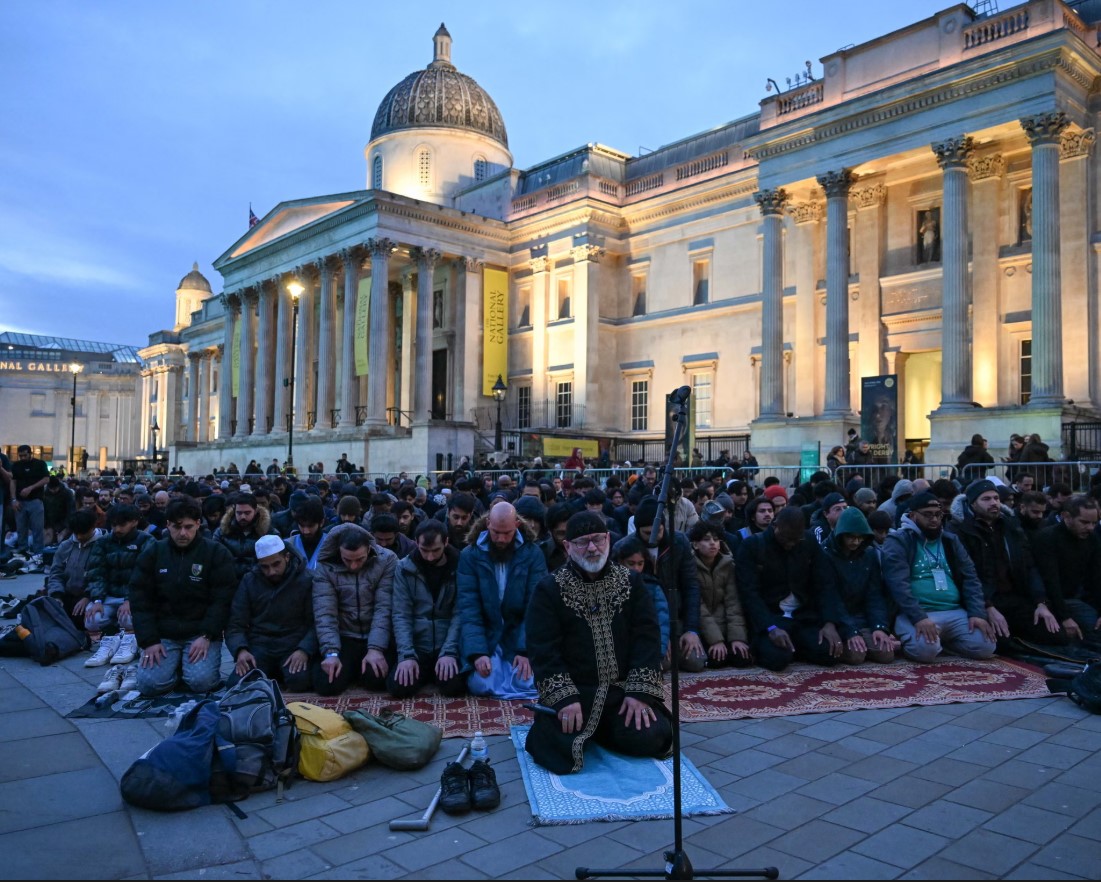
Image from a video by Intimacy With God, available here. I don’t recommend it.

In this season: a new favourite of evangelicals.

Though it is biblical (2 Timothy 4:2), what the hell does it mean in the mouths of today’s Christians? Here it is used to excess in the FreshPerspective blog: 

God is shifting his faithful sons and daughters into new seasons. But before I divulge into the signs, understand that everyone is called to different seasons. Some are being released into a season of exposure (platforms, opportunities etc), some into a season of preparation (preparing for a new season), and some into a wilderness season (a time of God pruning you, deliverance from past sins and behaviors before you enter a new season). So don’t be discouraged when it seems like you’re not where everyone else is. Seek God, pray and receive his wisdom and knowledge for what season you’re in.

It’s meant to sound profound, but there’s nothing profound about it. It’s pretentious, meaningless twaddle. Bob Dylan said it far better when he sang, ‘the times they are a-changing’. Things change; they continually evolve. Likewise our personal circumstances. God isn’t blessing, releasing, pruning or preparing you. Nor has he any great plans for you or the church. (Why? Because he’s not real.)  

Thoughts and Prayers/I’ll pray for you

Thoughts and prayers are always proffered when disaster strikes. The ‘thoughts’ I understand; when a long-distance friend lost her daughter to suicide a couple of years ago, I wanted her to know I was thinking of her and was ready to listen if she wanted to talk. She told me later that it was comforting to know that friends were thinking of her and were around if she needed them. I don’t think she said this just to make us, the friends, feel better. Such painful circumstances pare away insincerity.

There’s often not much more we can do beyond thinking about others when they are suffering like this. There are circumstances of course when we can offer more practical help, but adding ‘prayers’ to any expression of concern is lazy and glib. Prayers are of no use to anyone in distress or despair because prayers are, in any context, of no use, period. There’s no God out there, up there or inside us listening to our inner pleading. Even if there were, he is, according to his personality profile in the bible, so capricious and unheeding that he would do nothing to alleviate suffering. Neither would he step in supernaturally to remedy the terrible situations humans find themselves in. If he was even remotely concerned, he wouldn’t allow these to happen in the first place. Little point then in asking him to help with any mess he’s helped created, either intentionally or through disinterest.

But as I say, there’s no God so we need not trouble ourselves trying to work out what he’s playing at. Nor do we ever need the sanctimonious promise of prayers that will probably never be said. It doesn’t matter whether they are or not, so please, True Believers, can we dispense with  the cant?

The Daft Things Christians Say (the Sequel)

The return of an old favourite (of mine if no-one else’s)!

Dennis and I were in the States a couple of weeks ago and had the dubious pleasure of watching American news channels. I noticed on more than one, the presenters signed off with ‘God Bless’. As well as undermining what little objectivity they have left, the phrase rang hollow and made those using it, for whatever reason, as vapid and insincere.

It’s a phrase that many ordinary Christians and the nominally religious use (a waitress serving us lobster also came out with it, as if the lobster would magically be granted extra flavour.) It seems to me it’s a remnant from the days of incantation and magic. ‘May God bless you’ as opposed to ‘Let the devil smite thee’ or some such. ‘Goodbye’ has survived from these times too, originally ‘God be with you’, and is equally meaningless. Meaningless because if a God existed he would presumably be with you if he felt like it, or not as the mood took him. Attempting to summon his presence with an incantation of well-wishing is hardly going to influence him. Similarly with ‘God Bless’. Doesn’t the Bible say that God blesses whom he will (Romans 9:18)? No imperative will change that. Might it make the declarer of God’s presence of blessing feel more smugly self- righteous while the intended recipient might feel better, he or she convincing themselves they are actually ‘blessed’? Maybe, but God would have nothing to do with either state of mind.

Likewise that magic phrase Christians like to add to the end of prayers: ‘we ask this in Jesus’ name’. Will God not listen to their supplications if they don’t add it? Will he grant their requests if they do? I think we all know the answer. Why should it make any difference to Almighty God whether they add magic words to their pleas? If it does, what sort of God is it who must have exact words used, like a Hogwarts spell? The addition of a ‘just’ before the word ‘ask’, meaning ‘this is really a modest little request, your worshipfulness, we don’t want to bother you,’ doesn’t make it any more meaningful. From within the faith, as without, the phrase couldn’t possibly make any difference, apart from possibly allowing the supplicant feel better, more self-satisfied, like the child who adds a pretty picture to the end of their writing. ‘We (just) ask this in Jesus’ name’ another empty and vacuous magic spell.

Speaking in Tongues


I used to be so uncomfortable in prayer meetings that I attended back when I was a true believer when someone would start praying in tongues. It usually went something like alaluboolubamuba repeated over and over again, like a babbling brook. Babbling is what it was. In the churches I experienced it in, there was rarely any interpretation of the tongues as Paul instructed there should be. Even when someone was led by the Spirit to pipe up, what the speaker in tongues had said in gobbledegook was standard praise stuff: ‘Thank you Jesus for your wonderful mercies. Praise you for all you have done for us. Alleluia! Praise you’ etc, etc. And who were we, the others present, to say it wasn’t? Some would add their own Amens to the interpretation, adding credence to the meaningless phenomenon. The Spirit at work indeed.

Speaking in tongues, glossolalia, seems to have afflicted the cult in Corinth in particular. Paul addresses it in his first letter to the church there, and nowhere else. He doesn’t seem to know what to make of it. He feels unable to say that it’s merely a few people getting carried away (because that’s pretty much what all early Christian worship was) and can’t say it’s not the Spirit moving them to babble when that’s what the church was claiming. So he fudges it, claims he speaks in tongues more than anyone else (why do I hear Donald Trump in this boast?) and makes a few stipulations:

Only speak in tongues if there’s an interpreter present. (What happens if you get the urge the Spirit moves you when there’s no interpreter around?)

Glossolalia is ‘uttering mysteries’ in the Spirit that no-one can understand (so how can they be translated/interpreted by someone else?)

You shouldn’t speak in tongues all at the same time. It’s unseemly.

Use tongues only in private (according to the great know-it-all apostle, tongues are of the spirit and are merely a way of praising God. Tongues then are God praising God: what a narcissist he is! Other than this, Paul concludes they’re not much good.)

Interestingly, at no time does Paul suggest or acknowledge that some of the tongues manifesting themselves are other languages – real languages as opposed to unintelligible babbling. In fact he makes much of the fact that no-one understands what is said. It’s left to Luke to elevate linguistic nonsense to miracle status. In Acts 2:4-12, he has the disciples speak in real foreign languages after the Holy Spirit takes hold of them. Those around are ‘amazed’ (aren’t they always?) that they can suddenly hear the gospel message in their own tongue. Luke labours the point that, conveniently, there were men from ‘every nation under heaven’ present to verify the use of multiple languages by otherwise uneducated fishermen. Far more likely is that Luke, aware of the outbreak of babbling in at least one early church, shaped what he’d heard into what he thought was a more credible account. In other words he made up the story of the disciples spontaneously becoming fluently multi-lingual.

Later still, the unknown writer who invented the longer ending of Mark decided to mention the tongues phenomenon in the prophecies he invented for Jesus. In Mark 16:17 he has Jesus promise that those who believe in him would miraculously speak in ‘other languages’. How many times has this happened in the ensuing two millennia? I’d put money on there only ever having been sporadic outbreaks of meaningless babbling, such as that which I experienced. 

The church today continues to be confused about tongues. Some claim that ‘the gifts of the Spirit’, of which tongues are a part, no longer manifest themselves among believers. It’s a neat way to consign bizarre behaviour to the dumpster of history, but alas, it’s unscriptural. Nowhere does Paul suggest tongues and the other gifts of the Spirit would have a sell-by date before the Lord’s coming. Admittedly, he thought the Lord would be coming real soon. Only then, not before, would tongues and the other gifts of the Spirit ‘pass away’.

Other churches today are open to the possibility of tongues. Some even claim that the Spirit does indeed enable believers to launch fluently into languages, complete with correct syntax and vocabulary, that they don’t actually know. We can be sure there would be evidence of this online if it really occurred. There isn’t. 

Others are happy to go along with the unintelligible babbling, preferably with an interpreter who makes stuff up is also led by the Spirit to make sense of the mumbo jumbo.

Some abandon all restraint, with entire congregations babbling at the same time. Paul’s rules be damned!

And they wonder why we don’t take them seriously. As Paul himself warned:

If the whole church comes together and everyone speaks in tongues, and inquirers or unbelievers come in, will they not say that you are out of your mind? (1 Corinthians 14:23)

They surely will.

Have any of you encountered speaking in tongues? What did your church make of it?

Deconversion


In the late 1980s I reach a crisis point in my life. I pray for God’s guidance . I pray for wisdom. I don’t pray to ask him to resolve the situation (not of my making). The heavens, however, are as brass. I begin to entertain the idea that rather than God ignoring me or expecting me to sort the problem (which eventually led to me having a breakdown) he might not – gasp – exist! I had gone from being someone who heard God speaking clearly in my head – telling me I should ‘witness’ to some ‘lost’ soul or other – to someone contemplating whether I’d imagined it all.

What at first seemed like a possibility began over time to feel more like a probability. I borrowed books from my local library written not by evangelical authors but by secular scholars (if bishops can be regarded as such) – John Robinson’s Honest to God, Morton Smith’s Jesus the Magician Resurrection: Myth or Reality? John Shelby Spong’s A Bishop’s Search for the Origins of Christianity, and later still Bart Ehrman’s many books.

I began a journey of discovery, exploring what it was I had believed when a committed Christian. Irrationally perhaps, I clung to a belief in God longer than I did other aspects of Christianity. After all, God is kind of generic and could conceivably exist and operate independently of Christianity. I reasoned that God must, by definition, be superior to the anthropomorphic concepts of the Bible. I held on to this idea of a generic God for another decade or so. It gave me a sort of comfort, I suppose. I was aware he wasn’t compatible with all the Jesus stuff I’d once believed. Would a god who created the universe really require a human sacrifice to make peace with his own creation? It seemed unlikely.

My friendly but distant god sat comfortably in the back of my mind while I got on happily with life without him and without thinking about him very much either. Until one day, walking home from work, I suddenly wondered why I was bothering. Why was I sustaining the idea of a god? Any god: generic, biblical or comfort blanket. I didn’t need to. I didn’t need him (nor, if we pretend he really exists, he me.) Everything about life, the universe and everything was, in any case, more than adequately explained by science, evolution, astronomy, psychology (in which I have a qualification). In something like a revelation, I realised that no God existed. Not the YHWH variations in the Bible and not my nicer version of him. In that instant I stopped believing in God, god and gods. One second I was a believer (of sorts), the next I wasn’t.

It was liberating. I didn’t have to work out what God was really about, didn’t have to please him, ask his forgiveness, seek his grace, or any of the other convoluted nonsense that goes along with ‘him’.

  • Was this revelation as emotional as my original conversion? I don’t think so. It was the culmination of years of thinking, reading and challenging myself. My ultimate deconversion from god-belief was a rational process.

It had repercussions of course, which I’ll deal with next time. In the meantime, how does my deconversion compare with yours, those of you who’ve had the good fortune to have one?


Presenting a well-thought through Christian Response*

If there’s one thing I love about writing this blog it’s the considered, articulate comments I get from loving Christians.

A brave anonymous commenter left one the other day on the 2015 post ‘Gentle Jesus – meek and mild?‘. Short on time and rhetorical skills, Brave Anon opted instead for a different range of tactics. Here’s what he(?) had to say:

I’m a little short on time, and i wish I wasn’t, because I could pick apart your post piece by piece for hours. I WILL say though, that I’d expect someone who has dedicated a whole site to this matter to have actually read the book he’s so dedicated to disproving. It’s pretty clear that you haven’t and only used quick Google searches to try to prove your point. The big thing that i’d really like to point out is that most of the scripture you quoted to try to prove your point is from the Old Testament. That means it was law BEFORE Jesus was born. Yes, some of them are pretty harsh. That is why Jesus whittled the 613 commandments in the OT down to 10 in the NT. The most important being, ”Love the Lord your God with all your heart, and with all your soul, and with all your mind.” The most important one, right behind that, is to, “Love your neighbor as yourself.” That is why I just prayed for you. I wish that people like you would get away from trying to disprove the Word and find something else (literally ANYTHING else) to spend your time doing. What do you have to gain by making this site? Do you have such little self worth that, as a grown adult (I assume, but maybe I’m wrong), you really need someone to pat you on the back and say, “WOW! You did a really good job! You get a gold star. That means, you get to pick out what toy you want to play with at recess first today!” Will, if that’s what you need, I ain’t the one to say it. Your arguments are weak, and you are clearly uninformed on the subject you’ve chosen to focus on. Why don’t you, at least, read the Bible (I mean cover to cover) before you speak on it. If you need a little motivation, why don’t you remember that Satan knows the Bible better than ANYONE here on Earth. I mean, even better than the POPE!!! Familiarize yourself so you can, at least, make an educated, organized, well informed, argument. You do that, and I’ll consider giving you a shred of respect. Otherwise, good luck on your day of reckoning. I hear it’s hot down there, so make sure you pack shorts!!

Let’s ‘pick apart’ the tactics in use here:

  1. Mind reading: Brave Anon knows that I have never read the Bible. Impressive. Wrong, but impressive. He uses his telepathy too to work out my motivation for writing: so I’ll be rewarded with praise. Thanks, Brave Anon; in the 12 years I’ve been blogging I’ve never realised this.

  2. Jumping to conclusions: Brave Anon decides all my information comes from Google. While it’s true I do use Google to verify sources and provide links to articles, when it comes to the Bible, I quote it directly. All those references in brackets are the clue that this is what’s going on. They look like this: (Matthew 7:1-3), (1 Corinthians 5:12). Brave Anon might want to look these two up on Google.

  3. Confused irrelevancy: Brave Anon is unhappy I ‘quoted… from the Old Testament’ in the post in question. Wait – didn’t he just say I’ve never read the Bible? Isn’t the Old Testament part of the Bible any more? The point made by the post is that Matthew’s very Jewish Jesus says that the Law – that’s the one in the Old Testament – will never pass away, not one jot or tittle of it. Wasn’t the Old Testament, under a different name of course, the only scripture Jesus knew? Maybe that’s why I quote it alongside the later stuff Matthew makes up for him to say.

  4. Intuition: Brave Anon intuits I’m a full grown adult. Brilliant. He could of course have read ‘The Author…’ above, which would have told him that, and would also have informed him of why I post what I do. Guessing is so much more effective though, don’t you think?

  5. Condescension: Brave Anon prayed for me. Nice. Nevertheless, he felt moved to send a derisory comment.

  6. Withholding his respect: Jeez, if I’d known this was going to happen I’d never have written the post. I’m positively bereft.

  7. More confused irrelevancy: Satan, the capitalised POPE… what the…?

  8. Desperation: ‘Just wait until the day of reckoning then you’ll regret criticising my buddy Jesus ‘cause you’ll be burning in hell!’ This threat is always a part of Christians’ comments. I’m thrilled Brave Anon remembered to include it.

Thanks for dropping by, Brave Anon, and for reminding me to pack my shorts.

*Not really.

No God and the Domino Effect

This a response to Don Camp’s comment on my post The Evil of Christianity, in which he tries to isolate ‘the crux’ of our disagreement about the Faith.

You start, Don, from the assumption that there is a God. I, on the other hand, have considered the evidence and concluded that in all probability there isn’t one. Certainly not the Christian God. There may be a god out there somewhere that has no interest in human beings and their affairs, though I doubt it. As far as we humans are concerned such a deity is as good as non-existent, being entirely hypothetical. If it is out there, it certainly won’t be offended at my saying so.

Once I realised some years ago that a personal God did not exist a number of other things followed (or rather, collapsed):

No God means no Son of God or God Incarnate, no Saviour or Christ.

No God means no resurrection (which Paul makes clear was a work of God).

No God means no Holy Spirit.

No Holy Spirit means no regeneration of individuals to become new creations in God (you only have to look at Christians today to see this is the case.)

No God means no grand Salvation plan.

No God means no Heaven, no Final Judgement, no Kingdom of Heaven of Earth, no Eternal Life.

No God means the universe can’t have been created by him.

No God means no manipulation of evolution, no intervention in human history and no prophecy of things to come.

No God means that the world would be just as we find it: messy, beautiful, dangerous, turbulent, indifferent.

No God means prophecy is man-made and comes to pass at no greater rate than chance allows (i.e. practically zero.)

No God means conversations with ‘him’, revelations from him and visions of him are all imagined, generated by and within the human brain, which works in mysterious ways.

No God means no God-given morality. Morality is, as you say, culturally determined and so may and does change over time. (You can see this in the Bible itself where morality supposedly handed down by God for all time evolves throughout the Old Testament and into the new.)

No God means there is neither Sin nor Righteousness. These are religious concepts. The whole spectrum of human behaviour, from destructive to altruistic, is demonstrated by believers and non-believers alike.

No God means assertions like ‘the issue turns on what I perceive as good for me versus what God declares is good for me’ are illusory. What is good for you is what you have worked out, even if you think God had a hand in it. A supernatural being who doesn’t exist cannot be responsible for your well-being, though your church and the bible undoubtedly contributed to your conditioning.

No God means individuals must work out their own meaning and purpose. Some do, some don’t, as you observe, Don. This is as true of believers as it is for non-believers. Many atheists have managed it, or not, without having it imposed by religion. And despite what you say, Christianity is a religion. It is the epitome of religion.

No God means none of the Abrahamic religions are true and therefore Christianity and its ‘holy’ book, being based on an invalid premise, must be false. Most of the posts on this here blog are about demonstrating this fact.

No God means all gods are man-made, not all gods except one.

The crux of the matter is you believe in God while I see how unlikely it is that there is one. I’d agree with you if I could, Don, but then we’d both be wrong.

But Is It True?

We can argue till Kingdom come (i.e. forever) about whether or not this or that Bible verse is meant to be taken literally or metaphorically (God couldn’t make himself clearer?) and whether a particular author was an eyewitness or not, but the bottom line is, ‘Is what the Bible says True?’ Nothing else matters. If it is true, then it’s claims must be accepted. It would be extremely foolish to disregard them. If not, if the Bible is one big lie, then we must consign it to the dustbin of history.

Is it true that whatever a believer prays for, God will provide? Jesus says so several times:

If you believe, you will receive whatever you ask for in prayer (Matthew 21:22).

And I will do whatever you ask in my name, so that the Father may be glorified in the Son (John 14:13).

Very truly, I tell you, if you ask anything of the Father in my name, he will give it to you (John 16.23).

No, its not true. We don’t see ‘whatever’ and ‘everything’ being granted even when Christians pray ‘in accordance with God’s will’ as they like to qualify these promises.

Is it true that whatever a believer gives will be returned to him until it overflows (Luke 6:38)? While this is the foundation for the prosperity gospel movement it is patently untrue. Untrue symbolically too; if you give of yourself in God’s service you will be rewarded excessively? Just ask all those burnt-out ministers.

Is it true that with sufficient faith believers can uplift mountains and throw them in the sea (Matthew 21:21)? Obviously not, not even when this hyperbolic promise is interpreted figuratively. Christians can’t resolve their problems, work miracles or bring about radical change more than anyone else, and certainly not by ‘faith’.

Is it true that God looks after those he has chosen, to the extent he knows the number of hairs on their heads (Matt 10:29-30)? Evidently not. It didn’t work this way for Jewish people in the holocaust, it doesn’t work for the 10,000 children who die everyday of hunger and it doesn’t work for Christians, who fair no better than anyone else in life’s calamities.

Is it true that Jesus was born in Bethlehem under a wandering star? No. This is a myth constructed from older stories.

Is it true Jesus walked on water, turned water into wine and raised the dead? Or is it more likely these ‘miracles’ were created for him, ‘signs’ from Jewish scripture designed to present him as the anticipated Messiah? This is the more likely explanation. A man called Iesous did not really perform supernatural feats.

Is it true Jesus rose from the dead after three days and nights? No. While Mark (10.33-34) and Matthew (12:40) claim this was going to happen, they don’t even pretend that it did. Friday evening till Sunday morning is 36 hours, not three days and nights.

Is it true his disciples and lady friends saw Jesus risen from the dead? We don’t know; the accounts of them doing so were written forty and more years after the supposed event by people who weren’t there. The only eye-witness account of a risen-Jesus sighting is Paul’s and he admits it was in his head. So probably the answer is no: it’s not true people saw a resurrected physical body.

Is it true gospel Jesus existed? With his story made up from existing myths and mystical visions, it’s highly unlikely. So no.

Is it true Jesus sends those he’s saved to heaven when they die? The Bible doesn’t say he does; it claims he would be coming from heaven himself, in the time of those who were writing about him, to initiate God’s kingdom on Earth. So, no and no again; its not true he came down from heaven, in the time of those who were writing about him, to initiate God’s kingdom on Earth.

Is it true, that by believing in something akin to magic, people can rise from the dead? No. Believing a secret formula does not enable anyone to escape death. There is no evidence anyone has resurrected after being fully, properly dead because they believed something. There is no evidence anyone has resurrected from the dead ever.

Is it true that believing in Jesus makes people into new creations? No more than many other experiences in life. Does it make for better people – more righteous, more moral, more loving? Evidence from the Bible itself suggests not, as does the appalling behaviour of some Christians today.

Is it true that the spirit of this long-dead first-century itinerant Jewish preacher lives inside people today (John 14:17)? No, it’s not. There is no evidence that dead people, or celestial super-beings from some other plane, inhabit the living. Many believers are embarrassed to acknowledge even the possibility.

Is any of it true? We could play this game all day: taking any of the New Testament’s claims and stories and asking ourselves whether they are true. The answer will be, invariably and demonstrably, no. It takes the closing down of any critical faculties to believe they are, and mental gymnastics to maintain that, even if they’re not literally true, they contain hidden, profound truth. They don’t.

Jesus v. Covid (and the winner is…)

Two years ago, a few months before Covid hit, I wrote a post entitled ‘God’s Very Good Creation’ that included the picture above. The post concluded that ‘Jesus can’t save you from the common cold, let alone death’. How the past 23 months have borne that out! We hear almost daily of anti-vax pastors, preachers and assorted evangelicals, who have trusted the Lord to save them from Covid, dying of the virus. The Lord failed to come through for them despite their faith in him and his promises.

I recognise there are Christians who like to tell us God doesn’t work like this. He’s not, they say, a dispenser of health and healing, a fairy godmother who fixes those who love him just because they pray in earnest that he will. They’re right of course; God doesn’t work like this. (God doesn’t work, period.) So why does the Bible tell us he does?

Is anyone among you sick? Let him call for the elders of the church, and let them pray over him, anointing him with oil in the name of the Lord. And the prayer of faith will save the one who is sick, and the Lord will raise him up. And if he has committed sins, he will be forgiven (James 5.14-15).

And these signs will accompany those who believe: in my name they will… their hands on the sick, and they will recover (Mark 16.17-18).

Whatever you ask in my name, this I will do, that the Father may be glorified in the Son (John 14.13).

Again I say to you, if two of you agree on earth about anything they ask, it will be done for them by my Father in heaven. For where two or three are gathered in my name, there am I among them (Matthew 18.19-20).

At best this is delusional wishful thinking, at worst, out and out lies. Surely the men who made these fantastic claims knew that God wasn’t like this at all, that magical thinking and ritual didn’t really cure illness? (Perhaps we should expect nothing better from people who believed that God had granted them eternal life.) Despite their dishonesty, some believers today are still prepared stake their lives, quite literally, on the same false promises, discovering when it’s too late, that they are empty and meaningless. The Lord will not and has not saved anyone from Covid nor anything else.

Worse than that, however, is how Christian anti-vaxxers affect others; dissuading the gullible from having the vaccine, spreading infection and providing the means, the culture, for the virus to mutate. They also take up space in ICUs that people with unavoidable medical conditions need but can’t access because of them – like the child in this story. It’s also likely that, should health services become overwhelmed this winter because of the unvaccinated contracting Covid – the overwhelming majority of hospitalisations are of the unvaccinated – the rest of the population will need to go into lockdown again. The UK government, while saying it wants to avoid further lockdowns, has not ruled them out should the NHS need ‘saving’ once more.

Sarah Palin has said she will not get the vaccine because she ‘trusts in the science’. No, it doesn’t makes sense (when has she ever?) Palin believes her own immune system will protect her, failing to understand how vaccines work – by priming the immune system to produce anti-bodies against disease before coming into contact with it.

Palin and those similarly motivated by the fatal combination of ignorance and religion, who refuse to protect themselves and others, are selfish and socially irresponsible . Their actions are as far from loving one’s neighbour as it’s possible to imagine.


God or Superman?

Blog397

An early problem faced by the creators of Superman, only a few years after his first appearance in Action Comics #1 in 1938, was his impotence in the real world. Here was a character with incredible super-human powers – not quite as phenomenal as they would later become – who could defeat gangsters, wife-beaters, bullies and evil dictators with a flick of his little finger, but who, when a real life bully emerged on the world stage, couldn’t do anything. Stories could have been written about how he single-handedly defeated the Nazis and restored world peace but none of this would have been reflected in the real world. It’s true that today with its alternate realities and constant rebooting that Superman could be made to defeat modern-day fascism; but that would be on some other fictional Earth, not the real one. In the real world, Superman would remain impotent, having little effect beyond raising awareness and morale, which is what he did – or, more accurately, what his creators had him do – during World War II. There wasn’t anything else he or they could do.

By now, coronavirus should really have disappeared from the face of the Earth. Last Sunday was National Day of Prayer in the US. Independent of Donald Trump’s ‘initiative’ in calling for a day of grovelling in front of the Almighty, many other Christians have also been begging God to protect their church community from covid-19 (the godless can fend for themselves). Still others have commanded the virus, in the name of Jesus, to leave them and the USA alone (the rest of the world be damned.)

The effect of all this pleading and commanding has been that the coronavirus has continued to spread, heedless of borders and indifferent to the religious beliefs of its victims. Either God doesn’t give, as we say in this neck of the woods, a rat’s arse about who contracts covid-19, nor who dies from it, not even his born-again Chosen Ones. Everybody’s gotta die sometime, right? The important thing is that they’re right with the Lord before they do.

Or – God’s just like Superman. We can imagine him doing all sorts of incredible things, like healing disease, curing illness and saving the world, but in reality, none of them ever happen. He’s not going to protect people from coronavirus in precisely the same way he failed to protect them from 9/11, AIDs, the Holocaust, Spanish Flu, The Great Plague, Black Death and Leprosy. It’s not that he doesn’t care, it’s that he’s not there. He’s no more real than Superman and is every bit as impotent as the Man of Steel.

I’m a big fan of Superman – I’ve been reading the comics he appears in for 57 years now – and I’m fully aware he’s not real; he was created by Jerry Siegel and Joe Shuster 82 years ago and has been embellished by every writer and artist who’s worked on him ever since – much like God. If only those who plead with the Almighty, and worse, tell the rest of us what he thinks of us, would recognise that he is fictional too. He exists only in a fantasy realm, outside of which he has no super-powers, no influence, no ability to save us from coronavirus or anything else.

Remember the sequence in the Simpsons episode where Homer is, as usual, in lots of trouble; he looks to the sky and pleads, ‘I’m not normally a praying man, but if you’re up there, please save me… Superman.’ That’s exactly what Christians are doing right now, and the result will be the same as it was for Homer and for everyone else who’s ever called on Superman God to save them.

Coronavirus defeated

Blog395

Thank God the Coronavirus pandemic is over. It was scary there for a minute or two. Over 3,000 people died from it. Fortunately, they were mainly Chinese and South Koreans. Vice-president Mike Pence and other anti-abortionists Christian leaders have now taken care of it. On Friday they prayed that it would go away and God has done as they asked. The picture above, courtesy of The Friendly Atheist, shows them doing it. Here’s some other nitwits righteous ones doing the same thing and here an article about the prophet whom God chose to announce to the world that the threat was over. You have to wonder, though, why he made the virus in the first place and why he allowed it to spread so indiscriminately. I mean, even Christians were infected.

Truly, the way to resolve a world wide health crisis is to enlist the help of an imaginary sky fairy who, as usual, does f**k all to help.

Next week: the coronavirus continues to spread. These same men of God then realise that the virus is actually God’s punishment for abortion… er, homosexuality… um, opposition to Trump… er, people shaking their fists in his face (he really doesn’t like that.) Then it all becomes clear why God made the virus in the first place. Difficult to explain why he started it off in China though, but the Lord will surely let his prophets know that too (I mean, those Chinese are commies.)

Life must be easy when all you have to do is make stuff up. It’s more than a little bit worrying that those who do it are listened to by multitudes who’ve switched off their critical faculties. More worrying still when some of these fantasists are in charge of entire countries. The only way coronavirus will be defeated is through science; the development of a vaccine, which is still many months away. Imaginary deities – and they’re all imaginary – prayers, pleading and blaming are all worse than useless.