Whatever Happened To Pontius Pilate?

While indisputably a real person, we know only a little about Pontius Pilate, primarily from Philo, writing circa 41CE, and also Josephus (writing 75-79CE). Pilate was appointed as prefect, or governor, of Judea in 26CE and after ten years of insensitive and brutal control was, according to Philo, recalled to Rome in 36 ‘to stand trial for cruelty and oppression, particularly on the charge that he had executed men without proper trial.’ (On the Embassy to Gaius)

Described by Philo as having ‘an inflexible, stubborn and cruel disposition’, Pilate was not the kind of man who would entertain in his private residence those marked out for crucifixion, nor one who would feel remorse at the execution of thieves, insurrectionists and general trouble makers. It is likely he had hundreds if not thousands of them crucified during his time as prefect.

Would a man known for ‘his venality, his violence, his thievery, his assaults, his abusive behaviour, his frequent executions of untried prisoners and his endless savage ferocity’ (Philo), have a prisoner over for a chat about the nuances of the meaning of Truth? Almost certainly not.

Would he have suffered mental anguish because he might be about to execute an innocent man? Absolutely not.

Would he have symbolically washed his hands to ease his conscience? He would not.

Would he have offered a rabble the chance to free Jesus or the bandit Barabbas? Again, absolutely not. There was no such ‘tradition’ and the episode is clearly symbolic.

If Jesus was crucified ‘under Pontius Pilate’, the Prefect himself would, in all probability, not have been aware of it. Jesus would have been one more seditionist among many. Nor would Pilate have granted a member of the Sanhedrin, unrelated to the crucified criminal, the right to remove his corpse from a cross to give it a decent burial in compliance with Jewish ritual. Pilate was known for his insensitivity to such niceties.

Jesus’ encounters with Pilate in the gospels are so entirely implausible they can only be fictional. The two would never have met. Even if they had, none of the gospel writers would have known the details of their exchanges, different in each gospel. In all of them, the cruel and savage Pilate behaves entirely out of character.

While no records survive of any trials conducted by any prefect of the area (because there were none in the first place?) it is perhaps surprising that details of Jesus’s trial were not preserved, when only a few days later, reports that he had returned from the dead began to circulate. Yet, say apologists, this is one of the few indisputable, ‘minimal’ facts we know about the historical Jesus: ‘he was crucified under Pontius Pilate.’ It’s there in both the Nicene creed (325CE) and the so-called Apostles’ creed (circa 341). Yet Paul, writing close to the time of Pilate’s supposed involvement, doesn’t mention him, ever. When he’s not blaming ‘the Jews’ for Jesus’ death (forgetting he is a Jew himself) Paul is insisting demonic powers are responsible:

Yet among the mature we do speak wisdom, though it is not a wisdom of this age or of the rulers of this age (‘Archons of this Aeon’), who are being destroyed. But we speak God’s wisdom, a hidden mystery, which God decreed before the ages for our glory and which none of the rulers of this age understood, for if they had, they would not have crucified the Lord of glory. (1 Corinthians 2:6-8)

While Paul doesn’t refer to either Pilate or the Romans in his teaching about the crucifixion, he does refer to the latter in his letter to believers in Rome itself. in Romans 13 he tells them they must obey Roman authority because God himself has put it in place. What an incongruous, unreasonable directive if the Romans had indeed been responsible for the execution of the Messiah.

The only other mention of Pilate outside the gospels is in 1 Timothy, which was not written by Paul but forged long after Mark had written the Prefect into his gospel as the embodiment of Paul’s demonic powers. (Mark’s gospel is in fact awash with demons, not to mention Satan himself. It’s essentially an allegory of their defeat at the hands of the Messiah.) 1 Timothy 6:13 merely repeats a tradition developed from Mark’s gospel that Jesus made ‘a good confession’ in front of Pilate. 

The ‘fact’ that Pilate had Jesus executed is therefore poorly attested. Mark is the first to mention it, circa 70CE, and we know Matthew and Luke lifted their timelines and much of their detail from Mark. A growing number of scholars think John also relied on Mark for the general outline of his gospel. It is likely therefore there is only one source for Pilate’s involvement in Jesus’ death: Mark.

Outside the Bible, there is no evidence that Pilate was responsible. Josephus’s Testimonium Flavianum is widely accepted as an interpolation (i.e. later Christian tampering) and Tacitus’ mention of Pilate is far too late (c. 116CE) to be an independent source.* There is therefore no contemporaneous, independent, reliable evidence that Jesus was crucified under Pontius Pilate. That myth came later and then only from Mark.

Legend has it that Pilate either killed himself in 37CE on the orders of Caligula or retired and faded into obscurity. Whichever it was, would he, in his last days, have regretted his excessive cruelty? Would he have suffered remorse for executing an innocent man? Would he even have remembered? It all seems so unlikely.

*See chapter 3 of Michael Alter’s The Resurrection and Its Apologetics, 2024)

Homelander created by Garth Ennis and Darick Robertson. Image of Antony Starr from Amazon Prime’s The Boys.

The Bible as Metaphor (again)

A few days ago, Dennis and I visited Penrith, a small market town a short distance from the city where we live. What a delight it was to discover that the street preacher who plagues our city – the humourless Dale McAlpine – also inflicts himself on this smaller place. We so enjoyed hearing him bellow out, as we manoeuvered past his confederates handing out poorly written tracts, that we were all sinners – ye, everyone of us – bound for hell.

As we stopped at an ATM we heard Dale announce how Jesus healed lepers and cured leprosy, which patently he did not. He said Jesus’ healing of lepers was a metaphor for what he could do for us all, by removing our sin and making us whole again. His metaphor schtick – an sophisticated one for a simple street preacher – put me in mind of our very own Camp commenter. As Sunday school teacher Don frequently reminds us, the Bible is a) literature and b) largely metaphorical.

In case he’s forgotten and is arguing this week that we should view the bible’s stories as historical accounts (his other favourite tack), here’s what he actually said:

Much of scripture is the kind of literature in which metaphor and other kinds of figurative language is common… you are out of touch with the literary character of ancient literature.

I hope you all feel thoroughly chastised by this. I know I do. Don was taking exception to my post in which I itemised the Bible’s mythical creatures, talking animals and impossible events. So, I’m going to take him, and Dale at their word and take a fresh look at the Bible’s use of ‘metaphor and other kinds of figurative language’

First though, let’s understand that metaphor and figurative language are distinctly literary techniques. In literature and sometimes in speech, metaphors make subtle comparisons and bring to mind a host of associations that the author does not then have to explain. Outside of fiction, they don’t have much of a function. We don’t, for example, attribute metaphorical meaning to human events and interactions in the real world. The present war in the middle east is not a metaphor for something else, like, for example, the warfare that Christians believe rages in the Spirit world. Sleepy Joe Biden’s activity, or lack of it, is not a metaphor for the present condition of the USA (let’s hope not anyway). Our personal relationships are not metaphors for something grander. There is no metaphor embedded in actual events or real world interactions.

No. Metaphor exists almost entirely in literature. While the occasional non-fiction author might add a metaphor for flourish, strictly speaking, metaphor exists in and for fiction and poetry. More than this, when, in fiction, ideas are expressed metaphorically, it signals that the surface meaning is of lesser significance. It is the underlying or hidden meaning that matters. The fiction is the vehicle by which the metaphorical truth is conveyed. Don admits as much in his comment.

Let’s try some illustrations. The underlying metaphor of The Great Gatsby, its truth, is the dark underside of the American dream. Its surface story isn’t real; it is fiction. The metaphor conveyed through Moby Dick – the fictional whale as well as the novel as a whole – is the destructive nature of obsession. Again, as powerful as this is, none of the story that conveys it actually happened. Frankenstein’s central metaphor is the danger that uncontrolled science represents to humankind. The story that carries this message is, however, pure invention. In All The Light We Cannot See, Light is the metaphor, as it frequently is. The characters’ insights into truth are what the author seeks to convey. The fiction is the vehicle of that truth. Choose your own example: fiction embodies metaphor, the ‘truth’ of the story. But the story itself is rarely an actual event. Even when it’s based on one, as the movies say, the narrative is extensively fictionalised.

So, let’s go back to Dale’s leprosy metaphor. In several gospel stories, the authors have Jesus cure lepers precisely to illustrate how he can heal people of their inner leprosy: their sinful nature. Jesus almost certainly did not heal any lepers; this is the fiction. The creators of the gospels designed the story to carry metaphorical meaning, which, in this case, is that Jesus can heal us from sin.

Likewise the stories in which he heals the blind; the blindness is metaphorical. The saviour opens people’s eyes to spiritual truth. He didn’t really cure blind people; that is the fictional vehicle for the metaphor.

He didn’t turn water into wine; the writers of the fourth gospel wanted to convey the spiritual ‘truth’ that the new cult’s beliefs were superseding old Jewish ones; a metaphor was a memorable way to do it.

Lazarus was not raised from the dead; the story is a metaphor to illustrate how God will raise believers at the last day.

The Romans did not execute Jesus; it was the spiritual rulers of the age who, according to Paul in 1 Corinthians 2:8, put the saviour to death. The Romans are the metaphor for the wickedness of these supernatural beings.

Jesus did not rise from the dead. This too is a metaphorical fiction.

How did I do, Don? I’ve interpreted isolated periscopes from the gospels metaphorically. I’ve borne in mind that metaphor and other figurative devices are purely literary, techniques in fiction. I’ve channelled the literary character of ancient literature as defined by you (except of course you never actually do define it.)

You are invited to respond. I offer to post your comment, if it is as lengthy as I expect it to be. You must, however, keep to the point and resist making personal jibes. Choose any of the miracles, healings or pericopes from the gospels and demonstrate that they are real historical events.

It matters to you and to other Christians that the events of Jesus’ life did happen. That they’re not just the invention of clever writers who, taking inspiration from Jewish scriptures, created metaphorical events to convey higher ‘truths’. So persuade us that at least one miracle, healing or episode is more than a literary device, a metaphor for some fanciful theological ‘truth’. Provide the evidence that it really happened. Claiming the disciples witnessed the miracles or healing won’t cut it, when the disciples are themselves characters in the stories, and metaphorical at that.


The Ten Rules of Cult Club

Blog417

Which cult?        

        Any.

            All of them.

Let’s call this one The Brotherhood of the Lord.

Rule 1. Give your heart and soul to the Brotherhood.

Rule 2. Separate yourself from you family. They’ll just be a drag on you. They won’t understand you’ve found the Truth.

Rule 3. Treat other Brothers and Sisters as your family instead. Put them first.

Rule 4. Be prepared to die for your Brotherhood family. It’s not too much to ask.

Rule 5. Renounce your ego! You can’t enter fully into Truth until you let go of self.

Rule 6. Don’t criticise your brothers and sisters, specially not the leadership. The leaders know better than you; you are mere sheep and little children.

Rule 7. Sell everything you own; you won’t need it now. Give what you make to the poorest members of the group.

Rule 8. Listen to your leaders. They will tell you secrets about life that no-one outside the Brotherhood can possibly understand.

Rule 9. Don’t stop believing: if you’re obedient to the cult, your sins will be forgiven and you will live forever.

Rule 10. Be prepared: God is coming real soon to rescue you from this wicked world and elevate you to a place of glory

Or, as Jesus put it:

Rule 1. Any one of you who does not renounce all that he has cannot be my disciple (Luke 14.33). No one who puts his hand to the plough and looks back is fit for the kingdom of God. (Luke 9.62).

Rule 2. If anyone comes to me and does not hate his own father and mother and wife and children and brothers and sisters, yes, and even his own life, he cannot be my disciple (Luke 14.26).

Rule 3. Who is my mother and who are my brothers?” And stretching out his hand toward his disciples, he said, “Behold my mother and my brothers! For whoever does the will of my Father who is in heaven, he is my brother and sister and mother.” (Matthew 12.48-50).

Rule 4. Greater love hath no man than this, that a man lay down his life for his friends (John 15.13).

Rule 5. If anyone wants to come after me, let him deny himself, and take up his cross, and follow me. For whoever wants to save his life will lose it. But whoever loses his life for my sake will find it. (Luke 9.23).

Rule 6. Judge not, and you shall not be judged. Condemn not, and you shall not be condemned. Forgive, and you will be forgiven (Luke 6.37). Anyone who is angry with his brother without a cause will be subject to punishment. And whoever says to his brother ‘Raka!’ will be subject to the Council. And whoever says, ‘You fool!’ will be subject to hell fire (Matthew 5.22). Unless you change and become like children, you will never enter the kingdom of heaven (Matthew 18.3).

Rule 7. Go, sell everything you have and give to the poor, and you will have treasure in heaven. Then come, follow me (Mark 10.21).

Rule 8. This is why I speak to the crowds in parables: although they see, they don’t really see; and although they hear, they don’t really hear or understand (Matthew 13.13)

Rule 9. My sheep hear my voice, and I know them, and they follow me: and I give them eternal life; and they shall never perish (John 10.27-28)

Rule 10. Whoever exalts himself will be humbled, and whoever humbles himself will be exalted (Matthew 23.12). I am the resurrection and the life. He who believes in Me, though he may die, he shall live. And whoever lives and believes in Me shall never die. (John 11.25-26).

Two questions:

1. How many Christians today do all the things demanded by Jesus?

2. Who decided he said these things? Did Jesus say them – or was it the cult that arose in his name who put them retrospectively in his mouth?

Next time…

Another name for confirmation bias

Blog405

Most Christians admit to a belief in the Holy Spirit. The majority also subscribe to the notion that this manifestation of God (or Jesus?) guides them in their spiritual journey, supernaturally from within. The Holy Spirit, the Bible says, lives inside believers (1 Corinthians 3.16); an aspect of God designed to fit the human body.

You’d think then, that with part God embedded in their psyche or wherever it (or ‘he’, according to most believers) has taken up residence, that all Christians would think alike; would have the same priorities; would subscribe to the same doctrines; moreso when that other embodiment of God, Jesus himself, supposedly prayed for such a unity (John 17. 20-23).

Evidently they don’t achieve any of this. There are, depending on which authority you consult, in the region of 34,000 Christian denominations, sects and groups, all of which see themselves as possessors of God’s sacred truths. Most regard that it is they alone who possess this truth in its purest form. There wouldn’t be separate denominations otherwise.

And from where do they derive their own peculiar revelation of the Truth? Ultimately, most would say, from the Holy Spirit. It is he who guides them in all truth, as John’s Jesus promised (John 16.13), showing them how to read the bible and interpret it aright (1 Corinthians 2.6-16) and allowing them to discern truth (1 John 4) in what they hear from God’s chosen instruments on earth: pastors, ministers, prophets, evangelists, popes.

And the Truth they arrive at is different from the Truth arrived at by that other sect or wayward denomination elsewhere.Quote4

The Holy Spirit leads different Christians to contradictory doctrines on the essentials of the faith: about how an individual is ‘saved’ for example; whether it’s legitimate to talk of being ‘saved’ at all; predestination; free will; the place of baptism in salvation (essential or not?); Heaven and Hell; the nature of faith itself; the role of ‘works’; God’s plan for individual lives; evangelism; the ‘infallibility’ of the bible; how best to worship God; the nature of God; the existence of other supernatural beings; the role of women in the church. If they can’t agree on these – and they don’t – then what the f**k is the Holy Spirit playing at?

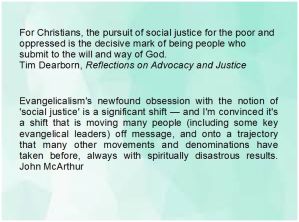
Then there are the issues they claim are of concQuotes2ern to God, though of course they don’t all agree on what these might be: social justice, morality, sex, same-sex relationships, equality, feminism, science, evolution, Hollywood, making America great again, guns, Trump, right-wing politics, liberalism, Covid-19 (many of which, we might note in passing, the bible has absolutely no interest in.) And what do we find?Quote5Quotes1First, the Holy Spirit provides diametrically opposed ‘truths’ to individual Christians, as the quotations within this post illustrate. Second, that same Spirit affirms the views, prejudices and biases of each Christian he speaks to. God’s thoughts are, miraculously, the same as those seeking them out. 

Of course, there is no Holy Spirit. There’s no Holy Spirit because there’s no God. What those who speak for him are doing is voicing the frequently ill-informed and evidence-free suppositions of their particular branch of the cult. Claiming these are endorsed by God is at best a delusion, at worst, sheer deceit.

The Holy Spirit, then: just another name for confirmation bias.


The Choice Is Yours

Blog395c

I don’t get a lot of comments on this here blog, but when I do they’re rarely as cogently argued as this one, left recently on an old post,Unbelievers are Going to Hell:

NO OBLIVION. HEAVEN OR HELL. HOLINESS OR DEBAUCHERY, GOOD OR EVIL, VIRTUE OR VICE, JESUS OR SATAN, THE SPIRIT OR THE FLESH, GOD OR IDOLS, RIGHTEOUSNESS OR WICKEDNESS, KINDNESS OR SELFISHNESS, LIGHT OR DARKNESS, PIETY OR PERVERSION, PLEASURE OR PAIN, TRUTH OR ERROR, THE NARROW GATE OR THE WIDE GATE. THE CHOICE IS YOURS.

Difficult to argue with, I think you’ll agree. This is reasoning of the highest calibre. All those false dichotomies have convinced me I need to change my debauched, perverted ways and take on the mindset of a first century zealot. You win Watchman Outreach Evangelism!

Or, as I may have just put in my response:

Lower case or UPPER CASE
Logic or LUNACY
Reality or FANTASY
Sense or NONSENSE
Seems you made your choice already.

Bathwater

Blog392

While putting together the ‘Can You Be a Christian and…’ series, I encountered on more than one occasion the line of reasoning (I use the term lightly) used by moderate Christians that, essentially, certain parts of the Bible are no longer relevant. So you can, they said, be both a free thinker and a Christian; you can be gay, so long as you disregard what the bible says about homosexuality; you can be a Christian woman if you dismiss Paul’s denigration of women; you can acknowledge evolution provided you reinterpret what the bible says about creation; you can be a realist if you ignore the bible’s supernaturalism.

But if you’re going to disregard anything the bible teaches that appears incompatible with what we know about psychology, sexuality, biology and reality, then how does the Bible’s central objective truth, as one commenter on here calls it, survive? What makes its core message (that, in some way, Jesus’ death and resurrection is capable of saving humankind) an immutable, eternal truth, while almost everything else can be compromised, deemed to be ‘culture-bound’ and metaphorical, to the point of irrelevance?

I recognise, of course, that fundamentalist Christians don’t do this. For them the bible is inspired, infallible and immutable. They’re prepared to compromise themselves, science and reality in order to honour and preserve what the book says. For them evolution, feminism, homosexuality and independent thinking will always be wrong. The alternative is to acknowledge that the bible doesn’t get everything right and to take the approach of the liberal progressive Christian who is prepared to adjust and adapt what it says; to emasculate it.

Which brings us back to asking where this process stops. If progressive Christians are prepared to dilute to the point of meaninglessness what the bible has to say about creation, women, sexuality and reality itself then why not what it teaches about Jesus and salvation?

It’s a fact that almost all varieties of the Faith, including fundamentalism, are happy to ignore completely Paul and Jesus’ teaching that the Kingdom of God was due to arrive, in all its glory, in their own time. It’s the same with Jesus’ moral extremism (giving to all who ask, loving enemies, turning the other cheek.) So why not the rest of it?

Why are Paul’s muddled theology and selected bits of the Jesus stories considered to be the baby while the rest of the bible is the disposable bathwater? On what basis do progressive Christians decide what is inessential and what is crucial, critical, indispensable? Ideas about angry deities, blood sacrifice, the sins of the people and the resurrection of god-men are every bit as culture-bound as the bible’s perspective on all those other issues.  

Because really, in the end, it’s all bathwater.


Pearl of Great Price

Blog358

Once Born Again™, I became involved with a local church, where my friend Simon took it upon himself to play Cupid, fixing me up with Jane. I was more than a little surprised a girl could be interested in me, but figured, in my flight from myself, that as she was interested, I should make the most of it. Sex wasn’t much of a problem: as good Christians we may’ve played about a little, but we stayed away from what the church liked to call ‘pre-marital intercourse’.

It wasn’t long, though, before Jane wanted to marry – she really wanted to get married. I wasn’t so sure and told her about my escapades with Sam, adding of course that I had since renounced such sin. She said that as long as it never happened again, she had no problem with my past transgressions. I felt pretty sure it wouldn’t happen again. After all, Jesus and his Holy Spirit were taking care of my old nature.

So Jane and I married and over time had three children. While I was very much involved with their upbringing, I would often feel I was ‘letting the Lord down’. When, as happened on holiday once, a group of younger men came round a corner minus their shirts, I found myself instinctually admiring them. What self-crucifying shame I would feel after occasions like these. I would even confess such ‘sins’ to a senior work colleague, a devout and very genuine older lady. I’d spare her the details of how exactly I’d ‘let the Lord down’, of course; I could never have brought myself to say I’d been turned on by naked male torsos. But somewhere deep within me I longed for intimacy and closeness with another man. I knew this was strictly forbidden so buried my desires deeper and deeper, suppressing and subjugating something vital about myself. I was on course, though I didn’t recognise it, to making myself ill. I was convinced that I was doing the right thing – for myself, for my marriage and for God.

My marriage, however, was in trouble. Jane seemed to have lost interest in our children, which hurt me greatly (and didn’t do them a lot of good either.) This and pressures at work, where my boss’ affair with a female colleague was creating some serious problems, made me question whether God really cared. When I needed him most, petitioning him for the wisdom to deal with these problems, the heavens, as the scripture almost says, were as brass. God, it seemed, just wasn’t interested. Perhaps, I started to wonder, he wasn’t even there. Added to this was the internal pressure I was still subjecting myself to; the tension and stress of sublimating my true nature. I was deeply unhappy. While the situation at work was eventually ‘resolved’ (by my finding a better job) I had become chronically depressed and remained so for several years.

Ultimately, once I had reached my fifties and the children were grown, Jane and I separated. I knew I couldn’t go on suffocating my feelings; the mind is not designed to be a pressure cooker – something has to give. I started to accept, though not yet embrace, my innermost nature. The relief was immediate and tremendous. I felt I had found myself and I didn’t care that society might not particularly like what I had I found. I had to be me, and not the uptight, miserable person I had become by denying my essential self. I squared up to the exciting yet daunting prospect of starting over, and acknowledged that if I were to have a new relationship it would be with another man. And so it was.

Over time I came to like myself – imagine that! All I’d felt for most of my life, since the time at the YMCA, was self-hatred. That was what Christianity, what Jesus, had done for me. Arguably, it had also ensured, by keeping me firmly in the closet, that I hadn’t died prematurely during the AIDs crisis of the 1980s. Perhaps though I’m giving it too much credit.

I’m ‘out’ now, in every sense: to my wonderfully supportive children, to you who read this blog (obviously) and to friends. Match-maker Simon, he who suggested going to the YMCA all those years ago, cut me off about a decade ago. As a born-again Christian, he regarded homosexuality as beyond the pale. His ‘principles’ meant more to him than our long-standing friendship. I still miss him, very much.

I don’t miss God. He has gone entirely and I’ve long recognise that he was never there to begin with. Instead, I have a sense of authenticity and my energy goes into living, not denial. I’ve become involved with the local LGBT Centre and I’m seeing a very nice man who I’m going to call Thomas, to spare his blushes. I’m very happy and feel, at long last, I really know what life’s about.

If you can stand it, I’ll tell you more next time.

Heaven’s Above

Blog356

I was struggling for inspiration this week with the homework assignment from my writing group. The title was ‘Heaven’s Above’ (or maybe ‘Heavens Above’, without the apostrophe) and possibly I was having difficulty with it because I don’t believe in a Heaven above, on account of there not being one.

The other night, in a local bar, this young guy came over to talk to my friends and me. He was a doctor from a nearby practice, and he started by asking how, when the time comes, we’d like to die. While perhaps not be the best way to start a consultation, his question provoked some interesting responses.

Then, having somehow detected that my friends and I had reached a certain level of maturity (we’re in our 60s), the young doctor asked what we felt was the point of life. He had, he said, a real need to know this, because having achieved all he wanted at 28, he was left wondering if there was any purpose beyond 30. I like to think we all gave him good answers. There’s life in these old dogs yet! For me, it was falling in love (yes, it happens to old people too) together with friends, lovers and other relationships, particularly those with my grown-up children and beautiful grandchildren. There’s also – though I didn’t bore him with the details – achieving authenticity, accepting yourself and living true to that self. Then there’s all the other things that make life worthwhile; being open to change, having new experiences, learning, helping others, reading, writing, conversation, music, walking… You will, I’m sure, have your own list.

I know that Sartre claimed that ‘Hell is other people’ and Lee Marvin thought much the same thing when he rumbled in Wand’rin’ Star that ‘Hell is in hello’, but Heaven is in these same things; in friendship and our other relationships. There may be some who think it’s easy for me to say all this. ‘After all,’ they say, without knowing me, ‘you have a good life. It’s pretty easy to feel positive about something that’s already going well,’ which is true. Except my life has had its share of traumas, problems and pains, and still does. But life is good and worthwhile in spite of these, and it’s purposeful too without recourse to God or Jesus. Who needs these two old frauds? We make our own Heaven here, now, in our own lives.

Am I saying count your blessings? Yes, I suppose I am, but not, I hope, in a glib way. There are so many good things in most of our lives; all we have to do is make them our own. ‘Lay hold on life,’ as the old hymn says, ‘and it shall be, thy joy and crown eternally.’ Maybe not eternally, but certainly beyond the age of 30.

Why logic, reason and truth have nothing to do with any god

Blog354

I’ve recently encountered again the ‘argument’ (it’s actually no more than an assertion) that without God logic and reason would not exist.

Here’s how ‘Liam’ puts it in a comment on Escaping Christian Fundamentalism:

If anything, the illogical nature of a godless universe is a massive pointer to a God, without Whom there is no reason or truth or logic…

To a degree this is right; if God made the universe and everything in it, including reason and truth and logic then, yes, they would owe their existence to him.

But it all hinges on that word ‘if’.

Equally, if God doesn’t exist, it follows he could not have created the universe and everything in it – including logic, rationality and truth.

One cannot take these things and say they are evidence that God exists and also that they only exist because God made them. Not unless you’re happy with a tautology – a feedback loop where each assumption is its own conclusion. Demonstrate, on the other hand, that God exists independently from the human imagination and then maybe you might be able to make the case that he created logic and reason. As it is, pointing to human attributes like logic and reason doesn’t ‘prove’ that God exists; it demonstrates only that these attributes are characteristics of the human mind. Logic, truth, reason (and mathematics), like God himself, have no independent existence outside of human cognition. They are ways of explaining life and the universe; they are not life and the universe themselves.

If, as seems probable, God doesn’t exist, then evidently, logic, truth and reason did not originate with him. Indeed, they took billions of years of slow evolution to develop. We know of no other way for intelligence to arise; and only intelligence produces logic, reason and truths. No God required


So it begins…

Jesus Lazes

A true story:

They didn’t see it coming. No-one did. It couldn’t have been predicted. He came into their lives unexpectedly one summer evening and none of them would ever be the same again.

He met Maddy first, then Andrew and soon after that the rest of the group. He was quiet, diffident even, but from the start his personality shone, his smile captivating them all. Some fell in love with him immediately, others later but either way, there was no escape. His zest for life was infectious, his gentle, thoughtful ways drew in all who encountered him. He didn’t demand change or presume to tell them how they should live, but his unaffected presence changed them all and added immeasurably to each of their lives.

And so the cult of Salvatore began, in the way that all cults begin, with a charismatic personality. When that individual seeks to manipulate and control others, particularly if he or she has Messianic aspirations, then before long an agenda emerges: unquestioning obedience; the belief that only this leader has the Truth; the demand that acolytes abandon family, friends and society for the cause; the proselytising to increase followers; the expectation that others acknowledge the leader’s power and glory; the rejection of those who fail to do so. This is how it was with Jesus, Muhammed, the Buddha, Joseph Smith, Mary Eddy Baker and so many others

The Salvatore cult won’t come to this; the man himself is neither controlling nor manipulative, though there are those who would do anything for him. Myself included.