The Origins of Evil

Where does evil come from? The Billy Graham Organisation knows:

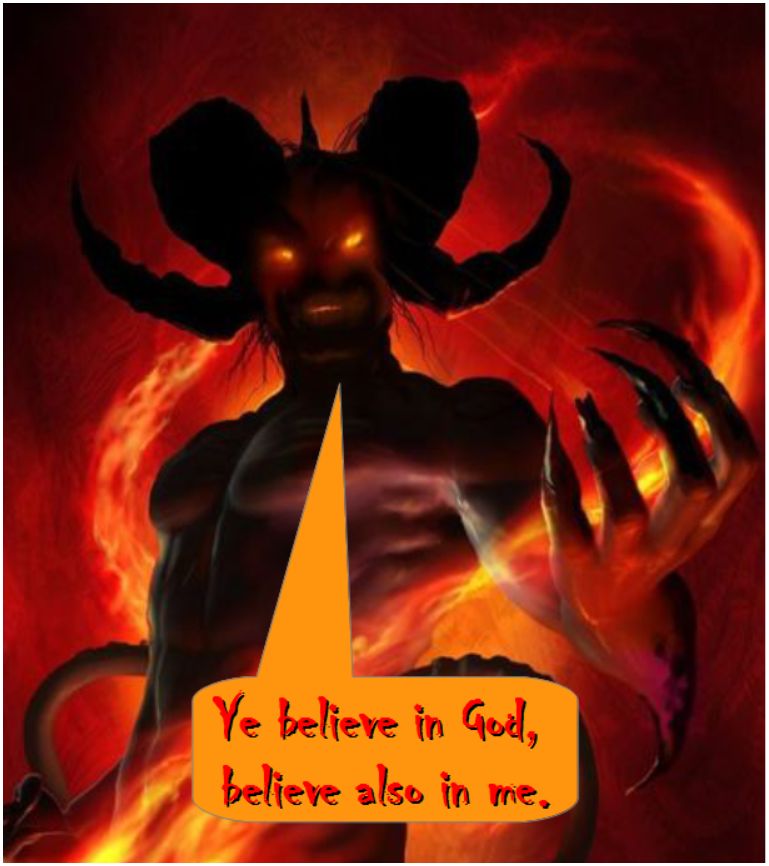
…the Bible does reveal two important truths about where evil comes from. First… evil comes from the Evil One — that is, from Satan… Satan is a powerful spiritual being who is absolutely opposed to God, and is far stronger than most of us realize. He isn’t equal with God, but is totally evil, and repeatedly works against God. Jesus called him “a murderer from the beginning…. a liar and the father of lies”.

No, not really. Evil is not a supernatural being cavorting around an unseen, undetectable spiritual realm while inflicting havoc on our reality (see here). Satan is not the embodiment of all evil for the simple expedient he and his minions do not exist.

What else does the Bible have to say about the origin of evil? Fake Paul in 1 Timothy 6: 9-10 claims that ‘…the love of money is the root of all evil’. He goes on to say, ’while some coveted after (money), they have erred from the faith, and pierced themselves through with many sorrows,’ which sounds suspiciously like a snipe at early Christians who refused to hand over their worldly goods to the cult.

Now, while greed and avarice can undoubtedly lead to wickedness, the love of money is not the root of all evil. Vindictiveness, spite, fear, ignorance, stupidity, hatred, lust for power, sexual lust, jealousy, coveting another’s property or territory, religious beliefs and deceit (take note, fake Paul): all can, and do, lead to evil.

Let’s give the Bible one last chance.

The author of Mark’s gospel has Jesus say:

What comes out of a man, that defiles a man. For from within, out of the heart of men, proceed evil thoughts, adulteries, fornications, murders, thefts, covetousness, wickedness, deceit, lewdness, an evil eye, blasphemy, pride, foolishness. All these evil things come from within and defile a man (Mark 7:20-23 NKJV).

While ‘Mark’ is talking about ritual purity in this bizarre mix of low-level immorality, religious offences and actual wickedness, he nails it as far as the source of evil is concerned. It emanates from human beings, most often, from men. While women are also capable of committing evil acts, and children too sometimes, most are perpetrated by men. 

It’s not easy finding evidence for this online, where misogynistic, religionist have taken over, claiming women are more evil than men on account of Eve eating the forbidden fruit. They also argue that women are more evil because they ‘hold a grudge longer’. However, a little digging dispels this ridiculous notion. Consider:

Are most dictators men or women? (Men, almost exclusively);

Are most genocidal acts initiated and carried out by men or women? (Men, almost exclusively)

Are most murderers men or women? (Men: 98% of murder convictions are of men);

Are most rapists men or women? (Men; 99% of convictions are of men);

Are rape gang members men or women? (Men, almost exclusively);

Are most child abusers men or women? (Men make up 88% of perpetrators);

Are most school shootings carried out by males or females? (Males, on a ratio of 145:4);

Are most terrorists men or women? (Men, on a ratio of 5:1);

Are most crime lords, drug barons and death-cult leaders men or women? (You already know the answer…)

Are most victims of sexual abuse male or female? (Female: 1 in 5 compared with 1 in 7 males)

Almost all malicious and unnecessary infliction of harm on others, nearly every evil act ever committed has been and is committed primarily by men. Only a small number are carried out by women. However, just because most evil is committed by men, not all men are evil. More than this, most human beings don’t commit ‘evil’. Neither do most Christians, though there does seem to be an inordinate number who are prepared to sexually abuse others. Nonetheless, many are happy to blame Satan for what evil there is, including their own. Attributing human evil to a malevolent fantasy figure is a duplicitous attempt to evade both responsibility and culpability.

In any case, according to true believers Satan’s main occupation is sowing the seeds of doubt in the minds of Christians, in an attempt to lead them away from Jesus (2 Corinthians 11:30). Satan is, when all is said and done, a pretty hopeless prop, not ‘a powerful spiritual being’ but an enfeebled metaphor for the evil that some humans engender.

Afterthought:

Where does goodness come from? That too is human. All compassion, kindness, consideration, empathy, helpfulness, love, joy and peace come from us.

Or not, as the case may be.

What to make of the Supernatural

When I was young, about 8 or 9, I was frightened of creatures that invaded my bedroom in the dark: monsters under the bed, devils in human form lurking in the shadows, that kind of thing. One night when I couldn’t sleep through fear, it came to me that if these creatures were real then so too were the super-heroes I loved: Superman, Batman and the Legion of Super-Heroes! Now, I knew these DC characters didn’t really exist and so I reasoned (I think pretty well for a 9 year old!) that that neither did their evil counterparts, the monsters and devils I was scared of. With this realisation, the horrors were vanquished. Shadows were just shadows. There was nothing scary under the bed.

Somewhere in a recent comment, either here or elsewhere (I can’t remember which nor can I find it), someone informed me that I make the a priori assumption that the supernatural isn’t real.

The term a priori is used with abandon by people who don’t necessarily know what it means so here’s how The Oxford English dictionary defines it:

relating to or denoting reasoning or knowledge which proceeds from theoretical deduction rather than from observation or experience.

I’ll take that. The only way one can assess the supernatural is through reasoning and deduction. There’s no independent evidence for it that can be considered; no external phenomenon to observe and analyse; no science, history or philosophy books that take it seriously or even consider it. I have no personal experience of the beings that supposedly inhabit the supernatural realm; no gods, angels, spirits, demons, ghosts or goblins have manifested themselves in front of me. I’ve never experienced magic, spells or exorcisms, at least not ones that can’t be explained far more convincingly in other ways. So what does that leave in terms of evidence?

Fantasy stories and religious texts. These are the only sources of information about the supernatural, and at least one of them is entirely fictional. Fantasy stories are by definition fiction. They are made up. Similarly, religious works are the products of minds from before the advent of science; explanations of the world and human experience that their creators could construct only in terms of their localised, pre-scientific superstitions. No-one outside of those who’ve chosen to believe in them takes them seriously, which is why their claims are never considered in serious science or history books (Ken Ham’s ‘scientific’ publications are nothing of the sort; they’re religious texts masquerading as science.)

That the supernatural has to be argued for, from an assumption that it does exist, is clear indication it does not; such powerful beings would surely be apparent in the real world, just as they are in Stranger Things (a fiction in case you’re not sure.) No-one has so far demonstrated that the supernatural is real. It is possible to argue it is but only through reliance on the same religious texts, the authority and reliability of which is in dispute on such matters

So, do I make an a priori assumption the supernatural doesn’t exist? Yes, in the sense I take it a priori that it doesn’t. Is this an assumption? No, it is a conclusion arrived at through an assessment of the evidence – there isn’t any: consideration of accounts of the supernatural reveals they’re fictional or prescientific, while personal experience of the apparently supernatural is better explained by rational means. I don’t therefore assume the supernatural doesn’t exist, I deduce it does not.

Actually, I did this when I was 8 or 9.

When A Child Is Born… Supernaturally

To what extent are the conflicting nativity stories in Matthew and Luke historical? That depends on whether or not you believe in the supernatural.

There is no evidence of a supernatural realm nor the beings who are said to inhabit it: God, heavenly Jesus, the Holy Spirit, angels and those they are constantly at war with: Satan and his demonic hordes. It is not as Jonathan Cahn describes it in The Serpent’s Prophecy:

Behind the perceivable realm lies another, beyond our ability to measure or quantify. Behind the history of this world lies another, unrecorded, unrecited, unknown. And behind that which moves and transforms the world lie unseen forces, causes, agents, undying and primeval (p3).

Cahn cannot possibly know any of this, any more than fake-Paul could when he wrote Ephesians 2,000 years ago (6:12). A reality that exists above and beyond nature – the meaning of supernatural – that is ‘unseen’, undetectable and ‘unknown’ is one that doesn’t exist, except in the imagination of a few fantasists.

Yet the supernatural is the basis of Christianity. Without it, its agents, as Cahn calls them, could not have interacted with the only reality there is. The Holy Spirit could not have impregnated Mary; angels could not have materialised to announce Jesus’s birth to a group of credulous shepherds; a divine being could not have communicated through dreams with Joseph and the Magi; a magic star could not have been manoeuvred into place over Jesus’ house. Most significantly, a non-existent God could not have sent his ‘son’ into this world.

It is futile to argue whether Matthew or Luke’s nativity narrative is the more historically accurate. Nor is there any point in trying to harmonise the two accounts. Neither is historical: the involvement of the supernatural rules out their being factual.

The inclusion of the supernatural in everything that follows is also fatal to claims made for the gospels’ historicity. The clues are there in the text: God’s pronouncements from the sky; the inexplicable miracles and healings; the presence of angels, demons and Satan; the dead rising; visions, prayers and prophecies. These tell us that what we’re dealing with is fantasy material. The creators of the gospels and other books of the New Testament had no more evidence than Cahn does that secretive super-beings existed, even if they did take them for granted. God and his interventions no more exist than Santa Claus and his magical Christmas deliveries.

Paul tells us that God raised Jesus from the dead (Romans 8:11). But there is no God, so he didn’t. There was no supernatural resurrection and without a resurrection there were no encounters, like those in the gospels, with a reanimated body.

Remove the supernatural from the Jesus story and there’s nothing left. Some wise advice lifted from Jewish scripture perhaps, plus a few cult rules, but that’s all. Paul’s experience of the risen Christ, like that of Cephas before him (described nowhere in the New Testament but allegorised in the gospels) and John of Patmos after him, were as Paul himself says, a ‘revealing’ in their own heads.

I hope none of this spoils Christmas for you. The Nativity isn’t a bad story, indeed it’s quite beautiful in places. But it is not historical. Like much in gospel Jesus’ life, and the resurrection itself, it is a fantasy generated by irrational and superstitious minds.

A very happy Christmas to both my readers.

A World When Revelation Was Possible

Greek and Roman cultures of the ancient world were obsessed with seers, oracles, prophets, muses and the fates. Politicians, priests and ordinary people were desperate to know how to keep on the right side of capricious gods and what the future held. Word from the supernatural realm, channelled through seers and prophets, was sought after and valued. Visions, dreams, portents and auspices that revealed secrets and mysteries were highly prized. It was a world saturated in superstition. Jewish culture, operating within this milieu, was no different.

Jews too revered prophets, dreams, visions and divination. This is apparent in both the Jewish scripture, the Old Testament, and also in the New, the writing of the early Christian cult birthed from Judaism in a Greco-Roman world. There are in the New Testament:

6 instances of god-induced dreams;

11 visions of heaven and heavenly beings;

578 new prophecies;

300 or so supposed fulfilments of earlier ‘prophecies’;

An abundance of revelations’ (Paul’s phrase) as well as those of Revelation itself (one long revelation or a series of shorter ones?);

113 visits from supernatural agents (Satan, demons, angels);

Assumptions that dead people can reappear (Jesus mistaken for Elijah and Jeremiah; Elijah and Moses manifesting themselves);

Multiple ‘resurrections’ both before and after Jesus’s.

People believed this kind of stuff! The supernatural, prophecy, ‘revelation’ and resurrection were regarded as entirely plausible, a given in the culture in which early Christians lived. The pagans around them may not have subscribed to the new cult’s reworking of these superstitions, nor accepted that Jesus was the Messiah, but they would not have found anything amiss with the idea and presence of the supernatural, with its attendant revelations, visions and prophecies. These were the currency of the day.

That such manifestations were mistaken or misinterpreted by the new cult would have been the point of disagreement for most people (though its important not to over-estimate how many actually knew of the Jesus cult in its early days), not that it manifested and incorporated them in the first place.

In the first century world, revelations, prophecies, visions and the like were considered to be gifts from the gods. Paul insisted that what he ‘received’ was from the supernatural realm, specifically from the heavenly Christ (Galatians 1:12). Accepting this was a prerequisite for believing what he went on to say about salvation, resurrection and Christ’s descent from the clouds. The supernatural world and its ability to communicate with ordinary mortals had to be accepted as real before anything Paul said could even be considered. Fortunately for him, the culture in which he operated embraced the idea that this was a reality.

If, however, there is no supernatural – and let’s be honest, we know there isn’t – there can’t ever have been revelation, prophecy or God-given visions. With no heavenly realm to transmit revelation, prophecy and visions into the brains of seers, prophets and visionaries, from where did – and do – their revelations, prophecies and visions originate? From brains conditioned in an environment infused with irrational, magical beliefs, whether that of the first-century or one of the many Christian, Bible-soaked bubbles that exist today. ‘Revelation’, ‘prophecy’ and visions emanate entirely from the human brain. It is this which originally created revelations and now sustains ideas like heavenly saviours and supernatural resurrections. These things have no independent existence outside of the human imagination.


Slippin’ and Slidin’

Recycled picture, new post

I’ve written before about how impossible it is to argue with Christians. It’s either that they have superior knowledge because an invisible ghost possesses them and is guiding them towards truths that non-believers can’t possibly perceive. Or it’s that the supernatural just cannot be understood in an evidential, naturalistic way. Science and empiricism – what we can detect with our own eyes, with specialist equipment that serves as an extension of those eyes or that can be mathematically demonstrated – just cannot detect, perceive or understand the supernatural. Gary Matson is currently experiencing this on Escaping Christian Fundamentalism, where a Catholic Christian (an oxymoron to many other religionists) is arguing that the things he believes in – hell specifically and his God generally – are just too sophisticated for the ignorant layman to understand. We’ve met this before too, from pseudo-intellectual Christians who think their faith, which its supposed founder said was best understood by becoming like a child, requires a degree or three in theology or philosophy.

It’s all a sleight of hand, and rather like wrestling with a jelly-fish. The assertion that the believer in the supernatural makes, that his or her particular brand of woo lies outside the purview of science, is mere flannel. ‘You can’t prove this because you haven’t the tools to’, applies to any form of magical belief – in heaven and hell, in an afterlife, in ghosts, and angels, gods who speak to mortals, mystical saints, flying horses, reptilian overlords, UFO abductions… you name it – does not stand up to scrutiny. If supernatural entities and states are outside the natural universe (and they are, by definition) then they will never be detected by science, observation and empirical measurement; but not because our means of detection is inadequate, but because they don’t exist. It isn’t that they are out there somewhere, detectable only with the right frame of mind or with the help of a spirit that itself has no physical presence; they are nowhere; they are not real. It is not the inadequacy of our means of detection that is at fault; it is that the invisible, non-physical and intangible have no substance outside the human imagination. As I’ve said before, remove human imagination from the equation and the supernatural goes with it. If humans were to become extinct tomorrow, so too would all the magical beings and places that humans have ever conjured up. They have no  existence independent of the human imagination.

Arguing that this isn’t so is to assume your conclusion in your premise: ‘Of course supernatural things exist, you just can’t see them. But I can prove them with my argument/philosophy/faith’. This, however, is a demonstration of irrationality, not of the supernatural. In any case, the fact the supernatural has to be argued for at all is evidence that it doesn’t exist. Nothing real has to be argued for, it can be detected, shown, demonstrated and measured by the senses, by instruments, by mathematical proofs. That gods and ghosts can’t be, but have to be argued for, tells us they are not real – not that they are beyond the scope of our capabilities.

Warning: May Contain Nuts

You ever meet a guy who says –

The world is under the power of evil supernatural beings.1

These supernatural beings once caused the death of a Godman. 2

This Godman had the last laugh because he came back to life.3

He, this guy, has actually seen the risen Godman! In his head.4

He’s visited part of Heaven, though maybe this was all in his head too.5

Those who align themselves with the risen Godman will also be resurrected (he’s not clear how this works. It just does).6

The Godman will be coming down from Heaven soon (‘soon’ as in the first century).7

Everyone who believes in the Godman will then levitate into the sky to meet him (yes, really!)8

People who die before this happens won’t miss out. Like everyone else, they’ll get a brand new body – a spiritual one!9

This guy has no idea what this spiritual body will be like (so don’t ask)10

The Godman will set up a magic Kingdom on Earth and those who’ve aligned themselves with him will live in it forever.11

People this guy doesn’t like won’t.12

If you were to encounter someone who said these things today, you’d quite rightly decide they weren’t right in the head and you’d give them a wide berth. Of course there’d be those who wouldn’t; gullible individuals who are unable to tell the difference between fantasy and profundity (like those duped by cult founders such as Joseph Smith, Charles Taze Russell, Jim Jones, David Koresh, L. Ron Hubbard and hundreds of others.) This is precisely what happened when this particular collection of absurdist claims first circulated, for these form the core of Christian belief, as devised by arch-fantasist Paul. Whether they’re aware of it or not, today’s Christians subscribe to this nonsense.

This is what Paul teaches.

This is what the Bible says.

This is what faith entails.

________________________________

1 1 Corinthians 2. 6-10

2 1 Corinthians 2.8

3 Colossians 2.15

4 Galatians 1.11-12

5 2 Corinthians 12.1-4

6 1 Corinthians 20-23

7 1 Thessalonians 4.15-16

8 1 Thessalonians 4.17

9 1 Corinthians 15. 42-44

10 1 Corinthians 15.35-37

11 Colossians 1.13

12 1 Corinthians 6.9-10

The God Who Never Was

Blog404

I’m considering reasons why God is unlikely to exist. The sixth, though by no means final reason is (drumroll): Christians.

If God existed and if he did the things the Bible, and Jesus in particular, claimed for him, then Christians would be very different creatures. They wouldn’t be beligerent and self-righteous, desperately trying to draw others into their cult, callously condemning everyone outside it while claiming they themselves are the persecuted (a caricature, I concede, but not without truth).

Instead, and according to Jesus and Paul, they would be brand new creations (2 Corinthians 5.17), infused with supernatural power: the Spirit of God no less (John 14.26; Romans 8.7-9). They would, moreover, have abandoned their families (Luke 14.26) and sold all they own to give to the poor (Matthew 19.21), relying solely on God for their needs (Mark 11.24; Matthew 21.22). They’d spend all their time as his slaves (Matthew 25.21; Romans 6.22), helping the sick, the destitute and the imprisoned (Matthew 25.35-40) and in return God would have endowed them with the ability to heal all disease (Mark 16:15), raise the dead (Matthew 10.7-8) and do miracles even greater than Jesus’ own (Mark 16.17-18; John 14.12).

If Christians were like this, as Jesus and Paul promised, the world would be a much more remarkable and better place. What does it tell us that it isn’t? When Christians don’t constantly demonstrate compassion and miraculous powers but instead spend their time demeaning gay people, ranting about abortion and proselytising (the latter a redundant activity when, if they were the new creatures the Bible promises they’d be, we would all see God in and through their actions and superpowers.) That Christians are not like this tells us Jesus got it entirely wrong; that his God had no interest in him and has none in us; that faith in God, as Jesus and his early followers envisaged it, does not deliver.

Christians actually know this, which is why they ignore what the Bible says they should be like, or explain it away with convoluted exegesis. They’re focused on their own ‘spiritual growth’, ‘worship’ and on how they’ll be going to heaven when they die – an offer the Bible never makes. Whichever avoidance strategy they resort to, the Bible says what it says: that God will enable his followers to do great miracles, like healing the sick and raising the dead; ‘all things’, in fact, though Christ who strengthens them (Philippians 4.1). The evidence demonstrates conclusively, despite the disingenuous claims of some loopier evangelicals, that God does nothing of the sort. He fails, yet again, to come through. The only reasonable conclusion is that this is because he’s not real.

So those are six major reasons why it is highly unlikely God exists. There are others, some of which I’ve touched on in other posts: how, despite Jesus’ promises he will, God looks after his devotees no better than caged sparrows (Matthew 10.28-31); how there’s no evidence the supernatural exists; how the spiritual realm and the gods that go with it are products of the human imagination. Collectively – and even separately – these convince me there’s no God, and certainly not that sorry excuse for one, Yahweh.

Love and Kindness

Blog349

I’m sometimes I asked what, given I don’t believe in Jesus, I do believe in. I always find this an odd question, presuming as it does that Christianity is really the only thing worth believing in. Implicit in it too is an acknowledgement that faith in the supernatural is irrational, and that sceptics are just as prone to irrationality as believers themselves: ‘you too have faith in any number of unprovable propositions, just like us misguided Christians!’ The question is often an attempt to show that sceptics are just as gullible as Christians.

Recently, Jimoeba said on his blog, The Common Atheist, ‘I believe passionately in nothing,’ meaning, I think, he doesn’t believe in any sort of supernatural nonsense. It set me thinking about what, in fact, I believe in. Do I still have some irrational, unfounded beliefs? Certainly I don’t believe – can’t believe – in Jesus and his support cast of mythical entities, who live in Heaven or just out of sight or wherever they’re meant to be. The same applies to their counterparts in other religions. It’s not that I hold this as a matter of faith; there simply isn’t the evidence to support the existence of gods, angels, demons, eternal beings, heaven and hell (as I discuss here and here.)

In any case, I prefer to know things rather than believe in them. Where there is evidence, there is no need for ‘belief’ or ‘faith’. Yet I still have a suspicion I believe in some things; things that seem intuitively right (never a good measure, I know, of what actually is true) but for which the evidence isn’t as substantial as I’d like. Things like love and kindness. I do believe in these, however cliched it may be to say, ‘I believe in love’. I do. I feel and, I hope, demonstrate love for my family, specially my children and grandchildren. Also to my friends and partners. It seems to me love matters a great deal. There are no doubt good evolutionary reason why we feel particularly strong affection for our offspring; taking care of them increases their – and the genes we share – chances of survival. But subjectively it is more than that. I believe it’s more than that anyway.

I find , try as I might, however, that I can’t extend that love to people I don’t know. Jesus’ command (not that I’m under any obligation to follow it) to love one’s neighbours and enemies is an impossibility, another example of his not knowing what he was talking about. It’s possible to feel compassion for those who suffer, or pity or sympathy, but these, while they’re perhaps components of love, are not completely love in any of its forms. So that’s why I believe in kindness too. ‘Be kind to your neighbour, to strangers and to those you encounter in daily life’ would have been, and is, a far more realistic expectation.

There are other things I believe in too – trying to steer people away from irrational belief in deities, saviours and magic books, obviously – and I’m not always consistent in my application of love and kindness. But I do try to be. I know they’re not absolutes, nor even universal values; they’re not delivered from on high because no values are, being entirely humanly derived, and they’re not practised by everyone either, not even aspired to by some. There’s no need to go around preaching about love and kindness, nor do they need a mythology created around them. Nevertheless, they’re what matter – to me, anyway.

I believe in them.

Theology: Much Ado About Nothing

Toothfairy2

I heard Richard Dawkins speak at the Edinburgh Book Festival recently. He suggested that the best way to understand views that are the opposite of one’s own is to study them for oneself. He was then asked by a smart-alec in the audience, that if this was so, how many works of theology he had read. Dawkins responded by saying he wouldn’t waste his time reading ‘pure theology’ because, in discussing the nature of God or the Trinity or the mechanics of the Resurrection, theology presupposes that the supernatural is real. As there is no evidence it is, there is no point in reading books the sole purpose of which is to discuss the nuances of the non-existent.

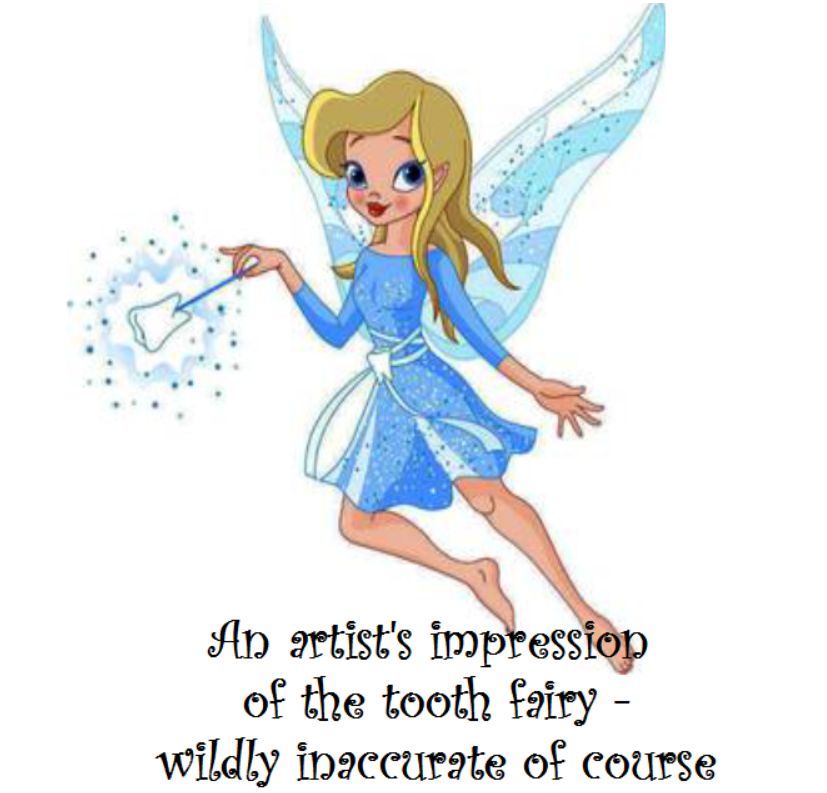
It was a good answer. There is no such thing as intellectual Christianity (or Judaism or Islam, or any religion.) No matter how complex the arguments become, they are essentially ones about nothing. Debates about theological matters, within and between the many versions of Christianity, are, as I’ve said before, as relevant as arguments about the colour of the tooth fairy’s dress.*

*Actually she wears a white dress to symbolise healthy teeth. I know this because of my deeply held faith and personal experience of tooth fairies.

Why I Can’t Believe in the ‘Lord Jesus Christ’: 2. Demons, demons everywhere

Demon2

They tell you all you need to do is accept Jesus as your Lord and Saviour. But it’s not true. You also have to accept on faith all sorts of peripheral nonsense. Nonsense like demons. And the ever-present malevolent Force that will pressurise you into misbehaving and compromising your commitment to the Lord. This Force is ‘The Enemy’, a.k.a. Satan or the Devil, and leading Christians astray is its/his principal occupation. The Enemy and his minions, the demons, are everywhere! All over the internet for a start, mainly on Christian sites. While the Church of Lucifer has an online presence, it’s Christians who love the bad guys the most.

According to some, Satan and his demons are in charge of this reality (though it could be God who’s got the whole world in his hands.) When they’re not attacking true believers, demons are doing their damnedest to bring America to its knees, mainly through ‘The Homosexual Agenda‘™ and abortion rights.

Perhaps it’s possible to ignore this aspect of the faith and still be a Christian, but to do so is to disregard the significant presence the devil and his demons have in the New Testament. Jesus himself has a cosy chat with Satan during his time in the wilderness, or so Matthew 4.1-11 would have us believe. Throughout the synoptic gospels, Jesus speaks very much as if he believes Satan to be an actual being, not merely a metaphorical personification of evil (eg: Luke 11:14-26). He also exorcises a significant number of individuals possessed by demons.

Steve Hayes on Triablogue blithely suggests that ‘when friends and relatives brought people to Jesus to be exorcized, that reflects their diagnosis, not his. They think the individual is possessed – which doesn’t imply that Jesus always shared their suspicions.’ But of course it does; to imply he was God and therefore would have known better is to impose a perspective that had yet to develop when the synoptic gospels were written – that, and a modern sensibility onto a first-century conditioned mind. If Jesus didn’t regard those brought to him to be possessed by demons, he would have said so. He is quick enough to correct his disciples elsewhere when they ascribe the wrong reasons to the causes of illness (John 9.1-3). Inventing ways to excuse Jesus’ ignorance is to avoid what the text clearly indicates; Jesus believed in demons. When he diagnoses a disturbed mind himself he doesn’t hesitate to conclude they are involved; he even engages in conversation with them (Luke 8.30-35).

We know now, and have known for some time, that illness and mental conditions are not caused by demons. We know too that same-sex relationships are not Satanic. There are no supernatural forces trying to debase America. There are no supernatural forces, full stop. It follows that Jesus’ mission couldn’t have been to magically defeat the devil by dying on the cross (Hebrew 2.14); his supposed sacrifice couldn’t have been the beginning of the end of the devil’s reign (Romans 16.20). Neither can there be any of the spiritual warfare against ‘powers and principalities’ of the air that dimwitted Christians imagine themselves to be engaged in (Ephesians 6.12).

Christianity is nothing without its imagined adversaries. With them it is nothing more than a superstition, which its founders ignorantly subscribed to and worked hard to perpetuate. Christians are about the same business today.

As for me, I cannot believe in a ‘Lord Jesus Christ’ who was so primitive, so uneducated and so ignorant he regarded Satan and his demonic forces to be real.