Newspeak (part two of a rant)

I’ve been considering the changing meaning of words. I acknowledge that this happens over time: language evolves like everything else. My concern here is the deliberate redefining of words to suit a given (political) agenda. This often underhanded stretching of words to give them new meanings, actually diminishes them and renders them dangerous. 

As part of its definition, Merrian-Webster describes racism as ‘behavior or attitudes that reflect and foster ‘the belief in racial superiority): discrimination, prejudice, or violence against people because of their race.’

Violence, it seems to me, is hardly ever justified. I have detested it since I was a child. There can be no doubt that violence is sometimes motivated by racial hatred, but like all the words I’m dealing with here, racism as an accusation is overused to the point of meaninglessness. While other nations – the Scandinavian countries, the US, Scotland and Wales – proudly fly their national flags practically everywhere, here in the UK it has been deemed to be racist by some on the Left. It’s common for the Ukranian, Palestinian, Scottish, Welsh and LGBT flags to be flown here, why are the English and Union flags now considered to be racist? It might, at a stretch be that they are divisive, but then aren’t all flags? Isn’t that what they’re for, to declare a national identity that is distinct from that of other states? The British flag is no more ‘racist’ than any other. Neither is expressing genuine concern for immigration, which is dismissed by those who’ve failed to control it, as racist. How can it be when those coming into Britain are from a variety of ‘races’, many white and European?

It’s racist, and hateful too, say ‘community leaders’ and white liberals, to object to the treatment of women within Islam, or first-cousin marriage or frequently expressed anti-Semitism. ‘Racism’ in these instances is an attempt to shut down discussion and censure those with legitimate concerns. Similarly, for fear of being considered racist, authorities have failed to investigate (hateful) criminal activities by ethnic minorities. And while it’s become clichéd to say it, criticism of Islam and its practices is not racist: Islam is a religion, not a race, its practitioners drawn from a range of ethnicities. The true meaning of racism has been lost. Those who suffer from it abandoned in the transition of the word into meaninglessness.

My 95 year old mother was in hospital recently. She struggled to understand what some of the nurses were saying to her, either about her condition or treatment or something else. She didn’t know which because, between her deteriorating hearing, the mouth coverings some nurses wore and the accents of those from other ethnicities, she couldn’t understand them. What she couldn’t do, she felt, was say this to them. In Britain today it is regarded as racist to tell someone from another culture you can’t understand them. So she didn’t, nor did she mention the problem to any other of the medical team for fear of being thought racist. This is where we are in today’s Britain.
A Phobia of Hate (part one of a rant)

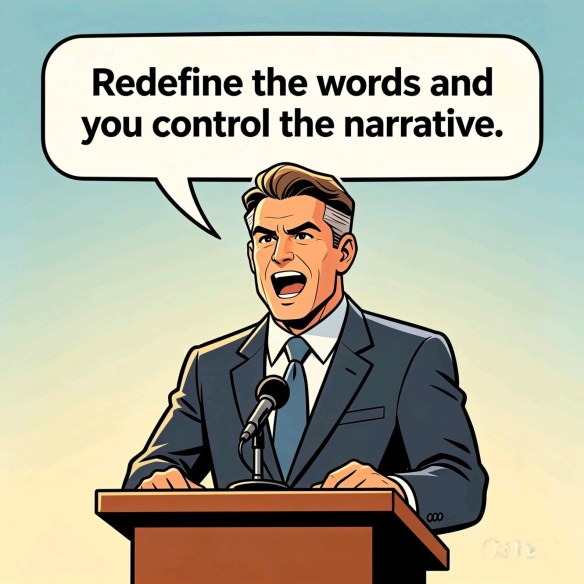
It used to be the case that when writing an essay or presenting an argument, the writer needed to define one’s terms. This way, parameters were set with clarity and, as we say these days, transparency about what was to be discussed. Sadly, this seems not to be the case any more. I don’t blame social media for this; it seems to me politicians have largely led the charge, using terms with usually clear definitions in ways that suit their own purpose, without any regard for that common understanding. Rarely do they make clear that this is what they are doing. The mainstream media are inclined to do the same. What we may think they’re talking about, they may not be. Perhaps both politicians and the media learned the trick from Christian commenters who are happy to change the meaning of words as they see fit (‘Atheists’, ‘myth’, ‘metaphor’ for example.)

I dealt with autism here. The term, and diagnosis, is now stretched so thinly that, according to the social scientist who first proposed the autistic ‘spectrum’, it has become ‘meaningless’. What other terms have been misapplied until they too have been rendered ‘meaningless’?

How about phobia? Strictly speaking a phobia is an irrational fear, one for which there is no real basis: arachnophobia, agoraphobia, claustrophobia, for example. Of course there may be real grounds for being fearful of spiders (some are poisonous) heights (if perched precariously on the top of a mountain) and enclosed spaces (if it is suffocating), but the terms arachnophobia, acrophobia, claustrophobia are reserved, or at least they used to be, for those whose fear is extreme and above and beyond the rational. The term phobia is now applied to anyone who expresses concern about or criticism of any movement or cause: homophobia, transphobia, Islamophobia come to mind. The first of these started life as an irrational fear that one might oneself be homosexual. Now it’s considered to be, by those who attribute their not ‘getting on’ in life or being subjected to personal criticism, to be the result of their being gay. Certainly ill-considered remarks may be unkind, a word that more than adequately describes much of what is described as phobic in modern society. But being unkind does not equate with a phobia, nor is it against the law. Not yet anyway.

Similarly offensive, a word originally that originally signified a physical attack, the meaning it still carries in law. As Paul Simon once expressed it in a rather pleasant little song, ‘One Man’s Ceiling is Another Man’s Floor’: what I might find offensive, in the sense of hurt feelings, is not necessarily what you find offensive, unless you choose to allow it to be. That’s because ‘offence’ in the slack modern sense is ridiculously subjective: it is, it seems, not a problem to call for the death of Jews but it is offensive to show images of an ancient ‘prophet’. Touchy religious sensibilities, sometimes prone to take offence at the slightest provocation, do not signal a criminal or even a criminal offence. And yet that is where we’ve got to, certainly in the UK. Remember your mother teaching you that sticks and stones may break your bones but words will never hurt you? Of course this is not entirely true; words can cause emotional hurt. But this doesn’t mean those who use words critically merit investigation by the officers of the law.

Hate is a verb. Unlike its antonym love, it cannot also be a noun. I know, this is pedantic of me, but we’re talking about words and the damage they can cause when misapplied. To alter and stretch their meaning out of all recognition results in the problems we now have in (British) society. All of the accusations of ‘hate’ that fly around these days are, grammatically, ‘hatred’ though in fact, they rarely qualify as this either. According to Merriam Webster, hatred is ‘an extreme dislike or disgust or ill will or resentment that is usually mutual: prejudiced hostility or animosity.’ Hatred is a powerful, destructive emotion. Reasoned opposition to the political manoeuvring of minority groups is not really it.

Of course it is possible to take such opposition to extreme lengths that it may look a lot like hatred, but by and large it is not. I do not ‘hate’ religious group that try to impose their beliefs and practices on me or my society, but I do oppose them and their efforts. I also oppose those who claim that any opposition to their efforts constitutes ‘hate’. It rarely does so, but how convenient it is for those who don’t get their own way to have the accusation in their armoury. Which is not to say real hatred isn’t expressed, often in violent action, but strangely, as a society, we seem less concerned with such action. We are, apparently, required to understand the frustrations of those carrying them out; their grievance is genuine and heartfelt. Hurty words though are of much more concern.


Racism? What Would Jesus Do?

The Church Of England recently issued guidelines to its London clergy advising them to preach anti-racist sermons and suggesting how they might go about it. Asked about it on UK TV, the reverend Sam Norton said he was worried that expressing concerns about the number of migrants entering this small island, many of them illegally, might unreasonably be construed as racist. He argued that it is not; I agree. The reverend was at pains to emphasise that racism was abhorrent (again, I agree) and was not something Jesus would condone.

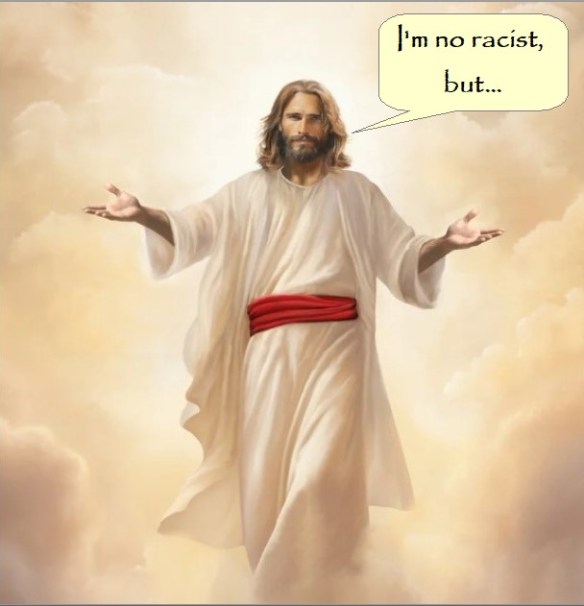
So, again, Jesus gets a free pass. As he’s portrayed in the four gospels, Jesus is racist. Or, rather, the men who made up his script, the early cult members now known as Mark, Matthew, Luke and John, were. They were racist about those who were not part of the new movement, particularly towards those who were hostile towards it. Granted the gospel creators had Jesus say some pretty good things too: love your neighbour as yourself, love and pray for your enemies, the parable of the good Samaritan; all wildly impractical and widely ignored by Christians everywhere.

Many of Jesus’ admonishments were written by cultists anticipating the end of the age for members of their own group; they were all too happy to lash out at those who weren’t part of it. Hence, the Syrophoenician woman of Mark 7:24–37 whom Jesus calls a ‘dog’, dogs being unclean in Judaism. This woman would have had a paler complexion than Jesus, who would not be the fair Caucasian he’s often portrayed as being. His name-calling is racist; it is only the woman’s pluckiness that persuades him to respond to her pleas.

The story is repeated in Matthew 15:21-28 where the woman is said specifically to be from Canaan, Jesus says explicitly that he ‘was sent only to the lost sheep of Israel’. Earlier, in Matthew 10:5, he instructs his disciples not to take his supposed life-saving message to anyone other than his fellow Jews: ‘Do not go into the way of the Gentiles, and do not enter a city of the Samaritans’. Matthew would, of course, have his version of Jesus exclude those who were not Jewish. Jesus’ racism here reflects Matthew’s community intent on preserving their Jewish heritage. Which makes the anti-Semitism Jesus is made to express in the fourth gospel all the more startling;

You (Jews) belong to your father, the devil, and you want to carry out your father’s desires. He was a murderer from the beginning, not holding to the truth, for there is no truth in him. When he lies, he speaks his native language, for he is a liar and the father of lies… Whoever belongs to God hears what God says. The reason you do not hear is that you do not belong to God [‘the right cult’?]

This is the racism of John 8:44, the rift between the new cult and Judaism having widened by the time the fourth gospel was written.

There are those online who argue that even though Jesus was God incarnate, his ‘human side’ and his upbringing in a prejudiced environment account for his narrow views of ethnicity.  This excuses his racism, they say, and shows how like us he really was. It doesn’t. It reflects the prejudices and racism of those who created the various versions of him. (Alternatively, online Christians argue, as here, that the pericope is invariably read ‘out of context’.) And, please, don’t get me started on the overt racism of Jesus ‘Holy Father’, the genocidal tyrant of the Old Testament.

The Bible as a whole is rife with blatant, divinely-inspired racism. Apart from this, I agree with the reverend Norton: having concerns about the scale of immigration is not racism. Just as criticism of Jesus is not blasphemy and censure of Muslim beliefs and practices is not Islamophobic.

Free Speech

The British government is considering making what it describes as Islamophobic remarks, on social media and elsewhere, a crime. It has so far been unable to define what Islamophobia is, but evidently it goes beyond the libel laws that already exist and which were used to jail the idiots who called for violence against immigrants (not exclusively Muslims) in the summer.

Critics say the government’s proposals are the means of introducing a blasphemy law through the back door. They fear it could lead to criminalising legitimate criticism of Islamic beliefs and practices. Should these be immune from criticism when some Muslim beliefs are as absurd as their Christian counterparts, others positively harmful and some antithetical to British democratic and social values? Should these aspects of Islam be immune from criticism or mockery? It would be a mistake if they were. Islam troubles me, and many others here in the UK, by virtue of the fact it is a religion. The imposition of a protected religion – any religion – is not something that would be beneficial for a largely secular society (or any other in my opinion).

And what of other religions? There has been mention that the new law would also protect Jews from anti-Semitism though there are, again, existing laws that do that. It’s difficult too to know what would be considered ‘anti-semitic’. Is criticism of the Israeli government’s actions? Hasidic Jews treatment of women? It’s hard to say, and it seems unlikely the British government will enlighten us any time soon.

You can be sure that if comment deemed Islamophobic or anti-Semitic becomes punishable by law, other religions will soon look to have their beliefs and practices granted the same ‘protections’. It would be perfectly reasonable for them to do so. After all, the criticism and mockery of Christianity and Christians themselves found here and elsewhere on the internet could be seen as being Christophobic, or whatever the Christian equivalent of Islamophobia is called. Of course Mormons and Jehovah’s Witnesses would be entitled to special protection too, as well as Buddhists, Hindus and all fringe religions. It might not be too long before criticism of politicians and politics is similarly curtailed.

Free speech would still exist for the practitioners of religions themselves of course. Our beloved local street preacher would still, presumably, be able shout about the evils of Pride and the sinfulness of homosexuality; his right to do so is, after all, enshrined in law. Muslim groups in Britain would still be able to deny women the same rights as men, while calling out the decadence and immorality of kafir Western cultures that have given them refuge. Terrorist acts carried out by Islamists would be protected from comment and censure. All religions would be able to assert the rightness of their ideologies over the mistaken beliefs of all the others.

Or will they? Will the proposed new law defining criticism of Islam as ‘Islamophobia’ escalate in the way I’m suggesting so that no-one can criticise or mock the beliefs of others? What of free speech then? How long before any such comment would be deemed hate speech, as negative remarks about transgenderism are now. How long before commenting on government policy is deemed to be ‘misinformation’? Questioning its ruinous pursuit of net zero, its immigration policy (or lack of one) and speaking out against whatever the current narrative happens to be might soon be anathema, in the same way questioning approaches to Covid were a few short years ago. How long before such ‘hate speech’ and ‘misinformation’ is punishable by law?

Of course I’m not saying calls to violence against any group of people whether religious, gay or transgender is something that should be tolerated. There are already laws to punish advocates of real hatred, as those who used social media to provoke riots in the UK discovered. Severely restricting free speech on the pretext of controlling hate speech and ‘misinformation’ still further will serve only to extinguish the legitimate criticism of religion, politics and other belief systems. It’s something totalitarian states do.