
Virgin Oil

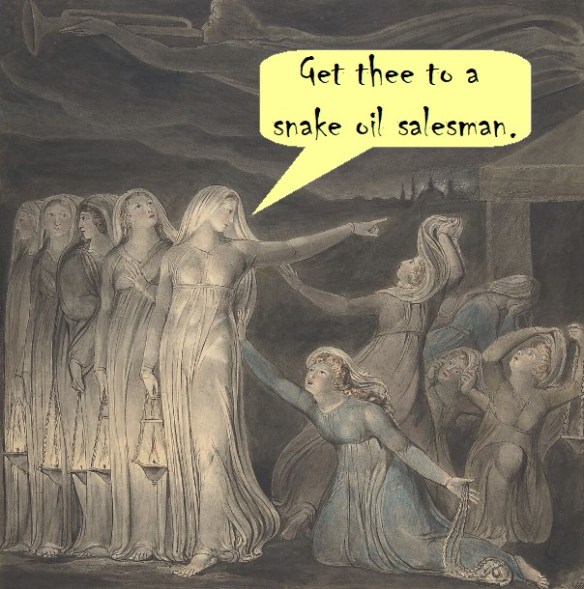
Dennis and I happened to find ourselves in the German city of Bremen recently where we visited the cathedral of St Peter. Apart from having a chapel in the keller of the church that looked suspiciously like an ancient Mithraic temple, the cathedral seemed particularly fond of the story of the Wise and Foolish Virgins, with sculptures of them on its walls.

The early church was obsessed with Jesus coming real soon to kick start the final judgement and inaugurate God’s Kingdom on Earth. Evangelists like Paul had told them so. The guarantee runs through all of his letters and presumably the rival preachers he mentions promised it too. The problem was that after a few decades of Jesus being a no show, some early converts had grown restless. How do we know this? Because later New Testament writers spend a great deal of time addressing the problem of Jesus’ failure to appear. The author of 2 Peter (3:8) comes up with the wholly unconvincing argument that with God a thousand years is like a day and he is giving more people the chance to repent. But this just doesn’t work as I explain here. In any case, 2 Peter is, like Jesus himself, late (most scholars place it in the early 2nd century).

The same issue concerns the writers who come between Paul and the forger of 2 Peter. The gospel writers were keenly aware of the frustration some in the early cult were feeling over Jesus’ late arrival. We know this was the case because the synoptic gospels are littered with parables and stories about why, forty years after cultists had begun looking to the skies for his appearance, Jesus still hadn’t arrived (see for example, Matthew 16.27-28; 24.27, 30-31, 34; Luke 21:27-28, 33-34 etc). Neither will you find any support in the New Testament for Jesus’ arrival being a ‘return’ or ‘second coming’. 

This is where the Wise and Foolish virgins come in. The parable is put into Jesus’ mouth in Matthew 25: 1-13. It’s a very peculiar tale, based on the idea that ‘the groom’ is about to marry ten young girls:

At that time the kingdom of heaven will be like ten virgins who took their lamps and went out to meet the bridegroom. Five of them were foolish and five were wise. The foolish ones took their lamps but did not take any oil with them. The wise ones, however, took oil in jars along with their lamps.

The bridegroom was a long time in coming, and they all became drowsy and fell asleep. At midnight the cry rang out: ‘Here’s the bridegroom! Come out to meet him!’ Then all the virgins woke up and trimmed their lamps. The foolish ones said to the wise, ‘Give us some of your oil; our lamps are going out. “No,” they replied, “there may not be enough for both us and you. Instead, go to those who sell oil and buy some for yourselves.”

But while they were on their way to buy the oil, the bridegroom arrived. The virgins who were ready went in with him to the wedding banquet. And the door was shut. Later the others also came. “Lord, Lord,” they said, “open the door for us!” But he replied, “Truly I tell you, I don’t know you.” Therefore keep watch, because you do not know the day or the hour.

Is gospel Jesus really endorsing marriage to multiple wives? He seems to be and certainly Mormon sects have taken him at his word. Whether he is or not, the point of the parable is to admonish those who are not prepared for the arrival of ‘the groom’ who has been ‘delayed’. Those who keep watching, however, are praised for their diligence and faithfulness. The groom is clearly intended to be Jesus; the foolish virgins those who have given up expecting him and the wise virgins those who still anticipate his arrival, symbolised by their keeping their lamps lit.

When the groom does finally show up in the story, he takes the wise girls into his wedding banquet (I think we know what that means) and locks out the foolish ones. When they bang on the door to be let in, he claims he’s never known them and shuts then out forever.

What a lesson for those who had begun to doubt that Jesus was going to come soon! What a promise to those who faithfully watched for him! The reward would soon be theirs.

Except of course it wasn’t. As we know, Jesus did not arrive when Paul, the early cultists and then the gospel writers believed he would. Mark, Matthew and Luke, while acknowledging that Jesus was ‘delayed’ nevertheless anticipated his arrival soon: ‘just a little while longer,’ they keep saying. ‘Keep watching’.

But it wasn’t to be. The foolish virgins, it turns out, weren’t as foolish as we’ve been led to believe.
Myths and Endless Genealogies

I’ve been reading Richard Carrier’s recent post about Docetism. Docetism, as you’ll know, is the idea that the Christ’s human body was illusory. Carrier questions whether this idea existed as a belief system in ancient times; the term, he says, was invented by modern theologians to describe a few vague notions that appeared only towards the end of the 2nd century.

He finds no evidence for Docetism as a movement at any time and certainly not when the books of the New Testament were being composed. Along the way, however, he discusses 1 Timothy 1:3-4, written either in the late first or early second century (and therefore not by Paul who died in AD 64):

…Command certain people not to teach false doctrines any longer or to devote themselves to myths and endless genealogies. Such things promote controversial speculations rather than advancing God’s work – which is by faith. (My emphasis)

‘Myths and endless genealogies’: interesting. What could these myths and genealogies be? Where were they to be found? In what way did they promote controversial speculations? How did they deplete faith?

The ‘myths’ are mentioned again in 2 Timothy, also not written by Paul but by someone using his name, again in the late first or early second century:

For the time will come when people will not put up with sound doctrine. Instead, to suit their own desires, they will gather around them a great number of teachers to say what their itching ears want to hear. They will turn their ears away from the truth and turn aside to myths. (2 Timothy 4:3-4)

Not, you’ll note, ‘(they will) turn aside to false doctrines or heretical teaching’, which is how this verse is usually interpreted and applied by nit-picking evangelicals today, but ‘they will turn aside to myths‘. Some in the early second century church were being distracted by such myths – spurious stories about Jesus – and the writer(s?) of 1 and 2 Timothy feel compelled to warn against them.

The author of 2 Peter, who certainly wasn’t Peter/Cephas, issues a similar warning in his letter of 80-90:

For we did not follow cleverly devised stories when we told you about the coming of our Lord Jesus Christ in power, but we were eyewitnesses of his majesty. (2 Peter 1:16)

What can these myths have been? What ‘cleverly devised stories’ about Jesus were circulating in the late 1st century and early 2nd? There were no ‘Docetic’ texts at this time, no ‘Gnostic’ ones, none of the more far-fetched, downright weird gospels, which all appeared later.

The use of ‘genealogies’ in 1 Timothy is a clue. Which documents with ridiculously contrived genealogies were circulating in the churches of the late first and early 2nd centuries? We know of none – apart from Matthew and Luke’s gospels. Could the forgers of 1 & 2 Timothy and 2 Peter be referring to these? Did they object to the fictional backstory Matthew, Luke and Mark had created for their heavenly saviour? Were these the myths to which believers were turning to instead of gazing heavenward at the ‘majesty’ of the celestial saviour who was soon to come in power to the Earth, as 2 Peter 1:16 suggests?

It certainly could.

The many and varied, Spirit-inspired interpretations of the Kingdom of God

Blog406Heaven

For the Son of Man is going to come with his angels in the glory of his Father, and then he will repay each person according to what he has done. Truly, I say to you, there are some standing here who will not taste death until they see the Son of Man coming in his kingdom” (Matthew 16.27–28).

Truly I say to you, this generation will not pass away until all these things take place. (Matthew 24.34)

See also Matthew 24.27, 30-31; Luke 21:27-28, 33-34; 1 Corinthians 15.51-52; 1 Thessalonians 4.15-17; 1 John 2:17-181; Peter 4.7

The Kingdom of God. What does it look like? When will it happen? Has it happened? You’d think that with the Kingdom of God being a central part of Jesus’ teaching, the central part, in fact – his ‘good news’ is about nothing else – that these would be questions Christians would find easy to answer.

They don’t. The Holy Spirit inspires a variety of incompatible responses from the faithful to the what, when and where questions. The most popular is, of course, that the Kingdom of God equates with Heaven: the saved are all going to heaven when they die. Post-mortem bliss, most Christians would tell you, is what Jesus meant by the Kingdom of God. After all, doesn’t Matthew refer to the Kingdom as the Kingdom of Heaven? Yes… but no: an after-life in Heaven is not what Jesus and his scriptwriters meant by the Kingdom. If it was, they would have said so, rather than promising, as they do, that God’s Kingdom was coming to the Earth real soon.*

So, when Jesus says the kingdom is just around the corner, which he does repeatedly in the synoptic gospels, he can’t have meant Heaven. Let’s try another favourite: Jesus meant that God’s Kingdom on Earth would manifest itself thousands of years in the future – in our time, no less. It’s all to do, you see, with Jesus’ return and the final judgement. As these have yet to happen then the final part of God’s plan – his reclaiming of his creation – will be in the (far) future too. A neat solution to be sure, but one that runs counter to everything in the gospels and in Paul. Admittedly it’s an idea that was taking shape in 2 Peter (3.8), a forgery written about 150CE, long after it had become apparent the Kingdom was running way behind schedule. However, you won’t find it in the synoptic gospels or the Pauline epistles because it isn’t what Jesus, Paul, the gospel writers or the earliest Chrsitians believed.

Where does this leave Jesus’ devotees today? With a Jesus who didn’t really mean the Kingdom would be manifesting itself in the physical world. This Jesus proclaims the Kingdom as something that exists inside his followers as an internal state of being. It’s true some of his pronouncements appear to fit this interpretation; the Kingdom is within you and all that, but what these statements are about in context is the Kingdom’s immanence at the time; what Jesus was saying was, ‘the Kingdom is arriving now; look at the signs – it’s all around you.’ A gnostic flavoured restructuring of what he actually claimed is yet another Spirit-led interpretation we can dispense with.

Consequently, some Christians accept that, yes, Jesus preached a Kingdom that would dramatically materialise in the real world close to the time he was speaking. That it didn’t in any observable way creates a dilemma: as God Incarnate, perfect and infallible, Jesus can’t have been wrong. This must mean the Kingdom did arrive when he said it would and we are living in it now. The Kingdom, these Covenantists say, is another term for the Christian era; the reign of the church, the Age of the Holy Spirit. We’re living in the Kingdom and have been for two thousand years!

How’s that working out?

Blog406Riot

Blog406Pollution

Blog406Bury

Blog406Starve

Yes, this looks exactly like the Kingdom of God Jesus promised: An eternity of peace with death and illness banished and the meek having inherited the earth; the social order reversed, God in charge and Jesus and his pals running the show. Or not.

So, however the faithful (re)interpret his words, however much they twist, cherry-pick or just plain ignore them, Jesus was wrong. The Kingdom of God did not arrive on the earth in the first century as he predicted. It’s definitely not here now. It won’t be coming in the future and it doesn’t await in an after-life; these were never the deal. (See my earlier series, Making Excuses for Jesus, for more detail.)

Whatever Christians do, wherever their imaginary Holy Spirit leads them, they end up with implausible and incompatible ways of explaining (away) the non-arrival of the Kingdom of God that Jesus promised. It’s a fallacy, a fantasy, another delusion sustained by the wilfully ignorant.

*John 18.36 does have Jesus say that ‘his’ Kingdom, as it’s become by the time of the fourth gospel, is not of this world. John, however, bears little relation to the other gospels and was written at least 70 years after Jesus lived. In any case, it doesn’t say or mean that common-or-garden believers are going to Heaven when they die.

God delays his judgement so he can torture more people

Judgement2

A Christian pastor, ‘Peter C’, has been assuring everyone on Daniel B. Wallace’s blog-site that God’s judgement has been delayed (2000 years and counting) because, as it says in 2 Peter 3.9, he wants to give as many people as possible time to repent and avoid hell. The pastor puts it like this:

The Lord is longsuffering, and not willing that any should perish, but that all would come to repentance. The context of 2 Peter 3:9 tells us that this is why the Lord appears to delay His coming – it is His longsuffering and love for humanity. It is not His will that anyone would pay the penalty for their own sin…

The claim of 2 Peter 3.9 – written not by Peter but by someone pretending to be Peter almost a century after he lived – has never made sense. God would have to delay his judgement indefinitely if he wanted to avoid punishing most of mankind. That’s because new unsaved humans are appearing all the time – about 353,000 are born every day. The longer God leaves it, therefore, the more unsaved humans there will be, simply because, as time goes on, the more of us there are.

If God had got on with the judgement in the first century, as Jesus said he would (Matthew 16.27-28; 24.27, 30-31, 34; Luke 21:27-28, 33-34 etc) then the unsaved would have been far fewer.

Here’s the maths: the population of the world in the first century was about 300 million; today it is 7.4 billion. Assuming, very generously, that about 30% of the population then, as now, was ‘saved’, the judgement then would have resulted in only 210 million people being sent to hell. The same percentage today would see 5.2 billion people being condemned to burn for all eternity.

2 Peter 3.9 is a weak excuse for why God’s judgement didn’t occur when Jesus, and Paul, said it would. It was written either by a fraud who lacked any understanding of basic maths and had no conception of how the world’s population would increase over the next two thousand years – or by someone who, like his predecessors in the cult, thought the judgement was imminent. If the latter, then he was referring only to those alive in his own time whom he thought were being given more time to repent. Either way, he was wrong. That his mistaken beliefs and false assurances are given credence by pastors and their flocks today testifies only to the stultifying effect of religious faith.