Religiophobia?

Is criticising Christianity and the way some people practise their religion a form of Christophobia? Strictly speaking a phobia is an irrational fear of whatever precedes it, as in homo-phobia, trans-phobia, Islamo-phobia and the like. In the accusations of whatever-phobia we hear today – and they invariably are accusations – ‘phobia’ seems to have come to mean ‘hatred of’; a hatred of Christianity and therefore of Christians; of homosexuality and therefore of gay people; of trans-people; of Muslims and so on.

Reasonable criticism of belief systems is not hatred. I don’t and am sure I never have had a hatred of Christianity or of any other religion. I certainly have views about Christianity as a seriously flawed, cock-eyed superstition (I hope I’m not giving my position away too early.) Reasonable criticism of it, mockery even, is perfectly legitimate, for reasons I’ve outlined before, just as criticism and mockery of any belief in the fantastic is legitimate. Ideologies based on belief in imaginary beings do not automatically merit respect nor do they have a de facto immunity from criticism. The same applies to those who subscribe to such fantasies, particularly when they attempt to force them on others. Calling out believers on their inconsistencies and hypocrisy is perfectly reasonable.

Is it fair then to express critical views of homosexuality and by extension of gay people? Of course. We are not immune from reasoned criticism, though much of it doesn’t qualify as ‘reasoned’; we have suffered much from emotional reactions to our existence and still do. (See Bruce’s recent post in which Republican North Carolina’s lieutenant governor, Mark Robinson rants about godless homos. When comment deteriorates into vitriol it becomes an incitement to hatred and, sometimes, violence. When this happens, the modern sense of phobia is justified.)

Islam is as irrational as Christianity and other religious belief systems. It is as legitimate to criticise and, when appropriate, to condemn Islam, just as it is Christianity. It is reasonable to question Muslim’s treatment of women, to insist it is inappropriate, particularly in a Western context. It is appropriate to oppose Muslims’ opposition to Western values rather to accede to their opposition to, for example, freedom of speech or the teaching of evolution and sex education in schools. It seems increasingly to me that in Britain we are conceding too much to Islam and to Muslims because we fear both the accusation of Islamophobia and, not entirely irrationally, a disproportionately aggressive response. Reasonable criticism of a belief system and those who subscribe to it is not hateful. We have a duty in a largely secular society to say so. To resist irrational belief in the supernatural when that belief, be it Christianity, Islam, Judaism or any other of the 4,200 religions human beings have dreamt up seeks to impose itself on others is neither hateful nor irrational. It is essential.

I‘d write more about Islam if I knew more about it. I’m disinclined to learn more, however, having already wasted much of my life in thrall to that other ‘great’ religion, the one I spend so much time deconstructing here. Who needs to know more about another? Saviours, Prophets, Gods, angels, signs and wonders – they’re all equally meaningless. Instead of claiming they’re victims of Christo/Islamophobia, religionists would do well to develop thicker skins as we ‘abominations’ and ‘perverts’ have had to do. They should ask themselves whether criticism of their practices and worldview is justified. They might just find it is.

The Evil of Christianity

Moral corruption and abuse are the inevitable destinations of religious sects. And they are all sects, regardless of their facade of respectability.

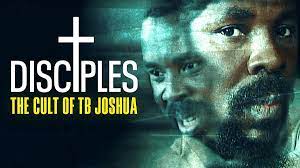
I recently watched Disciples: The Cult of T. B. Joshua, a series of programmes made by the BBC, about the Synagogue Church Of All Nations, led by the late ‘Daddy’ Joshua in Nigeria. You can watch the programmes on the BBC iPlayer where available and on YouTube elsewhere. When not preaching Jesus in the church’s massive auditorium, ‘Man of God’ Joshua was systematically and callously abusing, degrading and raping the vulnerable young women he had lured into serving the church.

Then today, I read of the sexual abuse of children, both historical and recent, by church leaders in a sect operating in Canada and the US known as The Truth. The abuse of some young boys and girls went on for years, leaving victims psychologically scarred and the perpetrators unpunished.

The Church worldwide has a serious, significant problem with sexual abuse that it consistently fails to address. There’s also the widescale abuse perpetrated in and by the Roman Catholic, Southern Baptist and Anglican sects. It is usually left to journalists and secular authorities to take responsibility for rooting out and exposing the abuse. The Church itself covers up, obfuscates and makes excuses, the chief of which is that the sects in question, the leaders in question, are an aberration and not ‘real’ Christians at all. (No kidding. But then who is?)

Individual Believers will say – and there will be some who will say it in response to this post – that it doesn’t happen in their nice little church (you sure?) and dismiss abuse as something that happens only in misguided cults. The truth is that the Church hands power to charismatic, manipulative men who, provided they preach the true gospel (whatever that is), are elevated above secular law and, lacking in empathy, regard themselves as beyond moral constraint. They see themselves as answerable only to God, because the Bible says so, and he has anointed them with both power and authority.

It happens time and again in churches, sects and Christian cults everywhere. It is the surest sign that Christianity does not work and is, despite the honeyed words of its apologists, positively evil.

If not Metaphor, then what?

I’ve been arguing that everything in Mark’s gospel is metaphor (because he says so) but there are some pronouncements credited to Jesus in the synoptic that do seem to read as if they’re not. These look as if they are meant to be taken at face value: 

Mark 9:1 And he said to them, “Truly, I say to you, there are some standing here who will not taste death until they see the kingdom of God after it has come with power.”

Mark 10:21. Go, sell everything you have and give to the poor, and you will have treasure in heaven. Then come, follow me.

Matthew 5:39. But I tell you, do not resist an evil person. If anyone slaps you on the right cheek, turn to them the other cheek also.

Matthew 5:40. And if anyone wants to sue you and take your shirt, hand over your coat as well.

Matthew 5: 43-44. You have heard that it was said, ‘Love your neighbour and hate your enemy.’ But I tell you, love your enemies and pray for those who persecute you,

Matthew 6:24. No one can serve two masters. Either you will hate the one and love the other, or you will be devoted to the one and despise the other. You cannot serve both God and money.

Matthew 6.25. Therefore I tell you, do not worry about your life, what you will eat or drink; or about your body, what you will wear. Is not life more than food, and the body more than clothes?

Matthew 7:6. Do not judge, or you too will be judged. For in the same way you judge others, you will be judged, and with the measure you use, it will be measured to you.

Luke 6:30. Give to everyone who asks you, and if anyone takes what belongs to you, do not demand it back.

Luke 14:26 If anyone comes to me and does not hate father and mother, wife and children, brothers and sisters – yes, even their own life – such a person cannot be my disciple.

Perversely, these are the very commands that most Christians insist are intended metaphorically. This includes those who oppose the idea that, Jesus’ parables excepted, the gospels are in any way symbolic. I know from experience that they have any number of unconvincing arguments of why Jesus doesn’t really mean what he is made to say. For example: ‘these pronouncements are too severe and impractical to be taken literally’; ‘the verses are being taken out of context’, and ‘they have a deeper spiritual meaning’ (oops – that’d be metaphor, wouldn’t it?). Ask these same folk if the statements are therefore metaphorical and you can expect to be met with barrage of abuse.

If they’re not metaphorical, why do we not find Christians striving to live according to them: renouncing wealth, giving to all who ask, selling all they have, resisting no-one, judging no-one, hating family, becoming a slave and having no care for their own welfare for the sake of the kingdom that Jesus promised was imminent.

Because they don’t believe him. Easier to disregard his words about the kingdom arriving within his disciples’ lifetime and the instructions for living in the short time until then. The hard stuff is treated as metaphorical when it makes demands on Christians themselves.

Possibly they’re right. I’d suggest that the pronouncements like those above were not Jesus’s at all. They’re cult-speak; the extreme demands of cult leaders seeking to control their acolytes. In case this sounds like an about face on my part, let me assure you it isn’t; I’ve long argued that among the metaphor and the reworking of Jewish scripture, the gospels include copious amounts of early cult rules.

Whether they’re metaphor or extreme demands once imposed on cult members, no-one today takes much notice of Jesus’ commands. What does this tell us about their worth? What does it tell us about Christians from the earliest days until now? What does it say about their willingness to crucify themselves (definitely a metaphor) in order to follow him?

Jesus’ Ungrateful Slaves

Jesus really liked telling stories about slaves. It’s as if he’d no objection to the inequitable arrangement of one person owning another. You’d think, if he really was the Son of God, he wouldn’t be quite so ready to assume unquestioningly, the zeitgeist of his day that decreed slavery was acceptable; necessary even. His being a man of his time, incapable of thinking beyond the assumptions and indoctrination of his culture might suggest he wasn’t a heavenly being at all. Either that or his creators, the writers of the gospels and the likes of Paul, were incapable of seeing beyond the zeitgeist and so made their god-man in its image.

In any case, they have Jesus tell a parable in Matthew 18:21-35 about forgiveness, which is populated once again with slaves and a slave owner. The story, in which a slave is forgiven by his master but fails in turn to forgive a fellow slave, ends with the following:

…after he had summoned him, his master said to him, ‘You wicked slave! I forgave you all that debt because you begged me. Shouldn’t you also have had mercy on your fellow slave, as I had mercy on you?’ And his master got angry and handed him over to the jailers to be tortured until he could pay everything that was owed. So My Heavenly Father will also do to you if each of you does not forgive his brother from his heart.”

Of course, the slave owner, referred at the start of the tale as ‘the king’ is – predictable metaphor alert – Jesus himself. He’s fond of casting himself in the role of kingly slave owner, with ordinary mortals his slaves. As we’ve seen already, this is the favoured analogy of New Testament writers to describe the relationship between their manufactured saviour and themselves.

Actually, the moral of the tale in this instance isn’t too bad; if you’re forgiven much it’s not unreasonable to suppose you could, in turn, forgive others their more minor offences. But this isn’t quite enough for Jesus’ script writers who have him drag jail, torture and retribution into the story. These, Jesus concludes, are the very things his wonderful Heavenly Father – based on the despotic rulers of the time – will inflict on anyone who doesn’t forgive as generously as they might.

What hypocrisy! Forgiveness is all according to Jesus but his Heavenly Father, he says with relish, will torture unforgivably anyone who doesn’t comply. What were the cultists who created this awful malicious character thinking? Jesus and everything to do with him is anti-human and soul-destroying.

As for me, I’d recommend forgiving others where you can, learning from the experience (once bitten twice shy and all that) and moving on. You won’t, whatever you do, be tortured by a fictitious, vindictive slave owner and his bullying idea of a god.


God’s Agents?

Christians are agents of God or so we’re informed. I’ve tried to locate where in the Bible it says that the Lord appoints fallible humans to be his 007s, but alas, I can’t find it anywhere. The best I can do are the claims in the fourth gospel that Jesus was God’s agent on Earth, but that’s not the same thing.

What about the idea then, also touted by Christians, that they are somehow God’s ‘partner’? No, that’s not there either. God regards himself as so far above us, his creators, that it would be like you or I partnering one of the ants crawling around in our gardens.

So how does the Bible describe the Christian’s relationship with God? It refers to it as master and servant. The word usually translated as ‘servant’ however, is doulos, which actually means ‘slave’. God doesn’t want you as an agent, partner or servant. He expects you to be his slave. Christian blogger, Sam Storms, explains what this means:

I, in the totality of who I am, have been purchased by Jesus Christ. He literally owns me. I belong to him, body, soul, spirit, mind, affections, abilities, talents, heart, will, and emotions. There is nothing in me or about me that belongs to me.

As a slave of God you are stripped of the very agency other Christians claim they gain from aligning themselves with the divine despot. And when you’ve done all he requires of you he’ll barely acknowledge you. As Jesus puts it in Luke 17:5-10:

Suppose one of you has a slave (doulos) ploughing or looking after the sheep. Will he say to the slave when he comes in from the field, ‘Come along now and sit down to eat’? Won’t he rather say, ‘Prepare my supper, get yourself ready and wait on me while I eat and drink; after that you may eat and drink’? Will he thank the slave because he did what he was told to do? So you also, when you have done everything you were told to do, should say, ‘We are unworthy slaves; we have only done our duty.’”

Whatever you do as God’s or Jesus’ slave won’t be enough, they’ll still regard you as a worthless slave.

I didn’t know about you, but this isn’t for me. I have more self-respect than to submit to a life as a slave. So have you. So in fact has everyone.

Most Christians agree. Almost all of them disregard the expectation that they become slaves. We know this because –

  • The majority don’t act as if they’re slaves, serving their fellow human beings till they’re fit to drop (Matthew 25 etc).

  • Most seem unaware even that Jesus insists they must be slaves when successive translators have deliberately altered the unsavoury ‘slave’ to the more palatable ‘servant’.

  • Those who are aware of his expectation seem to regard it as a metaphor; always a good get-out. And doesn’t Paul remark in his letters that believers are sons of God? That’s much more acceptable.

  • They omit the slavery element from their evangelising because no-one is going to be attracted by the offer of life-long servitude; far better to present Jesus as a would-be friend, big brother and all round good guy with whom people can be in ‘partnership’ or a fellow special ‘agent’.

  • They talk about free will when a slave, either of sin (John 8:34) or of Christ’s, has no freedom and no free will to exercise.

  • They convince themselves that sitting at a computer arguing with atheists online is the kind of slavery Jesus had in mind.

  • They turn a blind eye to the fact that the Bible teaches slavery is what they can expect not just now but for all eternity (Revelation 22:3-4).

It’s almost as if they don’t really believe such self-abasing, masochistic nonsense themselves.


An Open Letter to the Bride of Christ

Every day, it seems, there are reports of pastors, ministers, priests, youth workers, church officials – you name it – who sexually abuse children, teenagers and other vulnerable people. These predatory abusers are especially repugnant because they are Christians; born again servants of the Lord, cleansed, supposedly, by the blood of Jesus. As such they have a higher moral standard than those of us who don’t have God to make us good. Or so you keep telling us. Instead these individuals take advantage of their status to rob others of their innocence, psychological well-being and the joy they should later experience in a healthy, adult sexual relationship.

You, the Bride of Christ, the Church at large, who harbour these truly awful people, need to get your house in order. You’ve had a mere 2,000 years to do it. Instead, you spend your time condemning atheists, gay people, trans-people, feminists. Have you not read 1 Corinthians 5:12: ‘What business is it of mine to judge those outside the church? Are you not to judge those inside?’ Likewise, you are told by your Saviour to attend to the log in your own eye instead of carping about the speck you perceive in others’.

You need to stop tolerating the abusers in your midst. Stop defending them when they’re found out, stop pretending all is wholesome and savoury in the Church. Stop lying when you claim that the few offenders who do get caught are mere bad apples and not ‘true’ Christians.

If not for the good of others, do it for your own sake. The Bridegroom when he descends to claim his Bride is not going to want to copulate with you, riddled as you are with malignant sexual disease.


My Gay Demon

I am demon possessed. I know this for a certainty because Christians all over the Internet tell me. I am gay therefore I am possessed by a demon. Maybe more than one, I don’t know.

I’ve been trying to get in touch with my inner demon but he’s been keeping schtum. I assume he’s a him given he’s a demon of gayness, but again who knows. I’ve enquired in the deepest, darkest recesses of my mind and have searched my heart (though if I’m honest I wasn’t really sure how to do this) and can’t find him anywhere.

I was going to ask him why, if he’s a demon and therefore a real nasty piece of work from the pit of hell, why he’s led me to a happy and loving relationship with Dennis, one that has taken each of us from loneliness and depression to peace and contentment. I just didn’t know demons were so… well, so positive and creative. I always thought they were destructive and devious, like C. S. Lewis’s Screwtape. I think mine must be shy and more like Casper the Holy Ghost.

Alternatively, maybe there’s no such thing as demons, invisible evil super-beings who can’t be detected in any way. In my ‘worldview’ anything that’s invisible, undetectable and is a figment of rather dim-witted people’s imaginations is a being that doesn’t exist.

But then maybe that’s just me.

  And science.

    And every other academic discipline.

       And rationality.

         And reality.

It’s possible, after all, that a book written thousands of years ago by ignorant religious zealots trumps all of that.

The Power of Figments

Since his death, no-one has seen the itinerant preacher now known as Jesus. Some dispute he existed in the first place and certainly the character depicted in the gospels is a fictional creation. Assuming, however, that there was a real individual on whom this character was based, no-one has seen him in the flesh for 2000 years.

This includes all or most of those who wrote about him in the early years of the cult and whose writing now forms the New Testament. They either learnt about Jesus by word of mouth, as most converts throughout history have done, or they had a vision within their own heads of – what exactly? Those who write of such visions are either vague about what they claim they saw (Paul in Galatians 1: 15-16), are evidently making it up (John of Patmos in Revelation) or their visions are related by third parties many years down the line (Peter and Mary in the gospels, Stephen in Acts.)

Either way, the character believers claim to have seen or have heard about is a fantasy figure, not the rabbi who may or may not have existed. It’s this fantasy who lives in heaven snuggled up to his equally fictitious father, monitoring people’s behaviour, listening into their thoughts while simultaneously observing ‘the destruction the world is bringing on itself’ and doing not a thing to help.

All this from the heaven no Christian can locate: in another unspecified, invisible, undetectable dimension is the best they can offer. Nonetheless, if only more people would turn to him, Super-Jesus would help us solve the problems we face.

Because theocracies have always been so effective. They’ve led to a more just, fairer world as wise compassionate religionists have listened to their heavenly leaders – God, Allah, Jesus, Muhammed – and have applied the principles of their holy books to the running of their societies. Only obstinate sinners have had anything to fear from the arrangement: the degenerate, like those who have sex outside marriage and want access to contraceptives; gay people (especially); women who don’t know their place; women who seek abortions; the powerless; other, ‘inferior’ races; those of other religions, non-believers and atheists. None of these would have a place in Jesus’s new perfect world either, just as they don’t in societies controlled by Muhammed’s holy ones. Jesus’ agents will be happy to exterminate them, just as he instructs.

Magic Jesus as a figment of his followers’ imaginations can be made to say whatever they want, just as he was when he was being created by Paul and the gospel writers. He is a perpetual work in process, constantly changing to conform to what those who claim to know him want him to be. It’s easy to achieve this with a non-existent being from a non-existent place.

God’s Design for Sexual Relationships: the Gospel According to Don

A digression:

A little while back, a Christian commenter (we’ll call him ‘Don’) made the point that homosexuality and other non-conformist sexualities are ‘not the order of creation God intended‘. Yes, Don knows the intentions of a God whose purposes are unknowable (Romans 11:33-34)! 

And what are those intentions?’ I hear you ask. It is that everyone be, or pretends to be, heterosexual and involves the marriage of one man to one woman for life, for the procreation of children. I know this because it says so in the Book of Common Prayer, originally composed in 1622:

The union of husband and wife in heart, body, and mind is intended by God for their mutual joy; for the help and comfort given one another in prosperity and adversity; and, when it is God’s will, for the procreation of children and their nurture in the knowledge and love of the Lord. Therefore marriage is not to be entered into unadvisedly or lightly, but reverently, deliberately, and in accordance with the purposes for which it was instituted by God.

But how did the writers of this book know this was God’s plan? How do evangelicals today, who subscribe to the same ideas, know that this is what God intended? How does Don?

The Bible. Surely the writers of the prayer book consulted the Bible and created their summary of God’s plan from that. Surely the evangelicals who promote one-man one-woman marriage draw their inspiration from God’s Word. Surely this is how Don knows too.

Let’s see. Here’s what Paul has to say about marriage 1 Corinthians 7:28-29:

…if you marry, you do not sin, and if a virgin marries, she does not sin. Yet those who marry will experience distress in this life, and I would spare you that. I mean, brothers and sisters, the appointed time has grown short; from now on, let even those who have wives be as though they had none.

Hardly a ringing endorsement of marriage!

Paul goes on to say,

I would like you to be free from concern. An unmarried man is concerned about the Lord’s affairs—how he can please the Lord. But a married man is concerned about the affairs of this world—how he can please his wife— and his interests are divided. An unmarried woman or virgin is concerned about the Lord’s affairs: Her aim is to be devoted to the Lord in both body and spirit. But a married woman is concerned about the affairs of this world—how she can please her husband.I am saying this for your own good, not to restrict you, but that you may live in a right way in undivided devotion to the Lord…So then, he who marries the virgin does right, but he who does not marry her does better. A woman is bound to her husband as long as he lives. But if her husband dies, she is free to marry anyone she wishes, but he must belong to the Lord. In my judgment, she is happier if she stays as she is—and I think that I too have the Spirit of God (1 Corinthians 7:32-40).

In other words, avoid marriage if you can, the better to devote yourself entirely to the Lord. How many Christians actually do this? How many preachers and evangelists promote it? None that I know of.

I can already hear Don arguing that Paul’s views are his own and were not handed down from on high. Let’s then turn to what Jesus says about marriage. If anyone knows God’s views on the matter, it must surely be his very own Son. I don’t for a second, believe he was of course, especially as Jesus’ script was written years after Paul and owes a great deal to him. Nonetheless, here’s what Jesus is made to say about God’s plan for marriage:

Jesus said to them, ‘Those who belong to this age marry and are given in marriage; but those who are considered worthy of a place in that age [i.e. that of the Kingdom] and in the resurrection from the dead neither marry nor are given in marriage (Luke 20:34-36).

Surely he can’t be saying that those who want to rise from the dead and make it into the Kingdom of God shouldn’t marry? That they’re not worthy of that Kingdom if they do? Yup, that’s exactly what he’s saying.

Similarly, in Matthew 19:10-12, after discussing divorce with the Pharisees, Jesus responds to the disciples’ remark that ‘it is better not to marry’, with –

…not everyone can accept this teaching, but only those to whom it is given. For there are eunuchs who have been so from birth, and there are eunuchs who have been made eunuchs by others, and there are eunuchs who have made themselves eunuchs for the sake of the Kingdom of heaven. Let anyone accept this who can.

Even interpreted figuratively – though it’s not evident from the text that Jesus is speaking figuratively – this means Jesus thinks it’s preferable to be sexless: chaste, celibate, single. How well that’s worked out for the Catholic church!

Finally, there’s Luke 14:26 where Jesus makes it clear what following him entails:

If anyone comes to me and does not hatewife and children, brothers and sisters—yes, even their own life—such a person cannot be my disciple.

Not much ‘mutual joy’ there.

Unlike Jesus and Paul, I’m not knocking hetero-marriage or the procreation of children. I’ve been involved with both. If these are what floats your boat, that’s great. But they’re not what the Bible promotes. Just the opposite. After the tales of incest, polygamy and adultery in the Old Testament, the New teaches that marriage has had its day. It is to be avoided, the better to follow Jesus, prepare for the coming kingdom and be worthy of eternal life. Only marry, Paul advises, if you can’t control your sexual urges. But, according to Jesus, you are risking your place in the coming kingdom if you do. You can improve your chances by shunning sex altogether.

This is the Bible’s teaching about marriage and God’s intentions for the sexual beings he created. Strictly speaking, it’s the New Testament’s teaching; that of the Old is even more bizarre.

Aah but,’ I hear someone say, ‘it’s all about context.’ Certainly it is; and the context is that Paul and those who created Jesus’ script believed the current age was about to end. Marriage, such as it was (very different from the modern concept, particularly for women who could be bought and sold aged only 12 or 13), would also then be coming to an end. With the arrival of the Kingdom of God on Earth, marriage would be redundant. Better, Paul and the gospel writers argue, to have done with it now to conform ahead of time with the new system, with God’s plan: ‘those who are considered worthy of a place in that age and in the resurrection from the dead neither marry nor are given in marriage.’

But God’s plan – the arrival of his kingdom on Earth in the first century didn’t come to fruition. His plan for marriage to end likewise fell by the wayside. Instead, and without the assistance of any deity, the very human institution of marriage persisted and evolved, eventually being hijacked by the Catholic church in the ninth century. It emerged more or less in its current form – though not for everyone – in the 17th century. Whatever this signifies, it was not what ‘God intended for his creation’ nor his ‘design for sexual relationships’ (Don again, doubling down on his position.)

If the Bible is anything to go by, God has never been very impressed by marriage. His long-term plan for it, if that disreputable book is to be believed, was to scrap it altogether. Yet we still have Christians who use its continued existence to disparage and denigrate those of us who express our sexuality with other adults of the same sex, with whom we share a mutual attraction.

Shame on them.

No True Christian


Why is it, I wonder, that every Christian I encounter thinks they are True Christians, while most others are not?

A recent survey in the States revealed that belief in God is in decline. Ken Ham of Answers In Genesis decided this is because:

We live in a day when the religion of secularism (naturalism)—with its belief that there is no God, morality is relative, my happiness is all that matters, and we’re simply the products of evolution—is taught as fact in public schools and through the media.

I suggested on Ken’s Facebook page that the reason more people are rejecting the idea of God might have a lot to do with Christians themselves; that Christians’ own public performance was a complete turn-off for many people. I meant by this the way evangelicals in particular:

  • align themselves with Christian Nationalism;
  • actively campaign to restrict LGBT+ rights (and in some cases to have gay people executed);
  • are obsessed with abortion;
  • disregard almost totally Jesus’ actual commands and instead –
  • waste their time online maligning atheists and other minority groups;
  • are downright unpleasant to those who don’t share their views.

Silly me! I was told by a real Christian called Tim Bodnar that Christians who behave like this are not real Christians (despite believing they are):

If we are to know fellow believers by their fruit (or as you say, “public performance”) – we then know that their fruits show them to not be the Christians they claim to be.  That’s why our relationship with Jesus Christ is a personal one.

When I pointed out to Tim that this was nothing more than the No True Scotsman fallacy, he told me – passively aggressively but oh so lovingly – that ‘it isn’t difficult to grasp’ what’s going on; Christians who aren’t real Christians are the same as people who impersonate police officers. In any case, he said, Jesus had it covered.

Maybe it’s a good thing Christians refuse to look to themselves to learn why others are increasingly rejecting their God and their beliefs. After all, if they were to make their worn-out old fantasies more attractive, more people might fall prey to them. ‘True’ Christians are to be applauded for discouraging, albeit unwittingly, belief in their non-existent God.