Announcement

The story so far…

While he used to argue vociferously that the gospels are history – remember they must be history because Pilate and Herod are in them? – our resident apologist has backed away from this position. He says now they’re not history as such but are only ‘like’ history, which means they’re ‘historical but not written as histories’, whatever this means. He derides the likes of Ehrman and Tabor for their inability to recognise this (newly invented) fact. These no-nothings make a category error when they confuse the gospels with history.

I suspect Don wants to reclassify the gospels because he recognises they make rather poor history. It’s safer to pretend they’re designed to be something else, something that doesn’t require external evidence to verify it: ‘announcement’, for example.

This, however, merely sidesteps the question of where the gospel writers got their information from. Don has previously argued that the gospels are based on eye-witness reports, Peter’s dictation to Mark and a reliable oral tradition. But conjecture like this is only necessary if the gospels are history. If they’re not, but are ‘announcement’ instead, then their sources need  be neither historically reliable nor demonstrable.

If the accounts are ‘announcement’ rather than history then where does their ahistorical, announced information come from? Fortunately, Mark gives us a clue:

To you has been given the secret of the kingdom of God, but for those outside everything is in parables, so that “‘they may indeed see but not perceive, and may indeed hear but not understand, lest they should turn and be forgiven’” (Mark 4:11-12, referencing and misquoting Isaiah 6:9)

In fact, the gospels’ ‘announcement’ is conveyed by a story constructed from supposed prophecies from Jewish scripture and the immediate concerns of the early cult communities, expressed in metaphors of the gospel writers’ making. All of the internal evidence supports this conclusion. In fact, the source of the gospels’ material is the same as Paul’s and that of other writers in the New Testament. Here’s how the great, self-appointed apostle puts it: 

My gospel and the preaching of Jesus Christ [is] according to the revelation of the mystery which was kept secret for long ages, but now is made visible through the prophetic scriptures and is made known to all nations, according to the command of the eternal God, for the obedience of faith. (Romans 16:25-26)

Christ died for our sins according to the Scriptures. (1 Cor 15:3-8)

Compare this with:

Today this scripture is fulfilled in your hearing. (Gospel Jesus in Luke 14:21)

He said to them, “How foolish you are, and how slow to believe all that the prophets have spoken! Did not the Messiah have to suffer these things and then enter his glory?” And beginning with Moses and all the Prophets, he explained to them what was said in all the Scriptures concerning himself. (Gospel Jesus in Luke 24:25-27)

He said to them, “How foolish you are, and how slow to believe all that the prophets have spoken! Did not the Messiah have to suffer these things and then enter his glory?” And beginning with Moses and all the Prophets, he explained to them what was said in all the Scriptures concerning himself. (Gospel Jesus in Luke 24: 25-27)

(Paul) reasoned with them from the Scriptures, explaining and proving that the Messiah had to suffer and rise from the dead. “This Jesus I am proclaiming to you is the Messiah,” he said. (Fictional Paul in Acts 17:2-3)

The revelation of the Messiah and the secrets and mysteries revealed to Paul and the other apostles are ‘explained and proved’ in their entirety by ancient scripture. But, these scriptures in and of themselves do not prophesy the kind of Messiah the early apostles envisaged. Rather, the scriptures are retrospectively pressed into service to match the revelations of the Messiah that Paul and the others experienced.

This is Don’s ‘announcement’: secrets and mysteries founded not on history but on revelation expressed through metaphor and the misapplication of scripture.

Jesus’ Ungrateful Slaves

Jesus really liked telling stories about slaves. It’s as if he’d no objection to the inequitable arrangement of one person owning another. You’d think, if he really was the Son of God, he wouldn’t be quite so ready to assume unquestioningly, the zeitgeist of his day that decreed slavery was acceptable; necessary even. His being a man of his time, incapable of thinking beyond the assumptions and indoctrination of his culture might suggest he wasn’t a heavenly being at all. Either that or his creators, the writers of the gospels and the likes of Paul, were incapable of seeing beyond the zeitgeist and so made their god-man in its image.

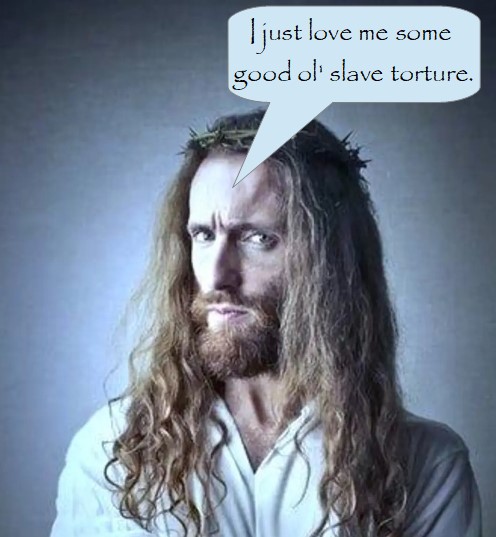
In any case, they have Jesus tell a parable in Matthew 18:21-35 about forgiveness, which is populated once again with slaves and a slave owner. The story, in which a slave is forgiven by his master but fails in turn to forgive a fellow slave, ends with the following:

…after he had summoned him, his master said to him, ‘You wicked slave! I forgave you all that debt because you begged me. Shouldn’t you also have had mercy on your fellow slave, as I had mercy on you?’ And his master got angry and handed him over to the jailers to be tortured until he could pay everything that was owed. So My Heavenly Father will also do to you if each of you does not forgive his brother from his heart.”

Of course, the slave owner, referred at the start of the tale as ‘the king’ is – predictable metaphor alert – Jesus himself. He’s fond of casting himself in the role of kingly slave owner, with ordinary mortals his slaves. As we’ve seen already, this is the favoured analogy of New Testament writers to describe the relationship between their manufactured saviour and themselves.

Actually, the moral of the tale in this instance isn’t too bad; if you’re forgiven much it’s not unreasonable to suppose you could, in turn, forgive others their more minor offences. But this isn’t quite enough for Jesus’ script writers who have him drag jail, torture and retribution into the story. These, Jesus concludes, are the very things his wonderful Heavenly Father – based on the despotic rulers of the time – will inflict on anyone who doesn’t forgive as generously as they might.

What hypocrisy! Forgiveness is all according to Jesus but his Heavenly Father, he says with relish, will torture unforgivably anyone who doesn’t comply. What were the cultists who created this awful malicious character thinking? Jesus and everything to do with him is anti-human and soul-destroying.

As for me, I’d recommend forgiving others where you can, learning from the experience (once bitten twice shy and all that) and moving on. You won’t, whatever you do, be tortured by a fictitious, vindictive slave owner and his bullying idea of a god.


Parables

Jesus’ parables are analogies: similes or metaphors. ‘The Kingdom of heaven is like’; ‘there once was a man…’ Every one of the parables tells a story that didn’t actually happen. There was no literal Good Samaritan, no Prodigal Son or Sower. Jesus, or more probably the gospel authors, made up these stories to illustrate ‘mysteries’ (μυστήριον; gnosticism anyone?) What do they say about the parables? The majority appear in Matthew’s gospel, though Mark and Luke also include them. There are none in John. Did he, a supposed eye and ear- witness, not know of them?

Mark has Jesus say to his disciples:

To you has been given the secret of the kingdom of God, but for those outside everything is in parables, so that “‘they may indeed see but not perceive, and may indeed hear but not understand, lest they should turn and be forgiven’” Mark 4:11-12

Mark lets his readers in on the ‘secret’ (μυστήριον again) because there are mysteries within the cult, secrets available only to the initiated. Remember, the parables were written – they are almost certainly literary creations – 40 years after the cult was established. Only cultists would understand the secrets/mysteries embodied in the parables. Parables, Mark tells us, are intended to disbar those who are not spiritually attuned from salvation/the kingdom of God/eternity.

The word translated as parable also means ‘riddle’, designed to puzzle or obfuscate. But Mark doesn’t just say the parables are intended to do this. He says ‘everything is in parables’. What did he mean by ‘everything’? All of the teaching he attributes to Jesus? All of the episodes he relates? Could it be that the entire Jesus story, crucifixion and resurrection included, is one long, extended parable? A metaphor, if you like.

You bet it is.

Related:

Stories about Jesus

The Jesus Story v. Reality

Cruci-fiction

Inventing Jesus

The Jesus Story v. Reality

Recycled picture, new post

Whenever the Jesus story comes face to face with reality, it fails. The nativity stories, which only Matthew and Luke think to invent include, are a case in point.

  • Luke tells us the Emperor Augustus decreed there should be a census in what we now know as 4BC. He didn’t. The closest Roman census was in AD6, ten years later and it didn’t entail hordes of people trailing back to their ancestral village.
  • Matthew claims that Herod was so enraged about the birth of the ‘royal’ baby that he killed all little boys under two years old. Except he didn’t. This never happened.
  • According to the same story, a host of supernatural beings appeared announcing that a young woman who’d never had sex with a man had given birth, while a wandering star shone directly over her house.

Where in reality do these kinds of things happen? That’s right: in myths and stories. They are typical literary tropes found in fantasy fiction. The ‘miraculous’ events of the nativity are of this genre.

  • Christians who delude themselves into thinking theirs is an intellectual faith concede the nativity is mythical, its events symbolic. They’re not usually so hot on what they’re symbolic of but say the story conveys truth. Still, they insist, the rest of the Jesus story is true. Evangelicals go even further and say it’s literally true. So, Jesus walking on water really happened (or if your faith is, oxymoronically, intellectual faith, it didn’t.) After all, the illusionist Dynamo walked across the Thames a few years ago (see it here), and if he could walk on water then how much more capable of doing that was the Son of God. Except the modern illusionist‘s feat was – yes, you guessed it – an illusion. So even if Jesus did the same thing, his trick was also an illusion. Those who say the story is included in Mark and Matthew because it’s actually only a parable about faith (or something) are conceding, again, that it didn’t actually happen.
  • Likewise when Jesus turns water into wine, calms the storm, raises the dead, chats with apparitions of long dead Jewish folk-heroes and does every other ‘miracle’ he’s credited with. If they’re only symbolic then, by definition, they didn’t happen. Nor did they happen, if, as Evangelicals believe, they’re being passed off as real events. ‘Miracles’ do not happen in reality. Never have, never will. They happen only in stories.

Well, okay, more enlightened Christians might say, but nonetheless Jesus conveyed to the world what God wanted us to know. He was wise and compassionate and told us how our sins could be forgiven. Except his wisdom comes directly from Jewish scriptures; he had nothing new to say. He was no more compassionate than anyone else and could in fact be an absolute s**t. He was inconsistent across the gospels about how sins were forgiven and much of his teaching in the original Gospel (Mark’s) is lifted from Paul or reflects the beliefs of the early Christ cult. Jesus the holy man is a construct – or rather a series of constructs, a literary device, not a real man.

So, okay; the nativity didn’t happen as depicted. The astounding feats attributed to Jesus didn’t happen and Jesus is whoever the various gospel writers and Paul want to make him. Nothing we’ve seen so far is factually, historically or really (as in reality) true.

But, the crucifixion and resurrection are! Oh yes. The rest is made up, but these two events most certainly are not.

  • Even though Jesus’ trial is historically inaccurate and is, as a consequence, highly implausible.
  • Even though there was no-one to record Jesus’s snappy repartee (or silence depending on which gospel you read) with Pilate or Herod.
  • Even though there was no such Roman custom as releasing a prisoner on the Passover.
  • Even though the synoptics have Jesus crucified on Friday while John says it was a Thursday.
  • Even though characters like Barabbas, Joseph of Arimathea, Mary Magdelene and the ‘disciple whom Jesus loved’ are evidently and entirely fictional.
  • Even though there was no eclipse of the sun that lasted for hours.
  • Even though there was no earthquake that shook zombies loose from their graves before Jesus had a chance to rise and shine himself.

Such things are not historical. They’re not even feasible. They did not happen in reality. Well, if not the crucifixion per se, Christians say, then definitely the resurrection: that most unlikely of all unlikely events. That really happened.

  • Even though the reports of it are completely at odds with one another.
  • Even though angels are involved once again.
  • Even though Jesus behaves entirely like a ghost, walking through closed doors, altering his appearance and vanishing at will.
  • Even though he levitates into the clouds.
  • Even though some of the disciples find it impossible to believe he’s back.
  • Even though dead people rise only in stories, myths, legends and fantasies.
  • Even though, in reality, dead people do not come back to life after three days, which is why Jesus didn’t either.

Still, I’m sure I’ll be told when I go to a carol service with my friends in a few days, that the story of Jesus’ birth, emotionally powerful as it is, is true from start to finish. Why? Because people’s capacity for believing fantasy stories knows no bounds.

The Ten Rules of Cult Club

Blog417

Which cult?        

        Any.

            All of them.

Let’s call this one The Brotherhood of the Lord.

Rule 1. Give your heart and soul to the Brotherhood.

Rule 2. Separate yourself from you family. They’ll just be a drag on you. They won’t understand you’ve found the Truth.

Rule 3. Treat other Brothers and Sisters as your family instead. Put them first.

Rule 4. Be prepared to die for your Brotherhood family. It’s not too much to ask.

Rule 5. Renounce your ego! You can’t enter fully into Truth until you let go of self.

Rule 6. Don’t criticise your brothers and sisters, specially not the leadership. The leaders know better than you; you are mere sheep and little children.

Rule 7. Sell everything you own; you won’t need it now. Give what you make to the poorest members of the group.

Rule 8. Listen to your leaders. They will tell you secrets about life that no-one outside the Brotherhood can possibly understand.

Rule 9. Don’t stop believing: if you’re obedient to the cult, your sins will be forgiven and you will live forever.

Rule 10. Be prepared: God is coming real soon to rescue you from this wicked world and elevate you to a place of glory

Or, as Jesus put it:

Rule 1. Any one of you who does not renounce all that he has cannot be my disciple (Luke 14.33). No one who puts his hand to the plough and looks back is fit for the kingdom of God. (Luke 9.62).

Rule 2. If anyone comes to me and does not hate his own father and mother and wife and children and brothers and sisters, yes, and even his own life, he cannot be my disciple (Luke 14.26).

Rule 3. Who is my mother and who are my brothers?” And stretching out his hand toward his disciples, he said, “Behold my mother and my brothers! For whoever does the will of my Father who is in heaven, he is my brother and sister and mother.” (Matthew 12.48-50).

Rule 4. Greater love hath no man than this, that a man lay down his life for his friends (John 15.13).

Rule 5. If anyone wants to come after me, let him deny himself, and take up his cross, and follow me. For whoever wants to save his life will lose it. But whoever loses his life for my sake will find it. (Luke 9.23).

Rule 6. Judge not, and you shall not be judged. Condemn not, and you shall not be condemned. Forgive, and you will be forgiven (Luke 6.37). Anyone who is angry with his brother without a cause will be subject to punishment. And whoever says to his brother ‘Raka!’ will be subject to the Council. And whoever says, ‘You fool!’ will be subject to hell fire (Matthew 5.22). Unless you change and become like children, you will never enter the kingdom of heaven (Matthew 18.3).

Rule 7. Go, sell everything you have and give to the poor, and you will have treasure in heaven. Then come, follow me (Mark 10.21).

Rule 8. This is why I speak to the crowds in parables: although they see, they don’t really see; and although they hear, they don’t really hear or understand (Matthew 13.13)

Rule 9. My sheep hear my voice, and I know them, and they follow me: and I give them eternal life; and they shall never perish (John 10.27-28)

Rule 10. Whoever exalts himself will be humbled, and whoever humbles himself will be exalted (Matthew 23.12). I am the resurrection and the life. He who believes in Me, though he may die, he shall live. And whoever lives and believes in Me shall never die. (John 11.25-26).

Two questions:

1. How many Christians today do all the things demanded by Jesus?

2. Who decided he said these things? Did Jesus say them – or was it the cult that arose in his name who put them retrospectively in his mouth?

Next time…

Jesus: Speak not clearly did he

Blog345JC

Why did Jesus not speak clearly? If he came from God, or was God in some way, why didn’t he express himself directly and with precision? Why did he obscure what he had to say with hyperbole, riddles and demands that even he couldn’t meet?

Don Camp, light-weight apologist and C. S. Lewis aficionado, has been giving me a little lecture over in the comments section of Debunking Christianity. He’s been providing the basics in how some of Jesus’ remarks in the gospels are hyperbolic and are therefore not to be taken literally. I am, of course, already aware of Jesus’ tendency to exaggerate (how far does this qualify as false witness, I wonder?) but Don and I were specifically discussing Matthew 5.29-30 where Jesus advises those who lust after a woman to pluck out their right eye and cut off their hand. Don asserted that obviously this is an exaggeration, to be understood figuratively, not literally. I asked him how one distinguishes between the two.

Don responded by saying one should look for clues in the scriptures (the bible as Murder, She Wrote); clues that might reveal how early Christians responded to Jesus’ assertions. If they ignored what Jesus said (while most did disregard his more extreme commands, such as the self-mutilation statements, there is evidence that some did indeed take him literally), then we can safely do the same. If, on the other hand (no pun intended) they acted on what he said, then it’s fair to assume it’s okay for today’s Christians to do the same. Sounds simple right? But it still doesn’t help anyone decide what is hyperbole and what is meant literally.

For example, Christians largely ignore Jesus’ commands to go the extra mile, give the shirts of their back to those who ask for them, turn the other cheek, love their enemies, disavow wealth, sell all they have, give no concern for the future and do all they can for the homeless, sick, naked and displaced. There isn’t a lot of evidence that even early followers did these things. Does their disregard for these commands mean that Jesus must have meant them figuratively? That there is spiritual truth to be discerned from them but that no practical action is expected or required?

Where do Jesus’ apparent assurances that his followers would heal the sick, raise the dead (Matthew 10.8) and do ‘works’ even greater than his (John 14.12) fit? Are these hyperbole or are they intended to be taken literally? Given early Christians serve as Don’s yard-stick for what is hyperbole and what is literal, what did they think? We don’t actually know, though evidently some considered the promises significant enough to include in the gospels. Among today’s believers, there are those – and not just on the fringe – who accept them as literal, while others scoff at the idea of taking them at face value.

What about Jesus’ promises that God’s Kingdom was imminent and that he would rise from the dead? Aren’t these just hyperbole too? Don says no, because people at the time didn’t ignore them (as they did his ‘obvious’ hyperbole) but believed they would happen. Therefore, they must have been meant literally. Unfortunately, Don fails to take into account that the promises of a resurrection were applied retrospectively; Jesus didn’t actually predict his own return from the dead (for reasons discussed here.) The Kingdom of God, meanwhile, failed to materialise when Jesus said it would. The extent to which early Christians believed these promises hardly demonstrates their literal truth. In any case, is ultimate truth to be determined by how ordinary, largely uneducated, superstitious back-water folks responded to what they heard or read? What a spurious and unreliable way to decide.

Which brings me back to my original question. Couldn’t Jesus have been a lot clearer about what he meant? Instead, he dressed up a lot of what he said in what might, or might not be, hyperbole. He issued other ‘truths’ in parables that he didn’t intend the hoi-polloi to understand (Mark 4.12). He offered advice that is of no practical use, some of it positively detrimental. He was neither systematic nor consistent and contradicted himself. So much of what he said is open to interpretation, to the extent that there are now thousands of Christian churches, cults and sects, all at odds with one another because they disagree about what he meant.

The New Testament as a whole too is a muddle of conflicting ideas and advice… though that’s a discussion for another time.