Announcement

The story so far…

While he used to argue vociferously that the gospels are history – remember they must be history because Pilate and Herod are in them? – our resident apologist has backed away from this position. He says now they’re not history as such but are only ‘like’ history, which means they’re ‘historical but not written as histories’, whatever this means. He derides the likes of Ehrman and Tabor for their inability to recognise this (newly invented) fact. These no-nothings make a category error when they confuse the gospels with history.

I suspect Don wants to reclassify the gospels because he recognises they make rather poor history. It’s safer to pretend they’re designed to be something else, something that doesn’t require external evidence to verify it: ‘announcement’, for example.

This, however, merely sidesteps the question of where the gospel writers got their information from. Don has previously argued that the gospels are based on eye-witness reports, Peter’s dictation to Mark and a reliable oral tradition. But conjecture like this is only necessary if the gospels are history. If they’re not, but are ‘announcement’ instead, then their sources need  be neither historically reliable nor demonstrable.

If the accounts are ‘announcement’ rather than history then where does their ahistorical, announced information come from? Fortunately, Mark gives us a clue:

To you has been given the secret of the kingdom of God, but for those outside everything is in parables, so that “‘they may indeed see but not perceive, and may indeed hear but not understand, lest they should turn and be forgiven’” (Mark 4:11-12, referencing and misquoting Isaiah 6:9)

In fact, the gospels’ ‘announcement’ is conveyed by a story constructed from supposed prophecies from Jewish scripture and the immediate concerns of the early cult communities, expressed in metaphors of the gospel writers’ making. All of the internal evidence supports this conclusion. In fact, the source of the gospels’ material is the same as Paul’s and that of other writers in the New Testament. Here’s how the great, self-appointed apostle puts it: 

My gospel and the preaching of Jesus Christ [is] according to the revelation of the mystery which was kept secret for long ages, but now is made visible through the prophetic scriptures and is made known to all nations, according to the command of the eternal God, for the obedience of faith. (Romans 16:25-26)

Christ died for our sins according to the Scriptures. (1 Cor 15:3-8)

Compare this with:

Today this scripture is fulfilled in your hearing. (Gospel Jesus in Luke 14:21)

He said to them, “How foolish you are, and how slow to believe all that the prophets have spoken! Did not the Messiah have to suffer these things and then enter his glory?” And beginning with Moses and all the Prophets, he explained to them what was said in all the Scriptures concerning himself. (Gospel Jesus in Luke 24:25-27)

He said to them, “How foolish you are, and how slow to believe all that the prophets have spoken! Did not the Messiah have to suffer these things and then enter his glory?” And beginning with Moses and all the Prophets, he explained to them what was said in all the Scriptures concerning himself. (Gospel Jesus in Luke 24: 25-27)

(Paul) reasoned with them from the Scriptures, explaining and proving that the Messiah had to suffer and rise from the dead. “This Jesus I am proclaiming to you is the Messiah,” he said. (Fictional Paul in Acts 17:2-3)

The revelation of the Messiah and the secrets and mysteries revealed to Paul and the other apostles are ‘explained and proved’ in their entirety by ancient scripture. But, these scriptures in and of themselves do not prophesy the kind of Messiah the early apostles envisaged. Rather, the scriptures are retrospectively pressed into service to match the revelations of the Messiah that Paul and the others experienced.

This is Don’s ‘announcement’: secrets and mysteries founded not on history but on revelation expressed through metaphor and the misapplication of scripture.

Jettisoned

It’s all very well discussing how the gospels came to be, but are they true and do Christians adhere to what Jesus purportedly tells them there? Let’s take a look at one of his instructions from Matthew 23.8-10:

But you are not to be called ‘Rabbi,’ for you have one Teacher, and you are all brothers. And do not call anyone on earth ‘father,’ for you have one Father, and he is in heaven. Nor are you to be called instructors, for you have one Instructor, the Messiah. 

Context: Matthew’s cult community is moving away from synagogue worship and so supplies Jesus with words condemning Pharisaic practices. Instead, because the new cult at this point is egalitarian, they have him endorse its practice. One teacher: the heavenly Christ. One church: the brotherhood. One Father: God in heaven. One Instructor: the heavenly Christ again.

How quickly the church jettisoned this advice! By the time of Ephesians (written in the late 1st or early 2nd and certainly not by Paul who was long dead) the church is awash with ‘the apostles, the prophets, the evangelists, the pastors and teachers, (given by Christ) to equip his people for works of service, so that the body of Christ may be built up (Ephesians 4.11-12)

A little later still, 1 Timothy – again, not written by Paul – speaks of hierarchical structures of overseers (‘bishops’), leaders, teachers and instructors (the two words have the same meaning), while later in the first century, and in direct contravention of Jesus’ admonition, the Roman church started calling its priests ‘father’. The Pope, – the term means Father or Papa – soon became the Father of all fathers.

Did the early church not really believe that Matthew 23.8-10 recorded the words of Jesus? (They’d be correct if so.) Or did they think that they didn’t matter; were, in fact, optional? (Parenthetically, what is it with gospel-Jesus habitually referring to saviour-figures in the third person? He does it here – ‘one instructor: the Messiah’ – and when he refers to ‘the Son of Man’. Why should we suppose he means himself when he does this? He’s not afraid to talk at length in the first person about himself in John’s gospel, but in the synoptics he’s apparently too timid to do so and feels compelled to use the third person and hide behind alter-egos. Unless of course fictional gospel-Jesus, or his script writers, regards ‘the Messiah’ and ‘the Son of Man’ as beings other than himself.) 

Then there’s the modern church, with its pastors (‘shepherds’), bishops (‘overseers’), teachers, instructors and priests (‘elders’). Does it too consider that gospel truths about brotherhood, no father but God and no teacher except the Christ, to be optional – insignificant even? Apparently so.

Which other words of Jesus do believers feel free to jettison? We’ll take an occasional look in the weeks ahead.


Miracles made to order

Mark makes his Jesus perform all the deeds the scriptures say will be performed by the Messiah. He doesn’t spell out that this is what he’s doing. He wants those who hear his gospel being read aloud (as it would have been to the cult’s members) to work it out for themselves: ‘he who has ears let him hear’ and all that.

This isn’t good enough for Matthew, however. He wants to make it obvious what’s going on, so he invents a story to draw attention to it. To do so, he has to have John the Baptist, who has previously acknowledged Jesus as the Messiah and heard God say as much from Heaven, doubt all of it. Matthew considers it worth it to make the more important point that Jesus is truly God’s Chosen One:

John (the Baptist) heard in prison about the works of Christ, and he sent his disciples to ask Him, “Are You the One who was to come, or should we look for someone else?”

Jesus replied, “Go back and report to John what you hear and see: The blind receive sight, the lame walk, the lepers are cleansed, the deaf hear, the dead are raised, and the good news is preached to the poor. Blessed is the one who does not fall away on account of Me.” (Matthew 11:2-6)

Matthew makes Jesus refer to several scattered verses from the scriptures that appear to say that once God’s Kingdom arrives on Earth the deaf shall hear, the blind see and the lame walk. Now you can believe, if you like, that Jesus really did make the blind see and the lame walk because the Kingdom had arrived (though -oops – it hadn’t!) or you can recognise that Matthew (and Mark before him) was aware of these references and made up a hero to embody them. Which is more likely, when every one of the miracles Jesus alludes to in Matthew 11 illustrates specific verses from scripture?

The blind see, the deaf hear, the lame walk (Isaiah 35:4-6) is brought to life in Matthew 9:27-31; 15:31-37 and 9.1-8.

Lepers cleansed: Leviticus 14 materialises as Matthew 8:1-4. The ability to heal a ‘defiling skin disease’ had long been thought to be a sign of the Messiah, so naturally Jesus has to be able to do it.

The dead rise: Daniel 12:2 is resurrected as Matthew 9.18-26.

The good news preached: Isaiah 52:7 becomes Jesus’ message.

A man called Jesus didn’t do these looked-for amazing things. These looked-for amazing things gave rise to a character constructed by myth makers: gospel Jesus. 


Cruci-fiction

Given the birth, baptism and wilderness narratives are fiction, why not then the other parts of Mark and Matthew? We’ve already seen how the trial and crucifixion in Mark are literary creations, which Matthew lifts and embellishes. The resurrection stories are also invented, which is why the different accounts are confused and contradictory. The likelihood that everything between the beginning and the end – Jesus’ ‘ministry’, miracles and preaching – is invented too, either by the authors of the gospels themselves or by those who preceded them. My money would be on the former; the stories are so carefully arranged, forming an integral part of a clever literary construct.

I have a growing, sneaking admiration for what Mark and Matthew, and later Luke and John, achieved. They consciously set about creating myth. When Paul and others preached that their Christ had died and risen again ‘according to the scriptures’ that’s literally what they meant; the Christ was discernible in Jewish scripture, his story laid out there for those with eyes to see it. Mark tells us as much in Mark 4:9: ‘He who has ears to hear, let him hear.’

What he and, to an even greater extent, Matthew did, was construct a Saviour story from these elements. They saw him, or thought they did, all over the place. Whether or not there was an actual Jesus is beside the point. as is the extent to which the gospel writers may have used existing stories about him. Gospel Jesus is their imaginative creation from start to finish. His life, deeds and many of his sayings are put together by cutting and pasting scripture.

Cite any episode in Mark and Matthew’s gospels and it will have a precedent in scripture, either a prophecy (that invariably isn’t a prophecy) or episode (that was never about a future suffering Messiah) or character (usually legendary in their own right.) You can believe, as many True Believers do, that these ‘Old Testament’ episodes foreshadow the events of Jesus’ life. That he miraculously fulfilled prophecy through everything he did and said while here on Earth. Or you can take the view that doesn’t rely on faith in the miraculous, and recognise that he’s merely written that way. He’s the literary embodiment of scattered scraps of scripture.

On this much more realistic view, everything Jesus is made to do, particularly his miracles and crucifixion, is symbolic; a fictional enactment of scripture. Other aspects are drawn from Paul (the Last Supper/Eucharist, for example), claims of inner-visions (the resurrection) and early cult rules (behavioural expectations.) The events of Jesus’ earthly existence, as created by the gospel writers, have no historical basis; they didn’t really happen. I maintain that all of the gospel writers were fully cognisant of this as they created their respective symbolic lives for him.

The Evolution of Jesus II: from Life Giving Spirit to God the Son and beyond.

A couple of decades after the first visions of a risen Jesus, a Jewish zealot called Saul decided he’d seen him too. He came to imagine a vision he’d had in his head was this same Jesus, who then revealed to Saul – all entirely within his head as he admits – what his death and return from the dead really meant. Paul, as he renamed himself, announced that God had decided Jesus was a good man and returned him to life after his execution. In doing so, God made Jesus his Son (you can read all this poppycock in Romans 1:3-4). Jesus was now a life-giving spirit, the Saviour Christ: 1 Corinthians 15:45. (Maybe though Jesus always had been this; it’s kind of confusing, but in Philippians 2:6-8 Paul seems to think Jesus was some sort of quasi-divine being from the get-go. Take your pick. Whatever.)

Memetic selection ensured the survival and perpetuation of Paul’s bizarre idea, one that was, after all, not unfamiliar to the Hellenised people of the first century. The superstitious embraced and transmitted it without knowing a thing about any itinerant Jewish preacher. 

The next stage of Jesus’ evolution came twenty or so years later, when a believer we now know as Mark decided to write a back story for this Christ. He created his story using Jewish scripture, Paul’s ideas and the rules of the sect to which he belonged. Who knows if Mark believed Jesus had ever been a real person who trudged around Palestine preaching the good news about the end of everything, but in Mark’s story he had him do just that. He decided, crucially, that he wouldn’t have Jesus become God’s adopted son at the time of his spiritual resurrection. Instead, Mark had him become God’s son at his baptism (Mark 1.10-11).

This wasn’t quite good enough for the next two cultists who attempted a Jesus narrative. While they plagiarised much of Mark’s story, they changed details and made up more for Jesus to say and do. Importantly, where Mark had avoided suggesting Jesus’ resurrection appearances had occurred in the real world, Matthew and Luke showed no such reticence. Their Jesus(es) showed himself not in visions but in the flesh. It’s likely Matthew at least knew he was creating a symbolic, literary representation of others’ visions.

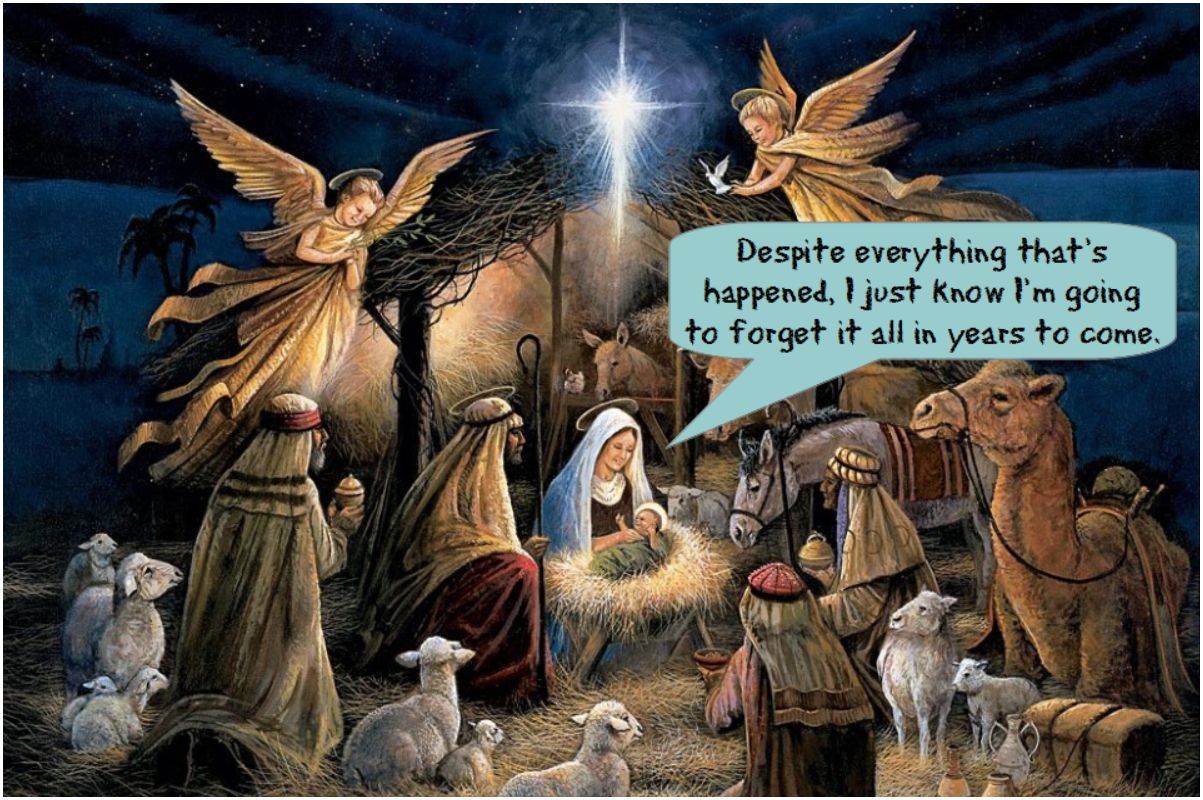
At the other end of the story, Matthew and Luke invented largely incompatible birth stories for their hero. For Matthew, Jesus was the Messiah from the time he was born, fulfilling all the prophecies Matthew borrowed to create his nativity story (he doesn’t: the Messiah, according to the very ‘prophecies’ Matthew manipulates is not divine but a human warrior).

Luke, on the other hand, is determined to push Jesus’ divinity even back further. For Luke, Jesus became divine when God magically made Mary pregnant; Luke’s Jesus is quite literally God’s son (Luke 1.35). Unfortunately, Mary forgot all about being impregnated by the Holy Semen Spirit later on in Luke’s ridiculous story. Nevertheless, Jesus’ status had evolved again; he’d become God’s son from the very moment of conception.

Even this was not good enough for the next version of the Jesus’ story. The writers of the fourth gospel decide to make him eternal and part of God himself. Plundering Greek philosophy and Paul’s ruminations from Philippians, they declare Jesus the ‘Logos’; the Word or aspect of God responsible for the creation of everything (John 1:1-5). And despite this being as far from an itinerant peasant preacher as it’s possible to be, even more gullible folk came to believe it.

Jesus’ evolution was still not complete, however. The council of Nicaea in 325 decided that Jesus was ‘begotten not made’ (whatever that means) – but couldn’t quite decide whether being the Logos and the Son of God actually made Jesus God Incarnate. It wasn’t until the Council of Constantinople in 381 that a collection of bishops decided Jesus was, after all, officially part of the Godhead. The apocalyptic preacher from the backwoods finally became God the Son, a mere 350 years after he lived (if indeed he did).

Jesus has continued to evolve ever since, becoming all things to all people; a God pliable enough to be whatever his followers want him to be: Roman Catholic, Greek Orthodox, Russian Orthodox, Evangelical, Mormon, fringe cult. He’s evolved into a schizophrenic deity capable of being both meek and mild and bellicose; best buddy and chief executioner; Christian Nationalist, socialist and capitalist, gay and anti-gay, pro-family and anti-family; anti-abortion and pro-gun; environmentalist and iconoclast; the one who promotes a prosperity gospel and the ‘One True God’ known (only) to a select few. Every contradictory manifestation is supported by the Bible, the Church or tradition. Every one is non-existent and ultimately pointless.

That’s some evolution.

Only The One Book

Some years ago I visited friends where another of their guests told me he had been reading a remarkable book. It was he said, about Atlantis and demonstrated beyond any doubt that the ancient city had really existed and had sunk beneath the ocean where it still waited to be found. I asked him how he knew this (a polite way of asking what his evidence was.) He looked at me incredulously. ‘Because the book says so,’ he explained.

It’s the same with all the claims made about Jesus: that he was the Saviour, the Messiah and the Son of God. All such claims are found only in one book written by people who already believed such things about him.

Outside of this book there’s nothing: no Roman records of his death and subsequent resurrection; no reports of post-resurrection visits by witnesses who weren’t already invested; no contemporary, independent accounts of his remarkable miracles; nothing from historians of the day about his return from the dead and subsequent ascent into the sky; no mention of him at all in any documentation for the first 80+ years of Christianity outside of this one book. The Son of God appears on Earth and nobody but a handful of superstitious zealots notice.

Not very convincing, is it? 

Is Jesus the Saviour, the Messiah and the Son of God?

Is Jesus the Saviour, the Messiah, and the Son of God?

No, no and no.

We know he’s not the Saviour because he hasn’t saved anyone. Every single person who has believed in him over the last 2,000 years has died and stayed dead. He hasn’t resurrected a single one of them and hasn’t ushered anyone into the heavenly mansion he (supposedly) said he was preparing for his Elect. Neither has he saved them from the trials of this life: illness, pain or suffering. His followers are no more saved from these than the rest of us.

Of course, Christians claim that what he saves people from is ‘sin’. But sin is an empty and peculiarly religious concept signifying the separation of ‘man’ from God. If there’s no God to be separated from there can be no sin. If, however, we’re talking about morals – ‘sinning’ – then it’s evident that believers are no more or less moral than anyone else. Jesus, it turns out, doesn’t save anyone from their own bad behaviour.

He’s not the Messiah (I’m resisting the temptation to add the Monty Python completion of that sentence) which is why most Jews do not believe in him. He doesn’t demonstrate any of the characteristics of the Messiah prophesied in Jewish scripture. He didn’t overturn the oppression his people endured under Roman rule and he hasn’t been there for the Jewish people in all their subsequent suffering. He certainly didn’t rescue them from the Holocaust. Only by redefining what is meant by ‘Messiah’, as early Christians did when they made the term synonymous with ‘saviour’, could Jesus even be considered a contender. In reality, he is an utter failure as a Messiah.

He’s not the Son of God. Even in the synoptic gospels he doesn’t claim to be; he’s cagey whenever the subject arises. It’s as if his early followers couldn’t make up their minds about how divine he actually was. Later Christians were more emphatic, claiming that the resurrection demonstrated Jesus’ divinity. Paul, however, doesn’t think so, saying only that Jesus’ return from the dead elevated him to a favoured position in God’s hierarchy (Philippians 2:9). Even this is going too far when the evidence of Jesus’ physical resurrection is so poor; the gospel stories do not  qualify him for Sonship. Nor do his failed promises and prophecies; if he were the Son of God, he’d have known the appearance of Son of Man (he himself?), the last judgement, the Kingdom of God on Earth, the inversion of the social order and the meek inheriting the Earth would not happen when he said they would. Or indeed at all. He was ignorant about so much! What sort of Son of God was he, to get so much so wrong?

In fact, we can be certain Jesus was no more the Son of God than Alexander the Great was Son of Ammon-Zeus or Augustus the ‘Son of the Most Divine’. How? Because like Ammon-Zeus and ‘the Most Divine’, the likelihood YHWH exists is ridiculously low; so low it’s reasonable to conclude he doesn’t. And no God = no Son of God.

To be continued.

Goodbye, Jesus

The Jesus narrative is a made-up story, originally created by a member of one of the many branches of a first century cult centred on a supernatural being experienced in visions. We call this cult member ‘Mark’. His ‘gospel’ was not written to convert anyone – I doubt any of them were – it was written as a ‘what if?’ story for fellow cult members: ‘what if our celestial saviour had lived on Earth?’ It is made up of St Paul’s teaching, Old Testament mythology, and ideas taken from pagan dying-god myths (probably in that order). It amalgamates the cult’s rules with what cultists believed about the end of the age: that their celestial saviour would very soon be coming down to Earth to save them and annihilate their enemies.

Ten or fifteen years later, another writer took Mark’s fiction and rewrote much of it for his branch of the cult. This was a group who saw themselves as still firmly within Judaism, so ‘Matthew’ toned down Paul’s teaching, eliminating a good deal of it. He heightened Jewish teaching for his co-religionists, and created a Jesus who was a manifestation of prophecy, as he saw it, from the Jewish scriptures. This construct had no time for any magic salvation-formula; like the cult who created him, he taught obedience to Jewish Law and believed that serving others was the way to eternal life.

A few years on and a third sect found Mark and Matthew’s stories weren’t entirely to their liking. They didn’t quite get Jesus right. So they took them and altered them again. Their scribe, known now as Luke, created a third Jesus. It’s possible this sect didn’t realise the original story was fiction. There’s some evidence Luke thought Jesus had really existed, 50 years or so before he remodelled him.

Later still, the creators (plural) of a fourth gospel created a Christ totally unlike the other three. This branch of the cult had ceased to believe, perhaps because it hadn’t happened when earlier believers said it would, that the saviour would be coming through the clouds at any minute to set up God’s kingdom on Earth. That part of the original idea was dropped; this Jesus is made to preach an internalised salvation, and everlasting life in heaven is beginning to be hinted at.

And that’s it. The adventures of Jesus on Earth began as a ‘what if?’ story created for existing cult members. Other branches of the cult took it and reshaped its central character so that he suited their needs and beliefs. A real Jesus was not necessary for any of this to happen. Just as it was for Paul, whether one existed or not is immaterial,. Even if he did, we can know nothing about him. The Jesuses created by each sect is a product of what they imagined their saviour to be, just like the various Christs that are worshipped today.

So, I’m saying a final goodbye to Jesus – or rather to all the Jesuses, Christs and made-up Messiahs spawned by the visions, fantasies and fan-fiction of the first century. I don’t need them, and neither do you.

This blog will be taking a new direction in the new year. Next time, though, I hope you’ll read one of my Christmas stories, as featured on the BBC.

Stay safe. 

In which the Messiah loses his mind and his mother loses her memory

BlogXmas

So there it is; all the evidence you need that the nativity stories are pure invention, right there in the bible itself.

In Mark 3:20-21, Jesus’ family witness him spouting platitudes and setting himself up as a leader of his people. They think, not without reason, that he’s lost his mind.

When his family heard about this, they went to take charge of him, for they said, “He is out of his mind.”

As Bob Seidensticker says in a recent post, this could be because the writer of Mark’s gospel wanted to denigrate Jesus’ dumb old family in favour of Paul’s brand of Christianity. 

Luke 2:19, however, tells us that, back when she was still passing herself off as a virgin, Mary ‘treasured in her heart’ all the amazing things that happened at the time of her son’s birth.

Shouldn’t, then, Mark’s ‘out of his mind’ story be followed by something like this?:

And lo, when his brethren did decry Jesus, saying was out of his mind, Mary his mother did jump up and sayeth out loud, ”leave off, you bullies. I know from the way the Almighty impregnated me, from what Gabriel said and the miraculous things that on went on at his birth – wise men, armies of angels and magic stars – that my boy is the Messiah, the Son of God, maybe even God himself.”

And his brethren were amazed at this, because they’d never heard any of it, on account of those fanciful nativity stories not being invented for another fifty years.

I wonder why it isn’t?

A very happy Christmas to both my readers.


Get your false Messiahs here…

blog351b

There was this guy who said he was the Son of God and the Messiah of his people. God appeared to him in a vision that enveloped him and changed him completely. Afterwards he discovered he had a knowledge of scripture that he previously hadn’t possessed and a invigorated sense of mission: God had appointed him to redeem his people. He changed his name and began to teach his people with power and a knowledge that all of them testified they had never experienced before. He brought them close to God and showed them how the world was coming to an end and how God would soon establish his Kingdom on Earth. He prophesied too, however, that he himself would die at the hands of the authorities, but that his followers should have no fear, because God would not forsake them: they would be part of the coming Kingdom.

And so it came to pass. At the age of 33, the Messiah died at the hands of the state.

And the name of this guy? Jesus, maybe? Well, it could be, but it wasn’t. Saul/Paul perhaps? Again, possibly… but no.

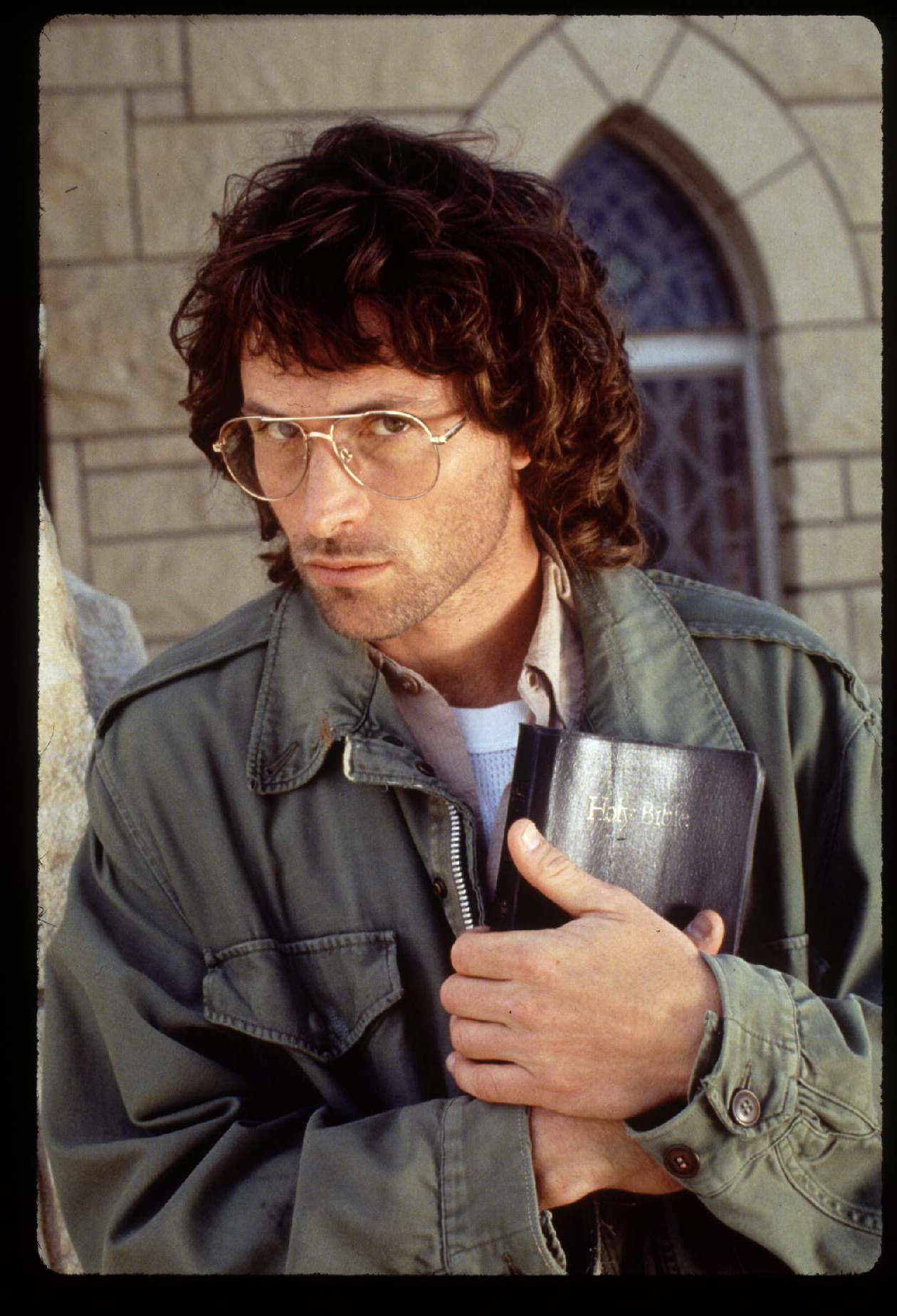
This guy’s name was David Koresh (real name Vernon Howell), leader of a Christian sect called the Branch Davidians. You may remember him from such massacres as the 1993 siege at Waco, where his church was based. He made all the claims above, just like Jesus and, to a lesser extent, Paul before him. None of his followers, it’s true, claimed to see him after his death, but some of those who survived the siege believe still that he will be resurrected and will return to lead them personally into the Kingdom of God.

I was watching a programme about him recently, a Storyville documentary originally broadcast in the States last year, which showed how easily we create our Messiahs and Saviours. The recipe, it turns out, is easy:

Take one charismatic individual who thinks he’s speaking for God;

Mix in an obsession with scripture;

Add some absurd self-promotion, and

Bake for a few years in the over-heated adulation of some desperate sycophants.

So – Jesus, Paul, Koresh. What’s the difference?

blog 351

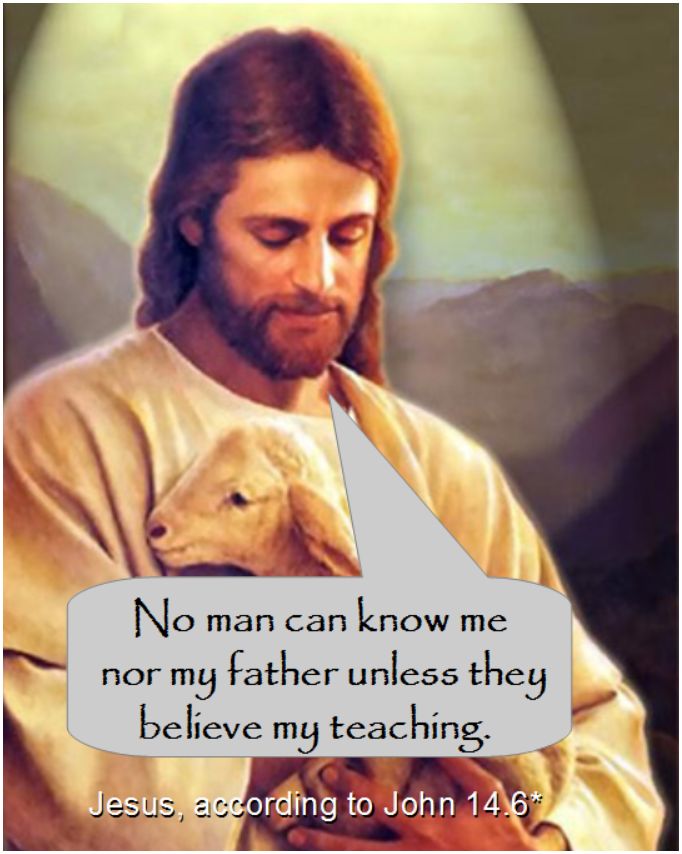
*Actually, the quote in the picture up top is not Jesus at all; its Koresh, from an interview with the FBI (see first link above.) John 14.6 says ‘No-one comes to the Father except by me,’ which is much the same.