New Bodies For Old

Paul taught that believers in the Lord Jesus would, once the Christ returned, be resurrected in a ‘spiritual body’. Those who remained alive at this time, as Paul anticipated he himself would be, were also to be ‘re-clothed’ in a new body (2 Corinthians 5.3) in preparation for life in the Kingdom.

He also seems to have believed that Jesus himself was resurrected in a ‘spiritual body’. This is presumably what Paul thinks he saw when Christ revealed himself to him in his head. Christians since have argued that when Jesus rose from the dead, it was in the same body in which he was crucified. Indeed, John’s gospel goes so far as to show his resurrected body still carried the wounds he suffered during his execution (John 20.26-29).

So what does this spiritual body, the one Paul promises all believers will receive, which is somehow physical yet not – the risen Jesus can pass ghost-like through locked doors (John 20.19) and levitate into the sky (Acts 1.8-11) – look like? What is its nature? Is it ephemeral so that it can vanish at will (Luke 24.31) and change its appearance (Luke 24.16), or is it like the bodies we have now, only better? Is it made of meat and gristle? Does it breath, eat, sweat, need to sleep, poop and pee? If not, then in what way is it a body? Will the new body retain its lungs, sweat glands, digestive system and genitals? Can it be considered a proper body if it doesn’t? If it’s to be an upgraded version of our existing bodies, minus all those pesky instincts, demands and messy bits, then how does it work? Does it only vaguely resemble the body we have now, like an Avatar in the famous film? Is it intangible, like the risen Christ’s (as implied in John 20.17)? Can it morph into unrecognisable forms (John 20.14)? Will it be able to pass through physical objects like Jesus’ ghostly form could ?

Alas, we shall never know. When Paul was making pronouncements about ‘spiritual bodies’ he hadn’t a clue what he was talking about. Writing to the cultists in Corinth, he anticipates that someone might want to know what ‘spiritual bodies’ are like. Here’s his profound answer:

But someone will ask, “How are the dead raised? With what kind of body do they come?” You foolish person! (1 Corinthians 15.35)

Yup, he had no idea what he was talking about so he resorts to ad hominem abuse instead. He then twitters on about how the physical body has to die, like a seed, before the new super-duper spiritual body can manifest itself. Except a seed doesn’t die in order to produce a plant. It may be buried but it doesn’t die. His analogy, which, you’ll note, doesn’t actually answer the question, fails miserably:

What you sow does not come to life unless it dies. And what you sow is not the body that is to be, but a bare kernel, perhaps of wheat or of some other grain…. So is it with the resurrection of the dead. What is sown is perishable; what is raised is imperishable. It is sown in dishonour; it is raised in glory. It is sown in weakness; it is raised in power. It is sown a natural body; it is raised a spiritual body. If there is a natural body, there is also a spiritual body. (1 Corinthians 15.36-37, 42-44)

His final flourish – if there is physical body then there has to be spiritual one – is, to use a technical term, absolute crap. He is making this stuff up and passing it off as a message from the Lord. Then as now, there were those who were taken in by him.

No-one has ever received a new body after their death; when this, our only body dies, we die. Our consciousness does not survive; it is a manifestation of our bodies, specifically of the brain, part of the meat and gristle that make up our bodies. It doesn’t hang around waiting for Jesus or God or some other non-existent being to transplant it in an imaginary super body.

No-one has ever received a new ‘spiritual body’, and no-one ever will. Of the 100.8 billion people who have died in the history of mankind, not one has gone on to live again in a new ‘spiritual body’. Not one has gone on to live again, period. If you think they have, you are free to present your evidence here. (Jesus, I should point out, doesn’t count: he wasn’t, according to Christian myth-making, entirely mortal. Plus his resurrection appearances are fiction.)

Paul is lying. There is no such thing as a ‘spiritual body’, no such thing as resurrection. You won’t be experiencing either. You are allowing yourself to be duped if you think you will.


The Ten Rules of Cult Club

Blog417

Which cult?        

        Any.

            All of them.

Let’s call this one The Brotherhood of the Lord.

Rule 1. Give your heart and soul to the Brotherhood.

Rule 2. Separate yourself from you family. They’ll just be a drag on you. They won’t understand you’ve found the Truth.

Rule 3. Treat other Brothers and Sisters as your family instead. Put them first.

Rule 4. Be prepared to die for your Brotherhood family. It’s not too much to ask.

Rule 5. Renounce your ego! You can’t enter fully into Truth until you let go of self.

Rule 6. Don’t criticise your brothers and sisters, specially not the leadership. The leaders know better than you; you are mere sheep and little children.

Rule 7. Sell everything you own; you won’t need it now. Give what you make to the poorest members of the group.

Rule 8. Listen to your leaders. They will tell you secrets about life that no-one outside the Brotherhood can possibly understand.

Rule 9. Don’t stop believing: if you’re obedient to the cult, your sins will be forgiven and you will live forever.

Rule 10. Be prepared: God is coming real soon to rescue you from this wicked world and elevate you to a place of glory

Or, as Jesus put it:

Rule 1. Any one of you who does not renounce all that he has cannot be my disciple (Luke 14.33). No one who puts his hand to the plough and looks back is fit for the kingdom of God. (Luke 9.62).

Rule 2. If anyone comes to me and does not hate his own father and mother and wife and children and brothers and sisters, yes, and even his own life, he cannot be my disciple (Luke 14.26).

Rule 3. Who is my mother and who are my brothers?” And stretching out his hand toward his disciples, he said, “Behold my mother and my brothers! For whoever does the will of my Father who is in heaven, he is my brother and sister and mother.” (Matthew 12.48-50).

Rule 4. Greater love hath no man than this, that a man lay down his life for his friends (John 15.13).

Rule 5. If anyone wants to come after me, let him deny himself, and take up his cross, and follow me. For whoever wants to save his life will lose it. But whoever loses his life for my sake will find it. (Luke 9.23).

Rule 6. Judge not, and you shall not be judged. Condemn not, and you shall not be condemned. Forgive, and you will be forgiven (Luke 6.37). Anyone who is angry with his brother without a cause will be subject to punishment. And whoever says to his brother ‘Raka!’ will be subject to the Council. And whoever says, ‘You fool!’ will be subject to hell fire (Matthew 5.22). Unless you change and become like children, you will never enter the kingdom of heaven (Matthew 18.3).

Rule 7. Go, sell everything you have and give to the poor, and you will have treasure in heaven. Then come, follow me (Mark 10.21).

Rule 8. This is why I speak to the crowds in parables: although they see, they don’t really see; and although they hear, they don’t really hear or understand (Matthew 13.13)

Rule 9. My sheep hear my voice, and I know them, and they follow me: and I give them eternal life; and they shall never perish (John 10.27-28)

Rule 10. Whoever exalts himself will be humbled, and whoever humbles himself will be exalted (Matthew 23.12). I am the resurrection and the life. He who believes in Me, though he may die, he shall live. And whoever lives and believes in Me shall never die. (John 11.25-26).

Two questions:

1. How many Christians today do all the things demanded by Jesus?

2. Who decided he said these things? Did Jesus say them – or was it the cult that arose in his name who put them retrospectively in his mouth?

Next time…

The many and varied, Spirit-inspired interpretations of the Kingdom of God

Blog406Heaven

For the Son of Man is going to come with his angels in the glory of his Father, and then he will repay each person according to what he has done. Truly, I say to you, there are some standing here who will not taste death until they see the Son of Man coming in his kingdom” (Matthew 16.27–28).

Truly I say to you, this generation will not pass away until all these things take place. (Matthew 24.34)

See also Matthew 24.27, 30-31; Luke 21:27-28, 33-34; 1 Corinthians 15.51-52; 1 Thessalonians 4.15-17; 1 John 2:17-181; Peter 4.7

The Kingdom of God. What does it look like? When will it happen? Has it happened? You’d think that with the Kingdom of God being a central part of Jesus’ teaching, the central part, in fact – his ‘good news’ is about nothing else – that these would be questions Christians would find easy to answer.

They don’t. The Holy Spirit inspires a variety of incompatible responses from the faithful to the what, when and where questions. The most popular is, of course, that the Kingdom of God equates with Heaven: the saved are all going to heaven when they die. Post-mortem bliss, most Christians would tell you, is what Jesus meant by the Kingdom of God. After all, doesn’t Matthew refer to the Kingdom as the Kingdom of Heaven? Yes… but no: an after-life in Heaven is not what Jesus and his scriptwriters meant by the Kingdom. If it was, they would have said so, rather than promising, as they do, that God’s Kingdom was coming to the Earth real soon.*

So, when Jesus says the kingdom is just around the corner, which he does repeatedly in the synoptic gospels, he can’t have meant Heaven. Let’s try another favourite: Jesus meant that God’s Kingdom on Earth would manifest itself thousands of years in the future – in our time, no less. It’s all to do, you see, with Jesus’ return and the final judgement. As these have yet to happen then the final part of God’s plan – his reclaiming of his creation – will be in the (far) future too. A neat solution to be sure, but one that runs counter to everything in the gospels and in Paul. Admittedly it’s an idea that was taking shape in 2 Peter (3.8), a forgery written about 150CE, long after it had become apparent the Kingdom was running way behind schedule. However, you won’t find it in the synoptic gospels or the Pauline epistles because it isn’t what Jesus, Paul, the gospel writers or the earliest Chrsitians believed.

Where does this leave Jesus’ devotees today? With a Jesus who didn’t really mean the Kingdom would be manifesting itself in the physical world. This Jesus proclaims the Kingdom as something that exists inside his followers as an internal state of being. It’s true some of his pronouncements appear to fit this interpretation; the Kingdom is within you and all that, but what these statements are about in context is the Kingdom’s immanence at the time; what Jesus was saying was, ‘the Kingdom is arriving now; look at the signs – it’s all around you.’ A gnostic flavoured restructuring of what he actually claimed is yet another Spirit-led interpretation we can dispense with.

Consequently, some Christians accept that, yes, Jesus preached a Kingdom that would dramatically materialise in the real world close to the time he was speaking. That it didn’t in any observable way creates a dilemma: as God Incarnate, perfect and infallible, Jesus can’t have been wrong. This must mean the Kingdom did arrive when he said it would and we are living in it now. The Kingdom, these Covenantists say, is another term for the Christian era; the reign of the church, the Age of the Holy Spirit. We’re living in the Kingdom and have been for two thousand years!

How’s that working out?

Blog406Riot

Blog406Pollution

Blog406Bury

Blog406Starve

Yes, this looks exactly like the Kingdom of God Jesus promised: An eternity of peace with death and illness banished and the meek having inherited the earth; the social order reversed, God in charge and Jesus and his pals running the show. Or not.

So, however the faithful (re)interpret his words, however much they twist, cherry-pick or just plain ignore them, Jesus was wrong. The Kingdom of God did not arrive on the earth in the first century as he predicted. It’s definitely not here now. It won’t be coming in the future and it doesn’t await in an after-life; these were never the deal. (See my earlier series, Making Excuses for Jesus, for more detail.)

Whatever Christians do, wherever their imaginary Holy Spirit leads them, they end up with implausible and incompatible ways of explaining (away) the non-arrival of the Kingdom of God that Jesus promised. It’s a fallacy, a fantasy, another delusion sustained by the wilfully ignorant.

*John 18.36 does have Jesus say that ‘his’ Kingdom, as it’s become by the time of the fourth gospel, is not of this world. John, however, bears little relation to the other gospels and was written at least 70 years after Jesus lived. In any case, it doesn’t say or mean that common-or-garden believers are going to Heaven when they die.

Another name for confirmation bias

Blog405

Most Christians admit to a belief in the Holy Spirit. The majority also subscribe to the notion that this manifestation of God (or Jesus?) guides them in their spiritual journey, supernaturally from within. The Holy Spirit, the Bible says, lives inside believers (1 Corinthians 3.16); an aspect of God designed to fit the human body.

You’d think then, that with part God embedded in their psyche or wherever it (or ‘he’, according to most believers) has taken up residence, that all Christians would think alike; would have the same priorities; would subscribe to the same doctrines; moreso when that other embodiment of God, Jesus himself, supposedly prayed for such a unity (John 17. 20-23).

Evidently they don’t achieve any of this. There are, depending on which authority you consult, in the region of 34,000 Christian denominations, sects and groups, all of which see themselves as possessors of God’s sacred truths. Most regard that it is they alone who possess this truth in its purest form. There wouldn’t be separate denominations otherwise.

And from where do they derive their own peculiar revelation of the Truth? Ultimately, most would say, from the Holy Spirit. It is he who guides them in all truth, as John’s Jesus promised (John 16.13), showing them how to read the bible and interpret it aright (1 Corinthians 2.6-16) and allowing them to discern truth (1 John 4) in what they hear from God’s chosen instruments on earth: pastors, ministers, prophets, evangelists, popes.

And the Truth they arrive at is different from the Truth arrived at by that other sect or wayward denomination elsewhere.Quote4

The Holy Spirit leads different Christians to contradictory doctrines on the essentials of the faith: about how an individual is ‘saved’ for example; whether it’s legitimate to talk of being ‘saved’ at all; predestination; free will; the place of baptism in salvation (essential or not?); Heaven and Hell; the nature of faith itself; the role of ‘works’; God’s plan for individual lives; evangelism; the ‘infallibility’ of the bible; how best to worship God; the nature of God; the existence of other supernatural beings; the role of women in the church. If they can’t agree on these – and they don’t – then what the f**k is the Holy Spirit playing at?

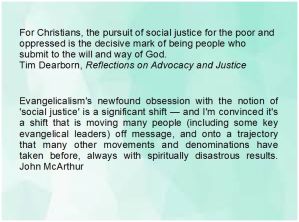
Then there are the issues they claim are of concQuotes2ern to God, though of course they don’t all agree on what these might be: social justice, morality, sex, same-sex relationships, equality, feminism, science, evolution, Hollywood, making America great again, guns, Trump, right-wing politics, liberalism, Covid-19 (many of which, we might note in passing, the bible has absolutely no interest in.) And what do we find?Quote5Quotes1First, the Holy Spirit provides diametrically opposed ‘truths’ to individual Christians, as the quotations within this post illustrate. Second, that same Spirit affirms the views, prejudices and biases of each Christian he speaks to. God’s thoughts are, miraculously, the same as those seeking them out. 

Of course, there is no Holy Spirit. There’s no Holy Spirit because there’s no God. What those who speak for him are doing is voicing the frequently ill-informed and evidence-free suppositions of their particular branch of the cult. Claiming these are endorsed by God is at best a delusion, at worst, sheer deceit.

The Holy Spirit, then: just another name for confirmation bias.


Jesus: Speak not clearly did he

Blog345JC

Why did Jesus not speak clearly? If he came from God, or was God in some way, why didn’t he express himself directly and with precision? Why did he obscure what he had to say with hyperbole, riddles and demands that even he couldn’t meet?

Don Camp, light-weight apologist and C. S. Lewis aficionado, has been giving me a little lecture over in the comments section of Debunking Christianity. He’s been providing the basics in how some of Jesus’ remarks in the gospels are hyperbolic and are therefore not to be taken literally. I am, of course, already aware of Jesus’ tendency to exaggerate (how far does this qualify as false witness, I wonder?) but Don and I were specifically discussing Matthew 5.29-30 where Jesus advises those who lust after a woman to pluck out their right eye and cut off their hand. Don asserted that obviously this is an exaggeration, to be understood figuratively, not literally. I asked him how one distinguishes between the two.

Don responded by saying one should look for clues in the scriptures (the bible as Murder, She Wrote); clues that might reveal how early Christians responded to Jesus’ assertions. If they ignored what Jesus said (while most did disregard his more extreme commands, such as the self-mutilation statements, there is evidence that some did indeed take him literally), then we can safely do the same. If, on the other hand (no pun intended) they acted on what he said, then it’s fair to assume it’s okay for today’s Christians to do the same. Sounds simple right? But it still doesn’t help anyone decide what is hyperbole and what is meant literally.

For example, Christians largely ignore Jesus’ commands to go the extra mile, give the shirts of their back to those who ask for them, turn the other cheek, love their enemies, disavow wealth, sell all they have, give no concern for the future and do all they can for the homeless, sick, naked and displaced. There isn’t a lot of evidence that even early followers did these things. Does their disregard for these commands mean that Jesus must have meant them figuratively? That there is spiritual truth to be discerned from them but that no practical action is expected or required?

Where do Jesus’ apparent assurances that his followers would heal the sick, raise the dead (Matthew 10.8) and do ‘works’ even greater than his (John 14.12) fit? Are these hyperbole or are they intended to be taken literally? Given early Christians serve as Don’s yard-stick for what is hyperbole and what is literal, what did they think? We don’t actually know, though evidently some considered the promises significant enough to include in the gospels. Among today’s believers, there are those – and not just on the fringe – who accept them as literal, while others scoff at the idea of taking them at face value.

What about Jesus’ promises that God’s Kingdom was imminent and that he would rise from the dead? Aren’t these just hyperbole too? Don says no, because people at the time didn’t ignore them (as they did his ‘obvious’ hyperbole) but believed they would happen. Therefore, they must have been meant literally. Unfortunately, Don fails to take into account that the promises of a resurrection were applied retrospectively; Jesus didn’t actually predict his own return from the dead (for reasons discussed here.) The Kingdom of God, meanwhile, failed to materialise when Jesus said it would. The extent to which early Christians believed these promises hardly demonstrates their literal truth. In any case, is ultimate truth to be determined by how ordinary, largely uneducated, superstitious back-water folks responded to what they heard or read? What a spurious and unreliable way to decide.

Which brings me back to my original question. Couldn’t Jesus have been a lot clearer about what he meant? Instead, he dressed up a lot of what he said in what might, or might not be, hyperbole. He issued other ‘truths’ in parables that he didn’t intend the hoi-polloi to understand (Mark 4.12). He offered advice that is of no practical use, some of it positively detrimental. He was neither systematic nor consistent and contradicted himself. So much of what he said is open to interpretation, to the extent that there are now thousands of Christian churches, cults and sects, all at odds with one another because they disagree about what he meant.

The New Testament as a whole too is a muddle of conflicting ideas and advice… though that’s a discussion for another time.

Jesus’ dates with destiny

Blog338Cross

I hope you’ll allow me a little speculation…

Here are the few days leading up to Jesus supposed resurrection as related by the synoptic gospels:

Nisan 15: Wednesday sunset to Thursday sunset. The Day of Preparation when thousands of Paschal lambs are slaughtered ready for the following day’s (i.e. Thursday evening’s) Passover. Jesus instructs his disciples on the arrangements he has made for the feast.

Nisan 16: a. Thursday evening: Jesus celebrates Passover.

b. Thursday evening and night: Jesus is arrested and tried.

c. Friday 9.00: Jesus is put to the cross

d. Friday 15.00: Jesus dies.

Nisan 17: a. Friday ‘evening’: The start of the Sabbath: Jesus is buried by Joseph of Arimathea.

b. Friday evening to Saturday sunset: Jesus body lies in the sealed tomb.

Nisan 18: Saturday sunset to ‘early’ Sunday: The body remains in the tomb overnight(?) but by early next morning is missing.

John’s timeline, however, is markedly different. He says that Jesus is arrested on the Day of Preparation for Passover – that’s Nisan 15 according to the synoptics, which started at sunset on Wednesday (John 13.1; 19.14.) In John, therefore, Jesus does not eat a Passover meal with his disciples. He shares an ordinary supper with them on the Wednesday evening, when he washes their feet. Judas slips out to inform on him just as he does in the synoptic gospels, a day later (Mark 14.16-17; Matthew 26.19-20; Luke 22.33-45.) John significantly alters the timing of events though he retains Judas leaving, though from a different meal. In the fourth gospel, Jesus is arrested on the Wednesday evening, the start of Nisan 15. John mentions in 18.28 that the temple officials involved in the arrest have yet to eat their Passover meal; it still awaits on Thursday evening.

In John, Jesus is tried during the night of Nisan 15, or the early hours of Thursday. Eventually, at around noon on the Thursday he is nailed to the cross and dies rapidly (John 19.14, 31, 42). By the time everyone else is eating the Passover meal later that day – a meal Jesus is present for in the synoptic gospels – John’s Jesus is well and truly dead. He is placed in Joseph of Arimathea’s tomb at some point Thursday evening, either the end of Nisan 15 or the start of Nisan 16. He remains there during Friday and Saturday (the Sabbath) but by Sunday morning his body, according to the story, is missing.

It has been argued – given we don’t know the year Jesus was crucified – that John has his Passover falling on the Saturday, the Sabbath (John 19.31), as happened on occasion, and that therefore John’s ‘Day of Passover Preparation’ was not the Thursday – as it is in the synoptics – but the Friday. According to this line of reasoning, Jesus’ arrest in John was also on Thursday evening, at the start of Nisan 16 and his crucifixion was on Friday, as in the synoptic gospels. But the Day of Passover Preparation cannot be freely moved around to accommodate both versions of events; either it was on the Thursday (Nisan 15) as the synoptics record, or it was on the Friday (Nisan 16) as those who seek to locate John’s crucifixion on Friday argue. Either John is wrong about when the Day of Passover Preparation fell or his Jesus was crucified a day earlier than in the synoptics on their Day of Preparation, Nisan 15.

There is further circumstantial evidence for John’s crucifixion being on the Thursday. While the synoptics have the chief priests, scribes and elders witnessing the crucifixion for themselves, John doesn’t mention their presence. In his Thursday scenario, they are too busy preparing for that evening’s Passover, overseeing the ritual slaughter of thousand of animals, to attend the crucifixion. Similarly, the various activities after Jesus dies – the buying of linen and spices, the removal of the body from the cross, the preparation for burial, sundry visits to Pilate and the posting of guards (though John does not report the latter.) – do not entail any infringement of the Sabbath regulations.

Moreover, John has Jesus in the tomb for three days and nights, more or less; the supposed resurrection does indeed occur ‘after three days’ as Jesus is made to predict numerous times (19 in total.)

Nisan 16: Jesus is buried at the start of Nisan 16 (our Thursday evening),

Nisan 17: Jesus remains in the tomb throughout Nisan 17; 6pm Friday to 6pm Saturday.

Nisan 18: 6pm Saturday to the early hours of our Sunday. He remains in the tomb until some indeterminate point, either before dawn (according to John) or just after (the synoptics.)

As well as a resurrection ‘on the third day’, John’s version of events provides an added bonus. By having his crucifixion on the Day of Passover Preparation, John  is able to draw an analogy between the slaughter of the sacrificial lambs and his ‘Lamb of God’ who, in his death, replaces them as an atonement offering.

I don’t know; maybe I’ve got this all wrong. There’s a problem, I concede, with John 19.30 which implies Jesus is on the cross on Friday (though by John 19.42, when Jesus is buried, it looks like the narrative has reverted to the day before the Sabbath; Friday day time.)

The effort to harmonise the two different timelines, that of the synoptics and that of John, involves having two different Days of Passover Preparation (Thursday and Friday) and indeed, two Passovers (Friday and Saturday). Does this seem likely to you? Two lots of lambs to be slaughtered and two celebrations on two consecutive days – I mean, these people weren’t made of money! Isn’t it far more likely there was one Day of Preparation and one Passover? If so, who is right about when they fell? John or the synoptic writers? They both can’t be. Whether apologists like it or not, isn’t it more likely that the fourth gospel has Jesus crucified on the same Day of Preparation that the synoptics mention (the Thursday), while in the synoptics – all based, let’s remember, on Mark’s account – he dies on the Friday after the Passover meal as they relate? It makes more sense of the conflicting timelines than attempting to mash them both together when they won’t. One or other, John or the synoptics, got it wrong about the day Jesus died; perhaps both did.

One thing’s for sure, what follows is pure unadulterated myth.

On what day did Jesus die?

Blog338Passover

I’ve been ‘discussing’ with a commenter on Gary Matson’s Escaping Christian Fundamentalism blog the incongruities between the synoptic gospels and John’s gospel in their accounts of the crucifixion. Specifically, the day on which it took place. While tradition has it on a Friday, it has long been debated whether this is the case; see Michael J. Alter’s The Resurrection: A Critical Enquiry for an excellent overview.

Scholarly consensus is, it has to be said, that Jesus did indeed die on a Friday. However, as discussed last time, one of the many problems surrounding the date of the crucifixion is that we don’t know the year in which it happened. We don’t therefore know the precise time of the Passover that the gospels say occurred around the time of the crucifixion. If we presume that it was during the month of Nisan in AD 33 (again, refer to Alter), then the monthly Passover was on the Thursday. The problem is, we do not know if Jesus died in AD33, or even in the month of Nisan. If the end of his life was in some other year or month (and there are good reasons for thinking it may have been), then the Passover would, in all probability, have fallen on a different day.

A Friday crucifixion creates significant problems. The first is that the synoptic gospels tell us that Jesus’ body was placed in the tomb ‘in the evening’. The evening of Friday (our time) is, and was, the start of the Sabbath, which would have prohibited any activity, including those the synoptic gospels tell us took place during the evening that followed Jesus’ death. These include Mary Magdalene, who apparently could find a shop open on the Sabbath, buying and preparing spices to anoint Jesus’ corpse and Joseph of Arimathea purchasing linen in which to wrap it. It also involves Joseph visiting Pilate to persuade him to release the body and then taking it down from the cross himself. All of these activities qualified as work and were strictly forbidden.

How to get round the problem? The apologist on Escaping Chrsitian Fundamentalism  has been making the case that ‘evening’ in first century Palestine was between 3pm, when Jesus died, and 6pm or thereabouts, when the sun set and the Sabbath began. There is some evidence this period was indeed known as ‘early’ evening. However, the word used for ‘evening’ in the gospels – ὀψίας – always signifies ‘late’ evening (Alter, p98). My apologist, however, argues that people in first century Palestine went to bed early, once the light began to fade (even though the gospels themselves suggest otherwise), so when the gospel writers refer to ‘the evening’ they must actually be referring to ‘late afternoon’.

The second, and to my mind more significant, problem is that a Friday burial, even if before the Sabbath began, means that Jesus was in the tomb for, at most, thirty-six hours; Friday evening to (before) dawn on Sunday when Mary Magdalene and the other women visited the tomb and decided he had risen. Thirty-six hours is only half of the ‘three days and three nights’ Jesus is made to predict he would be buried (Matthew 12.40). The writers of the gospels must surely have known this, and yet they all choose to maintain Jesus’ prediction in one form or another. Perhaps it was too well known to exclude. Or perhaps Jesus wasn’t executed and buried on a Friday.

I have been arguing with my apologist that John’s gospel addresses these two problems by locating the crucifixion a day earlier, on the Thursday, and also by having Jesus die long before 3pm. While the synoptics all say (copying from Mark) that he was put on the cross at 9am and died six hours later, John suggests that the crucifixion took place at around noon and that Jesus died quickly. John’s alternative scenario gives those involved in the burial time to prepare for it (a problem in the synotics) and allows the interment to take place in the evening proper, late Thursday evening not being part of the Sabbath. It also grants a period much closer to the prophesied three days and nights for Jesus to remain in the tomb.

Most scholars, however, agree that all four gospels record the crucifixion as taking place on a Friday. So what is my evidence that John’s gospel suggests otherwise? I’m glad you asked…

God is revealed in Jesus… or not


Blog335CompositeOn his blog-site, humbly named after himself, Roger E. Olson trots out the tired old cliche that there’s no such thing as atheism. Atheists, Rog tells us, know in their hearts that God exists, they just choose to ignore him. As a result, Rog has little time for atheism. (I discovered Roger’s wonderfully smug site through Bruce Gerenscer’s excellent one.)

Rog says that if we want to see what this heart-implanted God looks like, then we shouldn’t look to the Old Testament and the tribal warlord we find there – goodness me, no; we can safely discard him! That God just doesn’t match up to our twenty-first century sensibilities. No, if we want to see God then what we must do is look at Jesus, for in Jesus we see what God is really like.

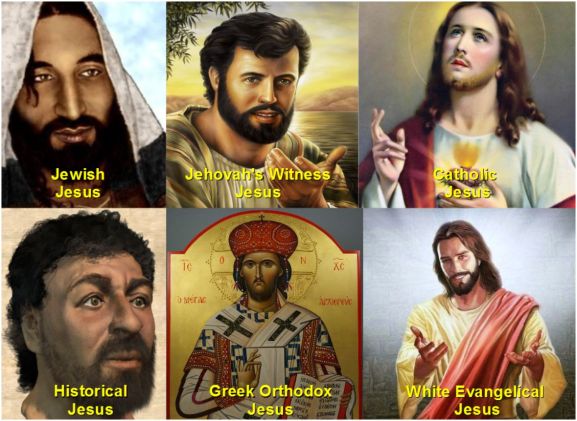
Oops! We’re right back at the problem I’ve been discussing these last few posts: just which Jesus are we talking about? There are so many. There’s the Jesus of the synoptic gospels (though he’s neither consistent nor pleasant), who is nothing like the self-obsessed Jesus of John’s gospel. Paul’s Christ is different again; he’s a complete invention, much like the Jesus of Hebrews who has morphed into a Jewish High Priest. The Jesus of Revelation meanwhile is an Evil Mutant straight out of the Marvel Universe, what with swords coming out of his mouth and all. So which Jesus has Rog got in mind? I think we should be told.

There are so many discrepancies in the various interpretations of Jesus in the New Testament, that it’s hard to see a clear, consistent picture of anything, let alone God, in such a shifting kaleidoscope of images. I’ve recommend that Rog should take atheism a little more seriously; the often incompatible Jesuses of the bible don’t reveal ‘the true nature of God’ anywhere as clearly as he claims. I’d go further: none of them show – can possibly show – what the non-existent is ‘really’ like. What they reveal instead are ideas about a God and a saviour made entirely in the image of the men who tasked themselves with creating them.

The Curious Case of the False News Nativity

Matthew4

Over on his Biblical Musing blog, Don Camp is eager to show us how, despite their disparities and contradictions, the two very different nativity stories in Matthew and Luke ‘mesh perfectly’.

Let’s take a closer look at some of that perfect meshing, shall we?

Herod v. Quirinius

First, the two accounts can’t even agree on when Jesus was born: Matthew’s gospel claims it was when Herod the Great was king (Matthew 2.1) while Luke says it was when Quirinius was governor of Syria (Luke 2.2). Yet Herod died in 4BCE and Quirinius didn’t become governor of Syria until nine years later, in 6CE. So Jesus couldn’t have been born at a time when both men were in their respective positions. This anomaly, as we’ll see, is a serious problem for the two accounts.

Census v. no census

Luke contrives to get Mary and Joseph to Bethlehem to fulfil the prophecy of Micah 5.2 which said the Messiah would be born in Bethlehem. He comes up with the idea that these Nazareth residents trekked all the way to Bethlehem – a journey of about 80 miles – because of a Roman census. The Romans did indeed conduct a census in 6CE (which presumably is why Luke wants the story to take place then) but it would not have entailed anyone travelling to their ancestral home. Why would it? Can you imagine the chaos that would ensue? The Romans would not, and did not, impose such a ridiculous demand on an already disgruntled populace.

Matthew, meanwhile, doesn’t mention any census – his Jesus was born about 11 years earlier – and he seems to think the family already lives in Bethlehem (Matthew 2.11 & 16). So, was Bethlehem their home as Matthew implies, or did they have to travel there from Nazareth, as Luke insists? Or had they nothing at all to do with Bethlehem? Matthew and Luke’s contradictory accounts are nothing more than clumsy attempts to show that Micah’s ‘prophecy’ is fulfilled in Jesus.

The Manger v. no manger

If they already lived in Bethlehem as Matthew suggests, there would be no reason for Mary and Joseph to search out an inn in which to stay for a census that had nothing to do with them. No inn, no ‘stable’ (though neither gospel mentions a stable as such) and therefore no manger. Yet there it is in Luke 2.7. It’s totally absent from Matthew’s account where, presumably, Mary simply had the baby at home.

Related v. Do I know you?

Luke has a long fable about the pregnancies of both Mary and Elizabeth, the mother of John the Baptist. He says the two women are related, possibly as cousins, making Jesus and John second cousins. The fourth gospel, however, asserts that the adult Jesus and John don’t know each other (John 1.33), while Matthew – and Mark too – don’t consider any of this significant enough to mention.

Don thinks the gaps in each account are just fine because God arranged for them to be covered by the other gospels. Yet only Matthew and Luke think to include anything about Jesus’ birth, and much of that is contradictory. Don’t Mark and John know anything about it? Was it not important to them? Even Paul, writing closest to Jesus’ lifetime doesn’t see fit to refer to it. Mary, whom both Matthew and Luke say was a participant in events, seems to have forgotten all about them when she later considers her adult son to be out of his mind (Mark 3.21).

The wandrin’ star v. clear blue skies

Nobody but Matthew mentions the star. Was Luke unaware of it? How about everyone else? If it was as astronomically significant as the story suggests, shouldn’t there be a record of it somewhere? And do stars, billions of miles from the Earth, really lead the way to a single spot here on the planet’s surface? Nobody but Matthew falls for this one – but then he would; he’s the one making it up.

Shepherds v. Astrologers

Luke has shepherds, Matthew astrologers who ‘visit the house’ where Jesus lived. Which is it – shepherds or astrologers? Both? If so, why does neither gospel writer mention the other’s set of visitors? Could it be that the shepherds and astrologers have their own symbolic significance in the gospel in which they appear and are therefore literary inventions? One suspects it could be.

Massacre v. nothing to see here

Herod the Great, who died, remember, almost a decade before the Roman census, orders the murder of all baby boys up to two years of age. At least he does in Matthew (2.16-18); Luke knows nothing of this so called ‘Slaughter of the Innocents’, presumably because Herod had been dead nine years by the time his story is set and, presumably, because it never happened. There is no record of such an atrocity anywhere in the historical record. Surely the Romans would have had something to say about it, given Herod was greatly exceeding his powers as a puppet ruler. One might almost think Matthew invented the whole thing just to make it look like another ‘prophecy’ was being fulfilled (Jeremiah 13.15 this time).

Egypt v. home for tea

Matthew (2.13-18) has the family flee to Egypt after the visit of the astrologers to avoid Herod’s hissy-fit and then when he dies (two years later?) they return to make their home in Nazareth (Matthew 2.19-23). According to Luke, however, they lived in Nazareth before the birth (Luke 1.26) and simply went back there once they’d had the eight-day old baby circumcised (Luke 2.38); no mention of the Egypt trip nor of Herod (unsurprisingly when he’s long dead according to Luke’s chronology.)

So there you have it. You be the judge of how ‘perfectly’ the two stories ‘mesh together’. And while you’re doing that, be sure to have a wonderful, superstition-free Christmas.

How much of the Bible was written backwards?

We know for a fact the book of Daniel was. The term for creating a prophecy after the event it purportedly predicts is Vaticinium ex eventu (Latin for ‘devious sleight of hand’). The creators of the Book of Daniel in the Old Testament were rather fond of Vaticinium ex eventu. Daniel’s prophecies, supposedly written in the sixth century BCE during the Babylonian exile about events that would occur later – much later – were actually created during the second century BCE. This was, of course, after most of them had occurred, which is how Daniel manages to predict most of them with reasonable accuracy. The remaining prophecy, however, written before the events it purportedly predicts is hopeless, completely way off; it foresees the resurrection of God’s people and the establishment of his Kingdom on Earth in the early part of the first century. As we know, this didn’t happen, though Daniel’s madcap ideas influenced the creators of the Jesus cult who all thought they were living in the end times. Jesus’ term for himself, ‘Son of Man’, is lifted straight from Daniel.

This is how most prophecy in the Bible works; it’s either written after the event, Vaticinium ex eventu style, or, when it’s genuinely written beforehand, doesn’t – surprise, surprise – ever come to pass.

Which bring us to Jesus own predictions of the destruction of the Jewish Temple in Jerusalem. He explains to his disciples in some detail in Mark 13 what to expect. He suggests too that soon after the destruction, the Son of Man will arrive through the clouds to establish God’s Kingdom on Earth, once and for all (well, maybe not all – just for ‘righteous’ Jews). It is no coincidence that Mark’s gospel was written about 70CE, just after the temple was destroyed, which makes it easy for Jesus to outline in some detail what the event would like, describing, as he is, what it was like.

Did I say Jesus? No, not Jesus, but the anonymous author of ‘Mark’s’ gospel who implants his knowledge from 70CE back to 30CE and on to Jesus. He – the gospel writer – also has Jesus refer to the opposition some believers were experiencing in the 70s and to the ‘reader’ of his warning. As David Madison notes in Ten Tough Problems in Christian Thought and Belief , ‘reader’ is an anachronism too; Jesus had no ‘readers’ when he was alive. The whole prophecy is later fabrication. Its author is typically less successful – completely unsuccessful in fact – in his prediction that soon after the events he describes, the Son of Man would return to put everything right (Mark 13.26-27). So, as we might expect, there is a reasonable degree of accuracy from the bit of the ‘prophecy’ written after the event, but none at all when it genuinely looks to the future.

But it’s not just prophecy this affects. It looks very much that key episodes in the Jesus story were invented (long) after his death, assuming he existed in the first place, and were added into the gospel stories many more years later. John’s gospel is almost entirely like this. The Jesus of the fourth gospel bears no relation to that in the synoptic gospels; in John he has morphed into the Christ of late first-century Christian belief, spouting fantastical gibberish about himself, like ‘I am the Way, the Truth and the Life’ and ‘I and the Father are One’. The Christ of faith is superimposed on the itinerant Jewish peasant executed for sedition.

It happens in the synoptic gospels too. In Matthew 28.19, the post-mortem Jesus commands his followers to ‘Go therefore and make disciples of all the nations, baptising them in the name of the Father and the Son and the Holy Spirit,’ undoubtedly quoting a later liturgical formula; the notion of the Trinity explicitly referenced here was unknown in Jesus’ own time and indeed in Paul’s. Similarly, the disputes with the scribes and Pharisees represent the writing back into the gospels of later Christians’ difficulties with the religious hierarchy.1 Jesus’ Sermon on the Mount meanwhile is demonstrably a later creation, not translated from Aramaic but written in Greek.2 Other absolutely crucial aspects of the Jesus story – it is easy to see how a case can be made for his not having existed at all – are also retrospective additions. We will come to them next time.

__________________________________________________________________

1 ‘Perhaps the best way to explain Matthew’s extensive criticism of the Jewish authorities is to say that his own community continued to experience opposition from non-Christian Jews, especially influential scribes and rabbis of the local synagogue(s), who accused them of abandoning Moses and the Law, of becoming apostate from the Jewish religion through their ill-advised faith in Jesus.’ Bart D. Ehrman, chapter 6, The New Testament: A Historical Introduction to the Early Christian Writings.
2 Richard Carrier, On the Historicity Of Jesus, pp 465-466, cited in Madison, p300