Mystic Revelations

What do the three ‘great’ Abrahamic religions have in common?

They all started with visions, hallucinations, dreams and mystic revelations. They’re not only based on these but owe their very existence to encounters with the supernatural that took place entirely within people’s heads. This of course is if they happened at all; many of these encounters with angels and God’s revelations take place in stories that have all the characteristics of myth or legend. Even so, they reveal much about the primitive state of mind (still around today) that believed God frequently revealed himself to, and in the minds of, chosen individuals.

First, the grand-daddy of the Abrahamic religions, Judaism: 

When Abram was 99 years old, YHWH appeared to him. He said to Abram, “I am El Shadday. Live in my presence with integrity. I will give you my promise, and I will give you very many descendants.” Immediately, Abram bowed with his face touching the ground, and again Elohim spoke to him, My promise is still with you. You will become the father of many nations. So your name will no longer be Abram [Exalted Father] but Abraham [Father of Many] because I have made you a father of many nations. I will give you many descendants. Many nations and kings will come from you. I will make my promise to you and your descendants for generations to come as an everlasting promise. I will be your Elohim and the God of your descendants. (Genesis 17)

Then Moses:

The Angel of YHWH appeared to (Moses) in a flame of fire from the midst of a bush. So he looked, and behold, the bush was burning with fire, but the bush was not consumed.

Then Moses said, “I will now turn aside and see this great sight, why the bush does not burn.”

So when YHWH saw that he turned aside to look, Elohim called to him from the midst of the bush and said, “Moses, Moses!” And he said, “Here I am.” (Exodus 3)

Notice how the inner voice goes from being that of ‘the angel of YHWH’ to YHWH himself (or one of his aliases). The entire scenario is preposterous of course, as is the Abraham episode before it. I’ve omitted the other occasions YHWH is said to appear to Abraham, including the infamous Genesis 22, where YHWH instructs Abraham to sacrifice his son. These stories are legends written, created from whole cloth, centuries after Abraham purportedly lived. He, like the later Moses, is almost certainly mythical, a character created to represent the beginnings of the Jewish faith. Even his names are symbolic. In truth, no one knows how Judaism began.

Onto Christianity:

The angel said to (Mary), “Don’t be afraid, Mary; God has shown you his grace. Listen! You will become pregnant and give birth to a son, and you will name him Jesus. He will be great and will be called the Son of the Most High. The Lord God will give him the throne of King David, his ancestor. He will rule over the people of Jacob forever, and his kingdom will never end.” (Luke 1)

Did this happen? If you believe angels exist then possibly, but we know they do not. We also know that this is myth. However, Luke wanted his readers to know that Jesus’ birth was miraculous so invented a story in which Mary encounters a heavenly being. The gospel writer anchors the divinity of Jesus to an implausible event which at best can only be a young woman’s vision (though it most certainly isn’t.)

The same is true of the resurrection appearances. Here’s Matthew 28:1-8:

Now after the Sabbath, as it began to dawn toward the first day of the week, Mary Magdalene and the other Mary came to look at the grave. And behold, a severe earthquake had occurred, for an angel of the Lord descended from heaven and came and rolled away the stone and sat upon it. And his appearance was like lightning, and his clothing as white as snow. The guards shook for fear of him and became like dead men. The angel said to the women, “Do not be afraid; for I know that you are looking for Jesus who has been crucified. He is not here, for He has risen, just as He said.”

More angels (they multiply in later gospels); again at best, though still highly improbable, the angel(s), if seen at all, can only be a vision or an hallucination (or mistaken identity.)

Onto the only first hand account of an encounter with the divine that the bible includes, Paul’s:

God was pleased to reveal His Son in me so that I might preach Him among the Gentiles… I want you to know, brothers and sisters, that the gospel I preached is not of human origin. I did not receive it from any man, nor was I taught it; rather, I received it by revelation from Jesus Christ. (Galatians 1)

I know a man in Christ who fourteen years ago—whether in the body I do not know, or out of the body I do not know, God knows—such a man was caught up to the third heaven. And I know how such a man—whether in the body or apart from the body I do not know, God knows— was caught up into Paradise and heard inexpressible words, which a man is not permitted to speak. (2 Corinthians)

This is all there is. This is the extent Paul talks about his heavenly encounters. In Galatians he admits that God revealing whatever it was he revealed was ‘in’ him, that is, in his own head. The bizarre tale he relates in 2 Corinthians reads like an hallucination (Paul says he doesn’t know whether it was in the body or out of it) which is all it could’ve been; there is no paradise or ‘third heaven’.

And finally, there’s Mohammed:

while I was sleeping last night, the keys of the treasures of the earth were brought to me till they were put in my hand.”… 

The angel came to him and asked him to read. The Prophet replied, “I do not know how to read. The Prophet added, “The angel caught me (forcefully) and pressed me so hard that I could not bear it any more. (Sahih Bukhari 6998)

Encounters with heavenly beings in dreams, ‘revelations’, visions, hallucinations and invented stories: these are central to Judaism, Christianity and Islam. The religions would not exist without them. Written as myth long after they supposedly occurred or referred to obliquely by those who claim to have experienced them, they are the products of fevered pre-scientific minds.

Post-script: I’ve searched in vain for Darwin’s admission that an angel revealed the process of evolution to him. I can only find his collection of evidence, his scientific observations and his careful analysis of his findings. Likewise Mendeleev who calculated the existence of elements that were at the time unknown. Likewise Crick, Watson and Franklin who discovered the structure of DNA. Strangely, none of these people relied on visions, dreams or divine revelations in uncovering truths about reality.


The Day After The Rapture

Are you still there?

Either the rapture didn’t happen or there aren’t many True Christians round where I live. I watched all day for them jetting into the sky to meet Jesus but didn’t see a single one.

What went wrong? That South African preacher Joshua Mhlakela who saw Jesus surely can’t have been mistaken. Jesus told him clearly that yesterday, or maybe today, would be when he’d be back to collect his Chosen and judge the great multitude of sinners. I even turned on the TV last night to see if it had happened elsewhere. I thought the Final Judgement was underway with some dude ticking off the UN. Turned out just to be some big orange guy, not Jesus in disguise.

So what now? I think I can guess. Jesus’ message to Joshua Mhlakela will be reinterpreted: it wasn’t that the Rapture was going to happen yesterday, or today. It’s the events leading up to the rapture that he promised would kick off this week. That’ll be it. The Rapture itself is still some time off, as it always is.

Mhlakela’s vision of Jesus was no different from the ones the earliest Christian believers had: those character with fake names like Peter and Paul. Dismiss the good pastor’s vision of the Lord and what JC purportedly said and you have to dismiss the visions of those early fanatics who operated under aliases. Visions, dreams and hallucinations have no bearing on reality, as Mhlakela and the thousands who believed him have demonstrated yet again. Christianity and many other faiths are founded on such imaginings. As Luke puts it in Acts 2:17 during ‘the Last Days’ of 2,000 years ago:

And it shall come to pass in the last days, says God, that I will pour out of My Spirit on all flesh; your sons and your daughters shall prophesy, your young men shall see visions, your old men shall dream dreams (misquoting Joel 2: 28-29)

This is the basis of the Christian delusion, and every other.

But Some Doubted

We know that all the accounts of the resurrection appearances are inconsistent, incompatible with each other and read like visions or hallucinations. If that’s not enough there are two aspects of the stories that are delivered almost as asides that give the game away.

Matthew 28:17 records that

…the eleven disciples went to Galilee, to the mountain where Jesus had told them to go. When they saw him, they worshipped him; but some doubted.

Meanwhile, in a completely different set of resurrection appearances, Acts 1:3 claims that

After his suffering, (Jesus) presented himself to (his chosen apostles) and gave many convincing proofs that he was alive. He appeared to them over a period of forty days and spoke about the kingdom of God.

These verses from Matthew and Acts are almost always overlooked by true believers. In the Matthew passage we have a number of the eleven remaining disciples doubting that what they were experiencing was the resurrected Jesus. That’s the same disciples whom the gospel tells us trailed round the countryside with him listening to him as he regularly predicted his death and resurrection. Yet when the resurrection happened (spoiler: it didn’t really) they doubted that what they were seeing was Jesus.

How can this be? Did he not look himself, as in the other tall-tales of his reappearance? Was he so changed he was unrecognisable? If so, how did anybody recognise him? That’s the trouble with visions and apparitions: they’re just not clear or convincing.

Luke, meanwhile, extends the time that Jesus spends with his followers from a day or so in his gospel to 40 days in Acts. This is when Jesus offers the ’many convincing proofs’ that he is the Messiah and has survived death. This really makes no sense at all. As I asked in a previous post (slightly edited here) –

By ‘many convincing proofs’: what does this mean? That he had to prove he’d come back to life? Couldn’t his old chums see that for themselves? Couldn’t they recognise the man with whom they’d spent the last three years (allegedly)? Or if they could, weren’t they convinced he’d returned from the dead so that he felt the need to prove it? And how did he prove it? With a death certificate? By letting them poke his holes? And this took forty days?

Isn’t it more likely they were subject to group hysteria and some sort of hallucination (they’d had hallucinations before – see Matthew 17:1-9) and they then had to convince each other that what they’d experienced was really Jesus?

This is what was really going on: it took those who’d hallucinated seeing the heavenly Messiah a significant amount of time (what ‘40 days’ actually means) to concoct what they thought proved their visions were real. Like Paul (perhaps copying him), they found this ‘proof’ in the ‘prophecies’ of Jewish scripture.

This is the ‘many convincing proofs’ Luke refers to. No resurrected god-man spent 40 days offering evidence from scripture that he was really back from the dead. The visionaries themselves came up with it. Unfortunately for them, relying on shaky exegesis and misapplied passages from ancient texts is no proof at all.

Try telling that to Paul and the gospel writers though. All of Christianity rests on the visions of a few and the ‘many convincing proofs’ from scripture that persuaded them that what they’d experienced was really the Messiah, manifested in all his glory.

We’re talking a faith built on sand indeed. No wonder those sensible early disciples doubted every part of it.

In which Howard visits Heaven and talks to Jesus

I recently finished reading My Descent Into Death and the Message of Love Which brought Me Back by Howard Storm, in which he recounts events surrounding his serious illness in the 1980s. This, he is convinced, caused his death after which some very dark beings, who at first he mistook for deranged medical staff, attempted to drag him off to a very sinister place. Fortuitously, Jesus and his angels were on hand to intervene and rescued hell-bound Howard.

Perhaps in my Evangelical days I would’ve lapped up stuff like this, but not now. A Christian friend – the same one who lent me the book I wrote about here – bought me. I promised I’d read it but what a struggle it was.

Once rescued by Jesus, Howard felt divested of his ego and overcome by love. He underwent a life review and was ever so gently ticked off for all the times he was less than kind. Instead of enjoying this state of bliss, however, Howard took the opportunity to bombard Jesus and the angels with banal questions, which given Howard’s comatose state they had time to answer at great length over many hours (which is how long it takes to read about them.)

When he came round and discovered he wasn’t actually as dead as he thought he was, Howard was a changed man. Once back on his feet, he joined a succession of churches so he could share his experience. When they didn’t fully appreciate how he’d really spent time with actual Jesus, he trained for the ministry himself. He has been a pastor now for several decades, regaling people with the tale of his encounter with fantasy heavenly beings.

Undoubtedly, Storm’s experience was powerfully real to him, so much so it changed his life on his return to reality. As I read My Descent Into Death, however, I couldn’t help but feel I’d heard it all before: in Paul’s account of his imaginary visits to heaven and his encounters with a resurrected Jesus. These were probably not Near Death Experiences (NDEs) – though who’s to say – but, like Storm’s, brain-induced hallucinations.

As scientist Britt Hartley explains in the video sent by koseighty a while back, we now have a much greater understanding of NDEs; they are culturally determined hallucinations induced by the brain as it begins its shutdown. Hartley is clear that under stress the brain is more than capable of creating reassuring visions for itself.

But like Howard Storm’s, Paul’s ‘revelations’ are more than a mere sighting of Jesus. Paul too has a long discourse with the heavenly being conjured up by and in his own brain. He imagines Jesus explains to him how salvation works (in a mighty complicated way) in the same way Howard does. I’m sure this discourse, like Howard’s, did not take place during the visions but were worked out later, over time, as Paul, and Howard, interpreted what the inner-visions ‘must’ have meant.

Oddly though, given they both encountered the same character, it’s difficult to reconcile the messages each was given by him. Storm’s is of a mushy universal love, devoid of the demands and convoluted theology of Paul’s Jesus. Strange that the Jesus Christ who is, according to Hebrews 13:8, the same yesterday, today and forever, has modified and softened his message in the two thousand years between Paul’s and Howard’s revelations. It couldn’t be because Howard’s is the result of his conditioning by a modern American culture that sees Jesus as a shiny, white-robed figure surrounded by angels who dispenses nothing but all-embracing love and happy-clappiness, could it? It surely could.


How the Bible tells us the Resurrection was nothing more than Visions

I’ve written about this before, but want to pull together some strands that demonstrate the risen Jesus was a vision or hallucination. He appeared only in the mind of others: the New Testament tells us as much.

Exhibit 1. Paul writes of the appearance of the risen Jesus, whom he sees as a ‘life-giving Spirit’, being ‘in’ him (Galatians 1.16). Paul has more than one such vision, including his trip to heaven recounted in 2 Corinthians 12.2, which he refers to as his ‘revelations’.

Exhibit 2. Paul implies in Corinthians 15.5-8 that others who have experienced the post-mortem Jesus ‘saw’ him in exactly the same way he did. For Paul, there was no difference between his inner-visions and those experienced by the so-called apostles.

Exhibit 3. The author of Acts creates a story out of Paul’s first vision, the famous account of his conversion on the road to Damascus. It’s a fabrication of course, told differently each time it’s referred to Even so, Luke retains the visionary nature of the experience: Jesus is a bright light and a disembodied voice.

Exhibit 4. The other sightings of the risen Jesus in Acts are visions. When, for example, Stephen is about to be stoned (Acts 7:54-56) he sees in his mind’s eye the heavens open and Jesus sitting at the right hand of god. Other New Testament encounters of the resurrected Jesus, such as John’s Revelation, are explicitly said to be visions.

Exhibit 5. Many of the sightings of the risen Jesus in Matthew and Luke are not of a real, physical human being. Those who experience him see him materialising in locked rooms, vanishing at will and floating up into the clouds. None of these events actually happened; they are the gospel writers’ literary realisations of visions experienced decades earlier, and they retain the hallucinatory qualities of those experiences.

Exhibit 6. Remaining with the gospels’ accounts of the risen Jesus, there is the strange phenomenon of those experiencing him failing to recognise him. Mary in the garden thinks he’s the gardener; the disciples on the road to Emmaus don’t know its him until he breaks bread; the disciples mistake him for someone else on the shore until he tells them how to fish properly. Most damning of all, some of the inner circle of disciples doubt it’s Jesus they’re seeing in their collective visions (Matt 28:17-18). Again, these stories preserve the tradition that the earlier visions weren’t always recognised as Jesus. And why wasn’t he? Because he was an hallucination

Exhibit 7. The risen Jesus has to prove who he is. According to Acts 1:1-3, he ‘presents himself’ his followers, some of whom have wandered around aimlessly with him for three years, and has to convince them he is who he appears to be. And, the text suggests, it takes him forty days to do it. This makes no sense. A far better explanation of this story (and it is a story) is that having experienced their visions of something-they-took-to-be-the-resurrected-Jesus (bright lights? Disembodied voices?), his followers set about convincing themselves that what they experienced really was their former Master. This they did by scouring the scriptures to find ‘proof’ that the Messiah would die and rise again. We know this is how their thinking worked. The same process was used to create the gospels and is evident throughout the New Testament.

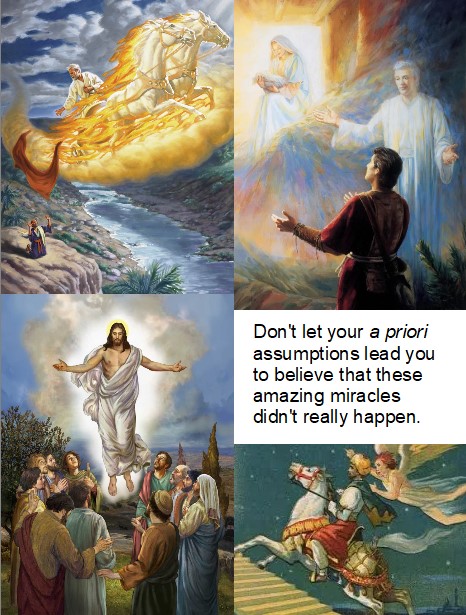
Exhibit 8. Dead people stay dead. They do not resurrect.. This is not an a priori assumption. No corpse has ever revived after 36 hours or indeed any other period of time. We know this experientially, statistically and scientifically. Only in stories and religious myth do the dead return. This is what we are dealing with here: stories and myth that flesh out the visions and hallucinations of a few religious zealots.

Either All True Or None True

About 2,500 years ago, a man called Elijah went up to heaven while still alive. He was taken through a whirlwind in a chariot of fire, pulled by horses of fire. This amazing event was witnessed by several other people who were profoundly affected by it. The story of this ascension was possibly relayed orally for many years until finally being written down in what is now 2 Kings 2.

Did any of this really happen?

Of course not. It’s a myth.

Some time in the 4th century BCE, the first king of Rome, Romulus, was taken, while still alive, to the dwelling place of the gods. From that time on he was worshipped as a god – some said he was eternal to begin with – with a temple being built in the very place from where he had ascended. Later he appeared to one of his followers, Julius Proculus who said the resurrected Romulus was larger and more beautiful than ever, armed with weapons shining like fire. Julius Proculus attested to this appearance of the resurrected Romulus, swore an oath to its veracity and relayed it faithfully to others.

Did any of this really happen?

Of course not. It’s a myth.

https://mythologymatters.wordpress.com/2019/04/18/easter-mythology-the-resurrection-as-modeled-on-greco-roman-myths/

It is not known when Mithras was born, if indeed he was. He emerged from a rock in the spiritual realm as a child or youth, ritually slaughtering a bull and sharing a banquet with the god Sol. He guided souls to the after-life, propelled as they were by the bull’s blood and flames. He was worshipped primarily by soldiers who saw him as their salvation from the bitterness of earthly life. There were rituals to be followed to become a true initiate and for Mithraic mysteries to be revealed. How Mithras made himself known to his acolytes is unknown, but in the first three centuries CE, his cult rivalled that of the Christians in popularity.

Did all of this really happen?

Of course not. It’s a fabrication, a myth.

In the 8th century CE, the prophet Muhammad flew from Mecca to Jerusalem on a winged equine. Once in Jerusalem he climbed a ladder to heaven. Once there he travelled through the various levels, having conversations with other lesser prophets, before entering Allah’s domain. His journey was later revealed to two early prophets who had known Muhammed when they were boys. They conveyed the details accurately until they were recorded, briefly at first in the Qur’an and later in more detail in its supplement, the hadith.

Did any of this really happen?

Of course not. It’s a fabrication, a myth.

In the early 19th century, Joseph Smith was visited by Jesus and his Father in a vision. They told him that he should not join any existing church because they were all in error. Later, a hitherto unknown angel named Moroni appeared to Smith and indicated to him where some gold plates were buried. He instructed Smith to dig up and translate the plates. Obediently, Smith did so, using a pair of seer stones for the translation. The resulting Book of Mormon was a revelation of Christ’s activities in North America following his resurrection. Smith wisely had a number of his associates witness, in writing, the existence of the gold plates as well as their supernatural provenance.

Did any of this really happen?

Of course not. It’s a fabrication.

In 1916 the Virgin Mary appeared numerous times to three poor Portuguese children, giving them instruction and prophesying to them. She also promised that she would perform a miracle at Fatima. Accordingly, between 30,000 and 100,000 people, including reporters and photographers, gathered at Fatima where many saw multi-coloured lights before the sun itself ‘danced’. It came closer to the Earth before zig-zagging back to its usual place in the sky. While not all of the attendees testified to the phenomenon of the dancing sun (some saw only the lights, others nothing at all) many did and testified to the effect the miracle had had upon them.

Did all of this really happen?

Of course not. It’s a fabrication based on hallucinations.

Around 30CE, a rabbi known as Jesus, who had been born of a virgin, gathered together 12 followers and went around Galilee preaching absolution from sin and the imminence of the Kingdom of God. He announced he was the Messiah who would rule the Earth when the kingdom arrived. The Jewish authorities took exception to his claims and petitioned the Romans to have him executed. This they did, only for Jesus to come back to life three days later, appearing in visions to his followers. He ascended to heaven, promising that those who believed in him would enjoy eternal life. Some of his disciples spread his message faithfully until it was eventually written down, first by a former Pharisee called Paul and then by four authors who accurately recorded what Jesus had said and done.

Did all of this really happen?

What do you think?

A Christian’s Circular Reasoning

Don asks:

Why is it not possible for people to see immaterial things? We see with the mind as much or more than with then eyes. If the mind can conceive of immaterial things we can see them. Often skeptics declare that what Paul saw was a hallucination. If so, he saw something that was not material. We all dream. When we do we see things that are not material. If there are immaterial beings such as spirits, why would it not be possible to see them?

Why is it not possible for people to see immaterial things? Because ‘immaterial things’ by their very nature cannot be seen. Moreover, in the sense you’re talking about – supernatural beings and places – there is no evidence they have independent existence outside the human imagination.

We see with the mind as much or more than with then eyes. The mind processes what the eyes see. Sometimes it produces, imagines, ‘sights’ for itself, as in hallucinations or dreams, but this doesn’t mean these sights are real. Indeed, they are not.

If the mind can conceive of immaterial things we can see them. You mean like ghosts, spirits from the Greek underworld and Norse gods? Of course you don’t,  though your argument applies equally to these. You mean only Christian immaterial things: heaven and hell, angels and demons and the risen Christ. This is merely special pleading.

Your assertion is patently untrue. It begs the question, ‘if the mind can conceive of ’immaterial things’ does this mean these things are real?’ To which the answer must always be ‘no’.

what Paul saw was a hallucination. If so, he saw something that was not material. Yes and yes. Paul hallucinated on more than one occasion, seeing figures and places that were not real. His seeing them did not make them real.

We all dream. When we do, we see things that are not material. A statement of the bleedin’ obvious, but yes, we all dream. Does this make what we see in those dreams real? Again, no.

If there are immaterial beings such as spirits…There aren’t. As you keep stating while failing to recognise it, they are merely figments of the imagination.

why would it not be possible to see them? Because as figments of the imagination, they don’t exist. Here’s where your ‘reasoning’ is entirely circular: the human mind can conceive of immaterial beings and places and these things can be ‘seen’ ((in dreams and hallucinations); because they can be seen they must be real. Therefore, we know they’re real because they can be seen. Can you not ‘see’ the absurdity of your position, Don?  

My 3+ year old granddaughter can distinguish between reality and figments of the imagination, fantasy and dreams. It is really is time you could too.

The Resurrection: Real or Imagined?

Did Paul see a physically resurrected man or did he hallucinate some sort of spirit? What does the bible say?

Paul describes his encounter with the risen Jesus in his letter to cultists in Galatia:

For I did not receive it (the gospel) from man, nor was I taught it, but it came through a revelation of Jesus Christ… God was pleased to reveal his Son in me… (Galatians 1.12 & 15)

‘Revelation, revealed, in me’: there’s no physically resurrected body here.

In his letter to the little community in Corinth, Paul tells us explicitly that Jesus was raised as a ‘life giving spirit’ (1 Corinthians 15.45). Whatever this means, this is how Paul experienced the risen Christ. Nowhere in his letters does he claim to have seen a man who has physically risen from the dead. Even in the legend created around Paul’s mystical revelations decades later, there’s no physical Jesus: a bright light and disembodied voice is what Luke comes up with.

Why does this matter? Well, for a start, Paul’s is the only first hand account of an encounter with the risen Jesus we have. And it was of an entirely ‘spiritual’ nature. Second, Paul assumes that those who ‘saw’ the risen Jesus had exactly the same sort of experience he did. He says in 1 Corinthians 15.5-8,

…(the Risen Jesus) appeared to Cephas, and then to the Twelve. After that, he appeared to more than five hundred of the brothers and sisters at the same time, most of whom are still living, though some have fallen asleep. Then he appeared to James, then to all the apostles, and last of all he appeared to me also, as to one abnormally born.

Paul makes no distinction between the way he experienced the risen Jesus, as a life giving Spirit, and the way these others did. His persistent use of ‘appeared to’ also underlines the mystical nature of these encounters; he doesn’t say Jesus ‘visited’ James or ‘spent time with’ Cephas or ‘chatted with’ the apostles over a fish supper (those legends would come later). There’s absolutely no human interaction here between these people and a real human being. No: instead, Paul says Jesus ‘appeared to’ them, as in ‘he was an apparition’.

The translation of the same passage in the King James version makes this obvious:

…he was seen of Cephas, then of the twelve: After that, he was seen of above five hundred brethren at once; of whom the greater part remain unto this present, but some are fallen asleep. After that, he was seen of James; then of all the apostles.  And last of all he was seen of me also, as of one born out of due time.

As for Paul, then, so for all these other sightings (we only have Paul’s word they actually took place.) They were apparitions, hallucinations, innervisions, emotional, spiritual experiences – call them what you will – ‘seen of’ others. They were not of a real man physically raised from the dead.

Why do some Christians find this so hard to accept? After all, this is much their own experience today. They may not hallucinate that Jesus is standing in front of them (assuming that’s what the ‘life giving spirit’ looked like to Paul and others) but they have an emotional experience at conversion that they credit to the presence, the spirit, of this long dead individual. If that’s how it is for converts today, why not for the original Christians? Why does there have to be physical resurrection at all?

Spoiler: there doesn’t and there wasn’t.


Will the real Jesus please stand up? (part 3)

As we’ve seen, so much about Jesus appears to have been invented and made up; literally, ‘envisioned’. Almost everything he said and did, including his death and resurrection, derive from Paul’s teaching and the Old Testament. Mark created his gospel narrative out of these, embellishing the story with ideas from other, pagan myths. Mark’s gospel then served as the basis of the other three canonical gospels.

It could be argue that none of this suggests Jesus didn’t exist. He could still have been a real life human being who wandered around Palestine, teaching people about the End of the Age. In which case, why did Paul and the later gospel writers have to make so much up about him, as clearly they did. Why didn’t they report directly what he taught, instead of quoting the Old Testament as Paul does when he talks about his Christ (he tells us this is what he’s doing, in Romans 15.2-4)? Not once does he refer to anything the historical Jesus said. Neither do the gospel writers. They make stuff up, they alter what their predecessors say, they dip into the Old Testament to construct Jesus’ teaching.

Why? If the real Jesus was such a Great Teacher, who had so much wisdom to impart, why don’t we find it in the gospels instead of this amalgam of other sources? Was his teaching so unimpressive and unmemorable that a new script had to be written for him? If so, how did he attract the fame and following he purportedly did? Why are the gospels literary creations and not the kind of reporting we might expect if they were relating the sayings and doings of one man? Why do the gospels have their own distinct agendas when they are supposedly reporting the views of a real individual? Why are there so many interpretations of Jesus in the New Testament: Jewish Jesus, Gentile Jesus, Anti-semitic Jesus, Gnostic Jesus, Anti-gnostic Jesus, Radical Jesus, Pacifist Jesus, Saviour Jesus, High Priest Jesus, Cosmic-judge Jesus? Why, if it really happened, does the resurrection read like myth, with all the differences in detail between the accounts? Why does Paul talk about it as something that was only revealed in ‘visions’? Why does Mark hint that his Jesus story is a parable, the true meaning of which can only be discerned by the spiritually mature (Mark 4.10-12)?

If Jesus was real, none of this – the myth making, the invention, the reliance on the Old Testament – would be necessary.

That Paul and the gospel writers made up so much suggests there wasn’t a real person on whom their teaching and stories are based. Jesus Christ was the result of the ‘visions’, dreams and hallucinations that someone called Cephas and a few others, Paul included, experienced.

There was no historical Jesus, no miracles, no wondrous teaching, no crucifixion, no resurrection, no ascension. There will be no second coming, no final judgement, no Kingdom of Heaven presided over by someone who originally lived 2000 years ago. Why? Because every bit of it is make believe.

In which Paul takes a trip to the third heaven

Blog408

In the New Testament, there are:

8 or more supernatural ‘visions’;

18 or so ‘appearances’ of angels;

about 6 significant dreams, through which God talks to people;

a dozen apparitions of dead people and

at least 3 significant ‘revelations’, in which individuals sense God in their heads (Paul, Jesus and John of Patmos).

The man who is largely responsible for Christianity as we know it, Paul, alludes only briefly to his magical conversion to the faith, describing it as ‘in’ his head in Galatians 1.16. It’s up to the writer of Acts to elaborate and embroider this non-event. Paul does, however, give rather more detail about another hallucination he has, in 2 Corinthians 12.1-4. To avoid boasting, he says boastfully, he refers to himself in the third person:

I must go on boasting. Although there is nothing to gain, I will go on to visions and revelations from the Lord. I know a man in Christ who fourteen years ago was caught up to the third heaven. Whether it was in the body or out of it I do not know, but God knows. And I know that this man—whether in the body or out of it I do not know, but God knows— was caught up to Paradise. The things he heard were too sacred for words, things that man is not permitted to tell.

This is evidently a psychotic episode; seeing things that are not there, experiencing events that are not happening. Paul himself admits he doesn’t know whether it was a real experience, nor does he know if he was in his body or not (definitely in it, just out of his mind.) He heard, he says, things he can’t possibly repeat, which makes you wonder why he bothers mentioning the whole bizarre episode in the first place: ‘I had this fantastic experience, unlike anything I’ve experienced before – but I can’t tell you a thing about it.’ It sounds like a dream he’s having trouble remembering or, like, man, a really freaky hallucinogenic trip.

From psychotic episodes like this – his conversion is another one – Paul spins his entire theology. Yes, the faith of Christians everywhere is founded on the hallucinations of a first century nutcase visionary.

I don’t know about you, but I’ve better things to do with my life than base it on the dreams and visions of a psychotic who lived 2000 years ago.