Who wrote the Bible?

According to Christians, Moses wrote the first five books of the Bible; Genesis to Deuteronomy are widely known as ‘the books of Moses’. There is little evidence Moses had anything to do with them and plenty that he didn’t. The narrative, for example, is never once in the first person; it’s all ‘Moses ordered this slaughter, Moses ordered that slaughter’, never ‘I was the bastard who ordered all the genocide.’ Maybe he was embarrassed about it or – much more likely – it was written by someone else..

In fact, the books were compiled from a range of sources, including stories from other cultures. They reached the form in which we know them around 600-400BC, a mere eight hundred to a thousand years after Moses was supposed to have lived. The events and folk-heroes they describe are demonstrably mythical.

Moses2

Christians like to say that King David wrote many of the Psalms. While David’s name is attached to 73 of the 150, there is no reason to conclude he wrote them. It is more likely ‘of David’ serves as a dedication to a revered (and long dead) figure and may, indeed, have been added much later. The Psalms were actually created over an extended period of time – as much as five hundred years – by a wide range of unknown composers.DavidBelievers attribute much of the book of Proverbs to King Solomon, the fruit of David’s loins. Again, this is highly unlikely. The sayings are largely traditional and the attribution ‘is likely more concerned with labeling the material than ascribing authorship.’


Palin

Christians believe four blokes called Matthew, Mark, Luke and John wrote the New Testament’s gospels. They didn’t. The gospels were written anonymously and did not have the traditional names attached until a century or so after their composition. None is by an eye-witness. There is no evidence that the writer of Mark was a disciple of Peter’s, nor that ‘Luke’ was a companion of Paul’s (and even if he was, this wouldn’t make him an expert on the historical Jesus), nor that ‘John’ was a bona fide disciple. The fourth gospel was written between 90 and 110CE when the disciple would have had to be between 80 and 100 years old, or, much more likely given life-expectancy in the first century, dead. There are several hands at work in ‘John’, as the gospel itself concedes (John 21.24).

 Beatles

Christians insist that all of the letters attributed to Paul in the New Testament were written by him. However, despite the fact they say they’re by Paul, Colossians, Ephesians, 2 Thessalonians, 1 & 2 Timothy and Titus are not; they are forgeries. They were composed long after Paul’s death, which occurred some time around 64CE. The earliest of the forgeries, Colossians, is thought to be circa 75CE, while the ‘pastoral’ letters to Timothy and Titus may be as late as 150CE. All of the forgeries contradict the ideas expressed in Paul’s genuine letters.
PaulPeter wrote the letters that carry his name, or so god-botherers claim, but according to the Bible itself, Peter was an illiterate Galilean fisherman (Acts 4.13). The Greek of the letters supposedly by him is accomplished and the theology well developed. Did Peter have time to learn Greek and polish its written form to perfection while busy preaching the gospel to all nations? Even if he did, how did he manage to write a letter (2 Peter) concerned with conditions in the church more than a century after his time with Jesus?

Anderson3

Jesus’ brothers James and Jude, we’re told, wrote the letters carrying their names. Again, they didn’t. The letter of James may have originated in the early Jerusalem church presided over by James the Just, but there’s no evidence this was Jesus’ brother. Jude is plagiarised from 2 Peter – word-for-word in places – which is itself a forgery. Would someone who knew Jesus as intimately as a brother need to steal what he had to say from an illegitimate source? Jude would have had to be well over a hundred years old to pull this one off.

Robertson2When all else fails – and it does – Christians fall back on that most implausible of last resorts, ‘the Holy Spirit’. The very breath of God, they insist, presided over the creation of the Bible from start to finish. If it did, it made a staggeringly bad job of it; misattribution, mistakes and forgeries are the hallmarks of ‘God’s precious Word’.doveAnd on this unstable foundation, this tissue of lies, rests the entire edifice that is Christianity.

(It is difficult to find online sources on the authorship of the Bible. Christians have taken over the Internet with innumerable sites insisting the Bible was written by whoever they say it was. I’ve had to fall back on Wikipedia here (the articles are pretty comprehensive) but if you don’t think it reliable enough, I recommend Bart D. Ehrman’s Forged: Writing in the Name of God – Why The Bible’s Authors Are Not Who We Think They Are.)

 

Dear Christian

Christians

Dear Christian,

Jesus said treat others as you like to be treated (Matthew 7:12) so why do you treat them with abuse and unpleasantness?

Blog191(2)

Jesus said turn the other cheek (Luke 6:29) so why do you respond with insults?

Blog191(1)Jesus said don’t judge unless you want to be judged (Matthew 7:1) so why do you constantly judge and condemn?

Blog191(5)

Jesus said love your enemies (Luke 6:27) so why doesn’t it happen?

Blog191(11)

Jesus said don’t call anyone a fool (Matthew 5.22) so why do you call them far worse than that?

Blog191(4)

Jesus said don’t pray in public (Matthew 6.5) so why do you pray in public?

Blog191(7)

Jesus said sell all you have and give the money to the poor (Luke 18.22) so why don’t you?

Jesus said you cannot serve God and money (Luke 16.13) so why are some of you so obscenely rich?

CrouchHinn'sJet

Jesus said deny yourself (Matthew 16.24) so why do you indulge and promote yourself above all things?

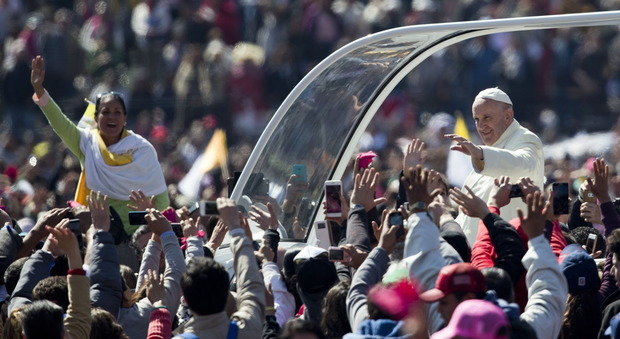
Blog191(8)OsteenPope Francis waves to the crowd, aboard the popemobile in Mexico City's main square, the Zocalo, Saturday, Feb. 13, 2016. Pope Francis kicks off his first trip to Mexico on Saturday with speeches to the country's political and ecclesial elites. The pontiff's five-day visit will include a very personal prayer at the Virgin of Guadalupe shrine. (AP Photo/Moises Castillo)

Jesus said ‘be perfect’ (Matthew 5.48) so why don’t we see you trying?

Sick

Jesus asked why you call him ‘Lord, Lord’ and yet don’t do what he tells you (Luke 6.46). Evidently he didn’t understand, as you do, just how many of his commands are optional. Thank goodness you know better than he did.

Get your free Porsche here*

*Or maybe notRaising

A True Story**

“So,” he says, “you might have an old banger now but when it finally packs in for good, we’ll upgrade it for you, free of charge.”

“You’ll upgrade it?”

“Sure. No problem. You see your old car is… well, I’ll be honest with you, it’s a really rubbish make. It’s a pile of crap to tell you the truth.”

“A pile of crap?” I splutter. “I can’t believe what I’m hearing. If it’s such a pile of crap why’d you sell me it in the first place? Why d’you sell them at all?”

“No need to get upset, mate,” he says. “As I said, when it’s completely clapped out we’ll replace it with a brand new one, free of charge.”

“Free of charge?”

“Yeah, that’s the deal. You wear out a lemon we give you a brand new Porsche.”

“A new Porsche? C’mon man, you’re winding me up. Why would you give me a new Porsche for nothing?”

“Because as I said, that’s the deal. Have a little faith man. It all works out.”

“Okay, I say. Well how about I get the Porsche now. Before this old rust bucket let’s me down completely.”

“Doesn’t work like that mate,” he says. “You get the banger first, the Porsche at the end.”

I tell him this makes no sense at all. “Look… Paul,” I say, reading his name off the dirty old name tag he’s wearing, “if you want people to have a completely free brand-new, top-of-the-range luxury car then you should just give it to them the first time they come in here. Forget the clapped out old banger bit. Just give them the Porsche.”

“Nah, mate. I’ve told you, that’s not the offer.”

“Okay,” I say, making one last effort. “Show me one person who’s benefited from this mad scheme of yours. Show me one person who’s driven away in a Porsche after their old vehicle’s reached the end of the road.”

“Listen, mate,” he says, “it’s like I said. You need to have a little faith.”

One person,” I say.

“Okay,” he mumbles, ”there are stories that the boss’s son did once…”

“The boss’s son? ‘Stories’? Christ, what sort of con are you operating here?”

“You’ve upset me now, you fool” he says, “and I’m not sure you qualify for the deal any more.”

I can only shake my head. “I’m not sure I ever did… mate,” I say.

*   *   *   *   *   *   *   *   *   *   *   *

**Yes, this really is a true story. You can find it in Paul’s first letter to the Corinthians (15.35-50). Here’s how it goes there:

But some one will ask, “How are the dead raised? With what kind of body do they come?” You foolish man! What you sow does not come to life unless it dies.  And what you sow is not the body which is to be, but a bare kernel, perhaps of wheat or of some other grain…

So will it be with the resurrection of the dead. The body that is sown (buried) is perishable, it is raised imperishable; it is sown in dishonour, it is raised in glory; it is sown in weakness, it is raised in power; it is sown a natural body, it is raised a spiritual body…

Flesh and blood cannot inherit the kingdom of God, nor does the perishable inherit the imperishable.

Right…


There’s good news and there’s good news…

Bat-Jesus

Mark, Matthew and Luke all tells us that Jesus preached the gospel when he was alive (Mark 1.14-15; Matthew 4.23, 9.35 & 10.5-7; Luke 20.1). So what was this gospel? What was Jesus’ ‘good news’? He had yet to die so it couldn’t possibly have been ‘you can be saved through my death and resurrection’ because this magic formula had yet to be arrived at by those who came later. Nor could it have been ‘accept my substitutionary atonement whereby I take the punishment you deserve in order to restore your relationship with God,’ for much the same reason. Nor could it have been, ‘you must accept me as your personal your saviour if you want to gain everlasting life in Heaven,’ because he didn’t regard himself in this way and he didn’t, according to the synoptic gospels, offer an eternity in Heaven. No, Jesus’ good news could not have been any of these because they are all later developments, mumbo-jumbo invented about him by others, not things he said himself .

Actually we needn’t speculate on what the good news was that Jesus preached because the gospels tell us: God was going to intervene in history very soon, rescuing his people from Gentile rule and setting up his Kingdom, in which he, Jesus, would be judge and king (Matt 24.27-34 & 25.31; Luke 1.33; 21.25-28). People, he said, referring only to Jewish people, should prepare themselves for this coming Kingdom by mending their ways (Matthew 10.5-6).

How soon would all this happen? In the lifetime of his hearers according to Mark 9.1, Matthew 16.28 and Luke 9.27, maybe even within a few weeks or months. When sending out the disciples to spread his good news he promised them, ‘you will not have gone through all the towns of Israel, before the Son of man comes (to usher in the new Kingdom)’ (Matthew 10.23). We can only assume that the disciples are back by now – in fact they return a few verses later – yet the Son of man still hasn’t materialised among the clouds in full view of ‘the tribes’ of the Earth (Matthew 24.30).

As the Bible records, Jesus was wrong in every respect; God did not set up his new Kingdom within the lifetime of those Jesus spoke to; the Son of man did not appear; the Romans were not overthrown; Jesus was not appointed judge and king of the world. The sarcastic inscription on his cross, ‘King of the Jews’, was the closest he came to having his self-aggrandising prophecy realised.

Is this the Jesus that Christians worshipped subsequently and still worship today? It ought to be as he’s the one revealed in the first three gospels. But the Jesus believers carry around in their heads is not this man. The ‘Jesus’ worshipped by Christians is primarily a construct of Paul’s – his ‘Christ’ – and their own collective imaginations. The mythical ‘Christ’ that Paul ‘did not receive from any man’, has replaced and almost obliterated Yeshua and his mistaken beliefs about the coming Kingdom (though Paul held on to the idea that it was indeed imminent; see 1 Thessalonians 4.15-17).

Admittedly ‘the Christ’ has had a far better shelf-life than Yeshua could ever have had on his own; the continual resurrection of the idea in the minds of believers – and only there – has ensured the perpetuation of the myth. When all is said and done, however, the Christ is nothing more than an imaginative recreation of a failed zealot with an altogether different gospel.* Yeshua’s good news of the Kingdom died shortly after he did and like him has stayed dead, its echoes preserved by Mark, Matthew and Luke and ignored by Christians everywhere.

* I’m aware there is a body of thought that gives primacy to the mythical god-man, ‘the Christ’, with the Jesus stories being seen as a later ‘in-fill’ designed to provide him with a plausible back-story. I’m not convined of this for several reasons, which I’ll explore at a later date.

Christianity: always winter but never Christmas

Spot the difference:Shore

Christians are hot on evidence.

There isn’t enough for evolution, they say, even though there’s an abundance.     

None, they claim, that the Earth is billions of years old, but only 6 thousand.

Not enough that climate change is man-made, when there’s considerable evidence it is.

None that there’s a genetic component to homosexuality when science reveals that there is.

But, as far as the resurrection of the body, judgement and eternal life in either Heaven or Hell are concerned, these they believe in, no evidence required.

I recently challenged Christians on Charisma magazine’s blog-site to provide or point me to evidence that any one of the 107 billion people who has ever lived who after they had died had gone on to enjoy either eternal life in Heaven or eternal punishment in Hell. Unfulfilled promises from magic books weren’t admissible, because a promise of something happening is not the same as it actually doing so. Jesus didn’t count either, as there are no eye-witness accounts of his bodily resurrection, only stories written decades after the supposed event. In any case he was half Vulcan or something, not an ordinary mortal.

Alas, my challenge went unanswered. You won’t find it on the Charisma site now because it has been removed by the moderator there. Expecting evidence from Christians for what they believe is patently unreasonable. After all, who needs evidence when you can exercise your licence to believe whatever you’re told?

Of course, there is no evidence of any resurrection nor of anyone who has gone on, post-mortem, to enjoy everlasting life. Have you noticed how everything about Christianity is either invisible – God, the Holy Spirit, Heaven, angels, demons – or lies permanently in the future; the Second Coming, the resurrection of the body, the Kingdom of God, judgement and eternal life? All of them always just that little bit further on. This year, next year, sometime, never. Just not now.

Yet Jesus, Paul, Revelation’s John and most other New Testament luminaries believed God’s Kingdom, the resurrection and judgement were coming within their own lifetimes.* Not one of them entertained the thought that 2000 years down the line none of these miraculous events would have materialised.

Small wonder then, that at the start of the second century, believers began to lose hope in the Second Coming, the Kingdom’s arrival and an earthly resurrection of the dead. Maybe, some of them began to think, eternal life would be not be here on Earth, as Jesus and Paul had promised, but in Heaven with God, which they most definitely hadn’t. This way, everything that hadn’t happened here on Earth would happen instead after death (we can see this transition taking place in the very late gospel of John). All of which was fortunate, because it dispensed with the need for confirmation and evidence; no-one could prove – apart from the fact nobody has ever survived their own extinction – that believers didn’t go to Heaven when they died. Equally, no-one could provide evidence they did.** How neat and convenient.

So if any Christians reading this would like to like to show us some evidence for the resurrection of the dead, post-mortem judgement, Heaven, Hell, God’s Kingdom on Earth – any of it – I’m sure we would all like to see it. Until then, I will go on regarding all of these assurances as empty promises – pie in the sky – that believers cling to desperately, while calling their desperation ‘faith’.

* See Matthew 16.27-28 & 24.27, 30-31, 34; Luke 21.27-28, 33-34; 1 Corinthians 15.51-52; 1 Thessalonians 4.15-17; 1 John 2:17-181; Peter 4.7; Revelation 1.1 & 21.2-4

** Psychics claim to commune with the dead of course, or at least with their spirits; more hokum from the minds of the deluded. Even if it weren’t, this isn’t the kind of resurrection Christians envisage for themselves. They dismiss psychics’ ‘evidence’ of life-after-death as so much demonic deception.

Now make up a story about it

Bible4

So there we have it. The accounts of Jesus’ resurrection all derive from imagined sightings of him post-mortem. Call them hallucinations, visions or revelations, none of them were encounters with a real, revived physical being.

Except that’s not quite it, because it’s worse than that, Jim.

Most of our accounts of the resurrection appearances are fifty years or more too late. Paul’s is the only first hand account we have and even that is sketchy and recounted several years after it happened. For at least three of those years, Paul meditated on his seizure and interpreted it as a revelation from the Lord. Undoubtedly, others had similar experiences; the stories of the resurrected Christ came from somewhere and the resurrection seems to have been central to Christian faith from its earliest days. Paul cites in 1 Corinthians 15:4-8 those he says have encountered the risen Christ:

He appeared to Cephas, then to the twelve. After that He appeared to more than five hundred brethren at one time, most of whom remain until now, but some have fallen asleep; then He appeared to James, then to all the apostles; and last of all, as to one untimely born, He appeared to me also.

Paul implies here that his own experience is the same as that of the others on his list; they too, then, had visions of the risen Christ within their imaginations. Significantly, Paul omits Mary Magdalene, the first to ‘see’ the post-mortem Jesus according to the later gospels, while some of the other encounters Paul claims to know about do not find their way into those accounts. Of those that do, we can be confident the details are wrong. They were most certainly not as they are described in the stories that eventually came to be written.

The earliest copies of Mark’s gospel famously have no resurrection appearances. The women discover the empty tomb, which Matthew and Luke later lift into their gospels, and, bizarrely, decide not to tell the disciples about it. By the time we get to last canonical gospel, written some thirty years down the line, its author embellishes Luke’s attempts to suggest that the risen Jesus has some physicality; he allows his old friends, especially Thomas, to poke around in his wounds and he eats fish. Nonetheless, as in the earlier gospels, the disciples all have trouble recognising him, even on a third occasion, and are afraid to ask him who he is (John 21.12). Did his followers simply experience, as John 14.15-20 and Matthew 18.20 seem to suggest, an intense sense of Jesus’ presence? This would make the reports of actual sightings evidence of later believers’ need for something more substantial than flashing lights and fuzzy feelings. Which is how, over time, surrounding detail came to be added.

In their specifics, the resurrection appearances in the gospels and Acts are stories that accrued around the visions and inner traumas experienced by Jesus’ friends and other zealots. As such they are fiction; the angels at the tomb – probably the empty tomb itself – the encounter on the road to Emmaus, the fish breakfast and the rest. Bart D. Ehrman demonstrates convincingly in Jesus Before The Gospels, that the oral tradition was not capable of transmitting the details of Jesus’ life and ministry accurately over a 40 year period (when Mark’s gospel was written). The same is true, perhaps moreso, of individuals’ idiosyncratic inner experiences. Over 50+ years, after which Matthew and Luke’s gospels were composed, reports of these visions would have been altered innumerable times by those relating them, ever onwards and outwards; details would inevitably have been changed, added, removed and invented in a protracted game of Chinese whispers. In all probability the gospel writers themselves introduced their own embellishments.

So then, from a small number of visions/hallucinations/feelings, via significantly altered accounts of these same subjective experiences, together with others that are pure invention, to the eventual recording of such stories 50 to 80 years later, this is the evolution of the fantasy that is the risen Christ.

See what you want to see

dog's bottom2

Paul was a religious fanatic, a zealot is how he describes himself, whose raison d’etre had become the elimination of those who believed that Yeshua was the Messiah. The Jesus movement, which at this time was still very much a part of Judaism (it is Paul who will later uncouple it from its Jewish mooring) is in Paul’s eyes an aberration and he is prepared to brutalise and imprison those who subscribe to it. He is an extremist; religion is his life, his world, his being; he spends all of his time with his band of Pharisaic thugs and members of the new cult (trying to destroy them, admittedly). That’s all he does. He doesn’t have any other interests. No wonder then, that he starts to hallucinate, as fanatics are prone to do, perhaps while suffering an epileptic seizure.

According to Luke in Acts 9.5, Paul can’t make sense of what he thinks he’s ‘seeing’ in his head. He doesn’t immediately connect the light there with Jesus and is forced to interpret it, perhaps some considerable time afterwards (both he and Luke recount the experience only many years later) as being the cult leader whose followers he is persecuting. Once he has decided that this is what his experience was all about, he switches from one kind of fanaticism to another, from one kind of extremist Judaism to another equally fanatical kind.

He does not, I want to emphasise, go from being a Jew to a Christian; he has three years yet to spend brooding on his hallucinatory experience and to work up a convoluted interpretation of it. Only after that does he offer his own bizarre take on the Yeshua phenomenon that conflicts with the original cult and will eventually succeed it.

So, the risen Jesus, like ghosts today, was ‘seen’ only by those already infatuated with him, and even then not always in a form that was recognisably human.

There were no appearances to anyone in the outside world who might have provided objective verification of his return from the dead.

No appearance to any authority, none to the emperor.

There was no appearance in front of Pilate so that the resurrection might be become part of Roman records.

None to Herod to show him he had overcome death.

None to the masses who had earlier called for his death to prove to them he really was their King. 

None to usher in, at last, the Kingdom of God he’d been promising for so long.

None to Caiaphas to demonstrate that he, Jesus, truly was the prophesied Messiah.

None to Judas, to prevent his suicide and forgive him for his betrayal (or ask his forgiveness for using him as a pawn in the Great Divine Plan).

None, in fact, to anyone outside his own coterie, people who were already susceptible to ‘visions’ and psychologically primed to see him again – or to convince themselves they had, like the gullible people today who swear they’ve seen him in the clouds, in various food items or in the hallowed form of a dog’s bottom.

Keen amateur photographer Terry Buckman spotted the 'Face of God' in a cloud formation as he was taking pictures of boats sailing on the English Channel near Sandbanks in Poole, Dorset. Terry said that he was the clouds part and then suddenly the shape of the face appeared. *** Local Caption *** Disclaimer: While Cavendish Press (Manchester) Ltd uses its' best endeavours to establish the copyright and authenticity of all pictures supplied, it accepts no liability for any damage, loss or legal action caused by the use of images supplied. The publication of images is solely at your discretion.kit-katdog's bottom


Believing is Seeing

Fish

Have you noticed how the risen Jesus seems only to have appeared to those who were already primed to see him? Of course, the accounts of the resurrection are inconsistent, unreliable and constructed long after the supposed event, but just for now, let’s take them at face value. Jesus appears first, according to Matthew, Luke and John, to his female followers – maybe one on her own (in John), maybe two (Matthew), maybe several (Luke) – but to women who would be mourning him and would be longing to see him again. And lo and behold, they do! He’s not quite substantial and not quite recognisable – every bit the hallucination, in fact – but he appears.

Next he is said to have shown himself to the disciples – maybe one (Luke), maybe two (Luke again), maybe several (Matthew) – men who have been thrown into complete disarray by Jesus’ death but who believed in him and his mission to inaugurate the Kingdom of God, and were looking forward to ruling it with him. So naturally they see him in their midst. Never mind he walks through walls and disappears at will, just like an apparition – he appears! As Acts 1.3 puts it, ‘he presented himself alive to them after his suffering by many proofs’.

Wait – ‘by many proofs’? What does that mean? That he had to prove he’d come back to life? Could they not see that for themselves? Couldn’t they recognise the man with whom they’d spent the last three years? Or if they could, weren’t they convinced he’d returned from the dead so that he felt he had to prove it? How? How did he prove it? With a death certificate? By letting them poke his holes? And this took forty days? Isn’t it more likely they were subject to group hysteria and some sort of hallucination (they’d had hallucinations before – see Matthew 17:1-9) and they then had to convince each other that what they’d experienced was really Jesus? No wonder it took forty days to concoct a ‘plausible’ story, to arrive at ‘the many proofs’ that Acts speaks of. Whichever it was, Jesus’ gullible old pals convinced themselves they’d seen him.

During these same forty days – though in his gospel Luke implies it’s a much shorter time (24.40-53) – Jesus fits in a guest appearance at a rock concert in front of 500 believers – believers, note. Not people who were converted as a result of this miraculous appearance, but people who were already part of the Jesus cult when they experienced this vision. Or so Paul tells us in 1 Corinthians 15.3-8. He wasn’t actually there, but he heard about it from a friend of a friend of a friend so it must be true.

And finally he appeared also to Paul himself (1 Corinthians 15.5). Not as a physical body but as a beam of light in Paul’s head. I’m not getting into how this was, as Paul himself admits, no more than an inner vision (he too is prone to hallucinations – see also Acts 16:9-10 and 2 Corinthians 12.1-7) because you can read about that here. Rather, I’m going to argue that Paul, arch-enemy to this point of all things to do with the Jesus cult, is just as primed for a sighting of the Lord as all those other people who think they saw him… next time.

to be continued.

Are You Doing What Jesus Christ Says?

Billboard

Dale McAlpine, sometime commenter here and fanatical street-preacher in these parts, has posted a tasteful little video on his web-site – that’s the smugly named Repent.com if you’re interested – called Are You Doing What Jesus Christ Says? Take a look at it over on Repent.com or on YouTube; it’s ludicrously melodramatic and wonderfully over the top. You’re sure to enjoy its typos and spelling mistakes too.

What’s remarkable about it apart from these things is that, despite its title, it makes little reference to what Jesus is supposed to have said. Instead, it’s all about how you’ll go to hell if you don’t repent and accept him as your saviour; but Jesus never said this. It says you’re a ‘vile, wretched, hell-deserving son or daughter of Adam’ – Jesus didn’t say this either. It also insists you should let his cross ‘disrupt the very centre and citadel of your life of self’ (whatever that means) and guess what? This wasn’t part of Jesus’ teaching either. In fact, none of these claims were part of his ‘good news’.

Of the things Jesus did say – go the extra mile, sell all you have to give to the poor, turn the other cheek, avoid judging so you won’t be judged, give to all who ask, give away your shirt as well as your coat, feed the hungry, visit the sick, clothe the naked and love your enemies – the video makes no mention. Funny that. Maybe that’s why we don’t see Christians doing them very often.

So, Christians – and Dale too – are you doing what Jesus said or are you, like the video, only interested in pointing out others’ supposed sins and shouting about how they need to join you in your delusional mumbo-jumbo?

Yes. Thought so.

The Stuff Christians Say… (part three)

DoorToDoorAtheists are aggressive/militant/unreasonable: The Christians might’ve got us on this one. After all, it is incredibly irritating when we atheists start preaching in the town centre or invade others’ events to tell them what to believe or dish out loony pamphlets or turn up at people’s doors when they’re just about to have their tea. And what about all those meeting places we have, on just about every corner of the city, with smart-arse posters about Adam and Steve on the board outside? And let’s not forget our readiness to blow up ourselves and others in the name of our great cause. Now that’s ‘militant’! Yes, we atheists really do have too much freedom to push our views on others. No wonder we’re so insufferable. (Note to self: check you’ve got this right.)

It takes more faith to be an atheist than a Christian: It takes no faith to recognise there are no supernatural beings. It takes no more faith not to believe in God – or to acknowledge that there is no God to believe in – than it does not to believe in Santa Claus, Poseidon or Ra. Christians themselves require no great abundance of faith to dismiss these characters. Is it so difficult to understand that atheists disregard the Christian pantheon of fantasy figures in exactly the same way? Or are believers practising their dishonesty-for-Jesus again? There is no faith involved in being an atheist. On the other hand, believing in an omnipotent but suspiciously inactive God, a super-hero Saviour, a magic Spirit, angels, cherubim, seraphim, demons, Satan, resurrected saints, Heaven, Hell and all manner of powers and principalities – this requires faith in delusional quantities. No atheist could possibly compete. Nor would they want to.