The Real Jesus

Dear Christian,

When you became a Christian, did you meet the man who wandered around Galilee 2,000 years and who, according to ancient stories, died on a Roman cross? Was it an actual human being you met at the moment you ‘saw the light’ (the clue’s in the term)? Or was it something – an emotional experience perhaps – that you interpreted as the presence of a heavenly, supernatural being? If you’re honest you’ll acknowledge you didn’t meet a real person but felt something that you took to be one.

When you pray to Jesus, exactly who are you praying to? Is it the man who drifted around Galilee 2,000 years ago? Are your thoughts magically transported back in time so he hears you, somehow or other, in his head? No? So do you pray to a supernatural, celestial Jesus who for the past 2,000 years has been sitting at the right hand of God in a mythical never, never land? I’m guessing you’ll say this is the Jesus you commune with (while disputing my calling heaven never, never land).

When you worship Jesus are your honeyed words whisked back 2,000 years to sustain a man who meandered around Galilee spouting profundities before getting himself killed? Or do you envisage your prayers reaching a supernatural figure living out there in space or maybe in another dimension? (C’mon, you know it’s the latter.)

When you say Jesus was present at the creation of the world as described at the start of Genesis, do you mean the man who, billions of years later, would roam around Galilee? Or do you mean a celestial  Jesus who was a part of the Godhead in some mysterious, inexplicable way? (I’m guessing, again, it’s this latter.)

When you say Jesus will judge the living and the dead at the End of the Age, do you refer to the man who lived 2,000 years ago, trudging around Galilee? Or do you mean some mystical manifestation of this character who’s eager to separate the sheep from the goats while hovering in the sky prior to massacring the goats? (It’s this version, isn’t it.)

In the Bible, did Paul meet the flesh-and-blood man who had slogged around Galilee a few years earlier? Or did he hallucinate a celestial being as a flash of light? (It was the latter, wasn’t it.)

When you speak of the Jesus who died on the cross to save you from your sins, do you quote the individual who supposedly drifted round Galilee 2,000 years ago? Or do you more often reference Paul, who never met him and knows nothing of his supposed earthly life? (You know which.)

Yet despite your belief in mystical, spiritual versions of Jesus, you are adamant he was not a mythical being. Not at the start of time, not at the end, nor in Paul’s writings; not in your own conversion, not in your prayers or worship and especially not in your own inner experience of him. No, he was, according to you, a very real person.

Yet there are no signs you believe in this historical Jesus, the man who allegedly roamed around Galilee two millennia ago. You ignore him and his teaching if favour of a celestial superman. How do we know you ignore him? All the examples above for a start, but there’s also the way you don’t do what he says. You don’t love your neighbour and enemies alike, you don’t sell all you have to give to the poor, you don’t give to everyone who asks, you don’t despise riches, you don’t refrain from judging others. You rarely turn the other cheek or go the extra mile and you are not prepared to forgive endlessly. You don’t accept that this man believed the End of Age was coming in his own time (or at least that his script-writers did) nor that he was disastrously wrong. It’s the cosmic super-being you go for every time.

How very strange. Cognitive dissonance is a powerful phenomenon, don’t you think?

More Daft Things Christians Say

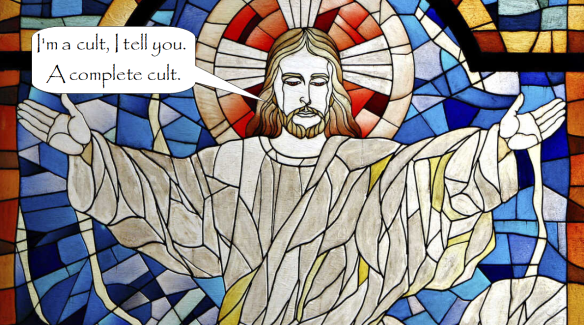
Image from a video by Intimacy With God, available here. I don’t recommend it.

In this season: a new favourite of evangelicals.

Though it is biblical (2 Timothy 4:2), what the hell does it mean in the mouths of today’s Christians? Here it is used to excess in the FreshPerspective blog: 

God is shifting his faithful sons and daughters into new seasons. But before I divulge into the signs, understand that everyone is called to different seasons. Some are being released into a season of exposure (platforms, opportunities etc), some into a season of preparation (preparing for a new season), and some into a wilderness season (a time of God pruning you, deliverance from past sins and behaviors before you enter a new season). So don’t be discouraged when it seems like you’re not where everyone else is. Seek God, pray and receive his wisdom and knowledge for what season you’re in.

It’s meant to sound profound, but there’s nothing profound about it. It’s pretentious, meaningless twaddle. Bob Dylan said it far better when he sang, ‘the times they are a-changing’. Things change; they continually evolve. Likewise our personal circumstances. God isn’t blessing, releasing, pruning or preparing you. Nor has he any great plans for you or the church. (Why? Because he’s not real.)  

Thoughts and Prayers/I’ll pray for you

Thoughts and prayers are always proffered when disaster strikes. The ‘thoughts’ I understand; when a long-distance friend lost her daughter to suicide a couple of years ago, I wanted her to know I was thinking of her and was ready to listen if she wanted to talk. She told me later that it was comforting to know that friends were thinking of her and were around if she needed them. I don’t think she said this just to make us, the friends, feel better. Such painful circumstances pare away insincerity.

There’s often not much more we can do beyond thinking about others when they are suffering like this. There are circumstances of course when we can offer more practical help, but adding ‘prayers’ to any expression of concern is lazy and glib. Prayers are of no use to anyone in distress or despair because prayers are, in any context, of no use, period. There’s no God out there, up there or inside us listening to our inner pleading. Even if there were, he is, according to his personality profile in the bible, so capricious and unheeding that he would do nothing to alleviate suffering. Neither would he step in supernaturally to remedy the terrible situations humans find themselves in. If he was even remotely concerned, he wouldn’t allow these to happen in the first place. Little point then in asking him to help with any mess he’s helped created, either intentionally or through disinterest.

But as I say, there’s no God so we need not trouble ourselves trying to work out what he’s playing at. Nor do we ever need the sanctimonious promise of prayers that will probably never be said. It doesn’t matter whether they are or not, so please, True Believers, can we dispense with  the cant?

The Daft Things Christians Say (the Sequel)

The return of an old favourite (of mine if no-one else’s)!

Dennis and I were in the States a couple of weeks ago and had the dubious pleasure of watching American news channels. I noticed on more than one, the presenters signed off with ‘God Bless’. As well as undermining what little objectivity they have left, the phrase rang hollow and made those using it, for whatever reason, as vapid and insincere.

It’s a phrase that many ordinary Christians and the nominally religious use (a waitress serving us lobster also came out with it, as if the lobster would magically be granted extra flavour.) It seems to me it’s a remnant from the days of incantation and magic. ‘May God bless you’ as opposed to ‘Let the devil smite thee’ or some such. ‘Goodbye’ has survived from these times too, originally ‘God be with you’, and is equally meaningless. Meaningless because if a God existed he would presumably be with you if he felt like it, or not as the mood took him. Attempting to summon his presence with an incantation of well-wishing is hardly going to influence him. Similarly with ‘God Bless’. Doesn’t the Bible say that God blesses whom he will (Romans 9:18)? No imperative will change that. Might it make the declarer of God’s presence of blessing feel more smugly self- righteous while the intended recipient might feel better, he or she convincing themselves they are actually ‘blessed’? Maybe, but God would have nothing to do with either state of mind.

Likewise that magic phrase Christians like to add to the end of prayers: ‘we ask this in Jesus’ name’. Will God not listen to their supplications if they don’t add it? Will he grant their requests if they do? I think we all know the answer. Why should it make any difference to Almighty God whether they add magic words to their pleas? If it does, what sort of God is it who must have exact words used, like a Hogwarts spell? The addition of a ‘just’ before the word ‘ask’, meaning ‘this is really a modest little request, your worshipfulness, we don’t want to bother you,’ doesn’t make it any more meaningful. From within the faith, as without, the phrase couldn’t possibly make any difference, apart from possibly allowing the supplicant feel better, more self-satisfied, like the child who adds a pretty picture to the end of their writing. ‘We (just) ask this in Jesus’ name’ another empty and vacuous magic spell.

Speaking in Tongues


I used to be so uncomfortable in prayer meetings that I attended back when I was a true believer when someone would start praying in tongues. It usually went something like alaluboolubamuba repeated over and over again, like a babbling brook. Babbling is what it was. In the churches I experienced it in, there was rarely any interpretation of the tongues as Paul instructed there should be. Even when someone was led by the Spirit to pipe up, what the speaker in tongues had said in gobbledegook was standard praise stuff: ‘Thank you Jesus for your wonderful mercies. Praise you for all you have done for us. Alleluia! Praise you’ etc, etc. And who were we, the others present, to say it wasn’t? Some would add their own Amens to the interpretation, adding credence to the meaningless phenomenon. The Spirit at work indeed.

Speaking in tongues, glossolalia, seems to have afflicted the cult in Corinth in particular. Paul addresses it in his first letter to the church there, and nowhere else. He doesn’t seem to know what to make of it. He feels unable to say that it’s merely a few people getting carried away (because that’s pretty much what all early Christian worship was) and can’t say it’s not the Spirit moving them to babble when that’s what the church was claiming. So he fudges it, claims he speaks in tongues more than anyone else (why do I hear Donald Trump in this boast?) and makes a few stipulations:

Only speak in tongues if there’s an interpreter present. (What happens if you get the urge the Spirit moves you when there’s no interpreter around?)

Glossolalia is ‘uttering mysteries’ in the Spirit that no-one can understand (so how can they be translated/interpreted by someone else?)

You shouldn’t speak in tongues all at the same time. It’s unseemly.

Use tongues only in private (according to the great know-it-all apostle, tongues are of the spirit and are merely a way of praising God. Tongues then are God praising God: what a narcissist he is! Other than this, Paul concludes they’re not much good.)

Interestingly, at no time does Paul suggest or acknowledge that some of the tongues manifesting themselves are other languages – real languages as opposed to unintelligible babbling. In fact he makes much of the fact that no-one understands what is said. It’s left to Luke to elevate linguistic nonsense to miracle status. In Acts 2:4-12, he has the disciples speak in real foreign languages after the Holy Spirit takes hold of them. Those around are ‘amazed’ (aren’t they always?) that they can suddenly hear the gospel message in their own tongue. Luke labours the point that, conveniently, there were men from ‘every nation under heaven’ present to verify the use of multiple languages by otherwise uneducated fishermen. Far more likely is that Luke, aware of the outbreak of babbling in at least one early church, shaped what he’d heard into what he thought was a more credible account. In other words he made up the story of the disciples spontaneously becoming fluently multi-lingual.

Later still, the unknown writer who invented the longer ending of Mark decided to mention the tongues phenomenon in the prophecies he invented for Jesus. In Mark 16:17 he has Jesus promise that those who believe in him would miraculously speak in ‘other languages’. How many times has this happened in the ensuing two millennia? I’d put money on there only ever having been sporadic outbreaks of meaningless babbling, such as that which I experienced. 

The church today continues to be confused about tongues. Some claim that ‘the gifts of the Spirit’, of which tongues are a part, no longer manifest themselves among believers. It’s a neat way to consign bizarre behaviour to the dumpster of history, but alas, it’s unscriptural. Nowhere does Paul suggest tongues and the other gifts of the Spirit would have a sell-by date before the Lord’s coming. Admittedly, he thought the Lord would be coming real soon. Only then, not before, would tongues and the other gifts of the Spirit ‘pass away’.

Other churches today are open to the possibility of tongues. Some even claim that the Spirit does indeed enable believers to launch fluently into languages, complete with correct syntax and vocabulary, that they don’t actually know. We can be sure there would be evidence of this online if it really occurred. There isn’t. 

Others are happy to go along with the unintelligible babbling, preferably with an interpreter who makes stuff up is also led by the Spirit to make sense of the mumbo jumbo.

Some abandon all restraint, with entire congregations babbling at the same time. Paul’s rules be damned!

And they wonder why we don’t take them seriously. As Paul himself warned:

If the whole church comes together and everyone speaks in tongues, and inquirers or unbelievers come in, will they not say that you are out of your mind? (1 Corinthians 14:23)

They surely will.

Have any of you encountered speaking in tongues? What did your church make of it?

God and the Domino Effect

Once free of belief in God, everything that follows collapses.

No God means –

   No divinely inspired scripture, no sin, no salvation, no need of salvation, no repentance or divine forgiveness (and no need of these things either), no grace.

   No supernatural, no heaven or hell, no Satan, angels or demons, no Holy Spirit, no effective prayer, no miracles, no judgement, no eternal life.

  No Son of God, no God Incarnate, no prophecy, no atonement, and, most significantly, no resurrection. 

According to the Bible, God resurrected Jesus (Romans 6:4; Galatians 1:1; Acts 2:22 etc). Therefore, no God = no resurrection.

So, where did all these ideas that, once God ceases to exist, fall like dominoes? Answer: the only place ideas ever come from: the human mind. Everything ever associated with gods, and with YHWH (Old and New versions) is entirely human invention. This is the only logical, rational conclusion.

  Paul’s vision of what he took to be the Risen Christ and his consequent theology: the product of a tortured imagination.

  The resurrection appearances supposedly experienced by Cephas and others: within their own heads (grief-induced hallucinations, dreams, trances, emotional agitation). Or: an emotional response to some natural phenomenon such as bright lights.

  The stories of Jesus that these visions inspired: invented by creative writers imaginatively applying ‘prophecy’ imagined by earlier writers.

  If he existed, Jesus’ Messiah complex: worked up entirely within his own religion-soaked brain.

  His conclusion that the end of the age was nigh and that he would be king of the new order (assuming he really did think this): the result of wishful thinking, all in his imagination.

Subsequent additions to the Christian experience: the Trinity, guesswork about the Messiah’s delayed return, the panoply of saints, heresy, blasphemy, ‘God’s standards’, the inerrancy of scripture, apologetics and, coming full circle, conversion experiences. All creations of the human imagination and emotions.

With no actual God, this is the only viable explanation of the phenomenon that is religion. Human beings did it.


No God and the Domino Effect

This a response to Don Camp’s comment on my post The Evil of Christianity, in which he tries to isolate ‘the crux’ of our disagreement about the Faith.

You start, Don, from the assumption that there is a God. I, on the other hand, have considered the evidence and concluded that in all probability there isn’t one. Certainly not the Christian God. There may be a god out there somewhere that has no interest in human beings and their affairs, though I doubt it. As far as we humans are concerned such a deity is as good as non-existent, being entirely hypothetical. If it is out there, it certainly won’t be offended at my saying so.

Once I realised some years ago that a personal God did not exist a number of other things followed (or rather, collapsed):

No God means no Son of God or God Incarnate, no Saviour or Christ.

No God means no resurrection (which Paul makes clear was a work of God).

No God means no Holy Spirit.

No Holy Spirit means no regeneration of individuals to become new creations in God (you only have to look at Christians today to see this is the case.)

No God means no grand Salvation plan.

No God means no Heaven, no Final Judgement, no Kingdom of Heaven of Earth, no Eternal Life.

No God means the universe can’t have been created by him.

No God means no manipulation of evolution, no intervention in human history and no prophecy of things to come.

No God means that the world would be just as we find it: messy, beautiful, dangerous, turbulent, indifferent.

No God means prophecy is man-made and comes to pass at no greater rate than chance allows (i.e. practically zero.)

No God means conversations with ‘him’, revelations from him and visions of him are all imagined, generated by and within the human brain, which works in mysterious ways.

No God means no God-given morality. Morality is, as you say, culturally determined and so may and does change over time. (You can see this in the Bible itself where morality supposedly handed down by God for all time evolves throughout the Old Testament and into the new.)

No God means there is neither Sin nor Righteousness. These are religious concepts. The whole spectrum of human behaviour, from destructive to altruistic, is demonstrated by believers and non-believers alike.

No God means assertions like ‘the issue turns on what I perceive as good for me versus what God declares is good for me’ are illusory. What is good for you is what you have worked out, even if you think God had a hand in it. A supernatural being who doesn’t exist cannot be responsible for your well-being, though your church and the bible undoubtedly contributed to your conditioning.

No God means individuals must work out their own meaning and purpose. Some do, some don’t, as you observe, Don. This is as true of believers as it is for non-believers. Many atheists have managed it, or not, without having it imposed by religion. And despite what you say, Christianity is a religion. It is the epitome of religion.

No God means none of the Abrahamic religions are true and therefore Christianity and its ‘holy’ book, being based on an invalid premise, must be false. Most of the posts on this here blog are about demonstrating this fact.

No God means all gods are man-made, not all gods except one.

The crux of the matter is you believe in God while I see how unlikely it is that there is one. I’d agree with you if I could, Don, but then we’d both be wrong.

If It Walks Like A Duck…

Psychology Today has this to say about cults:

Destructive individuals and cults use deception and undue influence to make people dependent and obedient. A group should not be considered a cult merely because of its unorthodox beliefs. It is typically authoritarian, headed by a person or group of people with near complete control of followers. Cult influence is designed to disrupt a person’s authentic identity and replace it with a new identity.

Let’s break this down a little:

Destructive individuals: But those enemies of mine who did not want me to be king over them – bring them here and kill them in front of me (Luke 19.27).

Do not suppose that I have come to bring peace to the earth. I did not come to bring peace, but a sword (Matthew 10:34).

He said to them, ‘But now, the one who has a purse must take it, and likewise a bag. And the one who has no sword must sell his cloak and buy one. For I tell you, this scripture must be fulfilled in me, “And he was counted among the lawless”; and indeed what is written about me is being fulfilled.’ They said, ‘Lord, look, here are two swords.’ He replied, ‘It is enough’ (Luke 22: 36-38). [This is evidently a fictitious episode created around a supposed prophecy (Isaiah 53:12).]

Use deception: The time has come. The kingdom of God has come near. Repent and believe the good news! (Mark 1:14-15). Therefore I tell you, whatever you ask in prayer, believe that you have received it, and it will be yours (Mark 11.24).

Undue influence: Any one of you who does not renounce all that he has cannot be my disciple (Luke 14.33). No one who puts his hand to the plough and looks back is fit for the kingdom of God. (Luke 9.62).

To make people dependent: If anyone comes to me and does not hate his own father and mother and wife and children and brothers and sisters, yes, and even his own life, he cannot be my disciple (Luke 14.26).

…and obedient: If you love me, keep my commands (John 14:15). Whoever serves me must follow me; and where I am, my servant also will be. My Father will honour the one who serves me (John 12.26).

Typically authoritarian… with near complete control: You are my friends if you do what I command you (John 15.14).

Not everyone who says to me, ‘Lord, Lord,’ will enter the kingdom of heaven, but the one who does the will of my Father who is in heaven. On that day many will say to me, ‘Lord, Lord, did we not prophesy in your name, and cast out demons in your name, and do many mighty works in your name?’ And then will I declare to them, ‘I never knew you; depart from me, you workers of lawlessness’ (Matthew 7.21)

Disrupts a person’s true identity: If anyone wants to come after me, let him deny himself, and take up his cross, and follow me. For whoever wants to save his life will lose it. But whoever loses his life for my sake will find it. (Luke 9.23). 

And replaces it with a new identity: Truly I tell you, unless you change and become like little children, you will never enter the kingdom of heaven (Matthew 18.13).

(John said,)He must become greater; I must become less’ (John 3.30).

It is not the healthy who need a doctor, but the sick. I have not come to call the righteous, but sinners to repentance (Luke 5: 31-32).

Whether Jesus said these things or they were put into his mouth by his early followers, it is still the case that if it looks like a cult, talks like a cult and behaves like a cult… it’s a cult.

As it was in the beginning, now and ever shall be.

God’s Megaphone?

from his book, The Problem Of Pain

Does the Christian God use pain to draw people to himself? Assuming for a moment that such a God exists, does he use human suffering to make followers for himself?

There is no evidence in the Bible to suggest he does. To be sure, the Bible has a fair amount to say about pain. It claims that suffering is a means by which God either chastens Christians (Hebrews 12.7) or strengthens them (Romans 5.3-5), but this is exclusively for people who already believe. The Bible does not say non-believers are afflicted as a means of drawing them closer to God; the idea is unbiblical.

Let’s assume then that while this notion finds no support in the bible, Christians have learnt over the centuries, perhaps though extra-biblical revelation, that God does use pain in this way. What does this tell us about God? That he’s a being whose principal way of making human beings pay attention to him is by causing (or allowing) them to suffer frequently unbearable pain and anguish.

What sort of God is this? Not one who loves the world and cares for humans far more than he does mere sparrows (Matthew 6.26). He’s more an unpleasant, sadistic bully: the jock who backs you up against the wall, grips your balls and squeezes hard.

Maybe that’s how it is. The God who created the universe is just such a being; a moral monster, as commenter koseighty puts it. It’s easy to see how he might be: human beings suffer, yet there’s (supposedly) a God who loves them; therefore pain and suffering must at the very least be sanctioned by God, or, more likely, delivered by him. This, after all, is the story of the Old Testament. The God so arrived at though is a thoroughly human creation, a means of minimising cognitive dissonance by reconciling human suffering and a God who supposedly cares.

One more assumption is needed. Let’s assume this time that despite the odds, this character really exists. Does his strategy work? Does inflicting pain and anguish on people make them, as Lewis suggests, cry out to the One doing (or allowing) the inflicting and compel them to love him? It seems unlikely; I can’t find any evidence online of anyone claiming that pain or anguish brought them to God. From a personal perspective, I can honestly say that in times of distress or suffering I have never, post-deconversion, called out to God or any supernatural entity for help. I’ve never interpreted my suffering as his calling me closer and have never, since escaping Christianity, succumbed to his malicious charms. (What I did do occasionally, following my deconversion, was to convince myself that my suffering was a punishment from God – for leaving him behind, being gay or something I’d done. These feelings disappeared when I embraced fully the fact that the Christian God isn’t real.)

Where does this leave the Christian with, as Lewis puts it, ‘the problem of pain’? How do they reconcile a loving God who allows or even causes human beings to suffer? They can’t. Instead they spout empty platitudes that they think let their indifferent, imaginary God off the hook. Just look at the meaningless theo-babble religious leaders came up with in 2004 after a tsunami hit Indonesia, killing 227,898 people.

Leave God out of the equation, however, and there are far better explanations for why humans suffer. ‘Shit happens’ is far more convincing than anything the religious have to offer. Physical pain is the body’s reaction to damage. It is an imperfect system that frequently overreacts or fires up even after damage is repaired (I know this having fibromyalgia). That’s what it is to have, to be, a physical body. Anguish comes from random acts of nature, the violence and cruelty we inflict on each other and the death of loved ones, much of which is beyond human control. ‘Thoughts and prayers’ are useless in ameliorating this kind of suffering. Measures to restrict people’s access to weapons undoubtedly helps, as it has in countries with politicians with sufficient strength and intelligence to enact gun-control legislation. Without it, as in Ulvalde recently, more children will die, more parents will experience terrible anguish and another massacre is inevitable. God won’t stop it.

Suffering is not symbolic of something else; it is not ‘God’s megaphone’ or an opportunity for others to point those afflicted to Christ’s light (or any other bullshit that involves the supernatural.) Pain simply is. It is our lot as physical bodies to endure or alleviate it as best we can.

God or Superman?

Blog397

An early problem faced by the creators of Superman, only a few years after his first appearance in Action Comics #1 in 1938, was his impotence in the real world. Here was a character with incredible super-human powers – not quite as phenomenal as they would later become – who could defeat gangsters, wife-beaters, bullies and evil dictators with a flick of his little finger, but who, when a real life bully emerged on the world stage, couldn’t do anything. Stories could have been written about how he single-handedly defeated the Nazis and restored world peace but none of this would have been reflected in the real world. It’s true that today with its alternate realities and constant rebooting that Superman could be made to defeat modern-day fascism; but that would be on some other fictional Earth, not the real one. In the real world, Superman would remain impotent, having little effect beyond raising awareness and morale, which is what he did – or, more accurately, what his creators had him do – during World War II. There wasn’t anything else he or they could do.

By now, coronavirus should really have disappeared from the face of the Earth. Last Sunday was National Day of Prayer in the US. Independent of Donald Trump’s ‘initiative’ in calling for a day of grovelling in front of the Almighty, many other Christians have also been begging God to protect their church community from covid-19 (the godless can fend for themselves). Still others have commanded the virus, in the name of Jesus, to leave them and the USA alone (the rest of the world be damned.)

The effect of all this pleading and commanding has been that the coronavirus has continued to spread, heedless of borders and indifferent to the religious beliefs of its victims. Either God doesn’t give, as we say in this neck of the woods, a rat’s arse about who contracts covid-19, nor who dies from it, not even his born-again Chosen Ones. Everybody’s gotta die sometime, right? The important thing is that they’re right with the Lord before they do.

Or – God’s just like Superman. We can imagine him doing all sorts of incredible things, like healing disease, curing illness and saving the world, but in reality, none of them ever happen. He’s not going to protect people from coronavirus in precisely the same way he failed to protect them from 9/11, AIDs, the Holocaust, Spanish Flu, The Great Plague, Black Death and Leprosy. It’s not that he doesn’t care, it’s that he’s not there. He’s no more real than Superman and is every bit as impotent as the Man of Steel.

I’m a big fan of Superman – I’ve been reading the comics he appears in for 57 years now – and I’m fully aware he’s not real; he was created by Jerry Siegel and Joe Shuster 82 years ago and has been embellished by every writer and artist who’s worked on him ever since – much like God. If only those who plead with the Almighty, and worse, tell the rest of us what he thinks of us, would recognise that he is fictional too. He exists only in a fantasy realm, outside of which he has no super-powers, no influence, no ability to save us from coronavirus or anything else.

Remember the sequence in the Simpsons episode where Homer is, as usual, in lots of trouble; he looks to the sky and pleads, ‘I’m not normally a praying man, but if you’re up there, please save me… Superman.’ That’s exactly what Christians are doing right now, and the result will be the same as it was for Homer and for everyone else who’s ever called on Superman God to save them.

Try praying

TryPraying

I was in Edinburgh recently and spotted posters, like the one above, on the backs of buses, advising people to ‘try praying’. There is, naturally, an entire web-site devoted to the campaign, created by Christians with more money than sense.

Here’s a thought: try praying that the bus on which one of these ads appears waits for you as you run for it and it pulls away from the stop. You think that would work? (No more than chance would allow.) Or try praying that if you do catch it, the driver will let you on, even though you’ve left your purse at home and can’t buy a ticket. Try praying that the pain you’ve experienced all day be taken from you as you set off walking home. Try praying for or about anything and see what God’s response is. Prayer, ‘tried’ or not, is no more effectual than wishful thinking or chatting with the fairies at the bottom of your garden.

Blog362a

(fixed it)

While in Edinburgh, I visited St Giles’ cathedral in the centre of the city. A friend I was with wanted to see a commemorative plaque there and I saw a chance to rest my aching legs. At the entrance was a sign that said the cathedral welcomed a donation of £5 ($6.55) per visitor to help with daily running costs. Evidently the ecclesiastical administrators haven’t realised they could ‘try praying’ and ask God to fund a building, the sole purpose of which is to honour him. Or perhaps they had ‘tried’ prayer and had discovered God wasn’t willing to provide the hundreds of pounds needed every day to keep it going.

Whichever, the only way churches like St Giles can survive is to have those humans who think they serve some meaningful purpose, fund them themselves. God couldn’t care less whether they flourish or not. If he did he’d keep them going from his abundant supply. That he doesn’t demonstrates not only his non-existence but also tells us that the church is an entirely human enterprise. Without human effort, and liberal amounts of filthy mammon, they invariably fail.