Sin

Sin

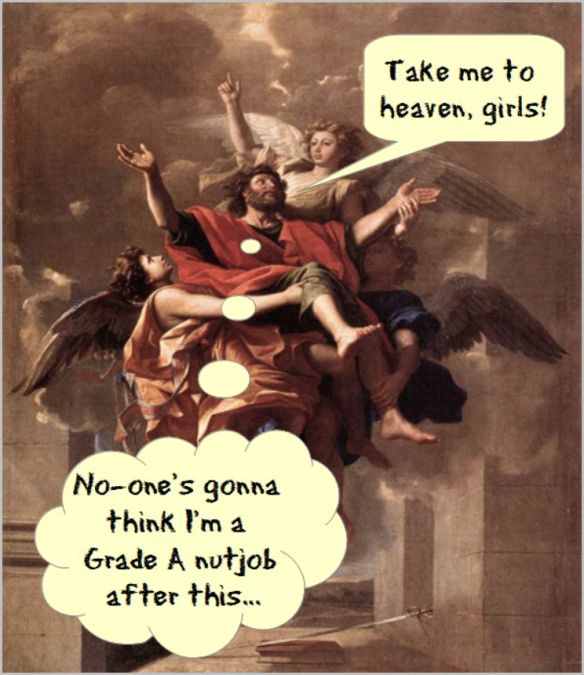
During the recent election in the UK, the leader of the Liberal Democrat party, Tim Farron, was asked if he thought gay sex was a sin. Farron is a born-again Christian and instead of answering the question, he hedged round it. Predictably, this meant that journalists returned to it, with the politician dodging it each time.

In all probability, Farron does regard gay sex as a sin. The bible teaches that all behaviour that offends God is sin, causing a rift between mortals and the deity. This, biblically speaking, is what defines sin. Tim Farron would have been better being honest, saying that his faith leads him to believe that sex between people of the same sex is sinful but that personally he is a supporter of equal rights for all. His voting record indicates this to be the case; he has consistently voted in favour of LGBT rights while, presumably, maintaining his faith. Perhaps if he had answered in this way, he might not have felt the need resign as Lib-Dem leader on the grounds that his role as party leader conflicted with his personal beliefs. Predictably, evangelical groups have claimed he was hounded out of office because of his beliefs, but it seems far more likely he was, as he said himself, finding it difficult to reconcile his faith-induced worldview with his public duty. It must be difficult defaming your colleagues when you’re supposed to be demonstrating Christ’s love.

Whatever the reason, those who believe that human behaviour is sinful are wrong. Nothing humans do is a sin. Nothing we do, gay sex included, offends God because there is no God to offend. Sin is an entirely religious concept that has outlived its usefulness, if it ever really had any. Which is not to say human behaviour cannot be immoral. It can, but immoral behaviour and sin are not the same thing. As a rule of thumb, morality is determined by the extent to which our behaviour adversely affects others. Deliberately harming them physically, materially or emotionally is (likely to be) immoral behaviour. Murder, theft and abuse are immoral – but they are not ‘sin’.

Morality is not always clear cut, however; arguably it would not be wrong to murder a terrorist or suicide bomber before he can embark on a killing spree. Aborting collections of cells in a woman’s uterus, if that is what she wants, is also not an immoral act. Similarly, victimless behaviours such as sex – both hetero and homosexual – between free, consenting adults is neither wrong nor immoral. Nor is masturbation, gender fluidity or transgenderism. And as for the betes noir of the church of my youth (and who knows, they may still be) – listening to rock music, having the odd drink and dancing – they’re not either.

On the other hand, some of the activities indulged in by religious people are immoral: attempting to impose their beliefs on others; misrepresenting and denigrating those different from themselves; pressurising gay people to deny their sexuality; advocating the death penalty for homosexuality; covering up fellow-believers’ criminal activity; teaching children that creation myths are true; dismissing science; persuading people that prayer works; convincing others they are sinners.

We all behave immorally, thoughtlessly and carelessly, from time to time. But we are not, as a consequence, destined for hell, nor are we in need of a saviour to magically wash away any wrong-doing; if that really worked, we would see no immoral Christians. No, when we have behaved immorally we need to make reparation to those we have harmed, not ‘repent’ by begging forgiveness of some irascible god. What we should never do, whatever the Righteous ones tell us, is regard ourselves as sinners. We are not: it is impossible to offend a deity that doesn’t exist.


Making Excuses for Jesus

jesus-jw

Excuse 5. When Jesus said the ‘Kingdom of God is coming soon’, what he meant to add was ‘but only in heaven and then in 1874. Or 1878. 1914? Er… 1975. After 2017?’

So say the Jehovah’s Witnesses. In 1897 they claimed that Jesus had started on his comeback tour in 1874:

Our Lord, the appointed King, is now present since October 1874, A.D., according to the testimony of the prophets, to those who have ears to hear it: and the formal inauguration of his kingly office dates from Apr 1878, A.D. Studies in Scriptures Series IV (p.621)

and

The year A.D. 1878 … clearly marks the time for the actual assuming of power as King of kings, by our present, spiritual, invisible Lord… The Time is At Hand (1911 ed) p.239

When there was no sign this had happened – and goodness knows what sort of sign there could possibly be – the JWs changed their minds again and said the real date for the start of the ‘full’ kingdom was to be 1914:

In view of this strong Bible evidence concerning the Times of the Gentiles, we consider it an established truth that the final end of the kingdoms of this world, and the full establishment of the Kingdom of God, will be accomplished near the end of A.D.1914. Studies in the Scriptures Series 2: The Time is at Hand (1889 ed) p.99

and

October, 1914, will witness the full end of Babylon, “as a great millstone cast into the sea,” utterly destroyed as a system. Watch Tower (Jun 15 1911) p.190

Alas, over a century later there’s no sign of the Kingdom’s ‘full establishment’, while the old, corrupt system (Babylon) carries on as normal. So, after another change of heart, and a quick, futile stab at 1975 as the right date, Jehovah’s Witnesses came up with a revised plan. Here’s how it looks:

Jesus will return while the generation alive in 1914 is still around, when he will finally get the Kingdom underway. This is the ‘generation’ to which he refers in his prophecies in the bible; his return and the Kingdom coming to the earth will definitely happen while the 1914 generation  is still alive.

But hang on! A person born in 1914 – and there are some still around – is now 103, while those who were already adults in 1914 are long dead. In other words, the 1914 generation has almost gone and there’s still no sign of Jesus or his Kingdom. Either he’s going to return real soon, before the last of the 1914 generation depart, or he’s going to miss the deadline yet again (Guess which it’s going to be).

But worry not, Jehovah’s Witnesses have this one covered too! When Jesus referred to ‘this generation’ he didn’t just mean one generation, but to the generation that ‘overlaps’ with that generation. There’s nothing biblical about ‘overlapping generations’, of course. Jesus didn’t say, ‘the Kingdom will come while this generation and those that overlap with it are still alive,’ but like mainstream Christians, Jehovah’s Witnesses need to give Jesus and themselves an excuse if they’re to avoid admitting that he and they have got it wrong.

So, an overlapping generation would be one like my own, whose grandparents were children in 1914. But we can extend this – and we can be sure JWs will once Jesus fails to return on time – because, using the same ‘reasoning’, my grandchildren’s generation ‘overlaps’ with my grandparents’ through me. My grandchildren’s grandchildren too will be connected with all previous generations, including that from 1914, because of those who have preceded them… and on and on, ad infinitum. In fact, Jesus could come back at any time in the future so long as someone is alive who can trace their ancestry back to 1914.

But he’s not going to. He wasn’t talking about a ‘generation’ almost 2000 years after he lived. He was certain the Kingdom of God was coming to his time and his people. All of these convoluted and ultimately unconvincing explanations of what he ‘really’ meant when he preached an imminent heavenly Kingdom on earth simply won’t do. While mainstream Christians mock Jehovah’s Witnesses for their silly conjecturing about Jesus’ return, they share the belief Jesus is coming back. Most won’t venture a date (though there have been plenty who have) because, they will tell you, Jesus also said ‘no-one knows the precise day or hour’ when the Son of Man and the Kingdom will appear (Mark 13.32). Nevertheless, they remain certain that Jesus will return: this year, next year, sometime… any time other than that which he actually predicted.

While evangelical Christians and others insist that the bible, where all Jesus’ failed prophecies appear, is the literal and infallible word of God, they refuse to take literally his pronouncements about the coming of the Kingdom. While he might have said he didn’t know exactly when it would arrive, he was certain it would be while his own generation lived. As he is made to say in Matthew 16.28, ‘some who are standing here will not taste death before they see the Son of Man coming in his kingdom’.

All of which is a problem for Christians: if these predictions are not to be ignored, then they must be interpreted, explained and, eventually, explained away. The last thing believers want to do is accept them for what they are; the demonstration of Jesus’ failure. The Kingdom didn’t arrive when he said it would and, given how far it is past its sell-by date, it’s certainly won’t be now.

Making Excuses for Jesus

Hokum2

Excuse 3. When Jesus said ‘Kingdom of God’ what he really meant was ‘heaven’.

According to many Christians, the Kingdom of God is a supernatural realm where those whom Jesus has redeemed are going to go when they die. This kingdom is not, despite what Jesus said, coming to the Earth; believers are going to it, and it’s called heaven.

This is probably the most prominent view among Christians today and it couldn’t be more wrong. As we’ve established, Jesus says repeatedly and consistently that the Kingdom is coming here, to the earth. As well as all of his assurances (cited in earlier posts), he taught his followers to pray to God that ‘thy kingdom come, thy will be done on earth as in heaven’ (Matt 6.10), a petition Christians affirm whenever they repeat ‘the Lord’s prayer’.

Nowhere does Jesus promise his followers that they will spend eternity in heaven with God. Neither does Paul, nor any of the New Testament writers. Heaven, according to the bible, is God’s abode beyond the clouds; it is not a theme park open for visitors or long term guests. True, Paul believed that deceased souls would enter the presence of Christ to be kept safe until the Kingdom’s arrival, at which point they would be housed in new, spiritual bodies (1 Corinthians 15:35-58; 1 Thessalonians 4.13-18). These new bodies would not be for life in heaven, however, but for a resurrected existence here on earth, once the Kingdom had been established.

Amazingly, Paul expected people to believe this appalling drivel. Later Christians evidently couldn’t, and so invented the idea that they would be going to Heaven permanently post-mortem. John 14.3, which makes Jesus say he’s going to prepare a place for his disciples ‘in his father’s house’, might be an early sign of this wishful thinking. On the other hand it might mean something else altogether – as usual Jesus is made to speak in obtuse riddles.

Whichever it is, Christians are not promised an existence in heaven when they die. The only offer is of a place in God’s Kingdom on Earth, which both Jesus and Paul thought was coming very soon.


Excuse 4. When Jesus said ‘Kingdom of God’ what he really meant was ‘an internal kingdom of the heart’.

The Kingdom of God, then, must be, as a commenter on Answers in Genesis recently assured me, ‘an internal kingdom of the heart’. But you’d be hard pushed to find this bit of fluff in the bible. The closest it comes to saying any such thing is in Luke 17.20-21 where Jesus announces that the Kingdom of God is ‘entos hymon,’ a phrase sometimes rendered as ‘within you’ but which is more accurately translated ‘among you’. It is not an assurance that the Kingdom of God is some sort of silopsistic comfort blanket for believers in the far-flung future. It is yet more evidence that Jesus (or his script-writers) regarded the Kingdom as imminent in his and their own immediate context: first century Palestine. 

That’s four excuses – four explanations that what Jesus really meant was what today’s Christians want him to have meant. It’s tough facing up to the reality that God’s Son – God himself according to some Christians – was so mistaken, so disastrously wrong. But he was.

So naturally, more excuses are needed…


How to argue like a Christian

Argue

If you’ve ever tried discussing matters of faith with a True Believer™, you’ll know how difficult it can be; like wrestling with a jellyfish – and just about as poisonous.

So here’s a guide for the unwary; 10 of their favourite lines (5 this time, 5 next), all of which I’ve experienced more times than I care to remember.

“You don’t know your Bible!”

Point out that Jesus’ ‘good news’ was nothing like Paul’s or that they were both wrong about the Kingdom arriving in the first century and this old canard gets trotted out. Even if you quote chapter and verse, a clear indication you do know the Bible, they still produce it. What they mean is ‘how dare you quote the bits of the Bible we true believers don’t like and prefer not to acknowledge.’

“You’re quoting out of context.”

I’ve posted about this one before. Seemingly as a sceptic you have no discernment when it comes to selecting Bible verses. How ever many you reference – one or a hundred – they will tell you it’s not enough; that you’ve not, somehow, caught the true meaning of what the Bible is saying, which is, naturally, what they say it means. Unsurprisingly. quoting isolated verses is something the Righteous themselves like to do all the time…

“The bible says…”

It doesn’t matter what point you make, this will appear somewhere in the Christian’s response, followed, of course, by some random verse from the book in question. Christians seem to regard it as the ultimate clincher, the way to silence any opponent, as if quoting the bible to those who recognise neither its credibility nor its authority persuades anyone of anything.

“You’ve no right to criticise Christianity when you can’t ‘prove’ how something came from nothing/how life arose/evolution.”

It’s unlikely anyone can explain these biggies in 140 characters or a Facebook comment, but we can direct those issuing the challenge to scientific works that offer viable theories soundly based on the evidence available. Needless to say our Christian smart-Alec is unlikely to read them, claiming instead that one’s inability to comprehensively explain the Big Bang or evolution ‘proves’ it must have been – watch the sleight of hand here – YHWH.

“‘People like you’ only want to wallow in your own sin (which is why you won’t let me have my own way).”

Now I like to wallow as much as the next man, but outside the Christian bubble, ‘sin’ is a fairly meaningless concept, designed only to induce guilt in others. Which means the point of this unpleasant finger pointing is to side-step any discussion and to dismiss whatever point you might want to make. What this retort really means is ‘you have an ulterior motive for saying what you’re saying and, in any case, your inherently evil nature doesn’t entitle you to have an opinion.’

More next time…

The original ‘good news’ had nothing to with any mystical salvation plan (part two)

Disciples2

Last time, I provided evidence that Jesus’ original ‘good news’ had nothing to do with any mystical salvation plan constructed around his supposed resurrection. My six references demonstrated that, even after his death, the disciples adhered to Jesus’ original message: God’s Kingdom was coming soon and they were going to rule over it. Here are six more reasons we can be sure this was the case:

7. Our earliest sources, Q and the gospel of Mark, do not give much credence to the resurrection as an actual event: Q records no sayings of the risen Jesus and Mark has no resurrection appearances; it ends with the women who discover the empty tomb deciding not to tell the disciples about it. In Mark’s gospel, then, the disciples are not even aware the tomb is empty, let alone that Jesus has returned from the dead. We can conclude from this that the community that produced Mark’s gospel, the supposed resurrection was not significant in and of itself.

8. Paul tells us that the disciples’ gospel was not the same as his, despite the fact he too believed the Kingdom wasn’t far off (1 Thessalonians 4:17). The disciples, he says in 2 Corinthians 11.4-5 and Galatians 1.6; 2.11-21, were preaching ‘a different gospel’. Different from his, certainly, but the same as the ‘good news’ Jesus proclaimed: Jewish people should prepare for the imminent arrival of God’s Kingdom on Earth (Mathew 9.35; 15.24), when, as Jesus himself had promised them, the disciples would judge the restored tribes of Israel and rule over them. It is, as we have seen, out of the question that they would jettison this aspect of the ‘good news’, given to them by Jesus himself.

9. Because the disciples – and Jesus’ brother James – saw the new Kingdom as intended for Jews only, as Jesus had before them (Matthew 10.23), they insisted that any Gentile converts must be circumcised; must become Jewish (Galatians 2.7). Paul, of course, objected to this requirement and throws tantrums about it in his letters (Galatians 5.1-12; Philippians 3.3). But like Jesus, the disciples saw no place for Gentiles, the unrighteous, in the new age; those who didn’t convert would, of necessity, be dispatched to eternal punishment (Matthew 25.31-46).

10. As far as the disciples were concerned, therefore, it was entirely for their own good that converted Gentiles be circumcised (Galatians 6.12-13) as this was their only guarantee of a place in the new Kingdom. What this tells us is that a salvation formula, such as that dreamt up by Paul, had no part in the disciples’ ‘good news’.

11. Wherever they appear – in Paul’s writing, the gospels, Acts – the disciples are portrayed as being at odds with an incantational, faith-based Christianity. The Bible attests, even with Paul’s new religion superimposed, that they held to a different gospel, a different sense of what Jesus’ life meant and a different notion of their place in the coming Kingdom. And wouldn’t they be the ones to know? They knew Jesus, spent time with him, listened to his teaching, bought into his misguided mission and had sufficient understanding of it to spread his ‘good news’ to fellow Jews, both while he was still alive and afterwards (Matthew 10.23; Luke 9.1-2).

12. The New Testament is testimony to the failure of everything Jesus and the disciples stood for; their ‘news’ that God was soon to turn the Earth over to the meek and that they would then rule the only people who mattered, the twelve tribes of Israel, with everyone else thrown into outer darkness (Luke 13:28). Jesus himself, of course, would return at some point to be top dog, God’s representative on Earth – his anointed one. None of this happened.

If only it had been allowed to rest there, we might not know today of Jesus and his mad ideas. Instead, Paul stepped in, reinterpreted the whole ridiculous enterprise and bequeathed the world a set of different but equally absurd beliefs. And the rest is history: religious wars, pogroms, inquisitions, suppression, superstition, clerical child abuse, Pat Roberston. Is this the Kingdom that Jesus and his closest associates foresaw? Decidedly not. But it is their legacy.

The original ‘good news’ had nothing to do with any mystical Salvation Plan™


Pentecost

As I discussed last time, there are indications throughout the New Testament that Jesus’ original ‘good news’ had nothing to do with a mystical salvation plan. There are clues too that the disciples clung to this original message – they’d heard it from Jesus himself, after all – even as other interpretations began to supersede it.

Let’s take a look at the evidence:

  1. Jesus tells his chosen twelve, which includes Judas, that they will rule with him in the age to come (Matt 19.28). As Bart Ehrman points out1, the fact that Jesus evidently had no foreknowledge of Judas’ later betrayal means this promise undoubtedly goes back to Jesus – it is unlikely later believers would have made it up. Though their names vary between gospels, Jesus hand-picked twelve men to rule with him.

  2. He appoints twelve disciples quite specifically and later tells them privately that this is so they can judge and each rule one of the twelve tribes of Israel once God’s Kingdom arrives (Luke 22.30).

  3. When Judas kills himself, the remaining eleven disciples think it vital to appoint a replacement twelfth (Matthias, in Acts 1.21-26). The number remains significant to them. How would they be able to rule the twelve tribes of Israel if there were only eleven of them? There had to be twelve for this very purpose. Even after Jesus’ death and supposed resurrection, the disciples are still preparing for the end of the age he prophesied and for their positions of power in God’s Kingdom.

  4. By the time the synoptic gospels were written, Jesus secret teaching that the Twelve would rule alongside him in the new kingdom had become common knowledge (hence its inclusion in the gospels). Given that he told them in private they’d be judges and rulers, it can only have been the disciples who later broadcast this information. And why would they do this? Because it was an integral part of their good news. Furthermore, all three synoptic gospels include a range of episodes in which the twelve are castigated for their presumption (eg: Mark 10.37-41; Matthew 20.22-24; Luke 22.24-30). These have all the hallmarks of stories created later, when a different ‘good news’ was emerging, specifically to mock the disciples’ belief.

  5. In much the same way, the disciples are consistently depicted as having no real understanding of Jesus’ mission (Mark 9.30-32; 10.35-45). And they don’t, in that they have no understanding of the later reinterpretation of Jesus’ significance. How could they? By the time the gospels came to be written, the mystical-Christ version of Christianity had started to take hold. Paul’s salvation plan and the supposed resurrection were beginning to assume greater importance than Jesus’ original message. How could the disciples, 40 years earlier, have known that this was going to happen? How could Jesus? They have to be portrayed as being largely ignorant of later developments – developments which, in any case, they opposed when they did encounter them (Acts 9.26; Galatians 1.6; 2.11-14; 3.1-3).

  6. In fact, Jesus teaching – all of it – was predicated on his belief that the Kingdom of God was ‘at hand’, imminent, about to happen real soon (Mark 1.15; 9.1; 13.30; Matthew 10.23; 16.28; 24.34), and that when it did, he and his chums would be there ruling it. It is unthinkable his inner circle would abandon this teaching, even after he died, in favour of something else. Any visions they had of him returned from the dead would only have reinforced their commitment to his ‘good news’; resurrection, after all, was a sure sign of the Kingdom’s arrival (Daniel 12.2-3).

To be continued…

1 Ehrman, Bart D., The Lost Gospel of Judas, p146

Suffer the Little Children

Jesus said to them, “Let the little children come to me, and do not hinder them, for the kingdom of God belongs to such as these.” Mark 10.14

…the very hairs of your head are numbered. Fear not: you are of more value than many sparrows. Luke 12.7

Jesus+kid

Recently, I attended the funeral of a little boy who died of the cancer he’d suffered from the time he was nine months old. His young parents are friends of mine. They showed their son such incredible love during his illness, ensuring he received the best medical care possible.

But where was God through it all? The God that Christians say has a special affinity for children, who loves them and cares for them? The God who looks after ‘the little people‘?

That God was nowhere. He showed no interest in this particular ‘little person.’ No concern and no compassion for him or his parents. Of course, that’s because he doesn’t exist, though this didn’t stop Christians telling the family how marvellous and caring and loving he is.

Really? If I had any vestige of faith left, what has happened to this innocent during his short life would have cured me of it entirely. And make no mistake, he was innocent, not a sinner (as if that would let God off the hook.) A deity who allows a baby to have cancer and to die after fourteen months of prolonged, invasive treatment would be a callous, worthless bastard. But we knew that already.

Had there been a God who cared, this little boy would’ve been two today, Easter Sunday.

The disciples would not have died for a lie (part one)

SonOfMan

The disciples would not have died for a lie, or so Christians like to argue.

Would they not?

Fanatics today do and it is more than likely the disciples believed their lie was true, if indeed they died for it at all. There’s not much evidence that they did. But if they did, maybe the lie they believed to be true was not the one today’s Christians think it was.

There is no evidence anywhere that Jesus’ original followers were martyred because of their faith in a physically resurrected Jesus – for their beliefs, maybe, but not necessarily because they believed Jesus had returned in bodily form from the dead. On the contrary, the evidence suggests that they holed up in Jerusalem to await his return through the clouds as the Son of Man, with a phalanx of hostile angels by his side (Heaven was, after all, just on the other side of those clouds). This was the crux of their beliefs.

How do we know?

There was significant tension between the disciples and Paul, which Paul himself relates, not only because he was convinced his message should be taken to the Gentiles but because of the very nature of that message. Paul and the disciples meant different things by ‘the gospel’. Paul’s irritation that others were preaching a different gospel is apparent in 2 Corinthians 11 & 12 where he calls the original disciples, ‘false apostles, deceitful workers, disguising themselves as apostles of Christ’ and bitterly refers to them as ‘the most eminent apostles’. He is arrogant enough to suppose, and to proclaim, that he has it right and they are wrong.

Paul’s good news was about the resurrected Christ of his visions, who magically made those who put their faith in him righteous in God’s eyes. As he puts it in 2 Corinthians 5:21, ‘God made him who had no sin to be sin for us, so that in him we might become the righteousness of God.’ Paul also believed this supernatural being would soon descend from the skies when he would give believers new bodies (Philippians 3.20) but this is a very different figure, and agenda, from the Jesus known to the disciples.

What then of Paul’s insistence, in 1 Corinthians 15.5 (written circa 55CE), that ‘the Twelve’ experienced the Risen Christ in much the same way he did? Firstly, of course, we have only Paul’s word for this. We have no first-hand corroboration (just the opposite in fact) and Paul had a vested interest in showing how significant his own experiences were. What better way to do so than by claiming Jesus’ original followers had had the same sort of hallucinations? Secondly, we don’t know what these ‘visions’, if they had them, meant to the disciples. Their belief would undoubtedly have been in a physical, bodily resurrection (cf: Daniel 2.12; Matthew 27.52), not in the beam-of-light manifestation of hallucination; this was much more Paul’s thing. Perhaps this is why any words uttered by vision-Jesus (for surely he would have spoken to his old chums) were not considered significant enough to be included in the earliest written record, ‘Q’.

The fully-realised resurrection appearances found in the gospels, then, in which Jesus declaims ‘blessed are they that have not seen, and yet have believed’ and ‘go and make disciples of all nations,’ are very clearly later developments, based, not on Q but on the visions suffered by Paul and others of influence and ‘written back’ into the gospel accounts.

Despite claiming that the Twelve experienced the Risen Christ in much the same way he did, Paul is critical of the disciples for preaching a different gospel, a different Jesus even, from the magical salvation-formula gospel he expounds. So what did the disciples believe – what was this other gospel that Paul disparaged so much?

We’ll see next time.


How not to love your neighbour

preachersImagine: a group of health-fascists set themselves up on a soap box in the city centre from where they lambaste everyone going past, with language that is abusive and demeaning, about the poor state of their health, their out-of-condition bodies and that many of them are  significantly over-weight. But, the speakers insist, a bottle of a magic potion they just happen to be selling will solve all their health problems overnight! All anyone has to do is commit to swallowing some every day for the rest of their lives.

Unsurprisingly, people are upset about this; they’ve come to town for all sorts of reasons, but not to be lectured about their health and size, which, for most of them are both perfectly fine. Some of these folk challenge the snake-oil salesmen, shouting back at them (not having the benefit of a tannoy system) and demanding to know what gives them the right to harass passers-by. In response, one of the salesmen pulls out a copy of last Tuesday’s Daily Mail; ‘it’s all in here,’ he declares, ‘all in black and white, and we believe it. The Daily Mail wouldn’t lie to us. Its Word is Truth. So get your magic potion now before it’s too late, ya depraved, ignorant slobs!’

Acceptable or not?

While you think about – if you even need to – the picture above was intended to accompany the previous post. It shows street preachers Michael Overd, Michael Stockwell and Adrian Clark before their trial for ‘public order offences’, which started last week and concluded on Tuesday this week. I felt it couldn’t be used while the trial was ongoing (contempt of court and all that) and so had it replaced with one of rabid American nutcase Franklin Graham.

Two of the three preachers, Overd and Stockwell, were found guilty and fined. Naturally, there’s an outcry from Christians and assorted fruitcakes everywhere about how the two have been denied their freedom of speech (though there is no protection of free speech under UK law) and how – oh calamity! – it’s no longer possible to ‘preach the gospel’ in the Britain. Absolute nonsense, of course, and while some more liberal commentators feel the case should never have reached the courts (let the nutjobs condemn themselves by spouting in the streets, suggests one) an example has been made of people who think the way to show love for your neighbour is setting out, in the judge’s words, to ‘insult, humiliate, demean (and) belittle’ them in public using a loud speaker in a shopping centre.

As Andrew Calibre pointed out in the previous post, haranguing and provoking people like this has nothing to do with love, nor is it ‘the gospel’. Shouting, as Overd did, about how your neighbour is ‘depraved and ignorant’ and how those who have sex outside marriage and gay people (of course) are ‘filthy, depraved and perverted’ is not, by any stretch of the imagination, ‘the good news’.

Perhaps the confusion is understandable when the Bible and God’s people™ are so muddled themselves about what ‘the good news’ actually is; God’s Kingdom arriving on Earth, as Jesus seems to have thought? Paul’s magical salvation formula? Or maybe it’s that there’s a free pass to heaven? One thing’s for sure, verbally abusing your neighbours and other strangers it isn’t. Even if street preachers justify their arrogance and rudeness by claiming they’re only conveying what (they think) the Bible says – so what? Their tawdry little book has no more authority than any other collection of ancient (or modern) fantasy, prejudice and supposition.

So, no, it’s not acceptable that hypothetical, self-appointed health experts verbally abuse strangers in the street. And as the court ruled this week, nor is it when religious zealots do the same. Passers-by and by-standers have every right to feel irritated, annoyed and offended, just as Christians would be if a group of Muslims propounded their beliefs with the same aggression, informing all and sundry how wicked they are and how they are destined to spend eternity in whatever hell Islam envisages. Nor would ‘we’re only preaching what the Qu’ran teaches’ be any justification.

But the issue isn’t only the irritation that people feel when religious extremists abuse them. It’s the one in a hundred, or whatever the percentage is, who takes them seriously, accepts the confederate’s tract, shows interest and is ultimately sucked into one of the many versions of the mind-numbing Jesus cult. Far worse than selling people magic potions, or insurance they don’t need, there is something obscene about cranks taking to the streets to recruit the gullible and unsuspecting to their (lost) cause. We wouldn’t tolerate it if it were anything other than religion, why should we accept it when it is? The prosecution of presumptuous con-artists does us all a service.


What’s Love Got To Do With It?

franklinA guest post by Andrew Calibre.

So there’s this smart-arse who thinks he’ll catch Jesus out by asking him a tricky question like, is it true microbes cause illnesses? Or, is Ken Ham right that the universe is only six thousand year old? But he bottles it, maybe ’cause he knows JC won’t have a clue what he’s talking about, and asks him an easy one instead – simple stuff about Jewish rules or something. “What is the greatest commandment?” is the best he can come up with (Matthew 26.32-40).

Jesus takes his chance and says, “Love the Lord your God with all your heart and with all your soul and with all your mind.” Predictable or what, even if he does make a big mistake: whoever heard of ‘the mind’ having anything to do with religion! Still, JC can’t resist elaborating on it. “This is the first and greatest commandment,” he says, as if everybody round him doesn’t know that already when it’s in their old magic book (Deuteronomy 6.5). He’s on a roll now and on he goes: “And the second is like it: ‘Love your neighbour as yourself.’ Clearly a cock-up, but there’s no stopping him: “The whole bloody religion” – he’s talking about the Jewish stuff, not the Christian fantasy that he knows nothing about on account of it not being invented yet – “is about these two things, nothing more,” he says.

Christ! How could he have got it so wrong? Love your neighbour as yourself! Whoever heard such crap? I know, a nice idea, but I ask you. Everybody knows that being religious, being a Christian, is about believing the right stuff (having the right doctrine, I think it’s called), trashing other Christians who believe the wrong stuff, and dumping on everybody else, specially if they’re sinners (and they’re all sinners), foreigners, LGBTI or transgender. Now that’s real Christianity. I know it is, because that’s how Christians do it, and they’re the ones who should know.

Apart from Jesus, nobody thinks loving others like you love yourself is a good idea. Even he wasn’t very good at it (Matthew 15.22-28 etc). What ‘your neighbour’ is for, is pointing out how sinful/lost/degenerate they are, how they’ve f**ked up their lives, how God’s going to punish them for all eternity for not being the same as you and how they’re just about single-handedly bringing about the end of the world on account of being so perverted/evil/foreign.

That’s how you love your neighbour! You can’t even claim to be loving them properly unless you’re telling them about Jesus, over and over again, and, in the process, denigrating, dismissing and damning them to hell over and over again. This is what truly loving your neighbour is about! I know because Christians say so endlessly: ‘you’re only really loving others if you’re telling them what shite they are and how they need Jeeesus to wipe it all away.’ So, okay, this isn’t exactly how you love yourself, but what’s that got to do with it?

If only Jesus had listened to his mouthpieces today. They know far more than he did about what’s important.

And love it isn’t.