Will the real Jesus please stand up?: Conclusion

There will no doubt be Christians reading this blog who are keen to tell me that no-one in their right mind would believe in a made-up Jesus.

No? Yet the self-righteous are still making up Jesuses in their own image. Jesuses who bear little relation to any of those in the Bible. Jesuses that suit their own agendas: White Republican Jesus, America First Jesus, Catholic Jesus (with his heart outside his body), anti-LGBT Jesus, Evangelical Jesus, Social Justice Jesus, Prosperity Jesus, Mormon Jesus, Jehovah’s Witness Jesus, Jesus who gives glimpses of heaven, Jesus who communicates with his ‘prophets’ here on Earth… and many more.

Every single one of them is a made to order, manufactured Jesus, every single one imaginary. The Jesus worshipped by individual Christians and churches is a figment of the imagination. He may be loosely based on one of the Jesuses of the Bible (I’ll generously give them the benefit of the doubt) but he is unique to every sect and to every single person within it. Each individual sets up an altar to the idol in their head and worships him there.

Christians: your personal Saviour isn’t real. You worship a construct of your own making.

From which, two questions follow:

If no-one in their right mind would believe in an imaginary Jesus, what does this tell us about you?

Given you believe in an imaginary Jesus, why is it so difficult for you to accept that the earliest Christians did too?

Stories


  • Many Christians believe that God himself impregnated Mary and that her son, Jesus, was God Incarnate. Yet they don’t accept that numerous others, including Perseus, Buddha and Vishnu, who were all fathered by gods, are in any way divine. Why not?
  • Evangelicals and other Christians believe that Jesus performed many miracles. However, they dismiss other miracle workers as frauds or mythical beings. As John Oakes puts it on the Evidence for Christianity website, ‘religious figures (such) as Osiris, Empedocles or Krishna almost certainly were not real people, making stories of supposed miracles they worked irrelevant’. Why?
  • Christians believe Jesus fed 5,000 people with 5 fish and 2 loaves. They don’t believe the Qur’an’s story that Muhammed did much the same thing. Why not?
  • Christians believe Jesus was visited by the long dead Moses and Elijah. They believe Paul saw Jesus after he died. Yet they dismiss the Mormon claim that Joseph Smith saw Jesus and God himself. Why?
  • Christians believe Jesus came back to life a day and a half after he was killed. However, they regard the resurrection stories of Dionysus, Osiris and Attis as counterfeit. Why?
  • Christians believe Jesus rose into the sky to take up his place in heaven. Yet they think it preposterous that Muhammed went there on a flying horse. Why?

When it comes to their own stories Christians are adamant that they are reliable accounts of events that really happened. Jesus really was God’s son. He really did do magic; really did feed 5,000 people with a few scraps; really did rise from the dead and really did beam up to heaven. Paul really met him on the road to Damascus.

Even liberal Christians like Joel Anderson, while acknowledging there is much that is suspect in the Jesus story, argue with all the cognitive dissonance they can muster, that the gospels are nevertheless ‘historically reliable’. This really won’t do. Evidentially, the gospels are as ‘historically reliable’ as the tall tales involving Osiris, Buddha, Vishnu, Muhammed and Joseph Smith. Gods only make visits to the Earth in stories, individuals only rise from the dead in stories, magic and miracles only occur in stories. The Christian examples of these tropes are as imaginary as all the others. The heroes of such stories – be it Empedocles, Perseus, Mithras, Buddha, Krishna or Jesus – are fabrications too.

If it’s constructed like a story, has all the components of a story and reads like a story then that’s exactly what it is. 

Making it all up

While the Old Testament is made up of myth and legend and the New created from the visions and dreams of a few disturbed individuals, we are expected to believe that the gospel accounts nevertheless shine out as beacons of truth.

We know, however, that much of what is contained in the four canonical gospels is fiction. I’m not referring here merely to how contradictory they are (though there is that), I’m talking about the parts that are clearly made up, invented for theological and literary purposes. These include:

The nativity stories: These are myth, created so that the Godman has an origin similar to those of other Godmen: There is no historical evidence for a wand’rin’ star, a census that involved the mass movement of populations or the Massacre of the Innocents.

The virgin birth: relies on a misreading of ‘young woman’ in Isaiah 7.14

The flight to Egypt: a misapplication of Hosea 11.1.

Genealogies: invented. Matthew’s and Luke’s are completely different and don’t, in any case, include sufficient generations to reach back to ‘the first man’.

The Magnificat: Written as a Greek poem. It is not an outpouring of a young peasant woman.

The temptation in the wilderness: Jesus did not have a conversation with the devil. He was not attended to by squadrons of angels; we know such beings do not exist. In any case, which eye-witness was present to record these fanciful encounters?

Angels: 12 appearances across the gospels. Demons and other evil spirits: at least 20 mentions. Myth, pure and simple.

The miracles: all of them make a theological point. This is their purpose. They are literary.

Jesus’s teaching: designed to encourage members of the cult, a cult that could only exist after the events the gospels purport to relay. Everything he’s made to say comes from different sects, Paul’s teaching, Old Testament wisdom literature and even pagan sources.

The sermon on the mount: created and written in sophisticated Greek, not delivered by a semi-literate itinerant preacher.

John’s self-obsessed Jesus: nothing like the character in the synoptic gospels. Either he’s made up or they are. Or both.

The Transfiguration: Elijah and Moses do not return from the dead to have a chat with Jesus. This is completely made up.

The Eucharist: first appears in Paul’s teaching in I Corinthians 11.23-27. It is distinctly pagan but is accommodated in the gospels because Paul insisted he got it directly from his (imagined) Christ.

Judas’ betrayal: suggested by Zechariah 11.12-13 (which in context is not a prophecy).

The custom of freeing a prisoner (Barabbas): no such custom existed. The event is symbolic.

Resurrected corpses emerge from their graves: Matthew made this up. No-one else seems to know of it and Luke makes a point of cutting the episode out of his version of events.

The Crucifixion: based on Isaiah 53 and various Psalms.

The Resurrection: based on the visions of Cephas, Paul and others with added, invented detail, incompatible across the four accounts.

The Ascension: Jesus levitates into the stratosphere, in front of witnesses no less. Or perhaps not; Luke invented this impossibility.

There is much more in the gospels that is evidently and demonstrably made up. We can, as Christians do, believe it all really happened. We can insist that the stories are not based on other sources but that these sources are prophecies of real events that took place in history. From this perspective, Paul’s and others’ visions are then the result of these same events.

But which is more likely? –
The Old Testament is packed with prophecies about Jesus’ life and death, and that what Paul and others saw in their heads was because Jesus really existed and spoke to them once he’d returned to Heaven…

Or: The Jesus story is fictional, a patchwork of Old Testament snippets, mystical visions, invented symbolic events and pagan ideas of resurrecting Godmen.

And If the gospels are fiction – and they evidently are – then why not Jesus himself? If there was no real history to be written about him, just this mish-mash of other sources, that can only be because there was no Jesus who walked the Earth 2000 years ago.

Jesus is the same as his near contemporaries Osiris, Dionysus and Mithras. Like them, he is entirely mythological.

What are the Odds?

To look at it another way…

The stories of the Old Testament are largely fictional. They’re myth, legend and otherwise fabricated. There was no Eden, no world-wide flood, no slavery in Egypt, no Exodus. There’s no evidence that the characters around which events supposedly took place actually existed: no Noah, Abraham, Moses, Job, Jonah or Daniel. Their stories were created long after the time they purportedly lived; centuries later. The stories written about kings – which, if they existed, were no more than half-remembered tribal chiefs – and the so-called great prophets are constructed from folktales. In short, nothing we read in the Old Testament actually happened.

When we get to the New Testament, we find convoluted exposition of Paul’s ‘revelations’ about Jesus; visions and imagined sightings of a celestial being he had in his own head. It’s the same for the fruitcake writer of Revelation who envisaged an unreal comic book Jesus; invention every bit of it. The Acts of the Apostles offers a fanciful and wholly inaccurate ‘history’ of the early church, including angels, teleportation and fatal miracles. Of the 21 letters in the New Testament, at least 11 are forgeries, known to have been written by anonymous authors who were not who they claimed to be. The other 10, including Paul’s genuine letters and the likes of Hebrews, make up all sorts of mystical stuff about an angelic Godman-cum-high priest.

 And yet, in the midst of these myths and legends, made-up characters and stories, forgeries and fantasies and mystical musings stands the indisputable truth of the gospels. Or so Christians and theologians would have us believe. These particular stories, surrounded as they are by fiction on all sides are historical, factual and true.

What are the odds?

Will the real Jesus please stand up? (part 4)

All of which begs the question: was Jesus a real person who became a mythical celestial being within 3 or 4 years of his death or was he a mythical celestial being to begin with who was historicised within about fifty or sixty years of his creation?

The time scales are important. Christians today argue that Jesus can’t possibly have been an imagined being because fifty to sixty years represents an insufficient period for him to have transitioned into a fully realised historical figure. Yet this is precisely what we see between Paul and others’ visions of Christ and the writing of Mark and Matthew’s gospels. (Richard Carrier makes the case that the writer of the former was cognizant of the fact he was not writing history but allegory. If so, Matthew’s gospel, circa 80CE, is the first to depict Jesus as an actual person.)

As related by Paul, his vision of the heavenly Christ followed those of Cephas, the twelve and 500 others. His experience is usually dated to between 34 and 37CE. These visions appear not to be rooted in reality. Paul writes at length about his Lord Jesus Christ yet shows no knowledge about the life, relationships, teaching or miracles of the character who later appears in the gospels. His Christ exists only in a celestial heaven where Paul believes his sacrifice also took place there.

Christians argue instead that Christ was a real person. He lived, preached and died in a specific geographical area (though the gospel writers don’t all agree where this was) at a particular time (they don’t agree on this either). After his resurrection he ascended to a heaven believed to be above the sky. He became a spiritual entity at this point, having lived a real life on Earth. Later Christians would argue he resumed the role of celestial being. After his ascension he began communicating with mortals attuned to him using visions and dreams; hence Paul’s and others’ revelatory experiences.

But wait. If fifty years is too short a period for a celestial Christ to be seen as a real person, then 4 years or less – the time between Jesus’ supposed ascension and Paul experiencing him in his head – is even shorter. If we’re judging how probable either transition is in terms of the time it took, the Christian preference of 3-4 years is by far the less likely.

A transition is involved either way: from a wholly spiritual entity to human, or from human to a celestial being. The first, taking about 50 years, is too short a time for Christians. They prefer the second, which involves only 4 years. It also entails supernatural intervention, with God required to engineer the transition from the human to the quasi-divine.

Taking Occam’s razor to the evidence – Paul’s genuine letters, the other early letters and the book of Hebrews – it is clear the transition happened the other way round. Christ was originally an imagined spiritual being, envisaged by Paul and others. The spiritual Christ was subsequently, 50 years later, given an earthly back story, like one of those shaky prequels created for an already successful TV series. This story in its different versions eventually came to dominate, stories being easier to remember and believe than complex theories about invisible beings.

Will the real Jesus please stand up? (part 3)

As we’ve seen, so much about Jesus appears to have been invented and made up; literally, ‘envisioned’. Almost everything he said and did, including his death and resurrection, derive from Paul’s teaching and the Old Testament. Mark created his gospel narrative out of these, embellishing the story with ideas from other, pagan myths. Mark’s gospel then served as the basis of the other three canonical gospels.

It could be argue that none of this suggests Jesus didn’t exist. He could still have been a real life human being who wandered around Palestine, teaching people about the End of the Age. In which case, why did Paul and the later gospel writers have to make so much up about him, as clearly they did. Why didn’t they report directly what he taught, instead of quoting the Old Testament as Paul does when he talks about his Christ (he tells us this is what he’s doing, in Romans 15.2-4)? Not once does he refer to anything the historical Jesus said. Neither do the gospel writers. They make stuff up, they alter what their predecessors say, they dip into the Old Testament to construct Jesus’ teaching.

Why? If the real Jesus was such a Great Teacher, who had so much wisdom to impart, why don’t we find it in the gospels instead of this amalgam of other sources? Was his teaching so unimpressive and unmemorable that a new script had to be written for him? If so, how did he attract the fame and following he purportedly did? Why are the gospels literary creations and not the kind of reporting we might expect if they were relating the sayings and doings of one man? Why do the gospels have their own distinct agendas when they are supposedly reporting the views of a real individual? Why are there so many interpretations of Jesus in the New Testament: Jewish Jesus, Gentile Jesus, Anti-semitic Jesus, Gnostic Jesus, Anti-gnostic Jesus, Radical Jesus, Pacifist Jesus, Saviour Jesus, High Priest Jesus, Cosmic-judge Jesus? Why, if it really happened, does the resurrection read like myth, with all the differences in detail between the accounts? Why does Paul talk about it as something that was only revealed in ‘visions’? Why does Mark hint that his Jesus story is a parable, the true meaning of which can only be discerned by the spiritually mature (Mark 4.10-12)?

If Jesus was real, none of this – the myth making, the invention, the reliance on the Old Testament – would be necessary.

That Paul and the gospel writers made up so much suggests there wasn’t a real person on whom their teaching and stories are based. Jesus Christ was the result of the ‘visions’, dreams and hallucinations that someone called Cephas and a few others, Paul included, experienced.

There was no historical Jesus, no miracles, no wondrous teaching, no crucifixion, no resurrection, no ascension. There will be no second coming, no final judgement, no Kingdom of Heaven presided over by someone who originally lived 2000 years ago. Why? Because every bit of it is make believe.

Will the real Jesus please stand up? (part 2)

What evidence is there in the Bible that Jesus really existed? Let’s take a look*:

Paul’s Christ – imaginary (only in his head)

The crucifixion – invented (structured around and based on selected parts of the Old Testament. These aren’t prophecies of his death, they’re used as the template for people writing centuries later)

The Resurrection stories – made up (following various visions and ‘revelations’. The stories themselves are not in Paul or Mark; they’re made up later)

The empty tomb – imaginary (added to bolster resurrection stories. Unknown to Paul)

Miracles – made up (not in Mark where Jesus flatly refuses to perform them. Later miracles all have symbolic meaning. They are symbolic)

Nativity stories – make-believe (the two accounts in Matthew and Luke conflict and have all the properties of myth)

Jesus’ ‘I Am’ statements – invented (only in John: missing entirely from the other gospels. How did they miss them?)

Sermon on the Mount – made up by Matthew (not in Mark but suddenly in Matthew where it is clearly a literary construct)

Jesus’ teaching – invented (next to none of it is original, based as it is on Paul’s teaching, Old Testament ‘wisdom’ and what the gospel writers needed him to say to fit their agendas)

Cult rules – made up (by members of the early cult church)

The Beloved Disciple/Lazarus and Nicodemus – imaginary (not in the other three gospels. How could they not know about Jesus’ most impressive miracle, the raising of Lazarus?)

The woman caught in adultery – invented (a very late addition to the fourth gospel; possibly as late as 350CE)

The Ascension – make-believe (I mean, really?)

Paul’s adventures in Acts – made up (largely incompatible with what Paul himself relates)

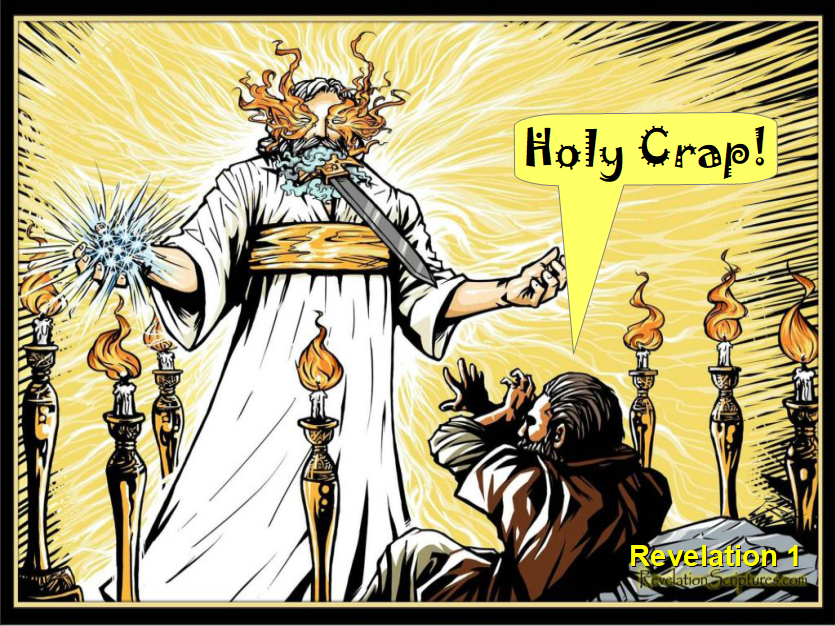
Revelation – total lunacy (made up in its entirety: Jesus didn’t say any of the things attributed to him there: he didn’t dictate letters to churches, isn’t a cosmic warlord, hasn’t brought a celestial city to the Earth, etc, etc)

Satan, demons, angels, spirits, powers and principalities – imagined (all non-existent)

Old Testament tales – made up (Creation, Adam & Eve, Tower of Babel, Noah, the Exodus, Job, Jonah, Daniel. Too many to list)

Ephesians, Colossians, 2 Thessalonians, 2 Peter, James, Jude, 1 & 2 Timothy, Titus – forgeries

Jesus – imaginary? It makes you wonder. So much is demonstrably made up about him. If he did exist, he has been buried under layers of make-believe, myth and other fiction; a grave from which he will never rise.

To be continued…

* Examples derived from my own considerations, Richard Carrier’s On The Historicity of Jesus, Bart D. Ehrman’s Forged and Did Jesus Exist?, Michael J. Alter’s The Resurrection, Barrie Wilson’s How Jesus Became Christian &  Freke and Gandy’s The Jesus Mysteries, amongst others.


Will the real Jesus please stand up? (part 1)

Over the last week or so I’ve encountered a couple of Christians online (here and here) who’ve made the point that Jesus must’ve existed because

  • Early Christians wouldn’t have died for a lie. (I’ve covered this before so all I’ll say here is that yes, they would – as zealots still do today – especially if they were convinced the lie was true.)

  • They themselves know Jesus as their personal saviour, and

  • The Bible tells us about him so no-one in their right mind could possibly believe he was imaginary.

These last two are interesting and related. Susceptible people have always believed in imaginary beings. All of the pantheons that have ever existed – Egyptian, Greek, Roman, Norse, Aztec, Hindu and numerous others – have had their adherents; people who lived with the conviction that supernatural beings were real and would respond, help or judge them in some way when they themselves acted in specific ways. Yet none of these beings existed. Why not Jesus?

Christians today don’t believe in Jesus alone, however. They subscribe to an entire company of invisible beings and places: God himself, of course, spirits – holy and otherwise – angels, Satan, demons, hell, heaven as well as a celestial being called ‘the Christ’ who sits at the right hand of God and who may or may not be related to an historical Jesus. Evangelicals and other believers build their entire worldview around such mythical beings, worshipping some of them; turn on your God channels any night of the week and see trance-like Christians telling Jesus how amazing, wonderful and worthy of praise he is. Yet this is a Jesus who is wholly imaginary.

Many of the posts on this blog are about how Christians aren’t very much concerned with the Jesus of the synoptic gospels, who tells his followers to sell all they have, give to everyone who asks and to turn the other cheek. They are only interested in his supernatural alter-ego, ‘the Lord Jesus Christ’, who makes no demands on them, but who, they think, listens and blesses them from on high. For all they care, any other Jesus may just as well be imaginary.

So if the Christ contemporary Christians worship isn’t real, why are they so insistent that the Jesus of the gospels must have been? It is equally likely that, the same as them, the earliest Christians also worshipped a made-up supernatural being.  

We’ll take a look next time at just what the Bible says about Jesus, and what it doesn’t.

The Great Resurrection Swindle

We have an anomaly. Paul did not see the resurrected Jesus in the body he died in. He is quite categorical about this. The Risen Jesus was revealed ‘within’ him as a vision of some sort (Galatians 1.15-16). Paul then implies that Peter and ‘the twelve’ apostles had previously encountered the Risen Jesus in precisely the same way; that is, though he doesn’t of course use the terms, as an innervision or hallucination:

For what I received (in my vision) I passed on to you as of first importance: that Christ died for our sins according to the Scriptures, that he was buried, that he was raisedon the third day according to the Scriptures, and that he appeared to Cephas, and then to the Twelve.  After that, he appeared to more than five hundred of the brothers and sisters at the same time, most of whom are still living, though some have fallen asleep. Then he appeared to James, then to all the apostles, and last of all he appeared to me also, as to one abnormally born. (1 Corinthians 15.3-8)

From this, Paul develops his idea that every other believer will, either after they die or when Christ descends from the clouds, be given a new ‘spiritual body’ without any of the limitations of the lowly fleshly body in which we spend this life. This is his gospel which, he wants everyone to know, did not come from any other human but from the Christ who appeared in his head (Galatians 1.11-12).

Here’s the anomaly: Paul believed he had encountered the risen Jesus, an experience of a super-spiritual being that was entirely in his own head. The later gospels, however, written decades after Paul’s psychotic episode, had a different view of the resurrected body. The original version of Mark, ending at 16.8, offers no resurrection appearances (Mark 16.9-20 was added much later in an attempt to plug the gap) but from Matthew onwards we begin to get a risen Jesus who assumes more and more of a physical form the further from Paul’s time we go. Luke wants us to know that his Risen Jesus has a real physical body; he asks for food which he then eats (Luke 24.42-43) and his crucifixion wounds are visible (Luke 24.37-39). John then goes even further by having Jesus invite the disciples to poke and admire the wounds (John 20.27), making the point that the body Jesus died in is the same one he resurrected in (even though in other parts of the narrative, for example when he encounters Mary Magdalene, he is suspiciously vision-like.)

As a result, later Christians were adamant that Jesus rose physically, in the body he’d died in. Today’s evangelicals seem to think so too.

So, here’s what we’ve got: Christianity’s earliest advocate, while promising resurrected believers will have a super new ‘spiritual’ body that bears little relation to their old physical bodies, witnessed the risen Christ only as a vision in his head. Yet Luke and John are at pains to point out that Jesus rose physically, in the same body he died in albeit with new super-powers. Luke even tries to distance his risen Jesus from Paul’s by having him say,

Handle Me and see, for a spirit does not have flesh and bones as you see I have. (Luke 24:37–39)

Isn’t it fortuitous, and not a little too convenient, that Jesus himself decides to makes the doctrinal point that he’s most definitely not a spirit, hallucination or vision? Of course, Luke (not Jesus) made up this line to address the hallucinated-spirit v. reanimated-corpse anomaly head on. Luke’s risen Jesus, whom, let’s not forget, Luke never met – nor did he meet any eyewitnesses to the resurrection (his sources are primarily Mark and Matthew) – is at pains to point out he is not like Paul’s risen Jesus. No sir, not at all. In the space of 30 or 40 years then, the risen Jesus has gone from being an imagined spirit (1 Corinthians) to a flesh and blood, revitalised corpse (Luke) with extra peripheral details like an empty tomb, added in support of the transition.

The risen Jesus began life as a vision. Paul makes this clear whenever he refers to him. He calls it his ‘revelation’. As time passed this supposed resurrection began to be fleshed out – literally – until the fantastical stories of a real body returning from the dead took form. Neither was real, neither is real; not the revelatory Christ nor the resurrected man. They are made up; one by a man who had a psychotic episode or bad dream, the other by men who disagreed with him. Anyone who thinks they’re going to receive either a spiritual body or a refurbished version of the one they’ve got now is deluding themselves.

Warning: May Contain Nuts

You ever meet a guy who says –

The world is under the power of evil supernatural beings.1

These supernatural beings once caused the death of a Godman. 2

This Godman had the last laugh because he came back to life.3

He, this guy, has actually seen the risen Godman! In his head.4

He’s visited part of Heaven, though maybe this was all in his head too.5

Those who align themselves with the risen Godman will also be resurrected (he’s not clear how this works. It just does).6

The Godman will be coming down from Heaven soon (‘soon’ as in the first century).7

Everyone who believes in the Godman will then levitate into the sky to meet him (yes, really!)8

People who die before this happens won’t miss out. Like everyone else, they’ll get a brand new body – a spiritual one!9

This guy has no idea what this spiritual body will be like (so don’t ask)10

The Godman will set up a magic Kingdom on Earth and those who’ve aligned themselves with him will live in it forever.11

People this guy doesn’t like won’t.12

If you were to encounter someone who said these things today, you’d quite rightly decide they weren’t right in the head and you’d give them a wide berth. Of course there’d be those who wouldn’t; gullible individuals who are unable to tell the difference between fantasy and profundity (like those duped by cult founders such as Joseph Smith, Charles Taze Russell, Jim Jones, David Koresh, L. Ron Hubbard and hundreds of others.) This is precisely what happened when this particular collection of absurdist claims first circulated, for these form the core of Christian belief, as devised by arch-fantasist Paul. Whether they’re aware of it or not, today’s Christians subscribe to this nonsense.

This is what Paul teaches.

This is what the Bible says.

This is what faith entails.

________________________________

1 1 Corinthians 2. 6-10

2 1 Corinthians 2.8

3 Colossians 2.15

4 Galatians 1.11-12

5 2 Corinthians 12.1-4

6 1 Corinthians 20-23

7 1 Thessalonians 4.15-16

8 1 Thessalonians 4.17

9 1 Corinthians 15. 42-44

10 1 Corinthians 15.35-37

11 Colossians 1.13

12 1 Corinthians 6.9-10