Christians’ Favourite Delusions 26.1: The Bible is the Word of God

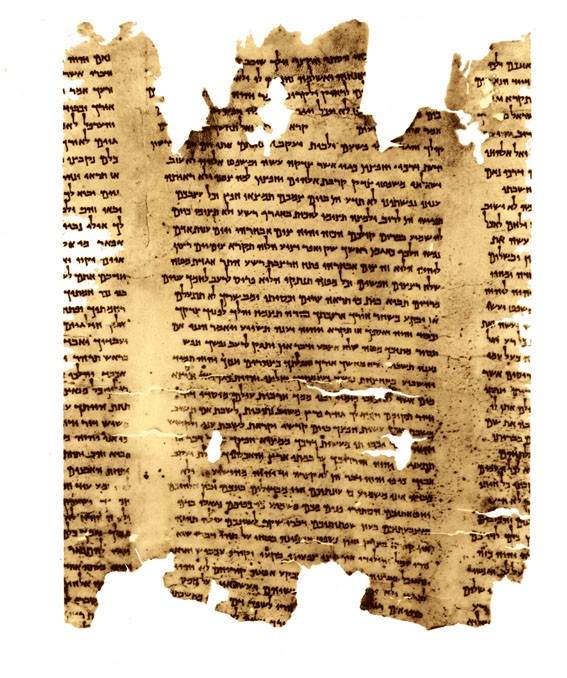
IsaiahThe Bible: not so much holy as full of holes.

So much hinges on the fallacy that the Bible is the literal, inerrant Word of God. As the ‘director’ of Christian Voice, Stephen Green, puts it:

We believe the Holy Bible to be the inspired, infallible, written Word of God to whose precepts, given for the good of nations and individuals, all man’s laws must submit.

Try as you might, you will not find the Bible claiming it is the Word of God, capitalised or otherwise. The phrase does appear, without the capital W, but on none of these occasions is the Bible referring to itself.

Christians usually base their conviction that the Bible is the Word of God on a verse in 2 Timothy (3.16):

All scripture is inspired by God and profitable for teaching, for reproof, for correction, and for training in righteousness.

There are some serious problems with this claim.

Firstly, the ‘scripture’ to which 2 Timothy 3.16 refers cannot be the Bible as we know it today. This was not compiled until about 260 years after these words were written*. At best, the author of 2 Timothy is referring to the first five books of the Bible – the Pentateuch – and maybe, possibly, though we cannot know for certain (you see how tentative it is?) some of the writing he had encountered that was eventually included in the New Testament.

By the same reckoning though, he could equally be referring to books that at one time were considered to be inspired but did not make it into the final 27 books of the New Testament**. This is also why the use of the term ‘the word of God’ in other places in the New Testament cannot be referring to the Bible as a whole. No-one knew when using the phrase in its original context that there was going to be a Bible, let alone one divorced from its Jewish roots.

Secondly, most scholars today are convinced that Paul did not write 2 Timothy, even though it claims that he is its author. There are very good reasons for saying the letter was written between 100-150CE, thirty-six years, at the very least, after Paul’s death in 64CE. In other words, 2 Timothy is a fake, claiming to be written by one person – Paul – when it is in fact the creation of another, taking advantage of the reputation of the more well-known writer.

How far can such a false witness be trusted? Most people in any other context would say not at all. And yet Christians take this forger’s letter to be ‘inspired by God’, just because it says it is. In essence they are saying that God is happy to inspire forgery, and not just in this instance either: none of the ‘pastoral’ letters (1 and 2 Timothy, together with Titus) is written by Paul, even though all of them claim to be. The second letter to the Thessalonians and those to the Ephesians and Colossians are not by him either; 1 and 2 Peter are not by the (illiterate) apostle Peter and the letters of James and Jude, while wanting us to think that they are, are not by Jesus’ brothers***.

In short, and as Bible scholar Bart Ehrman puts it:

Many of the books of the New Testament were written by people who lied about their identity, claiming to be a famous apostle — Peter, Paul or James — knowing full well they were someone else. In modern parlance, that is a lie, and a book written by someone who lies about his identity is a forgery.

Christians do not accept that the Qur’an is the word of God (Allah), nor the book of Mormon, even though both say they are, so why do they take it on trust, from a forged document that was lucky enough to find its way into the New Testament, that it and all other ‘scripture’ is inspired? ‘Faith’, they would tell you; but in this as in many other contexts, it is extremely misguided faith.


Notes:

* For the Bible’s late compilation see Charles Freeman (2008) Heretics, Pagans and the Christian State, p42

** For non-canonical texts once considered contenders see Bart Ehrman (2009) Jesus Interrupted: Revealing the Hidden Contradictions of the Bible, chapter 4

*** Forgeries in the New Testament are discussed more fully in Ehrman (2011) Forged: Writing in the Name of God – Why the Bible’s Authors Are Not Who We Think They Are: The pastoral letters – pp96-103; 2 Thessalonians – pp105-108; Ephesians – pp108-112; Colossians – pp112-114; Jude – pp186-188; James – pp192-198. Peter’s illiteracy is noted in the Bible itself (Acts 4.13) and is discussed on pp75-76 of Forged.

UK editions referenced.


The Great Resurrection Miscalculation

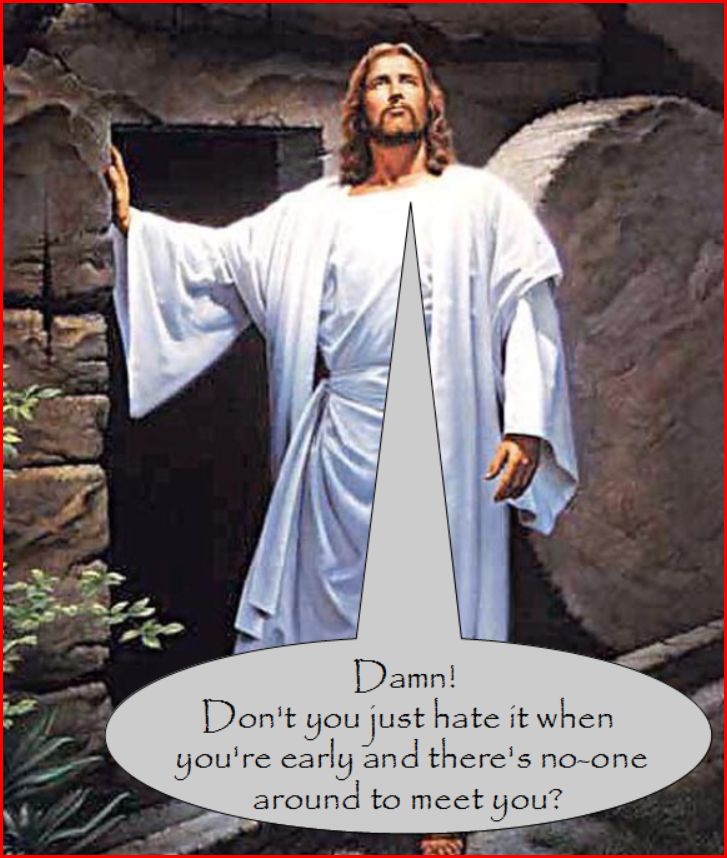
How long was Jesus in the tomb before he ‘rose again’? Three days you say? Wrong! Read on and discover the secret of the Great Resurrection Miscalculation.

Resurrection

Jesus is wrong about no less an issue than his claim that he would rise from the dead after three days. In Mark 10.33-34 he prophesies:

the Son of Man will be handed over to the chief priests and the scribes, and they will condemn him to death; then they will hand him over to the Gentiles; they will mock him, and spit upon him, and flog him, and kill him; and after three days he will rise again.

On the surface, this seems pretty accurate for a prediction of events made some time before they actually happen (it wouldn’t be a prediction otherwise). Except, of course, this prophecy, like others of Jesus’, was written forty years or more after the event. Even then, Mark or whoever wrote the earliest gospel, can’t get it right. He tells us clearly in Mark 15.34 that Jesus dies at 3pm on Friday; Matthew and Luke agree. Jesus then reappears, fully recharged, ‘very early’ on the Sunday morning (Mark 16.2). But 3pm Friday to the ‘very early’ hours of Sunday is less than 48 hours – not three days, not even two.

What is the cause of this failed prophecy? For some reason, Mark assumes that ‘on the third day’, when he believed Jesus rose from the dead, means the same as ‘after three days’, the words he has Jesus prophesy. The third day after the crucifixion would indeed be the Sunday, but it wouldn’t be, and isn’t, three full days after it, as Mark’s Jesus seems to think.

The problem is not Mark’s alone, however. Matthew’s Jesus is even more emphatic that he will be buried for the three complete days:

For just as Jonah was for three days and three nights in the belly of the sea monster, so for three days and three nights the Son of Man will be in the heart of the earth. (Matthew 12.40)

Thanks to Jesus’ insistence in Mark and Matthew that he would spend three days in the tomb, the belief that he must have done so – contrary to the ‘evidence’ in those same accounts that it was less than two – appears to have become securely established by the time of the fourth gospel. Its writers, however, find their own unique way round the problem. Their thinking seems to have been along the lines that ‘if Jesus said he was going to be buried for three days and three nights, then he must have been. He was the Son of God after all, and he wouldn’t get a thing like this wrong. Therefore, if, as we know, he rose on the Sunday, he cannot have been crucified on the Friday. He must have died on the Thursday’. And so the writers of John’s gospel shift the crucifixion back a day, to around noon on Thursday (John 19.14). It’s an ingenious solution. Thursday to Sunday – near enough three whole days. There’s even some neat symbolism as a bonus: the earlier execution equates with the slaughter of the sacrificial lambs on the Thursday, ready for that evening’s Passover. Problem more than solved!

Except it creates a whole raft of new ones, not least the glaring inconsistency between the synoptic gospels’ accounts of the crucifixion on the Friday – after Jesus’ and the disciples’ celebration of Passover the previous evening – and John’s gospel’s account of the crucifixion during Thursday afternoon, well before the Passover meal would have been eaten. Significantly, no-one in the history of Christendom has ever been persuaded by John’s Thursday crucifixion, otherwise we’d remember it on ‘Good Thursday’ instead of ‘Good Friday’, and have a different day off work.

Does any of this matter? Probably not, but it does demonstrate that:

i) if Jesus’ words in the synoptic gospels are to be taken literally, then either he can’t count or he badly misjudges the timing of his resurrection. If scheduled for three days after the crucifixion it should have occurred on the Monday;

ii) the resurrection probably didn’t happen at all, and more than forty years later Mark and Matthew trip themselves up trying desperately to convince people that it did, and that Jesus knew it would;

iii) the gospel writers are prepared to rearrange already highly improbable events to make equally unlikely prophecies appear true;

iv) because the Bible cannot get its own faked, after-the-supposed-event prophecies right it can’t possibly be trusted about other claims it makes. 

Happy Easter, y’all.

Adapted from my book Why Christians Don’t Do What Jesus Tells Them To …And What They Believe Instead. Buy it on Amazon UK or Amazon US.

Why_Christians_Don't_Cover_for_Kindle


Proof that God is real?

Thor

Christians – can you prove God exists? J. Lee Grady of Charisma magazine thinks he can and offers ‘7 Things That Prove God Is Real’. Leaving aside the fact that it shouldn’t be necessary to prove God is real – the God of the universe, Creator of Heaven and Earth, Father of Mankind should be more… apparent, shouldn’t he? – what are Mr Grady’s incredible proofs? Glad you asked. You can read the full article here, but to cut a long story short, they are:

Babies, thunderstorms, flowers, the Bible, the global spread of Christianity, Jesus and a personal friendship with God.

I hope you’re convinced. I know I am.

Problem is, all of these things are also evidence that God doesn’t exist.

Babies: Babies are miracles, according to Lee. We’ve evolved to find human babies cute and appealing even when they’re yelling, pooping and spewing – it helps us nurture them. But they’re not miracles; nearly 37,000 are born every day. What’s more, over a million of them die every year on the day they’re born. Which might just suggest God is not real at all.

Thunderstorms: Mr Grady says that because storms are powerful they put him in mind of God. This, however, is not proof of anything. Unless of course it’s Thor, god of thunder in Norse mythology and star of Marvel Comics. Is this who you mean, Lee?

Flowers: Lee says flowers are proof of God because they’re pretty. He seems to be unaware that their appearance is the result of natural selection; it has developed in order to attract insects and birds who then unwittingly assist in the plant’s reproduction. Yes, flowers are pleasing to the human eye as well, but their job is emphatically not ‘to simply make the world beautiful’, as Lee claims. They are evidence of evolution, not of a flower-arranging god.

The Bible: Lee trots out the false assertion that the Bible, in spite of having numerous authors over thousands of years, presents a consistent message. It doesn’t. There are, for example, at least nine different ways of being saved expressed by writers in the New Testament (some of whom, including the one Lee quotes, are forgers) – and they lived within a few decades of each other! A book cobbled together more than 300 years after the supposed main event, by men – not God – with a vested interest in its success, is not proof of the divine.

The global spread of Christianity: Human beings have worked hard throughout the ages to spread their own particular version of Christianity – often converting others on pain of death. There are today over 34,000 Christian groups, sects and cults, which is ‘proof’ that there is no one Mastermind behind it all. Other religions spread too, so perhaps that’s evidence their God is real as well (or instead), and so do diseases. The spread of an idea only illustrates human preoccupation with that idea.

Jesus: Really? His broken promises, failed prophecies, impossible morality and shabby treatment of those who didn’t buy into his mission somehow ‘prove God’? Maybe Lee means that Christ proves God. But ‘the Christ’ is an invention of Paul’s and has little to do with the man Jesus. In any case, one mythical figure does not prove another. Unless it’s Thor, of course, whose existence definitely proves there’s an Odin.

A personal friendship with God: What goes on in Lee’s head doesn’t prove anything, never mind the existence of God. A person’s feelings are subjective, solipsistic and entirely unverifiable. Thinking he’s got a relationship with God doesn’t mean that he has. Unlike my friendship with Thor. That’s really real.

So, seven proofs of God that are no proof at all. Anyone else care to take a turn?

Christians’ Favourite Delusions 17: You get saved by being washed in the blood of the lamb (Romans 5.9 etc)

Sermon

Not according to Jesus you don’t. And you’d think he being the Son of God – not to mention ‘the lamb’ in question – he’d be in a position to know. So how does Jesus say you find salvation? No magic formula for him; no quick-fix like the one Paul invents after Jesus’ death.

So how does Jesus reckon you get right with God? For once, he couldn’t be clearer:

If you want to receive God’s forgiveness, first you have to give it:

For if you forgive men their trespasses your heavenly Father also will forgive you; but if you do not forgive neither will your Father forgive your trespasses. (Matthew 6.14)

If you want to avoid God’s judgement… then don’t judge others:

Judge not that you be not judged. For with the judgement you pronounce you will be judged, and the measure you give will be the measure you get. (Matthew 7.1-2)

If you want God to show you mercy, first show mercy yourself:

Blessed are the merciful, for they shall obtain mercy. (Matthew 5.7)

If you want to experience God’s riches and blessings, first you have to be generous yourself:

Give and it will be given to you; good measure, pressed down, shaken together, running over, put into your lap. For the measure you give will be the measure you get back. (Luke 6.38)

If you want God to show you compassion, first be compassionate yourself:

The King will say to those at his right hand… I was hungry and you gave me food, I was thirsty and you gave me drink, I was a stranger and you welcomed me… Then the righteous will answer him, ‘Lord when did we see the hungry and feed thee or thirsty and give thee drink? And when did we see thee a stranger and welcome thee?… And the King will answer them, Truly I say to you, as you did it to one of the least of these my brethren, you did it to me’.

Then he will say to those at his left hand, ‘Depart from me, you cursed, into the eternal fire prepared for the devil and his angels, for I was hungry and you gave me no food, I was thirsty and you gave me no drink, I was a stranger and you did not welcome me… Truly I say to you, as you did it not to one of the least of these my brethren, you did it not to me’. (Matthew 25.34-46)

That’s right, Jesus sees being saved as a ‘measure for measure’ arrangement and uses that exact term repeatedly in order to get the message across. According to the ‘Son of God’, you get what you give. And, what’s more, his death has nothing to do with it. He starts preaching his ‘gospel’ message long before he’s crucified (Mark 1.14) and it most definitely doesn’t include any mystical piggy-backing on a death that hasn’t happened yet in order to gain God’s favour. Even Matthew, Mark and Luke don’t add it to their stories of Jesus, even though they wrote them after he died and after Paul’s invention of his magic salvation formula.

Jesus’ ‘measure-for measure’ gospel is very different from Paul’s – the two are incompatible in fact, though Christians refuse to see this. Jesus’ gospel is practical and moral: the way to God’s heart, he says, is through treating others, even those who might despise us, with kindness and compassion.

This, though, is too hard for Christians. They find Paul’s spiritualised, self-centred version of salvation much more to their taste.

Christmas Quiz Answers

Birth3

1. In what year was Jesus born?   a) 4 BCE (when Herod the Great was king)   b) the year 0     c) 6CE (when Quirinius was governor of Syria)

Matthew’s gospel claims Jesus was born when Herod the Great was king (Matthew 2.1) while Luke says it was when Quirinius was governor of Syria (Luke 2.2). But Herod died in 4BCE and Quirinius didn’t become governor of Syria until ten years later, in 6CE. So JC couldn’t have been born when both men were in their respective positions. Neither was he born in the year 0, because there wasn’t one (the Gregorian calendar goes from 1BCE to 1CE). Most scholars think Jesus was born around 4BCE, just before Herod’s death (as Matthew’s gospel suggests). Award yourself a splash of myrrh if you got this right.

2. When was Jesus born?  a) December 25th?   b) April 1st   c) in the summer

Not December 25th (see my post Jesus Is The Reason For The Season below) which was the date usurped from the pagan festival of Saturnalia; April 1st, maybe, as there’s something about this that takes us all for fools, but if the story is to be believed, it’s most likely he was born in the summer when shepherds would be out on the hillside with their sheep – if the story is to be believed. In short, we don’t actually know. If you said this, reward yourself with three hail Marys.

3. Who was Jesus’ father? a) God himself   b) Joseph, so that Jesus was descended from King David   c) one of Mary’s one night-stands

a) and b) rule each other out: see my post Jesus was born of a virgin… er, no was descended from David, er… below.  There were much later rumours that Mary was raped by a Roman soldier called Pantera, and certainly Jesus’ legitimacy is called into question by early critics of Christianity. This may be reflected in the gospels themselves where Jesus is referred to as his mother’s son, not his father’s as would have been customary (Mark 6.3). Treat yourself to Susan Boyle’s rendering of ‘Silent Night’ if you knew this.

4. How often did the Romans make people return to their ancestral home to be counted?  a) never   b) it was one-off   c) only when the gospel writer needed to get them to Bethlehem

Answer is c). While the Romans did carry out a census in 6CE, i) Jesus was born ten years earlier and ii) there is no record of the Romans forcing people to return to the home of their ancestors.

5. How did Mary get to Bethlehem?  a) on foot   b) on a donkey   c) by being a character in a contrived story

The answer is c). Luke’s nativity story, the only one to have them travel to Bethlehem, doesn’t say how she got there. Leave a carrot out for Santa’s reindeer if you answered correctly.

6. Where was Jesus born?  a) in a stable   b) in a cave   c) at home in Nazareth

Again, Luke’s Bethlehem account doesn’t say. Matthew implies Mary and Joseph lived in Bethlehem all along (Matthew 2.11 & 16) making the whole ‘no-room-at-the-inn’ scenario superfluous. Sprinkle yourself with frankincense for saying so.

7. According to Matthew’s gospel, how many wise-men visited the new-born babe?  a) none   b) three   c) they weren’t wise-men, they were astrologers

The answer is c) and the number isn’t specified.

8. What did the angels say to the wise-men when they told them of Jesus’ birth?  a) you will find him in a manger   b) nothing   c) follow that star

b) is correct. According to the story the angels spoke to the shepherds, not the wise-men. Deck the halls with boughs of holly if you fell for this one.

9. Where did the magic star shine?  a) over the stable where Jesus lay   b) over his house   c) since when do stars shine over specific objects here on Earth?

Looks like c) again, though Matthew, who is the only gospel writer to mention it, claims in Matthew 2.9-11 that it was b), over his house.

10. When did the wise-men visit the infant Jesus?  a) when he was a toddler   b) while he was still in the manger   c) after the Christmas rush

Matthew says Jesus was a child when the so-called wise-men visited him at home (Matthew 2.9-11 again). Given their encounter with Herod (Matthew 2.16), who thinks Jesus could be anything up to two years old, it’s likely JC was a toddler at this point in the fabricated story. Don ye now your gay apparel if you knew this.

11. When did Herod massacre all the little boys, hoping to kill the baby Jesus?  a) later that same week   b) a few years after the birth   c) there is no record of him having done any such thing

Yup, c) again.

12. How many shepherds visited the baby Jesus?  a) all of them  b) two old men and a young boy   c) none

The number isn’t specified, though Luke suggests all of them went (Luke 2.15-16). In fact it was ‘none’ because none of this actually happened.

13. What gifts did the shepherds bring?  a) a lamb   b) a lamb kebab   c) a pair of hand-knitted socks

It doesn’t say. You can have a new pair of hand-knitted socks yourself if you said so. Or a kebab.

14. Which animals were present at the birth?   a) a horse (c’mon, it was supposed to be in a stable)   b) an ox and ass   c) an ox, an ass, the wise-men’s camels and the shepherds’ sheep

No animals are mentioned.

15. After the birth, where did Mary, Joseph and the baby Jesus go?  a) to Egypt   b) home to Nazareth   c) nowhere

According to Matthew (2.13-18) the family went to Egypt following the visit of the wise-men and, after hiding there until Herod died, made their home in Nazareth (Matthew 2.19-23). According to Luke, however, they lived in Nazareth before the birth (Luke 1.26) and simply went back there once they’d had the baby circumcised (Luke 2.38); no mention of the holiday in Egypt nor of Herod, who’d been dead for ten years according to Luke’s chronology. It’s kinda neat the way the Bible tells such a consistent story, don’t you think?

16. Where will you find the Christmas story in the Bible?  a) in Genesis (because the answers are always in Genesis)   b) in all four gospels   c) in only two of the gospels, which have conflicting accounts

The answer is c); only in Matthew and Luke, each having a completely different take on things.

Feel entitled to sacrifice two turtle doves for making it this far.

A short Christmas quiz…

Nativity

How well do you know the Christmas story? See how you fare in this exciting nativity quiz. Answers in the Bible (and posted soon here);

1. In what year was Jesus born?

a) 4 BCE (when Herod the Great was king)   b) the year 0   c) 6CE (when Quirinius was governor of Syria)

2. When was Jesus born?

a) December 25th?   b) April 1st   c) in the summer

 3. Who was Jesus’ father?

a) God himself   b) Joseph, so that Jesus was descended from King David   c) one of Mary’s one night-stands

4. How often did the Romans make people return to their ancestral home to be counted?

a) never   b) it was one-off   c) only when the gospel writer needed to get them to Bethlehem

5. How did Mary get to Bethlehem?

a) on foot   b) on a donkey   c) by being a character in a contrived story

6. Where was Jesus born?

a) in a stable   b) in a cave   c) at home in Nazareth

7. According to Matthew’s gospel, how many wise-men visited the new-born babe?

a) none   b) three   c) they weren’t wise-men, they were astrologers

8. What did the angels say to the wise-men when they told them of Jesus’ birth?

a) you will find him in a manger   b) nothing   c) follow that star

9. Where did the magic star shine?

a) over the stable where Jesus lay   b) over his house   c) since when do stars shine over specific objects here on Earth?

10. When did the wise-men visit the infant Jesus?

a) when he was a toddler   b) while he was still in the manger   c) after the Christmas rush

11. When did Herod massacre all the little boys, hoping to kill the baby Jesus?

a) later that same week   b) a few years after the birth   c) there is no record of him having done any such thing

12. How many shepherds visited the baby Jesus?

a) all of them   b) two old men and a young boy   c) none

13. What gifts did the shepherds bring?

a) a lamb   b) a lamb kebab   c) a pair of hand-knitted socks

14. Which animals were present at the birth?

a) a horse (c’mon, it was supposed to be in a stable)   b) an ox and ass   c) an ox, an ass, the wise-men’s camels and the shepherds’ sheep

15. After the birth, where did Mary, Joseph and the baby Jesus go?

a) to Egypt   b) home to Nazareth   c) nowhere

16. Where will you find the Christmas story in the Bible?

a) in Genesis (because the answers are always in Genesis)   b) in all four gospels   c) in only two of the gospels, which have conflicting accounts

Good luck. Answers here soon.

Christians’ Favourite Delusions 13: Jesus was born of a virgin… er, no, was descended from David, er…

XmasMessage

That most fallible of books, the Bible, often wants it both ways. Never more so than when it’s trying to add spin to its central character. It wants us to believe that Jesus was born of a virgin, with no human male involved, and, at the same time, that he was physically descended from King David on his dad’s side.

He’s got to be born of David’s line, you see, because the prophecies say the Messiah will be just that. The writer of Acts (‘Luke’) knows this and tells his readers that God promised King David that through ‘the fruit of his loins, according to the flesh, he would raise up Christ to sit on his throne’. (Acts 2.30, KJV; my emphasis). The reference is to 2 Samuel 7:12, where Yahweh does indeed appear to tell David that he ‘will raise up your offspring after you, who shall come forth from your body, and I will establish his Kingdom’. This is to be a physical descendancy and is the reason for all those ‘begats’ at the start of some of the gospels; they are there to establish Jesus’ (supposed) royal descent on his father’s side. This is why, in his gospel, Luke contrives to get Mary and Joseph to Bethlehem for the birth: ‘Joseph also went from the town of Nazareth in Galilee to Judea, to the city of David called Bethlehem, because he was descended from the house and family of David‘ (Luke 2.4). That’s Joseph who was descended from David. Not Mary, not Jesus’ uncle Charlie and not the Almighty himself. Joseph.

Perversely, it is also Luke who insists that Jesus is the product of divine impregnation and a virgin birth (Luke 1.32-35). Why doesn’t he realise that if Jesus was virginally conceived, he cannot be the fruit of any human male’s loins? Luke includes the virgin conception and birth in his nativity story while insisting, in both his gospel and in Acts, that Jesus is the Messiah precisely because he is a physical descendant of David (see, for example, Luke 1.27, 1.32, 1.69, 2.4, 2.11, 3.31, 18.38, 20.41). But Jesus can’t be both a physical descendent of David through Joseph and the result of the God helping himself to a nice young girl. Could it be the two conflicting accounts were written by different fantasists?

So, is Jesus the ‘Son of God’ because he was created by the Almighty’s impregnation of Mary or is he the Messiah because he’s King David’s descendant ‘according to the flesh’? Either Jesus is physically descended from David or he is a being conceived through divine rape, like other mythical god-men of the ancient world.

He cannot be both – though he could, of course, be neither.