A Special Christmas Bible Study

An angel of the Lord appeared to (the shepherds), and the glory of the Lord shone around them, and they were terrified.

But the angel said to them, “Do not be afraid. I bring you good news that will cause great joy for all the people. Today in the town of David a Saviour has been born to you; he is the Messiah, the Lord. This will be a sign to you: You will find a baby wrapped in cloths and lying in a manger.”

Suddenly a great company of the heavenly host appeared with the angel, praising God and saying, Glory to God in the highest heaven, and on earth peace to those on whom his favour rests.” (Luke 2:9-16)

Another chunk of scripture that will be proclaimed from pulpits and in nativity plays again this year. Let’s take a closer look at the scenario Luke creates. Does it bear any relation to something that might occur in reality?

First, an angel. Doesn’t this tell us from the outset that we’re in the realms of fantasy fiction? You can’t fault Luke for trying though, he does his best to impress by adding a whole host of them. You can hear him thinking that ‘a great company of angels’ should convince all but the most hardened of hearts. He’s inventing freely, throwing in the tropes of the genre with abandon. Doesn’t he know angels are fierce, two-faced, six-winged creatures (Ezekiel 14:18; Isaiah 6), not handsome youths in glowing white robes? There’s a reason they prefaced their every appearance, including this one, with ‘Do not be afraid’.

Good news that will cause great joy for all the people: All? Even as Luke wrote this paean to wishful thinking he knew that the Jesus myth had not brought joy to ‘all people’. Most had rejected the claims of the new cult and joy was hardly the prevalent emotion in some of the churches Paul wrote to.

This will be a sign to you: You will find a baby wrapped in cloths and lying in a manger. A baby wrapped in cloths, as was the custom, and lying in an animal feeding trough is a ‘sign’? A sign that the Messiah had arrived? Really? Granted a manger is not a conventional place for a new-born but it’s hardly miraculous. And what if by the time the shepherds had abandoned their flocks to the night and its marauding wolves, Mary had, say, picked up the child or found a better place for it? Imagine the confusion! Sorry, Luke but this is a very poorly constructed story. You just didn’t think it through.

As for the angels’ last proclamation, what does it really mean?

Glory to God: this of course is fawning to a God whose ego is more inflated and fragile than Donald Trump’s. He demands continual praise not only from his heavenly messengers but from those here below, or else he’ll go off on one. You really want to spend eternity with such a tyrant, Christians?

…in the highest heavens: a reference to the fact that early Christians believed in different layers of heaven; Paul writes about them too. God resides, as acknowledged here, in the highest, the top floor executive suite. No-one ever gets to go up there. Emails are sent down from on high.

And on earth peace to those on whom his favour rests: what sort of peace? Certainly not the absence of conflict or war. We’ve now had two more millennia of these, some in the past initiated by Christians themselves. Do people who are at peace with themselves start wars? Peace within then. Do Christians know greater peace than anyone else? Hard to say when it’s not something that can be measured but I’m sure Christians will claim it’s so.

On whom his favour rests: who exactly is this? Who enjoys the favour of a capricious deity? How do they know when he visits all manner of trials and tribulations, testing and tempering on those who count themselves as his. I’m sure the early Christians who helped write the angels’ speech thought it was they who enjoyed the Lord’s favour. Today’s Christians probably think the same. YHWH has always played favourites. Everyone else can go to hell.

So, the heralds of Jesus’ birth didn’t exactly bring good news, did they. Not even in Luke’s imaginary, completely invented, never-happened-in-reality and isn’t-even-a-decent-metaphor scenario.

Provoking the Lion: a Fable

The others didn’t need much persuading when Sinwar told them they really had to do something about the lion. It was, he said, too near the camp and represented a threat. The gods demanded they gather their guns and other weapons to launch an attack not only on the alpha-male itself but the entire pride. That way, any future threats would also be eliminated. The problem of the lion and its proximity to the camp would be resolved once and for all.

They planned a dawn expedition when the lion and the pride could be caught unawares. As hunters they knew how to take their prey by surprise. They crept into the undergrowth and caught different members of the pride in their sights. Then, the onslaught began.

The cubs and unwary females were butchered first, with unrelenting savagery. Lionesses that sought to protect their offspring were mercilessly gunned down. Finally, the males appeared from the undergrowth and were met with a hail of bullets that tore into their powerful bodies, ripping them apart. They were no match for the hunters’ arsenal.

Caught unaware as it was, the pride stood no chance. The hunters looked on the carnage and knew it was good. They returned to camp, taking with them the only cubs to have survived the onslaught, mortally wounded and unable to resist. Once safely returned they praised the gods who had surely blessed their mission and ensured its success.

News of their heroic efforts soon spread until all around marvelled at their accomplishments. No-one gave much thought to the lions who had been slaughtered. It was taken as read that the pride had been in need of a merciless cull. Right had prevailed.

Unknown to Sinwar and the hunters, however, the alpha lion had survived. Hidden in the shadows, he licked his many wounds and knew instinctively he would exact revenge. He had been severely provoked and he vowed to himself that such provocation would not go unpunished. Others joined him; males who had recently left the pride to establish their own, heeded the deep instinct that they must band together to ensure their survival.

They attacked when their hunters were least expecting it and returned the savagery that had been meted out to them. The nearby townsfolk were shocked at the bloody retaliation; the hunters had been within their rights to attack the pride, after all. The lions had no right to exact a deadly revenge. Everyone in the region and even further afield seemed to think so. Nonetheless, a great deal more senseless death followed.

Having decimated the hunters and rescued some of the cubs, the lions took many townsfolk in their savage maws. They then moved on to new territories, sensing the allegiance of others to the hunters. They attacked those who had lent their support and had hunters of their own, losing some of their own number while destroying any who stood in their way. A rogue elephant from far away blundered into the fray, trampling many more while demanding the hunters and lions make up and be friends. (Meanwhile, a pygmy shrew from another land wondered if it too should join in but found itself incapable of deciding even whose side it should be on.)

Having stood its ground, the alpha lion returned to its den. He had taught the hunters and those who supported them that they provoked him at their peril. It would, he vowed, never happen again.

And now, the Conclusion

It’s a game you can play all day.

  • First, choose a story – any story – from the gospels.
  • Look for all the metaphors in the story.
  • Note its allegorical elements.
  • Find either the myth from Jewish scripture and/or the part of Paul’s fantasy that the story is based on.
  • Read the story in light of these insights.

Once you’ve done this a few times – which you can, literally, till Kingdom come – you’ll realise that all the stories in the gospels are literary inventions. Stories that are replete with metaphor, reliant on earlier mythical sources and that read like allegory would be considered, in any other context, to be fiction.

And what will you conclude from this?

That just because the stories are from the gospels doesn’t grant them a free pass. Stories that fulfil all the criteria of fiction, as the gospel stories do, are elsewhere considered to be fiction: think Romulus, the non-canonical gospels, King Arthur, the Book of Mormon, the Chronicles of Narnia. So why not here?

That calling the stories ‘pericopes’, in an attempt to elevate their status, merely disguises the fact they are just stories.

You’d acknowledge that History, as in the recording of past events, is not written as allegory. It doesn’t depend on metaphor and symbolism to reveal hidden meanings. Historians reject or are highly sceptical of any accounts that depend on such literary techniques. They usually conclude these are not history, whatever else they might be.

You could, I suppose, try arguing that history in ancient times wasn’t the discipline it is now and did indeed incorporate elements from fiction. But you’d be wrong. Historical accounts of the first century have survived and do not confuse historical fact, however interpreted, with fiction. Writing that relies on allegory and hidden meanings is not considered to be history. You would then have to concede that the gospel narratives do not qualify as history. You would then be in agreement with the majority of scholars who think this.

Then you’d ask, why? Why, if Jesus was such an incredible guy, did so much have to be made up about him? You could, I guess, argue that an itinerant first-century preacher successfully manipulated events so that he fulfilled ‘prophecy’, complied, at least in Mark, with Paul’s (future) teaching and managed to make himself some sort of living breathing metaphor. Or you could conclude, applying Occam’s razor, that the stories are simply made up. And if you did, you’d be agreeing with Mark when he reveals that ‘everything is in parables’ (Mark 4:11).

You’d then ask yourself: if the miracles, the healings, the profundities, hyperbole, nativity tales, angels, demons, zombies, the transfiguration and much else besides are all fiction, then why not too the resurrection? Is it one of only a few episodes in the gospels – the crucifixion is often cited as another – that isn’t fiction? Is it the one of only a few stories in that’s factual and true? The empty tomb, the angels, the sightings by Mary, the disciples and Thomas, the fish breakfast, the ascension: are these historical when everything else is not? You’d have to ask on what criteria you were salvaging this particular story as historical when all that precedes it patently is not.

Then you’d have to start wondering if there really was a Jesus. The versions of him who appear in the gospels are constructs, characters created from metaphor, Old Testament stories and the teaching of the early Christian cult. If there really was a man who trailed around Palestine with an apocalyptic message, he is long gone. Indeed, he had vanished by the time the stories about him that we know as the gospels came to be written.

Jesus and the Blind Man

This time we’ll take a closer look at Mark 8:22-26, a story about Jesus healing a blind man:

They came to Bethsaida, and some people brought a blind man and begged Jesus to touch him. He took the blind man by the hand and led him outside the village. When he had spit on the man’s eyes and put his hands on him, Jesus asked, “Do you see anything?”

He looked up and said, “I see people; they look like trees walking around.”

Once more Jesus put his hands on the man’s eyes. Then his eyes were opened, his sight was restored, and he saw everything clearly. Jesus sent him home, saying, “Don’t even go into the village.”

This parable is doing a lot of metaphorical heavy lifting.

First, it is located in Bethsaida, the home of some of the disciples as well as the place where Jesus does some of his most spectacular miracles, only later to curse the village for its lack of interest in him (Mark 11:21). It is symbolic of those who reject the cult’s message, or are too dim to see that their heavenly Jesus is the Messiah.

Second, the story is sandwiched (no pun intended) between the feeding of the four thousand, in which the hapless disciples fail to recognise Jesus’ miraculous status, and the account of Peter realising that Jesus is in fact the Messiah. The healing of the blind man, neatly placed between the two, is therefore an allegory within allegories about seeing (gettit?) Jesus for who he really is (i.e. what cultists believed him to be.)

Third, the story is a prophecy-fulfilled parable. Isaiah 35:5 says that when the Messiah comes ‘the eyes of the blind will be opened and the ears of the deaf unstopped.’ Jesus has to be made to do these things – he performs some ear unstopping too (Mark 7:31-35) – to show he is indeed the prophesied Messiah.

Fourth, physical blindness is a very obvious metaphor for spiritual blindness. The preceding story reminds those who can’t ‘see’ the cult’s truth for themselves: ‘Do you still not see or understand? Are your hearts hardened? Do you have eyes but fail to see, and ears but fail to hear?’ (Mark 8:18). This is itself a borrowing of Isaiah 6:9-10. Indeed, the entire story, together with that of the deaf man being cured, is a parable of Isaiah’s ‘prophecy’:

You shall indeed hear but never understand, and you shall indeed see but never perceive. For this people’s heart has grown dull, and their ears are heavy of hearing, and their eyes they have closed, lest they should perceive with their eyes, and hear with their ears, and understand with their heart, and turn for me to heal them.

Jesus’ healing of blindness then becomes a metaphor for seeing the light, as Peter does in the subsequent story when he finally recognises him, like the cult has done, as the Messiah.

Fifth, Jesus spits on or in the man’s eyes: a very clumsy metaphor for the streams of living water that emanate from God himself in Jeremiah 2:13. Perhaps too there’s a reference to the baptism ritual beloved of the early cult. (Christian bloggers themselves have trouble explaining this gross detail that Mark sees fit to include in his story.)

Sixth, in order to give sight to the blind man, Jesus (or rather the cult) first removes him – the initiate – from the village, from those who don’t even know they are blind. Next, Jesus/the cult shows him how those who are spiritually blind are no better than trees wandering around aimlessly (yes, Mark really does mix his metaphors). Jesus/the cult then opens the initiate’s eyes to the Truth so that finally he sees ‘everything clearly.’ He can now never return to his former state; his ‘home’ is with the cult, not with the spiritually blind outside it.

The story is evidently metaphorical. That Jesus spits in the man’s face is not, as some Christians claim, evidence that it really happened. It is weighed down by so much symbolism and clunky metaphor, and at the same time strategically placed between two other ‘seeing the light’ stories that its literary origins are apparent. Mark and his fellow cultists knew what they were doing when they dressed their beliefs up in stories like these. As they themselves insist, you need only open your eyes to see it.

Scripture Explained

In truth, when the Lord said, ‘love your enemies and pray for those who persecute you,’ he meant by taking his gospel to them and speaking the truth unto them in love. This, after all, is the highest form of love: sharing the Good News of Jesus. For surely there is no way we can really love someone who opposes us. Therefore this cannot be what the saviour meant when he commanded us to love our enemies. Evidently, he made use of hyperbole to encourage us in our daily journey with him by making salvation known to those whose sin will only lead them unto Hell. There comes a point nonetheless when we must recognise that there are many enemies who will not accept the Word. These we must oppose, denigrate and condemn as the Holy Spirit directs. Does not scripture itself expect as much?   

When the saviour declared that we can’t serve God and money, he again spoke metaphorically. He did not mean the wealthy cannot enter the Kingdom of God. No, what he refers to is priorities. It is perfectly possible to be wealthy and a follower of Jesus so long as we put Jesus first. Where in the world would we be if we had to give away our money and possessions?

When the saviour commanded us to sell all we have to provide for the poor, he did not mean in this world which stands already condemned. Rather, he speaks in metaphor and refers to the emptying of our very selves to better follow him.

When the saviour said we must take up our crosses to follow him even unto death, he likewise spake metaphorically. He loves each according to that which he is able to bear and seeks to bless those who loves him. He speaks here therefore of our dedication to him. He encourages us to ‘die’ to our selves so that we might allow him to transform us into new creations worthy of himself.

When the Scriptures says we become new creations, it does not mean literally nor that it will happen in the twinkling of an eye. No, rather it refers to our being a ‘work in progress’. The Lord of miracle and all creation does not wish to impose on our free will by transforming us instantly. Instead, he seeks to test and purify us in a long almost imperceptible process. Only in heaven will we attain perfection.

When the saviour promised that the End of the Age was nigh for those who stood before him, he did not mean it was nigh for those who stood before him. No, for this was a secret message, a mystery, for those who would worship him in what would be, for those who stood before him, the distant future. What he meant was that when the time was right, when diverse conditions had been met – some of which would only be made known after our Lord’s time on Earth – the Son of Man would descend from the heavens to inaugurate the final judgement and the Kingdom of God.

When the scriptures declare that the Kingdom of God is intended for here on Earth, it speaks only metaphorically, for God promises those who have been saved by the power of Jesus’s blood that they will live forever with him in Heaven itself. This is a mystery known only to those who exegete the Bible correctly and ignore the plain and literal meaning of what it says.

So this, brethren, is how to deal with scripture. You need only apply one simple rule as you read it: if it appears to make demands of you, it is not actually doing so. It is either metaphor, hyperbole or both and must not be taken literally. On the other hand, when scripture is not making demands of you, everything, however unlikely it seems, is real, true and factual.

He who has ears, let him hear.

Real or Metaphor?

Don has been asked repeatedly by Ark to ‘explain how to tell the difference between real and metaphor in a biblical context’.

Don has so far evaded the answer, gifting us instead his lectures about how we don’t really understand figurative language (I didn’t publish the latest), or telling us it all depends on whether the event described somehow feels real.

Let’s see if we can’t pin him down to a direct, unequivocal answer. Please tell us clearly, Don, whether the following account, from Acts 1:9-11, is real or metaphorical and how you know.

Now when (Jesus) had spoken these things, while they watched, he was taken up, and a cloud received him out of their sight. And while they looked steadfastly toward heaven as he went up, behold, two men stood by them in white apparel, who also said, “Men of Galilee, why do you stand gazing up into heaven? This same Jesus, who was taken up from you into heaven, will so come in like manner as you saw him go into heaven.”

No prevarication now, Don. None of your ‘it could be both’ bluff, nor your ‘it’s stylized history that isn’t really history’ evasiveness. No answering by turning the question back on us or suggesting we’re all too dumb to understand.

Is it real or is it metaphor, and how do you know?

Bible Study

Again he entered the synagogue, and a man was there with a withered hand. And they watched Jesus, to see whether he would heal him on the Sabbath, so that they might accuse him. And he said to the man with the withered hand, Come here.” And he said to them, Is it lawful on the Sabbath to do good or to do harm, to save life or to kill?” But they were silent. And he looked around at them with anger, grieved at their hardness of heart, and said to the man, Stretch out your hand.” He stretched it out, and his hand was restored. The Pharisees went out and immediately held counsel with the Herodians against him, how to destroy him. (Mark 3:1-6)

Greetings, my beloved Brethren. Today we are going to look at God’s Holy Word as revealed to our dear brother in the Lord, the one who will one day be called ‘Mark’. We’re looking specifically at the passage above, because some of you have expressed difficulty in discerning the full import of the text. I have to say I’m surprised at this. You only have to bear in mind Mark’s rule of thumb that everything in his gospel is a metaphor, which, when looked at with discernment, reveals a previously hidden mystery: 

To you has been given the secret of the kingdom of God, but for those outside everything is in parables, so that “‘they may indeed see but not perceive, and may indeed hear but not understand, lest they should turn and be forgiven’” (Mark 4:11-12, referencing Isaiah 6:9)

Our passage today begins with the Lord healing a man with a withered hand, which should straight away alert us to the fact we are dealing with metaphor. All of the healings in the gospels are. They stand for something more significant than any actual healing.

Some of you might already have made the connection between the use of ‘withered’ here, with its use in another story (Mark 11-12-14), where Jesus withers an unfruitful fig tree. Of course, no actual fig trees were harmed during this miracle. The fig tree and its withering are metaphors.

The tree, you see, is a metaphor for the Jewish system of worship, the old Covenant of the Law. This had reached the end of its life. It was fruitless and God was done with it. He was in the process of replacing it with salvation through Grace. All of this is represented metaphorically by Jesus cursing the fig tree and causing it to wither.

So it is in our passage today, except this time, God offers healing to the Jewish nation. He is nothing if not gracious, reaching out and offering acceptance into the new Covenant, expressed here as the healing of a withered hand. You won’t have missed the fact – again symbolic – that the healing occurs in the synagogue, the Jews’ place of worship. We might also remember Deuteronomy (6:8) where the Lord God instructs the Jews to wear his Law on their foreheads and, more significantly, to tie them to the backs of their hands. But now their hands have, metaphorically speaking, withered away, just as the fig tree will.

God knows of course that few will accept his proffered healing, insisting instead of labouring blindly under the old Covenant. The rest of the story reflects this stubbornness and the incalcitrant attitude as the Pharisees – metaphors for the Jews as a whole – round on Jesus and castigate him for breaking the Sabbath laws in healing the man – in spiritual reality the Jews themselves. That Jesus heals on the Jews’ sacred day is metaphorical too, demonstrating as it does that all the old laws are now surpassed. Jesus, and more importantly his followers – you, my dear brethren – are no longer under the yoke of that law but have new freedom serving Jesus under his new yoke, which is easy to bear. At the end of the story, the Pharisees – the Jewish leaders of our own time, lest we forget – leave to plot against the Lord; in reality against us. With his help we will of course bear this persecution stoically.

So you see my brothers, this story was written for you, to remind you that you are saved. You are the New Covenant. The Old has passed away. You can follow Jesus’ example and do good, yea, even on the Sabbath. You need not fear the Jews or others who might persecute you because the Lord is with us. The Jews, on the other hand, will soon be cast into outer darkness when he comes in person. Even so, Lord Jesus, come quickly.

I hope this has made clear to you the mystery hidden in this part of Mark. I know there will be some of you who are not sufficiently advanced in their understanding of the mysteries, being still babes in Christ, and may yet object to this exposition of the deeper secrets of the Lord. So be it. But don’t say you haven’t been made aware of the Truth.

Next time, if there are those who need to know more of the mysteries hidden in God’s new revelation, we can look at the next part of Mark, though I trust that you are, by now, developing sufficient spiritual insight to discern for yourselves the hidden mysteries embodied by the gospel’s metaphors.

Announcement

The story so far…

While he used to argue vociferously that the gospels are history – remember they must be history because Pilate and Herod are in them? – our resident apologist has backed away from this position. He says now they’re not history as such but are only ‘like’ history, which means they’re ‘historical but not written as histories’, whatever this means. He derides the likes of Ehrman and Tabor for their inability to recognise this (newly invented) fact. These no-nothings make a category error when they confuse the gospels with history.

I suspect Don wants to reclassify the gospels because he recognises they make rather poor history. It’s safer to pretend they’re designed to be something else, something that doesn’t require external evidence to verify it: ‘announcement’, for example.

This, however, merely sidesteps the question of where the gospel writers got their information from. Don has previously argued that the gospels are based on eye-witness reports, Peter’s dictation to Mark and a reliable oral tradition. But conjecture like this is only necessary if the gospels are history. If they’re not, but are ‘announcement’ instead, then their sources need  be neither historically reliable nor demonstrable.

If the accounts are ‘announcement’ rather than history then where does their ahistorical, announced information come from? Fortunately, Mark gives us a clue:

To you has been given the secret of the kingdom of God, but for those outside everything is in parables, so that “‘they may indeed see but not perceive, and may indeed hear but not understand, lest they should turn and be forgiven’” (Mark 4:11-12, referencing and misquoting Isaiah 6:9)

In fact, the gospels’ ‘announcement’ is conveyed by a story constructed from supposed prophecies from Jewish scripture and the immediate concerns of the early cult communities, expressed in metaphors of the gospel writers’ making. All of the internal evidence supports this conclusion. In fact, the source of the gospels’ material is the same as Paul’s and that of other writers in the New Testament. Here’s how the great, self-appointed apostle puts it: 

My gospel and the preaching of Jesus Christ [is] according to the revelation of the mystery which was kept secret for long ages, but now is made visible through the prophetic scriptures and is made known to all nations, according to the command of the eternal God, for the obedience of faith. (Romans 16:25-26)

Christ died for our sins according to the Scriptures. (1 Cor 15:3-8)

Compare this with:

Today this scripture is fulfilled in your hearing. (Gospel Jesus in Luke 14:21)

He said to them, “How foolish you are, and how slow to believe all that the prophets have spoken! Did not the Messiah have to suffer these things and then enter his glory?” And beginning with Moses and all the Prophets, he explained to them what was said in all the Scriptures concerning himself. (Gospel Jesus in Luke 24:25-27)

He said to them, “How foolish you are, and how slow to believe all that the prophets have spoken! Did not the Messiah have to suffer these things and then enter his glory?” And beginning with Moses and all the Prophets, he explained to them what was said in all the Scriptures concerning himself. (Gospel Jesus in Luke 24: 25-27)

(Paul) reasoned with them from the Scriptures, explaining and proving that the Messiah had to suffer and rise from the dead. “This Jesus I am proclaiming to you is the Messiah,” he said. (Fictional Paul in Acts 17:2-3)

The revelation of the Messiah and the secrets and mysteries revealed to Paul and the other apostles are ‘explained and proved’ in their entirety by ancient scripture. But, these scriptures in and of themselves do not prophesy the kind of Messiah the early apostles envisaged. Rather, the scriptures are retrospectively pressed into service to match the revelations of the Messiah that Paul and the others experienced.

This is Don’s ‘announcement’: secrets and mysteries founded not on history but on revelation expressed through metaphor and the misapplication of scripture.

Jesus’ Ungrateful Slaves

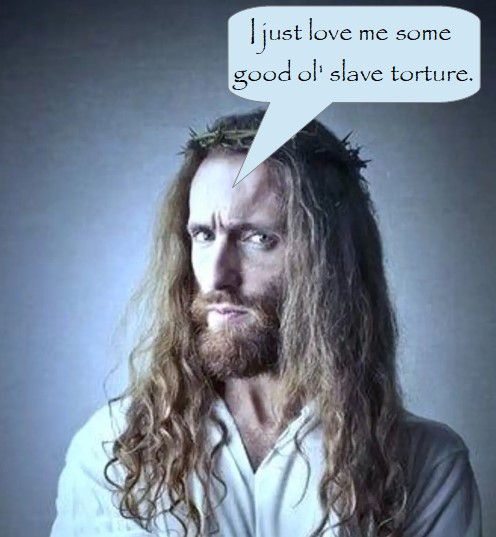
Jesus really liked telling stories about slaves. It’s as if he’d no objection to the inequitable arrangement of one person owning another. You’d think, if he really was the Son of God, he wouldn’t be quite so ready to assume unquestioningly, the zeitgeist of his day that decreed slavery was acceptable; necessary even. His being a man of his time, incapable of thinking beyond the assumptions and indoctrination of his culture might suggest he wasn’t a heavenly being at all. Either that or his creators, the writers of the gospels and the likes of Paul, were incapable of seeing beyond the zeitgeist and so made their god-man in its image.

In any case, they have Jesus tell a parable in Matthew 18:21-35 about forgiveness, which is populated once again with slaves and a slave owner. The story, in which a slave is forgiven by his master but fails in turn to forgive a fellow slave, ends with the following:

…after he had summoned him, his master said to him, ‘You wicked slave! I forgave you all that debt because you begged me. Shouldn’t you also have had mercy on your fellow slave, as I had mercy on you?’ And his master got angry and handed him over to the jailers to be tortured until he could pay everything that was owed. So My Heavenly Father will also do to you if each of you does not forgive his brother from his heart.”

Of course, the slave owner, referred at the start of the tale as ‘the king’ is – predictable metaphor alert – Jesus himself. He’s fond of casting himself in the role of kingly slave owner, with ordinary mortals his slaves. As we’ve seen already, this is the favoured analogy of New Testament writers to describe the relationship between their manufactured saviour and themselves.

Actually, the moral of the tale in this instance isn’t too bad; if you’re forgiven much it’s not unreasonable to suppose you could, in turn, forgive others their more minor offences. But this isn’t quite enough for Jesus’ script writers who have him drag jail, torture and retribution into the story. These, Jesus concludes, are the very things his wonderful Heavenly Father – based on the despotic rulers of the time – will inflict on anyone who doesn’t forgive as generously as they might.

What hypocrisy! Forgiveness is all according to Jesus but his Heavenly Father, he says with relish, will torture unforgivably anyone who doesn’t comply. What were the cultists who created this awful malicious character thinking? Jesus and everything to do with him is anti-human and soul-destroying.

As for me, I’d recommend forgiving others where you can, learning from the experience (once bitten twice shy and all that) and moving on. You won’t, whatever you do, be tortured by a fictitious, vindictive slave owner and his bullying idea of a god.


Parables

Jesus’ parables are analogies: similes or metaphors. ‘The Kingdom of heaven is like’; ‘there once was a man…’ Every one of the parables tells a story that didn’t actually happen. There was no literal Good Samaritan, no Prodigal Son or Sower. Jesus, or more probably the gospel authors, made up these stories to illustrate ‘mysteries’ (μυστήριον; gnosticism anyone?) What do they say about the parables? The majority appear in Matthew’s gospel, though Mark and Luke also include them. There are none in John. Did he, a supposed eye and ear- witness, not know of them?

Mark has Jesus say to his disciples:

To you has been given the secret of the kingdom of God, but for those outside everything is in parables, so that “‘they may indeed see but not perceive, and may indeed hear but not understand, lest they should turn and be forgiven’” Mark 4:11-12

Mark lets his readers in on the ‘secret’ (μυστήριον again) because there are mysteries within the cult, secrets available only to the initiated. Remember, the parables were written – they are almost certainly literary creations – 40 years after the cult was established. Only cultists would understand the secrets/mysteries embodied in the parables. Parables, Mark tells us, are intended to disbar those who are not spiritually attuned from salvation/the kingdom of God/eternity.

The word translated as parable also means ‘riddle’, designed to puzzle or obfuscate. But Mark doesn’t just say the parables are intended to do this. He says ‘everything is in parables’. What did he mean by ‘everything’? All of the teaching he attributes to Jesus? All of the episodes he relates? Could it be that the entire Jesus story, crucifixion and resurrection included, is one long, extended parable? A metaphor, if you like.

You bet it is.

Related:

Stories about Jesus

The Jesus Story v. Reality

Cruci-fiction

Inventing Jesus