Later ‘evidence’

The Didache is an early Christian manual discussing ethical behaviour and outlining liturgical practice. Scholars disagree about when it was created, most opting for a date around 100CE. Despite referring to itself as ‘The Teaching of the Lord Through the Twelve Apostles to the Gentiles’ in the only extant complete copy, the Didache doesn’t mention Jesus by name nor refer to any of the historical details of the kind provided in the gospels. Instead, it refers to ‘the Lord’ or ‘the Messiah’, the same terms Paul uses for his angelic Christ, and makes use of ‘teaching’ similar to that in the (invented) gospels, from which it almost certainly draws.

We’re now heading into a period when the gospels were in wider circulation and any reference to Jesus cannot be regarded as independent from them. We need, consequently, to be suspicious of any ‘evidence’ that appears to affirm his historical existence. Documents that appear after the gospels is unlikely to be from independent sources (not that they always reference their sources) but are merely relying on gospel data as filtered through contemporary Christian believers. Hence the Roman historian Tacitus, who wrote in his Annals circa 115CE:

Nero fastened the guilt (for the fire in Rome in 64CE) and inflicted the most exquisite tortures on a class hated for their abominations, called Chrestians by the populace. Chrestus, from whom the name had its origin, suffered the extreme penalty during the reign of Tiberius at the hands of one of our procurators, Pontius Pilatus, and a most mischievous superstition, thus checked for the moment, again broke out not only in Judæa, the first source of the evil, but even in Rome, where all things hideous and shameful from every part of the world find their centre and become popular.

Chrestians? Chrestus?

Pilate as procurator instead of prefect? Christianity as a ‘mischievous superstition’?

Actually, this last I can see. The other peculiarities are a problem for those who claim this is evidence for an historical Jesus. Written some 85 years after Jesus was supposedly active, this first extra-biblical reference to something approaching an historical figure is simply too late. Likewise everything after it.

We’ve exhausted the paltry references to ‘the Christ’ or ‘the Lord’ that exist prior to and just after the gospels. An historical Jesus there is not, in any of them. What does this all mean? 

The New New Testament: part 3

Following the fourth gospel is the epistle of Jude, written at the end of the first century. It is certainly not by a brother of Jesus, despite this traditional attribution. Rather, it addresses false teaching in the Christian community of its day. It makes its points with reference to characters in Jewish scriptures and even mentions the apostles (those who had visions of Jesus) but knows nothing about an earthly Jesus. Parts of Jude are lifted wholesale into the later forgery of 2 Peter.

And then… another made up Jesus! This time the avenging angel of Revelation. I’ve written about Revelation recently so won’t repeat it all here. Suffice to say, this revealing is completely within a disturbed cultist’s head. He wants to see those who oppose the cult to suffer at the hands of his the Messiah who sweeps down from heaven determined to wipe out unbelievers and set the chosen few up as rulers of a reformed Earth. This Jesus seems to have forgotten he once told people to love their neighbours, pray for those who persecuted them, humble themselves, give all they had to the poor etc etc. Revelation Jesus has no time for this sorta shit! Of course, he’s no more real than any of the gospel Jesuses. He’s simply another made-up version, ‘revealed’, or so his creator would have us think, from Heaven. Revelation is chockful of symbolism – The Whore of Babylon, the Number of the Beast, the Marriage Supper of the Lamb etc – all of it applicable to the time when it was written. It has no bearing on anything after that time and doesn’t, despite sloppy interpretations, feature ‘the Anti-Christ’.

The letters of John were all probably written by the same person. This is not the John credited with creating the fourth gospel nor Revelation’s nut-job. This John, or whatever he was really called, is concerned with divisions within his community, chiefly those caused by a group who denied that Jesus was the Christ (1 John 2:22). They were literally anti-Christ. This is where the term occurs in the New Testament and it doesn’t refer to a future madman who will crush Christians in his attempt to rule the world. It seems likely that John’s anti-Christs believed Jesus did not visit Earth as a flesh and blood human being. They were perhaps the last remnants of those Christians who, like Paul and most of the preceding New Testament letter writers, held that Jesus was a divine being, active only in Heaven. With these epistles then, written around CE 100, we turn a corner. Belief in the symbolic Jesus depicted in the gospels as a real man, has become the orthodoxy. It took some time to get here.

And chronologically, that’s about it. There are four forged books left, making the properly ordered New Testament end, not with a bang but a whimper. While 1 & 2 Timothy and 2 Peter claim to be written by Paul and Peter respectively their late date rules this out. 1 Timothy provides the infamous line that women should remain silent in church and obey their husbands at all times. 2 Peter has all the nonsense about a day being the same as a thousand years in God’s eyes. Its duplicitous author argues that God is delaying bringing punishment to the world so that more people might be saved. Evidently he lacks any mathematical understanding. You would think at this point the cultists would have realised that the cultists of the previous century, so certain of the Lord’s imminent arrival had got it disastrously wrong. But no. They reinterpreted their ‘revelations’ and prophecies so that instead of his arrival being ‘at hand’ it was now set to happen at any time in the future, even thousands of years ahead.

Christianity was all but dead at this point. It simply refused to admit it.

Frankie Goes to Hollywood

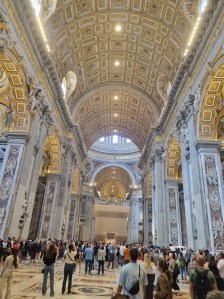
Dennis and I found ourselves in Rome last week, doing what I’m sure native Romans don’t do: the tourist trail. It’s a magnificent city.

As we were passing, we thought we’d call round at Frankie’s little place. We knew he wasn’t in, seeing as he was still on his world tour, just behind The Boss himself. He’s certainly got a great pad – Frankie that is, not Bruce – and after being frisked by hunky security guards we were admitted to St Peter’s Square. We felt moved, in the Pope’s absence, to grant an audience to the fairly thin crowd (it would get bigger later in the morning) and issue the benediction they so evidently craved. ‘Go, get a life,’ we offered from the steps of the Basilica. The faithful remained unmoved by this sage advice.

The Vatican is, I have to say, stunningly beautiful, a monument to human ingenuity and skill. But the cynic in me couldn’t help wonder what the majesty of it all had to do with the (supposed) teaching of Jesus in the Bible. I found myself playing a little game in my head along the lines of ‘how many ways does all of this contravene, contradict or downright ignore the beliefs of the earliest Christians, as expressed in what is now the New Testament?’ (Before any evangelicals tell me this is only to be expected of the Roman Catholic church, let’s not pretend that every other denomination doesn’t do the same thing.)

So, here are my suggestions for the Biblical admonitions that had to be ignored to create a religious monument on the scale of the Vatican. Feel free to make your own suggestions in the comments.

You shall not make for yourself an image in the form of anything in heaven above or on the earth beneath or in the waters below. (Exodus 20:40)

The statues of Paul and the apostles atop the buildings, the numerous images and carvings of saints, pious Marys and gruesome blood-spattered Jesuses certainly qualify as exalted images. The prohibition might not be New Testament but it is one of the Big Ten. The Vatican ditches it wholesale.

Jesus answered, “If you want to be perfect, go, sell your possessions and give to the poor, and you will have treasure in heaven. Then come, follow me.” (Matthew 19:21)

Like this ever happens!

Jesus said, ‘I am the way and the truth and the life. No one comes to the Father except through me (John 14:6)

And the Pope. And Mary. And the Saints. And the Church. And the Priests.

…the Most High does not live in houses made by human hands. (Acts 7:48)

So why build them for him? They may be meant to reflect his power and glory but they really only reflect that of the popes who had them built, plus the gullibility of their followers.

Do not store up for yourselves treasures on earth… But store up for yourselves treasures in heaven… For where your treasure is, there your heart will be also. (Matthew 6:19-21)

The Vatican’s tax free wealth, only some of which is on display around St Peter’s Square, is estimated to be between ten and fifteen billion dollars.

As I say, the Vatican is stunningly impressive; my photos don’t do it justice. If Christianity had never existed it would not have been created. But something equally impressive would have been, inspired by different ideals, deities or practicalities. Rome has stunning examples of these kinds of structures too. Nor am I getting at Catholicism per se. But you won’t find in it any expression of the beliefs, apocalyptic expectations and social reversals of the original Christian cult, nor in religion in general. Like all movements the cult had to evolve to survive, to the point it would be unrecognisable to its original quarrelsome adherents. Even if their images do look down on you from the roofs of beautiful buildings.

Whatever Happened to Yeshua bar Yosef?

What happened to the real Jesus? The itinerant Jew who trudged around Palestine with a small group of followers, preaching who knows what. How to survive the imminent end of the world perhaps. His name wasn’t really Jesus. That’s a Hellenised version of the Jewish name Yeshua: Ἰησοῦς’ pronounced ‘Yay-soos’, which means (suspiciously) ‘YHWH is salvation’. The bar Yosef part means son of Joseph, not son of God. Whatever he was about, this Yeshua was crucified by the Romans and soon after his death, one or two of his friends convinced themselves they’d seen him alive again. Or so the story goes.

The earliest information we have about Yeshua includes very little of what we now think we know of him. The crucifixion/resurrection are the only parts of the story that interest Paul, and then only because he thinks he too has seen the risen Yeshua inside his own head. But this Yeshua, whom Paul does indeed call Jesus, is no itinerant preacher. Paul seems unaware of any of his story, his parables, aphorisms or miracles. Instead he consistently describes Jesus as a heavenly being who speaks to him through ‘revelation’, explaining in convoluted terms how his death leads to salvation. This Jesus, now with appended ‘Christ’, Greek for Messiah, is an amalgam of elements from mystery religions, resurrection myths and Paul’s own fanciful ideas. He is hard to reconcile with a real man who walked the Earth years earlier.

Verdict: Paul’s celestial Christ isn’t Yeshua bar Yosef. Paul’s Christ never existed.

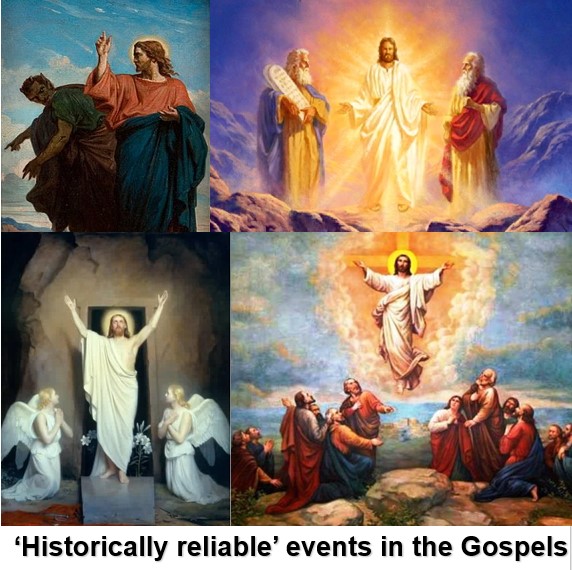
The accounts of Jesus that appear decades later attempt to ground Paul’s imaginary being historically and geographically. In this, the gospels are superficially successful but even a cursory analysis reveals serious fault lines. The gospels rely heavily on myth, metaphor and the misapplication of ‘prophecy’, rather than historical fact. They are a form of midrash. The first, written anonymously round about 70CE and later attributed to someone called Mark, is, as today’s TV dramas often say, based on an idea by Paul. It is unlikely it reflects an historical Yeshua. Subsequent gospels, also anonymous but known later as Matthew and Luke, are themselves based on Mark’s, importing its flaws and introducing spurious material of their own. In neither is Jesus the son of Joseph; he’s the son of God, born of a virgin

Verdict: the Jesus of the synoptic gospels is not Yeshua bar Yosef. He’s a literary construct, a fantasy figure.

When the fourth gospel appears, sixty to seventy years after Yeshua is supposed to have lived, the Jesus character has evolved yet again. John’s supremely confident, egotistical creation equates himself fully with God: ‘I and the Father are one,’ as he puts it. This Jesus bears little relation to Mark’s central character who keeps his mission and identity secret (as well he might as a literary construct created primarily for cult members in the know.)

Verdict: the fourth gospel’s Jesus is not Yeshua bar Yosef. He’s constructed from the beliefs of later versions of the cult.

By the time of Revelation (95-96CE), Christ has become a Game of Thrones reject, overseeing the destruction of demons, dragons and other non-existent creatures. Any semblance of reality has been left far behind.

Verdict: Revelation’s Christ isn’t Yeshua bar Yosef. He’s as imaginary as Paul’s Christ, another fanatic’s ‘vision’.

Can Yeshua bar Yosef be rescued from all these accretions? Can a historical figure be detected beneath the layers of fantasy constructed around him (or the idea of him at least)? The attempts made in the last 150 years suggest not. He is lost for good underneath layers of myth and magic.

Does it matter? Not really. None of his followers today would be interested even if he could be unearthed and resurrected. They are content with the Jesus of imagination: Paul’s, the gospel writers’, the creators of creeds, ministers who interpret the stories about him and their own emotional need. Today’s Christ is an imaginary being, a heavenly superman as unreal as the sky gods who preceded him; a faith-created myth.

Verdict: the Jesus worshipped by today’s Christians isn’t Yeshua bar Yosef either. That character is lost to us. So early did cultists lose sight of him, he may as well have not existed.

Perhaps he didn’t. 

Gullibility

On the left, oily evangelical preacher the reverend canon Mike Pilavachi (yes, really. No irony at all in those self-aggrandizing titles.) Pilavachi used his spiritual authority to abuse young men, compelling them to take part in homoerotic wrestling matches and providing them, for his own kinky gratification, with full body massages. Because, you know, it’s what Jesus would’ve wanted. He also bullied and manipulated others in his church and ‘across the world’ in his ‘ministry.’ So far so much par for the course.

What I find incredible is the reaction of one of Pilavachi’s victims, Matt Redman (right), musical partner in Pilavachi’s Soul Survivor church festivals.

Redman had this to say recently:

I think Jesus is an expert at bringing things into the light, and I think that’s what’s happening in this whole process. I think Jesus is doing this. I think Jesus is cleaning up his church and bringing something into the light that needed to be in the light.

What lunacy! Jesus will bring the sordid goings ‘into the light’, which raises more questions than it answers :

Was it Jesus who brought these doings into the open or was it victims who found the courage to speak out? If it really was Jesus, why didn’t he reveal matters much sooner to prevent more young men from falling foul of the deplorable Pilavachi’s abuse? Why, indeed, did Jesus not prevent the abuse in the first place, saving everyone the pain and psychological damage Pilavachi’s actions caused? Why did Jesus not make Pilavachi into a brand new creation, as promised in 2 Corinthians 5:17, when first he imbued him with his Spirit, a creation that lacked the desire to manipulate and abuse others?

I think we know the answer to all these questions.

Believing in Jesus is to believe in a fiction that has no more concern for your well-being than Casper the Friendly Ghost (to whom he is closely related). As much as I empathise with the vulnerable Matt Redman, he needs to be less forgiving of Pilavachi, reassess his reliance on a shadow and face reality. If anything, his belief in Jesus led him into the clutches of a psychopath who used him for his own gratification.

Mike Pilavachi has yet to be questioned by police. I guess Jesus really does look after his friends.

The Great Resurrection Scam

Brothers and sisters, we do not want you to be uninformed about those who sleep in death, so that you do not grieve like the rest of mankind, who have no hope.  For we believe that Jesus died and rose again, and so we believe that God will bring with Jesus those who have fallen asleep in him. According to the Lord’s word, we tell you that we who are still alive, who are left until the coming of the Lord, will certainly not precede those who have fallen asleep. For the Lord himself will come down from heaven, with a loud command, with the voice of the archangel and with the trumpet call of God, and the dead in Christ will rise first. After that, we who are still alive and are left will be caught up together with them in the clouds to meet the Lord in the air. And so we will be with the Lord forever.

1 Thessalonians 4:13-17 (circa AD 49-51)

Paul said that because Jesus died and rose from the dead others would too. How does this follow?

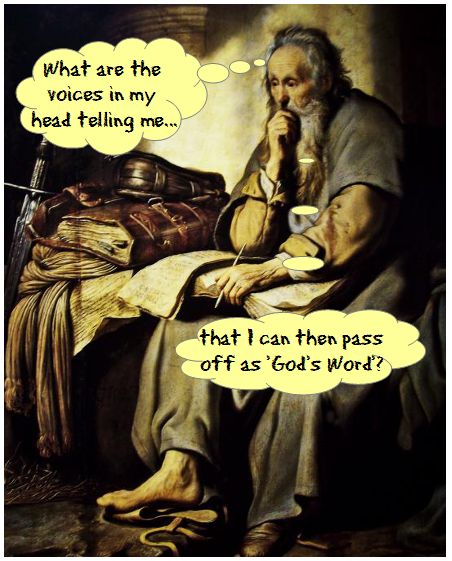
He also claimed that all a person had to do to be sure of a spiritual resurrection was to believe that Jesus had already risen (1 Corinthians 15:20, AD 53-54), How did he know this? Almost certainly it came to him in one of his visions and his subsequent ‘revelations’ (‘the Lord’s word’ as he puts it in the letter to the Thessalonian sect).

Possibly, though less likely, he learnt it from the Christians he persecuted prior to his conversion. If so, where did they get the idea from? That the cult members in Thessalonica had to ask Paul what would happen to those who had passed away suggests this wasn’t a significant concern prior to this point. Paul and other early believers thought the Messiah/Son of Man was going to appear within their lifetimes (‘we who are still alive’ etc). It was only when cultists started dying off in noticeable numbers, and the Lord remained a no-show, that it started to become an issue. Paul had to make something up. And make it up he did.

Just suppose…

Let’s imagine that the gospels were all written by eye-witnesses or the associates of eye-witnesses. Let’s suppose that prior to their composition there was a vibrant oral tradition that accurately preserved the Jesus story and his teaching in particular. Let’s suppose that Paul learnt what he knew of Christianity initially from the early believers he persecuted and then, following his miraculous conversion, from his meetings with the disciples. Let’s suppose that the later books of New Testament were written by people who knew Jesus personally or were really by Paul. Let’s suppose that everything in the bible was inspired by God and is truly his word. Let’s imagine that as result of all this, everything predicted and prophesied in the gospels, in Paul’s letters and the later ones by apostles, came to pass.

Because we’d have to imagine this. Even if everything we’ve supposed was true, none of the prophesies, predictions or promises have materialised in reality. Not one. No Son of Man beaming down from heaven while the disciples and Pilate were still alive, (as he promises in Mark 9:1 and Mark 14:62 respectively), no visit from the Messiah while Paul and his acolytes were living (1 Thessalonians 4:17), no final judgement, no Kingdom of heaven on Earth, no Christians performing miracles greater than those attributed to Jesus. Not even any ‘new creations’ imbued with the Holy Spirit (‘by their fruits shall ye know them.’)

Apologists put a lot of effort into explaining away these failures, some even arguing the Kingdom is actually with us now (how incredibly disappointing it is if this is the case!) Most disappointing of all is that no Christian has ever resurrected from the dead. Not Paul, not Peter, Mary Magdalene nor any other early follower, and no-one since: not Martin Luther, Charles Wesley, C. S. Lewis, Billy Graham nor any bishop, minister or evangelist who has ever lived. All have remained resolutely dead, just like everyone else who has ever ‘fallen asleep’ and everyone who will in the future.

However much Christians want to insist the Bible is true, accurate and God-breathed, in the end it simply doesn’t deliver.

Beyond The Grave

A few years ago, a friend of mine was working in his front garden when he spotted what he was sure were a couple of Jehovah’s Witnesses further down the street. He aimed to back inside before they reached his house, from where he could safely ignore them. But he timed it badly and before he knew it, the JWs were upon him.

My friend was under some stress at the time so when they asked him, ‘Wouldn’t you like to live forever?‘ he responded with, ‘Good God, no. This life’s bad enough. Why would I want it to go on forever?’ This took the wind out of their sail though didn’t divert them from their sales pitch for very long.

I’ve been in the same state of mind myself, and maybe you have, when life was so difficult I spent far too much time contemplating whether being dead might not be a better option. Thankfully, I couldn’t really contemplate doing anything about it, and was aware of the effect it would have on my loved ones if I did, but nonetheless I spent too much time considering – desiring even – my own non-existence.

I was pretty sure this was what awaited after death. I hadn’t, by this stage of my life, the conviction of the Jehovah’s Witnesses and mainstream Christians that a better life, one that would last forever, lay beyond this one. Instead, I made radical changes to my life in the here and now, to lift myself out of the slough of despond in which I found myself.

I love life now. It isn’t without its difficulties, not least the physical problems that come with older age, but I enjoy it to the full (apart from supermarket shopping). Having found my pearl of great price, I hope life will last for many years yet. I can’t guarantee it will, of course, so I make the most of every moment, surrounded by people I love and who love me.

Would I like my life to go on forever? Certainly, but I know it won’t. There is simply no evidence life continues after death. Assurances that it does in religious texts is no evidence at all. Even if it were, the type of eternal life suggested by the Bible, worshipping a needy, despotic God for evermore, is not the way I’d like to spend eternity.

Ask Christians how they know they will and the best that can come up with is that the Bible tells them so or that Jesus promises they will (which amounts to the same thing.) Ask them where this everlasting life will be lived and you’ll get one of two answers: in heaven or here on a restored Earth, once Jesus ‘returns’. The earliest writings in the New Testament support the here-on-Earth scenario. The later ones – perhaps because their authors had begun to realise Jesus wasn’t coming back any time soon – start, like John 14:2, to hint at a celestial existence.

No Christian – no non-believer either – has survived death to face eternal bliss or eternal damnation. Some will tell you that rising from the dead happens in an ethereal way immediately following death. The soul (or whatever) is resurrected either to be reunited with God outside of time and space or thrown to the demons in hell. The biblically savvy, like the JWs, will tell you the resurrection will not occur until Jesus’ return at some point in the future. Significantly, both expectations occur off-stage: the first in a undemonstrable plane of existence, the second in a future that never arrives. Both are wishful thinking, scenarios dreamt up by those frightened of their own non-existence.

The offer of everlasting life is one of the New Testament’s most pernicious lies. The idea is not to be found in the Jewish scriptures that make up the Christian Old Testament. It is a later development, dreamt up by extremists who convinced themselves, on the basis of a few visions, that God would ensure their continued survival, just as he had Jesus’s.

If this isn’t how the promise of living forever came about, then what is the evidence there is an existence beyond death? Empty assurances by first and second century cultists are not it.

  • Show me someone other than Jesus – whose ‘resurrection’ is metaphorical at best – who has risen from the dead.
  • Show me evidence that ordinary human Christians have already gone on to eternal life.
  • Show me, if you don’t subscribe to this view of immortality, the souls who rest with God awaiting a future resurrection (1 Thessalonians 4:13-18; Revelation 6:9-11).
  • Show me just one human, Christian or otherwise, who has gone on beyond death.
  • Prove that the promise of eternal life is real.

The Gospels and Other Fiction, part 2

The gospels were written as history. Their writers did not make things up.’

History, as koseighty has reminded us, is not littered with angels, devils, demons, spirits, apparitions, miracles, voices from the sky and resurrected corpses. Real history was being written at the same time as the gospels, by Josephus and Suetonius for example, who do not include the supernatural but do reference their sources, something the gospels never manage.

And of course the gospel writers did make things up. They invented numerous stories for Jesus to make it appear he is fulfilling prophecy (even when that ‘prophecy’ wasn’t prophecy to begin with.) This included making up ‘history’; Herod’s Massacre of the Innocents (a rewrite of a fiction about the infant Moses), the crucifixion eclipse, the rending of the temple curtain and more. These are all symbolic events. They didn’t really happen. Jesus’ own resurrection can safely be added to the list. It’s ironic that those who defend the gospel authors against the charge they made stuff up are the same who invent stories themselves: Mark and Luke knew each other? Mark proof-read Luke’s first draft? There were people who would fact check the gospels and point out any errors? But the original Christians wouldn’t do such a thing. Except they did.

There are no Inconsistencies, contradictions and inaccuracies in and between the gospels, but if there are, these are irrelevant. It’s the bigger picture that counts.’

Jesus is different in all four gospels. Despite Matthew and Luke’s plagiarising of Mark, they alter him to reflect the Jesus they believe in. John’s Jesus is so far removed from Mark’s that he’s a different character altogether. The inconsistencies do matter: did Jesus perform signs and wonders or not? Was he crucified on Thursday or Friday? Was it Peter, John or Mary who was first to see him resurrected? Did he hang around for one day or for 40? These conflicting details tell us that the creators of the Jesus story were more than happy to alter it when it suited their purposes. This is not how history is written. It is how propaganda is created. The ‘bigger picture’ is, in any case, made up of these smaller details. They work collectively and cumulatively to create the bigger picture. If we can’t rely on their being accurate how can we be sure the bigger picture is? When the gospel writers are unreliable in the smaller details, how can we be certain they’ve got the bigger picture right, given they’re all copying it from the same source, Mark, and giving it their own spin?

There is corroborating evidence of the gospels’ accounts’.

There is? Where? Just because there is some evidence that Nazareth existed doesn’t mean Jesus performed miracles, any more than Dunsinane castle’s existence proves Macbeth murdered King Duncan (he didn’t). Just because Pilate was a real historical figure doesn’t mean he crucified Jesus, any more than the existence of King’s Cross Station means Harry Potter catches his train there. And these, surely, are merely the small details. There is no corroboration at all for the bigger picture. Mention of the followers of Chrestus in Suetonius confirms at best that there were Christians in Rome at the time of Claudius, but no-one is disputing that. At worst, for the apologist, this curious reference has nothing whatever to do with Jesus. Later references to incidents from his story, by the much vaunted Church Fathers, are derived from the gospels and are therefore dependent on them. As such, they don’t constitute independent corroboration.

Everything Jesus prophesies or predicts in the gospels will come to pass, then sceptics will see that everything in the Jesus story is true.’

This one is from a commenter on Don’s blog. (I only went there by accident, honest.) The problem with this one is that everything Jesus is made to promise should already have come true, two thousand years ago. The Son of Man should have appeared in the sky with the heavenly host to usher in God’s Kingdom on Earth, while sending most of mankind to the fiery pit or outer darkness or some other damn place. Both he and Paul claimed that this would happen within their and their followers’ lifetimes. The trouble with Christianity is it is always winter and never Christmas. Its fulfilment God’s – God’s Kingdom on Earth, life after death, the final judgement – is always going to be at some indeterminate time in the future, a time and fulfilment that never quite arrives. It never will; part of ‘the big picture’ we can be confident we will never see.

More to come (unlike Jesus). 

Everything, Everywhere, All At Once

Sadly, we’ve failed to locate Jesus, the celestial super-being who is everything, everywhere, all at once yet nowhere at all. We’ve been presented with some possibilities, specifically that he exists in another dimension, which may or may not exist, from where he whispers directly into the brains of those who, over in this reality, call upon him. He even appears occasionally in visions, when the two dimensions ‘intersect’, which, as everyone knows, they’re capable of doing.

Unfortunately, all of this is undetectable by science but there’s no reason for concern because there is more to reality than that which science can observe. Equally regrettably, there’s no way of verifying this claim either; this is because science is deficient, limited as it is to investigating only ‘dirt and rocks’.

* * * *

It is far more likely that science can’t detect heaven and the eternal Jesus in precisely for the same reason it can’t detect Narnia, Valhalla and all the other fantasy worlds created over the millennia by human minds. Applying Occam’s razor, the imagination accounts for all these other ‘realities’ and the immortals that inhabit them.

No further explanation necessary.