What Is Truth?

I’m sceptical (or skeptical if you’re in the US). It’s a legacy of my years of believing the promises of Christianity. Preachers, pastors, Bible study leaders told me for 25 years that the promises of the bible, of Jesus himself, were all true. And like a fool I believed them. Jesus had made a new creature out of me; he loved me; he was guiding my life; he was returning soon; I’d be resurrected; I’d live in heaven forever… and on and on.

What a preposterous set of propositions! It took my Great Realisation, my own personal revelation that there was no God, to make me see how ridiculous they were.

It is this that left me with a legacy of scepticism. If I’d been misled all this time by people I respected and admired, what else was I accepting as true that very well might not be? I wasn’t going to be fooled again and so began to question practically everything I was told by authorities, experts and the media. If it seemed ‘off’, as we say these days, not quite right or too good (or bad) to be true I asked, ‘Who says so?’, ‘How do they know this?’, ‘What is the evidence?’, ‘Do they jump to conclusions or is their reasoning sound?’, ‘Why should I believe what they say?’ It’s exhausting, I assure you, having to search out the evidence – the primary sources of information – and to sift through it, recognising any bias that has been imposed on it. It’s either this or I must accept without question that everything I’m told is true. I can’t do that any more.

Here are a few examples of claims that I’ve been sceptical of on the recent past:

We are being guided by the science, said politicians during Covid to ensure compliance with whatever lockdown measures were being imposed. Did this really just mean was ‘we are being guided by our interpretation of some rather suspect data’? It became clear after we emerged from the hysteria surrounding the pandemic that this was the case.

Tens of thousands will die of Covid unless you comply: this based on computer predictions which turned out to be very far from accurate: the suspect data that ‘guided’ politicians.

A woman can have a penis. A man can have cervix. Yes, our politicians told us this during our recent fixation with transgenderism. Whatever you think of people changing sex, these two statements, designed to change hearts and minds, if not penises and cervixes, are patently false. Whatever was guiding those who said such things, it certainly wasn’t ‘the science’.

No more irresponsible, undeliverable promises. So said the Prime Minister exactly a year ago. I’m not going to be sceptical or cynical about this. I feel sure it’ll turn out to be true. Is he implying though that promises made earlier than this were indeed ‘irresponsible and undeliverable’. Surely not.

We will not raise taxes on working people (and energy prices will fall by £300 in the long term), Labour politicians, now the government, said only last year in an attempt to gain our votes. I was sceptical about this, as with much they said, and for the first time in many years Labour did not get my vote. Taxes have increased considerably for working people and everyone else in the last year and are set to rise again this week. The price of energy has risen too, by 18%, and will do so again in January. A £300 reduction by 2030, if it happens at all, is not really going to offset this by much. This was all very predictable; since when do politicians tell us the truth in order to get us to vote for them?

Anything Donald Trump says. Insert your selection here.

The NHS is the envy of the world. Pundits and politicians are very fond of this one. They like to add too that the NHS is underfunded. But the NHS is expensive, management heavy and wasteful. Is it really the envy of the world, and if it is, so what, when it’s constantly in crisis at home?

The BBC is the envy of the world. It is impartial and balanced. Is it? A number of independent reviews have determined that it has its own agendas and biases. During lockdowns it fuelled hysteria and now contributes to climate change panic. Rather than reporting facts, it tells us too often what we’re meant to think about issues. It has also been rocked over the past dozen years by sleaze and scandals.

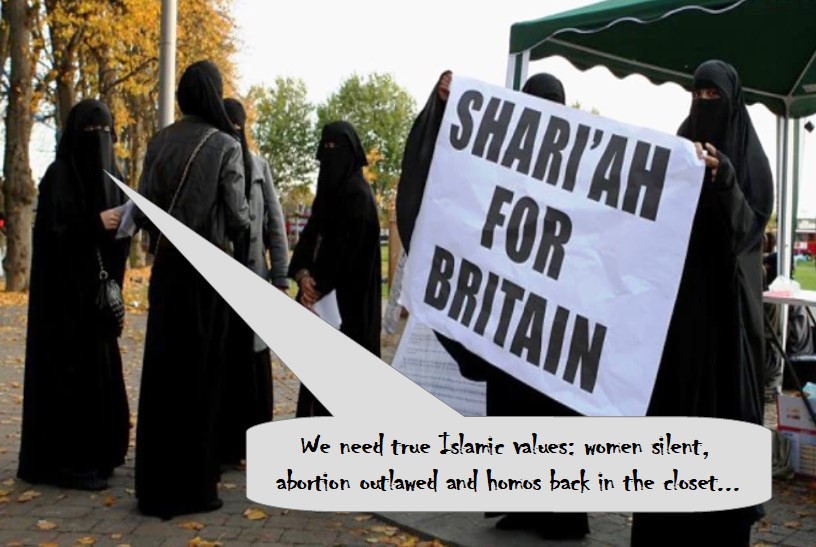
Islam is a religion of peace. So many questions about this one. Many Western politicians have claimed something like it. President George W. Bush did, shortly after 9/11. Perhaps ordinary Muslims are committed to peace but there are many Islamists (the term now used for Muslim extremists) are evidently not: as well as 9/11 there have been acts of Islamist terrorism in London (7th July 2005), at Charlie Hebdo in Paris, in Manchester, the slaughter in the street of an off duty soldier, the massacre of Israeli young people in October 2023, the killing of Christians and others in Nigeria.. Is ‘Allahu Akbar’ really a cry of peace?

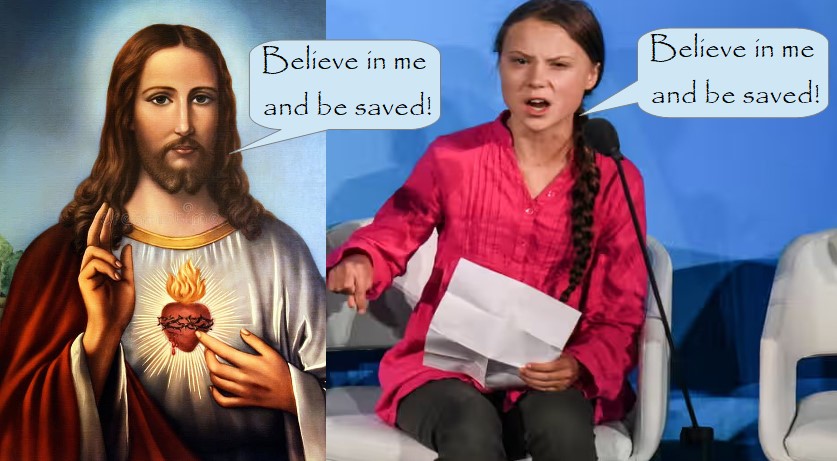
We can halt or reverse the climate changes we ourselves have caused. Can we? Who says? (Greta Thunberg, yes, but no actual scientists that I can find.) We can perhaps mitigate and slow down the change, and we should. But the climate will continue to change. Are these changes solely the fault of us humans – we’re contributing to the pace of change, certainly – when the climate has been in constant change from time immemorial?

I was accused of trying to be a maverick in a recent comment on an old post. Honestly, I’m not. It’s more a case of ‘once bitten, twice shy’; I’m not going to be told ever again what to think, especially not by those who don’t present good reasons why I should (I’ve Jesus to thank for this). Everything needs to be questioned, otherwise our minds are not our own. Be sceptical.

Not The Answer

Unlike most Brits, I knew of Charlie Kirk before his assassination last Wednesday. He cropped up on American blogs I read, most frequently on Joe.My.God. I profoundly disagreed with practically everything Charlie Kirk had to say, though a little of it made me re-examine my position on some issues. His views on gun control seemed to me to be extremely foolish and I objected to what he had to say about gay people, our relationships and status in society. I reacted against his Christian views, entangled as they were with his extreme political views. I objected too to his promotion of his faith; it seemed trite and smug (but then I think this of anyone who preaches Jesus.)

Following Kirk’s death, it’s been reported that he was prepared to debate with those who disagreed with him. He said, ‘When people stop talking, that’s when you get violence… When people stop talking, that’s when civil war happens, because you start to think the other side is so evil, they lose their humanity.’ Seemingly then he valued free speech and recognised the importance of dialogue and discussion, though perhaps his intent was to influence the views of others rather than reconsider his own.

He was opposed to transgenderism and this, at the time of writing, looks to have prompted his murder. Many on the Utah University campus last Wednesday would have been incensed by Kirk’s position that trans people were an ‘abomination’, showing a ‘throbbing middle finger to God.’ Some engaged him civilly on the issue, asking pertinent questions. Tyler Robinson, however, decided he would oppose Kirk’s more extreme views and advance the Trans cause by shooting him dead.

There is no justification for what Robinson did. Executing people one disagrees with is a feature of Putin’s Russia or Kim Jong Un in North Korea. It ought not to happen in the democratic west where we debate our opponents or, if they happen to be politicians, vote them out of office. Murder is never the solution, and in this case did not advance the cause the shooter felt so strongly about. Quite the opposite.

Those who argue that his shooting was justifiable – and yes, they’re out there – on the basis that Kirk’s views were extreme and reactionary must also accept that the assassination of any public figure is justifiable on the basis that some people find their views objectionable. Do we really want to go down this road, of rationalising assassinations on the basis the target espouses an ideology we find objectionable?

Those who rejoice at Charlie Kirk’s demise demonstrate a lack of humanity and support the desecration of Western values, free speech in particular.


Hysteria/Mission Creep/Overreach

When I was head (principal) of a primary (elementary) school in the 1990s, I had a staff member who regarded every small problem as ‘a Major Disaster’ (her words). Everything from a mislaid document to wet weather on sports day was an earth-shattering calamity. She was not the only one to overstate manageable events. Those who wield authority over us, their media lackeys and those with a cause of their own to promote are expert in whipping the populace up into a frenzy disproportionate to the given situation. After a short period in the spotlight, the hysteria and the movements that cause it usually fade, as the media finds something newer and shinier about which to induce panic. Occasionally, the newly out-of-favour movements fight back with renewed vigour, a mission creep extending their influence into new areas.

Looking back over the last 25 years, I and my fellow citizens here in the UK have been expected to be alarmed to an alarming degree about:

The Millennium Bug, when every computer in the world, so the experts said, would crash the instant the year 2000 started. This would, in turn, crash every automated system everywhere, causing chaos and mass fatalities. You all know what actually happened.

Foot & Mouth Disease, when millions of cattle and sheep were slaughtered and burnt. Millions of healthy animals were destroyed in case they contracted the disease.

Weapons of Mass Destruction supposedly amassed by Iraq who, we were told, could unleash them on the West within 45 minutes. That there was no evidence of any WMDs and the fact Iraq did not deploy them (because you can’t deploy something that doesn’t exist) did not deter George W. Bush and Tony Blair from launching their oxymoronic (with the emphasis on the moronic) ‘war on terror’. In so doing, they destabilised the world, creating many of the problems we face today.

Child Abuse Scandals: After either missing or covering up the serial abuse of children and vulnerable people by a BBC celebrity, British authorities went to town on ‘suspected paedophiles’, many of whom were nothing of the sort. (A friend of mine was caught up in this hysteria and spent time in prison for a youthful indiscretion many years earlier.) Unfortunately, this national crisis and the perceived need not to offend Muslims came into conflict when, over 20 years, rape gangs comprised mainly of Pakistani men were able operate in up to 50 UK cities with impunity. Hundreds of thousands of vulnerable, white working-class girls were systematically groomed and raped while the police and authorities turned a blind eye, the consequence of a woke priority taking precedence over the rights and safety of others.     

The Covid Pandemic and Lockdown, when governments the world over (apart from Sweden) panicked about a flu-like virus, closed down entire countries, failed to protect the vulnerable and crashed the very economies needed to fund healthcare and treatment for the infected. Britain was closed down for almost 2 years and still hasn’t recovered from the consequences. Citizens are now paying heavily for actions taken by a government that extended its powers to achieve very little.
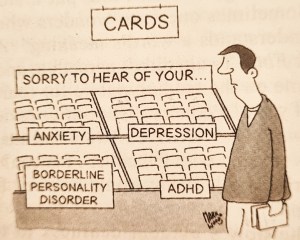
        Cartoon by Mark Woods, Spectator magazine, 7th June '25

Mental Health issues and the medicalised labelling of ordinary human behaviours. We all have mental health issues; this is what it is to be human. Some, it is true, have more than others. Determining an individual has ‘mental health issues’ forces him or her to become his or her issues. Instead of being prone to depression (as I was) or anxiety, the individual who experiences these is now ‘neuro-diverse’. Instead of suffering from a condition the individual could do something about they become that condition. Some people, usually males, used to be diagnosed as autistic. Now that autism is seen as a spectrum, everyone is deemed to be on it somewhere; everyone as a result is autistic. People become trapped in their condition with no way out, lifelong treatment the only recourse.

Black Lives Matter. As Lionel Shriver asks here, do black lives matter any more now than they did before all that righteous indignation and virtual signalling from white people?

Identity Politics in which individuals were told as a matter of urgency to self-identify solely on the basis of their ethnicity, religion, gender or sexuality. Gender dysphoria became a thing from which the trans-movement emerged. While I’ve every sympathy for those who feel they were born in the wrong body, society was unprepared for and incapable of dealing with the consequences. Women became ‘cis-women’, sex became ‘gender’ (a grammatical term), ‘non-binary’ became an option and the abuse of pronouns was politicised. An individual could identify as a plural ‘they’, while others lost their jobs if they declined to play along. Worst of all, children, who were too young to be allowed a tattoo, were given puberty blocking drugs, and in some cases surgery, because they felt they were the wrong sex. Children.

The High Court in the UK recently ruled that a man cannot become a woman, entrenching the views of campaigners and prompting other supporters to claim they knew this all along.

Wokeism; while it’s right and proper to treat each other with kindness, courtesy and consideration, politicising something we were, by and large, already doing was not. Wokeism pushed the boundaries over what could be done or said, or rather could not. Anything that might cause someone else offence was forbidden; commenting or criticising others’ religious beliefs or defending women’s rights became ‘hateful’; having a view on unsustainable immigration numbers made you a fascist. This was the era of cancelling those who did not conform to woke ideals. Toppling statues was popular too on the basis that a long-forgotten figure from 250 years ago may have had a slight connection with the slave trade. Western guilt for actions over which people living today had no part in and demands for reparations to those equally uninvolved ensued.

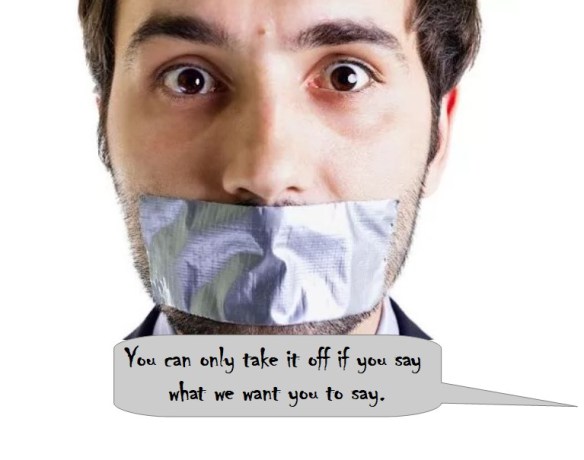
The ‘necessary’ control of free speech, a panic we’re still mired in. Stupid and inflammatory comments on social media can now earn you a prison sentence longer than that of a paedophile offender, often preceded by a visit from half a dozen policemen who will root through your house looking for evidence that you might have once had a ‘Brexity’ thought. Subjects off limits are; arguing that Covid19 began in a Wuhan laboratory (it might upset the Chinese); Islam, Islamic extremism and the Pro-Palestinian movement (however it’s still okay to criticise and condemn Jewish people for the actions of their government); expressing views different from the UK government’s and whatever the prevailing narrative happens to be. A government agency, ‘Prevent‘, last year redefined terrorism (see below) as ‘vocal support of ideologies that advocate discrimination’ and any expression of what it calls ‘cultural nationalism’. What this means is that those who call out religiously-motivated discrimination, lawlessness and terrorism are to be considered terrorists themselves. Actual terrorism and violence is therefore protected against those who would speak out about it, those who do so being the real terrorists. To put it another way, which I read recently (though can’t remember where): those who say hurty things are far more culpable than those who commit actual hurty things. This Orwellian doublespeak must now be taught in universities and other higher education institutions.  

The Climate Crisis and Net-Zero. You must be alarmed by the climate crisis (see here for how much of it Al Gore got wrong). You must too pay heavily for net-zero, thanks to additional taxes; energy prices in the UK are the highest in the world. You must buy into the government’s attempts to enforce a net-zero energy policy by 2050, despite net-zero being unachievable.

What if, might, could, maybe: the media’s favourite phrases to ramp up hysteria. ‘There might be terrible consequences’; ‘we could be headed for another Major Disaster’; ‘if X happens (though it hasn’t) then Y could possibly follow.’ When did the media stop reporting what has actually happened and take up fortune telling instead?  

* * * * * *

There is some comfort in the fact that the so-called crises and hysteria of the past eventually receded and faded away. So too will many of these current causes. All things, as George Harrison once wisely reminded us, must pass. They will, however, be replaced by others equally irrational and preposterous. Those who create them, be they governments, special interest groups or overwrought Swedish teenagers will expect us to conform to their Chicken-Little levels of hysteria. When they do, don’t be alarmed and be sure to seek out the evidence for yourself.

Neil’s Third Letter, to the Sceptics

Dear Sceptic,

I understand, I really do. Some of your explanations for what’s going on in the world are way out there. Some of them, in fact, are absolutely preposterous. But, I know how you got there. You’ve spent so long being misled, deceived and, yes, let’s face it, lied to by politicians and some of the media that you’ve come up with your own explanations for things. You’ve suspected in some cases that the establishment’s frequent misdirection and disinformation amounts to conspiracy, and certainly there have been conspiracies of silence in recent years (we’ll get to some examples soon). Unfortunately, this has meant those same authorities have been able to say that your views can be dismissed as mere conspiracy theories. You should be cancelled. Certainly some of your more way out theories – satanic overlords, faked moon-landings and microchip vaccines – need to be. Unfortunately this has also meant any reasonable arguments you’ve arrived at that run contrary to the prevailing narrative have also been airily dismissed as the work of nut-jobs and thrown in the dumpster along with all the whacky stuff.

You were right, it turned out, about Covid19. It was manufactured in a Chinese laboratory, partially funded by the US, from where it escaped in 2019. Even the US State Department has accepted that this is the most likely explanation of the virus’s origin and has asked Chinese authorities to release the relevant data (you can guess how this request was met.)

Look where it got you during the pandemic when you argued for the virus’s lab based origins. Despite the evidence you presented you were labelled conspiracy theorists, were cancelled and hurled in the ‘not worth your time’ trash can. It’s still happening now, because no-one can be allowed to upset the Chinese authorities when it could mean research labs in the West could lose Chinese sponsorship.

You’ve pointed out too that the UK government’s efforts to eliminate the country’s less than 1% contribution to to global emissions is futile. At £22 billion, its plan to ‘capture’ carbon waste is both ridiculously expensive and pointless: carbon capture has never been successfully achieved by any country that has previously attempted it. Never mind, the British taxpayer will fund this particular tilt at windmills (no pun intended); you can be dismissed as climate-change deniers, purveyors of false information as well as conspiracy theorists. A three-in-one success!

You’ve suggested that the current narrative on immigration doesn’t hold water. The government says we need present levels of immigration to fill job vacancies, sustain the economy and fund others’ welfare benefits and pensions. You’ve highlighted the unfounded assumptions inherent in this strategy, pointing out it has failed to improve the economy. You’ve suggested too that in the long term it will necessitate even more immigration to fund those currently entering the country when they draw welfare and claim their pensions. It’s a ponzi scheme writ large that merely kicks the can down the road. And for your trouble you’re labelled far-right, racist and Islamophobic (even when you don’t mention Muslims). You can always tell when those who seek to control the narrative have no counter argument; they’ll subject you to name calling, political slurs and seek to censure your views. Get with the narrative or else!

I could go on –

Question the idea that people alive today are somehow responsible for the slave trade 300 years ago: racist!

Express the view on the deleterious effects of the trans-movement on women’s rights and safety: transphobic!

Ask whether the plonkers who make stupid comments on social media should receive longer prison sentences than rapists and thugs: hate-filled bigot!

– but I won’t. Often, sceptical free thinker, you don’t get it right and others are taken in by your more whackadoodle theories. Unfortunately when you do have a point, backed by sound argument and evidence, it can easily be dismissed by lumping you in with the whackier of your brethren, and ultimately by silencing you and the platform on which you write. That’s Britain today (or is that just a conspiracy theory?)

Yours,

The Apostle Neil

Respect

Even before the events in Israel and Gaza, there were numerous recent examples of the term Islamophobia being used to suppress freedom of expression or shield wrongdoing.

A recent report by an all party group of UK MPs.

I’ve been told before that I should respect people’s religious beliefs. We all should apparently.

I can’t, I confess, summon respect for patent nonsense, nor for those who subscribe to it. I’m not even going to try.

There have, I admit, been a few believers I’ve met in life for whom I have had respect and even admiration, but this has been for the kind of person they were, not because of their religious beliefs per se. And no; their religion is not what made them admirable people. They were admirable irrespective of, or even despite, their irrational beliefs. I still hold to the theory of my own making, that religious conviction is like alcohol: both accentuate the existing characteristics of the individual, making them more of the person they already were, for better or for worse.

Equally, I’ve met many non-believers (I hate it that we have to describe ourselves as what we are not), LGBT people (for many religionists, the antithesis of admirable) and individuals whose views and outlook on life I haven’t necessarily agreed with, for whom I have also had respect and admiration.

It comes down to the old cliche, a truism nonetheless, that respect has to be earned. Just because someone believes in the supernatural or that Jesus died for our sins or that their deity or prophet trumps all others doesn’t mean I have to respect such views, or indeed those who hold them.

But this is where we’re headed, it seems. We’re expected to respect any old make-believe so long as it comes under the banner of religion and still more that doesn’t. It’s becoming ‘hateful’ to criticise religious belief and those who practise it. Because their views are sincerely held, the thinking goes, they merit protected status.

I commented some time ago on a Christian site (something I rarely do except when incensed) that was insisting ‘sodomites’ would burn in hell, because… the Bible. I countered that gay people were not going to hell because, in fact, no-one was. As well as the subsequent ‘loving’ comments from Christians, I was taken to task by a gay person telling me I was disrespecting the original poster’s Christian convictions.

Likewise when I suggest that we should be more wary of Muslim beliefs I’m told I’m being profoundly unfair, racist and Islamophobic, towards a minority – as a minority of one myself – and I should show more respect for an ancient and sacred tradition as well as those who subscribe to it.

I can’t do it. I can’t respect religious belief. It is no more worthy of respect than astrology, palm reading and spiritualism. It flies in the face of rationality. Not only is it insupportable, it is dangerous, a threat to hard-earned freedoms and rights.

Who Decides What A Culture’s Values Are?

Did you decide? Would you prefer to live in culture based on Christian, Islamic or Marxist values? According to some Internet Christians, these are the only choices available. Of course anyone with an ounce of sense and a modicum of honesty knows they’re not.

I choose to live in a society that is not dominated by cherry-picked Christian values, or indeed ‘values’ derived from any religion. I reject the claims of them all, including their demonstrably false notion that I and my fellow citizens cannot behave ourselves unless controlled by a morality imposed by an imaginary deity. Likewise, I don’t care to live in a culture determined by an extreme political ideology that serves only one part of society: usually the elites who devise the ideology in question.

Instead I choose, or rather was fortunate enough to be born into, a relatively liberal democracy, capable of determining its own values. These are largely secular and humanistic and include, amongst others, the rule of law, tolerance, and freedom of speech and movement. Of course the UK has never fully realised these aspirations but there has always been a sense, since the 1960s, that we were moving towards them. Perhaps I’m naive to think this, given the turbulence of the Thatcher years and President Blair’s mania for regulation, but overall it used to feel that we were moving gradually towards a fairer, more reasonable society.

It doesn’t now. The elites have embraced a wokeness that benefits a limited few and have redefined terms – ‘woman’, ‘crime’, ‘offence’, ‘hatred’ and ‘phobia’ among them – which has impacted negatively on personal rights and freedoms. They have reinterpreted the law so that it benefits vocal minorities while side-lining the majority. They have repeatedly reneged on promises and over-reacted to the crises of recent years – Covid in particular – by granting themselves greater powers to manage their own over-reaction; powers which, once each crisis has passed, they have declined to relinquish. The values of Britain today, as imposed by the governing classes, are overly woke and authoritarian. In my 68 years, I have never felt as micro-managed in my personal life as I do today.

So, I do understand why there are those who call for the return to what they perceive as Christian values or a cultural Christianity of church bells and hymn singing. I understand too the fear of some that the waning of Christian influence will see extreme Islamic values fill the vacuum. This seems to me to be a real possibility and one that would prove seriously detrimental and damaging to British society. However, attempting to resurrect nebulous ‘Christian values’ in order to prevent more intolerant ones from being imposed is no solution.

We need to be clear about our values and assert those we aspire to: tolerance, liberalism, democracy, freedom of speech, rights for all, equality under the law and, I would add, truthfulness, honesty, fairness, consideration and reasonableness. For a time, this may very well involve being intolerant of intolerance, whether derived from Christianity, Islam, wokeism or political ideology. In particular, we need to stop conceding ground to Islam and resisting the demands of Muslim activists when they conflict with the values and aspirations of the majority.

Perhaps none of this will matter to me, given I’m not going to be around for many more decades (if that). But I would like the Britain my grandchildren grow up in to be one that reflects humane, secular values. I fear for them that it might instead operate on the basis of oppressive, intolerant religious ones.


free speech

Why We Can’t Return To Christian Values

There has been a spate of articles recently advocating for a return to Christian values in the UK. Some, like that by Madeline Grant, don’t specify which values they have in mind. Nonetheless, Ms Grant worries about these unspecified values being replaced by the ‘terrible new gods’ of wokeism, while Douglas Murray – an agnostic commentator I admire and enjoy a great deal – argues for the revival of Christian forgiveness. Elsewhere, Richard Dawkins repeats his call for the preservation of ‘cultural Christianity’ in the face of less ‘decent’ religions like Islam.

I’m sure there are good arguments to be made for exercising more forgiveness both in our personal and national lives, though the idea is not without its difficulties. Dawkins too is right to express concerns that the vacuum that may be left as Christianity declines might be filled with more unsavoury and less charitable values.

But what are the Christian values that these writers see less of in modern life? For Dawkins it’s the chiming of church bells and rousing hymns, which, as pleasant as these are (I would not like them to disappear either) do not have any bearing on our morals and values.

According to Total People, our values in the UK are Democracy, the Rule of Law, Respect & Tolerance and Personal Liberty. Certainly the UK has long regarded itself as a tolerant country – though those on the receiving end of intolerance in the past (early immigrants, gay people for example) might disagree – and we have always aspired to show respect without necessarily achieving it. Our morals on the other hand, especially with regard to sex (and Christians invariably mean sex when they talk about moral decline) have changed over the last 30 or so years, becoming more tolerant of, for example, same-sex relationships and less accepting of adulterous or abusive ones.

The question is, however, do we owe our values and morals to Christianity? I’ve argued before that we don’t. I’ve also tried to demonstrate that there is no time in the past we could pinpoint and say, ‘here’s where the country demonstrably and consistently upheld Biblical principles, showing us just how far we’ve fallen since.’ I applied this criterion to the USA when Don Camp suggested there was a now lost Christian golden age, taking random points in US history and demonstrating there never was a time when Christian values prevailed. Any such golden age is a myth, in the States, the UK and anywhere else. It always has been so; read Paul’s first letter to the church in Corinth to see how far even early cultists fell short of his ideals. Christians themselves don’t and never have demonstrated the high standards the bible demands.

Why is this? Because Christian morals and values are impossible. Even those who think they live with the Holy Spirit in them fail, and frequently fail dramatically, to practise what they preach. They don’t love their enemies, a ridiculous expectation of Jesus’s that certainly can’t be extended to nations. Many of the righteous don’t demonstrate love for their neighbours (other than bombarding them with the gospel) and frequently showing an appalling lack of empathy for fellow-believers (take a look at the abuse that goes on in the church at large.) They don’t, in the main, sell all they have and give the proceeds to the poor; give to anyone and everyone who asks and give away their shirt as well as their jacket when it’s demanded of them. They do judge others but don’t – sorry, Douglas – forgive fellow-believers seventy times seven, let alone those of us they regard as the great unwashed. Perhaps it’s as well; what would a culture be like that repeatedly forgave its criminals, abusers and bullies?

The frequently ignored Golden Rule of ‘do onto others as you would have them do unto you’ predates Jesus by centuries, while the more realistic, secular version of it, tolerance and respect, likewise doesn’t derive from the Bible, Jesus or the church. This Holy Trinity of terrors demonstrate a marked absence of tolerance and respect for any positions other than their own and ‘personal liberty’ is not a concept known to them. Didn’t Jesus insist his followers become his slaves? His Father, meanwhile, is intolerant of everything human beings do and everything they are.

A Christian who commented on Grant’s article asked those who disputed her premise – that we need to return to Christian values – whether they would prefer to live in a country dominated by Christian, Islamic or Marxist values. I’ll leave his question with you – answers on a postcard please – and return to it next time.

.

Religiophobia?

Is criticising Christianity and the way some people practise their religion a form of Christophobia? Strictly speaking a phobia is an irrational fear of whatever precedes it, as in homo-phobia, trans-phobia, Islamo-phobia and the like. In the accusations of whatever-phobia we hear today – and they invariably are accusations – ‘phobia’ seems to have come to mean ‘hatred of’; a hatred of Christianity and therefore of Christians; of homosexuality and therefore of gay people; of trans-people; of Muslims and so on.

Reasonable criticism of belief systems is not hatred. I don’t and am sure I never have had a hatred of Christianity or of any other religion. I certainly have views about Christianity as a seriously flawed, cock-eyed superstition (I hope I’m not giving my position away too early.) Reasonable criticism of it, mockery even, is perfectly legitimate, for reasons I’ve outlined before, just as criticism and mockery of any belief in the fantastic is legitimate. Ideologies based on belief in imaginary beings do not automatically merit respect nor do they have a de facto immunity from criticism. The same applies to those who subscribe to such fantasies, particularly when they attempt to force them on others. Calling out believers on their inconsistencies and hypocrisy is perfectly reasonable.

Is it fair then to express critical views of homosexuality and by extension of gay people? Of course. We are not immune from reasoned criticism, though much of it doesn’t qualify as ‘reasoned’; we have suffered much from emotional reactions to our existence and still do. (See Bruce’s recent post in which Republican North Carolina’s lieutenant governor, Mark Robinson rants about godless homos. When comment deteriorates into vitriol it becomes an incitement to hatred and, sometimes, violence. When this happens, the modern sense of phobia is justified.)

Islam is as irrational as Christianity and other religious belief systems. It is as legitimate to criticise and, when appropriate, to condemn Islam, just as it is Christianity. It is reasonable to question Muslim’s treatment of women, to insist it is inappropriate, particularly in a Western context. It is appropriate to oppose Muslims’ opposition to Western values rather to accede to their opposition to, for example, freedom of speech or the teaching of evolution and sex education in schools. It seems increasingly to me that in Britain we are conceding too much to Islam and to Muslims because we fear both the accusation of Islamophobia and, not entirely irrationally, a disproportionately aggressive response. Reasonable criticism of a belief system and those who subscribe to it is not hateful. We have a duty in a largely secular society to say so. To resist irrational belief in the supernatural when that belief, be it Christianity, Islam, Judaism or any other of the 4,200 religions human beings have dreamt up seeks to impose itself on others is neither hateful nor irrational. It is essential.

I‘d write more about Islam if I knew more about it. I’m disinclined to learn more, however, having already wasted much of my life in thrall to that other ‘great’ religion, the one I spend so much time deconstructing here. Who needs to know more about another? Saviours, Prophets, Gods, angels, signs and wonders – they’re all equally meaningless. Instead of claiming they’re victims of Christo/Islamophobia, religionists would do well to develop thicker skins as we ‘abominations’ and ‘perverts’ have had to do. They should ask themselves whether criticism of their practices and worldview is justified. They might just find it is.

Christian Values

I keep coming across the idea that the West is abandoning its ‘Christian values’ (here for example). Some say we’re doing so without having anything with which to replace them, while others bemoan the influence of ‘wokeism’, Islam and social media.

This seems to me to be lazy journalism. What Christian values are we talking about?

  • Self-sacrifice, humility, selling all to help the poor, putting others before oneself? These are Christian values according to gospel Jesus but they have never been the prevalent values of Western culture.

  • Prohibitions against lying, stealing and murdering, together with admonitions to be civil and respectful predate the Bible by some considerable time. Then, as now, they were not values adhered to by everyone but were, nonetheless, ones that ancient cultures aspired to.

  • Sexual mores, then. This is, after all, what most Christians mean when they refer to Christian values. These are forever in a state of flux in any culture; however much authorities attempt to legislate sexual practices, consenting adults will always do what they want to do. The sixth commandment and the Bible’s homophobic stance would not exist if adultery and homosexuality were not practised in the barbaric past. Meanwhile, polygamy, paedophilia and non-consensual sex (with slaves) get a free pass in the Old Testament. The West’s sexual mores, which in any case vary from culture to culture, are not based on the Bible.

  • Anti-Semitism, superstition, slavery, the subjugation of women and the denigration of those of different religions, race and sexuality, are Christian values, all derived from the Bible, that the West has upheld in the past, and occasionally returns to still. If these are the Christian values we are abandoning then good, and good riddance too. We’re all better off without them.

The West’s values are capitalism, ‘civil rights, equality before the law, procedural justice’, education, empiricism and democracy, none of which derive from Christianity. Arguably they emerged in the West as a reaction against the church and the establishment, with their oppressive values, during the Enlightenment. These are humanistic values that, it seems to me, are not under threat today (though some of them could benefit from reform).

This being said, other values, particularly the right to free speech, empiricism, privacy and the right to live peaceably according to one’s own principles do appear to be under threat. There are aspects of wokeism and its troublesome twin, cancel culture, that pose a threat to these values, which have been, until recently, highly prized in the West. wokeism gnaws troublesomely at the West’s self-esteem and self-respect, rewriting its history and insisting it apologise and make reparation for the actions of people who lived hundreds of years ago. Even so, the values wokeism threatens were not derived from Christianity; you will not find individuals’ rights, empiricism and free speech promoted in the Bible, nor by later church tradition. These values were hard won by enlightened men and women and subsequently evolved, as all values and principles do, over the last couple of centuries.

Despite the loud lament that the West is losing its Christian values, it isn’t. Apart from a few unpalatable prejudices that can be traced back to the Bible, the West does not operate on Christian values and has not done so, if it ever did, for a very long time.

Policing Social Media?

I wrote this post in the middle of March, just before Don pitched Camp here, as a follow up to this post. Since then, the issues I address in it have moved on at an alarming rate. I’ve revised it to reflect these developments.

Who watches the watchmen? Should those who take it upon themselves to define what we are allowed to say or view be the same as those who police what we say and view? 

I’m not arguing for the protection of those who post abusive, hateful or libellous comments online. There is no place for racism, misogyny or homophobia in life and there are already laws for dealing with them. There is no reason they should not get a free pass on social media either. The question remains, however, who should be responsible for monitoring hate speech and either preventing or removing it. The same question needs to be asked of those comments that are considered, by whoever is going to decide these things, ‘harmful’ or constituting ‘misinformation’. Should the same official bodies that determine what is abusive, harmful or ‘misinformative’ be responsible for the actual censoring? This it seems to me, would be disastrous; the kind of thing that goes on in Russia, China and North Korea, not the ‘free’ west.

Nevertheless, let’s take look at the likely candidates for the role:

Governments. Should a government department regulate social media? As far as I’m aware, no such department exists in the UK or US at present. Governments themselves have, arguably, better things to do than monitor social media. Neither do they have the skills nor objectivity to exercise new, radical powers of censorship. It would be far too easy for them to decide that anything critical of their policies or actions is hate speech (or harmful or misinformation). In any case, as we’ve seen during the pandemic, governments already have far too much control of our lives.

The Police. The police have neither the resources nor manpower to monitor all that is said online. In the UK they don’t have sufficient manpower to intercept the many paedophiles operating online, let alone to monitor the comments of billions of ordinary folk. and haven’t they enough serious crime to be dealing with? 

Social media companies. Their algorithms have, so far, largely failed to eliminate abuse, while responding with unseemly zeal to blocking and barring perfectly innocent comments because of the presence of the odd trigger word. There simply aren’t enough humans to regulate comment, nor are social media companies in the business of deciding what is harmful or misinformative (though Patheos recently ousted bloggers who wrote anything critical about religion.) Governments may occasionally express their displeasure that companies are not doing more, but it’s difficult to see how they can. The slippery Sir Nick Clegg (behind Mark Zuckerberg in the picture), former UK MP and now second-in-command at Facebook, is not, as an establishment millionaire, the man for the job.

Users themselves. It isn’t realistic to think all users could be self-censoring. Many are not, nor are they ever going to be. Those with more extremist views, who have been blocked or banned by the popular social media companies, gravitate towards other sites, or create their own, that allow and even encourage such views (say ‘hi’ to QAnon, Breibart etc.) There is no moderation, in every sense of the word, on such sites (unless of course you happen to disagree with them, in which case you’re swiftly booted off.)

What to conclude? That governments have lost control of social media? Yes.  Though I would argue that control was never theirs to take. They’ve come late to the party and find, despite their gate-crashing attempts with new ‘misinformation’ laws, that they’re not being allowed in. Ultimately, however, these new laws are meaningless; a law that cannot be enforced is no law at all.

However…

Since I wrote this post, the UK’s Culture Secretary, the befuddled Nadine Dorries, has decided she wants to regulate streaming services, including Netflix, Amazon Prime Video and Disney+, lest they make available to paying adults content that might be regarded as ‘harmful’. If she is successful in having her bill pass into law, the government’s own media watchdog, Ofcom, will be able to force streamers to filter (out) what they provide in the UK, just as they have to do in China. It’s as if the late Mary Whitehouse finally won*. This is not what democratic governments are for.

* Mary, for my readers in the U.S., was a self-appointed guardian of public morals, not unlike your very own Monica Coles.