The End Is Nigh

The End is Nigh. Yes, really. Climate change activists waste energy on a daily basis letting us know. Unless we listen to them, our self-appointed Saviours, and immediately give up fossil fuels, the world is headed for calamity and will end soon. Never mind the pollution caused by Russia’s war-mongering and that of the 21 wars and 108 other armed conflicts (what’s the difference?) in the world today. It’s the way you heat your home that is going to bring about the end.

Not with the same focus as today’s climate fanatics but with the same religious fervour, the Jews of two and a half millennia ago waited expectantly for their very human Mashiach (anointed one) to appear. He was to deliver them from their oppressors and make them oppressors instead. He failed to arrive.

Years later, in the first century CE, a small enclave of Jews became convinced their Messiah was on his way. He had by this time transmogrified into a heavenly being but would soon be arriving to set the world aright and deliver his little band of followers from evil and, they decided, from death too. He didn’t make it, but such irrational wishful thinking is how all religions get going and Christianity was no exception.

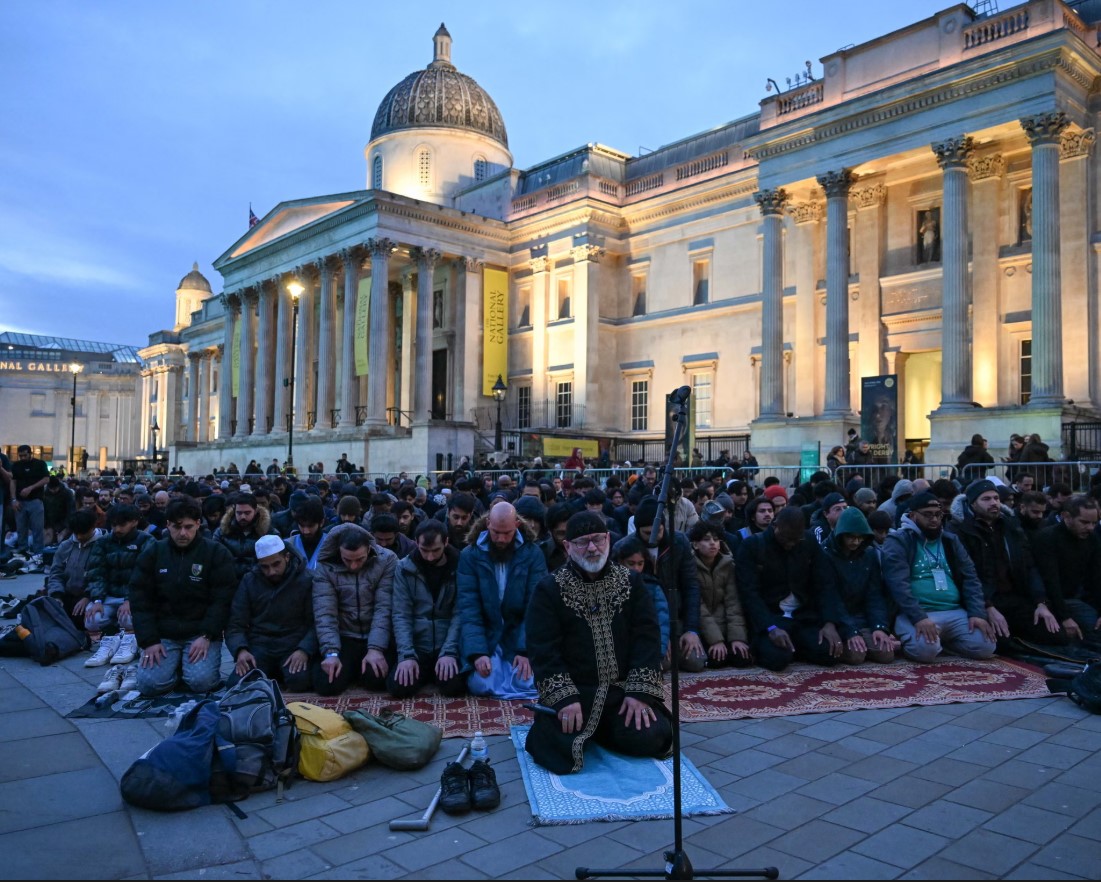
Muslims, meanwhile, believe that the Day of Judgement is not far off. Everyone will then be judged according to their service to Allah, the faithful rewarded with eternal life, the rest sent to Jahannam (hell).

So here’s a question for you: what do these years have in common? 66-70CE, 365, 370-400, 500, 793, 800, 847, 1000, 1033, 1200, 1284, 1504, 1585, 1600, 1705, 1792, 1833, 1836, 1874, 1901, 1918, 1936, 1967, 1977, 1982, 1994, 1997, 2000, 2007, 2011 and 2021.

They are, of course, a few of the innumerable predictions that the end isn’t far off, after which there will be a great reset. As I suspect you already know, none of these predictions came to pass.

Neither will any of the numerous predictions of future apocalypses– lots of them here – either. It’s not that we’re incapable of wiping ourselves out; it’s possible we will one day, but there won’t be a Mashiach, Christ or God who will step in at the last minute to rescue a favoured few so that everything can start again. There’s no simplistic fix of the sort climate zealots, Islamist terrorists and bumptious politicians insist. Like their apocalyptic predecessors they’re only deluding themselves and lying to the rest of us.

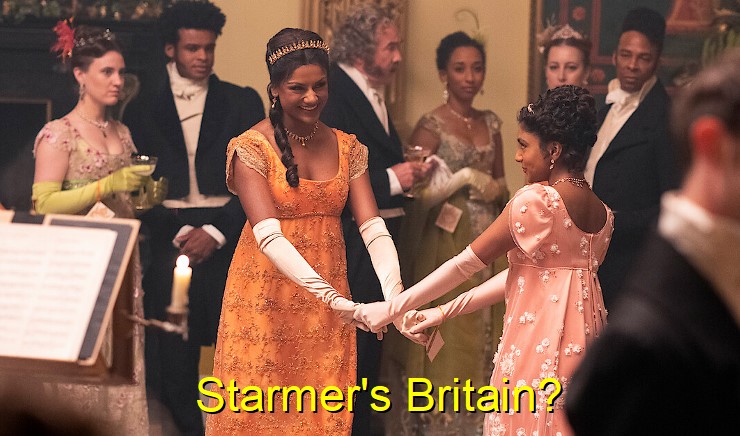
We are, it seems, obsessed with End Times scenarios, and always have been. Our only saviours, however, will be ourselves, if we’ve the will to be. I’m not sure we have, but a first step might be recognising that there’s no Starman (Starmer?) waiting in the sky, or anywhere else, eager to save us. There’s no magic panacea that will rescue us and reset the world.

Hysteria/Mission Creep/Overreach

When I was head (principal) of a primary (elementary) school in the 1990s, I had a staff member who regarded every small problem as ‘a Major Disaster’ (her words). Everything from a mislaid document to wet weather on sports day was an earth-shattering calamity. She was not the only one to overstate manageable events. Those who wield authority over us, their media lackeys and those with a cause of their own to promote are expert in whipping the populace up into a frenzy disproportionate to the given situation. After a short period in the spotlight, the hysteria and the movements that cause it usually fade, as the media finds something newer and shinier about which to induce panic. Occasionally, the newly out-of-favour movements fight back with renewed vigour, a mission creep extending their influence into new areas.

Looking back over the last 25 years, I and my fellow citizens here in the UK have been expected to be alarmed to an alarming degree about:

The Millennium Bug, when every computer in the world, so the experts said, would crash the instant the year 2000 started. This would, in turn, crash every automated system everywhere, causing chaos and mass fatalities. You all know what actually happened.

Foot & Mouth Disease, when millions of cattle and sheep were slaughtered and burnt. Millions of healthy animals were destroyed in case they contracted the disease.

Weapons of Mass Destruction supposedly amassed by Iraq who, we were told, could unleash them on the West within 45 minutes. That there was no evidence of any WMDs and the fact Iraq did not deploy them (because you can’t deploy something that doesn’t exist) did not deter George W. Bush and Tony Blair from launching their oxymoronic (with the emphasis on the moronic) ‘war on terror’. In so doing, they destabilised the world, creating many of the problems we face today.

Child Abuse Scandals: After either missing or covering up the serial abuse of children and vulnerable people by a BBC celebrity, British authorities went to town on ‘suspected paedophiles’, many of whom were nothing of the sort. (A friend of mine was caught up in this hysteria and spent time in prison for a youthful indiscretion many years earlier.) Unfortunately, this national crisis and the perceived need not to offend Muslims came into conflict when, over 20 years, rape gangs comprised mainly of Pakistani men were able operate in up to 50 UK cities with impunity. Hundreds of thousands of vulnerable, white working-class girls were systematically groomed and raped while the police and authorities turned a blind eye, the consequence of a woke priority taking precedence over the rights and safety of others.     

The Covid Pandemic and Lockdown, when governments the world over (apart from Sweden) panicked about a flu-like virus, closed down entire countries, failed to protect the vulnerable and crashed the very economies needed to fund healthcare and treatment for the infected. Britain was closed down for almost 2 years and still hasn’t recovered from the consequences. Citizens are now paying heavily for actions taken by a government that extended its powers to achieve very little.

        Cartoon by Mark Woods, Spectator magazine, 7th June '25

Mental Health issues and the medicalised labelling of ordinary human behaviours. We all have mental health issues; this is what it is to be human. Some, it is true, have more than others. Determining an individual has ‘mental health issues’ forces him or her to become his or her issues. Instead of being prone to depression (as I was) or anxiety, the individual who experiences these is now ‘neuro-diverse’. Instead of suffering from a condition the individual could do something about they become that condition. Some people, usually males, used to be diagnosed as autistic. Now that autism is seen as a spectrum, everyone is deemed to be on it somewhere; everyone as a result is autistic. People become trapped in their condition with no way out, lifelong treatment the only recourse.

Black Lives Matter. As Lionel Shriver asks here, do black lives matter any more now than they did before all that righteous indignation and virtual signalling from white people?

Identity Politics in which individuals were told as a matter of urgency to self-identify solely on the basis of their ethnicity, religion, gender or sexuality. Gender dysphoria became a thing from which the trans-movement emerged. While I’ve every sympathy for those who feel they were born in the wrong body, society was unprepared for and incapable of dealing with the consequences. Women became ‘cis-women’, sex became ‘gender’ (a grammatical term), ‘non-binary’ became an option and the abuse of pronouns was politicised. An individual could identify as a plural ‘they’, while others lost their jobs if they declined to play along. Worst of all, children, who were too young to be allowed a tattoo, were given puberty blocking drugs, and in some cases surgery, because they felt they were the wrong sex. Children.

The High Court in the UK recently ruled that a man cannot become a woman, entrenching the views of campaigners and prompting other supporters to claim they knew this all along.

Wokeism; while it’s right and proper to treat each other with kindness, courtesy and consideration, politicising something we were, by and large, already doing was not. Wokeism pushed the boundaries over what could be done or said, or rather could not. Anything that might cause someone else offence was forbidden; commenting or criticising others’ religious beliefs or defending women’s rights became ‘hateful’; having a view on unsustainable immigration numbers made you a fascist. This was the era of cancelling those who did not conform to woke ideals. Toppling statues was popular too on the basis that a long-forgotten figure from 250 years ago may have had a slight connection with the slave trade. Western guilt for actions over which people living today had no part in and demands for reparations to those equally uninvolved ensued.

The ‘necessary’ control of free speech, a panic we’re still mired in. Stupid and inflammatory comments on social media can now earn you a prison sentence longer than that of a paedophile offender, often preceded by a visit from half a dozen policemen who will root through your house looking for evidence that you might have once had a ‘Brexity’ thought. Subjects off limits are; arguing that Covid19 began in a Wuhan laboratory (it might upset the Chinese); Islam, Islamic extremism and the Pro-Palestinian movement (however it’s still okay to criticise and condemn Jewish people for the actions of their government); expressing views different from the UK government’s and whatever the prevailing narrative happens to be. A government agency, ‘Prevent‘, last year redefined terrorism (see below) as ‘vocal support of ideologies that advocate discrimination’ and any expression of what it calls ‘cultural nationalism’. What this means is that those who call out religiously-motivated discrimination, lawlessness and terrorism are to be considered terrorists themselves. Actual terrorism and violence is therefore protected against those who would speak out about it, those who do so being the real terrorists. To put it another way, which I read recently (though can’t remember where): those who say hurty things are far more culpable than those who commit actual hurty things. This Orwellian doublespeak must now be taught in universities and other higher education institutions.  

The Climate Crisis and Net-Zero. You must be alarmed by the climate crisis (see here for how much of it Al Gore got wrong). You must too pay heavily for net-zero, thanks to additional taxes; energy prices in the UK are the highest in the world. You must buy into the government’s attempts to enforce a net-zero energy policy by 2050, despite net-zero being unachievable.

What if, might, could, maybe: the media’s favourite phrases to ramp up hysteria. ‘There might be terrible consequences’; ‘we could be headed for another Major Disaster’; ‘if X happens (though it hasn’t) then Y could possibly follow.’ When did the media stop reporting what has actually happened and take up fortune telling instead?  

* * * * * *

There is some comfort in the fact that the so-called crises and hysteria of the past eventually receded and faded away. So too will many of these current causes. All things, as George Harrison once wisely reminded us, must pass. They will, however, be replaced by others equally irrational and preposterous. Those who create them, be they governments, special interest groups or overwrought Swedish teenagers will expect us to conform to their Chicken-Little levels of hysteria. When they do, don’t be alarmed and be sure to seek out the evidence for yourself.

Provoking the Lion: a Fable

The others didn’t need much persuading when Sinwar told them they really had to do something about the lion. It was, he said, too near the camp and represented a threat. The gods demanded they gather their guns and other weapons to launch an attack not only on the alpha-male itself but the entire pride. That way, any future threats would also be eliminated. The problem of the lion and its proximity to the camp would be resolved once and for all.

They planned a dawn expedition when the lion and the pride could be caught unawares. As hunters they knew how to take their prey by surprise. They crept into the undergrowth and caught different members of the pride in their sights. Then, the onslaught began.

The cubs and unwary females were butchered first, with unrelenting savagery. Lionesses that sought to protect their offspring were mercilessly gunned down. Finally, the males appeared from the undergrowth and were met with a hail of bullets that tore into their powerful bodies, ripping them apart. They were no match for the hunters’ arsenal.

Caught unaware as it was, the pride stood no chance. The hunters looked on the carnage and knew it was good. They returned to camp, taking with them the only cubs to have survived the onslaught, mortally wounded and unable to resist. Once safely returned they praised the gods who had surely blessed their mission and ensured its success.

News of their heroic efforts soon spread until all around marvelled at their accomplishments. No-one gave much thought to the lions who had been slaughtered. It was taken as read that the pride had been in need of a merciless cull. Right had prevailed.

Unknown to Sinwar and the hunters, however, the alpha lion had survived. Hidden in the shadows, he licked his many wounds and knew instinctively he would exact revenge. He had been severely provoked and he vowed to himself that such provocation would not go unpunished. Others joined him; males who had recently left the pride to establish their own, heeded the deep instinct that they must band together to ensure their survival.

They attacked when their hunters were least expecting it and returned the savagery that had been meted out to them. The nearby townsfolk were shocked at the bloody retaliation; the hunters had been within their rights to attack the pride, after all. The lions had no right to exact a deadly revenge. Everyone in the region and even further afield seemed to think so. Nonetheless, a great deal more senseless death followed.

Having decimated the hunters and rescued some of the cubs, the lions took many townsfolk in their savage maws. They then moved on to new territories, sensing the allegiance of others to the hunters. They attacked those who had lent their support and had hunters of their own, losing some of their own number while destroying any who stood in their way. A rogue elephant from far away blundered into the fray, trampling many more while demanding the hunters and lions make up and be friends. (Meanwhile, a pygmy shrew from another land wondered if it too should join in but found itself incapable of deciding even whose side it should be on.)

Having stood its ground, the alpha lion returned to its den. He had taught the hunters and those who supported them that they provoked him at their peril. It would, he vowed, never happen again.

The New New Testament: part 3

Following the fourth gospel is the epistle of Jude, written at the end of the first century. It is certainly not by a brother of Jesus, despite this traditional attribution. Rather, it addresses false teaching in the Christian community of its day. It makes its points with reference to characters in Jewish scriptures and even mentions the apostles (those who had visions of Jesus) but knows nothing about an earthly Jesus. Parts of Jude are lifted wholesale into the later forgery of 2 Peter.

And then… another made up Jesus! This time the avenging angel of Revelation. I’ve written about Revelation recently so won’t repeat it all here. Suffice to say, this revealing is completely within a disturbed cultist’s head. He wants to see those who oppose the cult to suffer at the hands of his the Messiah who sweeps down from heaven determined to wipe out unbelievers and set the chosen few up as rulers of a reformed Earth. This Jesus seems to have forgotten he once told people to love their neighbours, pray for those who persecuted them, humble themselves, give all they had to the poor etc etc. Revelation Jesus has no time for this sorta shit! Of course, he’s no more real than any of the gospel Jesuses. He’s simply another made-up version, ‘revealed’, or so his creator would have us think, from Heaven. Revelation is chockful of symbolism – The Whore of Babylon, the Number of the Beast, the Marriage Supper of the Lamb etc – all of it applicable to the time when it was written. It has no bearing on anything after that time and doesn’t, despite sloppy interpretations, feature ‘the Anti-Christ’.

The letters of John were all probably written by the same person. This is not the John credited with creating the fourth gospel nor Revelation’s nut-job. This John, or whatever he was really called, is concerned with divisions within his community, chiefly those caused by a group who denied that Jesus was the Christ (1 John 2:22). They were literally anti-Christ. This is where the term occurs in the New Testament and it doesn’t refer to a future madman who will crush Christians in his attempt to rule the world. It seems likely that John’s anti-Christs believed Jesus did not visit Earth as a flesh and blood human being. They were perhaps the last remnants of those Christians who, like Paul and most of the preceding New Testament letter writers, held that Jesus was a divine being, active only in Heaven. With these epistles then, written around CE 100, we turn a corner. Belief in the symbolic Jesus depicted in the gospels as a real man, has become the orthodoxy. It took some time to get here.

And chronologically, that’s about it. There are four forged books left, making the properly ordered New Testament end, not with a bang but a whimper. While 1 & 2 Timothy and 2 Peter claim to be written by Paul and Peter respectively their late date rules this out. 1 Timothy provides the infamous line that women should remain silent in church and obey their husbands at all times. 2 Peter has all the nonsense about a day being the same as a thousand years in God’s eyes. Its duplicitous author argues that God is delaying bringing punishment to the world so that more people might be saved. Evidently he lacks any mathematical understanding. You would think at this point the cultists would have realised that the cultists of the previous century, so certain of the Lord’s imminent arrival had got it disastrously wrong. But no. They reinterpreted their ‘revelations’ and prophecies so that instead of his arrival being ‘at hand’ it was now set to happen at any time in the future, even thousands of years ahead.

Christianity was all but dead at this point. It simply refused to admit it.

Live Backwards

I wanted in this post to think about the source(s) of evil, given it cannot be supernatural. However, defining evil isn’t as straightforward as I anticipated. The Oxford English Dictionary offers ‘Profoundly immoral and wicked’ while Merriam Webster goes for ‘morally reprehensible: sinful, wicked.’ Other dictionaries also mention both immorality and wickedness, replacing one concept in need of explanation with two. ‘Wicked’, it seems to me, is synonymous with evil, which doesn’t get us any closer to defining it. There are problems with ‘immorality’ too, as what constitutes immorality is frequently culturally determined.

Evangelicals, for example, regard same-sex relationships as immoral (so that’s me told) as is sex outside marriage. When I was involved in the church, dancing, drinking and listening to rock music (with all its backward messages!) were anathema. In some countries today many of these behaviours attract the attention of so-called morality police and are punishable by death (how moral is that!) Then there are those who fail to keep their word. Within months of being elected, the UK government under Keir Starmer has reneged on almost every promise they made prior to the election. Everyone expects politicians to lie so perhaps allowing ourselves to be duped by them means they’re not entirely responsible. Let’s not forget too that for some, eating meat is immoral, as is using fossil fuels. Our eating meat and our burning fossil fuels, that is.

So, are the practitioners of such relatively low-level, and disputed immoral acts – being gay, having non-marital sex, drinking and dancing, lying, using oil, eating meat – actually evil? Are women who have abortions, and the people who carry them out, evil? Of course not. It’s debatable whether some of these behaviours are immoral to begin with, but even if they are, immorality does not always equate with evil. I would argue that while all truly evil acts must, by definition, be immoral, not all (supposed) immorality is evil. Somehow personal immorality lacks the scale and awful consequences of true evil.

The Sanford Encyclopaedia of Philosophy is much nearer the mark when it comes to defining evil:

Evil must involve harm, and it must be serious enough to damage its victims’ capacity to function normally… Furthermore, the harm must be unjustified…

I’ll adapt and paraphrase this as ‘the malicious and unnecessary inflicting of harm on others’ to give us a working definition of evil.

So, who qualifies? Hitler obviously. Putin certainly. Other oppressive regimes. Murderers. Hamas. Child abusers. The gangs who have raped very young girls in numerous UK cities. How about the God of the Old Testament? He orders the cruel deaths of Israel’s enemies (Deuteronomy 7), promotes the smashing of babies’ heads against rocks (Psalm 137:9) and orders the taking of prison-of-war virgins as sex slaves (Numbers 31: 17-18). Later, Jesus – like father, like son – relishes the opportunity to put his enemies to the sword (Luke 19:27) and orders those who don’t believe in him be consigned to hell where they’ll be tortured forever (Matthew 25: 41-46). This is evil by any definition.

So, given there isn’t a God nor a heavenly Jesus, from where does evil originate? I’ll get to that, at last, in the next post.

Revealing the Truth of John’s Revelation

The revelation from Jesus Christ, which God gave him to show his servants what must soon take place. He made it known by sending his angel to his servant John, who testifies to everything he saw – that is, the word of God and the testimony of Jesus Christ.

Blessed is the one who reads aloud the words of this prophecy, and blessed are those who hear it and take to heart what is written in it, because the time is near… “Look, he is coming with the clouds,” and “every eye will see him,
even those who pierced him”; and all peoples on earth “will mourn because of him.”
So shall it be! Amen…

On the Lord’s Day I was in the Spirit, and I heard behind me a loud voice like a trumpet, which said: “Write on a scroll what you see and send it to the seven churches: to Ephesus, Smyrna, Pergamum, Thyatira, Sardis, Philadelphia and Laodicea.” I turned around to see the voice that was speaking to me. And when I turned I saw seven golden lampstands…

So begins the Book of Revelation, written by a fanatic identifying as John (think Steven Anderson) who finds himself on the island of Patmos ‘because of the gospel’, with an account of the imminent end of the world (1:3 ‘the time is near’ and 1:7 ‘even those who pierced him’ will see him.)

What follows is a disturbing and disturbed account of what the Earth could soon expect when Jesus descended from the heavens to wreak vengeance on sinful human kind.

John claims the scenario he’s about to describe was given to him by an angel who got it from the Lord Jesus Christ, who in turn received it from God himself (1:1). Or perhaps the angel and Jesus Christ are one and the same. Did John regard Jesus Christ as an angel, the ‘messenger’ of God (the literal translation of the Greek angelos)?

I’ve often wondered about this ’revealed’ business. Paul too talks about having Jesus ‘revealed’ in him (Galatians 1:16). What exactly are Paul and John talking about? John says he ‘saw’ (1:2) all that he’s about to describe in the next twenty-two tedious chapters, as if this ‘revealing’ is some sort of vision or hallucination. Given the complexity of what he then describes, this seems to me highly unlikely. He ‘sees’ in his mind’s eye god’s throne, attendant angels, the four horsemen, the opening of seven seals, the destruction of the world, the annihilation of most of mankind, the descent from heaven of the holy city, the intricate details of the construction of this city… read the book for yourself for even more. Even dreams are not this detailed or vivid.

I’m not convinced Paul saw the resurrected Jesus as a figure in front of him (or as a bright light or some other quasi-physical manifestation.) What Paul and John did when ecstatic with religious fervour – what John describes as being ‘in the Spirit’ – was concoct an explanation for the way they were feeling; Paul persuaded himself he’d seen a resurrected God-man and worked out over time what this might mean. He then attributed this thinking to his God and his divine influence. John under persecution (it’s generally accepted his being on Patmos ‘because of the gospel’ (1:9) was as punishment for being a public nuisance) fomented a doomsday scenario for those who persecuted him and the divine elevation of those who believed like he did, and attributed this to spiritual beings. The scenario was not revealed instantaneously to him by a supernatural agent; again, it was something developed over time – hence the quotations from other sources (1:7) – in an aggrieved fanatic’s head.

Revelation is a calculated literary construct, like the gospels themselves, devised and refined over time. John ‘saw’ none of it, nor did he ‘hear’ an actual disembodied voice telling him about living room furniture (1:12’s lampstands). No higher power ‘revealed’ any of it to him. On the contrary, he devised it himself, working out every aspect in his head. Either he was deluded enough to think he was actually being fed revenge-porn by an angelic Jesus or he cynically, deliberately attributed it to him.

There was not then, as there is not now, a heavenly Jesus who spoke to susceptible mortals here on Earth. The savage, avenging Jesus that John of Patmos creates from his own anger, bitterness and sense of persecution bears little relation to the other versions of the character in Paul and in the gospels (as Ehrman demonstrates in Armageddon). Revelation’s savage, slaughtering Jesus is at least the sixth manifestation of the character proffered in the New Testament. John demonstrates just how easy it was, and is, to invent one’s own version of a supposedly unchanging character (Hebrews 13:8; Revelation 1:8) and make him do, at least in your imagination, just what you want him to do.

Speaking in Tongues


I used to be so uncomfortable in prayer meetings that I attended back when I was a true believer when someone would start praying in tongues. It usually went something like alaluboolubamuba repeated over and over again, like a babbling brook. Babbling is what it was. In the churches I experienced it in, there was rarely any interpretation of the tongues as Paul instructed there should be. Even when someone was led by the Spirit to pipe up, what the speaker in tongues had said in gobbledegook was standard praise stuff: ‘Thank you Jesus for your wonderful mercies. Praise you for all you have done for us. Alleluia! Praise you’ etc, etc. And who were we, the others present, to say it wasn’t? Some would add their own Amens to the interpretation, adding credence to the meaningless phenomenon. The Spirit at work indeed.

Speaking in tongues, glossolalia, seems to have afflicted the cult in Corinth in particular. Paul addresses it in his first letter to the church there, and nowhere else. He doesn’t seem to know what to make of it. He feels unable to say that it’s merely a few people getting carried away (because that’s pretty much what all early Christian worship was) and can’t say it’s not the Spirit moving them to babble when that’s what the church was claiming. So he fudges it, claims he speaks in tongues more than anyone else (why do I hear Donald Trump in this boast?) and makes a few stipulations:

Only speak in tongues if there’s an interpreter present. (What happens if you get the urge the Spirit moves you when there’s no interpreter around?)

Glossolalia is ‘uttering mysteries’ in the Spirit that no-one can understand (so how can they be translated/interpreted by someone else?)

You shouldn’t speak in tongues all at the same time. It’s unseemly.

Use tongues only in private (according to the great know-it-all apostle, tongues are of the spirit and are merely a way of praising God. Tongues then are God praising God: what a narcissist he is! Other than this, Paul concludes they’re not much good.)

Interestingly, at no time does Paul suggest or acknowledge that some of the tongues manifesting themselves are other languages – real languages as opposed to unintelligible babbling. In fact he makes much of the fact that no-one understands what is said. It’s left to Luke to elevate linguistic nonsense to miracle status. In Acts 2:4-12, he has the disciples speak in real foreign languages after the Holy Spirit takes hold of them. Those around are ‘amazed’ (aren’t they always?) that they can suddenly hear the gospel message in their own tongue. Luke labours the point that, conveniently, there were men from ‘every nation under heaven’ present to verify the use of multiple languages by otherwise uneducated fishermen. Far more likely is that Luke, aware of the outbreak of babbling in at least one early church, shaped what he’d heard into what he thought was a more credible account. In other words he made up the story of the disciples spontaneously becoming fluently multi-lingual.

Later still, the unknown writer who invented the longer ending of Mark decided to mention the tongues phenomenon in the prophecies he invented for Jesus. In Mark 16:17 he has Jesus promise that those who believe in him would miraculously speak in ‘other languages’. How many times has this happened in the ensuing two millennia? I’d put money on there only ever having been sporadic outbreaks of meaningless babbling, such as that which I experienced. 

The church today continues to be confused about tongues. Some claim that ‘the gifts of the Spirit’, of which tongues are a part, no longer manifest themselves among believers. It’s a neat way to consign bizarre behaviour to the dumpster of history, but alas, it’s unscriptural. Nowhere does Paul suggest tongues and the other gifts of the Spirit would have a sell-by date before the Lord’s coming. Admittedly, he thought the Lord would be coming real soon. Only then, not before, would tongues and the other gifts of the Spirit ‘pass away’.

Other churches today are open to the possibility of tongues. Some even claim that the Spirit does indeed enable believers to launch fluently into languages, complete with correct syntax and vocabulary, that they don’t actually know. We can be sure there would be evidence of this online if it really occurred. There isn’t. 

Others are happy to go along with the unintelligible babbling, preferably with an interpreter who makes stuff up is also led by the Spirit to make sense of the mumbo jumbo.

Some abandon all restraint, with entire congregations babbling at the same time. Paul’s rules be damned!

And they wonder why we don’t take them seriously. As Paul himself warned:

If the whole church comes together and everyone speaks in tongues, and inquirers or unbelievers come in, will they not say that you are out of your mind? (1 Corinthians 14:23)

They surely will.

Have any of you encountered speaking in tongues? What did your church make of it?

Neil’s Third Letter, to the Sceptics

Dear Sceptic,

I understand, I really do. Some of your explanations for what’s going on in the world are way out there. Some of them, in fact, are absolutely preposterous. But, I know how you got there. You’ve spent so long being misled, deceived and, yes, let’s face it, lied to by politicians and some of the media that you’ve come up with your own explanations for things. You’ve suspected in some cases that the establishment’s frequent misdirection and disinformation amounts to conspiracy, and certainly there have been conspiracies of silence in recent years (we’ll get to some examples soon). Unfortunately, this has meant those same authorities have been able to say that your views can be dismissed as mere conspiracy theories. You should be cancelled. Certainly some of your more way out theories – satanic overlords, faked moon-landings and microchip vaccines – need to be. Unfortunately this has also meant any reasonable arguments you’ve arrived at that run contrary to the prevailing narrative have also been airily dismissed as the work of nut-jobs and thrown in the dumpster along with all the whacky stuff.

You were right, it turned out, about Covid19. It was manufactured in a Chinese laboratory, partially funded by the US, from where it escaped in 2019. Even the US State Department has accepted that this is the most likely explanation of the virus’s origin and has asked Chinese authorities to release the relevant data (you can guess how this request was met.)

Look where it got you during the pandemic when you argued for the virus’s lab based origins. Despite the evidence you presented you were labelled conspiracy theorists, were cancelled and hurled in the ‘not worth your time’ trash can. It’s still happening now, because no-one can be allowed to upset the Chinese authorities when it could mean research labs in the West could lose Chinese sponsorship.

You’ve pointed out too that the UK government’s efforts to eliminate the country’s less than 1% contribution to to global emissions is futile. At £22 billion, its plan to ‘capture’ carbon waste is both ridiculously expensive and pointless: carbon capture has never been successfully achieved by any country that has previously attempted it. Never mind, the British taxpayer will fund this particular tilt at windmills (no pun intended); you can be dismissed as climate-change deniers, purveyors of false information as well as conspiracy theorists. A three-in-one success!

You’ve suggested that the current narrative on immigration doesn’t hold water. The government says we need present levels of immigration to fill job vacancies, sustain the economy and fund others’ welfare benefits and pensions. You’ve highlighted the unfounded assumptions inherent in this strategy, pointing out it has failed to improve the economy. You’ve suggested too that in the long term it will necessitate even more immigration to fund those currently entering the country when they draw welfare and claim their pensions. It’s a ponzi scheme writ large that merely kicks the can down the road. And for your trouble you’re labelled far-right, racist and Islamophobic (even when you don’t mention Muslims). You can always tell when those who seek to control the narrative have no counter argument; they’ll subject you to name calling, political slurs and seek to censure your views. Get with the narrative or else!

I could go on –

Question the idea that people alive today are somehow responsible for the slave trade 300 years ago: racist!

Express the view on the deleterious effects of the trans-movement on women’s rights and safety: transphobic!

Ask whether the plonkers who make stupid comments on social media should receive longer prison sentences than rapists and thugs: hate-filled bigot!

– but I won’t. Often, sceptical free thinker, you don’t get it right and others are taken in by your more whackadoodle theories. Unfortunately when you do have a point, backed by sound argument and evidence, it can easily be dismissed by lumping you in with the whackier of your brethren, and ultimately by silencing you and the platform on which you write. That’s Britain today (or is that just a conspiracy theory?)

Yours,

The Apostle Neil

Featuring the Battle of the Century! Doomsday v. Panacea!

Human beings love doomsday scenarios. We have perpetually convinced ourselves that the circumstances in which we live are the most dreadful ever and, to quote The Beatles, can’t get no worse, The earliest Christians thought it: things were so bad that the end was surely to come. YHWH would tolerate the awful state of affairs no longer. But to the surprise of no-one he did.

Those alive in 17th century Europe couldn’t conceive of a worse time, what with the plague and all, and persuaded themselves that the world was ending. During the Covid lockdown we were told that the human race faced being annihilated by the virus and that whatever we’d previously regarded as normal would never return. Today we’re assured that the planet faces extinction if we don’t stop using fossil fuels. At the same time others claim that democracy/the West/civilisation are in such decline that the world will soon disintegrate into anarchy. Who knows, perhaps one day one of these modern doomsday scenarios will come to pass. Even a stopped clock is right twice a day.

Equally though, we are adept at devising panaceas, universal remedies to our problems. We have an unshakeable belief that by making a few simple changes – a new government/president/policy/ invention/initiative/innovation – we will avert disaster and resolve the challenges we face.

How have the panaceas of the past fared? The Jesus’ cult’s promises of new life and heaven of earth collapsed in the first century when God failed to rescue those who identified as his Chosen Ones from the wickedness that surrounded them. Nevertheless, Christianity bullied its way on to the present day, still offering the same tired solutions to age-old problems. Religion, in all its forms, only makes matters worse.

Revolution is no solution either, as the socially aware songs of the 1970s advised us. The French, American, Russian and Chinese revolutions changed situations but they didn’t usher in an age of peace and prosperity or remedy everything their instigators said they would. History demonstrates again and again that violence fails to improve anything. The freedom and independence that the Baltic states now enjoy came not from revolution but from the foresight of Mikhail Gorbachev who knew Russia could no longer afford to sustain its satellite states. Putin however knows better and seeks to reabsorb them back into his own soviet union.

Other panaceas of the past have similarly failed to deliver. The so-called industrial revolution created our modern world, led to the end of slavery and gave us the standard of living those of us in the West enjoy. Now we must deal with what many perceive as its legacy: world pollution, climate change, dwindling resources. Eliminating these is the new panacea. Once these challenges have been met, or so we’re told, the world will find itself on a much better footing, on course to recover from the damage we’ve caused it. Hence Just Stop Oil and Extinction Rebellion. It’s as simple as that. Except we know that surely it isn’t when the biggest polluters – China, Russia, India and potentially the US (Trump says he will pull out of climate change agreements if returned to the White House) – are not wholly on board.

We are a very long way from eliminating the use of oil: for a long time to come it will be needed to lubricate machinery, engines and windfarms, and for the production of plastics (a panacea in their own right not that long ago), computers, mobile phones and building materials. That’s not to mention the need for oil in the nation’s defence: the navy’s ships, the air force’s planes and the army’s tanks. We do not yet have the means of replacing the oil which fuels and lubricates modern life. We can be sure too that when we do, this new panacea will also have its own drawbacks, which will only become apparent once we have committed to them. We know this already with nuclear power which, once fossil fuels are eliminated, will be the principal means of producing electricity in the enormous quantities required to supply to industry, for heating, lighting and transport, including electric cars, which, if politicians have their way, will be the only kind available. We are already using environmentally-damaging methods’ to extract the rare minerals used for the manufacture of batteries, a process which also, ironically, creates more CO2 than the manufacture of a petrol car (itself a panacea not too long ago): According to MIT’s Climate Lab, one ton of mined lithium emits almost 15 tons of CO2’.

While there are those who claim that EVs cause less environmental damage than petrol (gas) vehicles, damage is still damage. It is not net zero. The dream of worldwide net zero is impossible. The only way it is even approachable is for the car and other forms of transport to disappear altogether – and we all know that isn’t going to happen. Even  hypocritical eco-warriors use the car and other forms of transport dependent on fossil fuels to get themselves to whichever work of art or ancient monument they plan to deface. 

China, which produces two thirds of the world’s electric car batteries, accounted ‘for 95% of the world’s new coal power construction activity in 2023.’ Then there’s the disposal of spent batteries: do we have policies for doing that in an environmentally friendly way? Is there an environmentally friendly way?

As you can probably tell, I’m not a believer in panaceas, whether religious or politically devised. They don’t work and never have. In years to come, the West will be wringing its hands at its plundering of the Congo for cobalt and South America for lithium for electric car batteries. ‘How could we get it so wrong?’ we will cry. ‘There must be a better way, a better panacea. Meanwhile, we must do penance and make reparations.’ I don’t have the answers, but extremist approaches like the half-baked schemes of Ed Miliband, the UK’s Secretary of State for Energy Security and Net Zero (yes, really), and pursuing impossible dreams do not seem to me to be the solution.

Respect

Even before the events in Israel and Gaza, there were numerous recent examples of the term Islamophobia being used to suppress freedom of expression or shield wrongdoing.

A recent report by an all party group of UK MPs.

I’ve been told before that I should respect people’s religious beliefs. We all should apparently.

I can’t, I confess, summon respect for patent nonsense, nor for those who subscribe to it. I’m not even going to try.

There have, I admit, been a few believers I’ve met in life for whom I have had respect and even admiration, but this has been for the kind of person they were, not because of their religious beliefs per se. And no; their religion is not what made them admirable people. They were admirable irrespective of, or even despite, their irrational beliefs. I still hold to the theory of my own making, that religious conviction is like alcohol: both accentuate the existing characteristics of the individual, making them more of the person they already were, for better or for worse.

Equally, I’ve met many non-believers (I hate it that we have to describe ourselves as what we are not), LGBT people (for many religionists, the antithesis of admirable) and individuals whose views and outlook on life I haven’t necessarily agreed with, for whom I have also had respect and admiration.

It comes down to the old cliche, a truism nonetheless, that respect has to be earned. Just because someone believes in the supernatural or that Jesus died for our sins or that their deity or prophet trumps all others doesn’t mean I have to respect such views, or indeed those who hold them.

But this is where we’re headed, it seems. We’re expected to respect any old make-believe so long as it comes under the banner of religion and still more that doesn’t. It’s becoming ‘hateful’ to criticise religious belief and those who practise it. Because their views are sincerely held, the thinking goes, they merit protected status.

I commented some time ago on a Christian site (something I rarely do except when incensed) that was insisting ‘sodomites’ would burn in hell, because… the Bible. I countered that gay people were not going to hell because, in fact, no-one was. As well as the subsequent ‘loving’ comments from Christians, I was taken to task by a gay person telling me I was disrespecting the original poster’s Christian convictions.

Likewise when I suggest that we should be more wary of Muslim beliefs I’m told I’m being profoundly unfair, racist and Islamophobic, towards a minority – as a minority of one myself – and I should show more respect for an ancient and sacred tradition as well as those who subscribe to it.

I can’t do it. I can’t respect religious belief. It is no more worthy of respect than astrology, palm reading and spiritualism. It flies in the face of rationality. Not only is it insupportable, it is dangerous, a threat to hard-earned freedoms and rights.