The Things I Love: A Conversation with God

This story doesn’t exactly illustrate the principle of not apologising for the things about which we feel passionate, but it’s close enough (just don’t tell God).

‘Well,’ said God, ‘what is it you can’t live without, because I’m thinking maybe I could take it away from you.’

‘God Almighty, why would you do that?’ I said, not having had many conversations with Jehovah and being a little uncertain about how to address him.

‘Well, you know. It’s important to me, what with my fragile ego and all, that nothing takes my place in your affections. Those things that you say you couldn’t live without could very well come between us.’

‘I see,’ I said.

‘And besides,’ God said, ‘I sometimes like to let a person be deprived of everything they hold dear, just to make sure they still believe in me.’

Now it happens I’d once read the story of Job in the Bible so I knew to tread carefully with this particular deity. So I told him first of all that I couldn’t live without Facebook and Twitter. Lo and behold, they instantly disappeared from my life! I was lucky, I guess, that Jehovah wasn’t as omniscient as he liked to claim. He didn’t suspect that it’s really reading I’d find it hard to be without: books, comics, magazines; anything with words, even the ones passed off as God’s own, even though they’re not.

‘Next!’ demanded the Almighty. So I told him of my love for Adele and Rihanna and all those other modern girl singers. And just like that, he removed them from my life too. This didn’t involve too much effort on his part seeing as I didn’t have any of their recordings to begin with. This left me with all the other music in my life – all that potent, cheap music from the sixties, seventies and eighties, which truly I would find it hard to live without.

This was getting trickier. I wanted to keep my family, especially my children and grand-children. Poor old Job was deprived of his – but what to tell God instead? ‘What I really love,’ I said, thinking on my feet, ‘is people who ring me up claiming to be from my bank when they’re not, or try to sell me solar panelling I don’t want or grants for boilers I don’t qualify for. ‘With a word – which sounded very much like ‘poof!’ – everyone in call centres everywhere vanished not only from my life but from the entire world.

‘Right,’ said the Lord, a little too smugly for my liking, ‘we’ve eliminated Facebook and Twitter, girl singers and people on the phone. What else can’t you live without that I should deprive you of?’

‘I’m inordinately fond of wires,’ I fibbed, ‘especially ones that tangle themselves up of their own accord.’ Which of course is all of them.

‘Done!’ said God. ‘They’re gone.’ And then, being careful to avoid mentioning friends I wouldn’t want to live without, I said, ‘I love getting pizza menus through the door, even though I’ve never, ever considered ordering a pizza delivery in my entire life. It’s so thoughtful of whoever it is who thinks I need them in their dozens.’ ‘Well,’ said God, ‘I’d say there are far too many things in your life you love more than me, and I’m more than happy to remove them. No more pizza menus for you.’ And he chuckled to himself.

‘You know, God,’ I said, not wanting to tip him off to the final thing I couldn’t live without, ‘I’d say that religion is the most important thing in my life. Definitely couldn’t live without that.’

Really though, I thought to myself, what no-one can live without – quite literally – as those poor souls with AIDS have discovered, is the human immune system. It’s the only thing keeping the outside out and the inside safe. Even Job, who was inflicted with all manner of diseases, relied on his immune system to survive Jehovah’s unwanted attentions.

God didn’t need to be told twice. He zapped all religion from the world and with it, he too vanished up his own fundamentalism.

And everyone live happily ever after, especially me.


Lessons From Life 6: Don’t Apologise For Things You Love

You’ll notice here this series has changed its title half way through, from 12 ‘Rules’ to ‘Lessons From Life’. Seems more appropriate.

Many years ago, when I was still at school, we were all required to give a talk about a hobby or something that we enjoyed doing. Despite being a hormonal teenager, I side-stepped some rather more compelling interests and opted instead to share my passion for reggae music.  

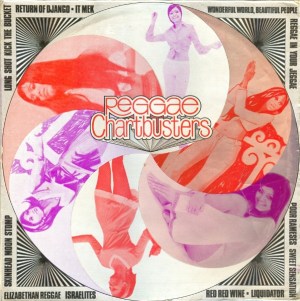
Reggae had reached the UK from Jamaica. Immigrants from the West Indies in the early 60s brought their music with them: ska originally, evolving into reggae over the course of the decade. When I first heard it in the late ‘60s, it had the familiar rhythm with an emphasis on the off beat that Bob Marley would later introduce to the wider world. I didn’t know that’s what it was doing then, of course, nor was it in any way familiar to me, a white middle-class boy in the north of England. I knew instantly  on hearing the opening bars of whichever track I encountered first (I wish I could remember more clearly which it was; either Jimmy Cliff’s Wonderful World, Beautiful People or Harry J’s Liquidator) that I loved it. I still do, whichever it was. 

So to my school talk. I gave some background to the genre and played snippets of different songs on my trusty cassette player, but I did it so apologetically, as if half embarrassed by my love for the music. Reggae wasn’t respectable back then, being seen by cooler kids (and they were all cooler than me) as a medium for throwaway novelty songs. I felt too, although I certainly wouldn’t have put it this way back then, that I was misappropriating another culture’s heritage. I felt a fraud, not being Jamaican myself. All of which is why, after a few minutes, the teacher interrupted my presentation. ‘Never,’ he said, ‘apologise for something you love.’  

While I didn’t then go on to complete my talk with unabashed enthusiasm, I gave a lot of thought to this trendy chap’s wise words (I can’t, alas, remember his name; he wasn’t one of our regular teachers) and eventually incorporated it into my emerging, rather fuzzy philosophy of life. I determine I will never again apologise for anything that means something to me, regardless of what others might think.  

Flash forward 50 years. I write a short piece about my abiding love for reggae music for my writers’ group. Another member happens to be involved in arranging a Black History Month celebration event and is having trouble finding contributors (there aren’t a lot of black people in this part of northern England.) Consequently, she asks me to talk about reggae and play a little of the music, via Bluetooth, at the event. While on the night I feel and admit to being an utter fraud – particularly when quite a few ethnic folk turn up – this time I make no apologies. 

Story for Rule 5: Don’t Take What Isn’t Yours

I try to ensure that the pictures I use on this blog are out of copyright or are otherwise freely available. I try to credit them when that’s possible, though it very often isn’t. I tell you this as it has some relevance to the ‘rule’ Don’t Take What Isn’t Yours. The story that follows is very loosely based on real events.

Barney worked long and hard at the lab. He carried out his research with diligence and wrote up his reports conscientiously. He was committed to the scientific method and evidence. There were no shortcuts as far as Barney was concerned. But he was growing increasingly dissatisfied. Not with the work, nor his colleagues. Nor even the long hours. No, his dissatisfaction stemmed from what happened to his work once it passed out of his hands. He knew it wasn’t uncommon, but nonetheless he was annoyed – no, he was angry – about what went on. His reports passed up the chain for his boss, Professor Jo Ashbridge, to consider and subsequently pass on to the university’s board.

Recently, however, Barney had cause to suspect this was not happening as intended. He’d come across a number of papers in the company’s in-house journal ostensibly written by his boss that read very much like his own work; they had the same vocabulary and phrasing, even the same paragraph breaks and structure. Sure, there were minor differences; a word or two altered here and there, sentences rearranged, though not always for the better, and sometimes a modified abstract. But it was his work nonetheless. What wasn’t there was his name. Instead the papers were credited to Professor Ashbridge and occasionally to a co-author, whom Barney doubted actually existed; he was aware that academics often included the name of a fictitious partner to increase their credibility. Ashbridge hadn’t even had the courtesy to cite Barney as co-author. He could hardly confront his boss. The reports did, after all, have superficial differences and the professor could easily claim that any similarities were entirely coincidental – before contriving to find ways of demoting or firing him.

Barney hit on a plan of sabotaging his own reports. Not so much that anyone would notice. At least not at first. He’d change small points here and there so that, for example, the section numbering wasn’t always sequential. Sure enough, once the report was published in the journal, there was the same error; no-one had picked it up. Then he got bolder. He included blatant untruths, though not to the extent they altered the over-all findings: a made-up name or a reference to a non-existent scientist. Finally, he added, deep within the report’s discussion of results, and without any surrounding context, the line: it is immoral to lift another person’s work and pass it off as your own. He was more than pleased when this survived, in tact, in the published paper. It was then a short step to query, innocently and under a pseudonym, about its inclusion, and that of all previous errors, in the professor’s papers.

And the result? After a lengthy enquiry and the professor’s admission of guilt, his publications were withdrawn and the real author tracked down. By then, however, Barney had moved on to better things: a post in an institution with less compromised ethical standards.

Professor Ashbridge quietly stepped down to spend more time with her family and garden.

Rule 5: Don’t Take What Isn’t Yours

Back when I was headteacher (principal) of a small school, children would frequently fall out over their belongings. They would ‘borrow’ or swipe one another’s pens, pencils, erasers, stickers… you name it. Trauma would usually ensue, and much time wasted (theirs and mine) in locating and returning disputed items. It became apparent we needed to take steps to save all this time and trauma, and the cause of these, namely interfering with others’ property. Together, the children and I arrived at one of the most effective rules ever devised: don’t take what isn’t yours.

The rule worked very successfully in school and equally well in life.

While obviously ‘don’t take what isn’t yours’ includes do not steal, it involves so much more: do not do anything that would rob others of their peace of mind or sense of well-being: do not take advantage of someone else, do not (mis)use them for your own pleasure or advancement: do not deprive others of life, liberty or happiness.

Expressed more positively, take only those things that you have earned, won, negotiated, paid for or which have been freely given to you.

Why do this? After all, as Christians are fond of saying, with no God to keep us on the straight and narrow, why should atheists feel any compunction to treat others fairly? From whence comes our moral compass? Certainly it doesn’t come from a non—existent deity. The golden rule, ‘Do unto others as you would have them do unto you’, while usually credited to Jesus is a much older principle, predating him by as much as 2000 years.

I would venture to say any such principle comes from within ourselves; it’s part of our nature as social animals. I have no issue with the view it is the result of social conditioning. That it originates or is reinforced by the socialising process we undergo as children does not invalidate the compunction to treat others fairly.

There are those, of course, who have no such compunction, and even those of us who do aren’t always successful in exercising it. The socialising process isn’t wholly effective, 100% of the time. But it’s good enough. It points us in the right direction; it’s an ideal, an aspiration. It’s a good way to be, which is enough in itself. It doesn’t guarantee that the consideration will automatically be reciprocated (though in my experience it makes it more likely) but nonetheless it comes with its own rewards: a sense of integrity, peace of mind, the trust and respect of others. Plus it keeps you out of trouble.


Rule 4 Guest Posts!

I’m honoured to have five guest posts following my Rule 4 post, Evaluate, Evaluate, Evaluate (aka, don’t believe everything you read.)

First up is –

QAsol:

As we know, the ‘pandemic’, its resultant lockdowns, compulsory mask wearing and soon to be mandatory vaccination program is a conspiracy by governments to subjugate their peoples in line with the world domination plan of the originators of the so-called virus, the Chinese, who deliberately created it in a lab and tested it first on an insignificant percentage of their own population before unleashing it on the world and America in particular, to destabilise the West and take control of the world by deconstructing democracy and depriving us of our hard-won freedoms, in the meantime censuring the voices of reason that see the conspiracy for what it is and seek to expose it, especially this site, which from the start has

Franklin D. Ruser-Graham:

The pandemic crisis is a timely reminder that we all need to return to the Lord to seek his forgiveness for the great moral failings of this country. In particular, I speak of the genocide of the unborn, the LGBTQ agenda – which God’s Word tells us clearly is a perversion and abomination that brings down his justified wrath upon us – and the erosion of the religious liberties upon which this great country was founded, though clearly this doesn’t include Muslims or any other of those made-up religions. Covid-19 is a wake up call, reminding us we should all go down, on our knees, in front of the most perfect man who ever lived, God’s Son, the Lord Jesus Christ, to beg his forgiveness for our sinful ways. Also, you shouldn’t need reminding, Jesus wants you to give and give again to causes close to God’s heart, specifically, this great ministry of mine.

Fux News:

So where is the evidence that masks work? There isn’t any. And lockdowns? Government overreach. All designed to perpetuate the hoax that is Covid-19 which has been perpetrated on us by a cabal led by Bill Gates . Our sources – the guy in the backroom who got it from his mother’s cousin’s second wife who knows someone who works in a hospital – tell us his vaccine contains a microchip designed to reset our DNA so that we all subscribe to the liberal leftie agenda and its absurd demand for evidence for all this garbage we make up as we go along…

The Worldwide Church of Jesus Christ’s Superspreaders:

We thank you Lord that we are able to gather here together in this season to worship you in truth and spirit. It is our calling, we know, a command you make clear in your Holy Word, specifically in II Covidians 19:21 (Variant reading). Satan, the Father of Lies, who has unleashed this plague on the Earth with the express purpose of denying God-fearing men and women their right to worship in vast numbers, shall not have his way. We vanquish him and his virus through the power of the Holy Spirit, who gives us authority over every sickness and protects us through faith from the works of the devil. In your name Lord. Amen, Amen.

Politicians and their mouthpiece media:

It is possible the new Covid variant discovered yesterday, might be a potential threat. It may be that lockdown might need to be extended because of this. We imagine everything is going to get so much worse before it gets better. We don’t know this for sure but we are happy to contribute to all the speculation to help maintain the sense of hysteria we’ve done so much to create. We conjecture that… blah, blah, more speculation, maybes, possibilities and mights…

Meanwhile in the real world:

The various vaccines are demonstrably effective, even against the Brazil P1 variant and can be adapted for others. They reduce infection rates. They reduce hospitalisations. They reduce transmission. That’s it.

Rule 4: Evaluate, evaluate, evaluate

1_L8Dxldc0QmPduC1ZDg9-OA.jpeg

Evaluate everything you read, see and are told. Don’t accept anything at face value. Fake news and conspiracy theories have always been with us and in recent years have proliferated. Respectable media outlets also need scrutinising with a generous dollops of scepticism. Most of our information about the world comes from such sources and while they might claim to be conveyors and purveyors of the truth, their facts must always be checked.

I wanted to use the remark here that everything you read in the news is true until it’s about something you know about but it appears, ironically, to have disappeared from the internet. I can’t attribute it, nor quote it accurately. Nonetheless, it remains essentially true. The trick is to ensure you do know what is being talked about. Don’t take someone else’s word for it. They don’t always check their sources, have their own agenda and are invariably in a hurry; accuracy is the casualty of one or all of these.

What is the solution? Some advocate not listening to/watching/reading the news at all, while avoiding all online chatter. Certainly this is tempting, but in these Covid lockdown days perhaps not altogether practical. More realistic is to ask the questions: how does this outlet know this? What is its source? How reliable is this source? Why is it reporting it in the way it is? What is significant or suspicious about the language it uses? Answers to these questions should help navigate the torrent of misinformation that’s out there.

Starting at the bottom of the cesspool, we can safely disregard anything that is proffered as coming directly from the Lord (or any other supernatural agent). Any number of self-appointed ‘prophets‘ have told us recently that God himself informed them that Donald Trump would easily win a second term. They announced he’d also vanquished Covid-19 at their bidding. Don’t even bother asking the questions I suggest above of this sort of batshittery. Dismiss it out of hand.

One step up from this is the stuff that informs us that ‘the Bible says’. This is merely a second-hand version of the claim that God has delivered a message personally. Quoting first century fantasists who believed God had spoken to them is not an advance in the sourcing of accurate information.

Don’t believe anything that cites an unspecified source. The tabloid press in the UK is fond of referring to ‘sources close to the government’ or ‘boffins’ (journalese for unspecified scientists who have invariably discovered a miracle cure or diet). Sources that cannot be verified may as well not exist. In all probability they don’t; they’re made up by lazy reporters and conspiracy theorists. Anything that requires a manufactured source is, by definition, unreliable. Don’t be taken in by it.

Then there’s the mainstream, ostensibly respectable media. Broadsheet newspapers and, here in the UK, the BBC, Sky and so-called Independent Television News (ITN). However these media have earned their respectability, there is no reason not to apply the enquiries I outlined above; moreso when they rely on their reputed respectability, assumed by many to be synonymous with ‘accurate’ and ‘reliable’, to inform and direct our thinking. Take as an example the reporting this week of Covid-19 fatalities in the UK by both the BBC and Sky TV news. Significantly, both networks used an identical phrase to announce that 454 death certificates on a given day ‘mentioned Covid-19.’ (you can see it used here on the BBC‘s web-site.) Notice how the word ‘mentioned’ slips by; the number of deaths is the focus of the announcement.

But what does this ‘mentioned’ mean? That 454 people died as a direct result of the virus? Evidently not, otherwise the announcement would say so: ‘454 people died of Covid-19 today.’ It doesn’t, though perhaps the use of ‘mentioned’ is intended to make us think this is the case. In fact, the phrase is the replacement of an earlier one designed to amplify the number of deaths attributable to the virus. This read ‘x number of people died with Covid-19’, conflating ‘with’, with ‘of’. The two are evidently not the same. The number of deaths directly attributable to Covid is lost, masked by the number of unfortunate individuals who had indeed contracted the illness but died of other causes, as humans, particularly elderly ones, are prone to doing. 

In fact, both the old and new phrases emanate from the Office of National Statistics, a government body that exists for who knows what useful purpose. That the BBC and Sky News adopted both phrases – the earlier one that tried to make ‘with’ mean the same as ‘of’ and the newer one with its casual use of ‘mentioned’ – reveals that neither the BBC nor Sky did their own work here; they merely repeated (parroted?) what government sources told them. How much more of their Covid reporting was and is like this?

None of which is meant to imply that the pandemic is fake news. Clearly it isn’t. Nor is it likely it represents any sort of conspiracy on the part of government or press. To coin a phrase, there is no need to ascribe to deviousness that which is adequately explained by incompetence or compliance. Reporting fatalities in this way has meant, however, that the UK appears statistically to have the highest mortality rate from Coronavirus in Europe. It has also helped alarm the populace into compliance with severe lockdown restrictions.

How many people have died as a direct result of Covid-19? We can’t tell from these particular statistics, reported as they are with a misleading use of language.

Evaluate everything.


Rule 3 Story: Neville

He’s over there, talking to her now. The two of them like hoodies on a street corner. She’s upset, he’s looking over at me with that look of his. The one that means, ‘I’ll get you, you evil little toad.’ What do I care what he thinks. So I answered the old cow back. If she can’t take it she shouldn’t be here.

Now he’s coming over, still trying to look like some sort of a tough guy. I make out to ignore him. What do I care.

‘Neville Fowler,’ he says. And then he sees Roy with me and says to him. ‘Roy Andrews. Get that silly grin off your face and both of you get yourselves over here. Now.’ So we do, as slow as we can, like. The silly prat doesn’t bother me and Roy.

‘What?’ I say as we get near him. ‘What d’you want?’

Old Robbo curls his lip and takes his time. It’s hard not to laugh. I know if I look at Roy we will, so I don’t look at him. The sooner we get this over with the sooner we get back in the lunch queue.

‘You inconvenience a member of my staff…’

‘Inconvenience? Don’t know what you mean.‘ I say. I mean, inconvenience. Who’s he think he is?

‘You inconvenience a member of my staff, or me or, indeed, any other pupils…’

‘Pupils, sir?’ I say. ‘What’s pupils?’

‘You inconvenience a member of my staff, me or anybody else, Mr Fowler, and I promise you, I will inconvenience you even more. You understand?’

‘Yeah,’ I say. ‘Can we go now?’ I look at Roy.

‘Do you understand?’ he says again, like there’s one of those full stops he’s always on about between each word.

‘I said I did, didn’t I?’ I say. What a prat.

‘Then you can go and join the lunch line again,’ he says.

‘Thanks,’ I say sarcastically and Roy smirks. We walk back to the line, enjoying all the admiring glances that are coming our way. The queue’s moved on and we’re up near the front now. We push Adele Hargreaves and her mate out the way and get our place back.

‘Just a minute, Mr Fowler. What you think you’re doing?’ Robbo’s followed us over. Creepy or what?

‘Getting back in the line again, like you said. You forgot already?’

‘No, I didn’t forget,’ he says. ‘But obviously you did, when I said if you inconvenienced me or my staff, I would inconvenience you more. Your place in the queue is there,’ and he points to the end of the line, twenty people away at the far side of the room.

‘Oh but, sir. That’s not fair we’re near the front.’

‘Not any more, you’re not,’ he says and stands there waiting. ‘Go on.’ And me and Roy do. I don’t know why, we just do. We set off for the end of the line.

‘And that, Neville,’ Robbo says as we pass him, ‘is what’s called an inconvenience.’


Rule 3: Take responsibility for your actions and their consequences

‘Take responsibility for your actions and their consequences’ sounds preachy, though I don’t mean it to be. ‘We’ definitely includes me!

Politicians exemplify the lack of foresight that needs to precede action. From Trump’s actions and speech while president that deepened divisions within the United States, to the British government’s stop/start policy for lockdowns, politics is beleaguered by short term thinking. Rarely do presidents and prime ministers have regard for the long term consequences of the decisions they make.

I’ve noticed that many people seem to have no idea that their personal behaviour inevitably produces results of one sort or another. How could they not? Yet so many seem oblivious to the fact that action (even inaction) has consequences; oblivious or wilfully ignorant. These consequences are not always the ones that might be expected – see the law of unintended consequences – and certainly they are not always positive or beneficial.    

The rest of us can be much the same. We think only of now. Indeed, we’re encouraged to do so by exhortations to ‘live in the moment’ and  ‘sufficient unto the day is the evil thereof’ – but as useful as such existential advice might be, we also need to give some though both to the future and to the impact our behaviour might have on others. And we need to own it. Our individual behaviour and its consequences are our personal responsibility, if we’re mature adults that is (and isn’t this what we try and instil in our children?)

We have nobody else to blame for either the way we act nor for what it leads to. Nobody makes us act or react in a particular way, we make the choices ourselves. Granted we may not all have the same advantages in life. Our background and personal baggage may well influence how we behave. Nonetheless, our behaviour, and what it leads to, is ours alone and ours to own. Given this, it is well to give some thought to the consequences of our actions ahead of time. ‘Act in haste, repent at leisure’ as the old proverb has it.

A woman – let’s call her Sarah – who was a member of a group I once belonged to was sharply critical of everyone else. She could, in fact, be extremely nasty. However, if anyone responded to her in kind, as people often did having been subject to her unpleasantness, Sarah was stung and deeply offended. ‘What an extremely rude person,’ was her usual retort. In this way, she systematically fell out with most other people in the group. When a new person joined, someone with whom Sarah had fallen out with previously, she declared she would leave if this person was allowed to stay. She had no supporters, having behaved unreasonably with most other members and consequently Sarah left, feeling unjustly and unkindly treated. She could not see how her downfall was of her own doing.

We can take credit when the effect of our actions is positive. We need to take responsibility when it isn’t. If we wrong someone else or affect their or our own lives adversely, then it is up to us to make reparation, to put right what we can. What we haven’t done, however, is offended any gods. We have not ‘sinned’. Neither has anyone had to die to fix things for us. No imaginary sacrifice from thousands of years ago is going to pay a penalty on our behalf. We remain irresponsibly infantile if we excuse ourselves with such thinking. We are the only ones who can take responsibility for our actions and their consequences. We learn and grow when we do while others are ‘saved’, from our carelessness and belligerence.

Story for Rule 2: Endgame

Very dark. Can barely see. Fading light in the far distance. Too frightened to move. Don’t know what’s underfoot. Damn, talking to myself. Hope no-one can hear.

You’re here too. Knew you would be.

Who?

It’s me, old friend. Right beside you.

Who’s me? Can’t see you. You’re just… a disembodied voice.

You too.

So where are we?

Where’d you think? Where we always are.

You know, this isn’t making much sense. I remember being in bed, then… here. Am I dreaming?

No… I don’t think so. Something else.

I’m not… not… dead, am I?

Course not. You wouldn’t be here talking to me if you were dead. I thought you knew: once you’re dead you’re dead. That’s it. No afterlife.

Okay, yes, I do know that. But this… this isn’t the judgement, is it?

Judgement? There’s no judgement. No sin from which to be absolved. You know it doesn’t work like that.

You’re right, I do know that. But what about regrets? And guilt? I’ve quite a lot of those.

Not a lot of point though, is there? I mean, what can you do about it now?

I could make changes. When I wake up – this is a dream, right? – when I wake up, I’m going to make some changes. I’m going to tell my children, grown up now of course, that I love them. I never told them enough.

They know.

Yes, but I want to tell them. Tell them and hug them. I’ve never been as demonstrative as I should’ve been. I regret I wasn’t a better parent.

Still, if they’re adults now, they’ve made it haven’t they?

Well, yes. I guess so, but I can’t help but feel I should’ve done more with life.

Such as?

Doing something worthwhile. Something that was me. I should’ve been more myself. Not tried to be something I wasn’t.

Right.

That’s what religion did for me. I certainly regret that!

You know, there’s no point regretting anything. Not now.

I thought you said this wasn’t the judgement?

You wouldn’t be here if it was. As I’ve already tried to explain, neither of us would. There’s nothing on the other side. Nothing. The fact we’re here at all proves this isn’t some sort of life after death.

So, why are we here, wherever here is? And who are you, anyway?

I thought you knew. I thought you’d recognise my voice after all this time.

Your voice? Why would I recognise your voice?

Because, my friend, I’ve always been here beside you.

You have?

I have. But now we have to go. Both… of us. Time… is up and it’s… getting darker.

Go? Go where? Why can I barely hear you now?

It has been good… knowing you. We’ve made a good team. But time… is… short.

Wait. What are you

We’ll go together. Like always

Yes, okay. We’ll go togeth

.

Rule 2: This Is It (so make the most of it)

My partner Dennis and I often take a walk in the local cemetery. It is a sobering experience but also, strangely, an inspiring one. Graves there date back to the 1700s, right through the 19th and 20th centuries to burials that have taken place in the past few years. Many people died young, not only in previous centuries, but recently. There are many graves of children and babies. Equally, there are many gravestones that record the long lives some people lived, even in the years before modern medicine.

All of these people, whatever the extent of their existence, lived real lives. They experienced the same highs and lows as those of us alive today. They enjoyed love and celebrated the same occasions we do. They suffered pain and hardship in much the same way as us, probably more so. They shared the same hopes and aspirations, for themselves and their children, experienced the same successes and disappointments. They sought meaning, some of them finding it (or having it imposed on them post-mortem) in religion, if the inscriptions on their tombstones are anything to go by. Quite a few modern graves have them to.

And yet, to what end? Every one of these people is gone. Long gone in most cases. They and their concerns, loves, hopes, dreams, worries and aspirations, whatever they were, died with them. None of them, not even those who trusted their souls to Jesus, has a renewed existence. Not one of them has gone on to a new life here or in heaven. Death was the end, as it will be for us too.

Which is where the inspirational aspect of contemplating the brevity of existence comes in. The few decades for which we are alive (if we’re lucky) is all there is. They are the only time we will experience life. We owe it to ourselves to enjoy each and every moment as well as we’re able. This life is not a prelude for another, better one after death (what sort of nonsensical contradiction is that?) This is it.

So, live the life you have. Savour every moment, even in lockdown or the mundanity of the daily grind. Change whatever it is that stops you from living. Live life fully while you can.