What Is Truth?

I’m sceptical (or skeptical if you’re in the US). It’s a legacy of my years of believing the promises of Christianity. Preachers, pastors, Bible study leaders told me for 25 years that the promises of the bible, of Jesus himself, were all true. And like a fool I believed them. Jesus had made a new creature out of me; he loved me; he was guiding my life; he was returning soon; I’d be resurrected; I’d live in heaven forever… and on and on.

What a preposterous set of propositions! It took my Great Realisation, my own personal revelation that there was no God, to make me see how ridiculous they were.

It is this that left me with a legacy of scepticism. If I’d been misled all this time by people I respected and admired, what else was I accepting as true that very well might not be? I wasn’t going to be fooled again and so began to question practically everything I was told by authorities, experts and the media. If it seemed ‘off’, as we say these days, not quite right or too good (or bad) to be true I asked, ‘Who says so?’, ‘How do they know this?’, ‘What is the evidence?’, ‘Do they jump to conclusions or is their reasoning sound?’, ‘Why should I believe what they say?’ It’s exhausting, I assure you, having to search out the evidence – the primary sources of information – and to sift through it, recognising any bias that has been imposed on it. It’s either this or I must accept without question that everything I’m told is true. I can’t do that any more.

Here are a few examples of claims that I’ve been sceptical of on the recent past:

We are being guided by the science, said politicians during Covid to ensure compliance with whatever lockdown measures were being imposed. Did this really just mean was ‘we are being guided by our interpretation of some rather suspect data’? It became clear after we emerged from the hysteria surrounding the pandemic that this was the case.

Tens of thousands will die of Covid unless you comply: this based on computer predictions which turned out to be very far from accurate: the suspect data that ‘guided’ politicians.

A woman can have a penis. A man can have cervix. Yes, our politicians told us this during our recent fixation with transgenderism. Whatever you think of people changing sex, these two statements, designed to change hearts and minds, if not penises and cervixes, are patently false. Whatever was guiding those who said such things, it certainly wasn’t ‘the science’.

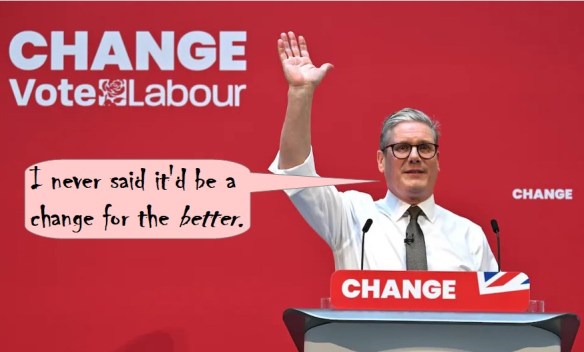
No more irresponsible, undeliverable promises. So said the Prime Minister exactly a year ago. I’m not going to be sceptical or cynical about this. I feel sure it’ll turn out to be true. Is he implying though that promises made earlier than this were indeed ‘irresponsible and undeliverable’. Surely not.

We will not raise taxes on working people (and energy prices will fall by £300 in the long term), Labour politicians, now the government, said only last year in an attempt to gain our votes. I was sceptical about this, as with much they said, and for the first time in many years Labour did not get my vote. Taxes have increased considerably for working people and everyone else in the last year and are set to rise again this week. The price of energy has risen too, by 18%, and will do so again in January. A £300 reduction by 2030, if it happens at all, is not really going to offset this by much. This was all very predictable; since when do politicians tell us the truth in order to get us to vote for them?

Anything Donald Trump says. Insert your selection here.

The NHS is the envy of the world. Pundits and politicians are very fond of this one. They like to add too that the NHS is underfunded. But the NHS is expensive, management heavy and wasteful. Is it really the envy of the world, and if it is, so what, when it’s constantly in crisis at home?

The BBC is the envy of the world. It is impartial and balanced. Is it? A number of independent reviews have determined that it has its own agendas and biases. During lockdowns it fuelled hysteria and now contributes to climate change panic. Rather than reporting facts, it tells us too often what we’re meant to think about issues. It has also been rocked over the past dozen years by sleaze and scandals.

Islam is a religion of peace. So many questions about this one. Many Western politicians have claimed something like it. President George W. Bush did, shortly after 9/11. Perhaps ordinary Muslims are committed to peace but there are many Islamists (the term now used for Muslim extremists) are evidently not: as well as 9/11 there have been acts of Islamist terrorism in London (7th July 2005), at Charlie Hebdo in Paris, in Manchester, the slaughter in the street of an off duty soldier, the massacre of Israeli young people in October 2023, the killing of Christians and others in Nigeria.. Is ‘Allahu Akbar’ really a cry of peace?

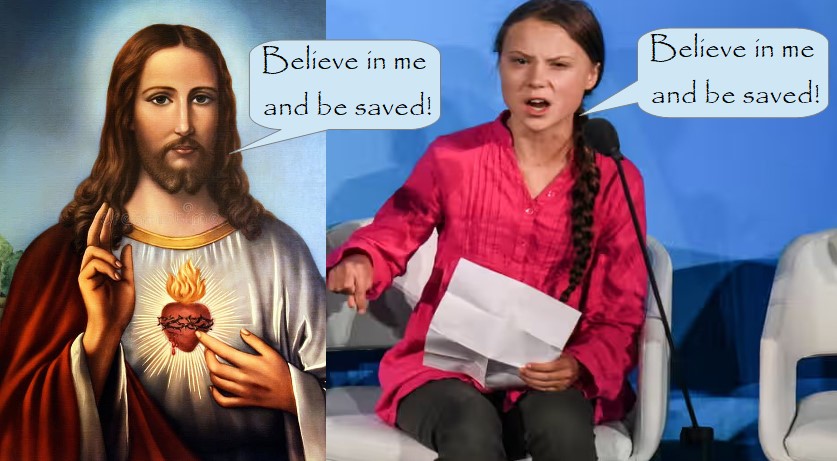
We can halt or reverse the climate changes we ourselves have caused. Can we? Who says? (Greta Thunberg, yes, but no actual scientists that I can find.) We can perhaps mitigate and slow down the change, and we should. But the climate will continue to change. Are these changes solely the fault of us humans – we’re contributing to the pace of change, certainly – when the climate has been in constant change from time immemorial?

I was accused of trying to be a maverick in a recent comment on an old post. Honestly, I’m not. It’s more a case of ‘once bitten, twice shy’; I’m not going to be told ever again what to think, especially not by those who don’t present good reasons why I should (I’ve Jesus to thank for this). Everything needs to be questioned, otherwise our minds are not our own. Be sceptical.

Two Ways of Knowing

A Christian friend told me recently that there are two ways of knowing: science and faith. I don’t agree with him of course and, while I expressed my scepticism, I didn’t argue. It seemed unlikely he would change his mind.

Faith and science have different, incompatible concepts of reality. The first – and faith was first historically – is that there is an invisible realm beyond this one, populated by powerful beings who influence and manipulate the humans who live here below. This reality, though invisible and largely undetectable, is actually more real than the one we see around us. Glimpses have been had of it, however, by those finely attuned to it, in dreams, visions and messages delivered during heightened emotional states. These visionaries – prophets – then pass on to others what the beings of the hidden realm expect of them. Life is then to be lived according to the instructions so conveyed, which usually consist of attempts to appease these gods by doing their bidding. In return for this obsequience, you’re allowed to believe you will live on after death

The other epistemology – actually the only true epistemology in this instance – is empirical, knowledge-based science. A later arrival, historically speaking, than the gods of the invisible realm. The scientific method is the best tool we have for sifting knowledge from superstition and emotion. These, particularly the latter, often impede us in our pursuit of knowledge, which is why science strives to eliminate them from its investigations, taking an objective approach to evidence. Unfortunately, the findings of science are occasionally contradictory (can a man become a woman or not?) and very often misinterpreted by non-scientists. Politicians and the media frequently over-simplify science’s findings and interpret them in ways that suit their own agendas.

Then there are those who masquerade as scientists but are not. During the pandemic, the UK was locked down for almost two years on the basis of computer predictions of what might happen if certain conditions prevailed. These predictions were taken as a scientific conclusion when in fact they were hypotheses, which by their very nature, could not be tested. Needless to say, they turned out to be drastically wrong. Computer projections are not, in themselves, science.

Science, through its practical offspring, medicine and technology, has undoubtedly been a boon to humankind, in a way religion never has. It has also sometimes been a curse too, inflicting us with, amongst other things, an arsenal of ever deadlier weapons, the means of destroying the environment and Covid itself. Science is a tool and like any tool can be wielded both constructively and destructively.

So, perhaps the gods will save us from our own folly after all. If only they and their invisible realm existed. Alas (or thankfully) they don’t; there is zero evidence for them, and visions, dreams and wishful thinking as reliable means of knowing about them. We’re on our own. Science is the best hope we’ve got, our only sure-fire way of knowing. If only politicians and the media understood it more than they seem to.

Hysteria/Mission Creep/Overreach

When I was head (principal) of a primary (elementary) school in the 1990s, I had a staff member who regarded every small problem as ‘a Major Disaster’ (her words). Everything from a mislaid document to wet weather on sports day was an earth-shattering calamity. She was not the only one to overstate manageable events. Those who wield authority over us, their media lackeys and those with a cause of their own to promote are expert in whipping the populace up into a frenzy disproportionate to the given situation. After a short period in the spotlight, the hysteria and the movements that cause it usually fade, as the media finds something newer and shinier about which to induce panic. Occasionally, the newly out-of-favour movements fight back with renewed vigour, a mission creep extending their influence into new areas.

Looking back over the last 25 years, I and my fellow citizens here in the UK have been expected to be alarmed to an alarming degree about:

The Millennium Bug, when every computer in the world, so the experts said, would crash the instant the year 2000 started. This would, in turn, crash every automated system everywhere, causing chaos and mass fatalities. You all know what actually happened.

Foot & Mouth Disease, when millions of cattle and sheep were slaughtered and burnt. Millions of healthy animals were destroyed in case they contracted the disease.

Weapons of Mass Destruction supposedly amassed by Iraq who, we were told, could unleash them on the West within 45 minutes. That there was no evidence of any WMDs and the fact Iraq did not deploy them (because you can’t deploy something that doesn’t exist) did not deter George W. Bush and Tony Blair from launching their oxymoronic (with the emphasis on the moronic) ‘war on terror’. In so doing, they destabilised the world, creating many of the problems we face today.

Child Abuse Scandals: After either missing or covering up the serial abuse of children and vulnerable people by a BBC celebrity, British authorities went to town on ‘suspected paedophiles’, many of whom were nothing of the sort. (A friend of mine was caught up in this hysteria and spent time in prison for a youthful indiscretion many years earlier.) Unfortunately, this national crisis and the perceived need not to offend Muslims came into conflict when, over 20 years, rape gangs comprised mainly of Pakistani men were able operate in up to 50 UK cities with impunity. Hundreds of thousands of vulnerable, white working-class girls were systematically groomed and raped while the police and authorities turned a blind eye, the consequence of a woke priority taking precedence over the rights and safety of others.     

The Covid Pandemic and Lockdown, when governments the world over (apart from Sweden) panicked about a flu-like virus, closed down entire countries, failed to protect the vulnerable and crashed the very economies needed to fund healthcare and treatment for the infected. Britain was closed down for almost 2 years and still hasn’t recovered from the consequences. Citizens are now paying heavily for actions taken by a government that extended its powers to achieve very little.

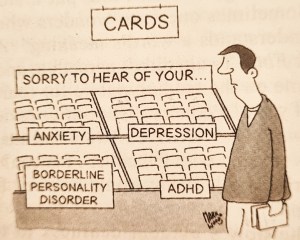
        Cartoon by Mark Woods, Spectator magazine, 7th June '25

Mental Health issues and the medicalised labelling of ordinary human behaviours. We all have mental health issues; this is what it is to be human. Some, it is true, have more than others. Determining an individual has ‘mental health issues’ forces him or her to become his or her issues. Instead of being prone to depression (as I was) or anxiety, the individual who experiences these is now ‘neuro-diverse’. Instead of suffering from a condition the individual could do something about they become that condition. Some people, usually males, used to be diagnosed as autistic. Now that autism is seen as a spectrum, everyone is deemed to be on it somewhere; everyone as a result is autistic. People become trapped in their condition with no way out, lifelong treatment the only recourse.

Black Lives Matter. As Lionel Shriver asks here, do black lives matter any more now than they did before all that righteous indignation and virtual signalling from white people?

Identity Politics in which individuals were told as a matter of urgency to self-identify solely on the basis of their ethnicity, religion, gender or sexuality. Gender dysphoria became a thing from which the trans-movement emerged. While I’ve every sympathy for those who feel they were born in the wrong body, society was unprepared for and incapable of dealing with the consequences. Women became ‘cis-women’, sex became ‘gender’ (a grammatical term), ‘non-binary’ became an option and the abuse of pronouns was politicised. An individual could identify as a plural ‘they’, while others lost their jobs if they declined to play along. Worst of all, children, who were too young to be allowed a tattoo, were given puberty blocking drugs, and in some cases surgery, because they felt they were the wrong sex. Children.

The High Court in the UK recently ruled that a man cannot become a woman, entrenching the views of campaigners and prompting other supporters to claim they knew this all along.

Wokeism; while it’s right and proper to treat each other with kindness, courtesy and consideration, politicising something we were, by and large, already doing was not. Wokeism pushed the boundaries over what could be done or said, or rather could not. Anything that might cause someone else offence was forbidden; commenting or criticising others’ religious beliefs or defending women’s rights became ‘hateful’; having a view on unsustainable immigration numbers made you a fascist. This was the era of cancelling those who did not conform to woke ideals. Toppling statues was popular too on the basis that a long-forgotten figure from 250 years ago may have had a slight connection with the slave trade. Western guilt for actions over which people living today had no part in and demands for reparations to those equally uninvolved ensued.

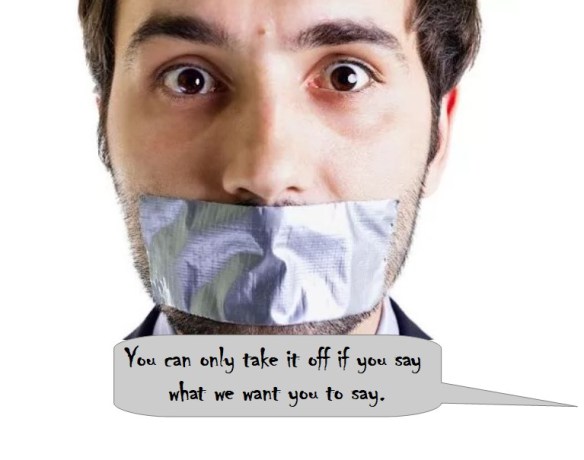
The ‘necessary’ control of free speech, a panic we’re still mired in. Stupid and inflammatory comments on social media can now earn you a prison sentence longer than that of a paedophile offender, often preceded by a visit from half a dozen policemen who will root through your house looking for evidence that you might have once had a ‘Brexity’ thought. Subjects off limits are; arguing that Covid19 began in a Wuhan laboratory (it might upset the Chinese); Islam, Islamic extremism and the Pro-Palestinian movement (however it’s still okay to criticise and condemn Jewish people for the actions of their government); expressing views different from the UK government’s and whatever the prevailing narrative happens to be. A government agency, ‘Prevent‘, last year redefined terrorism (see below) as ‘vocal support of ideologies that advocate discrimination’ and any expression of what it calls ‘cultural nationalism’. What this means is that those who call out religiously-motivated discrimination, lawlessness and terrorism are to be considered terrorists themselves. Actual terrorism and violence is therefore protected against those who would speak out about it, those who do so being the real terrorists. To put it another way, which I read recently (though can’t remember where): those who say hurty things are far more culpable than those who commit actual hurty things. This Orwellian doublespeak must now be taught in universities and other higher education institutions.  

The Climate Crisis and Net-Zero. You must be alarmed by the climate crisis (see here for how much of it Al Gore got wrong). You must too pay heavily for net-zero, thanks to additional taxes; energy prices in the UK are the highest in the world. You must buy into the government’s attempts to enforce a net-zero energy policy by 2050, despite net-zero being unachievable.

What if, might, could, maybe: the media’s favourite phrases to ramp up hysteria. ‘There might be terrible consequences’; ‘we could be headed for another Major Disaster’; ‘if X happens (though it hasn’t) then Y could possibly follow.’ When did the media stop reporting what has actually happened and take up fortune telling instead?  

* * * * * *

There is some comfort in the fact that the so-called crises and hysteria of the past eventually receded and faded away. So too will many of these current causes. All things, as George Harrison once wisely reminded us, must pass. They will, however, be replaced by others equally irrational and preposterous. Those who create them, be they governments, special interest groups or overwrought Swedish teenagers will expect us to conform to their Chicken-Little levels of hysteria. When they do, don’t be alarmed and be sure to seek out the evidence for yourself.

I Don’t Count


I don’t count. You don’t count. Not if, like me you’re an ordinary person quietly getting on with life, perhaps working to support your loved ones or maybe retired now, drawing the pension you’ve paid into all your life and paying your taxes. You don’t count. I don’t count.

Politicians only become interested in you, and then only as a statistic, when election time rolls round. They see us, in the UK at least, as a cash cow, needed only to fund not merely those services that are necessary to a functioning society but also for every other ill-thought-through scheme they devise.

When Labour – the equivalent of the Democrats in the States – came to power last year they suddenly ‘discovered’ that the previous Tory (Republican) government had left them with a £22 billion debt. A number of financial institutions disputed this figure and the government produced no concrete evidence for it. Nonetheless, they took immediate action, shelving most of their pre-election promises until the debt could be repaid. To this end, our politicians, being among the most unproductive members of society, cut out an enormous amount of government waste and immediately cancelled projects of no benefit to the British people. The Spectator magazine estimated that they saved in the region of £200 billion this way. They were quids in!

Except they did nothing of the sort. What they did was keep up their prolific spending, turning to their cash cow – the British tax-payer – to milk it for even more money by increasing taxes all round. Particularly hard hit were high earners (which I am not), the lower paid, businesses and farmers.

A disputed debt, created solely by politicians (much of it by unnecessarily locking down for two years), now has to be paid for by those who had nothing to do with its creation. As if this weren’t bad enough, the new UK government has extended its control of its people by –

  • Deciding what can and can’t be said online and elsewhere (a new, so-called Islamophobic blasphemy law is currently being considered);
  • Encouraging police to investigate ‘non-crime hate incidents’, while ignoring burglaries and shoplifting ‘incidents’;
  • Restricting how much of our own money we can give away to family and friends before the government helps itself to a massive slice;
  • Freezing tax thresholds, meaning individuals will start to pay tax at lower levels of income;
  • Making taxpayers pay for schemes and projects with no proven track record (carbon capture, net zero);
  • Permitting local councils to increase council taxes, some above the legal limit, for fewer services. (Almost a quarter of council tax collected is spent on ‘unjustifiably generous’ staff pensions.)
  • Allowing government agencies access to private bank accounts in order to determine whether benefit recipients are lying about their income (powers that are set to be extended in 2029);
  • Making tax payers fund mass immigration, which successive governments have failed to control.
  • Requisitioning farm land in order to build more houses. In a second blow to farmers, paying them less than the market value. The government seems hell-bent on destroying food production in the UK.
  • Expecting tax-payers to pay Mauritius between £9 billion and £18 billion to take a tiny island in the Indian Ocean off our hands (though Trump might prevent the handover). 

Also under consideration is a two-tier justice system offering greater lenience to those from minorities. Should penalties for criminal acts be determined by ethnicity?

None of this makes us North Korea, but it certainly doesn’t feel like we’re  living in a Western democracy. What happened to government of the people for the people? Why is there growing resentment in the UK that government is now something that is done to the electorate? Beware legislation that is ‘for your own good’ because it never is.

It’s no wonder so many British citizens feel neglected and side-lined by politicians who view them only as a source of income. Can you blame them, and me, for feeling like we don’t count?

Neil’s Third Letter, to the Sceptics

Dear Sceptic,

I understand, I really do. Some of your explanations for what’s going on in the world are way out there. Some of them, in fact, are absolutely preposterous. But, I know how you got there. You’ve spent so long being misled, deceived and, yes, let’s face it, lied to by politicians and some of the media that you’ve come up with your own explanations for things. You’ve suspected in some cases that the establishment’s frequent misdirection and disinformation amounts to conspiracy, and certainly there have been conspiracies of silence in recent years (we’ll get to some examples soon). Unfortunately, this has meant those same authorities have been able to say that your views can be dismissed as mere conspiracy theories. You should be cancelled. Certainly some of your more way out theories – satanic overlords, faked moon-landings and microchip vaccines – need to be. Unfortunately this has also meant any reasonable arguments you’ve arrived at that run contrary to the prevailing narrative have also been airily dismissed as the work of nut-jobs and thrown in the dumpster along with all the whacky stuff.

You were right, it turned out, about Covid19. It was manufactured in a Chinese laboratory, partially funded by the US, from where it escaped in 2019. Even the US State Department has accepted that this is the most likely explanation of the virus’s origin and has asked Chinese authorities to release the relevant data (you can guess how this request was met.)

Look where it got you during the pandemic when you argued for the virus’s lab based origins. Despite the evidence you presented you were labelled conspiracy theorists, were cancelled and hurled in the ‘not worth your time’ trash can. It’s still happening now, because no-one can be allowed to upset the Chinese authorities when it could mean research labs in the West could lose Chinese sponsorship.

You’ve pointed out too that the UK government’s efforts to eliminate the country’s less than 1% contribution to to global emissions is futile. At £22 billion, its plan to ‘capture’ carbon waste is both ridiculously expensive and pointless: carbon capture has never been successfully achieved by any country that has previously attempted it. Never mind, the British taxpayer will fund this particular tilt at windmills (no pun intended); you can be dismissed as climate-change deniers, purveyors of false information as well as conspiracy theorists. A three-in-one success!

You’ve suggested that the current narrative on immigration doesn’t hold water. The government says we need present levels of immigration to fill job vacancies, sustain the economy and fund others’ welfare benefits and pensions. You’ve highlighted the unfounded assumptions inherent in this strategy, pointing out it has failed to improve the economy. You’ve suggested too that in the long term it will necessitate even more immigration to fund those currently entering the country when they draw welfare and claim their pensions. It’s a ponzi scheme writ large that merely kicks the can down the road. And for your trouble you’re labelled far-right, racist and Islamophobic (even when you don’t mention Muslims). You can always tell when those who seek to control the narrative have no counter argument; they’ll subject you to name calling, political slurs and seek to censure your views. Get with the narrative or else!

I could go on –

Question the idea that people alive today are somehow responsible for the slave trade 300 years ago: racist!

Express the view on the deleterious effects of the trans-movement on women’s rights and safety: transphobic!

Ask whether the plonkers who make stupid comments on social media should receive longer prison sentences than rapists and thugs: hate-filled bigot!

– but I won’t. Often, sceptical free thinker, you don’t get it right and others are taken in by your more whackadoodle theories. Unfortunately when you do have a point, backed by sound argument and evidence, it can easily be dismissed by lumping you in with the whackier of your brethren, and ultimately by silencing you and the platform on which you write. That’s Britain today (or is that just a conspiracy theory?)

Yours,

The Apostle Neil

Featuring the Battle of the Century! Doomsday v. Panacea!

Human beings love doomsday scenarios. We have perpetually convinced ourselves that the circumstances in which we live are the most dreadful ever and, to quote The Beatles, can’t get no worse, The earliest Christians thought it: things were so bad that the end was surely to come. YHWH would tolerate the awful state of affairs no longer. But to the surprise of no-one he did.

Those alive in 17th century Europe couldn’t conceive of a worse time, what with the plague and all, and persuaded themselves that the world was ending. During the Covid lockdown we were told that the human race faced being annihilated by the virus and that whatever we’d previously regarded as normal would never return. Today we’re assured that the planet faces extinction if we don’t stop using fossil fuels. At the same time others claim that democracy/the West/civilisation are in such decline that the world will soon disintegrate into anarchy. Who knows, perhaps one day one of these modern doomsday scenarios will come to pass. Even a stopped clock is right twice a day.

Equally though, we are adept at devising panaceas, universal remedies to our problems. We have an unshakeable belief that by making a few simple changes – a new government/president/policy/ invention/initiative/innovation – we will avert disaster and resolve the challenges we face.

How have the panaceas of the past fared? The Jesus’ cult’s promises of new life and heaven of earth collapsed in the first century when God failed to rescue those who identified as his Chosen Ones from the wickedness that surrounded them. Nevertheless, Christianity bullied its way on to the present day, still offering the same tired solutions to age-old problems. Religion, in all its forms, only makes matters worse.

Revolution is no solution either, as the socially aware songs of the 1970s advised us. The French, American, Russian and Chinese revolutions changed situations but they didn’t usher in an age of peace and prosperity or remedy everything their instigators said they would. History demonstrates again and again that violence fails to improve anything. The freedom and independence that the Baltic states now enjoy came not from revolution but from the foresight of Mikhail Gorbachev who knew Russia could no longer afford to sustain its satellite states. Putin however knows better and seeks to reabsorb them back into his own soviet union.

Other panaceas of the past have similarly failed to deliver. The so-called industrial revolution created our modern world, led to the end of slavery and gave us the standard of living those of us in the West enjoy. Now we must deal with what many perceive as its legacy: world pollution, climate change, dwindling resources. Eliminating these is the new panacea. Once these challenges have been met, or so we’re told, the world will find itself on a much better footing, on course to recover from the damage we’ve caused it. Hence Just Stop Oil and Extinction Rebellion. It’s as simple as that. Except we know that surely it isn’t when the biggest polluters – China, Russia, India and potentially the US (Trump says he will pull out of climate change agreements if returned to the White House) – are not wholly on board.

We are a very long way from eliminating the use of oil: for a long time to come it will be needed to lubricate machinery, engines and windfarms, and for the production of plastics (a panacea in their own right not that long ago), computers, mobile phones and building materials. That’s not to mention the need for oil in the nation’s defence: the navy’s ships, the air force’s planes and the army’s tanks. We do not yet have the means of replacing the oil which fuels and lubricates modern life. We can be sure too that when we do, this new panacea will also have its own drawbacks, which will only become apparent once we have committed to them. We know this already with nuclear power which, once fossil fuels are eliminated, will be the principal means of producing electricity in the enormous quantities required to supply to industry, for heating, lighting and transport, including electric cars, which, if politicians have their way, will be the only kind available. We are already using environmentally-damaging methods’ to extract the rare minerals used for the manufacture of batteries, a process which also, ironically, creates more CO2 than the manufacture of a petrol car (itself a panacea not too long ago): According to MIT’s Climate Lab, one ton of mined lithium emits almost 15 tons of CO2’.

While there are those who claim that EVs cause less environmental damage than petrol (gas) vehicles, damage is still damage. It is not net zero. The dream of worldwide net zero is impossible. The only way it is even approachable is for the car and other forms of transport to disappear altogether – and we all know that isn’t going to happen. Even  hypocritical eco-warriors use the car and other forms of transport dependent on fossil fuels to get themselves to whichever work of art or ancient monument they plan to deface. 

China, which produces two thirds of the world’s electric car batteries, accounted ‘for 95% of the world’s new coal power construction activity in 2023.’ Then there’s the disposal of spent batteries: do we have policies for doing that in an environmentally friendly way? Is there an environmentally friendly way?

As you can probably tell, I’m not a believer in panaceas, whether religious or politically devised. They don’t work and never have. In years to come, the West will be wringing its hands at its plundering of the Congo for cobalt and South America for lithium for electric car batteries. ‘How could we get it so wrong?’ we will cry. ‘There must be a better way, a better panacea. Meanwhile, we must do penance and make reparations.’ I don’t have the answers, but extremist approaches like the half-baked schemes of Ed Miliband, the UK’s Secretary of State for Energy Security and Net Zero (yes, really), and pursuing impossible dreams do not seem to me to be the solution.

Who Decides What A Culture’s Values Are?

Did you decide? Would you prefer to live in culture based on Christian, Islamic or Marxist values? According to some Internet Christians, these are the only choices available. Of course anyone with an ounce of sense and a modicum of honesty knows they’re not.

I choose to live in a society that is not dominated by cherry-picked Christian values, or indeed ‘values’ derived from any religion. I reject the claims of them all, including their demonstrably false notion that I and my fellow citizens cannot behave ourselves unless controlled by a morality imposed by an imaginary deity. Likewise, I don’t care to live in a culture determined by an extreme political ideology that serves only one part of society: usually the elites who devise the ideology in question.

Instead I choose, or rather was fortunate enough to be born into, a relatively liberal democracy, capable of determining its own values. These are largely secular and humanistic and include, amongst others, the rule of law, tolerance, and freedom of speech and movement. Of course the UK has never fully realised these aspirations but there has always been a sense, since the 1960s, that we were moving towards them. Perhaps I’m naive to think this, given the turbulence of the Thatcher years and President Blair’s mania for regulation, but overall it used to feel that we were moving gradually towards a fairer, more reasonable society.

It doesn’t now. The elites have embraced a wokeness that benefits a limited few and have redefined terms – ‘woman’, ‘crime’, ‘offence’, ‘hatred’ and ‘phobia’ among them – which has impacted negatively on personal rights and freedoms. They have reinterpreted the law so that it benefits vocal minorities while side-lining the majority. They have repeatedly reneged on promises and over-reacted to the crises of recent years – Covid in particular – by granting themselves greater powers to manage their own over-reaction; powers which, once each crisis has passed, they have declined to relinquish. The values of Britain today, as imposed by the governing classes, are overly woke and authoritarian. In my 68 years, I have never felt as micro-managed in my personal life as I do today.

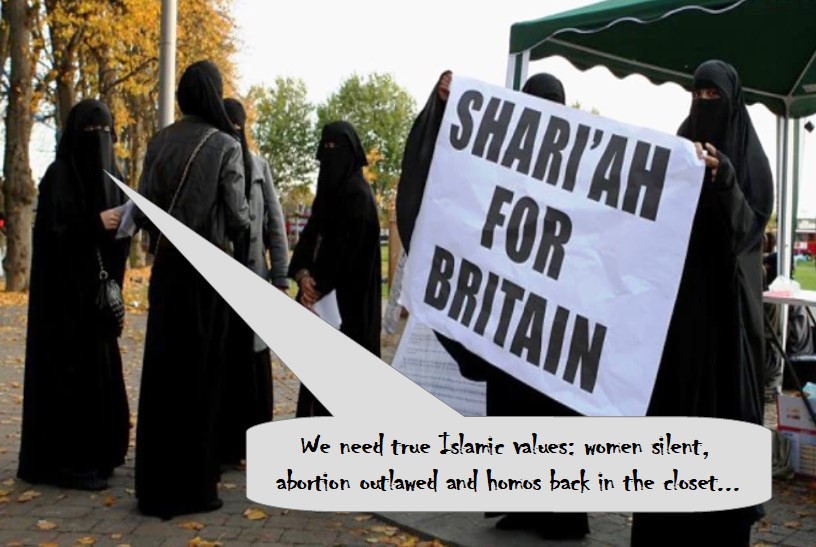
So, I do understand why there are those who call for the return to what they perceive as Christian values or a cultural Christianity of church bells and hymn singing. I understand too the fear of some that the waning of Christian influence will see extreme Islamic values fill the vacuum. This seems to me to be a real possibility and one that would prove seriously detrimental and damaging to British society. However, attempting to resurrect nebulous ‘Christian values’ in order to prevent more intolerant ones from being imposed is no solution.

We need to be clear about our values and assert those we aspire to: tolerance, liberalism, democracy, freedom of speech, rights for all, equality under the law and, I would add, truthfulness, honesty, fairness, consideration and reasonableness. For a time, this may very well involve being intolerant of intolerance, whether derived from Christianity, Islam, wokeism or political ideology. In particular, we need to stop conceding ground to Islam and resisting the demands of Muslim activists when they conflict with the values and aspirations of the majority.

Perhaps none of this will matter to me, given I’m not going to be around for many more decades (if that). But I would like the Britain my grandchildren grow up in to be one that reflects humane, secular values. I fear for them that it might instead operate on the basis of oppressive, intolerant religious ones.


free speech

The Only Truth

I long ago lost my Christian faith – though it was more of a conscious uncoupling than carelessness. It simply didn’t make sense any more; it wasn’t the Truth it claimed to be. It wasn’t even a truth.

The legacy of Covid-19 for me has been more loss of faith: in science and scientists, as suggested in the previous post, in the media (as I discussed here) and also in politicians and the police. My faith in politicians was, admittedly, never all that great, but the pandemic delivered the death blow. It’s not that I found the numerous parties at 10 Downing Street and in Whitehall a betrayal of the British people, who were under strict lockdown (though they were); it wasn’t the revelation that those who control our lives do so only with a steady supply of alcohol (though that is also true). It was because they were and are so utterly incompetent. None of the measures taken by the British government, nor the Scottish and Welsh assemblies, halted the spread of Covid. Yet like a dog returning to its vomit (Proverbs 26.11) they returned to the same old measures as if they worked. They imposed universal lockdowns and restrictions, making normal social behaviour a crime, when they should have been protecting the elderly and vulnerable, who then died in their thousands in care-homes and hospitals where many of them picked up the virus in the first place. Meanwhile, over-zealous, heavy-handed police officers fined people for sitting on park benches, threatened to arrest people for not wearing face-masks, stopped and questioned drivers they suspected might be breaking Covid rules and broke up ‘illegal’ gatherings while Downing Street partied on.

What a travesty of a democratically free society the last two years have turned out to be. I doubt I will ever vote again, after a lifetime of doing so. The opposition in the UK, the Labour party, exposed themselves to be as spineless and as cravenly zealous in oppressing people as the Conservative government. They opposed none of its draconian, futile measures. They wanted, in fact, for them to be more extreme. Will we ever return to those freedoms we enjoyed and which were our entitlement before the pandemic struck? Or will politicians cling onto the powers they granted themselves and the police to control the largely compliant hoi polloi? Knowing politicians, I think I know the answer. It’s a spoilt ballot paper for me next time and from now on.

All we have, we ordinary folk, is ourselves. The only ones we can possibly have faith in are our loved ones; partners, family and friends. See yourself through life. Take care of these others. Call upon anyone outside of this circle only when necessity dictates. Never believe that government, religion, science, the media or police are on your side and are going to do anything for you.

As Paul Simon wrote many years ago:

And so you see I have come to doubt
All that I once held as true.
I stand alone without beliefs;
The only truth I know is you.

He was talking about his then girl-friend, Kathy but the sentiment is applicable to you and your loved ones. If you’re doing anything but relying on and looking after these people, you are pursuing an illusion.

Covid+Science

Science created Covid-19. Or at least scientists did. The evidence is conclusive, being laid out in Failures Of State published in April 2021 by investigative journalists Jonathan Calvert and George Arbuthnott. In short, the virus was first detected about ten years ago in caves in south China after it had killed several miners. Scientists from Wuhan collected samples of the virus from bat guano in the caves. They returned to their lab where, after an initial investigation, they froze the virus until 2019 when they revived it and began experimenting on it, ostensibly to develop a vaccine effective against SARS-CoV2 viruses. They undoubtedly altered the virus at this point, adding the element that has been recognised as being engineered. They also allowed it to escape. This was probably not intentional; pathogens regularly escape from laboratories all around the world. We now know this is the most likely scenario for the origin of Covid-19.

Science propelled us into lockdowns and restrictions. Strictly speaking, the worst case predictions of scientific modellers propelled the world’s politicians into panic mode and, in consequence, populations into lockdowns. Whether data analysis, number crunching and computer projections can be properly defined as science is a moot point, but those involved in this work regard it as such, as do the politicians who act on modellers’ advice. They have been wrong more than they have been right.

Science is helping us out of the pandemic. The vaccine has reduced the number of cases of Covid and its variants. It is not as effective as was originally predicted, three inoculations providing only about five months’ protection. We can only hope that this is sufficient to get us though the next few weeks by which time it may be that the virus will have run its course. We know from previous pandemics that they last about two to three years, after which they become endemic (though naturally scientists are arguing about the meaning of this term). In other words, we will to have to learn to live with a (hopefully) weakened virus.

We must also be more cautious about science and scientists. Science is a tool that humans use to understand the world. It is a good tool, but it is only as reliable as those who use it; scientists who, like all other humans, make mistakes (lab leaks), have biases (towards worst case scenarios) and agendas (predictions of doom, profit, panaceas.) Science sits uneasily on a pedestal.


Omicron+Insanity

Who was it who said,Insanity is doing the same thing over and over again and expecting different results’? We don’t actually know. It’s often attributed to Einstein but it almost certainly isn’t, its first recorded use appearing in 1981, 26 years after Einstein died. Whoever it was though talked a lot of sense, as well as contributing a memorable meme to the world.

If only those who presently control our lives would heed it. They wouldn’t then be re-introducing the same restrictions they tried in 2020 and again in 2021 to prevent the spread of Covid. In the UK, the government has just announced that when secondary students return to school today they must wear face masks all the time, because obviously this stopped Covid infections last time round and will do so again. Except it didn’t stop them last time. If face masks worked, we wouldn’t now be in the position we are, with the rapid spread of the ultra-infectious Omicron variant. Face coverings did not prevent or even slow the spread of the original virus, nor the Delta variant; they are certainly not going to have any effect against Omicron. We know this from the countries that have had strict mask mandates in place for the last year. France has twice had almost as many infections in one day as England has had in total. The rest of the European Union has as many or more cases of Omicron than England, when England hasn’t, for the most part, forced its populace to wear face coverings. It makes no sense to impose them now on English school children. The government’s own Education Select Committee has ‘concerns’ about the measure. My sister and mother are conscientious mask wearers, yet during the holidays both have had heavy colds. Their masks did not prevent them from contracting a cold virus, quite possibly a Coronavirus (20% of colds are caused by Coronaviruses, the rest by other viruses.)

Non-pharmaceutical measures do not appear to prevent Covid infections; masks are of limited effectiveness and lockdowns merely defer the problem. Only vaccines reduce the virus’s potency and, even then, not for as long as we originally hoped. (Get the booster!) We have to learn to live with it, as we do with colds, flu and pneumonia. It is estimated that around 25,000 people a year die of flu in England and Wales, year on year. Over the last decade alone this adds up to far more deaths from flu (250,000) than deaths from Covid-19 in the last 2+ years (a contested 136,000), and far fewer than will die of the milder Omicron.

Yet we do not lockdown or wear masks because of flu. Of course the numbers for the milder Omicron are more concentrated and the fear is that cases will overwhelm health services (the same services successive governments have failed to reform.) However, according to the BMJ, 84% of hospitalisations are of the unvaccinated. If anyone is overwhelming the NHS it is people who have chosen not to have the vaccine; it is not reasonable that as a consequence, those who are vaccinated or who like, school children, are less susceptible to the virus, must have restrictions placed on them.

Of course the vulnerable and elderly must be able to isolate themselves and anyone should be free to wear face coverings if it makes them feel more comfortable. The rest of us must learn to get on with our lives alongside Covid-19 and its variants, just as we do with other respiratory diseases. They’re part of being human, after all. It is futile making us adopt the same measures that failed last time and the time before that and the time before that.

Insanity indeed.