What Is Truth?

I’m sceptical (or skeptical if you’re in the US). It’s a legacy of my years of believing the promises of Christianity. Preachers, pastors, Bible study leaders told me for 25 years that the promises of the bible, of Jesus himself, were all true. And like a fool I believed them. Jesus had made a new creature out of me; he loved me; he was guiding my life; he was returning soon; I’d be resurrected; I’d live in heaven forever… and on and on.

What a preposterous set of propositions! It took my Great Realisation, my own personal revelation that there was no God, to make me see how ridiculous they were.

It is this that left me with a legacy of scepticism. If I’d been misled all this time by people I respected and admired, what else was I accepting as true that very well might not be? I wasn’t going to be fooled again and so began to question practically everything I was told by authorities, experts and the media. If it seemed ‘off’, as we say these days, not quite right or too good (or bad) to be true I asked, ‘Who says so?’, ‘How do they know this?’, ‘What is the evidence?’, ‘Do they jump to conclusions or is their reasoning sound?’, ‘Why should I believe what they say?’ It’s exhausting, I assure you, having to search out the evidence – the primary sources of information – and to sift through it, recognising any bias that has been imposed on it. It’s either this or I must accept without question that everything I’m told is true. I can’t do that any more.

Here are a few examples of claims that I’ve been sceptical of on the recent past:

We are being guided by the science, said politicians during Covid to ensure compliance with whatever lockdown measures were being imposed. Did this really just mean was ‘we are being guided by our interpretation of some rather suspect data’? It became clear after we emerged from the hysteria surrounding the pandemic that this was the case.

Tens of thousands will die of Covid unless you comply: this based on computer predictions which turned out to be very far from accurate: the suspect data that ‘guided’ politicians.

A woman can have a penis. A man can have cervix. Yes, our politicians told us this during our recent fixation with transgenderism. Whatever you think of people changing sex, these two statements, designed to change hearts and minds, if not penises and cervixes, are patently false. Whatever was guiding those who said such things, it certainly wasn’t ‘the science’.

No more irresponsible, undeliverable promises. So said the Prime Minister exactly a year ago. I’m not going to be sceptical or cynical about this. I feel sure it’ll turn out to be true. Is he implying though that promises made earlier than this were indeed ‘irresponsible and undeliverable’. Surely not.

We will not raise taxes on working people (and energy prices will fall by £300 in the long term), Labour politicians, now the government, said only last year in an attempt to gain our votes. I was sceptical about this, as with much they said, and for the first time in many years Labour did not get my vote. Taxes have increased considerably for working people and everyone else in the last year and are set to rise again this week. The price of energy has risen too, by 18%, and will do so again in January. A £300 reduction by 2030, if it happens at all, is not really going to offset this by much. This was all very predictable; since when do politicians tell us the truth in order to get us to vote for them?

Anything Donald Trump says. Insert your selection here.

The NHS is the envy of the world. Pundits and politicians are very fond of this one. They like to add too that the NHS is underfunded. But the NHS is expensive, management heavy and wasteful. Is it really the envy of the world, and if it is, so what, when it’s constantly in crisis at home?

The BBC is the envy of the world. It is impartial and balanced. Is it? A number of independent reviews have determined that it has its own agendas and biases. During lockdowns it fuelled hysteria and now contributes to climate change panic. Rather than reporting facts, it tells us too often what we’re meant to think about issues. It has also been rocked over the past dozen years by sleaze and scandals.

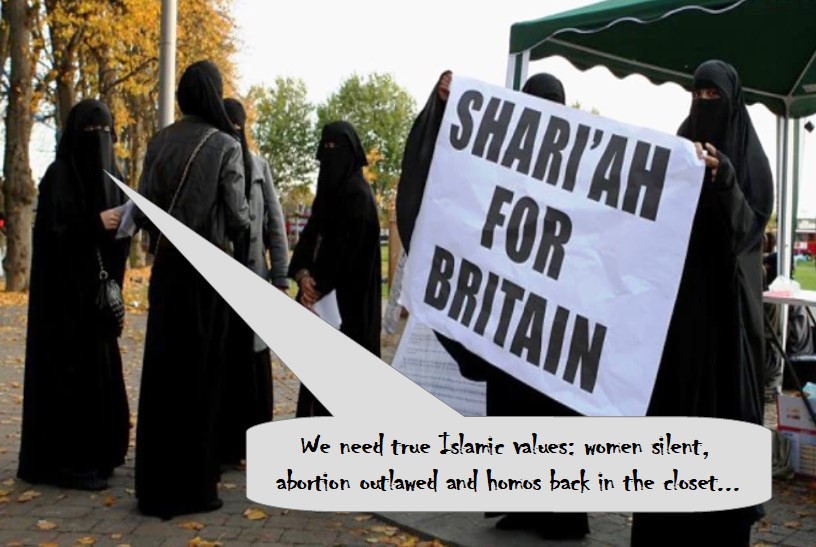
Islam is a religion of peace. So many questions about this one. Many Western politicians have claimed something like it. President George W. Bush did, shortly after 9/11. Perhaps ordinary Muslims are committed to peace but there are many Islamists (the term now used for Muslim extremists) are evidently not: as well as 9/11 there have been acts of Islamist terrorism in London (7th July 2005), at Charlie Hebdo in Paris, in Manchester, the slaughter in the street of an off duty soldier, the massacre of Israeli young people in October 2023, the killing of Christians and others in Nigeria.. Is ‘Allahu Akbar’ really a cry of peace?

We can halt or reverse the climate changes we ourselves have caused. Can we? Who says? (Greta Thunberg, yes, but no actual scientists that I can find.) We can perhaps mitigate and slow down the change, and we should. But the climate will continue to change. Are these changes solely the fault of us humans – we’re contributing to the pace of change, certainly – when the climate has been in constant change from time immemorial?

I was accused of trying to be a maverick in a recent comment on an old post. Honestly, I’m not. It’s more a case of ‘once bitten, twice shy’; I’m not going to be told ever again what to think, especially not by those who don’t present good reasons why I should (I’ve Jesus to thank for this). Everything needs to be questioned, otherwise our minds are not our own. Be sceptical.

Two Ways of Knowing

A Christian friend told me recently that there are two ways of knowing: science and faith. I don’t agree with him of course and, while I expressed my scepticism, I didn’t argue. It seemed unlikely he would change his mind.

Faith and science have different, incompatible concepts of reality. The first – and faith was first historically – is that there is an invisible realm beyond this one, populated by powerful beings who influence and manipulate the humans who live here below. This reality, though invisible and largely undetectable, is actually more real than the one we see around us. Glimpses have been had of it, however, by those finely attuned to it, in dreams, visions and messages delivered during heightened emotional states. These visionaries – prophets – then pass on to others what the beings of the hidden realm expect of them. Life is then to be lived according to the instructions so conveyed, which usually consist of attempts to appease these gods by doing their bidding. In return for this obsequience, you’re allowed to believe you will live on after death

The other epistemology – actually the only true epistemology in this instance – is empirical, knowledge-based science. A later arrival, historically speaking, than the gods of the invisible realm. The scientific method is the best tool we have for sifting knowledge from superstition and emotion. These, particularly the latter, often impede us in our pursuit of knowledge, which is why science strives to eliminate them from its investigations, taking an objective approach to evidence. Unfortunately, the findings of science are occasionally contradictory (can a man become a woman or not?) and very often misinterpreted by non-scientists. Politicians and the media frequently over-simplify science’s findings and interpret them in ways that suit their own agendas.

Then there are those who masquerade as scientists but are not. During the pandemic, the UK was locked down for almost two years on the basis of computer predictions of what might happen if certain conditions prevailed. These predictions were taken as a scientific conclusion when in fact they were hypotheses, which by their very nature, could not be tested. Needless to say, they turned out to be drastically wrong. Computer projections are not, in themselves, science.

Science, through its practical offspring, medicine and technology, has undoubtedly been a boon to humankind, in a way religion never has. It has also sometimes been a curse too, inflicting us with, amongst other things, an arsenal of ever deadlier weapons, the means of destroying the environment and Covid itself. Science is a tool and like any tool can be wielded both constructively and destructively.

So, perhaps the gods will save us from our own folly after all. If only they and their invisible realm existed. Alas (or thankfully) they don’t; there is zero evidence for them, and visions, dreams and wishful thinking as reliable means of knowing about them. We’re on our own. Science is the best hope we’ve got, our only sure-fire way of knowing. If only politicians and the media understood it more than they seem to.

Featuring the Battle of the Century! Doomsday v. Panacea!

Human beings love doomsday scenarios. We have perpetually convinced ourselves that the circumstances in which we live are the most dreadful ever and, to quote The Beatles, can’t get no worse, The earliest Christians thought it: things were so bad that the end was surely to come. YHWH would tolerate the awful state of affairs no longer. But to the surprise of no-one he did.

Those alive in 17th century Europe couldn’t conceive of a worse time, what with the plague and all, and persuaded themselves that the world was ending. During the Covid lockdown we were told that the human race faced being annihilated by the virus and that whatever we’d previously regarded as normal would never return. Today we’re assured that the planet faces extinction if we don’t stop using fossil fuels. At the same time others claim that democracy/the West/civilisation are in such decline that the world will soon disintegrate into anarchy. Who knows, perhaps one day one of these modern doomsday scenarios will come to pass. Even a stopped clock is right twice a day.

Equally though, we are adept at devising panaceas, universal remedies to our problems. We have an unshakeable belief that by making a few simple changes – a new government/president/policy/ invention/initiative/innovation – we will avert disaster and resolve the challenges we face.

How have the panaceas of the past fared? The Jesus’ cult’s promises of new life and heaven of earth collapsed in the first century when God failed to rescue those who identified as his Chosen Ones from the wickedness that surrounded them. Nevertheless, Christianity bullied its way on to the present day, still offering the same tired solutions to age-old problems. Religion, in all its forms, only makes matters worse.

Revolution is no solution either, as the socially aware songs of the 1970s advised us. The French, American, Russian and Chinese revolutions changed situations but they didn’t usher in an age of peace and prosperity or remedy everything their instigators said they would. History demonstrates again and again that violence fails to improve anything. The freedom and independence that the Baltic states now enjoy came not from revolution but from the foresight of Mikhail Gorbachev who knew Russia could no longer afford to sustain its satellite states. Putin however knows better and seeks to reabsorb them back into his own soviet union.

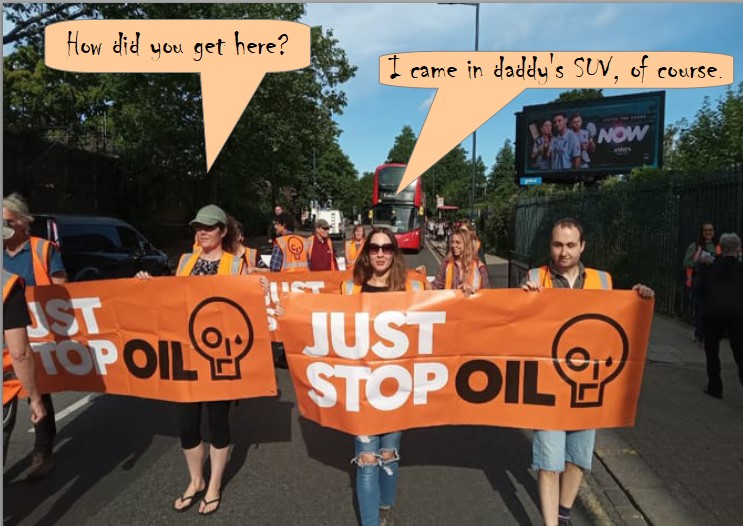
Other panaceas of the past have similarly failed to deliver. The so-called industrial revolution created our modern world, led to the end of slavery and gave us the standard of living those of us in the West enjoy. Now we must deal with what many perceive as its legacy: world pollution, climate change, dwindling resources. Eliminating these is the new panacea. Once these challenges have been met, or so we’re told, the world will find itself on a much better footing, on course to recover from the damage we’ve caused it. Hence Just Stop Oil and Extinction Rebellion. It’s as simple as that. Except we know that surely it isn’t when the biggest polluters – China, Russia, India and potentially the US (Trump says he will pull out of climate change agreements if returned to the White House) – are not wholly on board.

We are a very long way from eliminating the use of oil: for a long time to come it will be needed to lubricate machinery, engines and windfarms, and for the production of plastics (a panacea in their own right not that long ago), computers, mobile phones and building materials. That’s not to mention the need for oil in the nation’s defence: the navy’s ships, the air force’s planes and the army’s tanks. We do not yet have the means of replacing the oil which fuels and lubricates modern life. We can be sure too that when we do, this new panacea will also have its own drawbacks, which will only become apparent once we have committed to them. We know this already with nuclear power which, once fossil fuels are eliminated, will be the principal means of producing electricity in the enormous quantities required to supply to industry, for heating, lighting and transport, including electric cars, which, if politicians have their way, will be the only kind available. We are already using environmentally-damaging methods’ to extract the rare minerals used for the manufacture of batteries, a process which also, ironically, creates more CO2 than the manufacture of a petrol car (itself a panacea not too long ago): According to MIT’s Climate Lab, one ton of mined lithium emits almost 15 tons of CO2’.

While there are those who claim that EVs cause less environmental damage than petrol (gas) vehicles, damage is still damage. It is not net zero. The dream of worldwide net zero is impossible. The only way it is even approachable is for the car and other forms of transport to disappear altogether – and we all know that isn’t going to happen. Even  hypocritical eco-warriors use the car and other forms of transport dependent on fossil fuels to get themselves to whichever work of art or ancient monument they plan to deface. 

China, which produces two thirds of the world’s electric car batteries, accounted ‘for 95% of the world’s new coal power construction activity in 2023.’ Then there’s the disposal of spent batteries: do we have policies for doing that in an environmentally friendly way? Is there an environmentally friendly way?

As you can probably tell, I’m not a believer in panaceas, whether religious or politically devised. They don’t work and never have. In years to come, the West will be wringing its hands at its plundering of the Congo for cobalt and South America for lithium for electric car batteries. ‘How could we get it so wrong?’ we will cry. ‘There must be a better way, a better panacea. Meanwhile, we must do penance and make reparations.’ I don’t have the answers, but extremist approaches like the half-baked schemes of Ed Miliband, the UK’s Secretary of State for Energy Security and Net Zero (yes, really), and pursuing impossible dreams do not seem to me to be the solution.

Who Decides What A Culture’s Values Are?

Did you decide? Would you prefer to live in culture based on Christian, Islamic or Marxist values? According to some Internet Christians, these are the only choices available. Of course anyone with an ounce of sense and a modicum of honesty knows they’re not.

I choose to live in a society that is not dominated by cherry-picked Christian values, or indeed ‘values’ derived from any religion. I reject the claims of them all, including their demonstrably false notion that I and my fellow citizens cannot behave ourselves unless controlled by a morality imposed by an imaginary deity. Likewise, I don’t care to live in a culture determined by an extreme political ideology that serves only one part of society: usually the elites who devise the ideology in question.

Instead I choose, or rather was fortunate enough to be born into, a relatively liberal democracy, capable of determining its own values. These are largely secular and humanistic and include, amongst others, the rule of law, tolerance, and freedom of speech and movement. Of course the UK has never fully realised these aspirations but there has always been a sense, since the 1960s, that we were moving towards them. Perhaps I’m naive to think this, given the turbulence of the Thatcher years and President Blair’s mania for regulation, but overall it used to feel that we were moving gradually towards a fairer, more reasonable society.

It doesn’t now. The elites have embraced a wokeness that benefits a limited few and have redefined terms – ‘woman’, ‘crime’, ‘offence’, ‘hatred’ and ‘phobia’ among them – which has impacted negatively on personal rights and freedoms. They have reinterpreted the law so that it benefits vocal minorities while side-lining the majority. They have repeatedly reneged on promises and over-reacted to the crises of recent years – Covid in particular – by granting themselves greater powers to manage their own over-reaction; powers which, once each crisis has passed, they have declined to relinquish. The values of Britain today, as imposed by the governing classes, are overly woke and authoritarian. In my 68 years, I have never felt as micro-managed in my personal life as I do today.

So, I do understand why there are those who call for the return to what they perceive as Christian values or a cultural Christianity of church bells and hymn singing. I understand too the fear of some that the waning of Christian influence will see extreme Islamic values fill the vacuum. This seems to me to be a real possibility and one that would prove seriously detrimental and damaging to British society. However, attempting to resurrect nebulous ‘Christian values’ in order to prevent more intolerant ones from being imposed is no solution.

We need to be clear about our values and assert those we aspire to: tolerance, liberalism, democracy, freedom of speech, rights for all, equality under the law and, I would add, truthfulness, honesty, fairness, consideration and reasonableness. For a time, this may very well involve being intolerant of intolerance, whether derived from Christianity, Islam, wokeism or political ideology. In particular, we need to stop conceding ground to Islam and resisting the demands of Muslim activists when they conflict with the values and aspirations of the majority.

Perhaps none of this will matter to me, given I’m not going to be around for many more decades (if that). But I would like the Britain my grandchildren grow up in to be one that reflects humane, secular values. I fear for them that it might instead operate on the basis of oppressive, intolerant religious ones.


free speech

On my Mind

After a lifetime of voting in national and local elections I think it unlikely I will ever vote again. I am disillusioned with politicians of all stripes and at every level. Their decisions over the last few years have been disastrous and certainly not for the betterment of the British people. After so many broken promises I can’t find it in myself to believe in them any more.

Leaders and politicians take us into war but it is always ordinary people, quietly going about their everyday lives, who suffer. Religion lies at the heart of the conflict in the Middle East, motivating terrorist acts of unimaginable brutality. A god at war with himself, with innocents paying the price.

The human capacity for overreaction does not solve problems. Every unusual event is now classified as a crisis to which we respond irrationally and without resolution. In the UK during the 21st century, we (or rather politicians and leaders) have failed to address or resolve:

The so-called millennium bug (came to nothing after unnecessary panic and the waste of millions of pounds);

Foot and mouth disease (millions of healthy animals slaughtered, many lives ruined);

Iraq’s Weapons of Mass Destruction (never located and never used; non-existent. The irrational insistence by western powers that they did exist led to war and the destabilisation of the world);

Covid pandemic (lockdowns did not protect the vulnerable and elderly but successfully crashed the economy, from which the UK has still to recover);

Net-zero (electric cars, heat pumps and Ulez zones will not save the planet, yet they and similar measures will impoverish millions. We do not have the technology to halt, let alone reverse, climate change; it is hubris to think we will);

Illegal immigration (the UK and other European nations cannot cope with the strain on our infrastructure. Meanwhile the tax payer funds the accommodation of people who are here illegally, the system fails to process legal asylum seekers and politicians dither).

The narrative of the day, be it trans/gender issues, racial identity or climate change must not be challenged. Get with the agenda or be abused and cancelled. Whatever happened to free speech? I’m concerned about the attempts to control our thinking here in the UK.

Alarmist media that spend more time espousing their own opinions and endlessly speculating than reporting facts.

AI: More artificial than intelligent, AI is a disaster so far. Imagine Alexa handling the complexities of your business transactions or your banking and data security: ‘I don’t know the answer to that. Please try asking a different question (I.e. one that has no bearing on what you need to know but which fits my algorithmic agenda.)’ Does the human intelligence foisting AI on us bother to test the interface of AI and real, frustrated people?

Does bureaucracy exist only for its own self-perpetuation?. It certainly seems so.


The Only Truth

I long ago lost my Christian faith – though it was more of a conscious uncoupling than carelessness. It simply didn’t make sense any more; it wasn’t the Truth it claimed to be. It wasn’t even a truth.

The legacy of Covid-19 for me has been more loss of faith: in science and scientists, as suggested in the previous post, in the media (as I discussed here) and also in politicians and the police. My faith in politicians was, admittedly, never all that great, but the pandemic delivered the death blow. It’s not that I found the numerous parties at 10 Downing Street and in Whitehall a betrayal of the British people, who were under strict lockdown (though they were); it wasn’t the revelation that those who control our lives do so only with a steady supply of alcohol (though that is also true). It was because they were and are so utterly incompetent. None of the measures taken by the British government, nor the Scottish and Welsh assemblies, halted the spread of Covid. Yet like a dog returning to its vomit (Proverbs 26.11) they returned to the same old measures as if they worked. They imposed universal lockdowns and restrictions, making normal social behaviour a crime, when they should have been protecting the elderly and vulnerable, who then died in their thousands in care-homes and hospitals where many of them picked up the virus in the first place. Meanwhile, over-zealous, heavy-handed police officers fined people for sitting on park benches, threatened to arrest people for not wearing face-masks, stopped and questioned drivers they suspected might be breaking Covid rules and broke up ‘illegal’ gatherings while Downing Street partied on.

What a travesty of a democratically free society the last two years have turned out to be. I doubt I will ever vote again, after a lifetime of doing so. The opposition in the UK, the Labour party, exposed themselves to be as spineless and as cravenly zealous in oppressing people as the Conservative government. They opposed none of its draconian, futile measures. They wanted, in fact, for them to be more extreme. Will we ever return to those freedoms we enjoyed and which were our entitlement before the pandemic struck? Or will politicians cling onto the powers they granted themselves and the police to control the largely compliant hoi polloi? Knowing politicians, I think I know the answer. It’s a spoilt ballot paper for me next time and from now on.

All we have, we ordinary folk, is ourselves. The only ones we can possibly have faith in are our loved ones; partners, family and friends. See yourself through life. Take care of these others. Call upon anyone outside of this circle only when necessity dictates. Never believe that government, religion, science, the media or police are on your side and are going to do anything for you.

As Paul Simon wrote many years ago:

And so you see I have come to doubt
All that I once held as true.
I stand alone without beliefs;
The only truth I know is you.

He was talking about his then girl-friend, Kathy but the sentiment is applicable to you and your loved ones. If you’re doing anything but relying on and looking after these people, you are pursuing an illusion.