
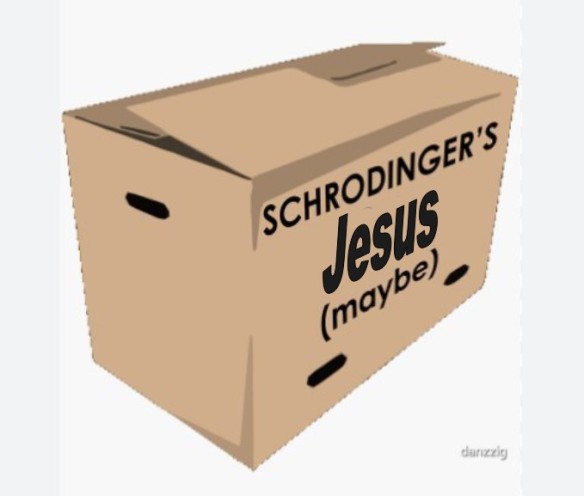
Whatever Happened to Yeshua bar Yosef?

What happened to the real Jesus? The itinerant Jew who trudged around Palestine with a small group of followers, preaching who knows what. How to survive the imminent end of the world perhaps. His name wasn’t really Jesus. That’s a Hellenised version of the Jewish name Yeshua: Ἰησοῦς’ pronounced ‘Yay-soos’, which means (suspiciously) ‘YHWH is salvation’. The bar Yosef part means son of Joseph, not son of God. Whatever he was about, this Yeshua was crucified by the Romans and soon after his death, one or two of his friends convinced themselves they’d seen him alive again. Or so the story goes.

The earliest information we have about Yeshua includes very little of what we now think we know of him. The crucifixion/resurrection are the only parts of the story that interest Paul, and then only because he thinks he too has seen the risen Yeshua inside his own head. But this Yeshua, whom Paul does indeed call Jesus, is no itinerant preacher. Paul seems unaware of any of his story, his parables, aphorisms or miracles. Instead he consistently describes Jesus as a heavenly being who speaks to him through ‘revelation’, explaining in convoluted terms how his death leads to salvation. This Jesus, now with appended ‘Christ’, Greek for Messiah, is an amalgam of elements from mystery religions, resurrection myths and Paul’s own fanciful ideas. He is hard to reconcile with a real man who walked the Earth years earlier.

Verdict: Paul’s celestial Christ isn’t Yeshua bar Yosef. Paul’s Christ never existed.

The accounts of Jesus that appear decades later attempt to ground Paul’s imaginary being historically and geographically. In this, the gospels are superficially successful but even a cursory analysis reveals serious fault lines. The gospels rely heavily on myth, metaphor and the misapplication of ‘prophecy’, rather than historical fact. They are a form of midrash. The first, written anonymously round about 70CE and later attributed to someone called Mark, is, as today’s TV dramas often say, based on an idea by Paul. It is unlikely it reflects an historical Yeshua. Subsequent gospels, also anonymous but known later as Matthew and Luke, are themselves based on Mark’s, importing its flaws and introducing spurious material of their own. In neither is Jesus the son of Joseph; he’s the son of God, born of a virgin

Verdict: the Jesus of the synoptic gospels is not Yeshua bar Yosef. He’s a literary construct, a fantasy figure.

When the fourth gospel appears, sixty to seventy years after Yeshua is supposed to have lived, the Jesus character has evolved yet again. John’s supremely confident, egotistical creation equates himself fully with God: ‘I and the Father are one,’ as he puts it. This Jesus bears little relation to Mark’s central character who keeps his mission and identity secret (as well he might as a literary construct created primarily for cult members in the know.)

Verdict: the fourth gospel’s Jesus is not Yeshua bar Yosef. He’s constructed from the beliefs of later versions of the cult.

By the time of Revelation (95-96CE), Christ has become a Game of Thrones reject, overseeing the destruction of demons, dragons and other non-existent creatures. Any semblance of reality has been left far behind.

Verdict: Revelation’s Christ isn’t Yeshua bar Yosef. He’s as imaginary as Paul’s Christ, another fanatic’s ‘vision’.

Can Yeshua bar Yosef be rescued from all these accretions? Can a historical figure be detected beneath the layers of fantasy constructed around him (or the idea of him at least)? The attempts made in the last 150 years suggest not. He is lost for good underneath layers of myth and magic.

Does it matter? Not really. None of his followers today would be interested even if he could be unearthed and resurrected. They are content with the Jesus of imagination: Paul’s, the gospel writers’, the creators of creeds, ministers who interpret the stories about him and their own emotional need. Today’s Christ is an imaginary being, a heavenly superman as unreal as the sky gods who preceded him; a faith-created myth.

Verdict: the Jesus worshipped by today’s Christians isn’t Yeshua bar Yosef either. That character is lost to us. So early did cultists lose sight of him, he may as well have not existed.

Perhaps he didn’t. 
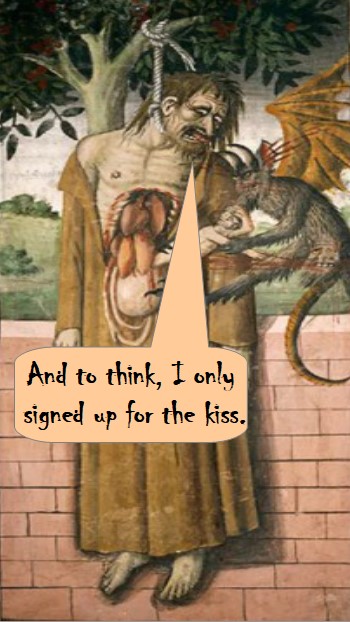
Whatever Happened to Judas Iscariot?

Even more significant in the gospels than Mary Magdalene is Judas. Like her, he is strangely absent from the rest of the New Testament. Apart from Luke’s ridiculous story of his death in Acts 1:18 – a story that contradicts the one in Matthew 27:5 – he isn’t mentioned anywhere else. You might think that’s to be expected, given he’s the disciple who betrays Jesus in the gospels. His name must have been anathema to early Christians.

We might expect, however, that when Paul is describing the Lord’s Supper for the very first time in 1 Corinthians 11:23-26, he might, when he gets to the part where he says ‘on the night he was betrayed’, have mentioned the name of the betrayer. It would seem the natural thing to do. Unfortunately, the word ‘betrayed’ (prodidomi) doesn’t appear in 1 Corinthians 11:23-26 or anywhere else in the epistles. The word Paul uses is paradidomi, meaning ‘handed over’, a handing over by spiritual agents (God himself?) not a traitorous human. Judas is in fact absent from Paul’s description of the Lord’s Supper, a revelation he claims to have received directly from the heavenly Jesus, who neglects to include Judas and all the other disciples too. Nor does Paul call the event ‘The Last Supper’; that name would come later. Read 1 Corinthians 11:23-26 for yourself and see. Bart Ehrman also addresses the problem here.

Bizarrely though Judas does turn up, sort of, in 1 Corinthians 15:3-8, when Paul is quoting a creed thought to originate in the earliest days of the new faith. Because it is considered so early, this creed is greatly valued and frequently cited by apologists. Never mind that it contradicts the later gospel sightings of the Risen Jesus (see the previous post). Here’s what Paul says in 1 Corinthians 15:5: ‘(Jesus) appeared to Cephas, and then to the Twelve.’ Then to the Twelve? What Twelve? As Simon Peter, wasn’t Cephas one of the Twelve to begin with? Maybe they weren’t the same person after all.

More significantly, the Twelve, at least according to the later gospels, originally included Judas. He was one of Jesus’ inner circle. And according to Matthew 27 and Acts 1 he killed himself almost immediately after betraying Jesus. He wasn’t around to see the Resurrected Christ. Yet according to Paul and the early creed all of the Twelve saw Jesus alive again. Either Judas wasn’t one of the Twelve and the gospels are wrong, or he was and he didn’t betray his Master after all, remaining alive for his reappearance. (Just to be clear, the Twelve at the time of the resurrection appearances did not include Judas’s replacement, Matthias (Acts 1:23-26). Matthias doesn’t become one of the Twelve till after Jesus has returned to Heaven (Acts 1: 9).

So, Judas isn’t mentioned as a Jesus’ betrayer by anyone other than the gospel writers, decades after the supposed resurrection. He isn’t mentioned by name at all. The only possible reference to him is in 1 Corinthians 15:5 where he’s still one of the Twelve and sees the resurrected Jesus. It couldn’t be could it, that Mark, reading Paul’s description of the Lord’s supper mistook, or deliberately misinterpreted, the phrase ‘was handed over’ to mean ‘was betrayed’ and constructed his story about the duplicitous Judas accordingly? Why, yes it could.

Conveniently, ‘Judas’ is the Greek form of ‘Judah’, the kingdom of the Jews who, so far as early Christians were concerned, rejected Jesus as the Messiah. Judas is a symbolic character in a literary work, representing those foolish Jews who turned their backs on salvation and so ‘betrayed’ the true Messiah.

Whatever Happened to Mary Magdalene?

(The risen Jesus) appeared to Cephas, and then to the Twelve (1 Corinthians 15:12)

When Jesus rose early on the first day of the week, he appeared first to Mary Magdalene, out of whom he had driven seven demons. (Mark 16:9)

Mary Magdalene and the other Mary went to look at the tomb… Suddenly Jesus met them. “Greetings,” he said. They came to him, clasped his feet and worshipped him. (Matthew 28: 1 & 9)

Mary Magdalene went to the tomb and saw that the stone had been removed from the entrance… she turned around and saw Jesus standing there. (John 20: 1 & 14)

Whatever happened to Mary Magdalene? I mean, where did she go? She’s everywhere in the gospels: following Jesus and his entourage around the place, funding his layabout lifestyle (Luke 8:1-3) and being first to see him after he returned from the dead. After that, nothing. Luke doesn’t even bring her back for his sequel and no one else in the New Testament so much as mentions her. When, in 1 Corinthians 15, Paul lists those who, like him, have had a vision of the risen Christ, she’s conspicuously absent. Mary is the first person to see Jesus resurrected according to three of the four gospels, yet in the far earlier tradition mentioned by Paul, she doesn’t get a look in. Her place is taken by Cephas.

The neglect of Mary Magdalene in early tradition could of course be because she was a woman, and a woman’s testimony, back in those less than enlightened times, was worth far less than a man’s. However, it’s far more likely that whoever created the creed had never heard of her. Why not? Because the gospels didn’t exist when they came up with it. They had no idea that a woman was supposedly the first to see Jesus alive again. As far as they were aware, it was ‘Cephas’ who’d had the first vision of the risen Lord. Yet Peter – assuming he and Cephas are the same person – isn’t the first to see the risen Jesus in any of the gospels.

Mary Magdalene is side-lined like this because when the creed was created, and later still when Paul quotes it in 1 Corinthians 15, the stories about her hadn’t yet been invented. It’s safe to say, she hadn’t been invented.

In fact, Mary Magdalene and most of the rest of the support cast from the (future) gospels aren’t referred to anywhere else in the New Testament. This includes at least eight of the disciples from the slightly differing lists in the gospels, the Virgin Mary, Joseph, the angel Gabriel, the Magi, Nicodemus, Lazarus, Martha & Mary, Judas (apart from Luke’s side-splitting story about him in Acts), Barabbas, Joseph of Arimathea and Doubting Thomas. Likewise, fictionalised versions of historical figures with key roles in the gospel stories aren’t referred to either: Herod, Pilate, Caiaphas and John the Baptist(?) are all absent, even from epistles written and forged after the appearance of the gospels’ ‘cunningly devised fables’ (2 Peter 1:16).

Decades after the early creed of 1 Corinthians 15 and Paul’s letters, Mark invented Mary Magdalene, as well as many other characters who appear in his gospel. His allegory then became the basis for the other three canonical gospels, whose authors added their own imaginary characters.

And just as they invented the earthly Jesus’ companions and adversaries, they created too his miracles, teaching, cryptic parables, bodily resurrection and ascension. Mary Magdalene was but one small aspect of their ingenuity.


Looney Tunes


In the air are Satan and his evil host. On earth are his servants – the masses of demons – and his innumerable worldwide human slaves. Throughout the once Christian West and America Satan’s slaves are all of the ungodly souls who have rejected our Lord Jesus Christ in favor of darkness, rebellion, autonomy, power, materialism, and a life of sin.

Linda Kimball, Renew America

This is reality for some modern day fanatics. They lift this sort of baloney from Ephesians (2:1-2, 6:12) which they attribute, erroneouslyto Paul.

It has to be true because it’s in the Bible. We must all respect it too because whackadoodle Linda believes it sincerely. Who needs evidence, sanity even, when you can diss every other human being like this? You can forget loving your neighbour as yourself when your neighbour is nothing more than a demon-possessed slave of Satan!