The Golden Age of Christian Values

If only we could get back to the golden age of Christian Values. The one that existed when I was young, before things changed so much and when life was so much better. People believed in God, went to church every Sunday and had good old fashioned, biblical values. The troubles of today could so easily have been averted if only we’d stayed true to those beliefs.

Yes, If only we could go back…

‘Let me take you there,’ says a disembodied voice.

‘That you Jesus?’ I ask.

‘If you like,’ it replies, ‘but I’d rather think of myself as the Spirit of Times Gone By. Let’s you and I return to some of them together and see if we can’t find the Golden Age of Christian Values.’

I feel him take my hand and suddenly we’re travelling through a vortex in time, away from the 2020s and into the past. As we do so, my smartphone disappears from my pocket, as if it had never existed. Disconcertingly, my Fitbit does the same. I’m sure going to miss them.

‘Take a look here,’ says the voice as a vista opens up on front of us. ‘Behold, 2003.’

‘Yes,’ I say. ‘Things were so much better even just 20 years ago. No wokeness, no talk of irreversible climate change… and no one had heard of gender identity or drag queen story hours!’

‘Really?’ my guide says. ‘That’s how you remember it? America was still reeling from 9/11, a Christian president was about to invade a country that had nothing to do with the attack and there were a record number of tornadoes across the US. Things weren’t that great for a whole load of people, especially the ordinary folk of Iraq.’

‘I guess not,’ I concede. ‘Maybe we need to go further back. Find that special time when we hadn’t abandoned God and he hadn’t left us to our own devices.’

‘Let’s do that,’ my host says, as once again we take to the swirling vortex, emerging seconds later in what he says are the early 1990s.

‘Much better,’ I say. ‘No destructive social media, no same-sex marriage anywhere. The Berlin wall has come down and the Second Gulf War is set to be a great success.’

I can feel my guide staring down at me, though oddly I can’t quite make out the details of his face. ‘Really?’ he says again. ‘I’m surprised you mention that. There’s also the Siege of Sarajevo on the horizon, racial unrest following the beating of Rodney King and in Bangladesh 138,000 people have just been killed by an earthquake. Plus, as you say no social media to speak of. You do remember, don’t you, how much you like arguing with atheists on it. I’m not sure this is the time we’ve been looking for either.’

I have to agree it isn’t, as once again he takes my hand and we return to the vortex, emerging mere seconds later… when?

‘The ’80s,’ he announces. ‘AIDs, the Iran-Contra scandal, acid rain, Chernobyl. I don’t see any Christian Golden Age here.’

‘Oh, I don’t know,’ I reply. ‘At least there was the Moral Majority, a genuinely Christian president and in England, a Prime minister with Christian principles. She even quoted the Bible sometimes. We had politicians of real integrity in this time period.’

I feel him raise an eyebrow even though I can’t see him. ‘A Christian president who left thousands to die,’ he remarks.

‘They brought it on themselves. God’s judgement on a sinful generation,’ I tell him, pleased to score a point.

We move on. ‘The 1960s,’ he declares. ‘Could this be your Golden Age?’

‘If there’s one thing I know for sure, it’s that the 1960s were not the Golden Age. Definitely not. That’s when everything started to go wrong. Moral relativism, Women’s Lib, Civil Rights riots, Stonewall, psychedelic drugs…’ I stop to catch my breath. ‘Long hair, promiscuity, nudity, abortion, decadent music. Oh Lord, it was awful and it paved the way for the depravity and dissolution that was to come. If ever there was a decade in need of God it was this one.’

‘Let’s not forget Assassinations and Vietnam,’ he adds.

‘For sure. That’s what comes of abandoning God.’

‘It looks like the 1960s were nearly as bad as you say 2023 is. Maybe things don’t really change as much as you think.’

‘Maybe,’ I concede. I haven’t really thought about it before.

‘You know, says my companion, I’m beginning to think we’re further than ever from the Golden Age you seek. But I’m prepared to give it one more shot if you are.’

I agree and we’re off again, emerging this time in the 1950s. ‘This is it!’ I exclaim, ‘This is Christianity’s Golden Age! People going to church, looking after their neighbors; there’s prayer in school and real Christian standards. This is where it all happened and it’s here where we should all return.’

‘I see what you’re saying,’ the figure beside me replies, ‘but it wasn’t good for everyone, was it.’

‘What do you mean?’ I ask incredulously.

‘Well,’ he says, ‘it wasn’t a great time if you were black. There was segregation and I assume you know there were still lynchings in this era.’

‘I didn’t say it was perfect,’ I object.

‘No?’ he says. ‘In this Golden Age, women were expected to keep house, raise children and serve their husbands, just like it says in the Bible. Too bad if they wanted a life beyond that.’

I can’t see a problem with this but something stops me from saying so.

‘And of course it was illegal to be gay back here. Fines, imprisonment and ruin were the price to be paid. Staying hidden was the only option for many.’

‘Not a bad thing,’ I murmur.

‘Then there was the Korean War in which 2.5 million people died, including 36,000 American servicemen; the Cold War with its ever present threat of nuclear annihilation; McCarthyism, the paranoia of The Red Scare and the persecution of those presumed to have left wing views… Need I go on?’

‘No, no. I take your point. Perhaps this isn’t the Christian Golden Age I’m looking for after all.’

‘You still don’t get it, do you?’ my companion says. There is no Christian Golden Age. If we were to go back another ten years we’d find the Second World War and the Holocaust when 6 million of God’s Chosen People and 5 million others were brutally, senselessly murdered.’

‘I guess,’

‘You guess? And even if we were to go back to the start of your Faith you would find the infighting, corruption and immorality prevent even that from being a Golden Age.’

‘Oh, I think you’re wrong there. It says in Acts…’

But he cuts me off: ‘My friend, your Golden Age has never existed.’

‘I’m sure we could find it somewhere,’ I mumble.

‘No,’ he says. ‘This is it. This, here in the ‘50s is as good as it gets. But only for some. This is where we stop. This is where you stay.’

‘Stay? I don’t want to stay here. I need to get back to my own time, to my family and my technology. I’ve atheists to argue with online.’

I see his eyes glow high above me. ‘The only way you’ll get back is to live your life from this point on, through the decades you’ve dismissed, and see how far you get. But it’s unlikely you’ll get back to 2023. Life expectancy in the 1950s is much shorter than where you’ve come from. And you’re no spring chicken to begin with.’

‘No, please,’ I stammer. ‘You can’t. I don’t belong here. This isn’t a Christian Golden Age after all.’

But I was on my own. My companion, like my shaky beliefs, had simply vanished.


Jettisoned

It’s all very well discussing how the gospels came to be, but are they true and do Christians adhere to what Jesus purportedly tells them there? Let’s take a look at one of his instructions from Matthew 23.8-10:

But you are not to be called ‘Rabbi,’ for you have one Teacher, and you are all brothers. And do not call anyone on earth ‘father,’ for you have one Father, and he is in heaven. Nor are you to be called instructors, for you have one Instructor, the Messiah. 

Context: Matthew’s cult community is moving away from synagogue worship and so supplies Jesus with words condemning Pharisaic practices. Instead, because the new cult at this point is egalitarian, they have him endorse its practice. One teacher: the heavenly Christ. One church: the brotherhood. One Father: God in heaven. One Instructor: the heavenly Christ again.

How quickly the church jettisoned this advice! By the time of Ephesians (written in the late 1st or early 2nd and certainly not by Paul who was long dead) the church is awash with ‘the apostles, the prophets, the evangelists, the pastors and teachers, (given by Christ) to equip his people for works of service, so that the body of Christ may be built up (Ephesians 4.11-12)

A little later still, 1 Timothy – again, not written by Paul – speaks of hierarchical structures of overseers (‘bishops’), leaders, teachers and instructors (the two words have the same meaning), while later in the first century, and in direct contravention of Jesus’ admonition, the Roman church started calling its priests ‘father’. The Pope, – the term means Father or Papa – soon became the Father of all fathers.

Did the early church not really believe that Matthew 23.8-10 recorded the words of Jesus? (They’d be correct if so.) Or did they think that they didn’t matter; were, in fact, optional? (Parenthetically, what is it with gospel-Jesus habitually referring to saviour-figures in the third person? He does it here – ‘one instructor: the Messiah’ – and when he refers to ‘the Son of Man’. Why should we suppose he means himself when he does this? He’s not afraid to talk at length in the first person about himself in John’s gospel, but in the synoptics he’s apparently too timid to do so and feels compelled to use the third person and hide behind alter-egos. Unless of course fictional gospel-Jesus, or his script writers, regards ‘the Messiah’ and ‘the Son of Man’ as beings other than himself.) 

Then there’s the modern church, with its pastors (‘shepherds’), bishops (‘overseers’), teachers, instructors and priests (‘elders’). Does it too consider that gospel truths about brotherhood, no father but God and no teacher except the Christ, to be optional – insignificant even? Apparently so.

Which other words of Jesus do believers feel free to jettison? We’ll take an occasional look in the weeks ahead.


An Open Letter to the Bride of Christ

Every day, it seems, there are reports of pastors, ministers, priests, youth workers, church officials – you name it – who sexually abuse children, teenagers and other vulnerable people. These predatory abusers are especially repugnant because they are Christians; born again servants of the Lord, cleansed, supposedly, by the blood of Jesus. As such they have a higher moral standard than those of us who don’t have God to make us good. Or so you keep telling us. Instead these individuals take advantage of their status to rob others of their innocence, psychological well-being and the joy they should later experience in a healthy, adult sexual relationship.

You, the Bride of Christ, the Church at large, who harbour these truly awful people, need to get your house in order. You’ve had a mere 2,000 years to do it. Instead, you spend your time condemning atheists, gay people, trans-people, feminists. Have you not read 1 Corinthians 5:12: ‘What business is it of mine to judge those outside the church? Are you not to judge those inside?’ Likewise, you are told by your Saviour to attend to the log in your own eye instead of carping about the speck you perceive in others’.

You need to stop tolerating the abusers in your midst. Stop defending them when they’re found out, stop pretending all is wholesome and savoury in the Church. Stop lying when you claim that the few offenders who do get caught are mere bad apples and not ‘true’ Christians.

If not for the good of others, do it for your own sake. The Bridegroom when he descends to claim his Bride is not going to want to copulate with you, riddled as you are with malignant sexual disease.


Applying Christian Logic

Apparently, because I’m no longer a Christian, it means I was never really a Christian. (According to Don I just enjoyed the ‘perks’.)

Convinced by the logic of this great insight, I now realise –

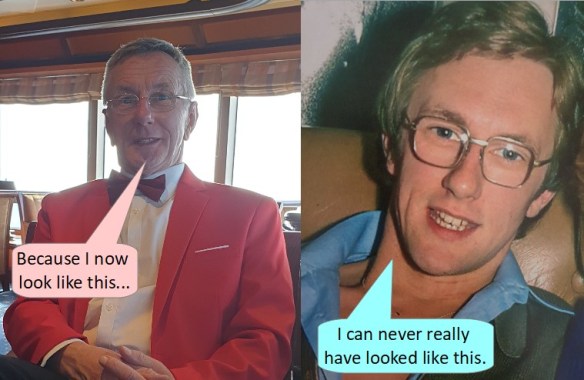
I am no longer young and therefore I was never young. (I just enjoyed thinking I was);

I am not now a teacher and therefore I never really was one. (I just enjoyed the holidays);

I am not now a husband and therefore I never really was. (I just imagined it);

I am no longer raising my children and therefore I never really did. (I just spent 25 years thinking I did);

I am not now a university lecturer and therefore I never really was. (I just experienced an illusion);

I’ll be dead one day and therefore I am not really alive now (I’m just – you guessed it – enjoying the perks).

I feel so much better knowing all this. Thanks, Don.


On Climate Change

Climate Change is happening.

But, like young Sheldon, I have questions.

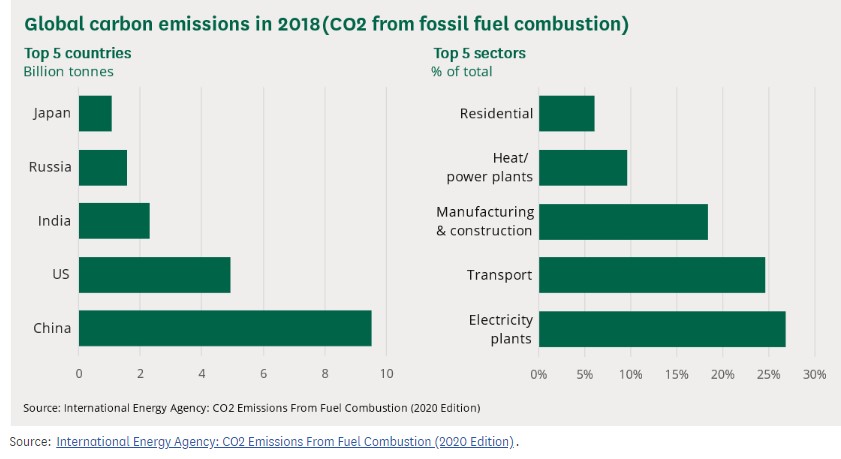
The UK’s carbon emissions are, according to the government’s official figures, 1.1%, while China, USA, India, Russia and Japan produce 58% between them: will the UK reducing its output by 1.1% to zero make any substantive difference to carbon levels and the climate?

Why, as Tony Blair asked last week, are ordinary households being expected to foot the bill for the UK government’s net zero measures? Why not those who produce the most carbon?

When China alone produces 28% of the world’s emissions, and is doing nothing to reduce these – in fact it is increasing them year on year – what use will it be if the UK impoverishes itself in its drive to net zero?

Why does the UK government feel the need to regard itself as a world leader in the drive to net zero when no-one cares what the UK is doing?

Is net zero achievable when the generation of power always produces some level of pollution? How is global net zero achievable when powers like China and Russia refuse to reduce their carbon emissions?

If there is widescale changeover to electric vehicles by 2030 (a UK target for new cars) will there be enough electricity to power them? How will all this extra electricity be generated?

Given most carbon emissions worldwide are from electricity plants, why is the population being ‘encouraged’ to change from oil powered vehicles to electric ones that require electricity plants to create their fuel?

Why do Just Stop Oil and other eco-activists travel to their demonstrations in transport powered by oil and other fossil fuels? Why do they heat their homes using these same fuels? Why do they have mobile phones made from plastic derived from oil, to communicate with each other? Why don’t they demonstrate themselves the kind of behaviour they demand from everyone else?

Why does one of Just Stop Oil‘s leading spokespersons, Dr Grahame Buss, take a £1 million pound pension from Shell Oil while demanding ‘the masses’ must be the ones to make radical changes?

Why do politicians travel by private jet and in motorcades to Climate Change conferences? Why don’t they demonstrate themselves the kind of behaviour they demand from everyone else?

Why, when climate is defined as weather over prolonged periods of time, does the media show us pictures of isolated weather conditions to illustrate climate change?

Do forests spontaneously and naturally combust?

Did the recent wildfires in Greece and elsewhere spontaneously combust as the direct result of high atmospheric temperatures or were they, as the evidence suggests, started either deliberately or through human carelessness? If so, why does the media portray them as examples of the effects of climate change?

Who decided that scrub and undergrowth in forests should no longer be cleared? Why did they, when layers of scrub and undergrowth, once alight, ensure fires spread more rapidly?

If, according to NASA, there has been a decrease in the total number of square kilometers burned each year (and) between 2003 and 2019, that number has dropped by roughly 25 percent’, why are recent, highly localised fires being represented – even by NASA! – as an increase attributable to climate change? 

According to UN Secretary General António Guterres, ‘the era of global warming has ended. The era of global boiling has arrived’. What exactly is it that is ‘boiling’? Is it oceans, rivers and lakes? Soil and rocks? Animal bodies? If so, where is the evidence that this is happening? Is such alarmist hyperbole persuasive or remotely helpful in combatting climate change? Or does it lead ‘the masses’ to believe politicians exaggerate the extent of climate change?

Can we slow down or even reverse climate change when it is a natural, inevitable part of nature’s cycle and, in terms of our own contribution, the biggest polluters are not interested?

Are we all doomed?