
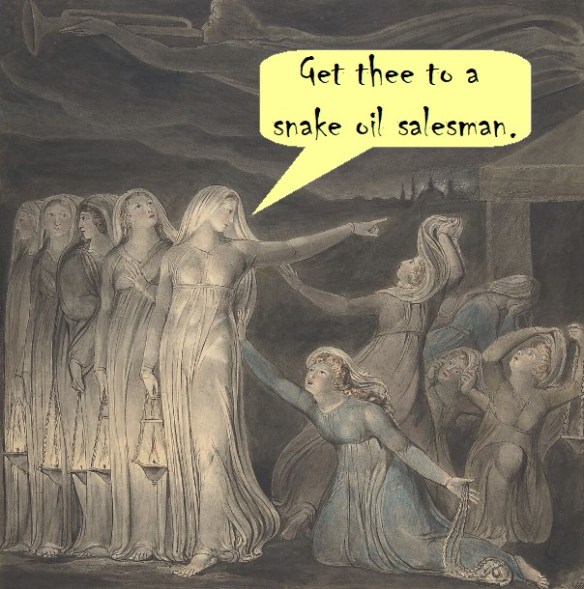
Dennis and I happened to find ourselves in the German city of Bremen recently where we visited the cathedral of St Peter. Apart from having a chapel in the keller of the church that looked suspiciously like an ancient Mithraic temple, the cathedral seemed particularly fond of the story of the Wise and Foolish Virgins, with sculptures of them on its walls.
The early church was obsessed with Jesus coming real soon to kick start the final judgement and inaugurate God’s Kingdom on Earth. Evangelists like Paul had told them so. The guarantee runs through all of his letters and presumably the rival preachers he mentions promised it too. The problem was that after a few decades of Jesus being a no show, some early converts had grown restless. How do we know this? Because later New Testament writers spend a great deal of time addressing the problem of Jesus’ failure to appear. The author of 2 Peter (3:8) comes up with the wholly unconvincing argument that with God a thousand years is like a day and he is giving more people the chance to repent. But this just doesn’t work as I explain here. In any case, 2 Peter is, like Jesus himself, late (most scholars place it in the early 2nd century).
The same issue concerns the writers who come between Paul and the forger of 2 Peter. The gospel writers were keenly aware of the frustration some in the early cult were feeling over Jesus’ late arrival. We know this was the case because the synoptic gospels are littered with parables and stories about why, forty years after cultists had begun looking to the skies for his appearance, Jesus still hadn’t arrived (see for example, Matthew 16.27-28; 24.27, 30-31, 34; Luke 21:27-28, 33-34 etc). Neither will you find any support in the New Testament for Jesus’ arrival being a ‘return’ or ‘second coming’.
This is where the Wise and Foolish virgins come in. The parable is put into Jesus’ mouth in Matthew 25: 1-13. It’s a very peculiar tale, based on the idea that ‘the groom’ is about to marry ten young girls:
‘At that time the kingdom of heaven will be like ten virgins who took their lamps and went out to meet the bridegroom. Five of them were foolish and five were wise. The foolish ones took their lamps but did not take any oil with them. The wise ones, however, took oil in jars along with their lamps.
The bridegroom was a long time in coming, and they all became drowsy and fell asleep. At midnight the cry rang out: ‘Here’s the bridegroom! Come out to meet him!’ Then all the virgins woke up and trimmed their lamps. The foolish ones said to the wise, ‘Give us some of your oil; our lamps are going out. “No,” they replied, “there may not be enough for both us and you. Instead, go to those who sell oil and buy some for yourselves.”
But while they were on their way to buy the oil, the bridegroom arrived. The virgins who were ready went in with him to the wedding banquet. And the door was shut. Later the others also came. “Lord, Lord,” they said, “open the door for us!” But he replied, “Truly I tell you, I don’t know you.” Therefore keep watch, because you do not know the day or the hour.
Is gospel Jesus really endorsing marriage to multiple wives? He seems to be and certainly Mormon sects have taken him at his word. Whether he is or not, the point of the parable is to admonish those who are not prepared for the arrival of ‘the groom’ who has been ‘delayed’. Those who keep watching, however, are praised for their diligence and faithfulness. The groom is clearly intended to be Jesus; the foolish virgins those who have given up expecting him and the wise virgins those who still anticipate his arrival, symbolised by their keeping their lamps lit.
When the groom does finally show up in the story, he takes the wise girls into his wedding banquet (I think we know what that means) and locks out the foolish ones. When they bang on the door to be let in, he claims he’s never known them and shuts then out forever.
What a lesson for those who had begun to doubt that Jesus was going to come soon! What a promise to those who faithfully watched for him! The reward would soon be theirs.
Except of course it wasn’t. As we know, Jesus did not arrive when Paul, the early cultists and then the gospel writers believed he would. Mark, Matthew and Luke, while acknowledging that Jesus was ‘delayed’ nevertheless anticipated his arrival soon: ‘just a little while longer,’ they keep saying. ‘Keep watching’.
But it wasn’t to be. The foolish virgins, it turns out, weren’t as foolish as we’ve been led to believe.


The more one delves into the history of the Church the more one realizes there is more than a good reason to believe the entire basis of the religion is simply a work of fiction, created entirely from whole cloth, and this could very likely include the character Jesus of Nazareth.
The epistles only surface once Marcion claims to have *collected* them.
These are donated/co-oped by/ to the church after Marcion publishes his own NT. And the Church who, as you rightly point out added further interpolation, pseudoepigraphy and outright forgery.
There is a school of thought among some scholars that Paul is nothing but a narrative construct from Marcion or from the Marcionites.
Nina Livesey believes the gospels are second century and retrofitted…. quite reasonable when we consider they are first mentioned around ce 180-185 by Irenaeus.
LikeLiked by 2 people
One question. Where did Marcion get the epistles? And how is it that earlier authors refer to them? If you just asked A I this is the answer: Clement of Rome, Ignatius of Antioch, Polycarp, Papias.
If you want to make sure, try earlychristianwritings.com But it is easier to use A I (I knew there must be some use for this.) Clement is writing to Corinth to whom Paul previously had penned a letter. He refers many times to Paul’s idea and theology.
LikeLike
Worth a watch….
LikeLiked by 1 person
When one considers the amount of forgery and outright lies pushed as ‘truth’ by the Church, then as now anything that relies on Church Tradition or it’s associated ‘sources’ should be regarded with the utmost skepticism and downright cynicism.
LikeLiked by 1 person
Probably Don, if all the traditions of the early church are True™, why aren’t you Catholic?
LikeLiked by 1 person
Foolish old Don here.
You haven’t been to a Jewish wedding, have you? Or seen Fiddler on the Roof. You could look it up, but the virgins are bridesmaids, not brides. Very similar to Hindu weddings in India, btw. The Groom is partying and may be late showing up. And he also takes a spin in a horse-drawn carriage around town as people throw money at him. Come to think of it, the money may be what makes an Indian groom late. Why hurry when there is more to be gotten? But that is India, not Judea.
This and the other two parables in Matthew that follow Matt 24 are intended to tell people how to wait for the Groom. This one makes one point. (Parables typically have one point to make.) It is wait patiently expecting that the Groom’s coming might be late. So, bring enough oil for a long wait. The others tell how to wait also. But this is enough.
Credit for creativity, Neil.
LikeLike
Dear foolish old
virginDon, I attempt unlike you, to take the Bible at face value.The creator of this story does not say the virgins are bridesmaids. Bridesmaids, by definition, wait on a bride. Yet these virgins wait, in both senses, on the groom. No bride is mentioned on whom they might wait. This is because the virgins themselves are the brides, waiting for their future husband to turn up. In Jewish tradition as in all others, it is the wife, or in this case wives, that the groom takes into the wedding feast, not the bridesmaids (for God’s sake, Don. How can you not understand what a wedding is for?)
The virgins represent the Bride of Christ; to insist otherwise is to rob the parable of its point, which is, as I describe – though you feel the need to mansplain it as if I never mentioned it – the long wait for the groom to appear. The story’s writer could never have imagined it would be 2,000 years and counting before he would show up (or in fact, wouldn’t). The author, like all cultists of the late first century, believed it would be only ‘a little while longer’.
It is you who have been ‘creative’ with this story, Don, forcing it to mean what you want it to mean and failing to see what it actually says.
While we’re at it, how about answering some of Kos’s questions, and mine too, that we put to you in the comments under the previous post. Anyone would think you’re unable to.
LikeLiked by 2 people
Oh gee! We’re having this wedding but we have no bride! Hey look! 10 virgins! What a happy coincidence!
LikeLiked by 1 person
Foolish Old Don here again.
I’m glad you asked. 1. The parable of the ten virgins is a parable. A parable is what the Greek word suggests, a story cast alongside a truth. In other words an allegory.
2. It needs to be considered in the cultural context where it was spoken, not ours. So, you may have to get in your time machines and travel back to 30 AD in Judea.
Culture: Weddings were family affairs but with a few friends. The wedding typically did happen after dark – because of the heat and because they included a feast, which was usually a late evening affair. It was held at the bride’s family home. (So, the bride was already there.) The virgins in this story are friends of the bride who are waiting to escort the Groom into the wedding. They are not girls who were all going to marry the groom. That would be contrary to every cultural practice and would be shocking to the first hearers.
But this is a parable. It is built on a cultural tradition, but it departs from it at times to make the point. (Jesus did introduce it as having to do with the kingdom of heaven.)
The point is the point. There were some waiting (described as virgins and therefore pure) for the coming of the groom. (The groom stands for Jesus.) They were going to enter the wedding supper when he arrived. (A wedding supper includes the family, the bride and groom and friends.) Some were foolish and had not brought enough oil for their lamps. (They were unprepared for the long wait. And so, as it grew late, they left to get more oil and were not there when the groom arrived.) When the groom arrived, those who were there went in with the groom AND THE DOORS WERE SHUT. The others who had not prepared were left out.
POINT: “Therefore stay alert, because you do not know the day or the hour.”
Does it really take a literature guru to figure that out?
LikeLike
Doesn’t my original post suggest all this, apart from the part played by the virgins?
Parable – check.
Allegory – check,
symbolic – check.
Virgins, pure – check.
Doors SHUT (in capitals, no less) – check.
Why do you consistently attempt to correct me by reiterating what I’ve already said?
All your analysis adds is that the groom preferred spending more time with the bridesmaids than the bride. Doesn’t that strike you, expert in 1st century, middle-Eastern marriage conventions, as odd? And what a bizarre wedding it is when no-one knows the time the groom will show up. Is this part of those 1sr century conventions you know so much about?
Your interpretation also eliminates the Bride of Christ analogy but I guess that doesn’t matter. And don’t the parables attributed to Jesus go out of their way to shock?
Whoever wrote this one has now been dead 2,000 years as have those he wrote it for: those early Christian cultists. Being long dead, none of them are keeping awake for the groom’s belated arrival. He won’t be turning up now, that’s for sure.
LikeLiked by 1 person
My interpretation.
We know from the Hebrew Bible that God is the groom and Israel is the bride.
In this parable, Jesus adds the Christian church as the bridesmaids. They aren’t the bride and they can never be the bride. And only half of them will make the cut as bridesmaids.
Conclusion: Israel is God’s favorite and Christians are never going to be. Christians are there to serve God and his bride (Israel) and only half of them are good enough to do even that.
It’s rather obvious when you put it in context.
(And yes, that whole thing that God will take his own sweet time in coming is definitely in there. Showing that Matthew was written at least after the first generation of Christians had died out .)
LikeLike
I like this interpretation, Kos. It’s far more viable than Brother Don’s. These crazy stories can mean whatever we want them to mean.
Let’s see what Don makes of your interpretation as only he knows the true meaning and is compelled to explain it to us like we’re five years old.
LikeLike
I will leave you to ponder.
LikeLike
Don here.
Have you read the book “On the Beach” or seen the movie? You should.
LikeLike
Relevance? The protagonists have hope, sure, but not of pie in the sky. You seem unable to distinguish between hope in impossibilities (your kind of hope) and hope in probabilities.
LikeLike
I do like a nice slice of pie in the sky. But a piece of sky cake is nice too.
LikeLike
We can only hope.
LikeLike
😅😂🤣😂🤣
LikeLike
There is hope. He showed us.
LikeLike
Hope of what, Don? Hope we’ll live forever? Hope we’ll end up in Heaven? Hope that Jesus will be back soon?
You can have as much hope as you like in impossibilities, but that’s what they will remain. Hope that somehow, some day they’ll come to pass is senseless, empty and futile.
It’s not for me. I choose not to live deluded.
LikeLike