
In today’s troubled world, we are fed stories intended to convince us of the rightness of the direction in which we’re travelling. I’ve chosen some that have been circulating in the UK for a while now and comment on them afterwards: remember, question everything! While I’ve paraphrased the stories, I’ve tried to represent them as accurately as I can. You can always click on the links to access their source. I stress that I’m not claiming there’s no evidence for these narratives; there may well be, at least for elements of some of them. I offer them simply as the stories they are, ones that are repeated often, widely circulated and widely believed. The evidence or absence of evidence for them is neither here nor there. It’s the stories as presented by those who want us to believe them that count:
The number of people with autism, children in particular, has expanded exponentially recently. We don’t fully understand why this should be but as we’ve found out more about autism, we’ve come to realise that far more people have the condition than was previously thought. In fact, we now recognise that everyone is on the autistic spectrum somewhere. What this means, for children in particular, is that extra provision needs to be made for them in school and additional money must be found to address their problems.
Except… Dame Uta Frith, the psychologist who first proposed that autistic traits were on a spectrum now says the attempts to diagnose and place every one on this spectrum somewhere is not what she intended. In fact, the overreach that has led to this represents a broadening of the definition of autism to the extent it has become meaningless. In consequence, those who do exhibit genuine artistic traits are overshadowed by those with traits well within the boundaries of normal and are often overlooked. This story, therefore, doesn’t stand up.
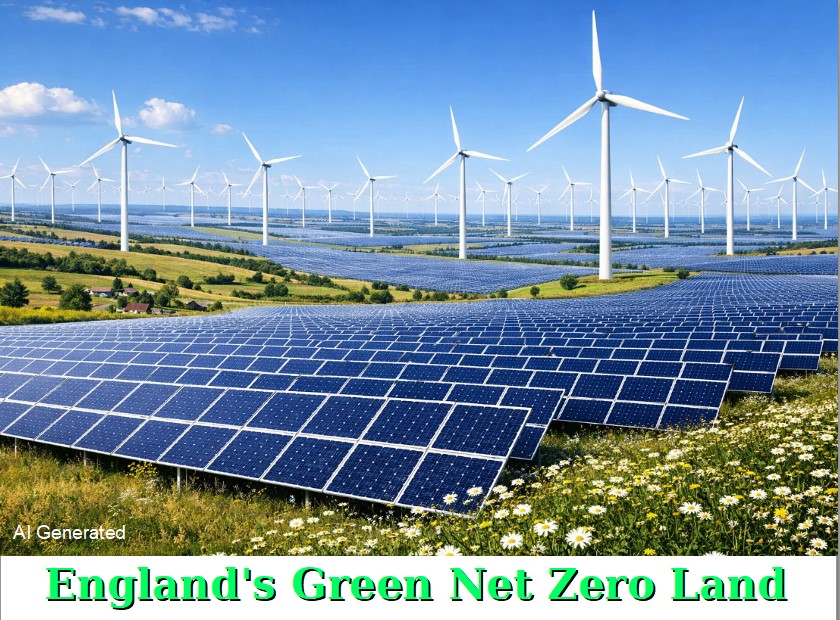
Unless we reverse or halt climate change, the planet, and life on it, is doomed. To achieve this the UK must go further and faster, eliminating all fossil fuel vehicles by 2030 and achieve net zero by 2050. It doesn’t matter how much this will cost households, businesses and the UK economy: for the sake of the planet, Britain must be a world leader in this endeavour.
So many questions! (Some already addressed here.) Is climate change as calamitous as some scientists and unqualified commenters suggest? There are other scientists who think not. And what about those dates? Where did they come from? Were they chosen arbitrarily or is there good scientific evidence that if they are missed there will be no reversing climate change? Which leads to, ‘can climate change really be reversed? Can it even be halted?’ We might ask too how much the current, liberal bombing going on in practically every part of the world is accelerating climate change (and why doesn’t the media ask this question?) Does the UK’s importing of gas and oil from other parts of the world really reduce its greenhouse gas emissions? (No) How much gas and oil are involved in the making, functioning and maintenance of wind turbines? How much agricultural land will be lost when the planned 500,000 additional acres of countryside are given over to solar farms? How many animal habitats will be destroyed? Why must the UK, with its 0.8% contribution to carbon emissions, be a (or even the) World Leader in Net Zero? Does any other nation notice or care what the UK is doing? Do China, USA, India or Russia feel compelled to emulate the UK’s virtuous example? (No). Is Net Zero unachievable in any case?
More stories next time…


Every new idea/fad comes with a finanial tag of some aspect or another.
Wind turbines are as good an example as any.
Does the positive really outweigh the negative?
I’m no scientist but I’ll wager in the long run the answer is No!
So why build them?
Hmmm… Lobby the scientists, pay fortheir research, throw in a Big Mac or two and you may find you have the answer, and the government contracts you need….. Especially if, for example, you are a large industrial producer of concrete.
This may be an oversimplification, but it probably isn’t far from the truth.
Now, we all know concrete does not “decompose”, so in 50 or 100 years when something else is developed that is a lot more efficient and ecologicaly sound than a wind farm the landscape will still be blighted by these effing eyesores….if or until, that is, some bright spark comes up with a way to repurpose ( hang the washing on them?) them or get rid of the concrete.
LikeLiked by 1 person
I couldn’t agree more Ark. I’ve been around long enough now to see the pattern repeated so many times.
First the panic, then the propaganda and the throwing money at the problem, followed by overreach which eventually becomes overkill. After all that there’s the realisation we may just have overreacted and the problem isn’t as bad as we thought (or we claim the measures we’ve spent billions on have been effective when they haven’t) and we move swiftly on to the next fad.
I know there’ll be some who read this post who will say climate change is the biggest crisis we’ve ever faced, but so were all the others in their time. And where are they now? We certainly didn’t resolve them.
LikeLiked by 1 person
I consider man made climate change to be real.. but some of the supposed miracle ‘energy saving’ methods are as suggested, faddish. “Follow the money!”
How about redirecting more/most /all of these funds to:
clean up the oceans,
educate more countries to ban plastic and find biodegradable alternatives.
Our grandads/great grandads never had plastic. How ever did they manage? “swoon”.
Educate the electorate how religious leaders, like politicians are in it for the money and get them all to think of something else to do besides war when they are bored.
LikeLiked by 1 person
Yes, absolutely. I think the record shows that climate change is constantly happening. Humans are accelerating it for sure. It’s our attempted solutions that are way off beam.
LikeLiked by 2 people
Re: climate change — since each of us is only here on this planet for a limited time, none of us can REALLY know what’s going to happen. We can guess (predict) based on existing conditions/knowledge, but nothing is set in concrete, so who can really know for sure?
LikeLike
If there are a thousand trees in a wood/ copse and a man cuts down one tree every day we can reasonably say that after a thousand days, notwithstanding volunteer seeds, there will almost certainly be no trees and thus no wood.
I reckon this is how climate scientists figure out such things….although they probably use graphs, slide rules and bigger words.
😉
LikeLike